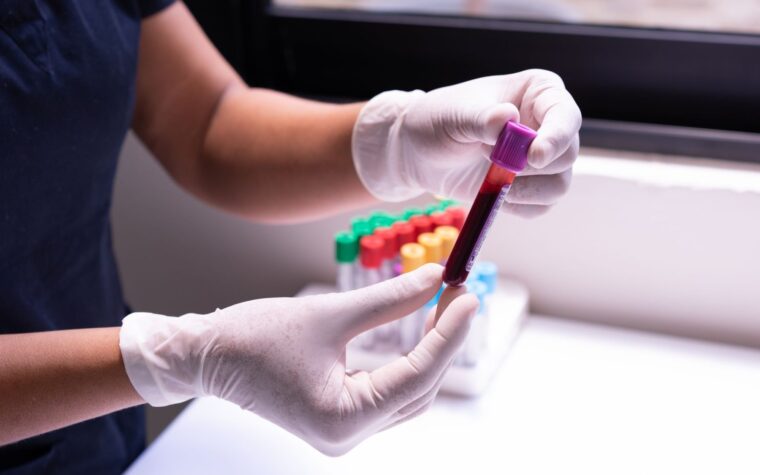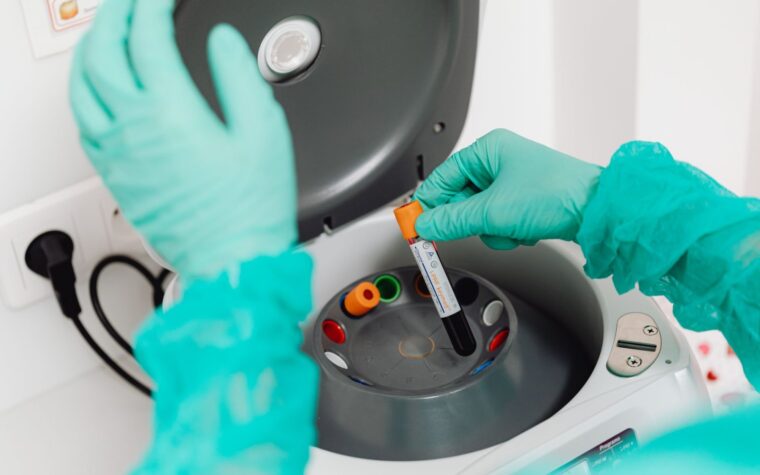
Quick answer: Function Health tests over 100 biomarkers in its standard annual membership, typically described as 100+ across roughly 60 distinct lab tests run twice per year. The exact number varies slightly because Function periodically adds panels to its default bundle, but the consistent marketing claim of “100+ biomarkers” holds. That said, the count depends heavily on how you define a “biomarker”: the company counts individual analytes on a complete metabolic panel as separate markers, which is the same method most direct-to-consumer labs use. For context, a full breakdown of what those Function Health 100 biomarkers cover shows they span hormones, metabolic health, thyroid, cardiovascular risk, and more.
What is the exact number of Function Health biomarkers?
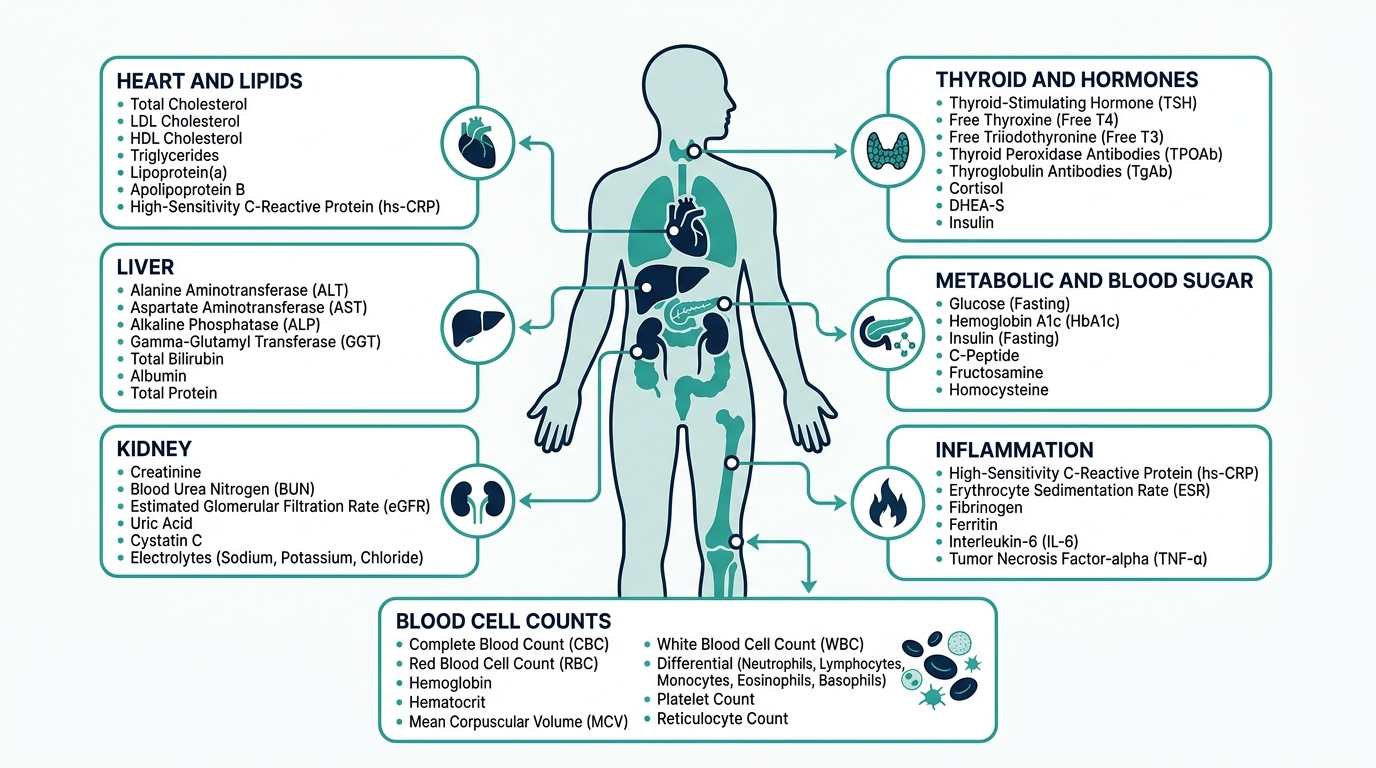
Function Health’s advertised count sits at 100 or more analytes, drawn from approximately 60 panel-level tests. At the moment of writing in mid-2026, the base membership runs closer to 110 to 120 individual analytes when you count every discrete value returned on multi-analyte panels like a comprehensive metabolic panel (CMP), a complete blood count with differential (CBC-diff), and a full lipid fractionation. Function does not publish a locked-in list down to the analyte level the way some clinical labs do, which is a legitimate complaint from users who want an exact number before buying.
Counting biomarkers can get confusing fast. See a straightforward 100+ biomarker panel with a physician-built action plan. One at-home Superpower draw checks 100+ biomarkers, physician-reviewed.
Why the fuzziness? Because multi-analyte panels each report several values. A CMP alone returns 14 data points (glucose, BUN, creatinine, eGFR, sodium, potassium, chloride, CO2, total protein, albumin, calcium, ALT, AST, bilirubin). If Function counts each as a biomarker, the panel adds 14 to the tally. That is standard practice in direct-to-consumer lab marketing, not a misleading claim. Most traditional annual physicals return 25 to 40 analytes total, so 100+ is genuinely more comprehensive.
For a detailed look at the membership pricing that gets you those tests, see our Function Health cost guide.
Which specific biomarker categories does Function Health cover?
Function organizes its markers into health domains rather than a flat alphabetical list. The core categories in the standard annual draw include:
- Metabolic health: fasting glucose, hemoglobin A1c, fasting insulin, HOMA-IR calculation, full CMP
- Cardiovascular risk: LDL, HDL, triglycerides, total cholesterol, ApoB, Lp(a), hs-CRP, homocysteine
- Complete blood count: CBC with differential including WBC subtypes, RBC indices, platelet count
- Thyroid: TSH, free T3, free T4, TPO antibodies (Hashimoto’s screening)
- Hormones (sex): total testosterone, free testosterone, estradiol, SHBG, LH, FSH, DHEA-S, progesterone (for women)
- Adrenal: morning cortisol, DHEA-S
- Liver and kidney: full CMP plus additional GFR markers
- Nutrients and vitamins: vitamin D (25-OH), vitamin B12, folate, ferritin, iron, TIBC, magnesium, zinc
- Inflammation: hs-CRP, fibrinogen, ESR
- Cancer screening markers: PSA (men), CA-125 (women), AFP, CEA
- Gut/autoimmune: anti-TTG IgA (celiac), ANA screen
- Infectious disease: HIV, hepatitis B surface antigen, hepatitis C antibody
- Heavy metals (select): lead, mercury in some member cohorts
The category list is more informative than a raw number. A membership that hits 100 biomarkers concentrated entirely in metabolic health would be far less useful than one spread across hormones, cardiovascular risk, and micronutrients. Function’s spread is genuinely broad by direct-to-consumer standards.
Does Function Health really test 100 biomarkers or is that marketing math?
It is both accurate and marketing-friendly at the same time. The 100+ figure counts every discrete analyte returned, which is a defensible and standard approach. A skeptic’s version of the same data: Function runs about 60 tests per year. If you exclude sub-analytes from panels and count only the primary diagnostic value per test, you land somewhere in the 55 to 70 range for core interpretable markers.
Neither framing is dishonest. The key question is whether Function’s coverage catches what matters for a 30- to 55-year-old who wants a genuine health baseline. Based on the category list above, it does. The traditional preventive care blood panel your doctor orders at an annual physical typically omits ApoB, Lp(a), fasting insulin, free T3, free testosterone, ferritin, and most of the micronutrient markers that Function includes. That is the real gap being closed, not the headline number.
For a thorough look at how the service actually works in practice, our Function Health review walks through the full member experience.

How does the Function Health biomarker count compare to Superpower?
Both services claim 100+ biomarkers, but the panel compositions differ in meaningful ways. Here is a direct comparison at the membership level:
| Feature | Function Health | Superpower |
|---|---|---|
| Advertised biomarker count | 100+ (per draw) | 100+ |
| Annual draws included | 2 | 1 (additional draws extra) |
| ApoB included standard | Yes | Yes |
| Lp(a) included standard | Yes | Yes |
| Fasting insulin standard | Yes | Yes |
| Cancer screening markers | PSA, CA-125, AFP, CEA | PSA (men), CA-125 (women) |
| Infectious disease panel | HIV, HBV, HCV | Limited |
| Physician review of results | Clinician available via platform | Yes, every result reviewed |
| Membership price (2026) | $499/year | ~$199/year |
| Add-on tests available | Yes, extensive catalog | Yes |
The biomarker counts are similar at the top level. The substantive differences are price (Function costs more than twice as much), draw frequency (Function gives two full draws per year, which is useful for tracking changes after an intervention), and physician involvement. Function provides access to clinicians but does not guarantee every result is reviewed; Superpower’s model builds physician review into every panel. You can compare pricing in detail in our Superpower cost guide.
The simplest way to actually get this done
Superpower is a full-body lab membership that runs 100+ biomarkers, has each result reviewed by a doctor, and tracks your numbers year over year (about $199/year). It is what we point readers to when they would rather get one clean, complete draw than chase single tests one at a time. Here is superpower blood test reviewed in full.
What biomarkers does Function Health NOT include in the base panel?
Knowing what is left out is as useful as knowing what is included. Notable omissions from the Function Health standard draw:
- Full thyroid antibody panel: TPO antibodies are included, but thyroglobulin antibodies typically require an add-on.
- Advanced stool testing: No gut microbiome panel or GI-MAP at baseline. These are available as add-ons at additional cost.
- Comprehensive heavy metals: A full heavy metals panel (arsenic, cadmium, lead, mercury, plus others) is an add-on, not standard.
- Omega-3 index: Not in the default draw. You need to purchase this separately.
- Comprehensive hormone metabolites: DUTCH testing (dried urine for thorough hormone assessment) is not part of the base panel.
- Sleep markers: Cortisol awakening response, melatonin, and circadian rhythm markers are outside the base panel.
- Advanced genetic testing: Pharmacogenomics or APOE genotyping require separate add-ons or separate services entirely.
- Inflammatory cytokines: IL-6 and TNF-alpha are not standard inclusions despite growing clinical interest.
The add-on catalog is extensive, which is both a feature and a revenue lever. A member who adds heavy metals, gut microbiome, omega-3 index, and a hormone metabolite panel can easily double the base membership cost. See our guide on Function Health add-on test prices for the current rate card.

How does Function count biomarkers versus how a doctor counts tests?
A physician ordering labs thinks in terms of test orders, not analyte counts. When your doctor orders a “comprehensive metabolic panel,” they place one order and get 14 values back. When Function says it tests 100+ biomarkers, it is counting those 14 values from the CMP as 14 markers, which is accurate at the analyte level but inflates the headline number compared to how clinicians speak.
This is not unique to Function. Labcorp, Quest, and every direct-to-consumer lab service uses this same convention. When comparing services, convert to a common denominator: look at the category list (hormones, thyroid, cardiovascular, metabolic) rather than the headline number. Two services claiming “100 biomarkers” may overlap 70% and differ in exactly the 30 markers that matter most for your individual risk profile.
If you want to understand how the workflow from ordering to results actually operates, the article on how Function Health works explains the end-to-end process.
Does the biomarker count differ for men and women at Function Health?
Yes, by roughly five to ten markers. The sex-specific differences in the default panel include:
- Women: Progesterone, LH, FSH, estradiol, anti-Mullerian hormone (in some cohorts), CA-125 (ovarian cancer screening marker), and additional thyroid antibodies given the higher prevalence of autoimmune thyroid disease in women.
- Men: PSA (prostate-specific antigen), total and free testosterone (with higher clinical emphasis on testosterone reference ranges), and SHBG.
Both versions reach the 100+ threshold. The sex-specific variation is clinically justified, not a way to give one group fewer tests.

What people get wrong about Function Health’s biomarker count
The most common misconception is that more biomarkers automatically means better medicine. The value of a 100-biomarker panel is not the number; it is whether the markers selected match your actual risk factors. A 35-year-old woman with a family history of early cardiovascular disease and PCOS gets maximum value from Function’s cardiovascular and hormone sections. A 50-year-old man more concerned about prostate health and metabolic drift cares most about PSA trends, fasting insulin, and ApoB over time.
A second misconception: that running 100 markers twice a year generates useful trending data on all 100. In practice, maybe 15 to 20 markers shift meaningfully enough between draws to inform a clinical decision. The rest are either stable (vitamin D seasonally adjusts, but cortisol and CBC rarely change dramatically over six months without a specific intervention) or are being tested for population-level risk stratification rather than personal trending. That is still valuable, but it is different from getting 100 actionable data points every six months.
Third: many users assume the panel covers everything their insurance-covered annual physical would skip. In most cases, the Function panel does cover those gaps well, but it does not replicate specialized tests a cardiologist, endocrinologist, or oncologist would order for diagnosed conditions. Talk to a clinician about your results, especially for markers outside normal range, before making treatment decisions.
Which of the 100+ biomarkers actually move between two draws?
Since Function’s headline feature is two draws a year, the practical question is not how many markers you get, it is how many will have changed enough by the second draw to teach you anything. Understanding the biology of each marker’s turnover tells you where to focus your attention.
Fast-moving markers, the ones most likely to shift meaningfully over a three to six month interval, respond quickly to diet, sleep, training, and stress:
- Fasting glucose, fasting insulin, and HOMA-IR: These reflect current metabolic state and can improve within weeks of cutting refined carbohydrates or losing visceral fat. They are the single most responsive cluster in the panel.
- Triglycerides: Highly diet-sensitive. A few weeks of reduced alcohol, sugar, and refined starch can drop them substantially.
- hs-CRP: This inflammation marker can swing quickly with an infection, an injury, a poor sleep stretch, or the opposite when inflammation resolves.
- Ferritin and vitamin D: Both respond to supplementation and, for vitamin D, to season and sun exposure over a matter of months.
- ALT and AST (liver enzymes): Sensitive to alcohol intake and fatty liver changes over weeks to months.
Slow-moving markers, the ones that anchor the panel but rarely change dramatically in six months absent a specific intervention:
- HbA1c: Reflects roughly the prior three months of average blood sugar because it measures glycation of red blood cells, which live about 120 days. It is deliberately a slow, smoothed signal.
- Lp(a): Largely genetically determined and stable for life. You typically measure it once to know your inherited risk, not to track.
- ApoB: Moves with lipid-lowering effort but on a scale of months, not weeks.
- TSH and thyroid markers: Stable unless there is a developing thyroid condition or a medication change.
The lesson: a two-draw membership earns its keep mostly on the fast-moving metabolic and inflammatory cluster. If you make a real lifestyle change after your first draw, the second draw is where fasting insulin, triglycerides, hs-CRP, and liver enzymes show whether it worked. Chasing movement in Lp(a) or TSH between draws is usually wasted attention.
How to prioritize which biomarkers matter most for your age and situation
One hundred markers is only useful if you know which handful deserves your focus. A blanket panel treats a 32-year-old and a 58-year-old identically, but their highest-yield markers differ. Here is a practical prioritization, not medical advice, just where the signal density tends to be:
- 20s and 30s, baseline building: Get Lp(a) once to learn your inherited cardiovascular risk early, when knowing it actually changes decisions. Watch fasting insulin and triglycerides for early metabolic drift that predates any change in fasting glucose. For women, a hormone baseline (LH, FSH, estradiol, AMH in some cases) is most informative before fertility questions arise.
- 40s, risk emerging: ApoB and hs-CRP become higher priority as cardiovascular risk compounds. HbA1c and HOMA-IR flag prediabetes years before a diagnosis. Ferritin and thyroid markers matter more for fatigue and energy complaints that become common in this decade.
- 50s and beyond, screening intensifies: Cancer-adjacent markers (PSA for men, along with age-appropriate screening referrals your clinician orders), continued ApoB and Lp(a) awareness, and kidney function trends via eGFR gain weight. Muscle and bone health markers become more relevant as well.
The point of a comprehensive panel is not to react to all 100 lines. It is to have the two or three markers that matter most for your decade already measured, in context, and trending. Everything else is a safety net that only earns attention if it comes back unexpectedly out of range.
Reference range versus optimal range: why the same number can look different
A recurring source of confusion with any 100-marker panel is the gap between a laboratory reference range and what wellness platforms call an optimal range. These are not the same thing, and knowing the difference keeps you from over-reacting or under-reacting.
- Reference range is statistical. It is typically the central interval of a reference population, meaning the middle band where most apparently healthy people fall. A value just outside it is flagged, but flagged does not automatically mean diseased, and inside the range does not automatically mean ideal.
- Optimal range is a narrower, interpretive band that some platforms overlay to nudge toward what they consider better-than-average. These bands are proprietary and vary by service. They are opinions informed by evidence, not federally standardized cutoffs.
This matters when you compare a 100-marker panel across services or across years. The same ferritin or TSH value can appear green on one platform and yellow on another purely because the platforms drew their optimal bands differently. When a marker sits inside the lab reference range but outside a platform’s optimal band, treat it as a conversation starter with a clinician, not a diagnosis. The measured number is the fact. The color coding is interpretation.
Preparation that changes your numbers regardless of how many you test
The size of the panel does not protect you from preparation errors that distort results. A few controllable factors can move several markers at once, which is worth knowing before either draw so your two data points are actually comparable.
- Fasting. A lipid panel is most accurate after roughly 10 to 12 hours of fasting because triglycerides stay elevated for hours after eating. Fasting glucose typically wants about 8 hours, and fasting insulin generally wants 10 or more. If you want your metabolic cluster to be interpretable, fast consistently for both draws so you are comparing like with like.
- Exercise timing. Strenuous exercise in the 24 to 48 hours before a draw can transiently lower glucose and triglycerides as muscles burn fuel, and can raise certain enzymes. If one draw follows a hard workout and the next follows a rest day, an apparent change may be an artifact of timing, not a real trend.
- Time of day. Cortisol and testosterone follow a daily rhythm and peak in the morning. Drawing both panels at roughly the same morning hour keeps hormone comparisons honest.
- Hydration and recent illness. Dehydration can concentrate several analytes, and a recent infection can spike inflammatory markers like hs-CRP for days. Note any illness near a draw so you do not misread a temporary spike as a baseline.
Standardizing these conditions across both annual draws is what turns a big biomarker count into meaningful trend data. Without that consistency, the second panel measures your prep as much as your physiology.
Don’t just read about your health, track it.
A single result is a snapshot. Superpower re-tests 100+ markers over time so you can watch them move as you change sleep, food, and training.
FAQ
How many biomarkers does Function Health test exactly?
Function Health consistently reports 100+ biomarkers per draw. In practice the number sits between 100 and 120 individual analytes depending on which multi-analyte panels are counted down to each sub-value. The company periodically updates its standard panel, so the count can shift slightly year to year.
Is 100+ biomarkers a lot compared to a regular physical?
Yes, substantially more. A standard annual physical blood panel typically returns 25 to 40 analytes. The biggest gaps usually include ApoB, Lp(a), fasting insulin, HOMA-IR, free T3, free testosterone (or full female hormone panel), and micronutrients like ferritin, magnesium, and zinc. Function covers all of these in its standard draw.
Does Function Health test 100 biomarkers twice a year?
Yes. The base membership includes two full draws per year. Both draws run the same core panel, which allows you to track changes over a six-month interval. This is one of Function’s genuine advantages over single-draw competitors, since a single data point tells you where you are but not which direction you are trending.
How does Function Health compare to Superpower in biomarker count?
Both claim 100+ biomarkers. The panel compositions overlap significantly on core metabolic, cardiovascular, and hormone markers. Superpower typically comes in at about $199 per year versus Function’s $499, and Superpower includes physician review of every result as a standard feature. For most consumers, the price difference is the more meaningful comparison than the exact biomarker count. See our full Superpower blood test review for a side-by-side analysis.
Are all 100+ Function Health biomarkers clinically meaningful?
Most are, though some markers (like fibrinogen or ANA screening in a young healthy adult) will rarely return actionable results. That is not necessarily a waste: some markers serve as population-level baselines that only matter if they are unexpectedly abnormal. The markers with the highest day-to-day clinical utility in Function’s panel are ApoB, Lp(a), fasting insulin, HOMA-IR, free testosterone, free T3, ferritin, and hs-CRP.
Can you get more than 100 biomarkers with Function Health add-ons?
Yes. The add-on catalog expands the panel significantly. Members can add a full heavy metals panel, omega-3 index, advanced thyroid antibodies, gut microbiome testing, DUTCH hormone metabolites, and more. Adding several panels can push the total well past 150 analytes but increases the annual cost proportionally. Our guide on Function Health add-on prices covers the current rate card.
How many tests does Function Health run per draw (versus biomarkers)?
The distinction matters. Function typically runs approximately 60 discrete test orders per draw. Those 60 orders return 100 to 120 individual analyte values because multi-panel tests report multiple values per order. When you see “100+ biomarkers,” that refers to the analyte count, not the number of distinct test requisitions.
Does Function Health’s biomarker count change year to year?
It can. Function has expanded its default panel since launch, and the company occasionally adds markers based on member feedback or emerging clinical evidence. Members who joined in earlier years may have a slightly different baseline count than current members. The 100+ figure has been stable as a floor since at least 2024, but the ceiling has crept upward as panels are added to the standard draw.
Is Function Health worth it for the biomarker count alone?
The biomarker count is a useful proxy but not the whole picture. Function’s value proposition is the combination of breadth, twice-yearly draws, longitudinal trend tracking, and physician access. If your main concern is getting a comprehensive one-time baseline panel, a service priced lower (like Superpower at about $199) runs a comparable number of markers and may deliver better cost-per-biomarker value. For people who want semi-annual comprehensive testing and the accompanying software layer, Function’s pricing becomes more defensible. Our full Function Health review breaks down the cost-benefit analysis in detail.
Vital Signs Today may earn a commission if you buy through links on this page. It does not affect our editorial assessments.