
Educational content, not medical advice. Talk to a licensed dermatologist or clinician before starting any peptide regimen, especially injectable formulations.
Short answer: “Glow peptide” is a catch-all term for at least three different things, a topical copper peptide serum (GHK-Cu), a cosmetic signaling peptide blend like Matrixyl 3000, or a compounded injectable stack (GHK-Cu plus glutathione plus ascorbic acid, or GHK-Cu plus BPC-157 plus TB-500). The term has exploded in searches in 2025 to 2026 because all three categories promise luminosity, firmness, and reduced pigmentation, just through very different mechanisms, price points, and risk profiles. A $32 serum and a $439 injectable protocol are both sold under the “glow peptide” umbrella, and they are not remotely the same product.
“Glow peptide” covers three different things, so what does your skin’s own biomarker profile actually show? One at-home Superpower draw checks 100+ biomarkers, physician-reviewed.
Why does skin lose its glow in the first place?
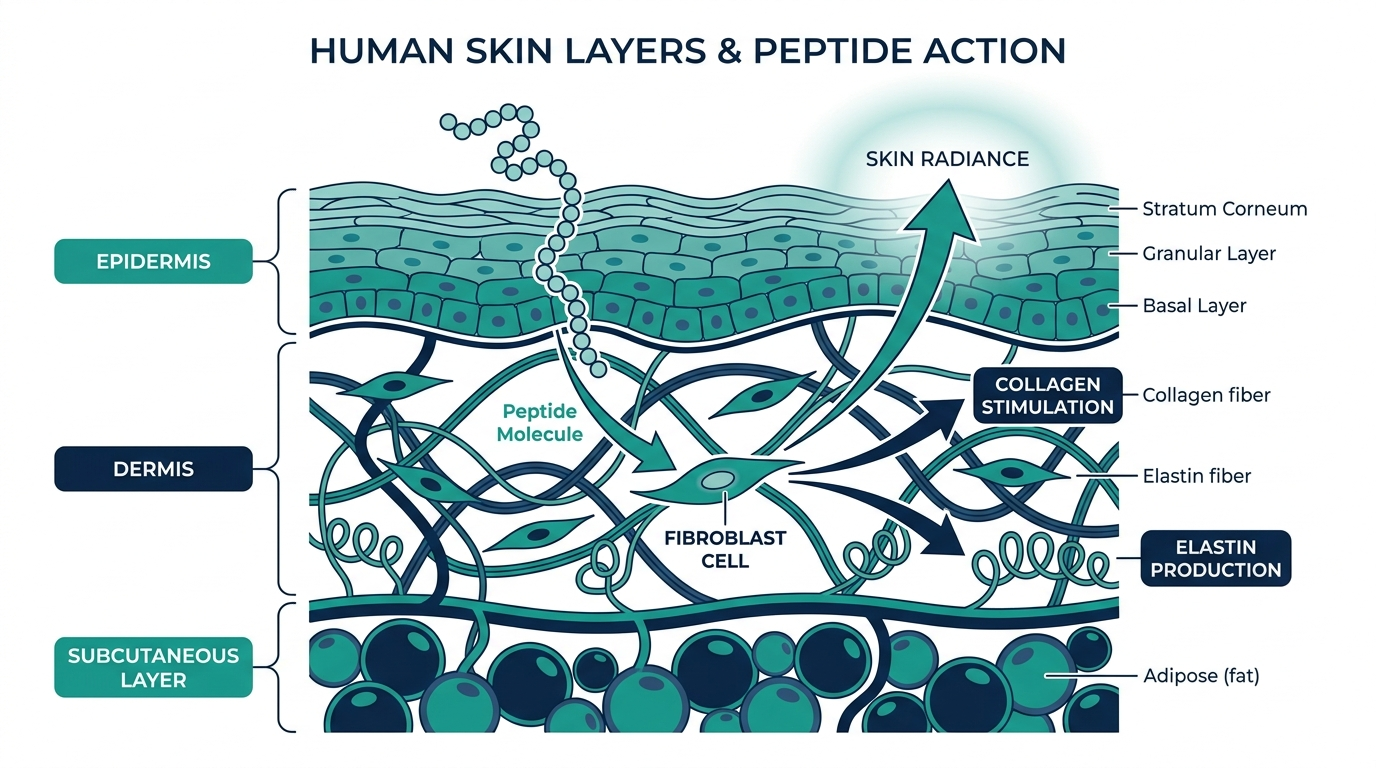
The loss of skin radiance is not one problem. It is four overlapping ones: declining collagen density, reduced cellular turnover, chronic low-grade inflammation, and increased melanin deposition in response to UV and hormonal shifts.
Collagen and elastin give skin its firmness and bounce. By age 40, most adults have lost 10 to 20 percent of dermal collagen compared to their peak in their mid-20s, and the rate accelerates after 50. Slower cellular turnover means dead cells pile up at the surface rather than shedding every 28 to 40 days as they did in youth, creating a dull, uneven texture. Inflammatory signaling driven by cortisol, UV exposure, and oxidative stress degrades the extracellular matrix further while triggering melanocytes to overproduce pigment.
Blood levels of GHK, the naturally occurring tripeptide the copper peptide GHK-Cu is modeled on, drop from approximately 200 ng/mL at age 20 to around 80 ng/mL by age 60, a 60 percent decline that correlates closely with the loss of regenerative capacity skin researchers have tracked for decades (Innerbody / GHK-Cu research overview).
Peptides are short amino acid chains that act as biological messengers. Different peptide sequences trigger different cellular responses: collagen production, inflammation suppression, melanin regulation, hyaluronic acid synthesis. The glow connection is straightforward on paper. Dense, hydrated, evenly pigmented skin with an intact extracellular matrix reflects light uniformly rather than scattering it. That uniform light reflection is what the eye reads as a glow.
Full-body lab membership: 100+ biomarkers, doctor-reviewed, tracked over time.
What are the three categories sold as “glow peptide”?
Understanding which glow peptide you are actually looking at matters because the evidence base, the cost, and the risk profile are different for each.
Category 1: Topical GHK-Cu (copper peptide) serums. This is the broadest category and the most researched. GHK-Cu (glycyl-L-histidyl-L-lysine bound to a copper ion) was first isolated by Dr. Loren Pickart in 1973 and has since appeared in over 100 peer-reviewed studies. It is sold legally over the counter as a cosmetic ingredient and is present in products from budget brands to medical-grade lines. This is what most people in mainstream skincare discussions mean when they say “copper peptide glow.”
Category 2: Signaling peptide blends (Matrixyl, Argireline, Leuphasyl). These are palmitoylated synthetic peptides that mimic collagen fragments or neuro-signaling compounds. Matrixyl 3000, composed of Palmitoyl Tripeptide-1 and Palmitoyl Tetrapeptide-7, is the most widely studied. These are purely cosmetic, appear in hundreds of retail serums, and are regulated under FDA cosmetics law rather than drug law. Their mechanism targets fibroblast stimulation and inflammation suppression.
Category 3: Compounded injectable blends. This is where the term “glow peptide” gets complicated and the risk calculus changes entirely. Two distinct injectable blends both circulate under the glow label. The first (sometimes called “Klow”) pairs GHK-Cu with glutathione and ascorbic acid in a compounded injectable for subcutaneous or intramuscular administration. The second layers GHK-Cu with BPC-157 and TB-500, tissue-repair research peptides. Neither has received FDA approval as a finished drug, and no randomized controlled trial has evaluated either combined injectable formulation as of June 2026 (Superpower GLOW Peptide guide).
How does GHK-Cu actually produce a skin glow?
This is where the science gets genuinely interesting, and the numbers are worth pausing on.
A 2014 analysis published in Gene found that GHK modulated the expression of 4,699 human genes, roughly 6 percent of the human genome. A 2018 analysis by Pickart, Vasquez-Soltero, and Margolina expanded this using Connectivity Map data and found GHK affected 31.2 percent of all human genes at a threshold of 50 percent or greater expression change, with 59 percent of those being upregulated and 41 percent downregulated (PMC full text). The gene categories most affected are tissue repair, antioxidant defense, anti-inflammatory signaling, and DNA repair, all of which contribute to the biological profile of healthy, radiant skin.
The clinical numbers are equally specific. In an 8-week trial, GHK-Cu serum produced a 31.6 percent reduction in wrinkle volume compared to Matrixyl 3000, and 55.8 percent compared to a control serum (PMC). In a separate 12-week study applying GHK to thigh skin, collagen production improved in 70 percent of the women treated, outperforming vitamin C (50 percent) and retinoic acid (40 percent). Combined with LED light therapy, GHK increased cell viability 12.5-fold, boosted basic fibroblast growth factor production by 230 percent, and raised collagen synthesis by 70 percent.
On the brightening side, in vitro research suggests GHK-Cu reduces tyrosinase activity, the rate-limiting enzyme in melanin synthesis, by 28 to 35 percent at low concentrations, with one 2024 study reporting 40.84 percent inhibition of melanin synthesis at a mass concentration of 5 g/L. A 2019 study in the Journal of Cosmetic Dermatology found topical 3 percent GHK-Cu reduced melanin index measurements by 15 to 20 percent over 12 weeks in subjects with post-inflammatory hyperpigmentation.
The brightening effect is real but moderate. GHK-Cu is not a rapid depigmentation tool. Think of it more like a tide going out steadily, not a wave.
The mechanism for radiance goes beyond just collagen and melanin. GHK-Cu down-regulates pro-inflammatory cytokines including IL-6 and TNF-alpha, which is relevant because low-grade chronic inflammation in the dermis is a significant driver of uneven tone and dullness.
How does Matrixyl 3000 contribute to skin glow?
Matrixyl 3000 works through a different but complementary mechanism. Palmitoyl Tripeptide-1 mimics the N-terminal sequence of pro-collagen I alpha and signals fibroblasts to upregulate type I and type III collagen synthesis. Palmitoyl Tetrapeptide-7 targets IL-6 signaling, reducing a key inflammatory driver of collagen degradation and pigmentation.
Clinical studies on Matrixyl 3000 report improvement in wrinkles, skin firmness, and elasticity after several weeks of consistent use, with one frequently cited trial reporting up to 45 percent wrinkle depth reduction over four months. The ingredient is cosmetic-grade, widely available, and appears in products at almost every price point, from The Ordinary’s sub-$20 serums to department store brands at ten times that price.
The two systems, GHK-Cu and Matrixyl-type peptides, work well in the same routine because they address overlapping but distinct pathways: copper peptides tackle the repair and inflammatory signaling side while palmitoylated peptides push collagen synthesis directly.
What is the injectable glow peptide, and who is it for?
The injectable GLOW blend is a fundamentally different product from the topical market, and treating them as the same thing is one of the more common errors in online discussions about peptides.
The most commonly offered compounded version pairs GHK-Cu with glutathione and ascorbic acid. Glutathione is the body’s primary intracellular antioxidant, and separately, research suggests it can reduce melanin synthesis by inhibiting tyrosinase. Ascorbic acid supports collagen synthesis and works synergistically with glutathione as an antioxidant regenerator. The combination is designed for systemic delivery with skin rejuvenation as the primary cosmetic goal.
The second variant adds BPC-157 and TB-500 to GHK-Cu in a 5:1:1 ratio (50 mg GHK-Cu to 10 mg each of the others). BPC-157 supports angiogenesis and tissue repair; TB-500 promotes cellular migration to injury sites. This version is aimed at both skin and systemic tissue recovery, not purely cosmetic glow.
Personally, I find the evidence for the injectable glow blend’s combined synergy persuasive in theory but frustratingly thin in practice. The individual components have research behind them. The specific combined injectable formulation has not been studied in a published randomized controlled trial as of June 2026. Any clinic telling you otherwise is citing ingredient-level research for a product-level claim.
The legitimate route to either injectable version runs through a compounding pharmacy and requires a prescription from a licensed clinician. Costs run approximately $199 to $399 per month for most injectable peptide programs (SeekPeptides pricing guide), with one clinic in Florida pricing the GLOW Mix (BPC-157 plus TB-500 plus GHK-Cu) at $439 for a four to six week program. None of it is covered by insurance.
Full-body lab membership: 100+ biomarkers, doctor-reviewed, tracked over time.
Glow peptide comparison: topical vs. injectable vs. blend
| Form | Main ingredients | Evidence level | Typical cost | Requires prescription? | Best for |
|---|---|---|---|---|---|
| Topical GHK-Cu serum | GHK-Cu 0.5-10% | Strong for collagen; moderate for brightening | $32-$199 for 30mL | No | Daily anti-aging, brightening, mild hyperpigmentation |
| Matrixyl 3000 serum | Palmitoyl Tripeptide-1 + Tetrapeptide-7 | Good clinical data for wrinkles and firmness | $15-$100+ | No | Collagen-building, firming, wrinkle reduction |
| Injectable GHK-Cu + glutathione + vitamin C | GHK-Cu, glutathione, ascorbic acid | Ingredient-level; no RCT for combined formula | $199-$399/month | Yes (compounded) | Systemic antioxidant + skin rejuvenation, supervised |
| Injectable GLOW stack (BPC-157 + TB-500 + GHK-Cu) | GHK-Cu, BPC-157, TB-500 (5:1:1) | Ingredients studied individually; no combined RCT | $350-$500/program | Grey zone / research label | Tissue repair + skin, often at wellness clinics |
| Oral / supplement collagen peptides | Hydrolyzed collagen, types I and III | Moderate; skin hydration and texture | $20-$60/month | No | Foundational collagen support, hair, nails |
What do insiders know that the marketing does not say?
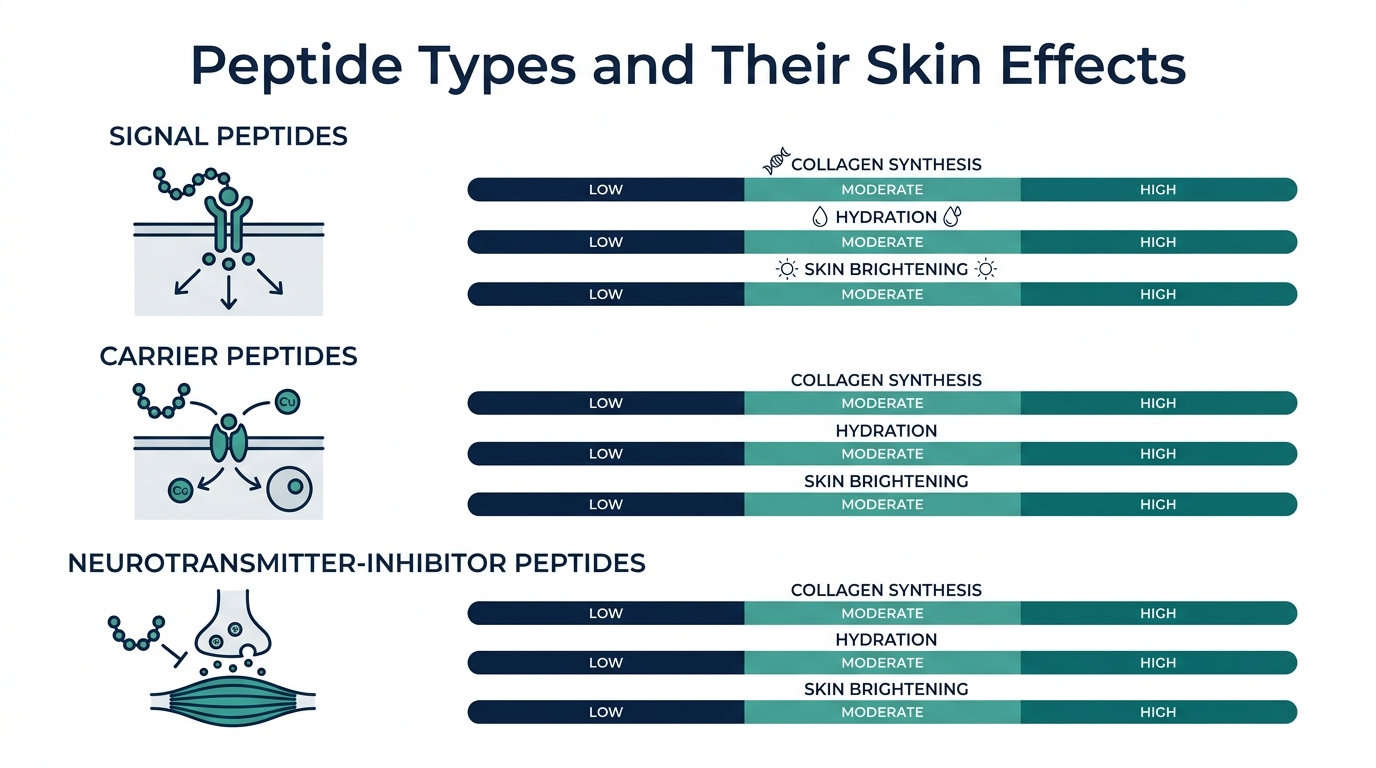
Three things are worth flagging for anyone reading past the surface level.
First, the copper ion in GHK-Cu is doing more work than most users realize. Copper activates lysyl oxidase, the enzyme responsible for cross-linking collagen fibers, which gives connective tissue its structural integrity. A peptide serum with GHK-Cu is not just adding a collagen signal, it is also supplying the cross-linking catalyst. That is why the results are different from vitamin C serum, which stimulates collagen synthesis without the cross-linking support.
Second, the topical concentration ladder matters in a way that product labels often obscure. There is a meaningful difference between a product with trace GHK-Cu added for label appeal and one formulated at 1 percent or above. The Ordinary’s Multi-Peptide + Copper Peptides lists 1 percent GHK-Cu at a $32 retail price. NIOD’s Copper Amino Isolate Serum 3 uses a 1:1 ratio of GHK-Cu to GHK peptide for a more targeted copper delivery at $93. Hairgenetix’s serum runs 10 percent GHK-Cu plus 5 percent AHK-Cu, the highest retail concentration on the market as of mid-2026, with published clinical trial data. More is not always better, but knowing what concentration you are buying matters.
Third, do not believe the common claim that you cannot layer copper peptides with vitamin C in the same routine. The concern is real with direct-contact high-dose ascorbic acid because oxidation reactions can degrade both compounds. But using a vitamin C serum in the morning and a GHK-Cu serum in the evening, separated by several hours, avoids the conflict entirely and is a legitimate protocol used in clinical skincare.
When does glow peptide not make sense?
Peptides are not the right tool for every skin concern.
If the primary driver of dullness is dehydration and a compromised barrier, a ceramide and hyaluronic acid routine will outperform a peptide serum in the short term. Peptides require a functional barrier to deliver signaling molecules to fibroblasts. Applying a GHK-Cu serum over stripped, inflamed skin is inefficient.
For rapid depigmentation, medical-grade options like hydroquinone (prescription), azelaic acid, or kojic acid work faster than any peptide. GHK-Cu’s 15 to 20 percent melanin index reduction over 12 weeks is meaningful for maintenance, not correction.
For deep structural aging (significant volume loss, severe laxity), topical peptides cannot substitute for filler, radiofrequency, or surgical correction. They support the biology of skin quality, not architecture.
And for anyone considering the injectable glow blend: if a clinic offers injectable BPC-157 or TB-500 without a clinical intake and lab review, treat it as a warning sign, not a convenience. The FDA removed BPC-157 from its 503A Category 2 restricted list on 22 April 2026, and a Pharmacy Compounding Advisory Committee meeting set for 23 to 24 July 2026 is expected to clarify which peptides return to permitted compounding status. A compliant 503A pharmacy is not yet freely dispensing these as of this writing (FDA bulk substances list).
The regulatory landscape is shifting fast. A telehealth provider who is current on this will tell you what is and is not prescribable today. One who is not will sell you something regardless.
How should you actually start with glow peptides?
For most people, the topical lane is the logical starting point. It has 40-plus years of safety data, does not require a prescription, and the best retail products cost well under $50 a month.
A reasonable starting routine: apply a GHK-Cu serum (1 percent or above) in the evening after cleansing and before moisturizer. If you also want the Matrixyl collagen-synthesis pathway, use a separate Matrixyl 3000 serum in the morning or alternate evenings. Allow eight to twelve weeks before assessing results. The collagen remodeling signal that creates firmness and texture improvement takes time to express structurally.
If you want to consider the injectable lane, get baseline bloodwork first. Minimum useful markers include CBC, comprehensive metabolic panel, CRP for inflammation, copper and ceruloplasmin levels if using GHK-Cu injectable, and liver enzymes given the detox load of glutathione. Any legitimate provider will require this before prescribing.
Do not start injectable peptides without a clinician. Not because of paperwork, but because the dose response curve for skin peptides is not linear. There are optimal dose windows, and someone who has seen hundreds of patients on these protocols will give you far better guidance than a forum thread.
Don’t just read about your health, track it.
A single result is a snapshot. Superpower re-tests 100+ markers over time so you can watch them move as you change sleep, food, and training.
Frequently asked questions
What exactly is a glow peptide?
Glow peptide is not a single ingredient. The term is used commercially to describe topical copper peptide (GHK-Cu) serums, signaling peptide blends like Matrixyl 3000, and compounded injectable formulations combining GHK-Cu with glutathione, ascorbic acid, BPC-157, or TB-500. Each works through different mechanisms and has a different evidence base and regulatory status.
Does glow peptide actually work?
For topical GHK-Cu, yes, with strong evidence. Clinical trials show 31.6 percent wrinkle volume reduction over 8 weeks, 70 percent improvement in collagen production over 12 weeks (outperforming vitamin C and retinoic acid in the same study), and 15 to 20 percent melanin index reduction for brightening. Matrixyl 3000 has similarly solid data for wrinkle reduction and firmness. Injectable glow blends are less established: the individual ingredients have research support but no RCT has tested the combined formulation.
Is glow peptide safe?
Topical GHK-Cu has one of the best safety profiles of any cosmetic active, with over 50 years of research and a naturally occurring structure (Innerbody). Injectable glow blends carry more uncertainty: long-term safety data for the combined formulations do not exist as of 2026, and neither the GHK-Cu plus glutathione blend nor the GHK-Cu plus BPC-157 plus TB-500 blend is FDA-approved as a finished injectable drug.
What is GHK-Cu and why is it in glow peptides?
GHK-Cu (glycyl-L-histidyl-L-lysine copper complex) is a tripeptide first isolated by Dr. Loren Pickart in 1973. It modulates expression of approximately 4,699 human genes, stimulates collagen and elastin synthesis, inhibits melanin production, reduces inflammatory cytokines, and transports copper to activate lysyl oxidase for collagen cross-linking. It is the most research-backed peptide in the glow category.
How long does glow peptide take to work?
Topical GHK-Cu shows visible improvements in texture and hydration in 4 to 8 weeks, with collagen density and firmness changes stacking over 3 to 6 months. Injectable glow blend users at clinics often report skin texture improvement within 3 to 6 weeks.
Can I buy glow peptide without a prescription?
Yes, for topical versions. GHK-Cu serums and Matrixyl products are sold over the counter as cosmetics and are widely available from brands like The Ordinary ($32), NIOD ($93), Allies of Skin ($199), and others. Injectable glow peptide blends require a prescription from a licensed provider through a compounding pharmacy.
What is the difference between glow peptide and copper peptide?
Copper peptide refers specifically to GHK-Cu, one ingredient. Glow peptide is a broader commercial term that often includes GHK-Cu but can also mean signaling peptide blends, injectable multi-ingredient formulas, or any peptide-based product marketed for radiance. When a brand says “glow peptide,” check the ingredient list for what is actually in it.
Author: Vital Signs Today Editorial Team, [credential]”]. Educational content, not medical advice. Sources linked inline.
Full-body lab membership: 100+ biomarkers, doctor-reviewed, tracked over time.
Primary sources
- PMC: Regenerative and Protective Actions of the GHK-Cu Peptide in the Light of the New Gene Data (Pickart et al., 2018)
- Innerbody: GHK-Cu Peptide, benefits, side effects, and more (2026)
- Innerbody: Best Copper Peptide Serum 2026
- Superpower: GLOW Peptide (Klow) educational guide
- FDA: Bulk Drug Substances Used in Compounding under Section 503A
- SeekPeptides: Peptide therapy cost complete pricing guide
- Nova Derm Institute: Peptides vs. Retinol vs. Vitamin C
- New Beauty: Everything to Know about Trendy Peptide Injections and Glow Stacks
- RWA Center: GHK-Cu The Regenerative Copper Peptide Guide (2026)
- The Ordinary: Matrixyl 3000 ingredient glossary
- Typology: Palmitoyl Tripeptide-1 and Palmitoyl Tetrapeptide-7 ingredient guide
Related reading
Vital Signs Today may earn a commission if you buy through links on this page. It does not affect our editorial assessments.