Quick answer: The four main types of drug test are urine, hair, saliva, and blood, and they differ mostly in how far back they can detect use. A urine test catches most drugs from about 1 to 4 days back (longer for heavy cannabis use), saliva covers roughly the last 1 to 2 days, blood is a narrow few-hours-to-2-day window, and a hair test reaches back about 90 days. Employers overwhelmingly use urine because it is cheap, fast, and federally validated, while hair is reserved for longer-history screening and blood is mostly clinical or DUI related.
If you have been told to take a drug screen and are not sure which you are facing, the method matters more than most people realize. The same person can pass one type and fail another on the same day. Below I break down the four common types of drug test: what each detects, how long the detection window runs, how accurate each is, what the panel numbers mean, and which employers reach for which method. I have read enough chain-of-custody forms to tell you the differences are not academic, they decide outcomes.
What are the main types of drug test?
There are four collection methods in routine use, plus a niche fifth. Each samples a different part of the body, so each tells a different story about timing. The sample you give is the single biggest factor in whether a given drug shows up at all.
- Urine (urinalysis): the default. Cheap, non-invasive, and the only method approved for federally regulated (DOT) testing. Detects recent metabolites, not the drug itself.
- Saliva (oral fluid): a swab inside the cheek. Hard to cheat because collection is observed, and it flags very recent use.
- Hair (follicle): a small snip near the scalp. Reads a long history but misses the last week or so.
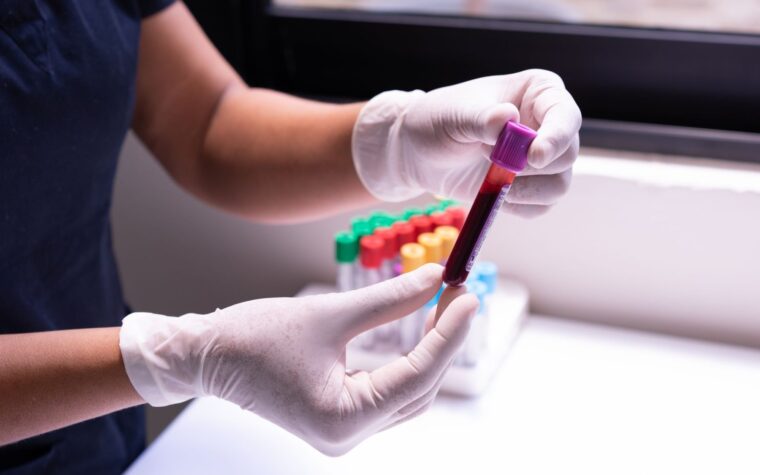
- Blood: the most precise for what is active right now, but invasive and expensive, so it shows up mainly in DUI, ER, and probable-cause situations.
- Sweat (patch): the niche fifth, worn for days to weeks, mostly for probation and child-custody monitoring.
Most people will only ever meet the first three. The choice comes down to three levers: cost, how far back the tester wants to see, and how easy the sample is to tamper with. Hold those in your head and you can predict which test almost any organization will pick. A budget-conscious employer who only cares about recent use reaches for urine. A court that wants proof of a habit over months orders hair. A roadside officer who needs to know if you are impaired right now swabs saliva or draws blood.
Why the sample you give changes the result
The simplest way to actually get this done
Superpower is a full-body lab membership that runs 100+ biomarkers, has each result reviewed by a doctor, and tracks your numbers year over year (about $199/year). It is what we point readers to when they would rather get one clean, complete draw than chase single tests one at a time. Here is superpower reviewed in full.
Here is the piece most explainer pages skip. Your body does not store a drug in one place, it moves it. A substance enters the bloodstream first, so blood and saliva (which mirrors blood) light up almost immediately and fade fastest. The liver and kidneys break it into metabolites routed into urine, which lags blood by hours but stays positive far longer. Finally, a tiny fraction binds into the keratin of growing hair, locking a record into the shaft. That is why a single dose can be invisible on one test and obvious on another the same hour. The four types of drug test are really four clocks at four speeds: blood is a stopwatch for the last few hours, saliva a slightly slower one, urine a clock measuring days, hair a calendar for months. “I will pass” always begs the question, “pass which one?”
Detection windows compared: urine vs hair vs saliva vs blood
This is the part that decides pass or fail. Windows below are typical ranges for a single, average use; heavy or chronic use (especially cannabis) stretches them well beyond these numbers.
| Method | Detection window | Best at catching | Typical cash cost | Where it is used |
|---|---|---|---|---|
| Urine | About 1 to 4 days (up to 30 days for heavy cannabis) | Recent-to-moderate use | $30 to $80 | Most employment, DOT, probation |
| Saliva | About 5 hours to 2 days | Very recent use, same-day impairment | $15 to $60 | Roadside, on-site, post-accident |
| Blood | A few hours to about 2 days | Active, current presence | $100 to $200+ | DUI, ER, insurance, probable cause |
| Hair | Up to about 90 days | Long-term, repeated use | $75 to $150 | Safety-sensitive hires, court history |
Notice the gap nobody warns you about: a hair test cannot see the most recent 5 to 10 days, because hair takes that long to grow out from the scalp. So a hair test and a urine test taken the same morning answer different questions. Urine asks “did you use this week?” and hair asks “have you used this season?”
The ranges above hide variation by drug. Cannabis is the outlier because THC is fat-soluble and accumulates in tissue, so a daily smoker can fail three to four weeks after quitting while a one-time user clears in two or three days. Here is how the common drug classes behave in urine, the test you are most likely to take.
| Drug class | Urine window, occasional use | Urine window, heavy or chronic use |
|---|---|---|
| Cannabis (THC) | 2 to 3 days | Up to 30 days |
| Cocaine | 1 to 3 days | Up to 1 week |
| Amphetamines | 1 to 3 days | Up to 1 week |
| Opiates (heroin, morphine) | 1 to 3 days | 2 to 4 days |
| Benzodiazepines | 1 to 3 days | Up to several weeks |
| PCP | 3 to 7 days | Up to 30 days |
The lesson: “a drug test” is never one window, it is a different window for every substance, and frequency matters more than dose for the fat-soluble drugs. A heavy cannabis or benzodiazepine user carries a tail that stretches for weeks; a casual user is clear in days.
How does each type of drug test actually work?
Every defensible drug test runs in two stages, and they explain almost everything about cost, speed, and accuracy.
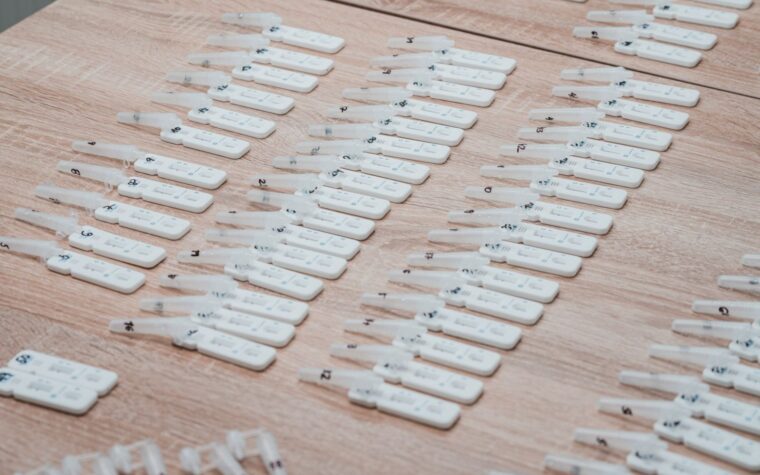
Stage one is the screen. Almost always an immunoassay, which uses antibodies that bind to a drug or its metabolite. It is fast, cheap, and runs in minutes on an instant device or in bulk at a lab. The catch is that immunoassays are built to be sensitive rather than specific, so they occasionally flag a compound that merely looks like the target drug. A screen result is a preliminary signal, not a verdict.
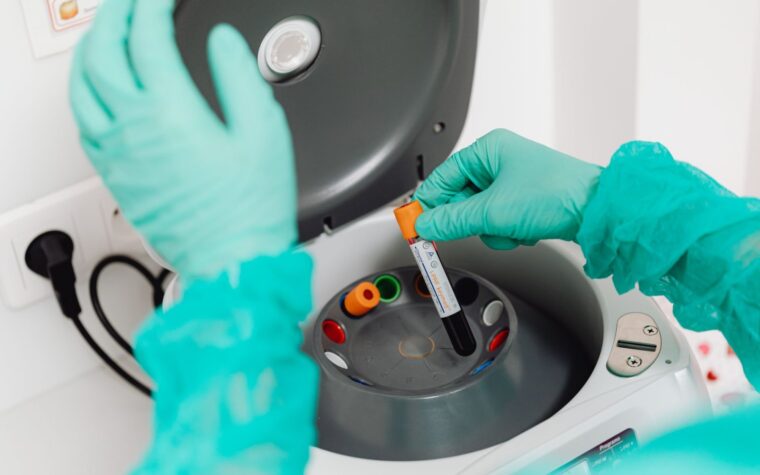
Stage two is confirmation. Any non-negative screen goes to gas chromatography-mass spectrometry (GC-MS) or liquid chromatography tandem mass spectrometry (LC-MS/MS), which separate the sample and identify each molecule by its mass fingerprint. They do not guess. That confirmation is what makes a positive hold up in a hearing or court, and why a regulated lab never reports a positive off the screen alone.
Here is how a typical regulated urine collection plays out, step by step:
- You show photo ID and empty your pockets. The collector starts a chain-of-custody form that follows the sample from the cup to the lab.
- You provide the sample in a private restroom (the water is usually dyed blue and the tap taped off to prevent dilution).
- The collector checks the temperature strip on the cup within four minutes. An out-of-range temperature is an immediate red flag for a substituted sample.
- The sample is split, sealed with tamper-evident tape, and you initial the seals.
- The lab runs the immunoassay screen. Negatives are reported and you are done.
- Any non-negative goes to GC-MS or LC-MS/MS confirmation.
- A confirmed positive goes to a Medical Review Officer (MRO), a licensed physician who calls you to ask whether a prescription explains the result before anything is reported to the employer. This is the safety net most people do not know exists, and the reason a valid Adderall script does not cost you a job over an amphetamine flag.
How accurate is each type of drug test?
All four confirm any non-negative with lab-grade GC-MS or LC-MS/MS, which is why a positive on a cheap dip-strip is not final until the lab signs off. A lab-confirmed result from any of the four is highly reliable; the differences show up in what each can be fooled by, and the real issue is false positives at the screening stage. Common, legal substances can trip an immunoassay:
- Poppy seeds can register as opiates. The famous bagel problem is real, though confirmation labs raised opiate cutoffs years ago to reduce it.
- Pseudoephedrine and some decongestants can read as amphetamines.
- Certain antidepressants and antipsychotics have cross-reacted with amphetamine or PCP screens.
- Some NSAIDs have historically caused odd flags on cannabis or barbiturate screens.
- CBD products that contain trace THC can push a heavy daily user over the cannabis cutoff even with no intent to use marijuana.
A good lab and an MRO exist precisely to catch these. Each method also has its own weak spot. Urine is the easiest to tamper with through dilution or substitution, which is why temperature checks exist. Hair can be affected by external contamination, so a careful lab washes the sample first. Saliva has the shortest memory and can miss use from even two days ago. Blood is the most precise snapshot but the most invasive and fleeting.
If you take an instant home kit, treat a positive as “go confirm at a lab,” never a verdict. We cover that in At-Home Drug Test Kits: Accuracy and How to Use Them.
What is a 5, 10, or 12 panel drug test?
The “panel” number is simply how many drug classes the test screens for, independent of the method. You can have a 5-panel urine test or a 10-panel hair test. The panel tells you what the test looks for; the method tells you how far back it sees. Two separate dials.
| Panel | What it adds | Typically used by |
|---|---|---|
| 5-panel | THC, cocaine, opiates, amphetamines, PCP (the federal baseline) | Most non-safety private employers, DOT |
| 10-panel | Adds barbiturates, benzodiazepines, methadone, propoxyphene, methaqualone | Healthcare, government, controlled-substance roles |
| 12-panel | Adds extended opioids (oxycodone, hydrocodone) and often ecstasy/MDMA | Roles where prescription-opioid misuse is the concern |
Some labs now offer 13, 14, and even 16-panel tests that add fentanyl, tramadol, and kratom, because the opioid landscape keeps shifting and a panel from a decade ago would miss the drugs causing the most harm today.
Pricing scales with the panel and the lab (full cost-by-setting breakdown below). The jump from a 5-panel to a 12-panel is the added confirmation work each extra class requires, not the lab padding the bill. To understand how this fits a hiring physical, see Do Physicals Include a Drug Test? When Employers Add One.
Which drug test do employers actually use?
For the vast majority of US jobs, the answer is a 5-panel urine test sent to a SAMHSA-certified lab. It is the cheapest option that still holds up in a dispute, and the only method the Department of Transportation accepts for safety-sensitive federal roles like truck drivers and pilots. Hair shows up where an employer wants a longer look back, common in finance, casinos, and safety-critical industrial hiring. Saliva is rising fast for on-site and post-accident testing because the collection is observed and nearly impossible to fake. Blood is rare in employment, mostly after a workplace accident or in a DUI context. Here is the quick map of who reaches for what, and why:
| Setting | Usual method | Why |
|---|---|---|
| Most private employers (pre-employment) | 5-panel urine | Cheapest defensible test |
| DOT and federally regulated roles | Urine (legally mandated) | Only method DOT accepts |
| Finance, casinos, sensitive hires | Hair | Wants a 90-day history |
| Post-accident, on-site, roadside | Saliva | Observed, fast, shows current use |
| DUI, ER, probable cause | Blood | Proves active impairment |
| Probation, child custody | Urine or sweat patch | Long monitoring, hard to fake |
To figure out where to go and what each setting charges, Where to Get a Drug Test (Employer, Court, or Personal) maps the options. And if you are getting blood drawn anyway, it is often smarter to capture a full baseline at once rather than pay for single tests piecemeal. Here is how a full-body panel compares.
What do specific health systems test for? Owensboro, Summit, Cox, TriHealth
People search for the exact panel a named hospital uses, and the honest answer is that no health system publishes a fixed list, because panels change with the role and state law. But the pattern is predictable: health systems hire clinical staff who handle controlled substances and non-clinical staff who do not, and the clinical track almost always draws a deeper panel.
- Owensboro Health. Like most regional hospital employers, it screens new hires through an occupational-health partner, and a 10-panel urine is the typical hospital-hire default rather than a 5-panel. The 10-panel adds benzodiazepines, barbiturates, and methadone, which matter where staff can access those drugs. It is usually non-DOT unless the role is federally safety-sensitive.
- Summit Health (including Pennsylvania). Runs standard occupational screens for hires (typically a 5 or 10-panel urine) and separate clinical urine drug monitoring for patients on controlled-substance therapy, which confirms the prescribed drug is present and screens for non-prescribed ones. Two different products, two different goals.
- Cox Health. Pre-employment screening follows the same logic: a 5-panel for general roles, a 10-panel for clinical and controlled-substance-access positions, and DOT urine for any regulated driver.
- TriHealth. As a large clinical employer, it leans toward a 10-panel for clinical hires, with standard SAMHSA-certified lab confirmation.
The practical takeaway beats any single hospital’s list: applying to a clinical role at a health system, plan for a 10-panel urine and have prescription information ready for the Medical Review Officer. For the exact panel, the only reliable source is the offer letter or the named occupational-health clinic, not a forum post. And is a Health Street 10-panel a non-DOT test? Yes. Health Street’s standard 10-panel urine is non-DOT by default. DOT testing is a separate, federally specified 5-panel with its own custody form, so a DOT role needs the DOT panel ordered specifically, not the commercial 10-panel. Ordering the wrong one is a common, costly mix-up for small employers.
Sweat patches, EtG, and the tests people forget exist
The four main methods cover most situations, but two others come up often enough to know, and both solve a problem the standard panel cannot.
The sweat patch is the continuous-monitoring tool. A tamper-evident adhesive patch worn on the arm or back for a few days to two weeks absorbs drugs excreted in sweat the whole time. Its value is coverage: a urine test is a single snapshot a person can plan around, but a patch worn for ten days catches use on any of those days, which is why probation officers and family courts favor it for people they cannot test daily. The trade-off is that contamination is easy to argue, so a positive patch usually escalates to confirmation testing rather than standing alone.
The EtG test exists because standard panels miss alcohol. Ethanol clears in hours, so by the time someone reaches a testing site it is gone. EtG (ethyl glucuronide) is a metabolite that lingers, and an EtG urine test detects drinking up to roughly 80 hours back, which is why abstinence programs, probation, and some monitoring boards use it rather than a breathalyzer. It is sensitive enough that incidental exposure (hand sanitizer, mouthwash) has occasionally triggered low-level positives, so responsible programs set a higher cutoff and confirm. Blood alcohol (the DUI standard) and breath alcohol (the roadside screen) measure current impairment, not history. The pattern holds across every method here: recent impairment versus a record over time determines which tool fits.
What does each type of drug test cost, by setting?
Method is only half the price story. Where you get tested changes the bill more than which sample you give, and the same panel can swing by a factor of five.
| Setting | What you usually pay | Notes |
|---|---|---|
| Instant home kit (CVS, Walgreens, Amazon) | $10 to $30 | Screen only, no chain of custody |
| Discount lab marketplace plus Quest or Labcorp draw | $35 to $90 | Cheapest defensible lab option, you order online |
| Walk-in urgent care or retail clinic | $60 to $150 | Convenient, often the priciest per test |
| Hair test (lab) | $100 to $150 plus | Higher confirmation workload |
| Blood alcohol or drug panel (clinical) | $100 to $250 plus | Hospital billing can push this far higher |
The number that surprises people is the hospital markup. A urine panel that costs $40 cash through a discount marketplace can appear as a $250 line item when the same Quest or Labcorp test is billed through a hospital outpatient department. The lab work is identical; the gap is the facility fee and billing code. If the test is not mandated to a specific site, ordering it yourself online is almost always cheaper.
Common mistakes people make with drug tests
I have watched people lose jobs over avoidable errors. These come up again and again.
- Trusting a home kit as final. An instant kit is a screen, not a confirmation. A positive on a CVS strip means “go to a lab,” and a negative on a cheap strip can miss a drug the lab would catch.
- Over-drinking water to dilute. Labs measure creatinine and specific gravity. A sample that is too watery gets flagged as dilute and you may be ordered to retest, sometimes under direct observation, which is worse than the original test.
- Forgetting to mention a prescription. Wait for the Medical Review Officer to call and disclose your Adderall, your codeine cough syrup, your benzodiazepine script. A valid prescription disclosed to the MRO turns a positive into a negative. Disclosed after the fact, it is a fight.
- Assuming CBD is safe. Many CBD products contain trace THC, and a daily user can accumulate enough to fail a cannabis screen. The label that says “THC-free” is not always tested to the cutoff your employer uses.
- Confusing panel with method. People hear “10-panel” and assume it is harder to pass than a 5-panel of the same method. It only screens for more drugs. If you do not use the extra classes, a 10-panel is no harder than a 5-panel.
Edge cases: uninsured, minors, Medicare, and employer-required
The standard playbook assumes a healthy adult sent by an employer. Real life is messier.
Uninsured, paying cash. You do not need insurance for a drug test, and cash is often cheaper than a billed visit. Discount lab marketplaces let you order a urine panel online, pay $35 to $90, and walk into a Quest or Labcorp draw site with a requisition, no doctor visit required.
Minors. A parent can request a test for a minor child, and many pediatric and urgent-care settings collect one with parental consent. Schools that test athletes follow their own district policy. Chain-of-custody rules still apply if the result needs to stand up anywhere official.
Medicare and Medicaid. These generally do not cover employment or legal drug testing, because it is not a medical-necessity service. They may cover testing that is part of legitimate care, for example monitoring a patient on long-term opioid therapy. If a clinic codes a workplace screen as diagnostic, you can end up with a surprise bill, the same trap that turns a “free” preventive test into a charged diagnostic one.
Employer-required and refusal. In a regulated DOT context, a refusal to test, including a dilute or adulterated sample treated as a refusal, carries the same consequence as a positive. In a private at-will context, refusing a lawful test is typically grounds to withdraw an offer or terminate. The test you skip is rarely the easy way out.
Which type of drug test should you choose?
If you are ordering it, match the types of drug test to the question you are answering:
- Impairment now (last day or two): saliva or blood. Saliva is cheaper and non-invasive; blood is for clinical or legal certainty.
- Standard, defensible employment screen: a 5-panel urine, the industry default.
- A long history of repeated use: hair, but remember it is blind to the last week.
- Monitoring someone over time (probation, recovery, custody): frequent urine or a sweat patch for continuous coverage.
- A parent worried about a teen: a confirmed lab urine test gives a real answer; an instant home strip is a conversation starter, not proof.
And if you are the one being tested, the most useful thing you can do is ask which method and which panel. That one answer tells you the detection window you are up against.
FAQ
How much is a urine drug test at Labcorp?
A standard urine drug test at Labcorp generally costs about $40 to $80 cash without insurance, depending on the panel. A 10-panel or 12-panel test sits at the higher end of that range, and employer-ordered tests are usually billed to the employer, not you. Ordering through a discount lab marketplace can bring a basic panel under $50.
Where can I buy a urine drug test?
Instant urine drug test kits are sold over the counter at CVS, Walgreens, Walmart, and Amazon for roughly $10 to $30. These are fine for personal screening, but they are not chain-of-custody tests, so they will not satisfy an employer or a court. For anything official, you need a lab-collected sample.
How much is a 10-panel drug test at Labcorp?
A 10-panel urine drug test at Labcorp typically runs about $50 to $100 cash, a step up from a 5-panel because it screens for five additional drug classes that each need confirmation if flagged. Ordering through a discount lab marketplace that uses Labcorp draw sites is usually the cheapest way to get one, often landing in the $55 to $75 range. Employer-ordered 10-panels are billed to the employer.
How much is a 12-panel drug test at Labcorp?
A 12-panel urine drug test at Labcorp generally costs about $70 to $130 cash, depending on whether extras like fentanyl are included. The 12-panel adds extended opioids and often MDMA on top of the 10-panel, and the price reflects the added confirmation work. As with the other panels, online discount ordering beats walk-in clinic pricing, and an employer-mandated test is paid by the employer, not you.
Can a hair test detect occasional use?
It can, but it is better at catching repeated use than a single instance. One-time use may not deposit enough into the hair shaft to register, while regular use over weeks builds a clear, months-long record. That is why hair testing is favored for history rather than for catching a recent slip.
Which type of drug test is hardest to cheat?
Saliva and hair are the hardest to beat. Saliva collection is observed and the window is so short there is little to do but wait it out. Hair is difficult to tamper with because the record is locked inside the shaft, and detox shampoos are largely ineffective against a proper wash-and-confirm lab process. Urine is the easiest to manipulate through dilution or substitution, exactly why temperature strips and observed collections exist.
How long does it take to get drug test results?
A negative on an instant test is immediate. A lab-based negative usually posts within 24 to 48 hours. A non-negative takes longer because it goes to GC-MS or LC-MS/MS confirmation and then to a Medical Review Officer, which can add a few business days. If your result is taking a week, it is almost always because something screened non-negative and is being properly confirmed, not because anyone forgot about it.
What does a hospital or health system drug test for?
For employment, most health systems use a 10-panel urine for clinical hires and a 5-panel for non-clinical roles, with DOT urine for regulated drivers. The 10-panel is favored because hospital staff can access controlled substances, so screening adds benzodiazepines, barbiturates, and methadone on top of the federal five. For patients, a hospital’s drug screen is a different tool, often used to monitor people on long-term opioid therapy, confirming the prescribed drug is present and checking for non-prescribed ones. The exact panel varies by system and role, so the offer letter or the named occupational-health clinic is the only authoritative source.