Quick answer: Blood test abbreviations are short codes for the panels and individual markers on your lab report. The big ones are CBC (complete blood count, your red cells, white cells, and platelets), CMP (comprehensive metabolic panel, covering glucose, electrolytes, kidney, and liver markers), and A1C (your average blood sugar over about three months). Most reports also flag each result as normal, high (H), or low (L) next to a reference range, so you can see at a glance which numbers fell outside the expected band.
What do blood test abbreviations mean on a lab report?
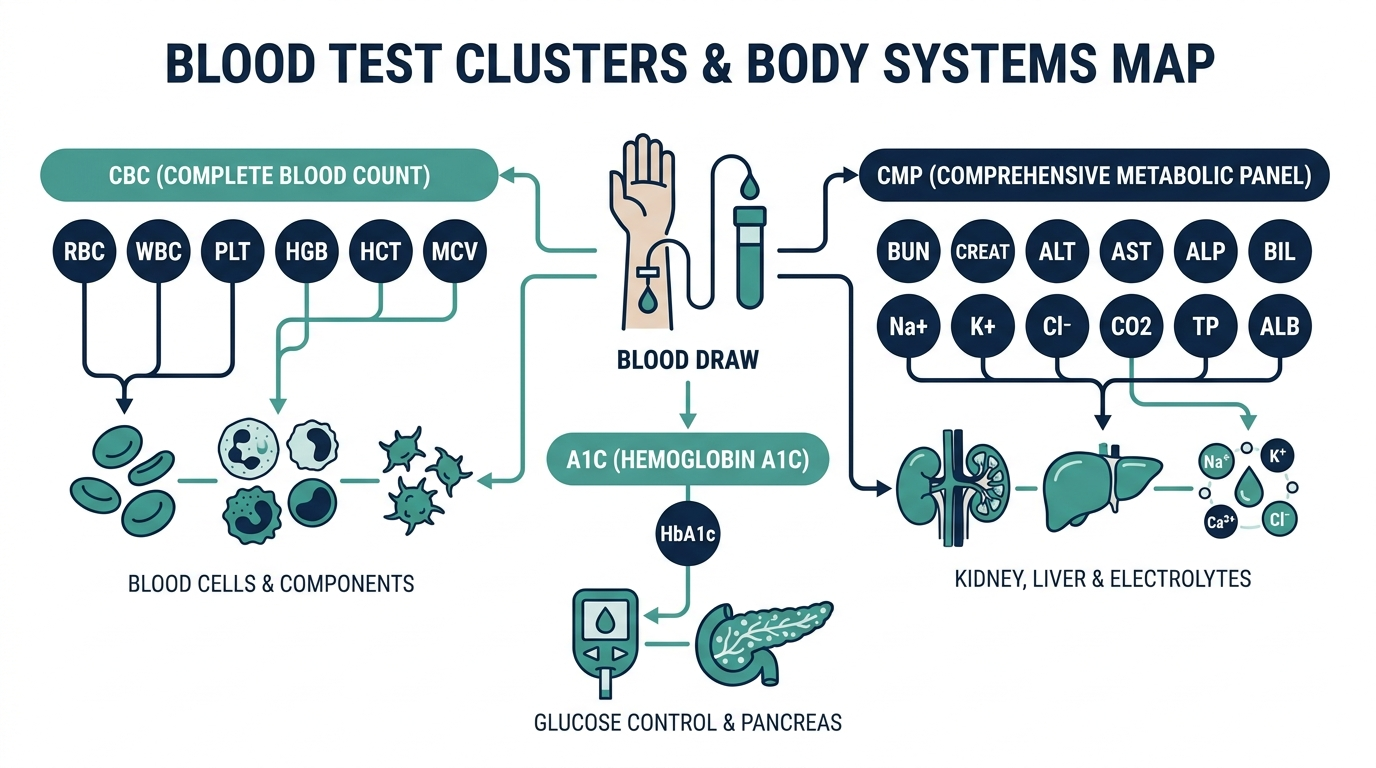
Blood test abbreviations are a shorthand language labs use so a printout fits on one page instead of ten. Every line on your report is either a panel (a bundle of tests ordered together) or a single analyte inside that panel. CBC and CMP are panels. Sodium, ALT, and hemoglobin are analytes inside them. Once you know which is which, the report stops looking like alphabet soup.
CBC, CMP, A1C: once you know the codes, why not see all of them and 100+ more markers in one panel? One at-home Superpower draw checks 100+ biomarkers, physician-reviewed.
Here is the insider part most people miss: the abbreviation tells you what was measured, but the little H or L flag in the next column tells you whether it landed outside the lab’s reference range. That range is not a verdict. It is a statistical band built from a healthy reference population, usually the middle 95 percent. By definition, about 1 in 20 perfectly healthy people will flag on any single marker. A lone star next to one value is rarely an emergency. A pattern across several related markers is what a clinician actually reads.
It also helps to know how the codes get on the page in the first place. Each test has a standardized LOINC code in the lab’s system, and the report just prints a friendly abbreviation next to it. That standardization is why CBC means the same thing at Quest as it does at Labcorp, even though the two companies format their printouts differently. The abbreviation is the public face of a much longer machine-readable name.
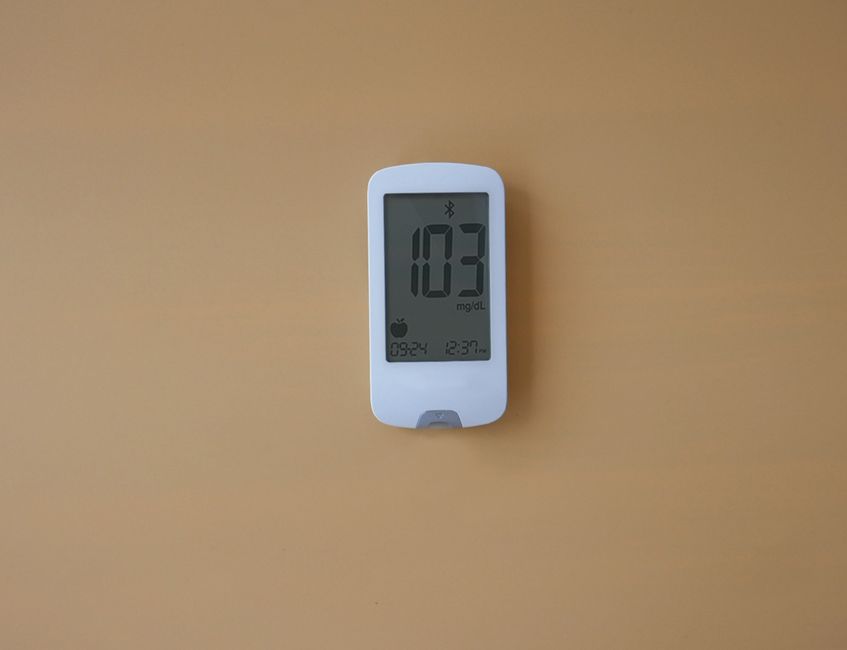
How to read any line on your report in 20 seconds
Every result line has the same four parts, and reading them in order tells you everything the abbreviation alone cannot. Go left to right.
- The abbreviation or test name. This is the what. ALT, HGB, GLU. If you do not recognize it, the full name is almost always printed right beside it in smaller type.
- Your value. The actual number the analyzer measured, like 142 or 6.1.
- The flag. A letter or word that compares your value to the range. H means high, L means low, a blank or N means in range. Some labs use HH or LL or a critical asterisk for results far enough outside the band to need a phone call.
- The reference range and units. Something like 135 to 145 mmol/L. The units matter, because the same marker can be reported on two different scales and the numbers will not match if you compare across labs.
Read those four parts together and a flagged value tells its own story. A sodium of 133 with a range of 135 to 145 is technically low but only two points under the floor, which is a shrug. A potassium of 6.8 with a range of 3.5 to 5.0 is a number a lab will call your doctor about within the hour. Same letter L or H, completely different urgency, and the units and the size of the gap are what tell them apart.
The full blood test abbreviations glossary, grouped by panel
This is the master list. The codes below cover the vast majority of what shows up on a standard annual draw. We grouped them by the panel they live in so you can find any abbreviation fast, and added a typical adult reference range so you can sanity check your own report. Ranges shift slightly by lab, age, sex, and pregnancy, so always defer to the range printed on your own page.
CBC: complete blood count abbreviations
The CBC is the most ordered blood test in the country, and it counts and sizes the three cell lines floating in your blood. It is the panel that screens for anemia, infection, and clotting problems in one draw.
| Code | Full name | What it measures | Typical adult range |
|---|---|---|---|
| WBC | White blood cell count | Immune cells, screens for infection and inflammation | 4.0 to 11.0 x10^9/L |
| RBC | Red blood cell count | Oxygen-carrying cells | 4.2 to 5.9 x10^12/L |
| HGB or Hb | Hemoglobin | Oxygen-carrying protein, key anemia marker | 12 to 17 g/dL |
| HCT | Hematocrit | Percent of blood that is red cells | 36 to 50 percent |
| PLT | Platelet count | Cell fragments that form clots | 150 to 400 x10^9/L |
| MCV | Mean corpuscular volume | Average red cell size | 80 to 100 fL |
| MCH | Mean corpuscular hemoglobin | Average hemoglobin per red cell | 27 to 33 pg |
| MCHC | Mean corpuscular hemoglobin concentration | Hemoglobin concentration in red cells | 32 to 36 g/dL |
| RDW | Red cell distribution width | How much red cell size varies | 11.5 to 14.5 percent |
| MPV | Mean platelet volume | Average platelet size | 7.5 to 11.5 fL |
| NEUT | Neutrophils | White cells that fight bacteria | 40 to 70 percent of WBC |
| LYMPH | Lymphocytes | White cells that fight viruses | 20 to 40 percent of WBC |
| MONO | Monocytes | White cells that clear debris | 2 to 10 percent of WBC |
| EOS | Eosinophils | White cells tied to allergy and parasites | 1 to 6 percent of WBC |
| BASO | Basophils | White cells in allergic response | Under 2 percent of WBC |
The last five rows are the CBC differential, often labeled CBC w/ diff on the order. The differential splits your white cells into their five types, which is how a clinician tells a bacterial infection (neutrophils up) from a viral one (lymphocytes up) from an allergic or parasitic process (eosinophils up). If your report shows only a flat WBC with no breakdown, the differential was not ordered.
CMP and BMP: metabolic panel abbreviations
The CMP is the 14-test panel that checks your blood sugar, electrolytes, kidneys, and liver in a single tube. The BMP is its shorter 8-test sibling that drops the liver enzymes and proteins. If you are fasting for labs, this is usually why, because glucose reads higher after a meal.
| Code | Full name | What it measures | Typical adult range |
|---|---|---|---|
| GLU | Glucose | Blood sugar at the moment of the draw | 70 to 99 mg/dL fasting |
| BUN | Blood urea nitrogen | Kidney filtering and hydration | 7 to 20 mg/dL |
| CRE or CREA | Creatinine | Kidney function | 0.6 to 1.3 mg/dL |
| eGFR | Estimated glomerular filtration rate | Calculated kidney filtering rate | Over 60 mL/min |
| NA | Sodium | Fluid and electrolyte balance | 135 to 145 mmol/L |
| K | Potassium | Nerve and heart rhythm function | 3.5 to 5.0 mmol/L |
| CL | Chloride | Electrolyte and acid balance | 98 to 107 mmol/L |
| CO2 | Carbon dioxide (bicarbonate) | Acid-base balance | 22 to 29 mmol/L |
| CA | Calcium | Bone, nerve, and muscle function | 8.5 to 10.2 mg/dL |
| ALT or SGPT | Alanine aminotransferase | Liver cell health | 7 to 56 U/L |
| AST or SGOT | Aspartate aminotransferase | Liver and muscle | 10 to 40 U/L |
| ALP | Alkaline phosphatase | Liver and bone | 44 to 147 U/L |
| TBIL | Total bilirubin | Liver and red cell breakdown | 0.1 to 1.2 mg/dL |
| TP | Total protein | Albumin plus globulins | 6.0 to 8.3 g/dL |
| ALB | Albumin | Liver protein production and nutrition | 3.5 to 5.0 g/dL |
A few liver codes travel together. AGAP or anion gap is a calculated electrolyte value some panels add to flag acid-base problems. GGT (gamma-glutamyl transferase) is not in the standard CMP but gets added when a doctor wants to know whether an ALP elevation is coming from the liver or the bone, since GGT rises with liver and bile duct issues but not bone. If you want the deeper read on what each line tells a doctor, this overlaps heavily with What Do They Test For in Routine Bloodwork? and the breakdown in a complete blood panel.
Lipid panel: cholesterol abbreviations
The lipid panel measures the fats in your blood and is the core heart-risk screen on an annual physical. Triglycerides are the one result here that truly needs a fast, because blood fat spikes for hours after a meal.
| Code | Full name | What it measures | Typical adult target |
|---|---|---|---|
| CHOL or TC | Total cholesterol | All cholesterol combined | Under 200 mg/dL |
| LDL or LDL-C | Low-density lipoprotein | The cholesterol that drives plaque | Under 100 mg/dL |
| HDL or HDL-C | High-density lipoprotein | The protective cholesterol | Over 40 men, over 50 women |
| TG or TRIG | Triglycerides | Blood fat that spikes after eating | Under 150 mg/dL |
| VLDL | Very-low-density lipoprotein | Triglyceride-rich particles, usually calculated | 2 to 30 mg/dL |
| Non-HDL | Non-HDL cholesterol | Total minus HDL, all the bad fractions | Under 130 mg/dL |
| CHOL/HDL | Cholesterol to HDL ratio | A quick risk ratio | Under 5, ideally under 3.5 |
| ApoB | Apolipoprotein B | Counts the actual plaque-driving particles | Under 90 mg/dL |
| Lp(a) | Lipoprotein little a | A genetic, lifelong heart-risk particle | Under 30 mg/dL or 75 nmol/L |
Two of these are newer and worth a sentence. ApoB counts the number of particles driving heart risk rather than the cholesterol they carry, which makes it a sharper signal than LDL alone for many people. Lp(a) is genetic, set near birth, and only needs checking once in a lifetime, but a high reading meaningfully raises risk and explains some early heart disease that LDL alone misses.
Glucose and diabetes abbreviations
A1C is the one worth memorizing. It measures the percentage of your hemoglobin coated in sugar, which reflects your average glucose over roughly three months, so it cannot be gamed by skipping breakfast.
| Code | Full name | What it measures | Typical adult range |
|---|---|---|---|
| A1C or HbA1c | Glycated hemoglobin | Three-month average blood sugar | Under 5.7 percent |
| GLU or FBG | Fasting blood glucose | Sugar after an overnight fast | 70 to 99 mg/dL |
| eAG | Estimated average glucose | A1C translated into mg/dL | Under 117 mg/dL |
| OGTT | Oral glucose tolerance test | Sugar handling after a sweet drink | Under 140 mg/dL at 2 hr |
| C-pep | C-peptide | How much insulin you make | 0.5 to 2.0 ng/mL fasting |
| HOMA-IR | Insulin resistance index | Calculated insulin resistance | Under 2.0 |
The thresholds for A1C are worth committing to memory because they are the same nationwide: under 5.7 percent is typical, 5.7 to 6.4 is prediabetes, and 6.5 and above suggests diabetes. A fasting glucose of 100 to 125 mg/dL is the prediabetes band, and 126 or higher on two occasions points to diabetes.
Thyroid abbreviations
TSH is the front-line thyroid check, and counterintuitively a high TSH points to an underactive thyroid, not an overactive one, because TSH is the brain shouting at a sluggish gland to work harder.
| Code | Full name | What it measures | Typical adult range |
|---|---|---|---|
| TSH | Thyroid-stimulating hormone | Front-line thyroid screen | 0.4 to 4.0 mIU/L |
| FT4 or Free T4 | Free thyroxine | Main circulating thyroid hormone | 0.8 to 1.8 ng/dL |
| FT3 or Free T3 | Free triiodothyronine | The active thyroid hormone | 2.3 to 4.2 pg/mL |
| TPO Ab | Thyroid peroxidase antibody | Autoimmune thyroid marker (Hashimoto) | Under 35 IU/mL |
| TG Ab | Thyroglobulin antibody | Second autoimmune thyroid marker | Under 20 IU/mL |
Iron, vitamins, and inflammation abbreviations
These standalone markers round out a thorough annual draw and explain a lot of fatigue, hair loss, and brain fog that a basic CBC can miss.
| Code | Full name | What it measures | Typical adult range |
|---|---|---|---|
| FERR | Ferritin | Stored iron, the truest iron-deficiency marker | 30 to 300 ng/mL |
| Fe | Serum iron | Iron circulating right now | 60 to 170 mcg/dL |
| TIBC | Total iron-binding capacity | Capacity to carry iron | 240 to 450 mcg/dL |
| TSAT | Transferrin saturation | Percent of iron capacity filled | 20 to 50 percent |
| B12 | Vitamin B12 (cobalamin) | Nerve and red cell health | 200 to 900 pg/mL |
| 25-OH D | 25-hydroxy vitamin D | Vitamin D status | 30 to 100 ng/mL |
| hs-CRP | High-sensitivity C-reactive protein | Low-grade inflammation tied to heart risk | Under 1.0 mg/L low risk |
| ESR | Erythrocyte sedimentation rate | General inflammation marker | Under 20 mm/hr |
| Hcy | Homocysteine | Amino acid tied to heart and B-vitamin status | Under 15 micromol/L |
Ferritin deserves a flag of its own. It is the single best marker of iron stores, and it can read low while your hemoglobin still looks normal, which is exactly the stage where iron deficiency is easiest to fix. One catch worth knowing: ferritin also rises with inflammation, so a normal ferritin in someone who is sick can hide a real iron deficiency. That is why doctors often read ferritin alongside hs-CRP.
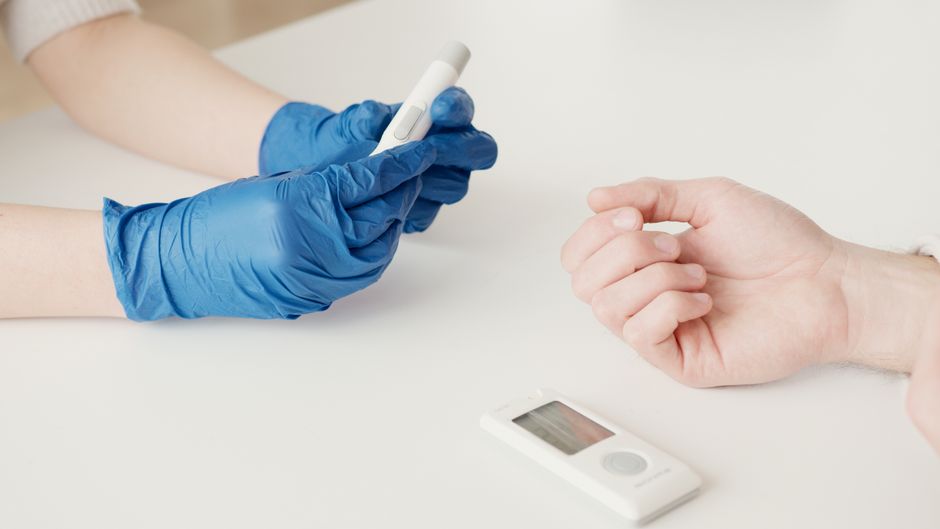
The abbreviations actually worth watching
A full report can run 40 lines, but a short list of markers does most of the work for everyday health. If you only track a handful year over year, these carry the most signal for the most people.
- A1C is the cleanest single read on metabolic health and cannot be gamed by a one-day diet change.
- ApoB or LDL is the heart-risk number that responds to diet, exercise, and medication, so it is the one you can actually move.
- hs-CRP catches silent inflammation that a cholesterol number alone misses.
- Ferritin finds iron deficiency early, before hemoglobin drops and before you feel wiped out.
- eGFR and creatinine together track kidney function, which declines quietly and rewards early attention.
- TSH is the cheapest way to catch a thyroid drifting off course, a common and very treatable cause of fatigue and weight change.
- 25-OH vitamin D is low in a large share of adults and easy to correct once you see the number.
Tracking the same markers over time, which is the point of the biomarkers worth tracking, turns a one-off snapshot into a trend you can act on.
The simplest way to actually get this done
Superpower is a full-body lab membership that runs 100+ biomarkers, has each result reviewed by a doctor, and tracks your numbers year over year (about $199/year). It is what we point readers to when they would rather get one clean, complete draw than chase single tests one at a time. Here is superpower reviewed in full.
What does abnormal mean in a blood test?
An abnormal flag means one of your results fell outside the lab’s reference range, not that something is wrong with you. The H, L, or abnormal label is the lab software comparing your number to the expected band and marking the ones that sit above or below it. That is the whole mechanism, and understanding it kills a lot of needless panic.
Three things to remember when you see abnormal on test results. First, reference ranges are population averages, so a result just past the edge is often clinically meaningless. Second, ranges vary by lab, by age, and by sex, which is why your number can flag at one lab and read normal at another. Third, abnormal without context says nothing about how far off or how urgent. A potassium that is barely low reads very differently from one that is dangerously low. When a result is flagged, the smart move is to look at the trend across past draws and talk to a clinician about your results rather than self-diagnose from a single line.
Some reports add a second tier of flags for results far enough out to need action now. A critical or panic value, sometimes shown as HH or LL or a starred line, is one the lab is required to phone to the ordering provider, often within the hour, because it can be immediately dangerous. A potassium over 6.0, a glucose over 500, or a platelet count under 20 are classic examples. If you see a plain H or L, it is informational. If you see a double flag or get a call from the office, that is the system working as designed.

Common mistakes people make reading their report
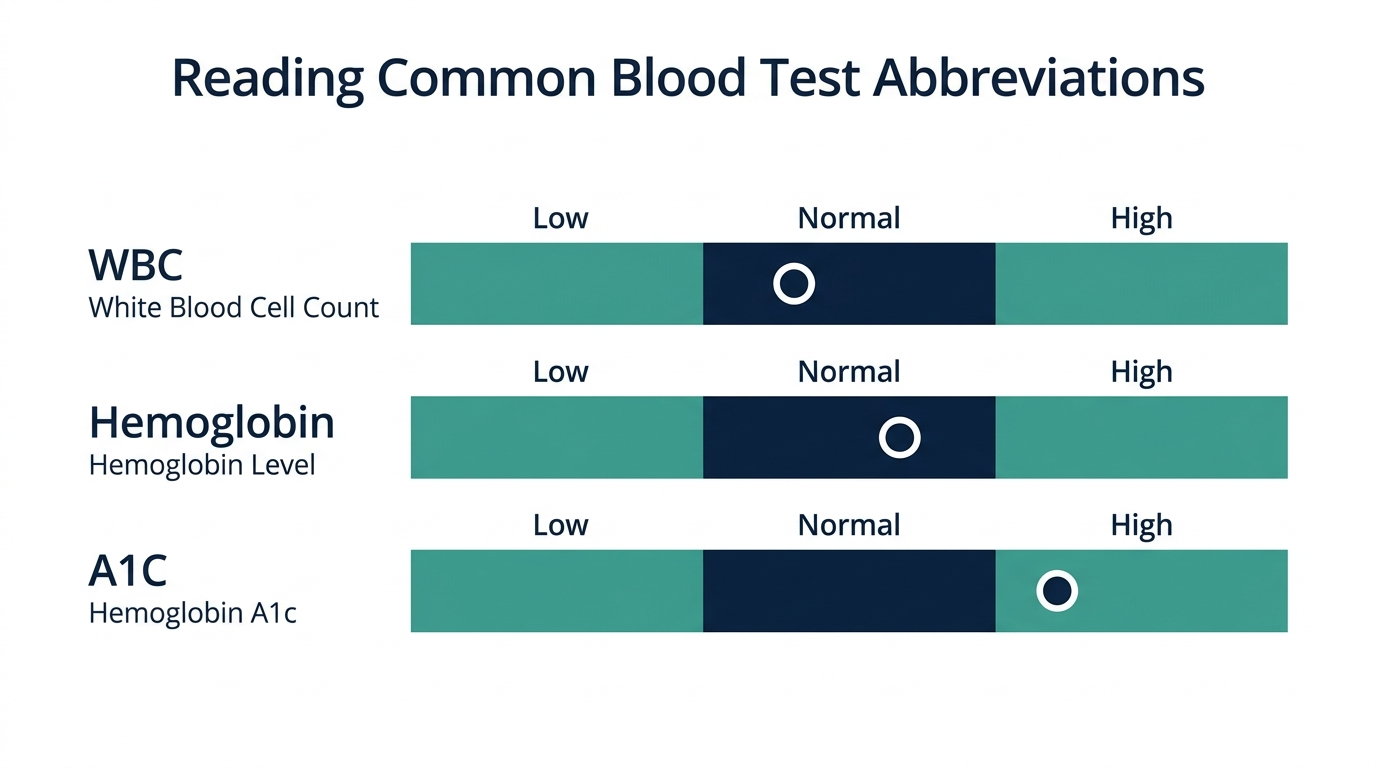
Most lab-report anxiety comes from a few predictable misreadings. Knowing them ahead of time saves a lot of late-night searching.
- Treating one flag as a diagnosis. A single value just outside the range is usually noise, not news. Clinicians read clusters of related markers, not lone stars.
- Comparing across labs without checking units. The same marker can be reported on different scales. A vitamin D of 75 means something very different in nmol/L than in ng/mL. Always match the units before you panic about a change.
- Ignoring fasting status. A glucose or triglyceride drawn after lunch will read high and mean nothing. Check whether the draw was fasting before you read those two lines.
- Reading TSH backward. High TSH points to an underactive thyroid, not an overactive one. The intuitive direction is the wrong one.
- Assuming a normal CBC rules out iron deficiency. Ferritin can be low while hemoglobin is still normal. A clean CBC does not clear your iron stores.
- Panicking over a high MCV or RDW alone. These red cell indices are clues, not conclusions. They mean something only next to hemoglobin and your other counts.
How to read your whole report in two minutes
Start by sorting every line into a panel, because the codes cluster. Anything under CBC is a blood cell. Anything under CMP is sugar, an electrolyte, a kidney marker, or a liver marker. Standalone lines like A1C, the lipid panel, and TSH sit on their own. Once the report is grouped, scan only the flagged values, then ask two questions: how far outside the range is it, and is it part of a cluster?
Here is a worked example. Say your report shows hemoglobin at 10.5 (low), MCV at 72 (low), RDW at 16.5 (high), and ferritin at 8 (low). Read alone, each is just a flag. Read together, they tell one clean story: small red cells, varied in size, with empty iron stores and a low hemoglobin. That is the textbook picture of iron-deficiency anemia, and no single line could have told you that. Now flip it. Hemoglobin 11 (low), MCV 110 (high), B12 at 180 (low). Large cells plus low B12 points the opposite way, toward a B12 or folate problem. Same low hemoglobin, completely different cause, and only the cluster reveals which.
That clustering is exactly how clinicians read reports, and it is why a membership that keeps your full panel in one place year over year is more useful than scattered one-off tests. If you are curious what a comprehensive version covers, see what Superpower tests for and how much Superpower costs before you decide whether one annual draw beats piecemeal testing.
Who should look at which abbreviations
Not every code matters equally for every person. A little targeting saves money and worry.
- Generally healthy adults get the most from CBC, CMP, a lipid panel, A1C, and TSH once a year. That covers blood, metabolism, heart, sugar, and thyroid in a few tubes.
- Anyone with a family history of heart disease should add ApoB and Lp(a), since LDL alone can miss real risk and Lp(a) is genetic and only needs checking once.
- People who are tired, dizzy, or losing hair should push for ferritin, B12, and vitamin D, not just a basic CBC, because those deficiencies hide behind normal counts.
- Adults over 50 or with high blood pressure or diabetes should watch eGFR and creatinine closely, because kidney decline is silent until it is advanced.
- Pregnant patients see shifted ranges on nearly every marker, so a flag during pregnancy should always be read against pregnancy-specific ranges, not the standard adult band.
Edge cases: when the abbreviations behave differently
A few situations change how the same codes read, and they trip people up because the printout looks normal but the interpretation is not.
- Children and infants have their own reference ranges for almost every marker. A hemoglobin or alkaline phosphatase that flags high in an adult can be perfectly normal in a growing child, because growing bone pours out ALP.
- Older adults often run a naturally lower eGFR and a slightly different CBC, so age-adjusted ranges matter. A good report applies them automatically, but not all do.
- Hemolyzed samples happen when red cells break during a rough draw. They falsely raise potassium and a few other values, which is why a wildly high potassium with no symptoms often just means a redraw, not a crisis.
- Recent intense exercise can elevate AST, ALT, and creatinine for a day or two because muscle leaks those into the blood. A marathon the day before labs can fake a liver or kidney flag.
- Acute illness raises inflammatory markers like CRP and ferritin and can temporarily skew a CBC differential. Drawing labs in the middle of a cold gives a snapshot of the cold, not your baseline.
Don’t just read about your health, track it.
A single result is a snapshot. Superpower re-tests 100+ markers over time so you can watch them move as you change sleep, food, and training.
FAQ
What does RDW mean in a health test?
RDW stands for red cell distribution width, a measure of how much your red blood cells vary in size. A high RDW often appears before hemoglobin drops, which makes it an early hint of iron, B12, or folate issues. On its own it is just a clue, so clinicians read it alongside MCV and hemoglobin.
What does it mean when blood work is abnormal?
It means at least one result landed outside the lab’s reference range and got flagged H or L. It is not a diagnosis. Because ranges cover only the middle 95 percent of a healthy population, even healthy people commonly flag on one marker, so the size of the gap and the overall pattern matter far more than a single star.
What does moderate mean in a health test?
On many qualitative results, labs grade findings as none, trace, mild, moderate, or marked instead of a number. Moderate sits in the middle, more than a faint trace but short of heavy. It is a graded estimate, not a precise count, so interpret it in the context of your symptoms and other results.
Do all labs use the same blood test abbreviations?
Mostly, but not always. Core codes like CBC, CMP, A1C, ALT, and TSH are near universal. Some labs swap notation, writing Hb instead of HGB or CREA instead of CRE, and reference ranges differ between labs. When in doubt, the full marker name and units are printed next to the code.
What is the difference between CBC and CMP?
A CBC counts and sizes your blood cells, the red cells, white cells, and platelets, so it screens for anemia, infection, and clotting. A CMP measures the chemistry in your blood, the sugar, electrolytes, kidney markers, and liver enzymes. They answer completely different questions, which is why most annual physicals order both in the same draw.
What does H or L mean next to my result?
H means the value is above the lab’s reference range and L means it is below. A blank or N means the result is in range. Some labs add a stronger flag like HH, LL, or a starred critical value for results far enough outside the band to need urgent attention, and those are the ones a lab will phone to your doctor.
Why does my report say to fast for some tests but not others?
Fasting matters for glucose and triglycerides because both rise sharply for hours after a meal, so an unfasted draw reads falsely high. It does not matter for A1C, which reflects three months of average sugar, or for a CBC, a TSH, or most CMP electrolytes. If your order mixes fasting and non-fasting tests, you fast for the strictest one, which is usually the lipid panel or glucose.
Which blood test abbreviations should I actually track over time?
For most people the highest-signal markers are A1C, ApoB or LDL, hs-CRP, ferritin, eGFR with creatinine, TSH, and vitamin D. Together they cover metabolic health, heart risk, inflammation, iron, kidney function, and thyroid. Tracking the same handful year over year turns a single confusing report into a trend you can read and act on.
Can I interpret my blood test abbreviations without a doctor?
You can absolutely learn what each abbreviation measures and whether a value is flagged, which is what this guide is for. What a layperson should not do is diagnose from a single flagged line, because reference ranges are statistical, results cluster, and context like fasting, illness, and medications changes everything. Use the abbreviations to understand your report, then bring any flagged pattern to a clinician.
Vital Signs Today may earn a commission if you buy through links on this page. It does not affect our editorial assessments.