
Last updated 7 August 2026. Educational content, not medical advice. Tesamorelin (Egrifta SV) is an FDA-approved prescription medication. All off-label use in non-HIV adults requires supervision by a licensed clinician. Talk to your provider before starting, adjusting, or stopping any protocol.
Short answer: The FDA-approved dose is 1.4 mg of Egrifta SV subcutaneously once daily, injected into the abdomen, rotating sites each day. Inject in the evening on an empty stomach (at least two hours after your last meal). A prescribing physician sets and monitors your dose through IGF-1 blood draws at baseline, six to eight weeks, and 24 weeks. Compounded tesamorelin via a telehealth clinic typically runs $250 to $500 per month and requires a clinical intake before any script is written.
Tesamorelin dosing requires clinician oversight, so wouldn’t a full baseline panel make that conversation sharper? One at-home Superpower draw checks 100+ biomarkers, physician-reviewed.
Everything below is what a responsible provider covers in a real intake, and what most “protocol guides” online quietly leave out.
Why is tesamorelin different from every other peptide in this category?
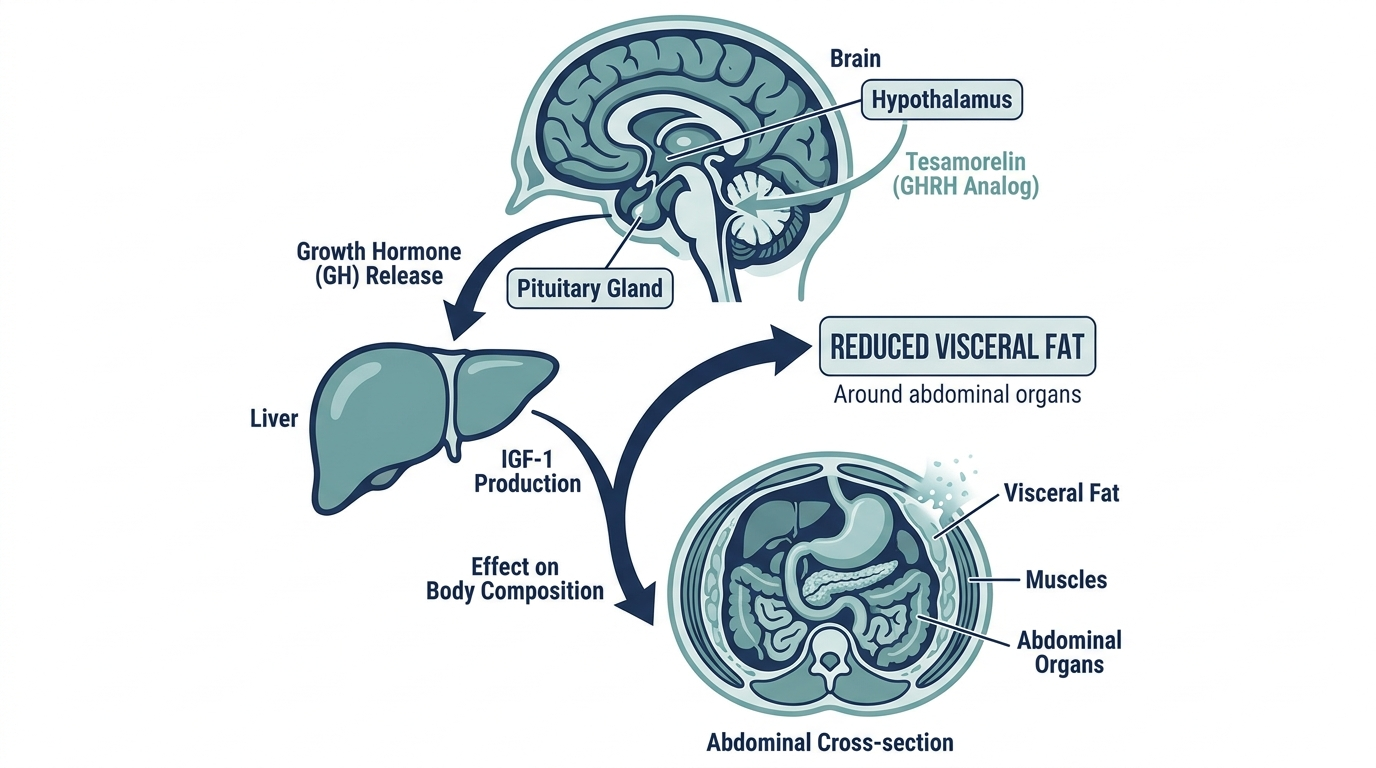
Most growth hormone-releasing peptides you will read about online sit in a grey zone: sold for research, not approved for human use, compounded from sources you cannot verify. Tesamorelin is the exception. It has been FDA-approved since 2010 for the reduction of excess abdominal fat in adults with HIV-associated lipodystrophy, making it the only GHRH analog with a full safety and efficacy dataset from Phase III trials. That is a meaningful distinction, not a marketing point.
In March 2025, the FDA approved Egrifta WR (tesamorelin F8), a weekly-reconstitution formulation that became commercially available in September 2025. The same molecule, the same mechanism, the same indication, but now reconstituted once a week instead of daily, which reduces handling complexity for patients doing self-injection. The pharmacokinetic data shows bioequivalence to the original F1 formulation.
The mechanism is what makes it interesting beyond the HIV indication. Tesamorelin is a 44-amino-acid synthetic analog of endogenous GHRH, with a single structural modification at the N-terminus: a trans-3-hexenoic acid group that blocks dipeptidyl peptidase IV (DPP-4) from cleaving the molecule. That modification extends the half-life enough for once-daily dosing, while still binding the GHRH receptor on pituitary somatotroph cells with the same specificity as native GHRH.
The result is pulsatile growth hormone secretion, not the flat sustained elevation you get from injecting exogenous synthetic HGH. The body’s somatostatin feedback loop stays intact. When GH rises, somatostatin rises to bring it back down. That preserved regulatory architecture is why the Phase III trials showed fasting glucose remaining stable and HbA1c unchanged despite meaningful IGF-1 elevation.
Personally, I consider this the single most important pharmacological distinction in the GH-secretagogue space. “Pulsatile” is not a buzzword; it is the difference between amplifying a natural rhythm and overriding the endocrine system with a firehose.
Full-body lab membership: 100+ biomarkers, doctor-reviewed, tracked over time.
What is the actual FDA-approved dose, and what do clinics use off-label?
The prescribing information for Egrifta SV specifies 2 mg subcutaneously once daily. The Egrifta WR formulation delivers an equivalent 2 mg daily dose from a vial reconstituted once weekly rather than daily. Both figures come from the same Phase III pivotal trials in HIV-infected patients with excess abdominal fat.
Off-label, you will see two modifications in telehealth practice:
1 mg daily: Many compounding clinics start non-HIV patients at 1 mg rather than 2 mg, citing a more conservative IGF-1 target for general optimization versus treating established lipodystrophy. The cognitive function trial referenced later in this article used 1 mg daily, as did much of the off-label bodyweight and recovery literature. This is not a lower-efficacy dose in non-HIV adults; it is a more conservative IGF-1 target.
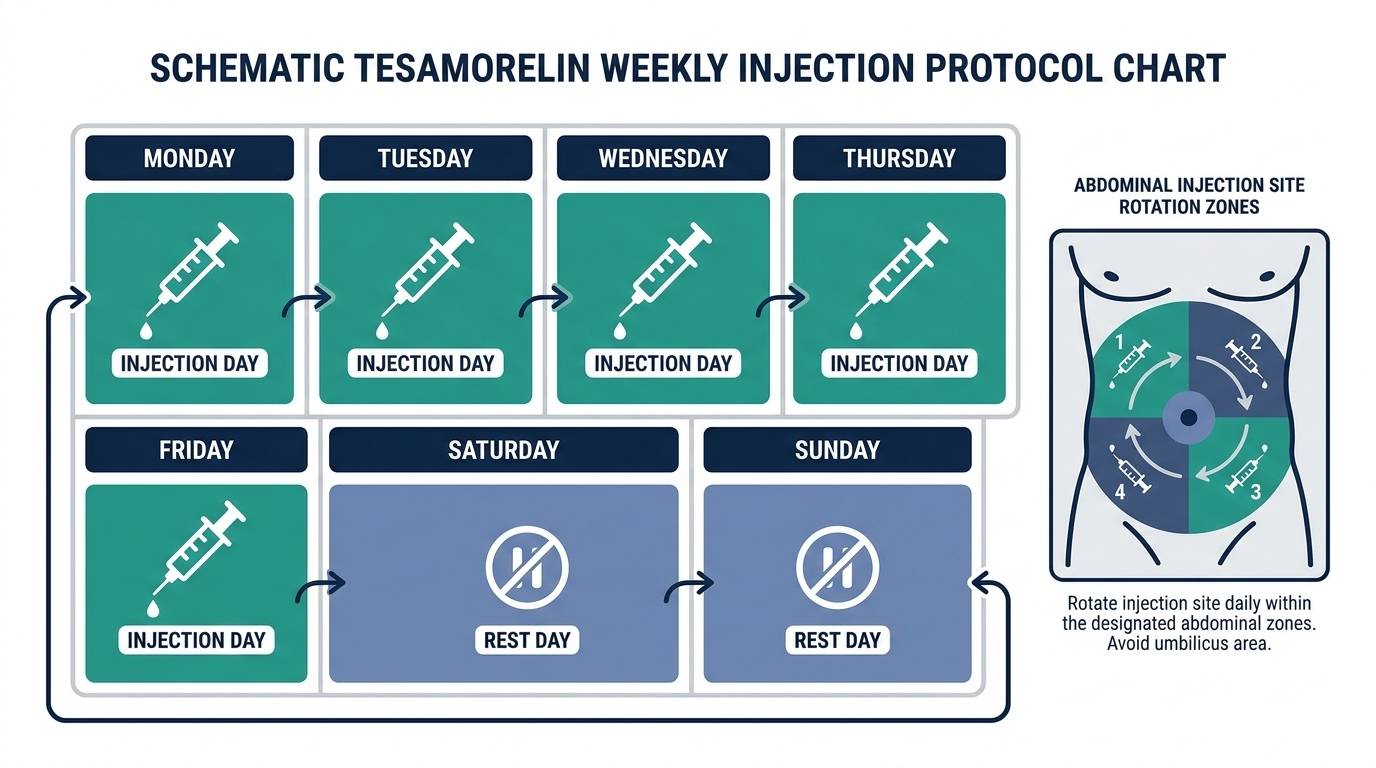
5-on/2-off weekly cycling: Some practitioners prefer five injections per week rather than seven continuous days, on the theory that two rest days per week reduce pituitary receptor downregulation over long cycles. The clinical evidence base for or against this frequency is less robust than for sermorelin, since the FDA approval used daily administration. Your provider’s preference here will vary.
Do not believe forums that suggest “more is better” with GHRH peptides. Above the therapeutic range, you are not amplifying fat loss; you are pushing IGF-1 above the age-adjusted reference ceiling, which carries its own risk profile. A clinician who is not checking IGF-1 labs is not running a protocol, they are running an experiment.
When should you inject, and why does timing matter?
The bedtime window is not a minor convenience detail. It is mechanistically significant, for the same reason it is in any GHRH-class peptide protocol.
Your pituitary releases growth hormone in distinct pulses throughout the 24-hour cycle. The largest single pulse occurs during early slow-wave sleep, approximately 30 to 90 minutes after sleep onset. Somatostatin tone, the brake on GH secretion, drops during these sleep stages. Injecting tesamorelin 30 to 60 minutes before bed means you are delivering exogenous GHRH receptor stimulation precisely at the moment somatostatin resistance is lowest and the pituitary is primed to fire.
Dose it at noon into high somatostatin tone and you are fighting the body’s own brake system for the same receptor signal.
The second rule is fasted injection. Insulin and growth hormone are counter-regulatory: rising insulin suppresses the GH response to GHRH stimulation. The standard clinical window is at least two hours after your last meal, with 30 minutes of continued fasting after injection. A bedtime injection at 10 p.m. with dinner finished by 8 p.m. satisfies both rules cleanly.
This is worth flagging because it is the most common protocol error I see described in telehealth feedback threads: patients inject at the right time of night but had a late snack at 9 p.m. and wonder why their IGF-1 labs at eight weeks show minimal movement.
How do you actually inject tesamorelin?
This section is educational. Your prescribing provider and the pharmacist who dispenses your kit will walk you through the full procedure. What follows is what the procedure actually involves so you understand the process before your first dose arrives.
Tesamorelin is dispensed as a lyophilized (freeze-dried) powder that must be reconstituted with the diluent supplied in the kit. The Egrifta SV vial uses a daily reconstitution process. The newer Egrifta WR formulation is reconstituted once per week, which is a meaningful practical simplification for anyone who finds daily mixing finicky.
Reconstitution (Egrifta SV daily format):
1. Allow both vials (tesamorelin and diluent) to reach room temperature for 10 to 15 minutes.
2. Wipe both stoppers with a fresh alcohol swab.
3. Draw 2.1 mL of diluent into a syringe and inject it slowly down the inner wall of the tesamorelin vial, not directly onto the powder cake.
4. Roll the vial gently between your palms for 30 seconds to mix. Do not shake. Shaking degrades the peptide structure.
5. Inspect the reconstituted solution: it must be clear, colorless, and particle-free. Any cloudiness or particulates mean the vial should not be used.
6. Draw your prescribed dose immediately after reconstitution. Administer or discard within 3 hours if held at room temperature, or within 24 hours if immediately refrigerated after reconstitution.
Injection:
– Site: the abdomen only, as per the FDA-approved label. Rotate to a different spot each day within the abdomen. Stay at least two inches from the navel. Avoid any area with scars, bruises, or prior injection-site reactions.
– Needle: a 27 to 29 gauge, half-inch insulin syringe is standard. The shorter needle length is appropriate for subcutaneous (under-skin) injection, not intramuscular.
– Angle: pinch a skinfold at the chosen site. Insert the needle at 45 degrees if you are lean or at 90 degrees if there is adequate subcutaneous tissue. Release the skinfold, then inject slowly over 5 to 10 seconds.
– After: withdraw the needle and apply gentle pressure with a clean swab. Do not rub, which can cause the solution to spread unevenly and increase local irritation.
Storage: Unreconstituted vials are refrigerated at 36 to 46°F (2 to 8°C). Do not freeze. Keep away from light. Reconstituted solution is used immediately or held refrigerated and used within the same day.
What do the clinical trials actually show it does?
Tesamorelin’s evidence base is more solid than almost any compounded peptide you will encounter in a telehealth intake, because the Phase III data was submitted to the FDA.
Visceral fat reduction: The pooled Phase III pivotal trials (n=806 HIV-infected adults, 26 weeks) showed approximately 15.4% reduction in visceral adipose tissue versus placebo (p<0.001). CT imaging measured absolute VAT area decreases averaging 27.71 cm². Subcutaneous fat, the layer directly under the skin, was largely unaffected, which is the mechanistic signature of tesamorelin: it targets metabolically active visceral fat specifically, not total body fat.
Triglycerides: In the same pooled trials, triglycerides fell by a mean of 37 mg/dL in the tesamorelin group versus a 6 mg/dL increase in placebo (p<0.001). This is a clinically significant lipid improvement associated with cardiovascular risk reduction.
Liver fat (NAFLD data): A 2014 JAMA study (n=50) found hepatic fat fraction fell 2.9% absolute with tesamorelin versus a 0.9% increase with placebo (p=0.003). A 2019 Lancet HIV trial (n=61) showed liver fat fell 37% relatively, with 35% of tesamorelin-treated patients achieving NAFLD resolution versus 4% of placebo. For patients with established visceral fat accumulation and elevated liver fat, this is an outcome no diet or exercise study has matched in the same population.
Cognitive function: A 20-week randomized controlled trial (n=152, ages 55 to 87) enrolled both healthy older adults and adults with mild cognitive impairment, administering 1 mg of tesamorelin nightly via subcutaneous injection. The intent-to-treat analysis showed favorable cognitive effects (p=0.03); a completer analysis showed more robust benefit (p=0.002). Executive function, specifically Stroop color-word interference and task switching, improved significantly (p=0.005). Delayed verbal recall improved in adults with mild cognitive impairment. IGF-1 levels rose 117% but remained within physiological range. This was not an industry-sponsored study; it was published in the Archives of Neurology and funded through NIH mechanisms.
This cognition finding is the insider detail that most tesamorelin content online does not discuss, because it does not fit neatly into the “fat loss peptide” narrative the telehealth marketing machine has built around the compound. A GHRH analog improving executive function in adults aged 55 to 87 with a small daily dose and no serious adverse events is a finding worth understanding before you dismiss tesamorelin as only relevant if you have HIV.
How does tesamorelin compare to sermorelin and CJC-1295?
If you are evaluating which GHRH-pathway peptide belongs in a protocol, the comparison table below maps the practical differences. All three hit the same receptor, but the pharmacological engineering is different.
| Feature | Tesamorelin | Sermorelin | CJC-1295 (with DAC) |
|---|---|---|---|
| Molecule | Full 44-AA GHRH + N-terminal modification | First 29 AA of GHRH | Modified GHRH 1-29 with albumin-binding DAC |
| Half-life | ~26 minutes plasma; once-daily dosing via DPP-4 resistance | ~10 to 11 minutes; requires once-daily injection | Up to 1 to 2 weeks; allows once-weekly dosing |
| GH secretion pattern | Pulsatile (physiological) | Pulsatile (physiological) | Blunted pulsatility (sustained elevation) |
| FDA approval | Yes (HIV lipodystrophy, 2010; Egrifta WR 2025) | Yes (Geref Diagnostic, 1997; now off-label only) | No |
| Primary clinical evidence | Phase III RCT, n=806; JAMA, Lancet HIV | Off-label; older GH deficiency data | No Phase III data |
| Approved dose | 2 mg daily (Egrifta SV); Egrifta WR equivalent | 200 to 300 mcg daily (off-label) | No approved dose |
| Visceral fat specificity | Demonstrated in RCTs | Not documented as primary endpoint | Not documented |
| Typical monthly cost (telehealth) | $250 to $500 | $175 to $225 | $200 to $350 |
| Off-label availability | Yes, compounding clinics | Yes, widely available | Compounding; more restricted post-2024 |
The most important row is GH secretion pattern. CJC-1295 with DAC creates a sustained elevated GH state across the week because it binds albumin and releases slowly. That sounds appealing until you consider that the body’s somatostatin feedback system is designed to brake pulsatile signals, not a constant low-level wash of receptor activation. Sustained non-pulsatile GH elevation is pharmacologically closer to exogenous HGH than to what tesamorelin or sermorelin produce. Whether that matters for your specific goal depends on what your clinician is trying to accomplish.
Tesamorelin’s advantage over sermorelin is the full 44-amino-acid sequence. Sermorelin contains only the first 29 amino acids of GHRH. Whether those additional residues make a clinical difference in receptor binding and GH pulse amplitude is debated; the fact that tesamorelin was chosen for the pivotal FDA trials and sermorelin was not suggests the manufacturer and the FDA both thought it mattered.
What are the real side effects, and which ones require action?
The Phase III trials are the most reliable data source on adverse events, and they were conducted in HIV-positive adults, a population with a different baseline health profile than the typical off-label telehealth patient. Keep that context in mind when reading the percentages.
Common, manageable (from Phase III pooled data):
– Injection site reactions (redness, swelling, itching): occurred in 25 to 35% of participants. Rotating sites daily and staying out of previously reactive areas brings this number down substantially over time.
– Peripheral edema (fluid retention, typically in the lower legs): a known GH-axis effect, usually mild and transient in the first 4 to 6 weeks.
– Arthralgia (joint aches): reported in approximately 13% versus 7% placebo. Usually dose-responsive and resolves with dose reduction or discontinuation.
– Myalgia, paresthesia (tingling): less common, same pattern.
Metabolic (requires monitoring, not automatic discontinuation):
– IGF-1 elevation: expected and pharmacodynamic. The concern is sustained elevation above the age-adjusted reference ceiling, which carries theoretical associations with growth-dependent cancers in large population studies. Your provider should be checking IGF-1 at baseline, 6 to 8 weeks, and 24 weeks. If it clears the top of the normal range, dose reduction or a protocol break is the standard response.
– Fasting glucose rise: GH is counter-regulatory to insulin. In the Phase III trials, fasting glucose showed a modest mean increase, but HbA1c did not worsen significantly over 26 weeks. A 12-week study in type 2 diabetes patients (n=53) found no significant between-group differences in relative insulin response or fasting glucose at study end. Patients with pre-existing diabetes or impaired glucose tolerance warrant closer glycemic monitoring and an explicit benefit-risk discussion with their provider.
Contraindications (do not start or stop immediately):
– Active malignancy of any kind: GH-axis stimulation is contraindicated in the presence of cancer because of theoretical growth promotion effects.
– Pituitary gland disorders (tumors, damage, surgery): tesamorelin works by stimulating the pituitary, so a structurally or functionally compromised pituitary will not respond appropriately.
– Pregnancy: contraindicated.
– Severe hypersensitivity to mannitol (used as an excipient in the formulation).
The question I would want answered before any start: “Has anyone checked my baseline IGF-1 and fasting glucose?” If the answer is no, the protocol is not complete.
Telehealth GLP-1 program with provider visits and pharmacy coordination.
Who should not be taking tesamorelin, and what myth needs correcting?
The clinical contraindications above are the hard stops. But there are softer “wrong fit” scenarios that come up more often in practice.
Active malignancy is the absolute contraindication, and it is not theoretical. The FDA labeling carries this warning specifically because IGF-1 is a growth factor. This is not a reason to avoid tesamorelin if you have no cancer history and clean screening; it is a reason to ensure your provider has reviewed your history before prescribing.
The “bigger dose, faster results” myth: Multiple forum threads push 2 mg for non-HIV adults on the basis that the FDA-approved dose is 2 mg, so why go lower? The reasoning fails on mechanism. The approved dose was calibrated for established HIV-associated lipodystrophy, a condition producing significantly elevated visceral fat versus baseline. A healthy adult in an optimization context has a different IGF-1 starting point and a different therapeutic window. Starting at 1 mg and titrating up based on IGF-1 labs is conservative medicine, not “underdosing.”
The “take it as long as you want” myth: Visceral fat reduction from tesamorelin reverses toward baseline after discontinuation. This has been documented in the Phase III continuation and discontinuation arms. Ongoing therapy is required for sustained benefit, which is a financial and practical consideration that many clinic marketing materials glide past. Tesamorelin is not a reset; it is an ongoing intervention.
Who is actually a strong candidate: Adults with documented visceral adiposity, elevated triglycerides, or metabolic syndrome markers who have not achieved meaningful visceral fat reduction through diet and exercise alone are the population closest to the enrolled trial population. Older adults with declining IGF-1 and concerns about cognitive aging are a second group with published evidence behind them, even if that evidence base is smaller. The off-label anti-aging aesthetic patient who wants “GH secretagogue therapy” without documented clinical need is the group where the benefit-risk math is least clear.
What does it cost, and what does the price actually include?
Pricing in 2026 breaks into three tiers depending on source and formulation:
- Brand-name Egrifta SV (Theratechnologies): The list price runs approximately $2,400 to $2,800 per month. Insurance covers it for the HIV lipodystrophy indication only, and coverage requires prior authorization with documented HIV status and lab evidence of lipodystrophy. Off-label use is not covered.
- Compounded tesamorelin via telehealth clinic: The practical price for most off-label users. 503A compounding pharmacies produce tesamorelin with a valid prescription; pricing ranges from $250 to $500 per month depending on dose and the specific clinic’s pharmacy sourcing. Some clinics include the intake consultation and lab review in a monthly program fee; others bill those separately. Ask explicitly what is included.
- Research-use-only vendors: Tesamorelin shows up on grey-market research-chemical sites at $40 to $100 per vial. As noted below, this is a separate and significantly higher-risk category.
One line that should not be buried: compounded tesamorelin is a biologic, not a small molecule. The FDA classifies biologics differently from conventional drugs under the compounding statute, and the permitted compounding pathways are narrower. Ask the clinic which specific 503A pharmacy is filling your prescription and verify that pharmacy’s license on your state board of pharmacy website. This is not optional caution; it is the minimum due diligence for a prescription biologic.
The research-vendor route carries all the risks described in the research-peptide market broadly: no verified identity, no verified purity, no clinician monitoring your IGF-1, and no accountability if the vial contains something other than what the label claims. Given that tesamorelin is accessible through a licensed clinical route at a reasonable compounded price, there is less justification for the grey-market path here than with peptides that have no approved form.
What does a full tesamorelin cycle actually look like?
A responsible telehealth protocol for off-label tesamorelin in a non-HIV adult generally follows this structure, though your provider will customize based on your labs and goals:
Month 0 (pre-start):
– Baseline labs: IGF-1, fasting glucose, HbA1c, lipid panel, metabolic panel, complete blood count.
– Clinic intake: medical history, review of contraindications, discussion of realistic expectations and reversibility.
– Prescription written for compounded tesamorelin at 1 to 2 mg daily.
Weeks 1 to 4 (initiation):
– Injection site reactions are most common in this window. Rotating sites daily and avoiding areas with prior reactions minimizes persistence.
– Peripheral edema may appear in weeks 2 to 4. It typically resolves as the body equilibrates to GH elevation.
– Evening fasted injection, 30 to 60 minutes before bed. No late snacks.
Week 6 to 8 (first check-in):
– IGF-1 recheck is the primary pharmacodynamic marker. Target is the upper half of the age-adjusted reference range, not above it.
– Fasting glucose recheck if baseline was borderline.
– If IGF-1 is subtherapeutic (below mid-range), dose may be titrated up. If above upper limit, dose reduction or brief break.
Weeks 12 to 16 (mid-cycle):
– Waist circumference and body composition (DEXA if available) to assess visceral fat response.
– Triglycerides and lipid panel to capture the metabolic effect.
– Protocol adjustment if needed.
Weeks 24 to 26 (end of first cycle):
– Full lab recheck including IGF-1, fasting glucose, and lipids.
– Decision point: continue therapy (requires ongoing prescription and lab monitoring), take a washout break (4 to 8 weeks minimum), or discontinue.
If you discontinue, visceral fat will trend back toward baseline over 6 to 12 months. This is not a failure of the drug; it is the expected pharmacology. The question is whether ongoing therapy justifies the cost and monitoring burden for your goals, which is a clinical and personal financial decision.
Don’t just read about your health, track it.
A single result is a snapshot. Superpower re-tests 100+ markers over time so you can watch them move as you change sleep, food, and training.
Frequently asked questions
What is the standard dose of tesamorelin?
The FDA-approved dose for Egrifta SV is 2 mg subcutaneously once daily. The Egrifta WR formulation delivers a bioequivalent 2 mg daily dose from a once-weekly reconstituted vial. Off-label telehealth protocols for non-HIV adults frequently start at 1 mg daily, titrating up based on IGF-1 response at 6 to 8 weeks.
When is the best time to inject tesamorelin?
Evening injection, 30 to 60 minutes before sleep, on an empty stomach of at least two hours. This aligns the exogenous GHRH signal with the pre-sleep window when somatostatin tone is lowest and the pituitary is most responsive to GHRH receptor stimulation.
Does tesamorelin require a prescription?
Yes. Tesamorelin (Egrifta SV, Egrifta WR) is an FDA-approved biologic prescription medication. Compounded versions require a valid prescription from a licensed prescriber sent to a licensed compounding pharmacy. Any source selling injectable tesamorelin without a prescription is operating outside the law.
What blood tests does a provider check during a tesamorelin protocol?
At minimum: IGF-1 at baseline, 6 to 8 weeks, and end of cycle; fasting glucose and HbA1c at baseline and mid-cycle; a lipid panel to capture the triglyceride effect; and a basic metabolic panel. Providers vary in whether they also track body composition (DEXA or imaging) and waist circumference, but IGF-1 is the non-negotiable pharmacodynamic marker.
Will the results last after I stop?
No. The visceral fat reduction reverses toward pre-treatment baseline after discontinuation, as documented in the Phase III discontinuation arms. Ongoing therapy is required for sustained benefit. This is a key point most telehealth marketing does not state plainly.
Can healthy people who do not have HIV use tesamorelin?
Clinicians do prescribe tesamorelin off-label for visceral fat reduction in non-HIV adults, particularly those with metabolic syndrome or elevated visceral adiposity that has not responded to lifestyle intervention. The evidence base for this use is extrapolated from the Phase III HIV data and the body composition sub-studies; there are no large RCTs in a general non-HIV population. A clinician must make an individual benefit-risk judgment, and the same lab monitoring requirements apply.
How is Egrifta WR different from Egrifta SV?
Same molecule, same indication, same daily dose. The difference is the diluent formulation: Egrifta SV requires daily reconstitution, while Egrifta WR (approved March 25, 2025, commercially available September 2025) uses a formulation that allows once-weekly reconstitution, reducing daily handling. The pharmacokinetic data confirms bioequivalence.
Telehealth GLP-1 program with provider visits and pharmacy coordination.
Author: Vital Signs Today Editorial Team, [credential]”]. Educational content, not medical advice. Sources linked inline.
Primary sources:
– Theratechnologies / GlobeNewsWire: Egrifta WR FDA Approval, March 25, 2025
– Drugs.com: Tesamorelin Monograph (Egrifta SV prescribing information)
– PubMed / PMC: “Effects of Growth Hormone-Releasing Hormone on Cognitive Function in Adults With Mild Cognitive Impairment and Healthy Older Adults” (Archives of Neurology, 2012)
– Superpower.com: Tesamorelin Clinical Guide (Phase III pooled data, JAMA 2014, Lancet HIV 2019)
– PubMed: “Body composition, hepatic fat, metabolic, and safety outcomes of Tesamorelin, a GHRH analogue, in HIV-associated lipodystrophy: A meta-analysis of randomized controlled trials” (2026)
– Innerbody.com: Tesamorelin Benefits, Safety and Buying Advice (2026)
– Mayo Clinic: Tesamorelin subcutaneous route, side effects and dosage
Related reading
Vital Signs Today may earn a commission if you buy through links on this page. It does not affect our editorial assessments.