Last updated 13 July 2026. Educational content only, not medical advice. Compounded tirzepatide is subject to significant regulatory restrictions in 2026. Talk to a licensed clinician before using any form of tirzepatide.
Short answer: For a 15 mg tirzepatide vial, add 1.5 mL of bacteriostatic water to reach a clean 10 mg/mL working concentration, where every 10 units on a U-100 insulin syringe delivers exactly 1 mg. If you prefer larger injection volumes and simpler mental arithmetic, add 3 mL instead for a 5 mg/mL concentration, where a 5 mg dose is exactly 100 units. Both are valid starting points, but most compounding pharmacy instructions default to 1.5 mL for this vial size.
Mixing tirzepatide at home? See the metabolic markers that show how your body is actually responding. One at-home Superpower draw checks 100+ biomarkers, physician-reviewed.
The question sounds like basic arithmetic. It is, until you realize that every number downstream, every unit you draw, every dose you think you are taking, depends entirely on that single number. Swap 1.5 mL for 3 mL and your dose volume doubles with no change in the milligrams you intended to take. Swap 1.5 mL for 1 mL and you are running a 15 mg/mL concentration where a 5 mg dose is 33.3 units, awkward decimal math on a syringe that reads in increments of 2. A FAERS pharmacovigilance study covering 2022 through early 2025 identified incorrect dose administration as the single most reported adverse event for tirzepatide, with 19,461 cases logged and an 8-fold increase from 2022 to 2024 (PMC/FAERS analysis). Most of those errors traced back to multidose vials and miscalculated concentrations.
This guide gives you every concentration option for a 15 mg vial, the complete unit tables for each, and the one reconstitution mistake that sends a dose from therapeutic to dangerous without any warning on the syringe.
Full-body lab membership: 100+ biomarkers, doctor-reviewed, tracked over time.
Why does the volume of bac water you add actually matter?
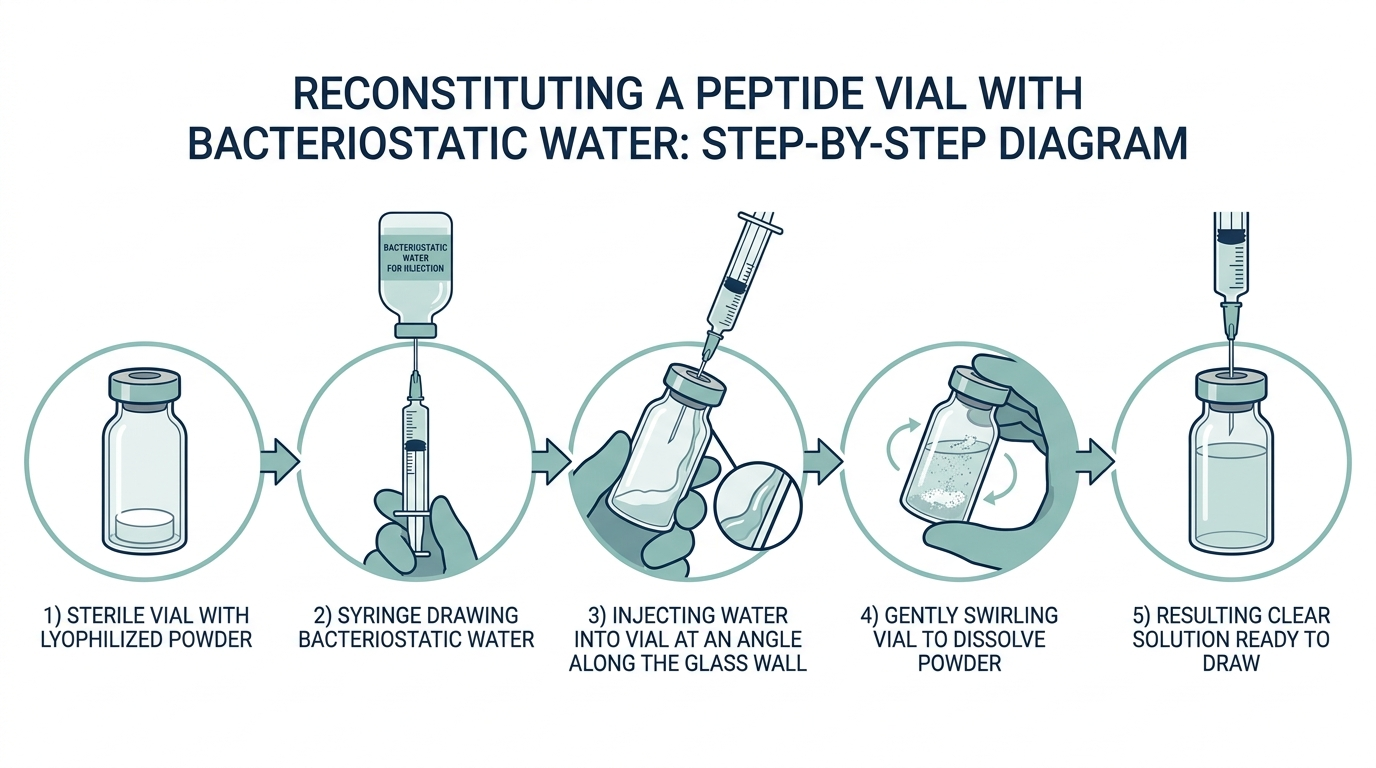
The lyophilized powder inside a compounded tirzepatide vial takes up negligible physical volume. When you inject bacteriostatic water through the stopper, the water you add is essentially the entire volume of the resulting solution. That makes the math a direct ratio: total tirzepatide in milligrams divided by total bac water in milliliters gives you your concentration in milligrams per milliliter.
Every dose volume you draw downstream is then your target dose divided by that concentration. Get the concentration wrong at reconstitution, or borrow a dose table from someone who used a different water volume, and you will draw the wrong number of units for your intended dose every single time. No feedback, no error message on the syringe, just quiet overdose or underdose depending on which direction the mistake ran.
This is the most important paragraph on this page: the milligram dose means nothing without the concentration. Always record both the water volume you used and the date of reconstitution on the vial label, every time.
The three practical concentrations for a 15 mg vial
The simplest way to actually get this done
Superpower is a full-body lab membership that runs 100+ biomarkers, has each result reviewed by a doctor, and tracks your numbers year over year (about $199/year). It is what we point readers to when they would rather get one clean, complete draw than chase single tests one at a time. Here is superpower reviewed in full.
Three bac water volumes cover every meaningful use case for a 15 mg tirzepatide vial.
| BAC Water Added | Concentration | Best For |
|---|---|---|
| 1.0 mL | 15 mg/mL | Not recommended for most users; draws for standard doses land on awkward decimals |
| 1.5 mL | 10 mg/mL | The standard default; clean math, 1 mg per 10 units on a U-100 syringe |
| 3.0 mL | 5 mg/mL | Larger injection volumes, easier to read very small doses, preferred by some compounding pharmacies |
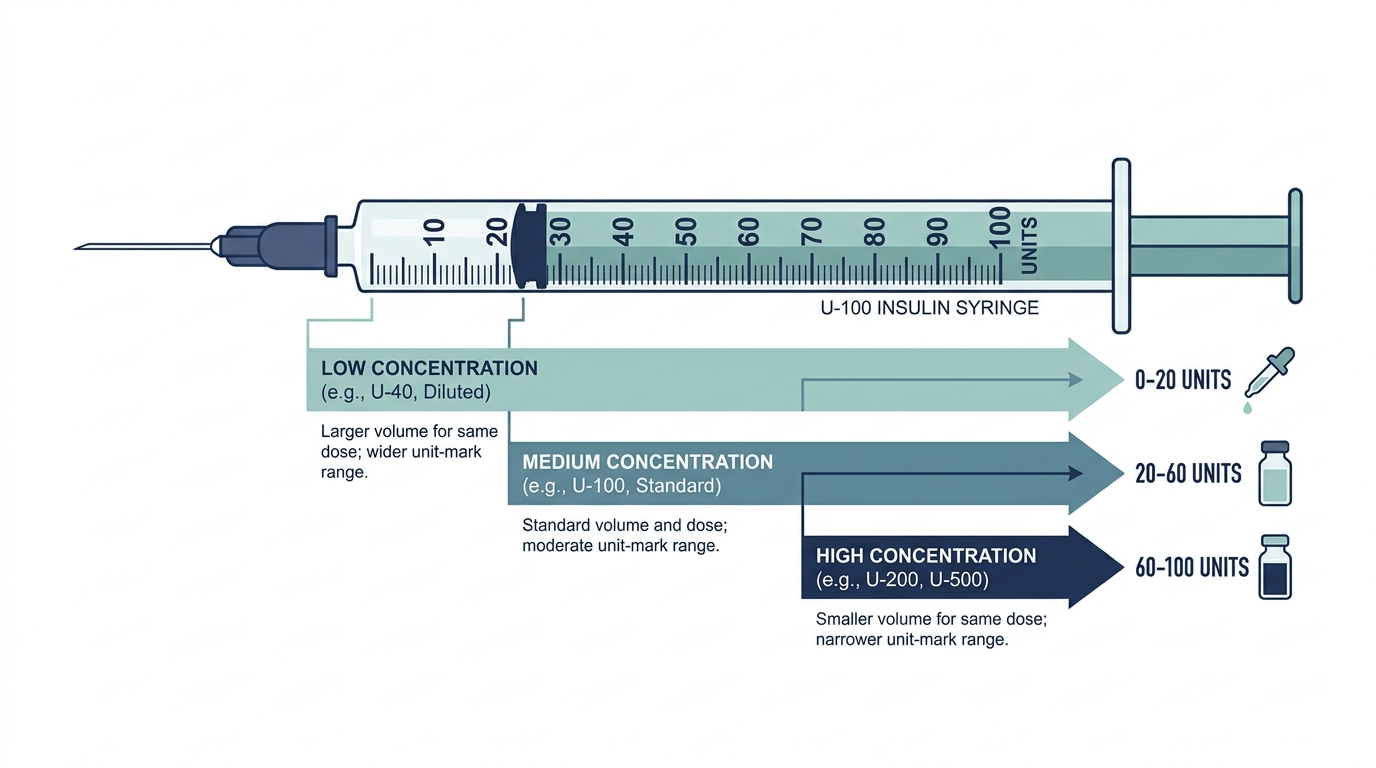
The 10 mg/mL option (1.5 mL of water) is the one most compounding pharmacy instruction sheets default to for 15 mg vials, according to reconstitution guides at TrimRX and GLP3 Planner. The reason is that 10 mg/mL produces round numbers: a 5 mg dose is 50 units, a 7.5 mg dose is 75 units, and a 10 mg dose is 100 units, all readable on a standard U-100 insulin syringe without needing a calculator at draw time.
The 5 mg/mL option (3.0 mL of water) is favored by people who want larger physical injection volumes for subcutaneous comfort, or who are drawing very small starting doses where the extra dilution reduces pipetting error. At 5 mg/mL, a 2.5 mg starter dose is 50 units, which is easier to hit accurately than 25 units at 10 mg/mL.
Personally, I think the 1.0 mL option (15 mg/mL) should not be used for home reconstitution. The math is not impossible, but a 5 mg dose lands at 33.3 units and a 7.5 mg dose lands at 50 units. When the unit count itself is a repeating decimal, you are introducing rounding error every single draw. There is no practical reason to accept that trade-off.
Full unit tables for the two recommended concentrations
At 10 mg/mL (1.5 mL BAC water added to 15 mg vial)
This is the standard choice for most users following pharmacy or telehealth clinic instructions.
| Dose | Draw Volume | U-100 Syringe Units |
|---|---|---|
| 2.5 mg | 0.25 mL | 25 units |
| 5.0 mg | 0.50 mL | 50 units |
| 7.5 mg | 0.75 mL | 75 units |
| 10.0 mg | 1.00 mL | 100 units |
| 12.5 mg | 1.25 mL | 125 units* |
| 15.0 mg | 1.50 mL | 150 units* |
*These volumes exceed a standard 1 mL syringe. Split into two draws using the same sterile needle, or use a 3 mL syringe.
At 5 mg/mL (3.0 mL BAC water added to 15 mg vial)
Recommended if you are titrating carefully from low starting doses.
| Dose | Draw Volume | U-100 Syringe Units |
|---|---|---|
| 2.5 mg | 0.50 mL | 50 units |
| 5.0 mg | 1.00 mL | 100 units |
| 7.5 mg | 1.50 mL | 150 units* |
| 10.0 mg | 2.00 mL | 200 units* |
| 12.5 mg | 2.50 mL | 250 units* |
| 15.0 mg | 3.00 mL | 300 units* |
*At 5 mg/mL, doses above 5 mg exceed a standard 1 mL insulin syringe. For therapeutic doses at the upper range, 10 mg/mL (1.5 mL water) is the more practical concentration.
Why bacteriostatic water and not sterile water?
Bacteriostatic water contains 0.9% benzyl alcohol, a preservative that inhibits bacterial growth. That difference matters because a reconstituted peptide vial is punctured repeatedly, every injection a potential contamination event. Sterile water, which has no preservative, supports a single-use or 24-hour window at most before bacterial risk becomes meaningful. Bacteriostatic water extends that window to 28 days refrigerated, which is the standard beyond-use date across compounding pharmacy guidelines (TrimRX storage guide).
Do not believe claims of 60-day or 90-day stability after reconstitution. Those numbers appear occasionally in research-vendor content, but the 28-day window is the figure supported by USP compounding standards and the pharmacovigilance literature. After 28 days, the benzyl alcohol concentration cannot reliably hold off contamination, and peptide degradation compounds the risk.
One nuance worth knowing: benzyl alcohol itself can cause localized irritation at the injection site in some people, and rare hypersensitivity reactions are documented. If you are reconstituting a vial through a licensed pharmacy program and notice persistent injection site reactions, mention it to your clinician. It is more likely a technique issue than a benzyl alcohol reaction, but worth ruling out.
Step-by-step reconstitution for a 15 mg tirzepatide vial
These steps assume you already have your vial of lyophilized tirzepatide, a vial of bacteriostatic water, a U-100 insulin syringe, and alcohol prep pads. A licensed clinician should walk through the process with you before your first draw.
- Wash hands for at least 20 seconds and work on a clean, dry surface.
- Swab both rubber stoppers with separate alcohol prep pads. Hold the swab against the stopper for 15 seconds, then let it air-dry completely. A wet stopper carries alcohol into the vial.
- Draw your bac water volume. Pull the plunger back to 15 units (0.15 mL) past your target volume first to equalize pressure, insert the needle into the bac water vial, invert it, and draw your full target amount, either 1.5 mL or 3.0 mL.
- Inject slowly down the glass wall. Insert the needle through the tirzepatide stopper at an angle so the stream of water runs down the inside of the glass, not directly onto the white powder cake. The goal is gentle dissolution, not turbulent mixing.
- Do not shake. Shaking forces the peptide chain through mechanical stress and can shear the molecule, reducing potency. Instead, gently roll the vial between your palms for one to two minutes or let it sit at room temperature for five minutes until the solution is clear and colorless.
- Inspect the solution. Hold the vial to light. A properly reconstituted tirzepatide solution is clear to slightly yellow-tinged, with no particles, cloudiness, or discoloration. If you see floating particles or the solution stays cloudy after five minutes, do not use it.
- Label the vial immediately with the date of reconstitution, the concentration (either 10 mg/mL or 5 mg/mL), and the discard date (28 days forward).
- Refrigerate at 36 to 46 degrees Fahrenheit (2 to 8 Celsius). Do not freeze. Freezing disrupts the peptide structure and can cause the benzyl alcohol to crystallize.
What makes the 15 mg dose specifically significant?
The 15 mg weekly dose is the maximum FDA-approved dose of tirzepatide for both Zepbound (weight management) and Mounjaro (type 2 diabetes). In the SURMOUNT-1 Phase 3 trial, participants on 15 mg tirzepatide achieved a mean body weight reduction of 22.5% at 72 weeks under the efficacy estimand, compared to 2.4% on placebo (Eli Lilly SURMOUNT-1 results). More than one-third of participants on the 15 mg arm lost at least 25% of their body weight, a result that would have been considered implausible for a non-surgical intervention a decade ago.
That efficacy profile is why there is so much interest in 15 mg vials specifically, both in the brand-name pen and in the compounded powder format. But 15 mg is also the maintenance dose reached after a titration schedule that typically runs 20 weeks or more, starting at 2.5 mg and stepping up through 5, 7.5, 10, and 12.5 mg. People who jump to 15 mg without titrating through the lower doses consistently report higher rates of nausea, vomiting, and early discontinuation. The concentration math in this guide applies equally to every dose along that titration, not just the top of the range.
Telehealth GLP-1 program with provider visits and pharmacy coordination.
The legal reality of compounded tirzepatide in 2026
If you are reconstituting a compounded tirzepatide vial, you need to understand what changed in late 2024 and early 2025, because the legal ground shifted significantly.
The FDA declared the tirzepatide shortage resolved on December 19, 2024. That declaration triggered the end of enforcement discretion for compounding pharmacies: 503A state-licensed pharmacies lost their grace period on February 18, 2025, and 503B outsourcing facilities followed on March 19, 2025 (FDA clarification statement). Legal challenges from the Outsourcing Facilities Association failed in federal court in May 2025.
What this means in practice: the majority of “compounded tirzepatide” sold through telehealth-adjacent platforms after March 2025 is operating in a legally grey or non-compliant space unless it can demonstrate a specific patient need, such as a documented allergy to an inactive ingredient in commercial Zepbound or Mounjaro, that cannot be met by the brand-name product. That narrow carve-out is the only legitimate 503A pathway remaining.
The brand-name alternative is now genuinely competitive on price. Eli Lilly made the Zepbound KwikPen, a multi-dose pen containing four weekly doses, available at retail pharmacies at self-pay pricing starting at $299 for the 2.5 mg dose and up to $449 for the 10 mg and 15 mg doses as of 2025. At that price point, the financial rationale for pursuing a compounded vial has shrunk considerably, while the legal and safety profile of the brand-name route is unambiguously cleaner.
The dosing error that lands people in the emergency room
The FAERS analysis published in 2026 covering 65,974 tirzepatide adverse event reports found that incorrect dose administration was the most common event category, with 19,461 cases, and it increased 8-fold from 2022 to 2024 (PMC/FAERS analysis). The analysis logged 2,418 hospitalizations from tirzepatide adverse events overall. Multidose vials with miscalculated reconstitution concentrations were a recurring factor.
The specific error pattern goes like this: a person sees a forum post recommending “50 units for a 5 mg dose” without any mention of the concentration that table was built on. They apply that unit count to their own vial, which they mixed at a different concentration. If their vial is at 10 mg/mL and the forum table was built for 5 mg/mL, they draw 50 units and inject 5 mg as intended. But if they absorbed the table for 10 mg/mL and their vial is actually at 5 mg/mL, the same 50 units delivers 2.5 mg, half the intended dose. Reverse the concentrations and 50 units delivers 10 mg, double the intended dose.
Do not believe any unit count you read online without first confirming the concentration it was built on. This is not a caveat. It is the difference between the therapeutic window and a nausea emergency.
Personally, I have seen enough forum threads where someone pastes a dosing table with no concentration header to know this particular mistake is not rare. Label your vial, write down your concentration, and never borrow a unit count without verifying the denominator.
How to store a reconstituted tirzepatide vial
After reconstitution, the vial needs refrigeration between 36 and 46 degrees Fahrenheit (2 to 8 Celsius) and protection from light. Light degrades peptide bonds over time, which is why the glass vials are typically amber-tinted or stored in a box.
A few things that accelerate degradation and are worth avoiding: leaving the vial on the counter between injections (temperature cycling stresses the peptide), storing it in a freezer (freezing damages both the peptide and the benzyl alcohol preservative), and repeatedly entering the vial with a used needle (each non-sterile puncture introduces contamination risk).
The 28-day discard rule is not a conservative suggestion. It is the point at which the benzyl alcohol concentration may no longer reliably suppress bacterial growth, even under refrigeration. A 15 mg vial reconstituted at 10 mg/mL contains 15 mg across 1.5 mL of solution, which at a 5 mg weekly dose provides exactly three draws. That maps almost perfectly to a 21-day supply within the 28-day window, which is one reason the 1.5 mL reconstitution is the practical default for this vial size at therapeutic doses.
How to read your reconstitution instructions if they came from a pharmacy
If you received your tirzepatide through a legitimate compounding pharmacy with a valid prescription, your vial came with a patient instruction sheet that specifies the exact diluent volume to use. Use that number, not this guide’s default. Pharmacy instructions are specific to the concentration they verified and dispensed. This guide covers the standard options; your pharmacy sheet overrides all of it.
If your instruction sheet is unclear about the diluent volume or you cannot locate it, call the dispensing pharmacy directly. That is not a question a forum should answer on behalf of a licensed pharmacy.
Don’t just read about your health, track it.
A single result is a snapshot. Superpower re-tests 100+ markers over time so you can watch them move as you change sleep, food, and training.
Frequently asked questions
How much bacteriostatic water should I add to a 15 mg tirzepatide vial?
The two most common options are 1.5 mL, producing a 10 mg/mL concentration, and 3.0 mL, producing a 5 mg/mL concentration. The 1.5 mL option is the default in most pharmacy instruction sheets because it produces round unit numbers for standard weekly doses. Always use whatever volume your prescribing clinician or dispensing pharmacy specifies.
What is the concentration if I add 1.5 mL to a 15 mg vial?
15 mg divided by 1.5 mL equals 10 mg/mL. At that concentration, 10 units on a U-100 insulin syringe delivers exactly 1 mg of tirzepatide.
What is the concentration if I add 3 mL to a 15 mg vial?
15 mg divided by 3 mL equals 5 mg/mL. At that concentration, 10 units on a U-100 syringe delivers 0.5 mg, and a 5 mg dose is 100 units.
Can I use sterile water instead of bacteriostatic water for tirzepatide?
Technically possible, but not recommended for a multi-dose vial. Sterile water has no preservative, meaning it cannot suppress bacterial growth between injections. Bacteriostatic water contains 0.9% benzyl alcohol specifically to allow multi-dose use over 28 days. If you used sterile water, the vial would need to be treated as single-use and discarded after one draw.
How long is reconstituted 15 mg tirzepatide good for?
28 days refrigerated at 36 to 46 degrees Fahrenheit (2 to 8 Celsius). This is the standard beyond-use date for bacteriostatic water-reconstituted compounded peptides under USP guidelines. Discard the vial after 28 days regardless of remaining volume. Do not freeze a reconstituted vial.
Is it legal to buy compounded tirzepatide powder in 2026?
The regulatory situation is restrictive. The FDA declared the tirzepatide shortage resolved in December 2024, and the enforcement discretion that allowed mass compounding ended in February to March 2025. Compounded tirzepatide from 503A pharmacies is currently legal only with specific documented clinical justification that the commercial product cannot meet the patient’s needs, such as an allergy to an inactive ingredient. Most of the compounded tirzepatide circulating in the grey market does not meet that standard. The licensed telehealth route with brand-name Zepbound is the compliant path for the majority of patients.
What does a 15 mg tirzepatide dose actually do? Is it worth titrating up to?
In SURMOUNT-1, the 15 mg weekly dose produced a mean body weight reduction of 22.5% at 72 weeks, the highest outcome of any approved GLP-1 or dual agonist in that trial class (Eli Lilly SURMOUNT-1 data). More than one-third of participants on 15 mg lost at least 25% of body weight. However, 15 mg is a maintenance dose reached after a structured 20-week titration. It is not a starting dose, and the gastrointestinal side effect profile at 15 mg without titration is substantially worse than at lower doses.
Author: Vital Signs Today Editorial Team, [credential]”]. Educational content, not medical advice. Sources linked inline.
Primary sources:
– Eli Lilly SURMOUNT-1 results (NEJM publication announcement): https://investor.lilly.com/news-releases/news-release-details/lillys-surmount-1-results-published-new-england-journal-medicine
– PMC FAERS analysis, Real-World Safety Concerns of Tirzepatide 2022-2025: https://pmc.ncbi.nlm.nih.gov/articles/PMC12469573/
– FDA clarification on GLP-1 compounding policies: https://www.fda.gov/drugs/drug-alerts-and-statements/fda-clarifies-policies-compounders-national-glp-1-supply-begins-stabilize
– FDA declaratory order on tirzepatide shortage resolution: https://www.fda.gov/media/184606/download
– TrimRX 15mg tirzepatide reconstitution guide: https://trimrx.com/blog/how-to-reconstitute-15-mg-tirzepatide-a-comprehensive-guide/
– GLP3 Planner tirzepatide bac water calculator: https://glp3planner.com/resources/tirzepatide-bac-water-calculator
– TrimRX compounded tirzepatide storage and shelf life: https://trimrx.com/blog/compounded-tirzepatide-storage-shelf-life/
– freemedicaljournals.com tirzepatide bac water calculator: https://freemedicaljournals.com/blog/tirzepatide-bac-water-calculator/
– Zepbound KwikPen retail launch announcement: https://www.prnewswire.com/news-releases/zepbound-tirzepatide-the-most-prescribed-weight-management-medication-in-2025-now-available-in-multi-dose-kwikpen-302693937.html
Want a real clinician to run the numbers, not a guess?
Joi + Blokes is a telehealth clinic that prescribes GLP-1 medication (Zepbound, compounded semaglutide and tirzepatide), hormone therapy (TRT, HRT), thyroid care, and peptides after a real lab panel and clinician review, with no membership or consult fee (prescriptions from about $59/month, lab panels from $149). If the scale will not budge, this is where you find out whether insulin, thyroid, or hormones are the real reason. Here is Joi + Blokes reviewed in full.
Related reading
Related: which GLP-1 telehealth service fits you.
Vital Signs Today may earn a commission if you buy through links on this page. It does not affect our editorial assessments.