Only testing blood work once a year? See what a deeper, more frequent panel could catch early. One at-home Superpower draw checks 100+ biomarkers, physician-reviewed.
- Most healthy adults need routine blood work about once a year, usually drawn during an annual wellness visit, even when they feel fine.
- Healthy adults without heart disease should have a cholesterol (lipid) panel every 4 to 6 years starting at age 20, per the American College of Cardiology and American Heart Association.
- Adults with no diabetes risk factors should be screened for diabetes starting at age 35 and, if results are normal, repeated at least every 3 years, per the American Diabetes Association.
There is no single calendar that fits everyone. How often you need blood work depends on your age, your existing conditions, your medications, and your personal risk. This guide breaks down the common tests, the evidence-based intervals behind them, and the situations that call for more frequent draws.
How often should a healthy adult get routine blood work?
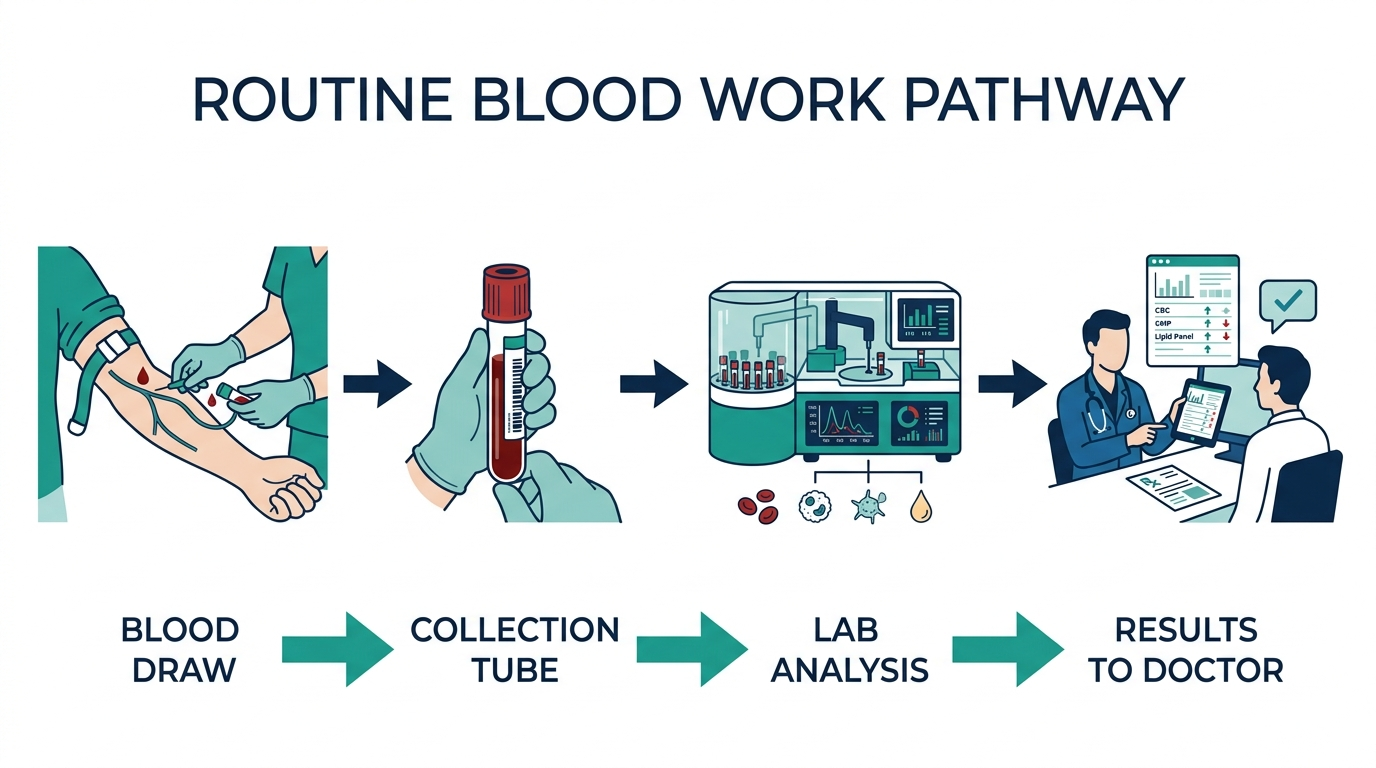
Most healthy adults need a basic round of blood work about once a year, typically drawn at an annual wellness exam. There is no universal mandate for yearly testing in people with no symptoms or risk factors, but a yearly checkpoint lets a clinician track trends and catch silent changes early. A complete blood count (CBC) is often performed at least once a year and frequently each time you see your doctor (Forest Urgent Care).
The point of annual labs is not the single number. It is the trend line. A cholesterol or fasting glucose value that drifts upward year over year tells your clinician something a one-time snapshot cannot. If you are young, lean, and have no family history of chronic disease, your clinician may reasonably stretch the interval. If you are over 40 or carry risk factors, yearly testing becomes the practical default.

How often should you check cholesterol and a lipid panel?
Healthy adults without heart disease should have a lipid panel every 4 to 6 years starting at age 20, according to American College of Cardiology and American Heart Association guidance cited by Cleveland Clinic. That interval tightens with age and risk.
- Ages 20 to 44, low risk: every 4 to 6 years is reasonable.
- Middle age and higher risk: men 45 to 65 and women 55 to 65 are often screened every 1 to 2 years.
- Over 65: annual screening is common.
- On a statin or with known heart disease: more frequent testing to monitor response.
High cholesterol has no symptoms, so a normal-feeling person can carry a high LDL for years. That silent quality is exactly why a fixed interval matters. The numbers above are starting points, not rules. A strong family history of early heart attack or stroke is a common reason a clinician pulls the interval in.
How often should you test blood sugar and A1C?
Adults with no diabetes risk factors should begin diabetes screening at age 35, and if results are normal, repeat at least every 3 years, per the American Diabetes Association 2026 Standards of Care. Screening can use fasting glucose, an oral glucose tolerance test, or an A1C.
The interval shifts the moment risk appears. The ADA notes that screening should happen sooner, and more often, with symptoms or a change in risk such as weight gain. People with overweight or obesity plus an added risk factor are often screened earlier than 35.
If you already have diabetes, the A1C cadence is different. The ADA advises measuring A1C at least twice a year in patients who are stable and meeting goals, and at least 4 times a year when therapy has changed or glucose is not at target (American Diabetes Association). A1C reflects roughly the prior 3 months of average blood sugar, which is why a 3-month minimum spacing makes biological sense.
How often should you get a comprehensive metabolic panel?
A comprehensive metabolic panel (CMP) is commonly ordered during annual physicals and routine wellness exams, with yearly testing typical for adults over 40 (MedlinePlus). The CMP measures 14 substances, including glucose, kidney markers, liver enzymes, and electrolytes, giving a wide read on organ function in one draw.
Frequency rises with reasons to watch a specific organ. Clinicians may order a CMP or CBC every 3 to 6 months for people managing chronic conditions or taking medications that affect the liver or kidneys (Pharmacy Times). Common triggers for tighter monitoring include:
- Kidney concern: tracking creatinine and eGFR over time.
- Liver concern or new medication: watching liver enzymes after a drug is started.
- Diuretics or other drugs: checking electrolytes such as sodium and potassium.

When do you need blood work more often than once a year?
You need more frequent blood work whenever a condition, medication, or new symptom requires active monitoring, and intervals of every 3 to 6 months are common in those settings (Pharmacy Times). The yearly default is for stable, low-risk adults. Several situations override it.
- Chronic disease management: diabetes, kidney disease, thyroid disorders, and heart disease all warrant closer tracking.
- New or adjusted medication: statins, thyroid hormone, blood thinners, and many others require follow-up labs to confirm dose and safety.
- New symptoms: unexplained fatigue, weight change, easy bruising, or persistent infections can prompt a CBC or metabolic panel regardless of when you last tested.
- Pregnancy: prenatal care includes its own schedule of blood tests.
The principle is simple. Routine screening is about catching silent change in a healthy body. Monitoring is about following a known problem closely enough to act on it. Your clinician decides which mode you are in, and the interval follows from that.
How should you decide your own testing schedule?
The right schedule is the one your clinician sets after weighing your age, history, medications, and risk factors, not a number from a chart online. The intervals in this article are evidence-based defaults that apply to broad groups. They are a starting point for a conversation, not a prescription.
Bring three things to that conversation. First, your family history, especially early heart disease, diabetes, or thyroid disease. Second, a current list of every medication and supplement you take. Third, any new symptoms, even vague ones. With those in hand, your clinician can tell you which tests you need and how often, and whether your low-risk yearly default should become a tighter monitoring schedule.
How often should you check your thyroid (TSH)?
Thyroid testing is one of the most common questions, and the answer is more nuanced than the fixed intervals for cholesterol or glucose because expert bodies disagree. The American Thyroid Association has suggested screening all adults with a TSH test starting at age 35 and every 5 years after that. Other groups are more conservative: the US Preventive Services Task Force does not recommend routine TSH screening in nonpregnant, asymptomatic adults, favoring targeted testing in people with risk factors or symptoms instead (USPSTF, Thyroid Dysfunction Screening).
In practice, that means your thyroid testing cadence depends on your situation:
- No symptoms, no risk factors: routine screening is optional, and intervals of several years are reasonable if tested at all.
- Symptoms present: unexplained weight change, fatigue, cold or heat intolerance, hair changes, or a racing or slow heartbeat are reasons to test regardless of the calendar.
- Known thyroid condition or on thyroid medication: monitoring is much tighter. After a dose change, TSH is typically rechecked in about 6 to 8 weeks, because the thyroid axis takes weeks to reach a new steady state, then spaced out once stable.
- Higher risk: a personal history of autoimmune disease, prior thyroid surgery or radiation, or a strong family history often prompts earlier and more regular testing.
The recurring theme across all blood work applies here too: screening a healthy person and monitoring a known condition are two different modes with very different intervals.

Monitoring on medications: liver, kidney, and blood counts
Some of the most important blood work is not screening at all, it is safety monitoring tied to a specific drug. Many medications require periodic labs to confirm they are working and not causing harm, and skipping these is a genuine risk. Common examples include:
- Statins: a lipid panel confirms the cholesterol response, and liver enzymes may be checked based on your clinical picture.
- Thyroid hormone: TSH is rechecked after any dose change and periodically once stable.
- Blood thinners: some anticoagulants require regular clotting tests to keep the dose in a safe window, while others need periodic kidney function checks.
- Diuretics and blood pressure drugs: electrolytes such as sodium and potassium, plus kidney markers, are watched because these drugs can shift them.
- Metformin and other diabetes drugs: A1C and kidney function guide dosing and safety, and long-term metformin can lower vitamin B12.
- Certain immune-suppressing and disease-modifying drugs: often require a CBC and liver panel on a set schedule to catch effects on blood counts or the liver early.
For these, intervals of every 3 to 6 months are common while a situation is being watched, tightening right after a medication starts or changes. The purpose is not routine screening but catching a drug effect before it becomes a problem, which is why these schedules are set by the prescriber rather than a generic chart.
Blood work by age: a decade-by-decade view
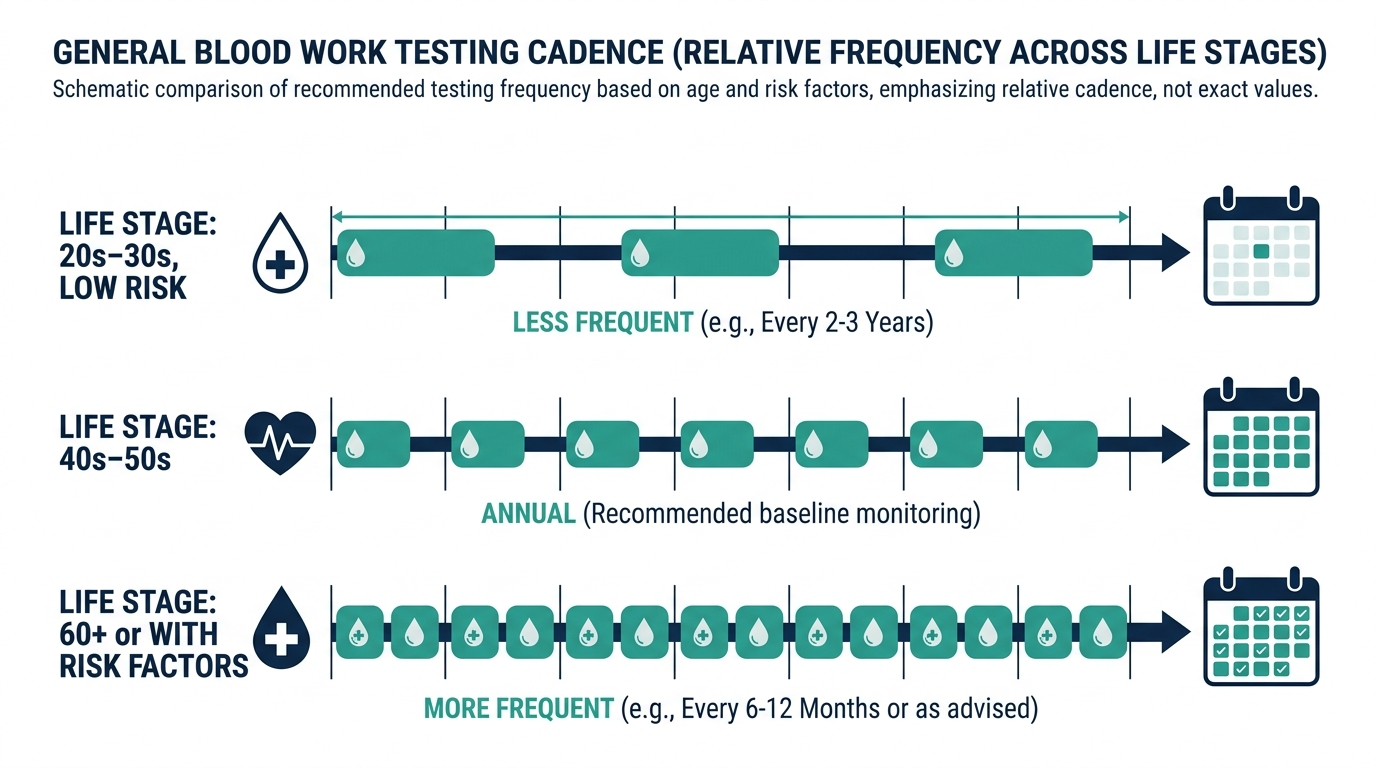
While there is no universal calendar, the mix of tests and their frequency tends to shift as you age and risk accumulates. Here is a broad orientation, always to be tailored by your clinician.
- 20s and 30s: a low-intensity era for most healthy people. A baseline panel establishes your normal, cholesterol screening can begin around age 20 on a multi-year cycle, and testing is otherwise driven by symptoms or risk. Establishing a baseline while young is valuable because it gives future results something to compare against.
- Age 35 onward: diabetes screening typically begins, and depending on the guideline used, thyroid screening may enter the picture. Risk factors like weight gain, high blood pressure, or family history can pull intervals in.
- 40s and 50s: yearly labs become the practical default for many people as chronic disease risk rises. Lipid testing often tightens to every 1 to 2 years in higher-risk adults, and metabolic panels are commonly part of the annual visit.
- 60s and beyond: annual testing is common, and monitoring for kidney function, glucose, and cholesterol tends to intensify. Older adults are also more likely to be on medications that require their own monitoring labs.
The through-line is that testing shifts from occasional and symptom-driven in youth to regular and trend-focused with age, because the conditions being screened for grow more likely over time.
Fasting and preparation: which tests need it and what skews results
Whether you need to fast depends entirely on which tests are ordered, and getting this wrong is a common reason for an inaccurate result or a repeat draw.
- Usually require fasting (8 to 12 hours, water allowed): a fasting glucose and, traditionally, a lipid panel, since recent food can raise triglycerides and glucose.
- Do not require fasting: a CBC, an A1C (which reflects months of average glucose), and a TSH.
- Sometimes require fasting: a comprehensive metabolic panel, because it includes glucose, so your clinic may ask you to fast if an accurate glucose reading matters (Cleveland Clinic, CMP).
Beyond fasting, several everyday factors can nudge results and are worth controlling for a cleaner read:
- Hydration: being well hydrated makes the draw easier and can steady certain concentration-dependent values.
- Recent hard exercise: intense activity in the day before can transiently affect some markers, including certain muscle and white cell values.
- Alcohol: recent drinking can affect liver enzymes and triglycerides.
- Time of day and consistency: for markers you track over time, drawing under similar conditions makes trends more meaningful.
- Supplements: tell your clinic about biotin and other supplements, since some can interfere with specific lab assays.
The single best move is to ask the ordering clinic for the exact instructions for your specific tests, rather than assuming, since one fasting test in a bundle means you fast for the whole draw.
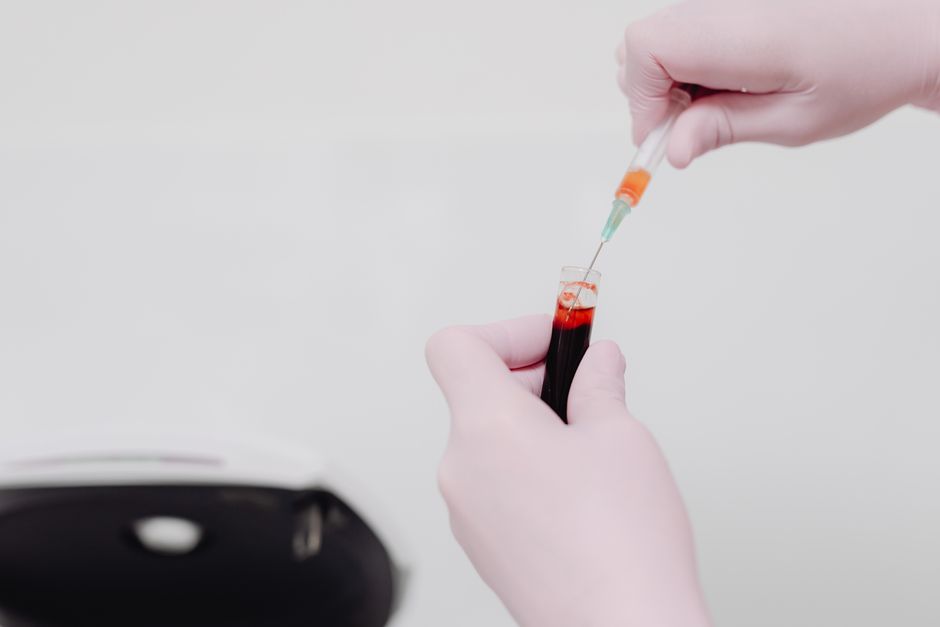
What a good baseline panel usually includes
When people ask what to test, a sensible starting panel for a general checkpoint typically covers a few core areas, each answering a different question about your health.
- Complete blood count (CBC): screens for anemia, infection, and clotting-cell problems by counting red cells, white cells, and platelets.
- Comprehensive metabolic panel (CMP): a wide read on organ function, covering glucose, kidney markers, liver enzymes, and electrolytes in one draw.
- Lipid panel: cholesterol and triglycerides for cardiovascular risk.
- A1C or fasting glucose: to screen for prediabetes and diabetes.
- Thyroid (TSH): often included when symptoms or risk factors are present.
- Targeted additions: vitamin D, vitamin B12, iron studies, or others, added when your history or symptoms justify them rather than by default.
Note that broad organizations do not recommend testing every possible marker in everyone. Vitamin D, for instance, is generally not recommended as a routine test for people not at risk of deficiency, and when supplementation starts, it is usually rechecked no sooner than three months later. The right panel is targeted to your risks and questions, which is exactly why the schedule is a conversation with your clinician rather than a fixed list.
Why the trend matters more than any single result
The most valuable thing regular blood work gives you is not any one number, it is the direction those numbers move over time. A single result is a snapshot taken on one day under one set of conditions. Two or three results across years draw a line, and that line often reveals a problem long before any single value crosses into an abnormal range.
Consider a few examples of why the trend wins:
- Cholesterol creeping up: an LDL that climbs steadily year over year, even while still technically in range, signals rising cardiovascular risk that a one-time normal reading would miss.
- Fasting glucose drifting: a glucose slowly rising from the low-normal zone toward the prediabetes threshold is an early warning that lets you act before crossing the line.
- Kidney function declining: a gradual downward trend in kidney markers is more meaningful than a single value, and it changes management.
- Response to change: if you improve your diet, exercise, or start a medication, comparing before and after results is the only way to confirm it is working.
This is also why consistency matters. Drawing your labs at roughly the same time of day, under similar fasting conditions, and ideally through the same lab makes your trend line trustworthy rather than noisy. A number that jumps around because conditions changed is hard to interpret. A number tracked cleanly over time is one of the most powerful tools in preventive care, because it turns silent, gradual change into something you and your clinician can see and act on early.
Signs you should get blood work sooner than scheduled
Routine intervals assume you feel well. Certain new symptoms are reasons to test regardless of when your last draw was, because they can reflect a change worth catching quickly.
- Unexplained fatigue or weakness that does not improve with rest.
- Unintended weight loss or gain without a change in diet or activity.
- Easy bruising or bleeding, or tiny red spots on the skin.
- Frequent or lingering infections.
- Increased thirst and urination, which can signal high blood sugar.
- Swelling, changes in urination, or persistent nausea, which can point to kidney issues.
- Yellowing of the skin or eyes, which warrants prompt evaluation of the liver.
None of these symptoms diagnoses anything on its own, but each is a legitimate reason to move up your testing rather than wait for the calendar. The purpose of scheduled labs is to catch silent change, and the purpose of symptom-driven labs is to investigate a change your body is already signaling. Knowing which situation you are in, and bringing your symptoms, medication list, and family history to your clinician, is what turns a generic testing schedule into the right one for you.
Don’t just read about your health, track it.
A single result is a snapshot. Superpower re-tests 100+ markers over time so you can watch them move as you change sleep, food, and training.
Frequently asked questions
Do I need to fast before routine blood work?
Some tests require fasting and others do not. A lipid panel and a fasting glucose test often require 8 to 12 hours without food or drink except water. A CBC and many other tests do not. Ask the ordering clinic for specific instructions before your draw.
Is yearly blood work necessary if I feel healthy?
Feeling healthy does not rule out silent conditions. High cholesterol and early diabetes often cause no symptoms for years. A yearly checkpoint at a wellness visit helps catch these trends early, though your clinician may adjust the interval based on your risk.
At what age should I start regular blood work?
Cholesterol screening can start at age 20 every 4 to 6 years for healthy adults, per the American College of Cardiology and American Heart Association. Diabetes screening for people with no risk factors begins at age 35, per the American Diabetes Association.
How often should I check my A1C if I have diabetes?
The American Diabetes Association advises an A1C at least twice a year if you are stable and meeting your goals, and at least 4 times a year if your treatment changed or your glucose is not at target. A1C reflects about the prior 3 months.
What is the difference between a CBC and a CMP?
A complete blood count (CBC) measures blood cells such as red cells, white cells, and platelets. A comprehensive metabolic panel (CMP) measures 14 substances including glucose, electrolytes, and kidney and liver markers. They answer different questions and are often ordered together.
Sources
- Cleveland Clinic, When Should You Get Cholesterol Checked?
- American Diabetes Association, Diagnosis and Classification of Diabetes, Standards of Care 2026
- American Diabetes Association, Understanding A1C
- MedlinePlus, Comprehensive Metabolic Panel (CMP)
- Pharmacy Times, Comprehensive Metabolic Panel vs Complete Blood Count Labs
- Forest Urgent Care, Difference Between CBC and CMP Blood Tests
This article is for general educational purposes and is not medical advice. It cannot diagnose or treat you and does not replace your clinician. Always discuss your lab results and any health decisions with a qualified healthcare professional.
Related reading
Related: best at-home biomarker tests of 2026.
Vital Signs Today may earn a commission if you buy through links on this page. It does not affect our editorial assessments.