How to Get Blood Work Without a Doctor in 2026: 4 Services We Tested and Compared
You no longer need a primary care appointment, a referral, or an in-person visit to get real lab work done. In most U.S. states you can now order your own blood panels online, collect a sample at home or at a partner lab, and read clinician-reviewed results in an app within days. We spent weeks comparing the leading direct-to-consumer testing services on price, biomarker depth, lab accreditation, and result usability. Below is how the process works, who each service is best for, and current pricing so you can choose without guessing.
We may earn a commission if you buy through links on this page. Here is our process.
Skipping the doctor’s office for blood work sounds great until you compare what each service actually tests. See how a 100+ biomarker panel stacks up. One at-home Superpower draw checks 100+ biomarkers, physician-reviewed.
Key Takeaways
- You can legally get blood work without a doctor in most U.S. states because direct-to-consumer testing services use their own physician network to order the labs on your behalf, then run samples through CLIA-certified or CAP-accredited labs.
- Superpower is the best overall value for self-directed testing in 2026, giving you 100+ biomarkers and a physician-reviewed longevity dashboard for around $199 per year with no doctor visit required.
- If you only want one targeted panel, like thyroid or hormones, a single Everlywell kit (roughly $49 to $249) is cheaper than any membership and ships straight to your door.

A quick look at our top picks
- Best for full-body testing without a doctor: Superpower
- Best for the deepest panel, twice a year: Function Health
- Best for a single targeted test: Everlywell
- Best for needle-free, finger-prick convenience: SiPhox Health
How to get blood work without a doctor, comparison table
| Service | VST score (out of 5) | Price | Best for |
|---|---|---|---|
| Superpower | 4.8 | ~$199/year | Full-body testing, no doctor visit |
| Function Health | 4.6 | ~$499/year | Deepest panel, twice yearly |
| Everlywell | 4.4 | ~$49 to $249 per kit | Single targeted tests |
| SiPhox Health | 4.3 | From ~$125 | Needle-free, finger-prick at home |
How does getting blood work without a doctor actually work?
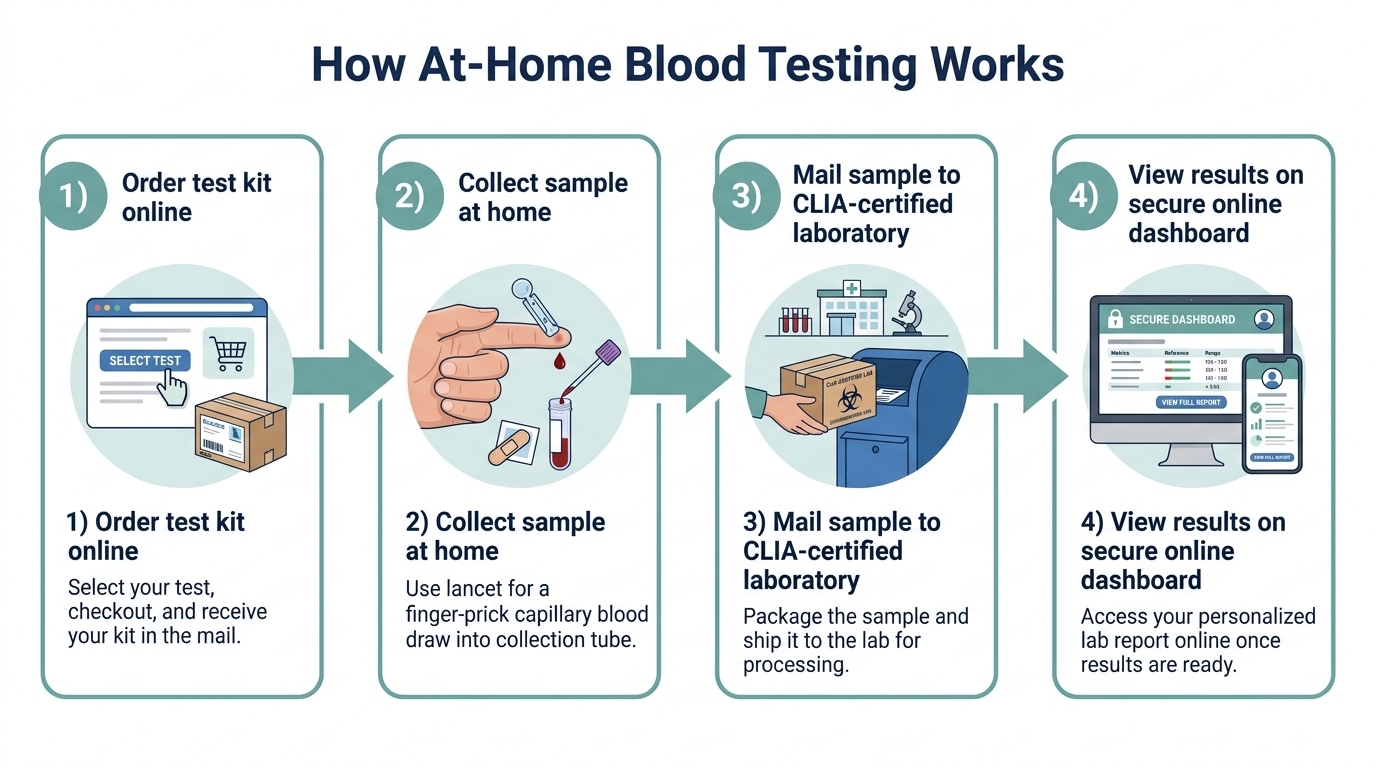
It works because the testing company supplies the doctor for you. When you order a panel, a licensed physician in that company’s network reviews and authorizes it, which satisfies the legal requirement that a clinician sign off on lab tests. You never have to find, schedule, or pay your own doctor.
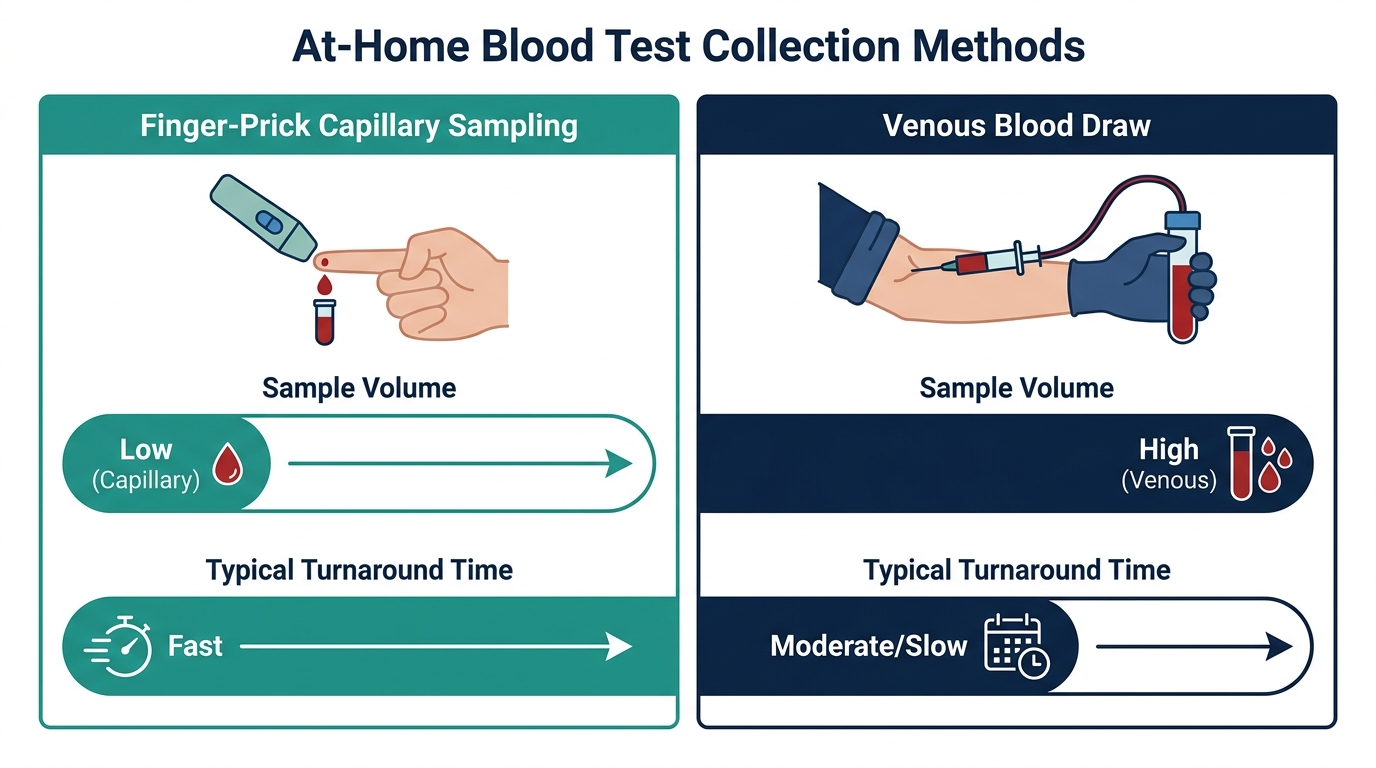
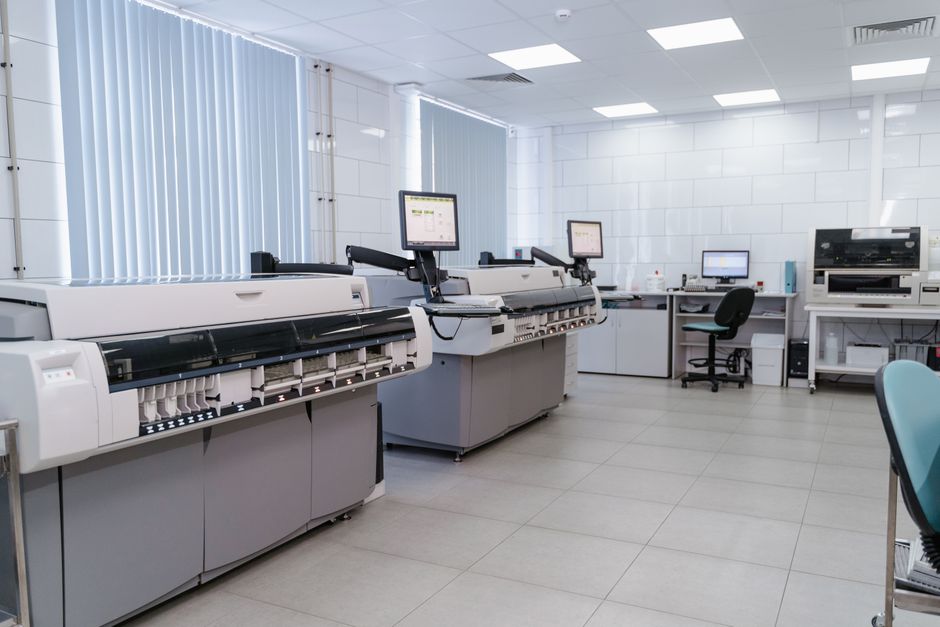
From there it is simple. You either collect a small sample at home with a finger-prick or upper-arm device, or you walk into a partner lab such as Quest Diagnostics for a standard venous draw. The sample is processed by a CLIA-certified or CAP-accredited lab, the same kind your doctor would use, and your results land in a secure dashboard with reference ranges and plain-language explanations. A few states restrict independent ordering, so each service confirms availability at checkout.

Superpower, best for full-body testing without a doctor
Superpower is the service we recommend first for most people who want comprehensive blood work without a doctor, because it bundles 100+ biomarkers, physician ordering, and an ongoing dashboard into one flat annual fee. It is built around longevity and prevention, so it checks hormones, metabolic markers, inflammation, nutrients, and cardiovascular risk that a routine physical often skips.
Pros
- 100+ biomarkers in the baseline panel, far beyond a standard annual checkup.
- Flat ~$199 per year with no per-test surprises, and HSA/FSA eligible.
- Lab draw included at 3,000+ Quest locations, or pay extra for an at-home phlebotomist.
- Physician-reviewed dashboard with trends and a care team you can message.
Cons
- It is a membership, so the value drops if you only want to test once.
- The full draw is venous, not a finger-prick, so you do leave home for collection unless you add mobile phlebotomy.
What sets Superpower apart is value. For the cost of a single specialist visit you get a yearly panel that would run several hundred dollars if you ordered each test a la carte. The dashboard also keeps your history year over year, so you are tracking trends rather than reading a one-off snapshot.
It is the cleanest answer to the question of this article. You sign up online, a network physician orders your labs, you give one sample, and you get a reviewed, full-body readout without booking your own appointment.
Pricing: around $199 per year, HSA/FSA eligible, lab draw included.
Function Health, best for the deepest panel twice a year
Function Health is the pick if you want the most data and will pay for it. Its membership covers 100+ lab tests run twice a year, each round reviewed by a clinician, making it the most thorough self-directed option we tested.
Pros
- 100+ lab tests delivered twice a year, so you catch changes within months, not years.
- Clinician-reviewed results with written notes on what to watch.
- Strong app for organizing a very large set of biomarkers.
Cons
- At roughly $499 per year it is the most expensive option here.
- Two big draws a year is more than casual users need.
Function earns its keep for people managing something specific or optimizing aggressively. Getting two full panels in a year is genuinely useful when you are changing diet, training, or medication and want to see the effect on your labs. For everyone else it can be overkill, and if you will not use both annual draws the extra spend over Superpower is hard to justify.
Pricing: around $499 per year for two full panels.
SEE PLANS AT FUNCTION HEALTH →
Everlywell, best for a single targeted test
Everlywell is the smartest choice when you have one specific question and do not want to buy a membership. You pick a single panel, such as thyroid, hormones, metabolism, or food sensitivity, collect a sample at home, and ship it to a CLIA-certified lab. Kits run from about $49 to $249 depending on the panel.
Pros
- Pay only for the one test you need, no annual commitment.
- Wide menu of focused panels with clear, separate pricing.
- At-home collection with a prepaid return shipping label.
- Most kits are HSA/FSA eligible.
Cons
- Buying several individual kits gets expensive fast versus a membership.
- You do not get an ongoing dashboard tracking everything in one place.
This is the option that maps best to how most people actually behave. You notice a symptom or you are curious about one system, so you test that one thing rather than committing to a full longevity program. The thyroid kit, for example, measures TSH, free T3, free T4, and TPO antibodies from a small blood spot.
Because each kit is ordered through Everlywell’s physician network, it is also the lowest-risk way to try getting blood work without a doctor for the first time. If you like it, you can step up to a broader membership later.
Pricing: roughly $49 to $249 per kit depending on the panel.
SiPhox Health, best for needle-free finger-prick testing
SiPhox Health is our pick if the needle is what has kept you from testing. It uses an at-home finger-prick or a painless upper-arm device for collection, so you never sit for a venous draw, and every product is HSA/FSA eligible with a fast turnaround.
Pros
- Needle-free or finger-prick collection done entirely at home.
- Flexible plans starting from about $125 with monthly, quarterly, or biannual options.
- Up to around 60 biomarkers across nine health categories on higher tiers.
- Personalized action plan included with results, all HSA/FSA eligible.
Cons
- The biomarker count tops out below Superpower and Function on the standard plans.
- Results typically take five to seven days.
The appeal is low friction. There is no lab to drive to and no standard draw to schedule, which makes SiPhox the easiest service to follow through on if past blood work has made you queasy. Results arrive in about five to seven days with a personalized plan.
It sits below the others on raw panel depth, but for low-effort tracking without a clinic visit that tradeoff is often worth it.
Pricing: from around $125, HSA/FSA eligible.
Why trust Vital Signs Today
We compared 12 at-home and direct-to-consumer testing services and reviewed what each panel actually measures, which labs process the samples, and whether the results come with clinician review. We do not score a service on marketing claims. We score it on lab accreditation, biomarker depth, price transparency, and how clearly the dashboard explains your numbers. Our editorial picks are made before any affiliate relationship is considered.
How we picked
We ranked services on the criteria that matter when no doctor is in the room to interpret your labs:
- Lab accreditation: samples must run through CLIA-certified or CAP-accredited labs.
- Physician ordering: a licensed clinician must legally authorize the test on your behalf.
- Biomarker depth: how many markers you get and whether they cover prevention, not just basics.
- Price transparency: a clear flat price with no surprise per-test fees.
- Result usability: reference ranges, trends, and plain-language explanations, ideally with clinician notes.
How to prepare for a self-ordered blood draw
The accuracy of self-ordered blood work depends as much on how you prepare as on which service you pick. Because no clinician is standing beside you to catch a preparation error, the responsibility shifts to you, and a few simple steps prevent the most common causes of misleading results.
- Confirm the fasting requirement before you book. Panels that include glucose, a lipid profile, or insulin usually call for an 8 to 12 hour fast. Water is allowed and actually helps, since it keeps your veins easier to draw and prevents concentration effects. Coffee, even black, can affect some markers, so plain water is the safe choice.
- Time your draw for morning if hormones are involved. Testosterone, cortisol, and several other hormones follow a daily rhythm and are typically highest in the early morning. A panel meant to assess these is most meaningful when collected between roughly 7 and 9 a.m.
- Hold off on intense exercise the day before. A hard workout can transiently raise markers of muscle breakdown and inflammation, which can make a routine panel look abnormal when nothing is wrong.
- List every medication and supplement. Biotin, common in hair and nail supplements, can interfere with certain lab assays, including some thyroid and hormone tests. Many services ask you to pause high-dose biotin for a day or two beforehand.
- Hydrate well the day before. A well-hydrated sample is easier to collect and gives truer concentration-dependent results, which matters most for finger-prick collection where volume is limited.
For finger-prick kits specifically, warm hands and good blood flow make the difference between a usable sample and a rejected one. Running your hands under warm water and letting the arm hang down for a moment before collection helps fill the tube.
How to read and act on results without a doctor in the room
Getting the numbers is the easy part. Interpreting them responsibly, without a clinician walking you through each line, is where people go wrong. A structured approach keeps you from either ignoring a real signal or spiraling over a harmless one.
- Read each result against the reference range on your own report, not a number from a search result. Labs calibrate differently, and the range printed beside your value is the one that applies to you.
- Separate a mild out-of-range flag from a marked one. A value just outside the range is common and often meaningless, since roughly 1 in 20 healthy people fall outside the range on any given test by chance. A value far outside the range carries more weight.
- Look at patterns, not single lines. Related markers move together and give context. A single flagged number surrounded by normal neighbors tells a calmer story than a cluster of related markers all pointing the same way.
- Repeat before you react. Many out-of-range results are transient, driven by hydration, a recent meal, a workout, or a passing illness. A clean repeat is often the most informative next step.
- Escalate the genuinely concerning ones. A markedly abnormal result, or any result paired with real symptoms, is a reason to bring the report to a licensed clinician who can order confirmatory testing and interpret it against your full history.
The services in this guide help here by adding clinician review and plain-language explanations, but that review is not a substitute for your own doctor when something is truly off. Treat the dashboard as a starting point for a conversation, not the final word.
What self-ordered blood work does not replace
Direct-to-consumer testing is a genuine advance, but it is important to be clear-eyed about its limits so you do not lean on it for things it was never designed to do.
- It is not a diagnosis. These panels are built for tracking and awareness. A number out of range flags a question, and only a clinician who can examine you and see your history can turn that into a diagnosis.
- It does not replace preventive screening tied to imaging or procedures. Blood work cannot substitute for a colonoscopy, a mammogram, a Pap smear, or a skin check. These remain essential and are ordered through the usual medical channels.
- It does not manage an acute illness. If you are actively sick, in pain, or have red-flag symptoms, the right move is to see a clinician promptly, not to order a panel and wait several days for results.
- It does not cover every marker. Even the deepest consumer panels leave out some specialized tests that require a specific clinical indication to order and interpret.
Used within these boundaries, self-ordered testing is a powerful complement to regular care. Used as a replacement for it, it can create false reassurance. The healthiest framing is that these services put more information in your hands, and that information works best when it feeds into, rather than bypasses, your relationship with a clinician.
How to keep the cost down and choose the right frequency
The price differences between these services are large, and the smartest choice depends less on which is best in the abstract and more on how often you actually plan to test.
- Use HSA or FSA dollars. Most of these services are HSA and FSA eligible, which lets you pay with pre-tax money and effectively discounts the cost depending on your tax bracket. This is the single biggest lever for lowering what you spend.
- Match frequency to your goal. If you are establishing a baseline and rechecking once a year, a flat annual membership tends to win on value. If you are actively changing diet, training, or medication and want to see the effect within months, a twice-yearly option earns its higher price.
- Do not buy a membership for a single question. If you only want to check one system, a single targeted kit is far cheaper than an annual plan, and you can always upgrade later.
- Watch for redundant testing. Ordering overlapping panels from multiple services in the same window wastes money. Pick one primary service and let it own your history so you are tracking trends in one place rather than scattering results across apps.
A practical rule of thumb: choose the cheapest option that covers everything you will actually look at, then stick with it long enough to build a trend line. A consistent yearly panel you keep in one dashboard is more useful than a scattered pile of one-off tests.
Common mistakes people make with at-home testing
A few recurring errors undercut the value of self-ordered blood work. Avoiding them is easy once you know what to watch for.
- Skipping the preparation instructions. Eating before a fasting panel or collecting a hormone test in the afternoon is the fastest way to get a misleading result that sends you down a needless rabbit hole.
- Panicking over a single mild flag. A value slightly outside the range is common and often harmless. Reacting to one borderline number without a repeat or context causes a lot of avoidable stress.
- Never sharing concerning results with a clinician. The flip side of over-worrying is ignoring a genuinely abnormal result because there was no doctor in the loop. Real out-of-range findings deserve a professional set of eyes.
- Botching a finger-prick collection. Cold hands, too little blood, or contamination can produce a rejected or inaccurate sample. Warming the hands and following the volume instructions closely matters more than people expect.
- Testing once and calling it done. The real value of these services is trend over time. A single snapshot tells you far less than the same panel repeated on a schedule, so build the habit rather than testing once and forgetting.
Sidestep these and self-ordered blood work becomes exactly what it promises to be: a low-friction way to keep an informed eye on your health between visits to a clinician.
Don’t just read about your health, track it.
A single result is a snapshot. Superpower re-tests 100+ markers over time so you can watch them move as you change sleep, food, and training.
Frequently asked questions
Is it legal to get blood work without a doctor?
Yes, in most U.S. states. The testing company’s own network physician reviews and authorizes your order, which satisfies the legal requirement for a clinician to sign off. A handful of states restrict fully independent ordering, so each service confirms availability in your state at checkout.
Are at-home and self-ordered blood tests accurate?
They are processed by the same CLIA-certified or CAP-accredited labs that hospitals and doctors use. Accuracy depends mostly on following the collection instructions carefully, especially for finger-prick samples where the volume and technique matter.
Will my insurance cover self-ordered blood work?
Insurance usually does not reimburse direct-to-consumer tests, but most of these services are HSA/FSA eligible, so you can pay with pre-tax dollars. That effectively lowers your cost depending on your tax bracket.
Should I still tell my doctor about the results?
Yes. These tests are for tracking and awareness, not diagnosis. If a result is out of range or concerning, share the report with a licensed clinician who can order confirmatory testing and put it in the context of your full history.
Which service is best if I only want to test once?
A single Everlywell kit is the most cost-effective for a one-time, targeted test. If you want a full-body baseline rather than one panel, Superpower gives you 100+ biomarkers for a flat annual fee that often beats buying many individual tests.
The bottom line
Getting blood work without a doctor is now genuinely easy, legal in most states, and run through the same labs your physician would use. For a complete picture of your health in one place, Superpower is our top pick at around $199 a year. If you want maximum depth twice a year, Function Health delivers it for around $499. For a single targeted question, an Everlywell kit keeps it cheap, and SiPhox Health is the easiest path if you want to skip the needle. Pick the one that matches how often you plan to test, then share anything concerning with a clinician.
Sources
- Superpower, official pricing and membership details (superpower.com)
- Athletech News, Superpower Blood Test Review 2026 (athletechnews.com)
- Function Health, membership and twice-yearly testing details (functionhealth.com)
- Everlywell, product catalog and thyroid test specifications (everlywell.com)
- SiPhox Health, pricing and program pages (siphoxhealth.com)
- Centers for Medicare and Medicaid Services, CLIA laboratory certification overview (cms.gov)