Wondering if your cortisol is actually driving your stress and fatigue? One draw checks it alongside 100+ other biomarkers. One at-home Superpower draw checks 100+ biomarkers, physician-reviewed.
- A cortisol blood test measures the amount of the stress hormone cortisol circulating in your blood, and a typical morning (6 a.m. to 8 a.m.) result falls between 10 and 20 micrograms per deciliter (mcg/dL) according to Cleveland Clinic.
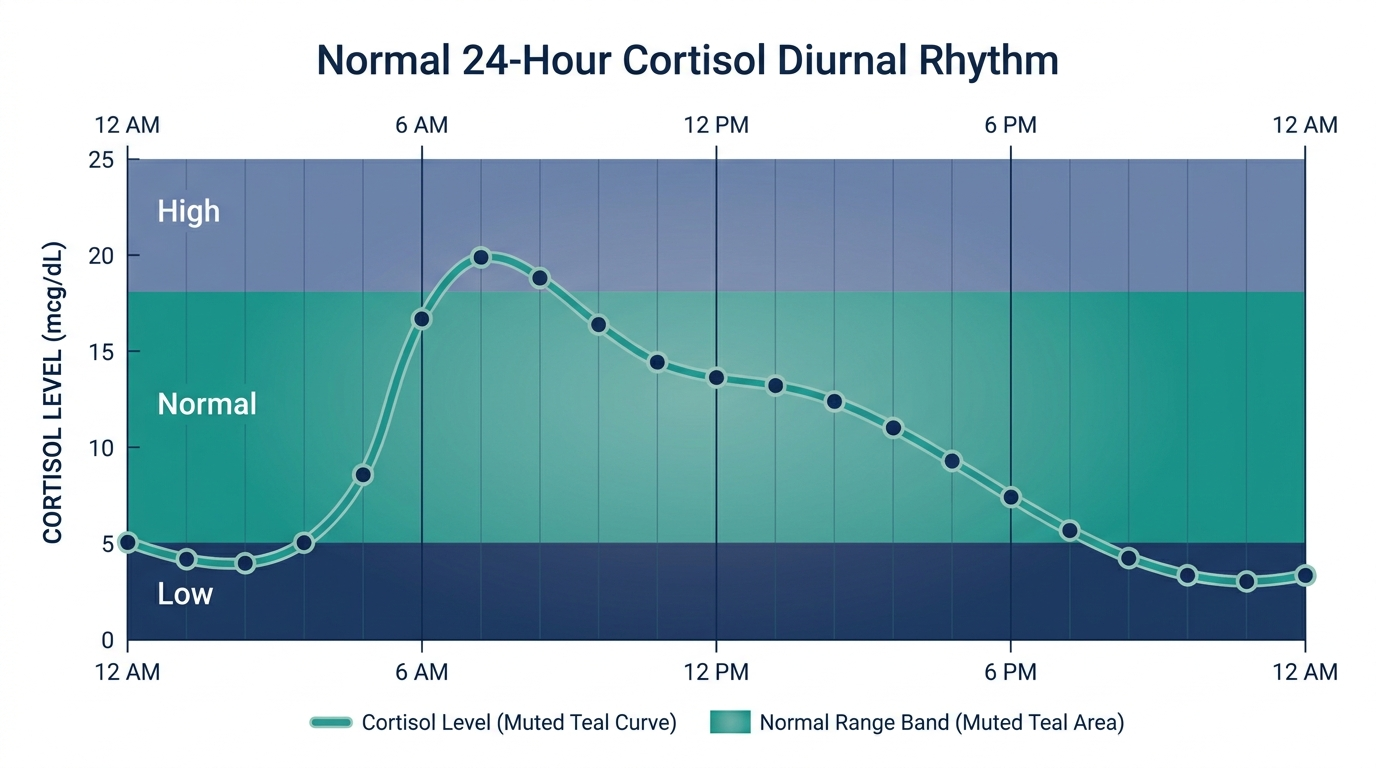
- Cortisol follows a daily rhythm that peaks in the early morning and drops to its lowest point near midnight, so the time of day your blood is drawn changes what counts as a normal result.
- Persistently high cortisol can point to Cushing syndrome, while persistently low cortisol can point to Addison disease (primary adrenal insufficiency), per MedlinePlus, though one number is rarely enough to diagnose either.
What is cortisol in a blood test?
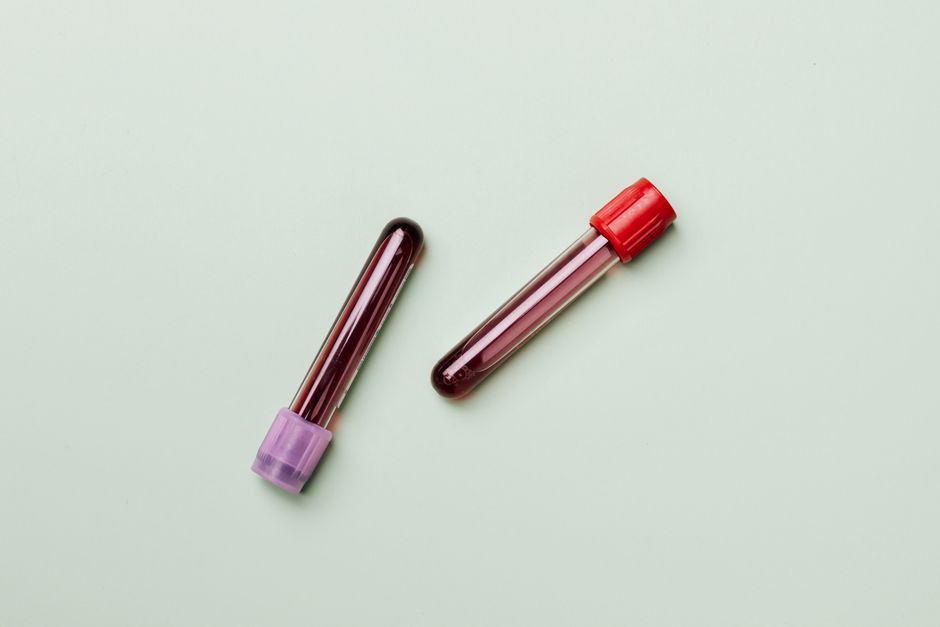
A cortisol blood test measures how much cortisol, the body’s main stress hormone made by the adrenal glands, is present in a blood sample. For a morning draw between 6 a.m. and 8 a.m., Cleveland Clinic lists a normal range of 10 to 20 mcg/dL, and by around 4 p.m. that range typically falls to about 3 to 10 mcg/dL. MedlinePlus reports a slightly different 8 a.m. window of 5 to 25 mcg/dL, which reflects how reference ranges vary by laboratory and assay.
Cortisol does far more than respond to stress. It helps regulate blood sugar, blood pressure, metabolism, inflammation, and the sleep and wake cycle. Because the hormone is constantly shifting, the lab almost always notes the exact time the sample was collected. The result on its own is a snapshot, not a verdict, and your clinician reads it against the clock and your symptoms.

Why is cortisol measured?
Cortisol is measured mainly to check whether the adrenal glands are making too much or too little of it, which is why MedlinePlus names Cushing syndrome (excess cortisol) and Addison disease (deficient cortisol) as the two conditions the test most often investigates. A clinician may order it when symptoms suggest a hormone imbalance rather than as a routine screen.
Common reasons your clinician might order a cortisol test include the following.
- Signs of high cortisol: weight gain around the trunk and face, a fatty hump between the shoulders, purple stretch marks, easy bruising, high blood pressure, and muscle weakness.
- Signs of low cortisol: ongoing fatigue, unexplained weight loss, low blood pressure, darkening of the skin, nausea, and salt craving.
- Monitoring known disease: tracking treatment for an adrenal or pituitary disorder over time.
Because cortisol rises with physical and emotional stress, even a needle stick or a poor night of sleep can nudge the number, so clinicians interpret it carefully rather than in isolation.
What does a high cortisol mean?
A high cortisol result means your blood holds more of the hormone than expected for the time of day, and when it stays elevated it can signal Cushing syndrome, which MedlinePlus describes as a state of too much cortisol. A single high morning value above the roughly 10 to 20 mcg/dL range from Cleveland Clinic does not confirm the diagnosis on its own.
Many things temporarily raise cortisol without disease being present.
- Acute stress: illness, surgery, pain, or anxiety during the blood draw.
- Medications: corticosteroid drugs and estrogen-containing pills such as some birth control.
- Pregnancy: cortisol-binding proteins rise, lifting total measured cortisol.
When true overproduction is suspected, clinicians confirm it with follow-up tests rather than one blood level. The overnight dexamethasone suppression test is a common next step. After a dose of dexamethasone, an 8 a.m. cortisol under 1.8 mcg/dL is considered a normal, suppressed result, and StatPearls notes that a value above 1.8 mcg/dL raises concern for hypercortisolism, with levels above 5 mcg/dL suggesting significant excess.
What does a low cortisol mean?
A low cortisol result means your blood holds less of the hormone than expected, and persistently low levels can indicate adrenal insufficiency, including Addison disease, which MedlinePlus defines as the body making too little cortisol. A morning value well below the usual 10 to 20 mcg/dL window deserves attention because cortisol should be at its daily peak then.
Low cortisol can stem from a problem in the adrenal glands themselves (primary) or from the pituitary gland failing to send the signal hormone ACTH (secondary). To tell the difference and confirm a true deficiency, clinicians often use the ACTH stimulation test, also called the cosyntropin test. Cleveland Clinic explains that synthetic ACTH is injected and cortisol is measured before and after to see whether the adrenal glands can respond. Healthy glands raise cortisol after the injection, while glands that stay flat point toward adrenal insufficiency.
A sudden, severe drop in cortisol can cause an adrenal crisis, a medical emergency with very low blood pressure, vomiting, and confusion that needs immediate treatment.
How is cortisol interpreted with other markers?
Cortisol is rarely read alone. The single most important companion is the collection time, because Cleveland Clinic notes cortisol is highest in the early morning and lowest near midnight, so a 4 p.m. value of 3 to 10 mcg/dL and an 8 a.m. value of 10 to 20 mcg/dL can both be normal. Time stamps come before any pairing with other labs.
After timing, clinicians often look at cortisol alongside related hormones and dynamic tests.
- ACTH: the pituitary hormone that tells the adrenal glands to make cortisol. Pairing the two helps locate whether a problem sits in the adrenal glands or the pituitary.
- Dexamethasone suppression test: checks whether cortisol can be turned down, with a normal 8 a.m. result under 1.8 mcg/dL per StatPearls.
- ACTH stimulation test: checks whether cortisol can be turned up after a cosyntropin injection, per Cleveland Clinic.
This pattern of suppression and stimulation, rather than one resting number, is how the picture comes together.
An insider nuance: the clock matters more than the cutoff
Here is something experienced clinicians lean on that patients rarely hear. The exact time of your draw often matters more than whether you sit one or two points outside the printed range, because cortisol can roughly halve between an 8 a.m. and a 4 p.m. sample, moving from about 10 to 20 mcg/dL down toward 3 to 10 mcg/dL per Cleveland Clinic figures. A value that looks alarming on paper can be completely normal once the timing is known.
This is why a random afternoon cortisol drawn for vague fatigue is hard to act on, and why standardized 8 a.m. draws or dynamic tests are preferred. Two practical points follow. First, ask what time your sample was taken before worrying about a number. Second, late shift work, recent travel across time zones, and disrupted sleep can shift your internal clock and the result with it. The reference range assumes a normal day and night pattern, so an unusual schedule is worth mentioning to your clinician.
Cortisol reference ranges by time of day
Because cortisol swings across the day, a single set of numbers cannot describe “normal.” Instead, clinicians read your result against the time your blood was drawn. The values below are typical adult ranges, but they vary by laboratory and assay, so always compare your result to the range printed on your own report.
| Time of collection | Typical range | What it reflects |
|---|---|---|
| 6 a.m. to 8 a.m. (morning peak) | About 10 to 20 mcg/dL (Cleveland Clinic) | The daily high point, best for a reliable read. |
| Around 4 p.m. (afternoon) | About 3 to 10 mcg/dL (Cleveland Clinic) | Naturally about half the morning value. |
| Late night (near midnight) | Lowest of the day | Often measured in saliva to catch the nighttime trough. |
| After dexamethasone (8 a.m.) | Under 1.8 mcg/dL is normal (StatPearls) | Tests whether cortisol can be suppressed. |
The single biggest interpretation mistake is comparing an afternoon result to a morning range. A value of 8 mcg/dL is perfectly normal at 4 p.m. but would be low first thing in the morning. This is why the collection time is stamped on the report and why standardized 8 a.m. draws are preferred when the question is whether the adrenal system is working.

The biology: how the HPA axis controls cortisol
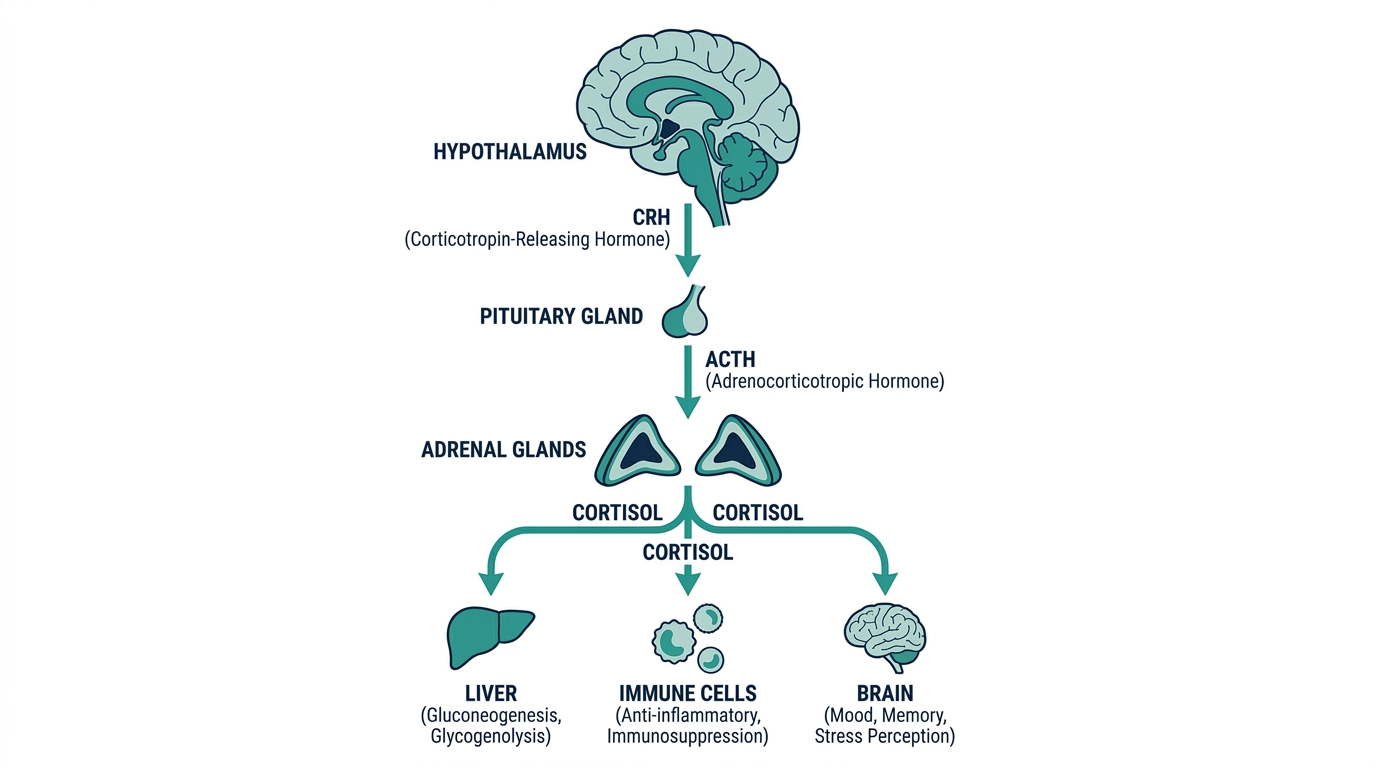
Cortisol does not float freely under its own control. It sits at the end of a chain of command called the hypothalamic-pituitary-adrenal axis, or HPA axis, and understanding that chain explains why a high or low result can arise from three different places.
- The hypothalamus in the brain releases a signal called CRH.
- The pituitary gland responds to CRH by releasing ACTH into the blood.
- The adrenal glands, sitting atop the kidneys, respond to ACTH by producing cortisol.
Cortisol then feeds back to the brain and pituitary to switch off further CRH and ACTH, a self-regulating loop that keeps levels in check. This is why clinicians measure ACTH alongside cortisol: a high cortisol with a suppressed ACTH points to the adrenal glands overproducing on their own, while a high cortisol with a high ACTH points upstream toward the pituitary. The same logic works in reverse for low cortisol, separating a primary adrenal problem from a pituitary signaling problem. Once you see cortisol as the output of a three-step relay rather than a standalone number, the pattern of follow-up tests makes intuitive sense.
Symptoms to watch and when to seek care
A cortisol number gains meaning when read against how you feel. Because both excess and deficiency produce recognizable patterns, the symptoms often guide which direction a clinician investigates.
Signs that may accompany high cortisol
- Weight gain concentrated around the abdomen and face, sometimes called a rounded or “moon” face.
- A fatty pad between the shoulders, thinning skin, and easy bruising.
- Wide purple or pink stretch marks, high blood pressure, and muscle weakness.
- Mood changes, difficulty sleeping, and in some people higher blood sugar.
Signs that may accompany low cortisol
- Persistent deep fatigue that rest does not fix, and unexplained weight loss.
- Low blood pressure, dizziness on standing, nausea, and salt craving.
- Darkening of the skin, especially over scars, knuckles, and skin folds, in primary adrenal insufficiency.
Certain features are red flags that warrant urgent care rather than a routine appointment. Severe weakness, vomiting, confusion, abdominal pain, and very low blood pressure can signal an adrenal crisis, a life-threatening emergency in which the body cannot produce enough cortisol under stress. Anyone with known adrenal insufficiency who becomes acutely ill should seek immediate treatment.
What can raise or lower a cortisol result
Cortisol is one of the most easily skewed lab values because it responds to stress in real time. Before treating a single result as the truth about your adrenal glands, it helps to know what can move it.
- Acute stress and illness: pain, infection, surgery, and even anxiety during the needle stick can lift cortisol temporarily.
- Estrogen and pregnancy: estrogen-containing birth control and pregnancy raise cortisol-binding globulin, which increases total measured cortisol without necessarily raising the active hormone.
- Corticosteroid medications: prescribed steroids can either raise measured cortisol or suppress the body’s own production, depending on the drug and timing.
- Sleep disruption and shift work: a scrambled day and night cycle shifts the whole rhythm, so the reference range, which assumes a normal schedule, may not apply.
- Recent travel across time zones: jet lag temporarily desynchronizes the internal clock.
The practical lesson is that context matters as much as the number. Tell your clinician about recent illness, medications, birth control, pregnancy, and your sleep and work schedule, because any of these can change how a cortisol result should be read.
Sample interpretation scenarios
Concrete examples show how the same figure can carry different meanings. These illustrate the reasoning clinicians use and are not personalized advice.
- Morning cortisol of 16 mcg/dL, no symptoms: squarely within the typical 8 a.m. range, this is a reassuring result on its own.
- Afternoon cortisol of 7 mcg/dL: this looks low against a morning range but is normal for 4 p.m., a classic timing trap.
- Morning cortisol of 4 mcg/dL with fatigue and low blood pressure: a low value at the daily peak, paired with symptoms, is worth investigating for adrenal insufficiency, usually confirmed with an ACTH stimulation test.
- High morning cortisol that fails to suppress after dexamethasone: an 8 a.m. value above 1.8 mcg/dL after the test raises concern for hypercortisolism and prompts further workup.
In every case the interpretation depends on timing, symptoms, and follow-up testing rather than one resting number.
What to do after an abnormal cortisol result
An out-of-range cortisol value is a starting point for a conversation, not a diagnosis you should act on alone. The right next steps depend on the direction of the result and how you feel.
- Confirm the timing first. Before anything else, check what time your blood was drawn. An afternoon draw compared to a morning range is the most common false alarm, and simply repeating the test at 8 a.m. may resolve it.
- Bring your full context to your clinician. List every medication and supplement, mention birth control or pregnancy, and describe your sleep and work schedule, since each can move the number.
- Expect confirmatory testing. A high result may lead to a dexamethasone suppression test or repeat measurements, while a low result usually leads to an ACTH stimulation test. One resting value rarely settles the question.
- Do not stop or start steroids on your own. Corticosteroid medicines profoundly affect cortisol, and abrupt changes can be harmful. Any adjustment belongs with your prescriber.
- Know the emergency signs. Severe weakness, vomiting, confusion, and very low blood pressure need urgent care, especially in anyone with known adrenal insufficiency.
For most people, an isolated abnormal cortisol simply prompts a better-timed repeat test and a review of medications and stressors. The value of the result lies in what it triggers next, not in the single number on the page.
Cortisol, stress, and everyday health
Cortisol earned its reputation as the stress hormone because it surges when the body perceives a threat, sharpening focus and mobilizing energy. In short bursts this is protective and normal. The concern arises when the stress response stays switched on for long stretches, since chronically elevated cortisol is associated with disrupted sleep, higher blood sugar, and changes in appetite and weight. This is different from a diagnosed disorder like Cushing syndrome, and a blood test cannot label ordinary daily stress as a disease.
What a cortisol result can offer is context. If you have symptoms that fit a hormone imbalance, the test helps a clinician decide whether to look deeper. If your levels are normal, that itself is useful reassurance, redirecting attention to sleep, workload, and lifestyle rather than an adrenal problem. Understanding that cortisol naturally rises and falls each day, and rises further under stress, helps set realistic expectations for what a single measurement can and cannot tell you.
Common misconceptions about cortisol testing
Cortisol is a popular topic in wellness circles, which has spread a few misunderstandings worth correcting.
- “A single cortisol level can diagnose adrenal fatigue.” The term “adrenal fatigue” is not a recognized medical diagnosis, and a lone cortisol value cannot confirm a subtle imbalance. Genuine adrenal disorders are diagnosed with dynamic testing.
- “Any high cortisol means Cushing syndrome.” Stress, illness, and certain medications commonly raise cortisol without disease, which is why confirmation testing exists.
- “Cortisol should be as low as possible.” Cortisol is essential for blood sugar, blood pressure, and the stress response. Too little is dangerous, not virtuous.
- “The blood test is the only way to measure cortisol.” Saliva and 24-hour urine tests answer different questions, and the best choice depends on what a clinician is checking.
Keeping these straight helps you read a cortisol result calmly. The most useful habit is to ask two questions before reacting: what time was the sample drawn, and what do my symptoms suggest?
Curious where your cortisol really sits?
Baseline cortisol and 100+ biomarkers today and retest as life changes, all in one membership with physician review.
Frequently asked questions
Do I need to fast before a cortisol blood test?
Fasting is usually not required for a standard cortisol blood test, but timing is. Because levels peak in the morning, draws are often scheduled around 8 a.m. Follow your clinician’s instructions, since some related tests or medications can have specific prep rules.
What time of day is best to test cortisol?
Early morning, around 8 a.m., is the standard time because cortisol naturally peaks then, giving the most reliable reference point. Cleveland Clinic lists a normal 6 a.m. to 8 a.m. range of 10 to 20 mcg/dL. Afternoon draws are lower and used for specific questions.
Can stress alone cause a high cortisol result?
Yes. Cortisol is the body’s main stress hormone, so acute stress, illness, pain, or even anxiety during the blood draw can temporarily raise it. This is why a single high value does not confirm Cushing syndrome and clinicians use follow-up testing.
What is a dangerously low cortisol level?
There is no single universal cutoff, but a very low morning cortisol with symptoms like extreme fatigue, low blood pressure, and vomiting can signal adrenal crisis, a medical emergency. Clinicians confirm low cortisol with an ACTH stimulation test rather than one reading.
Is a cortisol blood test the same as a saliva or urine test?
No. Cortisol can be measured in blood, saliva, or urine, and each suits different questions. Blood gives a point-in-time level, late-night saliva captures the nighttime low, and 24-hour urine measures total daily output. Your clinician picks the type based on what they are checking.
Sources
- Cleveland Clinic, Cortisol Test
- MedlinePlus, Cortisol Test
- MedlinePlus Medical Encyclopedia, Cortisol blood test
- StatPearls (NCBI Bookshelf), Dexamethasone Suppression Test
- Cleveland Clinic, ACTH (Cosyntropin) Stimulation Test
This article is for general educational purposes and is not medical advice. It cannot diagnose or treat you and does not replace your clinician. Always discuss your lab results and any health decisions with a qualified healthcare professional.
Related reading
Related: best at-home thyroid and hormone tests.
Vital Signs Today may earn a commission if you buy through links on this page. It does not affect our editorial assessments.