The optimal vitamin D level for most adults is between 30 and 50 nanograms per milliliter (ng/mL), or 75 to 125 nanomoles per liter (nmol/L), based on current evidence from major health organizations. Levels below 20 ng/mL indicate deficiency, while levels above 60 ng/mL may pose risks.
Related: See the vitamin D reference chart by age and sex
Key Takeaways
- Optimal vitamin D level: 30–50 ng/mL (75–125 nmol/L) for general health.
- Levels below 20 ng/mL are considered deficient and linked to bone loss and immune issues.
- Levels above 60 ng/mL may increase risk of toxicity and should be avoided without medical supervision.
- Testing is done via a simple blood test for 25-hydroxyvitamin D.
- Sunlight, diet, and supplements can help maintain optimal levels, but individual needs vary.
What Is the Optimal Vitamin D Level?
The optimal vitamin D level is a blood concentration of 30 to 50 ng/mL (75 to 125 nmol/L) for most healthy adults, according to the Endocrine Society and the Institute of Medicine.
Vitamin D is a fat-soluble vitamin that plays a critical role in calcium absorption, bone health, immune function, and cell growth. To determine whether your level is optimal, doctors measure the concentration of 25-hydroxyvitamin D in your blood. This is the most reliable marker of vitamin D status. For a deeper look at how biomarkers like this are used in health assessment, see our guide on Biomarkers Explained.
Research shows that maintaining levels within the 30–50 ng/mL range supports bone density, reduces fracture risk, and may help regulate immune responses. Some experts argue that levels up to 60 ng/mL could be beneficial for certain populations, such as older adults or those with malabsorption disorders, but the consensus remains that 30–50 ng/mL is a safe and effective target for the general population.
How Is Vitamin D Level Measured?
Vitamin D level is measured through a simple blood test that checks the concentration of 25-hydroxyvitamin D, also called calcidiol.
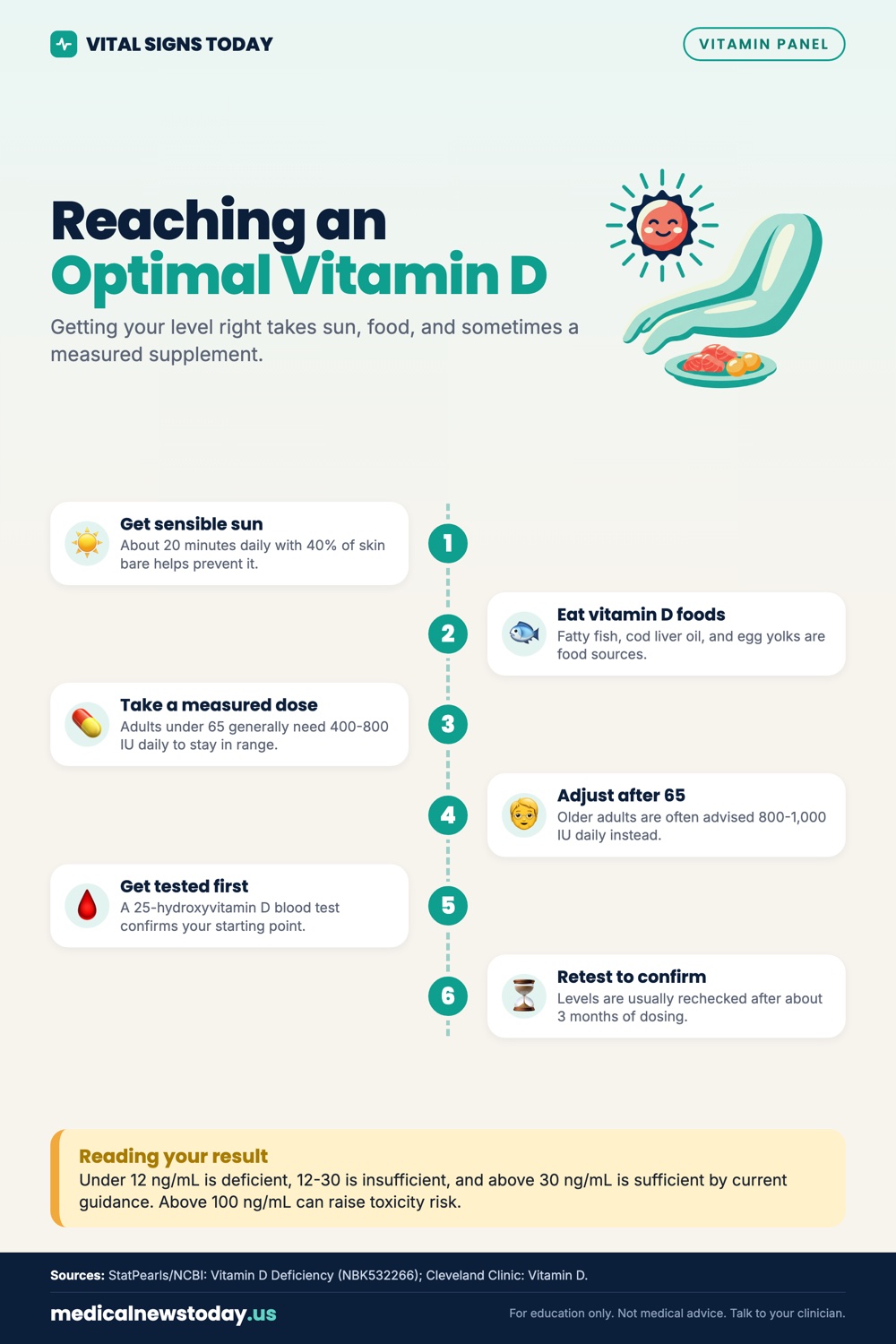
This test is widely available and does not require fasting. Results are typically reported in nanograms per milliliter (ng/mL) or nanomoles per liter (nmol/L). To convert, multiply ng/mL by 2.5 to get nmol/L. For example, 30 ng/mL equals 75 nmol/L. Most labs consider levels below 20 ng/mL (50 nmol/L) as deficient, 20–29 ng/mL as insufficient, 30–50 ng/mL as sufficient, and above 60 ng/mL as potentially excessive.
It is important to note that different laboratories may use slightly different reference ranges, so always discuss your results with a healthcare provider who can interpret them in the context of your overall health.
What Happens if Vitamin D Is Too Low?
When vitamin D levels fall below 20 ng/mL, the body cannot absorb calcium efficiently, leading to weakened bones and an increased risk of fractures.
In children, severe deficiency causes rickets, a condition where bones become soft and deformed. In adults, low vitamin D is linked to osteomalacia (softening of bones), osteoporosis, and muscle weakness. Emerging evidence also suggests that chronic low levels may impair immune function, raising the risk of respiratory infections, autoimmune diseases, and mood disorders such as depression.
People with darker skin, those who live in northern latitudes, older adults, and individuals with obesity or digestive conditions like Crohn’s disease are at higher risk for deficiency. Regular testing can help identify low levels early.
What Happens if Vitamin D Is Too High?
Vitamin D levels above 60 ng/mL (150 nmol/L) can lead to toxicity, a condition called hypervitaminosis D, which causes dangerously high calcium levels in the blood.
Excess vitamin D usually results from taking very high doses of supplements over a long period, not from sunlight or diet. Symptoms include nausea, vomiting, weakness, frequent urination, and kidney stones. In severe cases, it can cause kidney damage and calcification of soft tissues. The tolerable upper intake level for adults is 4,000 IU per day from supplements, but toxicity typically occurs only at doses above 10,000 IU daily for months.
If you are taking high-dose vitamin D supplements, your doctor should monitor your blood levels regularly to keep them in the safe range.
How Can I Achieve an Optimal Vitamin D Level?
You can achieve an optimal vitamin D level through a combination of sensible sun exposure, dietary sources, and supplements when needed.
Sunlight triggers vitamin D synthesis in the skin. Spending 10 to 30 minutes in the midday sun several times a week, with arms and legs exposed, can help maintain levels. However, factors like latitude, season, sunscreen use, and skin pigmentation affect production. Food sources include fatty fish (salmon, mackerel, sardines), cod liver oil, egg yolks, and fortified foods like milk and cereals. For many people, especially those in northern climates or with limited sun exposure, a daily supplement of 600 to 2,000 IU is recommended to reach and maintain the 30–50 ng/mL range.
It is best to get your level tested before starting supplements, so you can tailor the dose to your needs. Retesting after three to six months can confirm you are on track.
Frequently Asked Questions
Can vitamin D be toxic?
Yes, vitamin D can be toxic if taken in very high doses for extended periods. Toxicity usually occurs at daily intakes above 10,000 IU for several months, leading to hypercalcemia. Symptoms include nausea, vomiting, and kidney problems. It is very rare from sunlight or food alone. To stay safe, do not exceed 4,000 IU daily without medical supervision, and have your blood levels checked if you take high doses.
What is the best time to take vitamin D supplements?
The best time to take vitamin D supplements is with a meal that contains fat, as vitamin D is fat-soluble and absorbs better when consumed with dietary fat. Many people take it with their largest meal of the day, such as lunch or dinner. Consistency matters more than the exact time, so choose a time you can stick to daily.
Do I need a vitamin D supplement if I get enough sun?
If you get regular, sensible sun exposure year-round and have light skin, you may not need a supplement. However, many people do not get enough sun due to indoor lifestyles, sunscreen use, or living at higher latitudes. A blood test is the only way to know for sure. If your level is below 30 ng/mL, a supplement can help you reach the optimal range safely.
This article is for general information and is not medical advice. See our Medical Disclaimer.