Maybe a doctor in the emergency room ordered it after you mentioned a swollen calf or a sudden shortness of breath. Maybe it showed up on a printout with a strange three-letter name and a number next to it, and you went home wondering what you were actually tested for. Either way, you ended up here asking a simple question that turns out to have a surprisingly clever answer.
A D-dimer result rules things out more than it rules them in. See your broader clotting and health picture too. One at-home Superpower draw checks 100+ biomarkers, physician-reviewed.
D-dimer is not your average lab value. Most blood tests are most useful when they come back positive. This one is most useful when it comes back negative. Understanding why flips the whole thing on its head, and it explains why a normal result can be one of the most reassuring numbers on your chart.
What blood test is D-dimer?
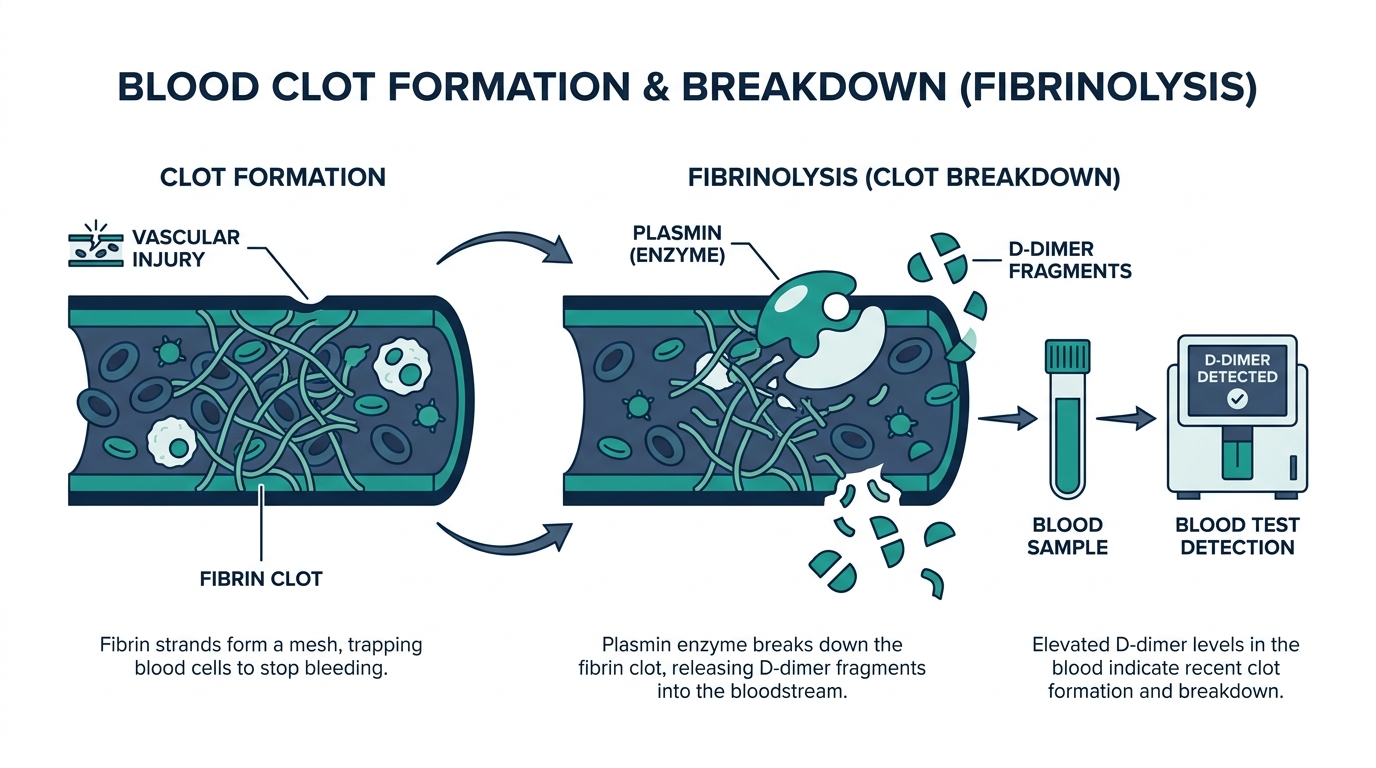
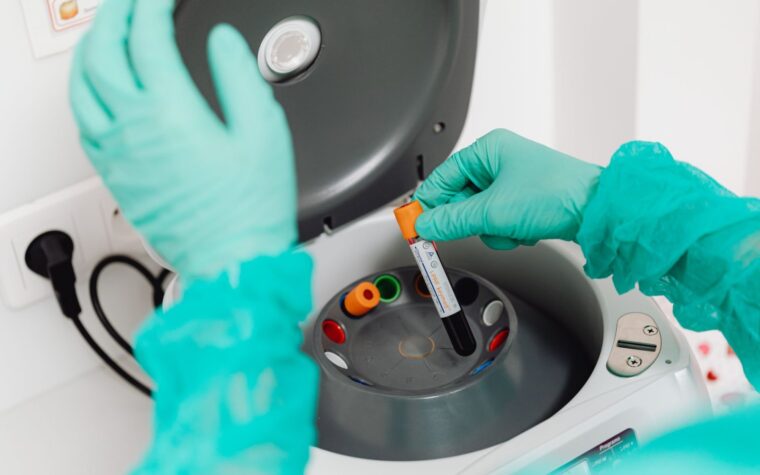
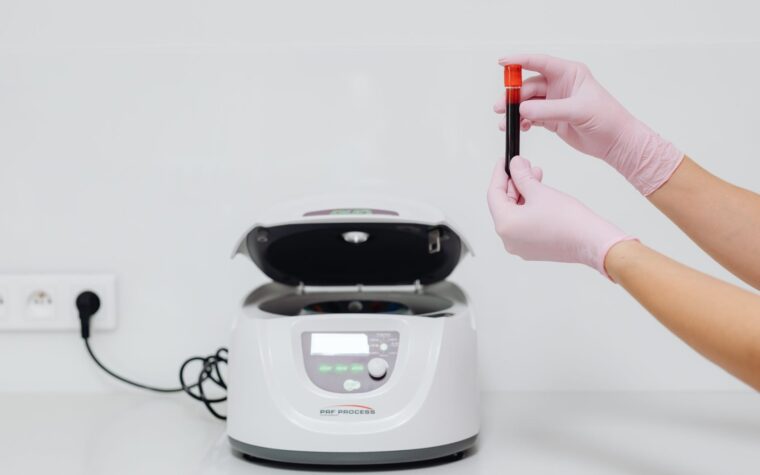
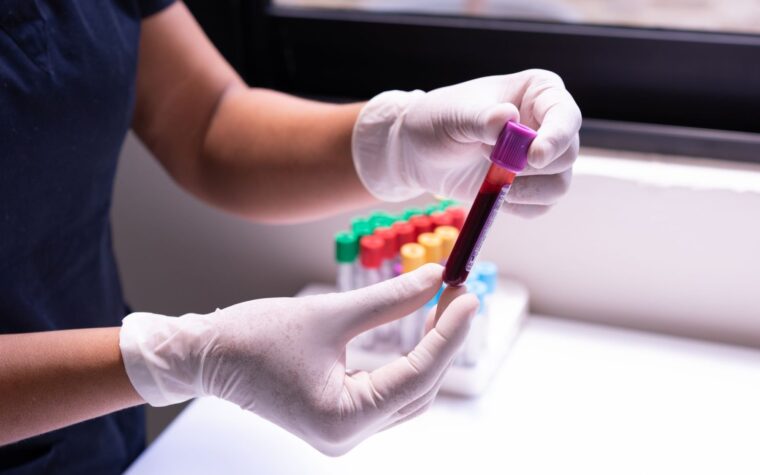
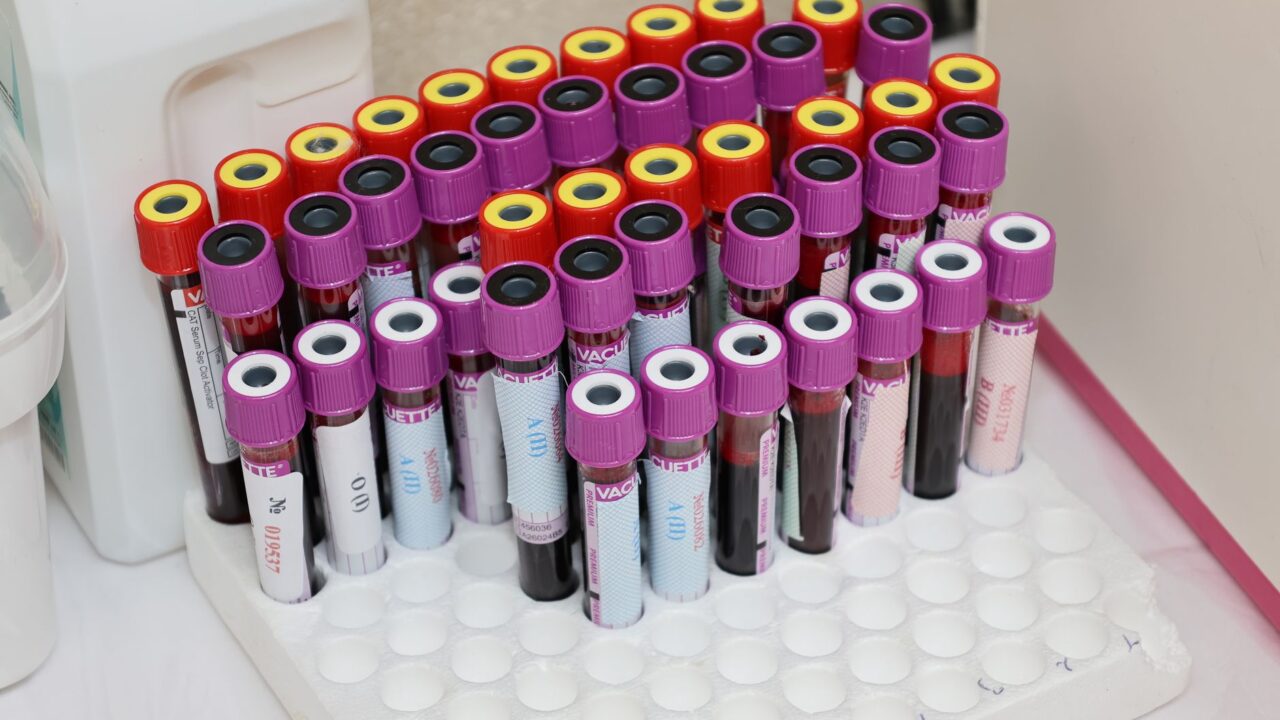
The question “what blood test is D-dimer” has a precise answer: D-dimer is a blood test that measures a small protein fragment your body releases when a blood clot breaks down. That fragment is also called D-dimer, which is why the test and the substance share a name. It is a simple blood draw, usually from a vein in your arm, run on a sample in the lab (MedlinePlus).
In plain terms, D-dimer is a debris detector. When a clot forms and then your body starts dissolving it, leftover pieces float into your bloodstream. The test counts how much of that debris is present. A low or absent level suggests no significant clotting is happening. A high level says clot activity is underway somewhere, though it cannot tell you where (Cleveland Clinic).
What is the D-dimer blood test actually measuring?
The D-dimer blood test is measuring a fibrin degradation product, which is the technical name for the leftover scraps of a dissolved clot. Here is the chain of events behind it. When you bleed, your body weaves a protein called fibrin into a net that holds a clot together. Once the injury heals, an enzyme system chops that fibrin net apart, and one of the specific fragments it leaves behind is D-dimer (MedlinePlus).
The clever part is that D-dimer only appears when both steps have happened: a clot formed, and then it started breaking down. That two-step requirement is what makes the test specific to active clot turnover rather than just any protein floating around. In a healthy person who is not forming clots, there is very little D-dimer to find.
This is why the test is so closely tied to two conditions in particular: deep vein thrombosis (DVT), a clot usually in a leg vein, and pulmonary embolism (PE), a clot that has traveled to the lungs. Both flood the blood with D-dimer as the body tries to dissolve the clot (StatPearls, NCBI).
What is a normal D-dimer level?
A normal D-dimer is generally below 500 ng/mL (or 0.50 micrograms/mL), and a result at or above that cutoff is considered positive (StatPearls, NCBI). That said, there is no single universal “normal” range, because laboratories use several different assay methods and report in different units. Your own lab report will state whether your result is normal, low, or high (Cleveland Clinic).
The practical takeaway: always read your D-dimer against the reference range printed on your own report, not against a number you found online. The 500 ng/mL figure is the most widely used threshold, but the units on your page matter, and a lab that reports in D-dimer units (DDU) rather than fibrinogen equivalent units (FEU) will use a different cutoff.

What does a high D-dimer mean?
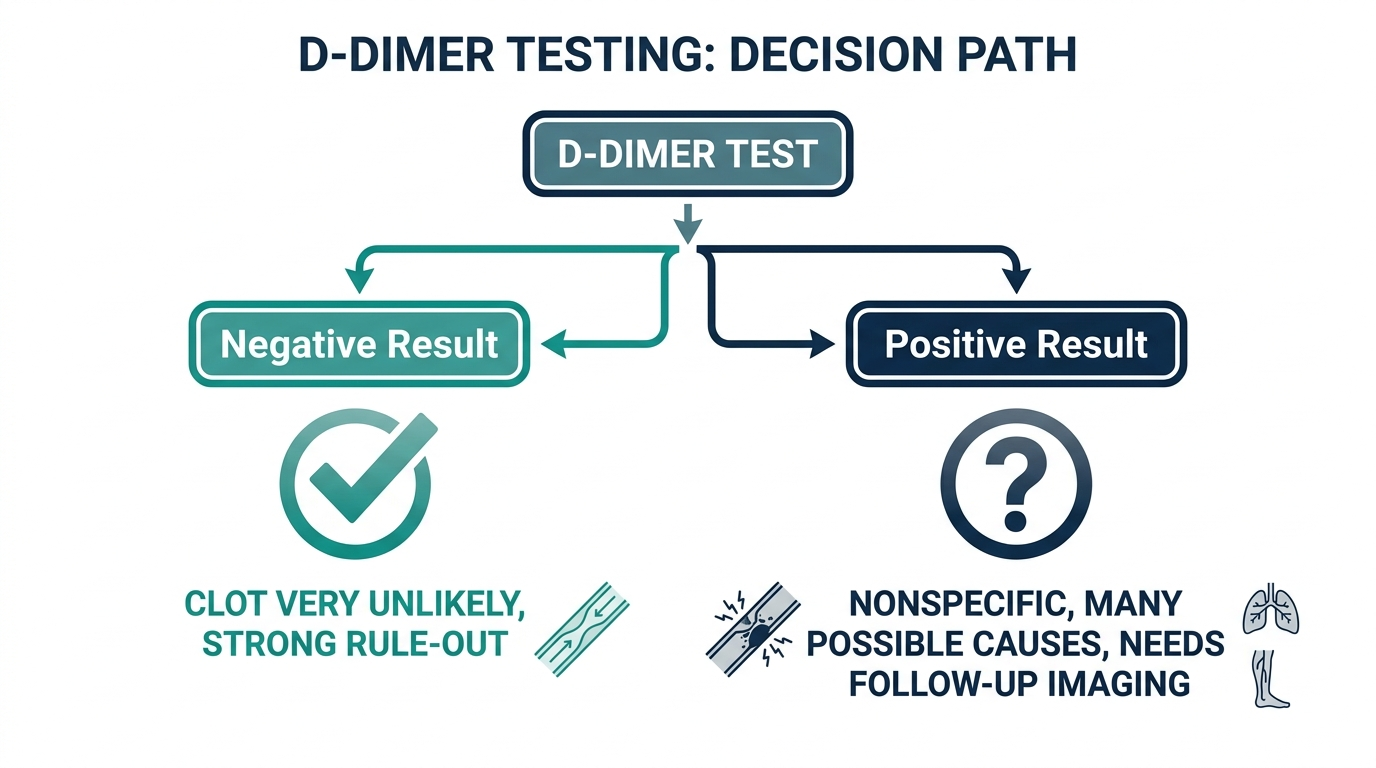
A high D-dimer means there is increased clot formation and breakdown happening somewhere in your body, but on its own it cannot tell you what kind of clotting problem you have or where the clot is (Cleveland Clinic). It is a flag that says “look closer,” not a diagnosis.
An elevated result can point toward serious clotting conditions, including:
- Deep vein thrombosis (DVT), a clot in a deep vein, most often in the leg (MedlinePlus).
- Pulmonary embolism (PE), a clot that has lodged in the lungs (MedlinePlus).
- Disseminated intravascular coagulation (DIC), a dangerous condition where clotting happens throughout the body at once (Cleveland Clinic).
- Stroke, where abnormal clotting can play a role (Cleveland Clinic).
Here is the catch that trips up a lot of people. D-dimer goes up for many reasons that have nothing to do with a dangerous clot. Pregnancy, recent surgery, trauma, infection, heart disease, and simply being older can all push the level above the cutoff (Cleveland Clinic). Rheumatoid arthritis can even produce a false-positive result. That is why a high D-dimer almost never ends the investigation. It usually starts one, sending you toward imaging like an ultrasound or a CT scan to find out whether a real clot is there.
What does a low or negative D-dimer mean?
A low, negative, or normal D-dimer means you most likely do not have an active clotting disorder, and in the right clinical setting it is powerful enough to rule one out (Cleveland Clinic). This is the part that makes D-dimer unusual among blood tests, and it is worth understanding clearly.
D-dimer has high sensitivity but low specificity (StatPearls, NCBI). Translated: it rarely misses a clot, but it lights up for lots of harmless reasons too. That combination gives it a strong negative predictive value. So when someone has a low or intermediate suspicion of a clot and their D-dimer comes back negative, doctors can often skip the expensive, radiation-heavy CT scan entirely (StatPearls, NCBI).
So a negative D-dimer is doing real work. It is not just “nothing found.” It is actively closing the door on a DVT or pulmonary embolism for the right patient, which spares you imaging, anxiety, and sometimes an unnecessary hospital stay.
Why is D-dimer a test you want to come back negative?
Because D-dimer is built to exclude clots, not to confirm them. It is one of medicine’s best examples of a “rule-out” test, and that design is the single most important thing to grasp about it. A negative result is genuinely informative. A positive result, by itself, often is not (StatPearls, NCBI).
Think of D-dimer like a smoke detector. A silent alarm is strong evidence there is no fire. A blaring alarm could mean a fire, or it could mean you burned toast. You still have to go look. D-dimer works the same way: quiet is trustworthy, loud just means investigate.
Here is the insider detail that changes how you should read your own result, especially if you are over 50. The standard 500 ng/mL cutoff was calibrated on a general population, but D-dimer naturally drifts upward with age. That means a perfectly healthy 75-year-old can sail past 500 and get flagged “positive” for no good reason, triggering a CT scan they did not need. To fix this, many clinicians now use an age-adjusted cutoff for patients over 50, calculated as the patient’s age multiplied by 10 ng/mL (StatPearls, NCBI). For a 75-year-old, that raises the threshold to 750 ng/mL. This single adjustment safely rules out clots in far more older patients and prevents a large number of unnecessary scans (PubMed, age-adjusted D-dimer cutoff). If you are older and your result is “high” but still under your age times ten, that context is worth asking your clinician about.
One more honest caveat that does not always make it into patient handouts: a negative D-dimer is reassuring in low and moderate-risk situations, but it is not a free pass when suspicion of a clot is very high. In high-risk patients, doctors will image you regardless of the D-dimer, because the test can occasionally miss a real pulmonary embolism (PMC, negative D-dimer in the emergency department). The test is a filter, not a verdict.
Why D-dimer is never ordered on its own logic
One of the most important things to understand is that a D-dimer result is meaningless without a companion: a pretest probability score. Doctors do not order this test blind and then react to the number. They first estimate how likely a clot is based on your symptoms and history, and only then decide whether a D-dimer can help.
The standard tool for this is the Wells score, a short checklist that stratifies you into low, moderate, or high probability of a clot before a drop of blood is analyzed. The rule that follows is elegant: a D-dimer assay cannot be used alone to exclude a clot, it must be paired with that pretest probability (CoreEM). Here is how the logic plays out in practice.
- Low or moderate probability plus a negative D-dimer: The clot is effectively ruled out, and imaging can usually be skipped. This is D-dimer at its most powerful.
- Low or moderate probability plus a positive D-dimer: You move on to imaging, because the test cannot confirm a clot on its own.
- High probability: The D-dimer is often skipped entirely, and you go straight to a CT scan or ultrasound, because a negative result would not be trustworthy enough to override strong clinical suspicion (CoreEM).
This is why two people with the identical D-dimer number can be sent down completely different paths. The number never speaks for itself. It only means something once your doctor has placed it against how likely a clot was to begin with.

DDU versus FEU: the units that quietly change your cutoff
If your report lists a threshold that looks nothing like 500, the units are almost certainly the reason, and this is one of the most confusing details in the whole test. D-dimer is reported in two different unit systems, and they differ by roughly a factor of two.
- Fibrinogen equivalent units (FEU): The more common system, where the familiar cutoff is around 500 ng/mL.
- D-dimer units (DDU): Roughly half the FEU value, so a comparable cutoff is around 250 ng/mL.
As a practical anchor, 1000 ng/mL FEU is equivalent to about 500 ng/mL DDU (REBEL EM). This is exactly why you should never compare your number to a threshold you found online without first checking which units your lab used. A result of 400 could be reassuringly normal in one unit system and flagged high in the other. When in doubt, the reference range printed on your own report already accounts for the units your lab reports in, which is why it is always the number to trust.
Non-clot reasons your D-dimer can be high
Because the test lights up for any active clot turnover, and clot turnover happens in many ordinary situations, elevations are common and usually not dangerous. Knowing the long list helps make sense of a positive result that turns out to be nothing.
- Pregnancy: D-dimer rises steadily through a normal pregnancy, which is why the standard cutoff is unreliable in pregnant patients and specialized approaches are used.
- Recent surgery or trauma: Any tissue injury triggers clotting and breakdown, elevating the level for a period afterward.
- Infection and inflammation: Significant infections, including severe ones, can drive D-dimer up as part of the body’s inflammatory response.
- Cancer: Many cancers increase clotting activity, raising baseline D-dimer.
- Older age: Levels drift upward with age, which is the entire reason the age-adjusted cutoff exists.
- Liver disease and recent clots: Both can keep the level elevated for reasons unrelated to a new dangerous clot.
The common thread is that a high D-dimer confirms clot activity somewhere but says nothing about whether that activity is a harmless byproduct of surgery last week or a dangerous clot in your lung today. That distinction is what the follow-up imaging is for.
What the test itself is like, and how fast results come
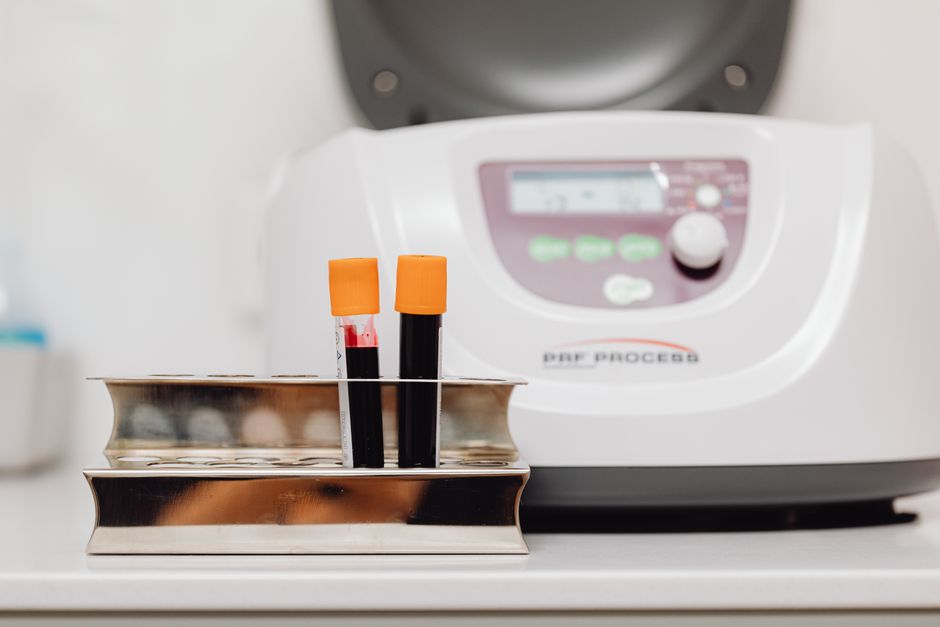
Practically speaking, a D-dimer is an ordinary blood draw. A small needle collects a sample from a vein in your arm, usually into a light blue citrate tube used for clotting studies, and the whole draw takes only a few minutes. There is no fasting and no special preparation required, which is part of why it is so convenient in an emergency setting.
Turnaround is one of the test’s strengths. Because it runs on an automated analyzer, results are often available within an hour or two in a hospital or emergency department, which is exactly what makes it useful for a fast rule-out decision while you are still being evaluated. In an outpatient setting the result may post to your portal within a day. If you are being worked up for a possible clot, the D-dimer is usually one of the first numbers back, precisely so that a negative result can quickly steer you away from unnecessary scans.
Beyond rule-out: the other jobs D-dimer does
While excluding DVT and pulmonary embolism is its headline use, D-dimer has a few other roles worth knowing.
- Diagnosing and monitoring DIC: In disseminated intravascular coagulation, where clotting runs out of control throughout the body, D-dimer is markedly elevated and is tracked alongside other clotting markers.
- Guiding how long to stay on blood thinners: After a clot, a D-dimer checked some weeks after stopping anticoagulation can help estimate the risk of another clot, informing whether treatment should continue.
- Assessing severity in some acute illnesses: A markedly high D-dimer can be one signal, among others, that an illness involves significant clotting stress, though it is interpreted cautiously and never in isolation.
In every one of these roles the same principle holds. D-dimer is a sensitive, easily moved marker of clot turnover, which makes it superb at closing doors and only a starting point for opening them. Its real power is in the reassurance of a clean negative, read in the light of how likely a clot was in the first place.
How to read your own D-dimer result without spiraling
If you are holding a result and trying to make sense of it, a short mental checklist keeps you from drawing the wrong conclusion in either direction.
- Check the units first. Confirm whether your report is in FEU or DDU, because the same raw number means different things in each. The reference range on your own page already accounts for this.
- A negative result in a low-risk setting is genuinely reassuring. This is the test doing its best work, closing the door on a clot and often sparing you a scan.
- A positive result is a starting line, not a diagnosis. Given how many harmless things raise D-dimer, a high number almost always means further evaluation rather than confirmed disease.
- Your age matters. If you are over 50 and your number is above 500 but below your age times ten, ask whether the age-adjusted cutoff applies to you.
- Symptoms override a reassuring number. A negative D-dimer does not cancel out a swollen, painful calf or sudden shortness of breath. If you have strong symptoms, that is a reason to be evaluated regardless of the number.
Read this way, D-dimer stops being a mysterious three-letter flag and becomes what it was designed to be: a fast, sensitive filter whose quiet is trustworthy, whose noise means look closer, and whose real meaning only emerges alongside your risk and your symptoms.
Turn what you just learned about d-dimer into action.
Superpower lets you test d-dimer and 100+ biomarkers from home, then re-check them over time so you can actually see progress, physician-reviewed at every step.
Frequently asked questions
What is the D-dimer blood test used for?
It is mainly used to help rule out dangerous blood clots, especially deep vein thrombosis and pulmonary embolism, in people who are not high-risk. It can also help evaluate disseminated intravascular coagulation and monitor some clotting conditions (MedlinePlus). A negative result is more useful than a positive one because the test is built to exclude clots rather than confirm them.
What is a normal D-dimer level?
A normal D-dimer is generally below 500 ng/mL (0.50 micrograms/mL), with a result at or above that considered positive (StatPearls, NCBI). Ranges and units vary by lab, so compare your result to the reference range printed on your own report.
What does a high D-dimer mean?
It means there is active clot formation and breakdown somewhere, but it does not say where or what kind. High levels can come from a clot, but also from pregnancy, surgery, trauma, infection, heart disease, or older age (Cleveland Clinic). A high result usually leads to imaging rather than a diagnosis on its own.
Can D-dimer be high without a clot?
Yes, very often. Because the test has low specificity, many non-clot situations raise it, including pregnancy, recent surgery, infection, and advancing age (StatPearls, NCBI). This is why a positive D-dimer is a reason to investigate, not to panic.
Does a negative D-dimer rule out a blood clot?
In people with low or moderate suspicion, a negative D-dimer effectively rules out DVT and pulmonary embolism and can spare them a CT scan (StatPearls, NCBI). In patients with high suspicion, doctors will still image regardless, because the test can occasionally miss a clot (PMC, negative D-dimer in the emergency department).
This article is for general educational purposes and is not medical advice. It cannot diagnose or treat you and does not replace your clinician. Always discuss your lab results and any health decisions with a qualified healthcare professional.
Related reading
Vital Signs Today may earn a commission if you buy through links on this page. It does not affect our editorial assessments.