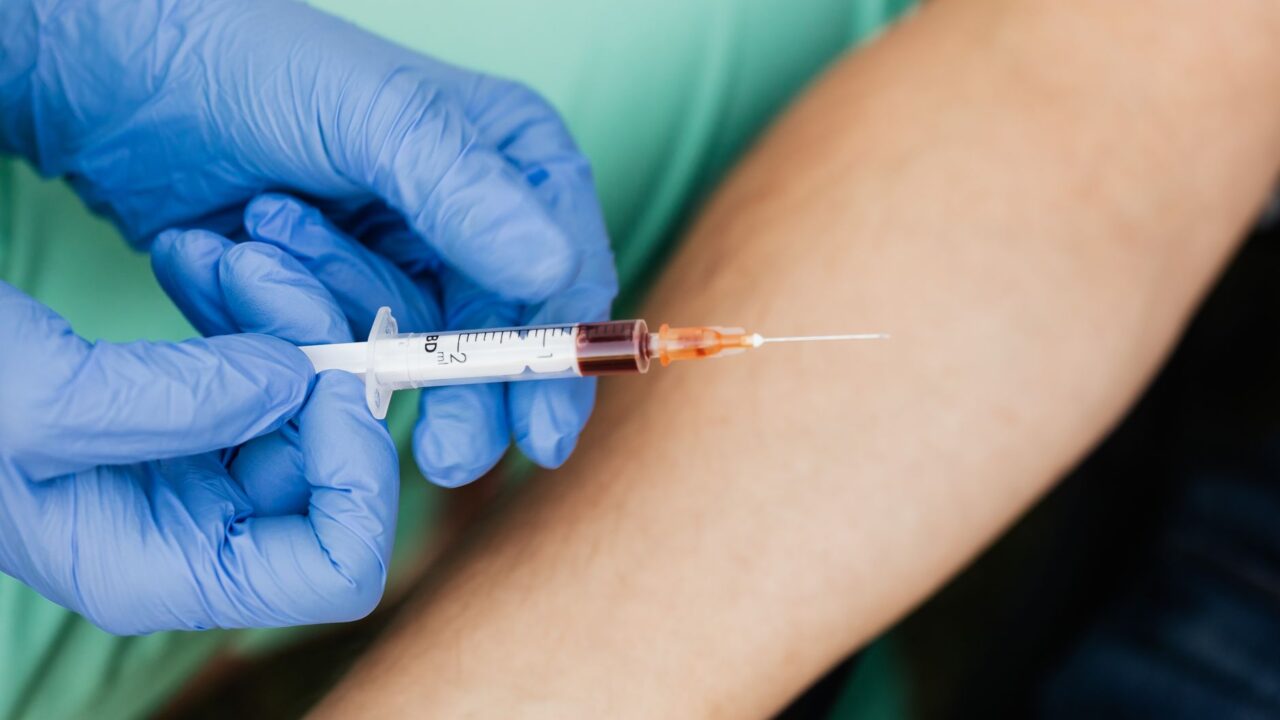
It is the test you have almost certainly had and almost certainly never read. At a routine physical, your clinician drew a tube of blood, and a few days later a results portal lit up with a wall of three-letter codes: GLU, BUN, ALT, ALP, plus a cluster of numbers for sodium and potassium. That wall has a name. It is the CMP, and it is quietly one of the most informative single tubes of blood medicine runs on a healthy person.
Most people glance at the flags, see nothing in red, and close the tab. That is a missed opportunity, because the CMP is essentially a 14-point inspection of your metabolism, and knowing how to read it tells you a great deal about how your body is actually running.
What is a CMP blood test?
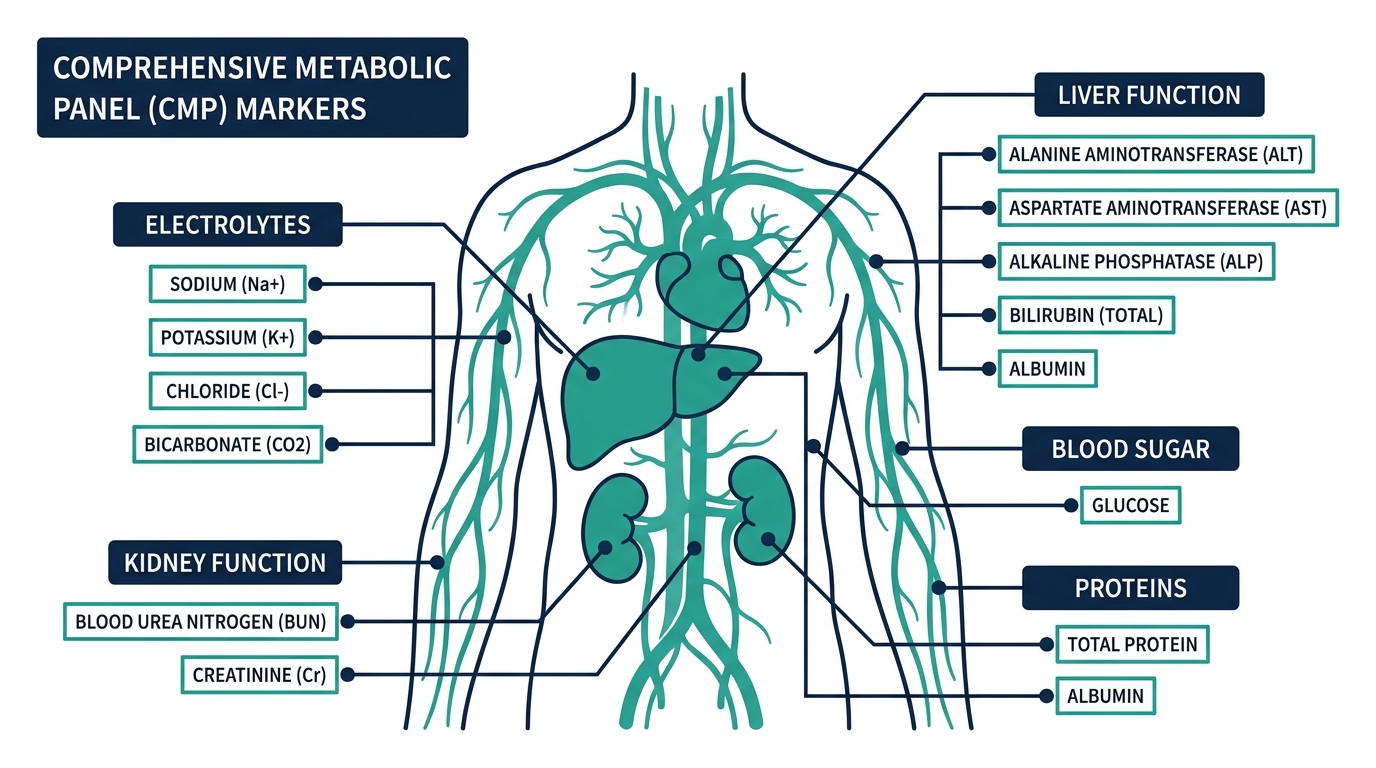
A CMP blood test, short for comprehensive metabolic panel, is a routine blood test that measures 14 different substances in your blood and gives a snapshot of your metabolism and the chemical balance in your body (MedlinePlus). It checks how well your liver and kidneys are working, your blood sugar, your protein levels, and your fluid and electrolyte balance (Cleveland Clinic). In plain terms, the CMP is a broad systems check: one blood draw that looks at several of your most important organs and chemical levels at once.
This is why a CMP is one of the most commonly ordered panels at a routine checkup. It can flag conditions like diabetes, kidney disease, and liver disease before you ever feel a symptom, which is exactly the point of a screening test.
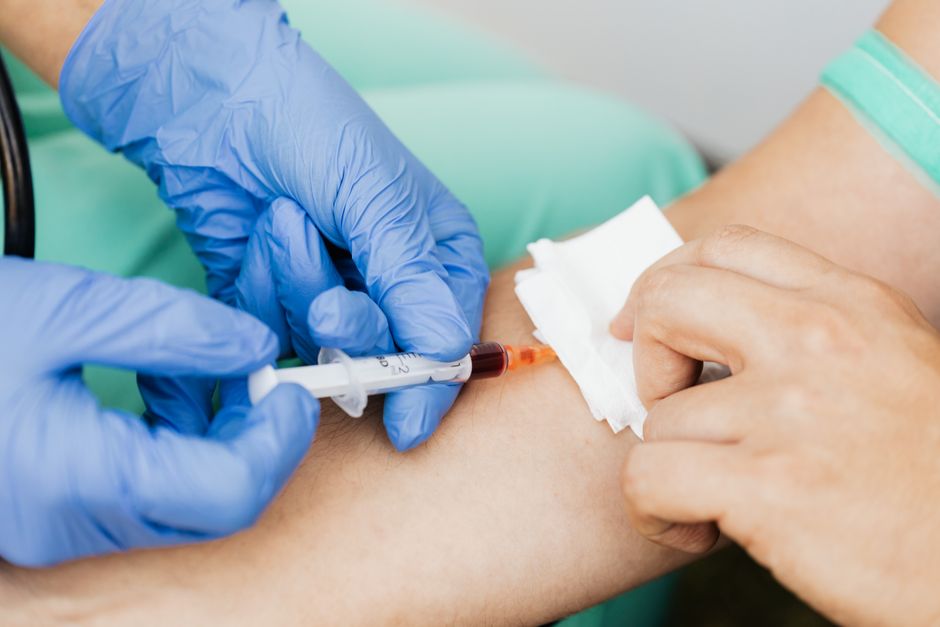
What blood tests are in a CMP?
A CMP contains 14 individual tests, and they sort neatly into five groups (MedlinePlus). Knowing the groups is the whole trick to reading the panel, because the numbers only mean something in clusters.
- Blood sugar: glucose, your body’s main fuel source.
- A mineral: calcium, needed for nerves, muscles, and the heart to work.
- Electrolytes (4): sodium, potassium, bicarbonate (carbon dioxide), and chloride. These control fluid balance and the acid-base balance of your blood.
- Kidney markers (2): BUN (blood urea nitrogen) and creatinine, waste products your kidneys are supposed to filter out.
- Liver and protein markers (6): total protein, albumin, ALP (alkaline phosphatase), ALT (alanine transaminase), AST (aspartate aminotransferase), and bilirubin.
Here is a detail that clears up a lot of confusion when you compare two of your own reports. A CMP includes the same 8 tests as a basic metabolic panel (BMP), plus 6 more that look at proteins and liver enzymes (MedlinePlus). So if one visit ordered a BMP and another ordered a CMP, the CMP is simply the BMP with the liver and protein panel bolted on. Same blood draw, wider view.
What is a normal range on a CMP?
There is no single normal range for a CMP, because it bundles 14 separate tests, each with its own reference range that varies slightly by lab and instrument. The only range that matters for your result is the one printed next to it on your own report, since that is the range your specific lab calibrated (MedlinePlus). Always read your number against your own report, not against numbers you find online.
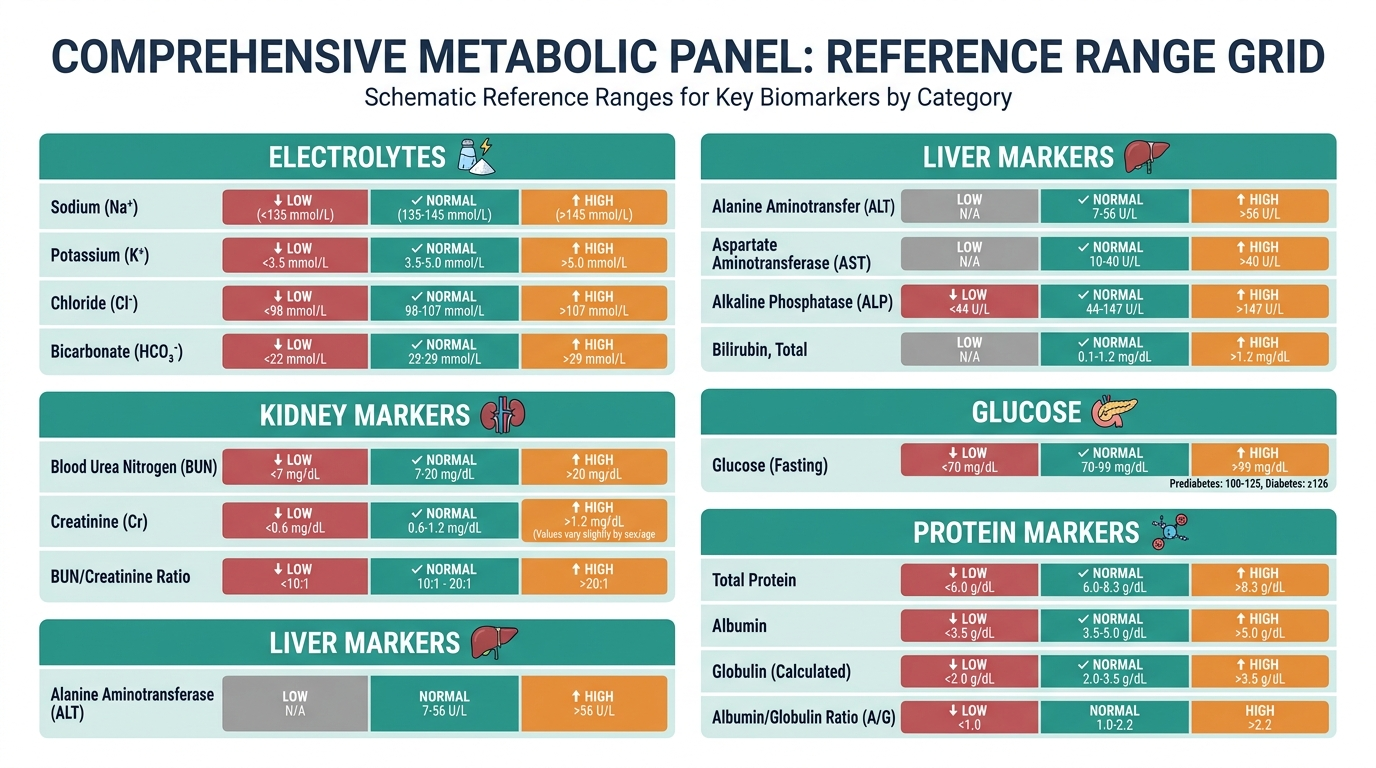
That said, the commonly cited adult reference ranges give you a useful mental map of where the numbers usually land:
- Glucose: roughly 70 to 99 mg/dL when fasting.
- Calcium: about 8.5 to 10.2 mg/dL.
- Sodium: about 136 to 145 mmol/L.
- Potassium: about 3.7 to 5.1 mmol/L.
- Bicarbonate (CO2): about 22 to 30 mmol/L.
- Chloride: about 98 to 107 mmol/L.
- BUN: about 7 to 21 mg/dL.
- Creatinine: roughly 0.6 to 1.3 mg/dL depending on sex and muscle mass.
Liver markers like ALT, AST, ALP, bilirubin, total protein, and albumin each carry their own range too. The practical takeaway: a single value sitting just outside its range is common and often harmless, especially if it is barely off. What clinicians actually watch for is a pattern across a group.
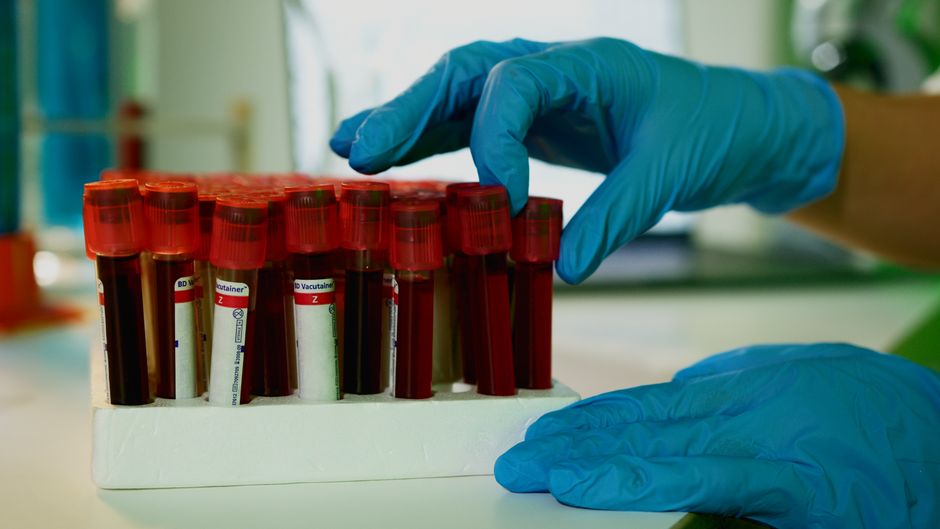
What does a CMP test for, and what do abnormal results mean?
A CMP tests for problems in your blood sugar, electrolytes, kidneys, and liver, and an abnormal result points your clinician toward a specific organ system rather than giving a diagnosis on its own. The panel is built to detect liver disease, kidney disease, diabetes, and high blood pressure, often before symptoms appear (Cleveland Clinic). Here is how the clusters translate.
- High glucose can suggest diabetes or prediabetes. A markedly elevated fasting glucose is a classic early screening flag (Cleveland Clinic).
- High BUN and creatinine together suggest the kidneys are not filtering waste efficiently, a pattern seen in kidney disease and dehydration.
- High ALT and AST (the liver enzymes) suggest liver cells are stressed or damaged, while abnormal ALP and bilirubin can point toward bile-flow or other liver problems (MedlinePlus).
- Off electrolytes (sodium, potassium, chloride, bicarbonate) can reflect dehydration, kidney issues, or the effects of medications such as diuretics.
- Low albumin or total protein can reflect liver or kidney problems or poor nutrition.
The recurring theme: one odd number is a question, not an answer. A real interpretation reads the whole panel together and then weighs it against your symptoms, history, and other tests.
Do you need to fast before a CMP blood test?
Usually yes, but follow your clinician’s instruction, because it depends on which numbers they care about. Providers commonly ask you to avoid eating or drinking for a window before a CMP, often in the range of 10 to 12 hours (Cleveland Clinic). More broadly, fasting blood tests typically require 8 to 12 hours without food, and plain water is allowed, while juice, coffee, and soda are not because they get into your bloodstream and can skew results (MedlinePlus).
The reason fasting matters is almost entirely about one number: glucose. Eating spikes your blood sugar, so a recent meal can push the glucose result up and make a fasting reading meaningless. The electrolyte, kidney, and liver markers are far less sensitive to a recent snack. If you forgot and ate breakfast, do not panic, but do tell the person drawing your blood so the glucose result can be read in context.

The part most people miss: the CMP has a hidden test built into it
Here is the insider detail that almost never makes it into the patient handout. Tucked inside the four electrolytes is a calculation called the anion gap, and many clinicians look at it before almost anything else. The anion gap is the difference between your measured positive ions (mainly sodium) and your measured negative ions (chloride and bicarbonate). Your lab often computes it automatically from the CMP numbers you already have, no extra blood required (NCBI StatPearls).
Why does it matter so much? The anion gap is the fastest way to screen for a dangerous shift in your blood’s acid balance called metabolic acidosis, and a widened gap can be the first sign of serious problems like diabetic ketoacidosis, kidney failure, or certain poisonings (NCBI StatPearls). In critically ill patients, a higher anion gap has been linked to greater all-cause mortality at 30 and 90 days (NCBI PMC). That is the quiet power of a CMP. It looks like a routine wellness panel, but buried in the electrolytes is a number that emergency physicians treat as a vital sign. Most patients never even see it on their report.
So the next time you open a CMP, do not just hunt for red flags. Read it in clusters, glance at the electrolytes as a set, and remember that this unglamorous panel is doing more work than its plain layout suggests.
Reading the liver and protein cluster like a hepatologist
The six markers that turn a basic metabolic panel into a comprehensive one are where most of the interpretive nuance lives, and they are the numbers patients understand the least. They fall into three functional jobs: two are true liver enzymes (ALT and AST), two describe bile flow and heme turnover (ALP and bilirubin), and two describe how much protein your liver is manufacturing (albumin and total protein). Reading them as three pairs, rather than six loose numbers, is what separates a useful interpretation from a nervous guess.
ALT and AST: the enzymes that leak when liver cells are stressed
ALT (alanine transaminase) and AST (aspartate transaminase) are enzymes that live inside your liver cells. When those cells are inflamed or dying, the enzymes spill into the bloodstream, so a rising level is essentially a measure of cellular leakage. ALT is fairly specific to the liver, while AST also appears in heart and skeletal muscle, which is why a heavy workout, a muscle injury, or even an intramuscular injection can nudge AST upward without any liver problem at all.
The insider move here is to read the two enzymes as a ratio, sometimes called the De Ritis ratio. In healthy people the AST to ALT ratio usually sits somewhere around 0.8 to 1.3. The pattern of the ratio narrows the differential:
- Ratio below 1 (ALT higher than AST) is the most common elevated pattern and typically points toward metabolic-associated fatty liver disease or viral hepatitis, where ALT rises more sharply.
- Ratio of 2 or higher is the classic signature of alcohol-related liver injury, and it becomes more convincing when a separate marker called GGT is also high (GGT is not part of the CMP, which is one reason clinicians sometimes add it).
- Ratio between 1 and 2 can appear as fibrosis advances toward cirrhosis, when the liver has lost enough healthy tissue that the pattern shifts.
One caution that trips people up: the ratio only means something when at least one of the enzymes is actually elevated. Calculating a De Ritis ratio from two perfectly normal values tells you nothing.
ALP and bilirubin: the bile-flow pair
Alkaline phosphatase (ALP) and bilirubin behave differently from the transaminases because they rise mainly when bile cannot drain properly, a situation called cholestasis, rather than when liver cells are dying. When ALP and bilirubin climb together while ALT and AST stay relatively calm, clinicians think about a blockage in the bile ducts, such as a gallstone, rather than hepatitis. There is a second trap built into ALP: it is also produced in bone, so a high ALP in a growing teenager, a healing fracture, or certain bone conditions can be entirely unrelated to the liver. Bilirubin adds its own wrinkle through a common and completely harmless inherited condition, Gilbert syndrome, which mildly raises bilirubin in a large slice of the population and is frequently mistaken for liver disease on a first read.
Albumin and total protein: the manufacturing report
Albumin and total protein describe production rather than damage. Albumin is the single most abundant protein your liver makes, and because it takes weeks for levels to fall, a low albumin tends to reflect a longer-standing problem: chronic liver disease, kidney loss of protein, inflammation, or poor nutrition. Total protein bundles albumin together with the globulins, the family of proteins that includes your antibodies. Subtracting albumin from total protein gives globulin, and dividing albumin by globulin gives the albumin-to-globulin (A/G) ratio, usually a little above 1 in healthy adults, with many labs citing a range around 1.1 to 2.5. A low A/G ratio (from low albumin, high globulin, or both) can flag chronic inflammation or, less often, disorders of antibody-producing cells, which is why an unexplained low ratio sometimes earns a follow-up test. In healthy adults total protein generally lands somewhere near 6.4 to 8.3 g/dL and albumin near 3.4 to 5.4 g/dL, though your own report’s range is the one that counts.

What can throw your CMP off before the needle even comes out
A CMP is sensitive enough that everyday choices in the 24 hours before your draw can move a number into or out of range. Knowing these in advance is the cheapest way to avoid a false alarm and a repeat blood draw.
- A recent meal pushes glucose up and can nudge potassium and triglycerides, which is the whole reason fasting is requested for the glucose reading.
- Dehydration concentrates the blood and can lift sodium, BUN, albumin, and calcium together, producing a cluster of mildly high values that resolves with a glass of water and a redraw.
- Hard exercise in the day or two before can raise AST and creatinine because both leak from stressed muscle, not just from liver or kidney trouble.
- A clenched fist or a tight tourniquet during the draw can artificially raise potassium, and red cells breaking in the tube (hemolysis) does the same. A surprisingly high potassium with no symptoms is often a collection artifact, and a good lab will flag the sample and ask for a repeat.
- Medications and supplements matter more than most people realize. Diuretics shift sodium and potassium, and biotin, a popular hair and skin supplement, can interfere with certain lab assays. Tell your clinician what you take so results are read in context.
None of this means the test is unreliable. It means a single odd number deserves a second look at what you did the day before, not immediate panic.
Which panels the CMP travels with, and why
Clinicians rarely order a CMP in isolation. It is usually part of a small set of panels that fill in the CMP’s blind spots, and understanding the companions helps you read your own portal.
- Complete blood count (CBC). The CMP says nothing about your red cells, white cells, or platelets. A CBC drawn alongside it covers anemia, infection, and clotting cells, so the two together give a far more complete picture than either alone.
- Lipid panel. The CMP’s glucose hints at metabolic health, but cholesterol and triglycerides live on a separate lipid panel. Ordered together after an overnight fast, they sketch your cardiometabolic risk.
- A1C. A single fasting glucose is a snapshot; hemoglobin A1C reflects your average blood sugar over roughly three months. When a CMP glucose is borderline, an A1C is the natural next step rather than repeating the glucose over and over.
- GGT. When the liver enzymes are up and the story might involve alcohol or bile obstruction, GGT is the add-on that sharpens the picture, since it is not part of the standard CMP.
Three sample readings, the way a clinician would think them through
Reference ranges are static; interpretation is a story. Here is how the same panel produces very different conclusions depending on which numbers move together.
- Glucose 118 mg/dL, everything else normal. One mildly high fasting glucose, alone, is a prompt to confirm rather than diagnose. The reasonable next move is an A1C or a repeat fasting glucose, not a diabetes label from a single value.
- ALT and AST both mildly high, ratio below 1, albumin and bilirubin normal. This is a common pattern in fatty liver, especially alongside a higher body weight or metabolic risk. The liver’s manufacturing (albumin) and drainage (bilirubin) are intact, which is reassuring, and the usual path is lifestyle-focused evaluation rather than alarm.
- BUN high, creatinine normal, sodium high, after a hot day with little water. This trio reads as dehydration far more often than kidney disease. BUN reacts to fluid status faster than creatinine, so a high BUN with a normal creatinine and a high-normal sodium usually resolves with rehydration and a redraw.
The through-line in all three: the meaning lives in the combination, and context (what you ate, drank, and did) is part of the result.
Who should get a CMP, how often, and what to do with an odd result
A CMP is a screening and monitoring test, so the right frequency depends on why it is being run. For a healthy adult, it commonly appears as part of a periodic checkup rather than on a fixed calendar. People taking medications that affect the liver, kidneys, or electrolytes (such as certain blood pressure drugs, diuretics, or long-term pain relievers) are often monitored more regularly so a shift is caught early. Anyone managing diabetes, kidney disease, or liver disease may repeat relevant portions of the panel on a schedule their clinician sets.
If a value comes back out of range, a sensible sequence looks like this: first, check whether it is barely off or clearly off, since borderline values are common and frequently benign. Second, consider the day before the draw, because meals, exercise, dehydration, and collection artifacts explain a large share of surprises. Third, look for a pattern across the relevant cluster rather than fixating on the single flagged number. Fourth, follow your clinician’s guidance on whether to repeat the test, add a companion marker like A1C or GGT, or simply recheck at your next visit. A lone mildly abnormal number on a screening panel is a question to answer, not a diagnosis to fear.
Common misunderstandings about the CMP
- “A number in red means something is wrong.” Reference ranges are built so that a small percentage of perfectly healthy people fall just outside them by definition. A value barely outside its range, especially in isolation, is often normal for you.
- “A CMP checks my cholesterol and blood count.” It does not. Cholesterol lives on a lipid panel and blood cells on a CBC. The CMP covers metabolism, electrolytes, kidney, and liver, and nothing else.
- “High liver enzymes mean liver damage.” Not necessarily. AST leaks from muscle too, so intense exercise or a muscle injury can raise it, and mild fluctuations are common. The pattern and the ratio matter more than a single elevated enzyme.
- “If I fasted, every number is now perfect.” Fasting mainly protects the glucose reading. It does not fix a value that is off for another reason, and over-fasting to the point of dehydration can actually skew sodium, BUN, and albumin.
- “The panel diagnoses my disease.” A CMP points toward an organ system; it does not name a condition on its own. Diagnosis comes from combining the panel with your symptoms, history, and further, more specific testing.
Frequently asked questions
What is the difference between a CMP and a BMP?
A CMP includes the same 8 tests as a basic metabolic panel (BMP), plus 6 more that measure proteins and liver enzymes such as albumin, total protein, ALP, ALT, AST, and bilirubin (MedlinePlus). A CMP is simply a BMP with a liver and protein panel added.
What blood tests are in a CMP?
A CMP measures 14 substances: glucose, calcium, sodium, potassium, bicarbonate, chloride, BUN, creatinine, total protein, albumin, ALP, ALT, AST, and bilirubin (MedlinePlus). They cover blood sugar, electrolytes, kidney function, and liver and protein status.
Do I need to fast before a CMP?
Often yes. Providers commonly ask you to avoid eating or drinking for a window before a CMP, frequently 10 to 12 hours, mainly so the glucose reading is accurate (Cleveland Clinic). Plain water is usually allowed. Always follow your own clinician’s instructions.
What does a CMP test for?
A CMP checks your blood sugar, electrolyte and fluid balance, kidney function, and liver and protein status, and it can help detect diabetes, kidney disease, liver disease, and high blood pressure before symptoms appear (Cleveland Clinic).
Should I worry if one CMP value is out of range?
Usually not on its own. A single value just outside its range is common and often harmless. Clinicians interpret the panel in clusters and weigh it against your symptoms, history, and other tests rather than reacting to one number (MedlinePlus).
This article is for general educational purposes and is not medical advice. It cannot diagnose or treat you and does not replace your clinician. Always discuss your lab results and any health decisions with a qualified healthcare professional.
Related reading
Vital Signs Today may earn a commission if you buy through links on this page. It does not affect our editorial assessments.