
Last updated June 2026. Educational content, not medical advice. Tesamorelin is a prescription medication in the United States. Talk to a licensed clinician before considering any peptide therapy.
Short answer: Tesamorelin is a 44-amino-acid synthetic analog of growth-hormone-releasing hormone (GHRH) that tells your pituitary gland to secrete more natural growth hormone. It is the only FDA-approved prescription peptide proven in Phase III trials to reduce visceral (deep belly) fat, with a mean 18% reduction in visceral adipose tissue over 26 weeks compared to placebo. As of March 2025 it is available in a new weekly-dose formulation called EGRIFTA WR, made by Theratechnologies.
Tesamorelin nudges your pituitary to release more growth hormone. See your own hormone markers before considering it. One at-home Superpower draw checks 100+ biomarkers, physician-reviewed.
Why does visceral fat matter enough to need its own approved drug?
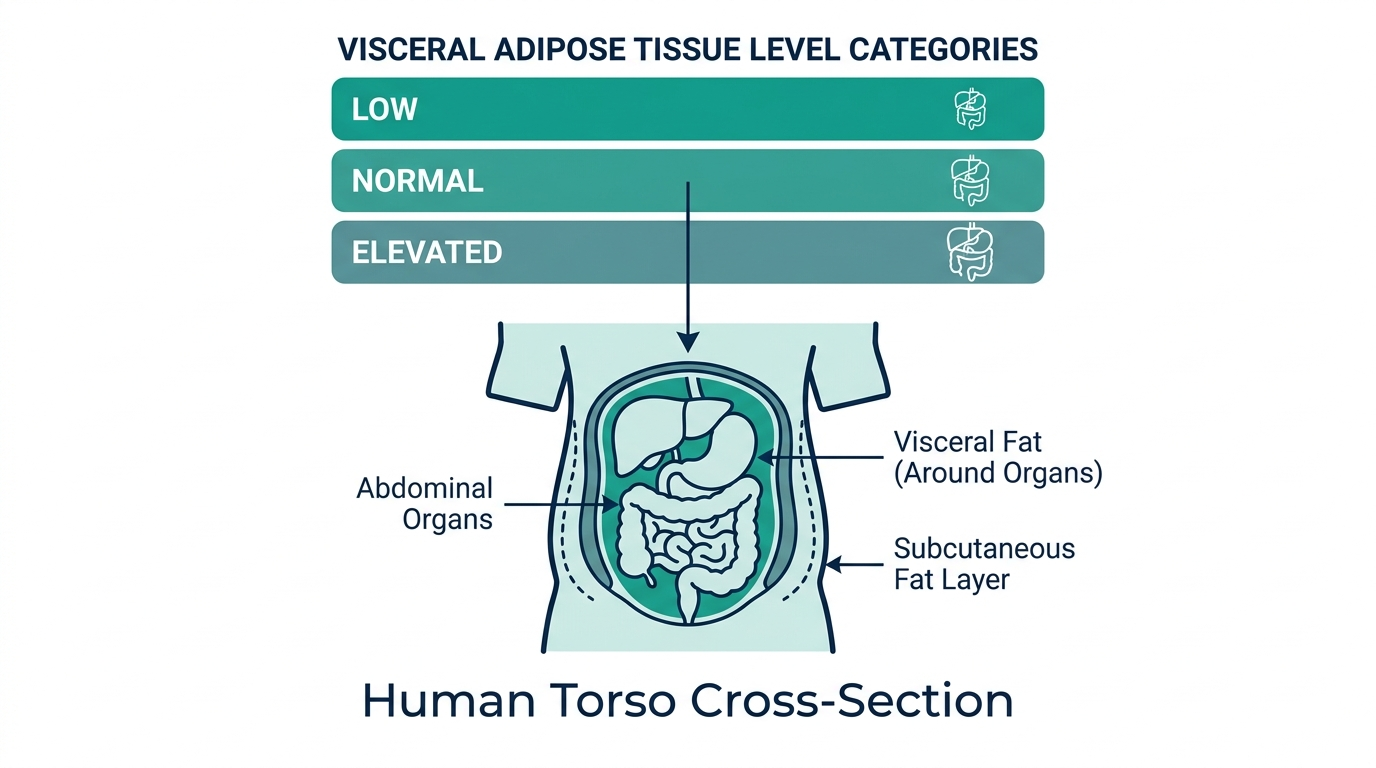
Not all fat is equal. Subcutaneous fat, the kind you can pinch, is mostly a storage inconvenience. Visceral fat, packed around your liver, pancreas, and intestines, behaves like a metabolic organ. It secretes inflammatory cytokines, drives insulin resistance, raises triglycerides, and is one of the strongest single predictors of cardiovascular disease, type 2 diabetes, and non-alcoholic fatty liver disease (NAFLD).
The problem with visceral fat is that it is largely invisible from the outside, often fails to respond to caloric restriction alone, and is worsened by growth hormone deficiency. Adults lose roughly 1% of pituitary growth hormone output per year after age 30. People with HIV on antiretroviral therapy can lose it far faster, thanks to drug-induced lipodystrophy, a redistribution syndrome that slams visceral fat into the abdomen while wasting the limbs.
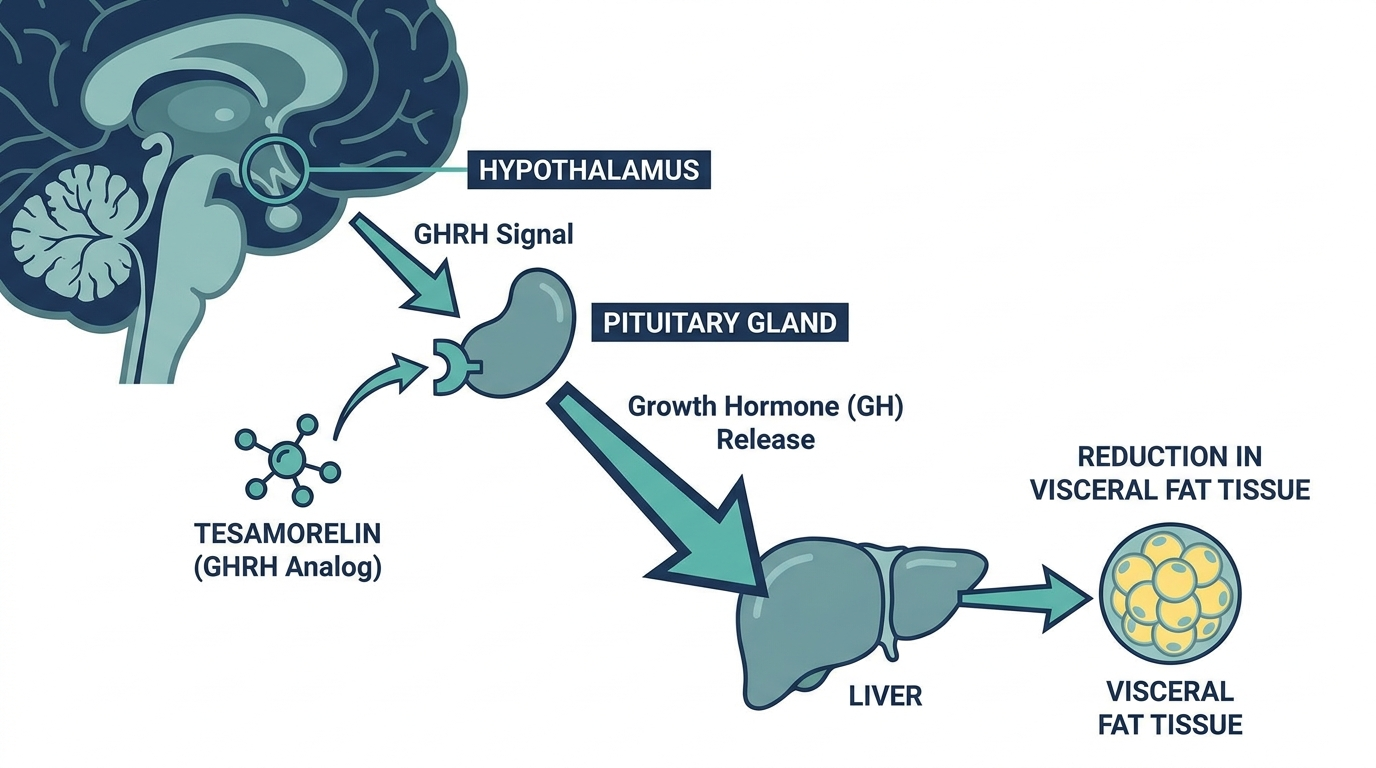
That biology is what tesamorelin was designed to correct, and the mechanism is elegant: rather than injecting synthetic growth hormone directly, the peptide restores the upstream signal. Your pituitary responds by releasing your own GH in a more physiological, pulsing pattern.
Full-body lab membership: 100+ biomarkers, doctor-reviewed, tracked over time.
What exactly is tesamorelin and how is it made?
The simplest way to actually get this done
Superpower is a full-body lab membership that runs 100+ biomarkers, has each result reviewed by a doctor, and tracks your numbers year over year (about $199/year). It is what we point readers to when they would rather get one clean, complete draw than chase single tests one at a time. Here is superpower reviewed in full.
Tesamorelin is a stabilized synthetic version of human GHRH(1-44), the full 44-amino-acid sequence your hypothalamus naturally secretes. The modification that makes it clinically useful is a trans-3-hexenoic acid group attached to the N-terminus of the peptide chain.
That small structural addition matters enormously. Native GHRH degrades in the bloodstream within 3 to 7 minutes, which is why injecting it directly does nothing useful at therapeutic doses. The trans-3-hexenoic acid group blocks the enzyme dipeptidyl peptidase IV (DPP-IV) from cleaving the molecule, extending the half-life to approximately 26 to 38 minutes. That is long enough to produce a meaningful, sustained signal at pituitary GHRH receptors, which then trigger a pulse of endogenous GH.
The GH pulse in turn signals the liver to produce insulin-like growth factor-1 (IGF-1), the downstream hormone that does most of the metabolic work: mobilizing fat from visceral depots, supporting lean muscle, and promoting tissue repair. The key pharmacological advantage over direct HGH injection is that the GH secretion remains pulsatile and feedback-regulated. Your body still applies the natural brakes.
This feedback-regulated mechanism is one of the features clinicians specifically cite when arguing tesamorelin carries a lower risk profile than injecting synthetic HGH directly, though this comparison is still debated in the literature.
What did the clinical trials actually show?
The pivotal evidence comes from two large Phase III randomized controlled trials, LIPO-010 and LIPO-011, both published in 2010 and forming the basis for FDA approval.
The headline number from the Falutz et al. 2010 trial (PubMed): visceral adipose tissue (VAT) decreased by a mean of 18% in the tesamorelin group (about 21 cm² on CT scan) versus a 0.6% decrease in the placebo group over 26 weeks (P < 0.0001). Waist circumference, trunk fat, and waist-to-hip ratio all improved significantly. Importantly, subcutaneous fat did not change, meaning tesamorelin selectively targets visceral depots, not overall body fat.
A separate 2015 randomized trial (PMC) found that in HIV-infected patients with abdominal fat accumulation, tesamorelin also reduced liver fat content. A 12-month double-blind trial in HIV patients with NAFLD showed tesamorelin reduced hepatic fat, prevented fibrosis progression, and changed hepatic gene expression in beneficial directions, increasing oxidative phosphorylation pathways while dampening inflammation (JCI Insight, 2020).
The cognitive angle is where things get genuinely surprising. A 2012 randomized trial (PubMed) in healthy older adults and people with mild cognitive impairment found that 20 weeks of GHRH administration improved executive function, raised brain GABA levels across frontal, parietal, and occipital regions, and reduced myo-inositol, a metabolite elevated in Alzheimer’s disease, in the posterior cingulate. This was a side finding from an aging study, not a primary endpoint, but it has driven real scientific interest.
The maintenance caveat: patients who stopped tesamorelin after 26 weeks saw visceral fat return to near-baseline within another 26 weeks. This is not a one-time fix.
One detail from the trials reshapes expectations more than any headline number: subcutaneous fat did not change. Tesamorelin drained the deep visceral depot while leaving the pinchable surface layer alone. In practice that means the scale can move very little even when a CT scan shows a real drop in visceral fat, because visceral tissue is a smaller share of total body mass than most people assume. Someone taking tesamorelin for the right reason is chasing a metabolic and cardiovascular change, a smaller waist and a calmer liver, not a dramatic number on the bathroom scale. People who go in expecting a GLP-1-style weight plummet are measuring the wrong thing and usually end up disappointed for no good reason.
What are the approved and off-label uses of tesamorelin?
FDA-approved indication (as of 2026): reduction of excess abdominal fat in adults with HIV-associated lipodystrophy. This is the only on-label use. Tesamorelin remains the first and only treatment ever specifically approved for this condition.
Off-label clinical use: Prescribers in functional medicine, endocrinology, and longevity medicine increasingly prescribe tesamorelin off-label for:
- Visceral fat reduction in non-HIV adults with metabolic syndrome or significant abdominal obesity
- Fatty liver disease (NAFLD) management in metabolically compromised patients
- Cognitive support in older adults with GH deficiency
- Body composition optimization as part of broader hormone restoration protocols
The off-label use evidence base is weaker than the HIV lipodystrophy data, but the mechanistic rationale is solid: visceral fat accumulation linked to GH deficiency is not biologically unique to HIV patients. A 2025 meta-analysis in ScienceDirect pooled results from multiple randomized controlled trials and confirmed the body composition, hepatic fat, and metabolic benefits hold across the HIV-associated lipodystrophy population with no new safety signals.
What is EGRIFTA WR and how does it differ from the original?
On March 25, 2025, the FDA approved EGRIFTA WR (tesamorelin F8), a reformulated version of the original EGRIFTA SV, made by Theratechnologies (TSX: TH).
The practical difference: EGRIFTA WR requires reconstitution once per week, supplying seven daily doses from one vial, rather than the daily reconstitution required by EGRIFTA SV. Patients inject a smaller volume each day. The molecule is bioequivalent to the original; only the formulation and storage handling changed. EGRIFTA WR is patent-protected in the US until 2033 and is gradually replacing EGRIFTA SV in clinical settings.
The dose for EGRIFTA WR is 1.28 mg daily (versus 2 mg daily for EGRIFTA SV), administered as a subcutaneous injection, typically in the abdomen.
How does tesamorelin compare to other GH secretagogues?
| Peptide | Class | FDA approved | Primary use | Half-life | Visceral fat evidence |
|---|---|---|---|---|---|
| Tesamorelin | GHRH analog | Yes (2010, HIV lipodystrophy) | Visceral fat reduction | 26-38 min | Phase III, P < 0.0001 |
| Sermorelin | GHRH (1-29) fragment | Yes (pediatric GH deficiency, discontinued) | Broad GH support | 10-12 min | No Phase III for fat |
| CJC-1295 | GHRH analog | No | GH pulse enhancement | Days (with DAC) | No RCT data |
| Ipamorelin | Ghrelin receptor agonist | No | GH pulse, cleaner profile | 2-3 hours | No RCT data |
| Synthetic HGH | Exogenous hormone | Yes (GH deficiency) | Direct HGH replacement | Variable | Off-label use; non-pulsatile |
The comparison the forums rarely get right: sermorelin is often described as the “cheaper alternative” to tesamorelin. That framing is backwards. Sermorelin is a 29-amino-acid fragment of GHRH, shorter and less stable, with a 10-to-12-minute half-life and no Phase III evidence for visceral fat reduction. Tesamorelin is the full 44-amino-acid sequence, structurally reinforced, with a decade of randomized controlled trial data behind a single specific endpoint.
Personally, if the clinical goal is visceral fat reduction, tesamorelin is the only GH-axis peptide with the evidence to back that claim. The sermorelin comparison is like calling ibuprofen an alternative to a surgery-specific anesthetic because both are used in the OR.
What does tesamorelin treatment actually look like in practice?
A legitimate tesamorelin prescription comes through a licensed physician or a telehealth platform with real clinical oversight. The pathway:
- Intake and labs. A prescribing clinician orders baseline labs including IGF-1, fasting glucose, HbA1c, a lipid panel, and liver enzymes. This is not optional. IGF-1 specifically determines both candidacy and monitoring frequency.
- Prescription to a 503A compounding pharmacy. Brand-name EGRIFTA WR retails at approximately $3,000+ per month and is insured only for HIV-approved use. Compounded tesamorelin from a licensed US compounding pharmacy costs $150 to $300 per month through telehealth platforms, with the consultation adding $50 to $200, or bundled as one fee of roughly $200 to $350 per month total (PrymLab pricing overview).
- Self-injection. Tesamorelin is injected subcutaneously, typically in the lower abdomen, once daily at bedtime or first thing in the morning on an empty stomach for cleaner GH pulsing. The clinician or pharmacy provides reconstitution and injection instructions.
- Follow-up labs. IGF-1 is rechecked at 12 weeks. If IGF-1 exceeds the upper limit of the age-adjusted normal range, the dose is reduced or paused. Fasting glucose is monitored at 6-week intervals.
Telehealth platforms currently prescribing tesamorelin or its compounded equivalent include Defy Medical, Marek Health, and several functional medicine practices operating nationally. The intake-to-first-shipment timeline at most platforms is 7 to 14 days.
Telehealth GLP-1 program with provider visits and pharmacy coordination.
What are the side effects and who should not take tesamorelin?
The side effect profile in the Phase III trials was generally manageable. The numbers from the prescribing information and the LIPO trials:
- Injection site reactions (redness, itching, pain): occur in approximately 62% of patients but cause discontinuation in fewer than 1%. Most reactions are mild and transient.
- Joint pain (arthralgia) and peripheral edema: reported in roughly 10 to 13% of patients in both trials, consistent with any GH-stimulating agent causing fluid shifts.
- Fasting glucose increase: mean rise of approximately 4.9 mg/dL. In the trial populations, this did not translate into HbA1c progression, but patients with established diabetes were excluded from the pivotal trials.
- Transient liver enzyme elevation: occurred in 4 to 7% of participants; resolved spontaneously in most cases with no documented cases meeting Hy’s Law criteria for drug-induced liver injury.
Absolute contraindications:
- Active malignancy. Any cancer diagnosis that is not in confirmed remission. Growth-promoting agents are formally contraindicated because IGF-1 can be a tumor growth factor, and this is not negotiable.
- History of pituitary adenoma. This is the contraindication that surprises patients. Tesamorelin’s GHRH receptor agonism can reactivate dormant adenoma tissue, triggering regrowth even years after surgical resection. Anyone with a personal or family history of pituitary tumors needs a specialist evaluation before considering any GHRH analog.
- Pregnancy or breastfeeding.
- Hypersensitivity to tesamorelin or any component of the formulation.
On the cancer risk question specifically: Do not believe the framing that elevated IGF-1 causes cancer. The LIPO-010 and LIPO-011 trials with follow-up periods of one to two years did not identify a statistically significant increase in cancer incidence in the tesamorelin arm. The operative word is “significant” at one to two years. Carcinogenic effects often take decades to manifest, so long-term cancer risk cannot be ruled out by the current evidence, and responsible clinicians say so plainly. For anyone without active cancer or pituitary adenoma history, the current evidence does not establish elevated cancer risk at therapeutic doses.
Myth: tesamorelin is just HGH with a different label
This comes up constantly on forums, and it is wrong in a way that matters clinically. Tesamorelin does not deliver growth hormone. It tells your pituitary to make it. The difference:
Direct HGH injection suppresses your pituitary’s natural GH axis over time. Your pituitary learns to produce less because the signal keeps arriving without it. Tesamorelin leaves the natural feedback loop intact: if GH rises enough, your hypothalamus and pituitary apply the brakes. The GH pulse remains physiologically shaped rather than a flat pharmacokinetic curve. That is why tesamorelin’s side effect profile is considerably better than direct HGH injection at equivalent functional doses, and why its IGF-1 elevations stay within the normal range in most patients at therapeutic doses.
A useful mental model: tesamorelin is the coach who tells the team to play. Synthetic HGH is busing in a replacement team from outside.
Don’t just read about your health, track it.
A single result is a snapshot. Superpower re-tests 100+ markers over time so you can watch them move as you change sleep, food, and training.
Does tesamorelin work without diet and exercise?
This is the question that separates a good outcome from a wasted three hundred dollars a month. Tesamorelin corrects a specific hormonal signal, the GH axis, that drives visceral fat accumulation. It does not override calorie surplus, poor sleep, or a diet that keeps insulin high all day. The trial participants were not told to abandon lifestyle change, and the mechanism does not make food intake irrelevant.
Think of it as clearing a specific blockage rather than a license to ignore the basics. If insulin resistance and a GH deficit are the reasons your midsection will not respond to diet and training, tesamorelin can unlock that response. If your visceral fat is being fed by nightly alcohol, chronic short sleep, and a large daily calorie surplus, the peptide is pushing against a current that keeps refilling the depot. The honest framing clinicians use is that tesamorelin makes lifestyle work show up faster in the visceral compartment, not that it replaces the lifestyle work.
There is a practical reason to get the basics running first. Sleep is when your largest natural GH pulse happens. If you are sleeping five hours a night, you are blunting the exact system tesamorelin is trying to amplify. Fixing sleep, resistance training, and protein intake is not a consolation prize while you wait for a prescription, it is the substrate the peptide acts on.
How does tesamorelin fit next to GLP-1 drugs?
People increasingly ask whether tesamorelin competes with or complements a GLP-1 like semaglutide or tirzepatide. They do different jobs. GLP-1 drugs suppress appetite and drive large total-body weight loss, including subcutaneous fat, which is why the scale moves so much on them. Tesamorelin does not touch appetite and barely moves total weight, but it selectively pulls down the deep visceral and liver fat that GLP-1 weight loss does not always fully address.
A known problem with rapid GLP-1 weight loss is that some of the loss is lean mass, and appetite suppression can crater protein intake. That is the opposite of what the GH axis wants. This is exactly the kind of multi-drug decision that belongs with a clinician who is watching your labs, not a forum protocol, because stacking growth-axis and appetite-axis drugs changes how you have to monitor glucose, IGF-1, and lean mass. The point here is not a recommendation to combine them, it is that they are aimed at different fat compartments, and only a prescriber looking at your full panel should decide whether either, or both, makes sense for you.
Frequently asked questions
Is tesamorelin legal in the US in 2026?
Yes, as a prescription medication for HIV-associated lipodystrophy (brand-name EGRIFTA WR and EGRIFTA SV) and as compounded tesamorelin available through licensed telehealth clinicians and 503A compounding pharmacies. It is not an over-the-counter product and is not sold legally as a “research chemical.” Unlike BPC-157 or TB-500, tesamorelin is fully within the prescription drug framework.
How long does tesamorelin take to work?
Most patients see measurable changes in waist circumference and visceral fat on imaging at 8 to 12 weeks. The Phase III trials measured primary endpoints at 26 weeks. Maximum visceral fat reduction typically occurs at 6 months of consistent dosing.
What happens when you stop taking tesamorelin?
Visceral fat returns to near-baseline within 26 weeks after stopping, based on the extension phase of the Falutz 2010 trial. There is no permanent fix; maintaining the effect requires continued dosing.
Can people without HIV use tesamorelin?
Yes, off-label. Many prescribers use it for non-HIV patients with significant visceral adiposity, metabolic syndrome, or NAFLD. The mechanism is not HIV-specific. Off-label use requires a prescription from a clinician who has evaluated your full health profile.
Does tesamorelin cause cancer?
No clinical trial has found a statistically significant increase in cancer risk at therapeutic doses. Active malignancy is an absolute contraindication, and anyone with cancer history should discuss the risk with their oncologist. Long-term carcinogenic risk over decades cannot be fully excluded by the current evidence, which follows patients for one to two years.
How much does tesamorelin cost in 2026?
Brand-name EGRIFTA WR runs approximately $3,000+ per month without insurance coverage (insured only for HIV lipodystrophy). Compounded tesamorelin through licensed telehealth clinics costs $150 to $300 per month for the medication, plus $50 to $200 consultation fees, or bundled at $200 to $350 per month. No insurance covers off-label use.
Is tesamorelin the same as sermorelin?
No. Both are GHRH-class peptides, but tesamorelin is the full 44-amino-acid sequence of human GHRH, structurally reinforced with a trans-3-hexenoic acid group for stability, with a half-life of 26 to 38 minutes and Phase III clinical trial data for visceral fat reduction. Sermorelin is a 29-amino-acid fragment, half-life 10 to 12 minutes, with no Phase III data for visceral fat and no current FDA approval for adults.
Will tesamorelin make me lose weight on the scale?
Probably not much, and that is by design. In the trials it selectively reduced deep visceral and liver fat while leaving subcutaneous fat unchanged, so waist circumference dropped without a large change in total body weight. If you want big scale movement, that is a different class of drug. Tesamorelin is aimed at the metabolically dangerous fat, not the number on the scale.
Do you need to cycle tesamorelin?
There is no established cycling requirement in the approved protocol; it is dosed continuously with periodic IGF-1 and glucose monitoring, and the dose is reduced or paused if IGF-1 runs above the age-adjusted range. Any cycling schedule you see promoted online is not part of the FDA-approved regimen and should only be considered under a prescriber who is tracking your labs.
What labs should I check before and during tesamorelin?
Before starting, a prescriber typically orders IGF-1, fasting glucose, HbA1c, a lipid panel, and liver enzymes. IGF-1 is rechecked around 12 weeks and used to titrate the dose, and fasting glucose is watched at roughly 6-week intervals because GH-axis stimulation can nudge glucose up. Getting a broad baseline panel first also makes it easier to see what actually changed once you are on therapy.
Author: Vital Signs Today Editorial Team, [credential]”]. Educational content, not medical advice. Sources linked inline.
Primary sources:
– Falutz et al. (2010), PubMed 20101189, Phase III tesamorelin trial, NEJM
– Tesamorelin liver fat / NAFLD trial, PMC 4363137
– Tesamorelin hepatic transcriptomics in NAFLD, JCI Insight 2020
– Tesamorelin cognitive effects trial, PubMed 22926095
– Meta-analysis of tesamorelin RCTs, ScienceDirect 2026
– EGRIFTA WR FDA approval, March 25, 2025, Theratechnologies press release
– FDA full prescribing information EGRIFTA WR, 2025
– EGRIFTA SV original label, FDA accessdata
– Tesamorelin pricing overview 2026, PrymLab
– Tesamorelin cost 2026, GoodRx Egrifta
Related reading
Vital Signs Today may earn a commission if you buy through links on this page. It does not affect our editorial assessments.