You got a panel of blood work back, maybe after a bout of stubborn belly pain, and tucked among the cholesterol and blood sugar numbers is a single word with a result beside it: lipase. If it landed in the normal range you probably moved on. If it was flagged high, your stomach may have dropped before you even knew what the test measured. Either way, lipase is worth understanding, because it is the one number doctors lean on hardest when they suspect your pancreas is in trouble.
Lipase flags trouble with your pancreas. See it alongside your full metabolic and digestive panel for context. One at-home Superpower draw checks 100+ biomarkers, physician-reviewed.
Here is the part most quick explainers skip. Lipase is not a general wellness marker. It is a targeted alarm bell for one organ, and reading it correctly means knowing both what it is shouting about and what it stays silent on.
What is lipase in a blood test?
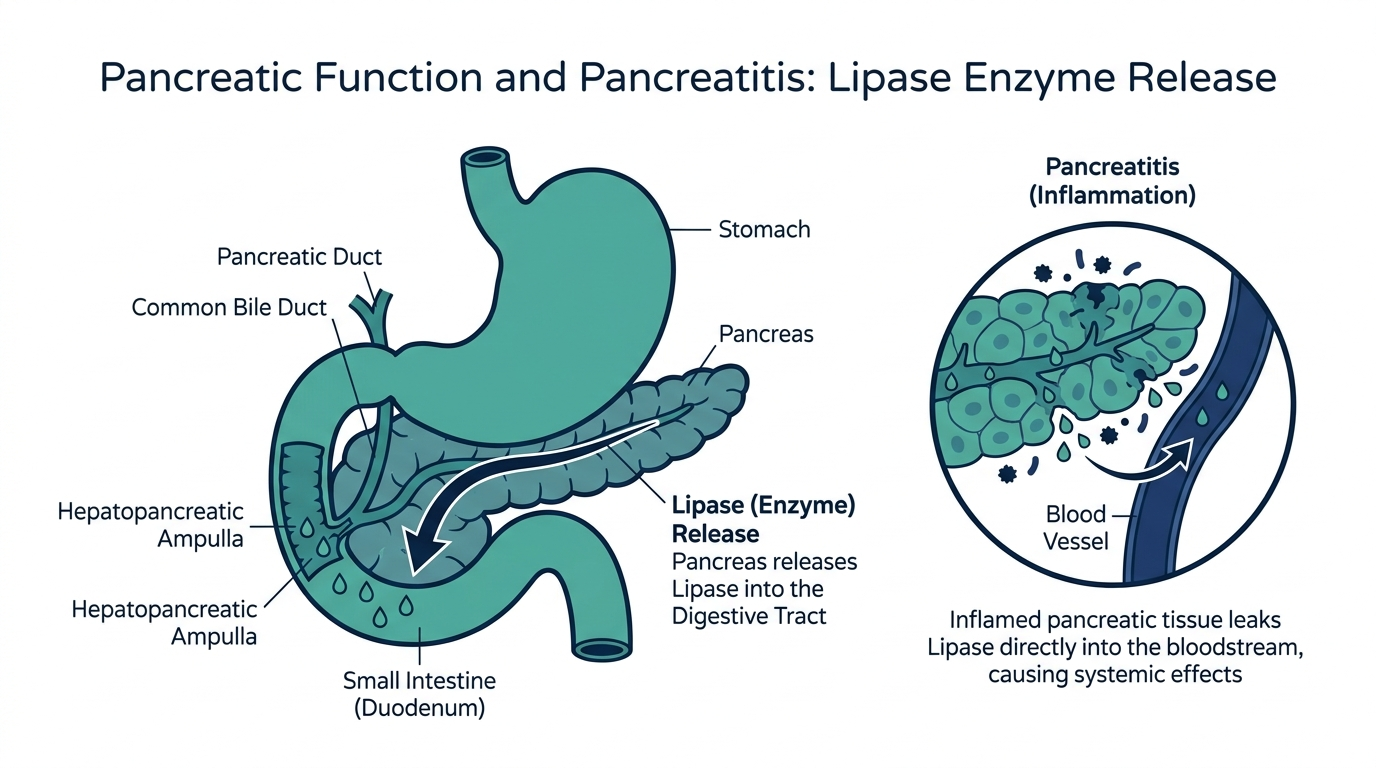
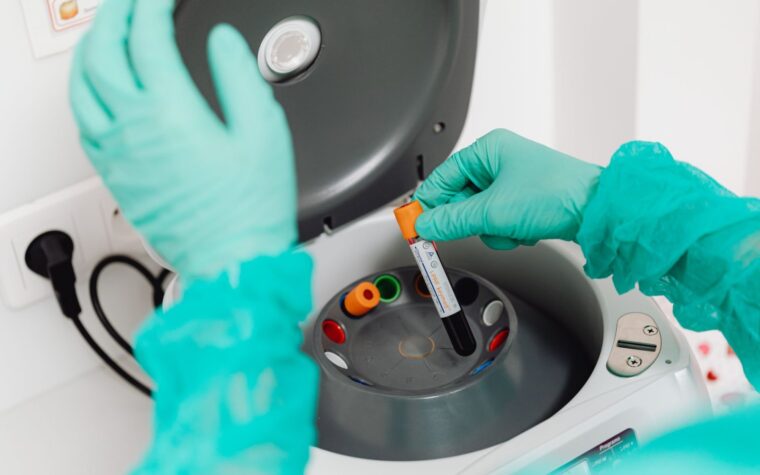
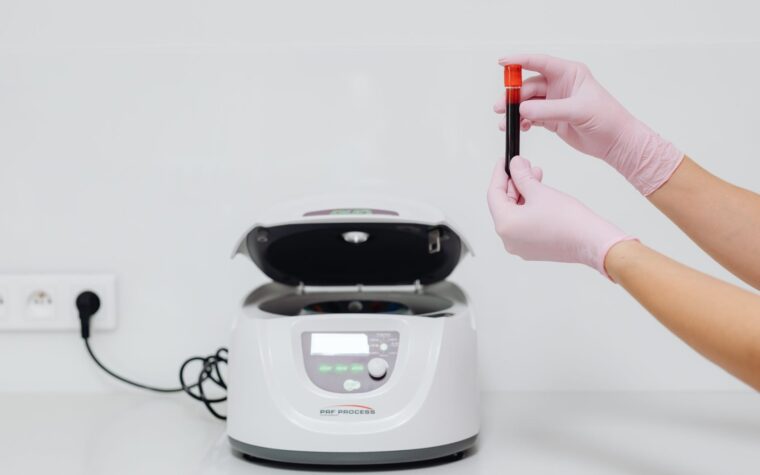
Lipase is a digestive enzyme that breaks down fats, and most of it is made by your pancreas (MedlinePlus). A lipase blood test measures how much of that enzyme is circulating in your bloodstream. It is normal to have a small amount of lipase in your blood at all times. The test matters because when the pancreas is inflamed or damaged, it leaks lipase into the blood in large quantities, so the level spikes.
So when you ask what is lipase in a blood test, the short answer is this: it is a pancreas stress signal. A normal level is reassuring background noise. A sharply elevated level is the body telling you the pancreas is leaking, and that is information no clinician ignores.
What does lipase mean in a blood test, and what does a lipase blood test show?
What lipase means in a blood test is essentially the health of your pancreas, read through one enzyme. A lipase blood test shows whether your pancreas is releasing too much of its fat-digesting enzyme into the bloodstream, which happens when pancreatic tissue is injured or inflamed (Cleveland Clinic). The test is ordered most often to diagnose acute pancreatitis, but it also helps evaluate chronic pancreatic disease, cystic fibrosis, intestinal blockage, and pancreatic cysts (MedlinePlus).
What a lipase blood test does not show is just as important. It cannot tell you why the pancreas is inflamed, whether the cause is gallstones, alcohol, or something else, and it cannot grade how severe the attack will become (PubMed). It confirms that there is a problem and points at the organ. The detective work of cause and severity comes from imaging, history, and other labs.
What blood test is lipase, and what blood test shows lipase?
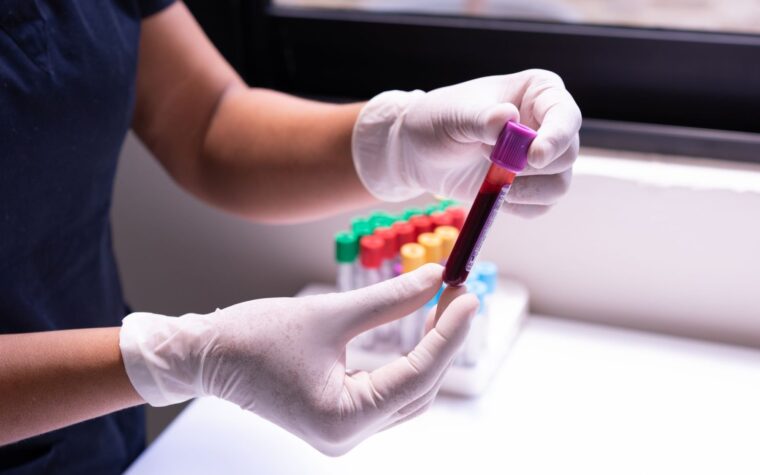
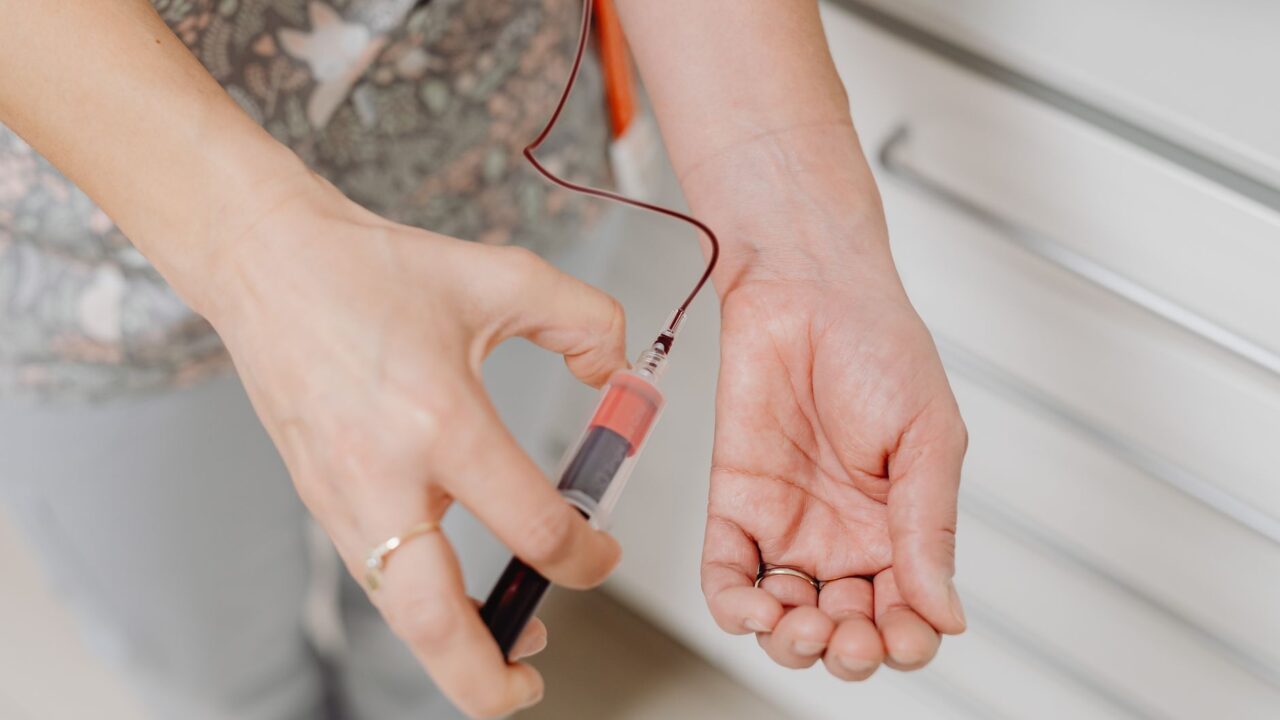
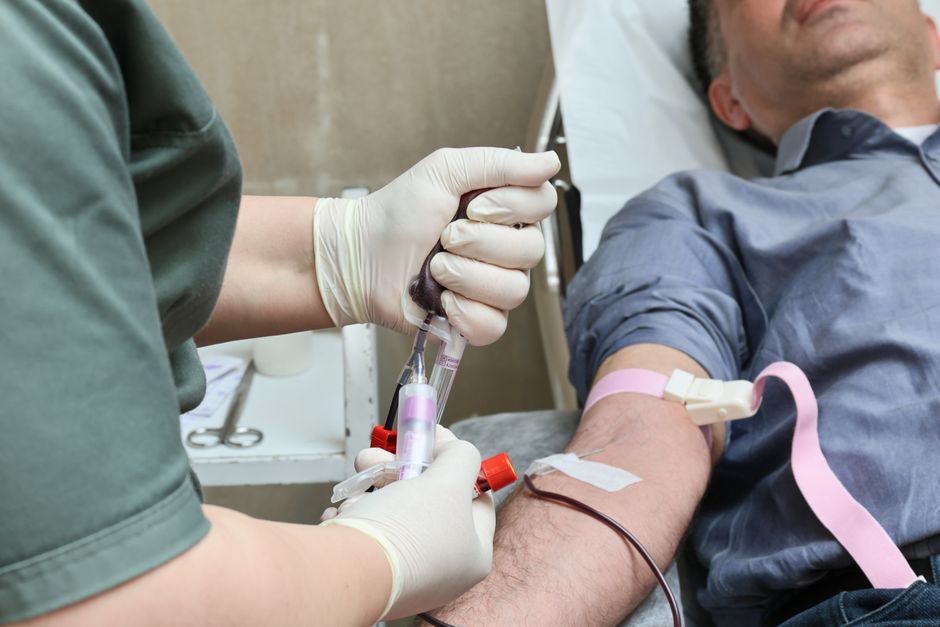
Lipase is a simple blood test drawn from a vein in your arm, often run as part of a broader metabolic or abdominal-pain workup rather than a standalone order. The blood test that shows lipase is usually labeled simply “lipase” or “serum lipase” on your panel. You do not need a special test name to find it. Look for the word lipase in the chemistry section of your report, typically near amylase, the other classic pancreatic enzyme.
In many emergency departments, when someone arrives with severe upper abdominal pain, lipase is one of the first enzymes the lab runs. Some guidelines now recommend ordering lipase alone rather than pairing it routinely with amylase, because adding amylase rarely improves the diagnostic picture (PubMed).
What is a normal lipase level?
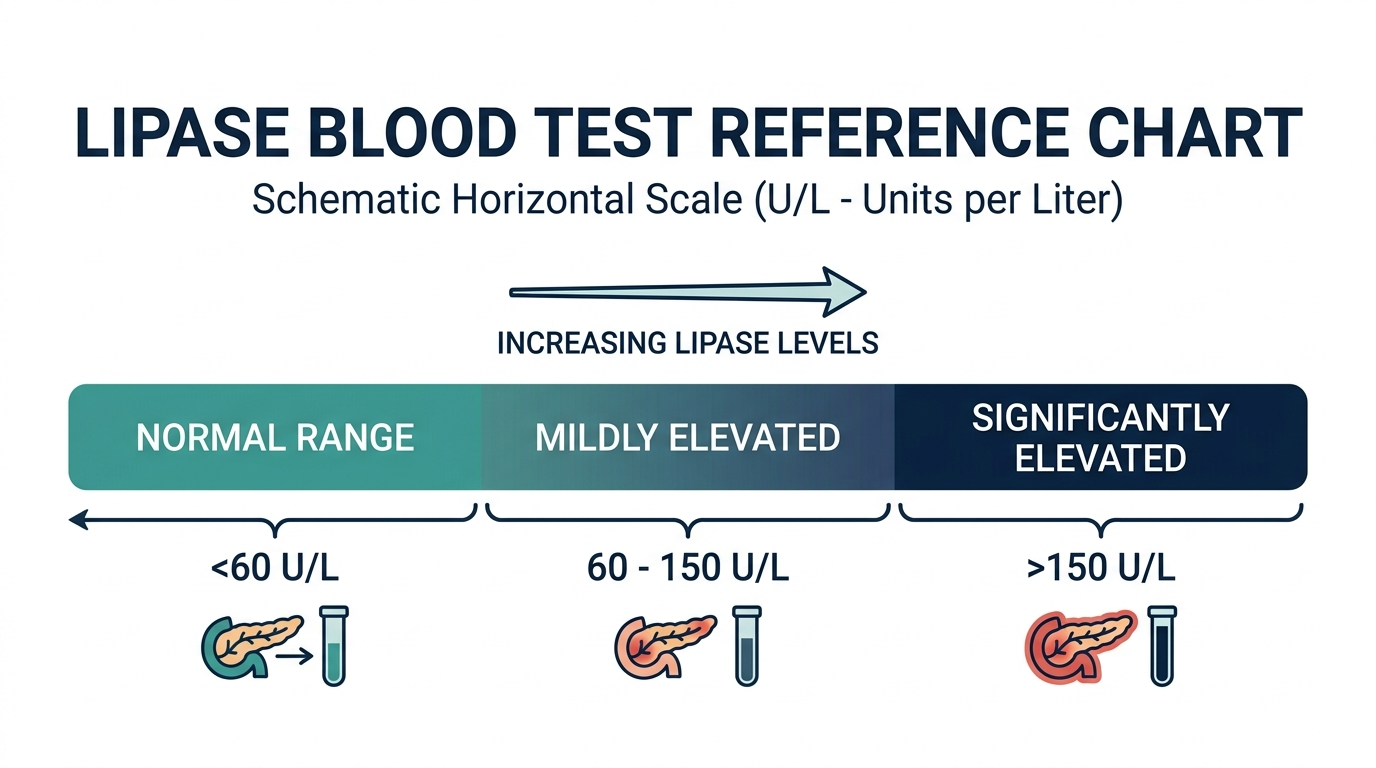
A normal lipase level is generally about 0 to 160 units per liter (U/L), though the exact range varies with age, sex, and the specific laboratory and instrument used (Cleveland Clinic). Some labs report this as 0 to 2.67 microkatals per liter. Always compare your result against the reference range printed on your own report, since that is the range your lab actually calibrated.
Here is the practical threshold to remember. Clinicians do not get especially worried about a lipase that is mildly above the top of the range. The number that triggers a serious workup is a lipase three or more times the upper limit of normal, which for a typical range means roughly 480 U/L or higher (Cleveland Clinic). That threefold cutoff is not arbitrary, and it explains a lot about how the test is used.
What does a high lipase level mean?
A high lipase level usually means the pancreas is inflamed or damaged and is leaking enzyme into the blood. A very high level, three or more times the upper limit of normal, is one of the core signals used to diagnose acute pancreatitis (MedlinePlus). But pancreatitis is not the only thing that pushes lipase up. Other causes of elevated lipase include (Cleveland Clinic):
- Gallstones, which can block the pancreatic duct and back enzyme up into the gland.
- Heavy alcohol use, a leading driver of both acute and chronic pancreatitis.
- Blocked pancreatic ducts, from stones, scarring, or a mass.
- Chronic kidney disease, because impaired kidneys clear lipase more slowly, so it accumulates.
- Other abdominal problems, including peptic ulcers, gallbladder disease, intestinal obstruction, and pancreatic cancer (MedlinePlus).
Diagnosis of acute pancreatitis does not rest on the number alone. The widely used standard requires two of three findings: characteristic upper abdominal pain, lipase or amylase above three times the upper limit, and imaging consistent with pancreatitis (PMC). A high lipase with classic pain is often enough on its own.
Now the insider point that rarely reaches the patient version. The timing of the blood draw can change everything. Serum lipase rises within hours of an attack starting, peaks around 24 hours, and can stay elevated for up to about two weeks (PMC). That long tail is exactly why doctors now favor lipase over amylase, which fades faster. If you show up to the ER two or three days after the pain began, amylase may already have drifted back to normal while lipase is still flagged high, catching a diagnosis that amylase alone would miss. The flip side is the rare and dangerous trap of a normal lipase: a small number of genuine pancreatitis cases run normal enzyme levels, so a normal number does not always clear the pancreas if the pain and imaging say otherwise (PMC).

What does a low lipase level mean?
A low lipase level is far less commonly discussed and usually points in the opposite direction from inflammation. It can mean the enzyme-producing cells of the pancreas have been permanently damaged and can no longer make normal amounts of lipase (MedlinePlus). This pattern shows up in chronic conditions such as long-standing chronic pancreatitis and cystic fibrosis, where repeated injury gradually burns out functioning pancreatic tissue.
For most people with an otherwise unremarkable panel, a lipase sitting toward the low end is not something to chase. It becomes meaningful mainly in the context of chronic digestive symptoms, poor fat absorption, or a known pancreatic condition. As always, a single low number is read against your symptoms and the rest of your results, not in isolation.
Why is lipase usually preferred over amylase?
Lipase has quietly overtaken amylase as the go-to pancreatic enzyme, and the reason comes down to better aim and a longer window. Several evidence-based guidelines now recommend using lipase over amylase to diagnose acute pancreatitis (PubMed). Lipase offers higher sensitivity, meaning it catches more true cases, and it stays elevated longer, giving a wider window to detect an attack even days after symptoms begin (PubMed).
There is a cost-and-clarity angle too. Studies have found that ordering both enzymes together adds little to no diagnostic value over lipase alone, so routinely co-ordering them is often wasted testing (PMC). This is why you may now see lipase ordered on its own where, a decade ago, both would have been drawn reflexively. If your report shows lipase without amylase, that is modern practice, not an oversight. Keep in mind, though, that neither enzyme reveals the cause of the inflammation or predicts how severe it will get (PubMed).

The symptoms that usually send someone for a lipase test
Lipase is rarely checked out of curiosity. It is almost always ordered because someone has symptoms that point at the pancreas, and recognizing that cluster helps you understand why the enzyme matters. Classic acute pancreatitis presents with:
- Severe, persistent upper abdominal pain, often described as boring straight through to the back. It typically does not come and go like ordinary indigestion; it settles in and stays.
- Pain that worsens after eating, particularly fatty meals, because food stimulates the already inflamed pancreas.
- Nausea and vomiting that does not relieve the pain the way it might with a simple stomach bug.
- A tender, sometimes distended abdomen, and in more serious attacks, fever and a fast heart rate.
- Relief when leaning forward and worsening when lying flat, a small but telling clue clinicians look for.
Certain features are red flags that warrant emergency care rather than a wait-and-see approach: severe unrelenting pain, repeated vomiting with inability to keep fluids down, high fever, confusion, a racing heart, or signs of dehydration. Severe pancreatitis can become life threatening, so this is not a picture to ride out at home. If these symptoms describe you, the lipase test is part of an urgent evaluation, not a routine checkup.
What actually raises lipase, cause by cause
A high lipase says the pancreas is stressed, but the causes differ enormously in how they are treated, so it helps to understand the main culprits behind an attack.
- Gallstones. A stone that lodges where the bile and pancreatic ducts meet can back enzymes up into the gland. Gallstone pancreatitis is one of the two most common forms, and it often means the gallbladder eventually needs to come out to prevent a repeat.
- Alcohol. Heavy or binge alcohol use is the other leading cause, capable of triggering both a single acute attack and, over years, chronic pancreatitis that slowly scars the gland.
- Very high triglycerides. This one is underappreciated. When blood triglycerides climb very high, generally in the range of 1,000 mg/dL or more, they can trigger acute pancreatitis, and the risk starts rising once levels pass roughly 500 mg/dL. Hypertriglyceridemia accounts for a meaningful share of cases and is easy to miss unless a lipid panel is checked.
- Certain medications. A number of drugs list pancreatitis as a rare adverse effect. GLP-1 medications used for diabetes and weight loss have drawn attention here, though in studied groups many recurrent episodes turned out to have causes other than the drug. The practical point is to tell your provider every medication you take.
- Blocked ducts, kidney disease, and other abdominal problems. Scarring, a mass, or a mechanical obstruction can raise lipase, and because the kidneys help clear the enzyme, reduced kidney function lets it accumulate even without a fresh pancreatic attack.
This is why lipase confirms the alarm but does not name the intruder. Pinning down the cause guides everything that follows, from removing a gallbladder to lowering triglycerides to stopping alcohol, and it usually takes a history, a lipid panel, and imaging to sort out.
The tests read alongside lipase, and how severity is judged
Because lipase alone cannot grade how bad an attack is, clinicians surround it with other tests that fill in the cause and the risk. When someone is admitted with pancreatitis, the workup commonly includes:
| Test | What it adds |
|---|---|
| Liver enzymes and bilirubin | A sharp rise can point to a gallstone blocking the ducts, suggesting a gallstone cause. |
| Triglycerides | Screens for a hypertriglyceridemia trigger, which changes treatment substantially. |
| Complete blood count | A rising white cell count and hematocrit help gauge inflammation and dehydration. |
| Calcium and glucose | Both can shift in significant pancreatitis and factor into severity scoring. |
| C-reactive protein (CRP) | Measured over the first days, a high CRP is used as one marker of a more severe course. |
| Imaging (ultrasound or CT) | Ultrasound looks for gallstones; CT assesses the extent of pancreatic inflammation and complications. |
Severity is judged by the whole picture, not the lipase number. In fact, a very high lipase does not mean a more dangerous attack. The height of the enzyme correlates poorly with how sick someone becomes. What predicts a rough course is persistent organ stress, dehydration, and markers like CRP over the first 48 to 72 hours, which is why hospitalized patients are watched closely rather than judged on a single enzyme.
What happens after a high lipase, and how to lower future risk
If lipase confirms acute pancreatitis, the initial treatment is largely supportive: hospitalization, intravenous fluids, pain control, and careful reintroduction of food as the gland settles. The longer game is preventing the next attack, and that depends on the cause:
- If gallstones were the trigger, gallbladder removal is often recommended to prevent recurrence.
- If alcohol was the driver, stopping alcohol is the single most protective step, and support for doing so is part of good care.
- If triglycerides were sky high, treatment shifts toward diet, medication, and controlling diabetes to bring them down and keep them down.
- If a medication is suspected, your provider may adjust or replace it.
For people with chronic or recurrent pancreatic disease, lipase may be followed over time, and a persistently low lipase can signal that the gland has lost function, which brings its own issues with fat digestion and nutrition. In those cases, enzyme replacement and dietary support come into play. The common thread is that a lipase result is the opening of a plan, not the end of one.
Preparing for the test and reading it wisely
A lipase blood test is a simple venous draw, and in an emergency it is run immediately with no preparation. When it is ordered non-urgently as part of a panel, a few points help you interpret it correctly:
- Fasting may be requested. Lipase itself does not strictly require fasting, but it often rides along with other tests that do, so follow the instructions you are given.
- Kidney function colors the result. Because the kidneys clear lipase, reduced kidney function can nudge it upward independent of the pancreas.
- Some medications matter. Tell your provider about all prescriptions and supplements, since a few can affect pancreatic enzymes.
- Anchor to your lab’s range. Reference ranges differ by instrument, so the number that matters is how far your result sits above or below your own report’s stated range, especially the threefold-elevation threshold used for pancreatitis.
Read this way, lipase stops being a scary flagged line and becomes what it truly is: a sensitive, well timed alarm for one organ, most meaningful when interpreted next to your symptoms, your other labs, and imaging.
A few common misunderstandings are worth clearing up. A higher lipase number does not mean a more severe attack, since the height of the enzyme correlates poorly with how sick a person becomes. A normal lipase does not always rule out pancreatitis, because a small number of real cases run normal levels. And a mildly elevated lipase, just above the top of the range, is usually far less concerning than an elevation of three times or more, which is the level that genuinely signals an acute pancreatic problem.
Diet and recovery after a pancreatitis diagnosis
Once a high lipase has confirmed a pancreatic attack and the acute phase is settling, attention shifts to how you eat, because the pancreas needs a gentle runway to recover. Food is reintroduced gradually rather than all at once, and the choices you make afterward influence whether the gland stays calm.
- Start light and low fat: after the initial rest, meals typically begin small and low in fat, since fatty food stimulates the pancreas hardest. Bland, easy to digest choices are usually first.
- Favor smaller, more frequent meals: spreading intake across the day places less demand on the gland than a few large meals.
- Stay well hydrated with water: fluids support recovery, and water is the simplest choice while the digestive system settles.
- Avoid alcohol completely: even when alcohol was not the trigger, it stresses a recovering pancreas and is best left out during healing.
For people whose pancreas has lost function over time, marked by a persistently low lipase, digestion of fat becomes harder, and clinicians may add prescribed enzyme support and dietary guidance. The overall principle is patience: the gland recovers on its own schedule, and eating in a way that does not provoke it is a large part of getting there.
How lipase differs across age groups
Lipase is interpreted a little differently depending on who is being tested, and knowing this prevents misreading a value that is normal for one age but not another. Reference ranges are age aware for good reason.
- Children: pediatric pancreatitis is less common than in adults, and its causes skew toward structural problems, certain medications, infections, and inherited conditions rather than alcohol or gallstones. Ranges are read against pediatric references.
- Adults: the classic adult drivers, gallstones and alcohol, dominate, and the familiar threefold-elevation threshold is the practical trigger for a serious workup.
- Older adults: reduced kidney function becomes more common with age and can raise lipase independent of the pancreas, so results are read with kidney status in mind.
Across every age, the same discipline applies: compare the number to the reference range for that person, read it alongside symptoms, and treat a single value as one clue rather than a verdict. A lipase that looks alarming out of context can be entirely appropriate once age and kidney function are accounted for.
Don’t just read about lipase, track it.
A single result is a snapshot. Superpower re-tests lipase and 100+ markers over time so you can watch them move as you change sleep, food, and training.
Frequently asked questions
What does lipase blood test mean if my result is high?
A high lipase usually means your pancreas is inflamed or damaged and is leaking enzyme into the blood. A level three or more times the upper limit of normal is a key sign of acute pancreatitis, though gallstones, alcohol use, kidney disease, and blocked ducts can also raise it (Cleveland Clinic). Your clinician interprets it alongside your symptoms and imaging.
What is a normal lipase level?
A normal lipase is generally about 0 to 160 U/L, though ranges vary by lab, age, and sex (Cleveland Clinic). Compare your result to the reference range printed on your own report.
What blood test shows lipase?
Lipase appears on a standard blood chemistry panel, usually labeled “lipase” or “serum lipase,” and is drawn from a vein in your arm. It is often ordered during a workup for abdominal pain, sometimes alongside amylase (MedlinePlus).
Can lipase be normal even with pancreatitis?
Yes, though it is uncommon. A small number of genuine acute pancreatitis cases occur with normal lipase levels, which is why doctors do not rely on the number alone when pain and imaging suggest pancreatitis (PMC).
What does a low lipase level mean?
A low lipase can mean the pancreatic cells that produce the enzyme have been permanently damaged, as seen in chronic pancreatitis or cystic fibrosis (MedlinePlus). On its own, in an otherwise normal panel, it is usually not a cause for concern.
This article is for general educational purposes and is not medical advice. It cannot diagnose or treat you and does not replace your clinician. Always discuss your lab results and any health decisions with a qualified healthcare professional.
Related reading
Vital Signs Today may earn a commission if you buy through links on this page. It does not affect our editorial assessments.