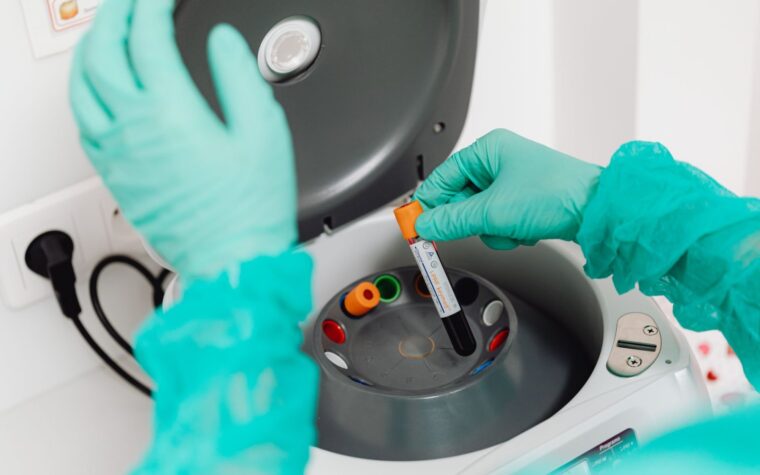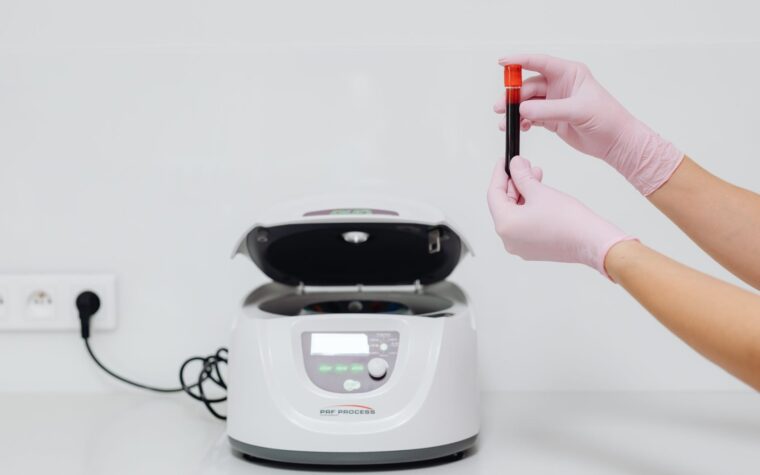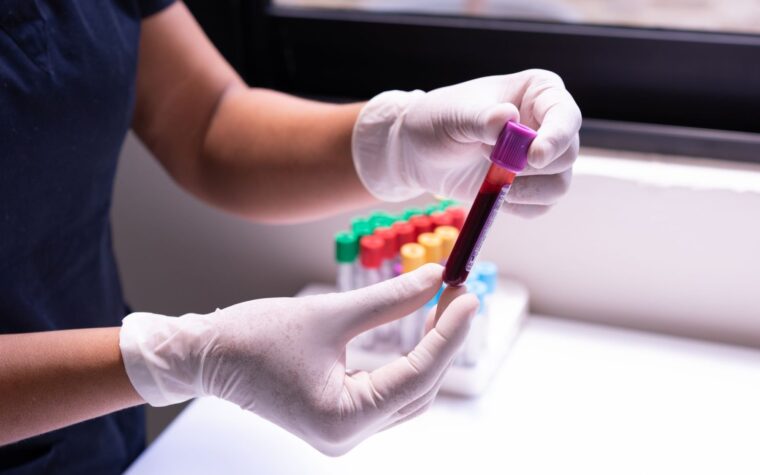
You got your lab results back, scanned past the cholesterol and the blood sugar, and landed on a line that says PT/INR with a single small number next to it, maybe 1.0, maybe 2.6. No units, no percentage, just a bare ratio. If you take a blood thinner, that one number may be the single most important figure on the whole page. If you do not, it is still telling your clinician something specific about how well your blood knows when to stop bleeding.
INR is a number your doctor actively manages. Want to see the other biomarkers behind your clotting health? One at-home Superpower draw checks 100+ biomarkers, physician-reviewed.
INR is one of the few lab values that doctors actively steer toward a target rather than just check once. That makes it worth understanding properly, not skimming.
What is INR in a blood test?
INR stands for international normalized ratio, and it is a standardized measure of how long your blood takes to clot. It is reported together with the prothrombin time (PT) test, which times in seconds how long a sample of your plasma takes to form a clot after a clotting trigger is added (MedlinePlus). The INR takes that raw clotting time and converts it to a ratio so that a result from one lab means the same thing as a result from any other lab. In plain terms, INR is a clotting speed score, where a higher number means your blood is clotting more slowly.
The “normalized” part is the whole point. Different labs use different chemical reagents that clot blood at slightly different speeds, so a raw prothrombin time of 13 seconds at one lab is not directly comparable to 13 seconds at another. The INR formula corrects for that using a reference factor, which is why your warfarin clinic can trust a result no matter where the blood was drawn (StatPearls, NCBI).
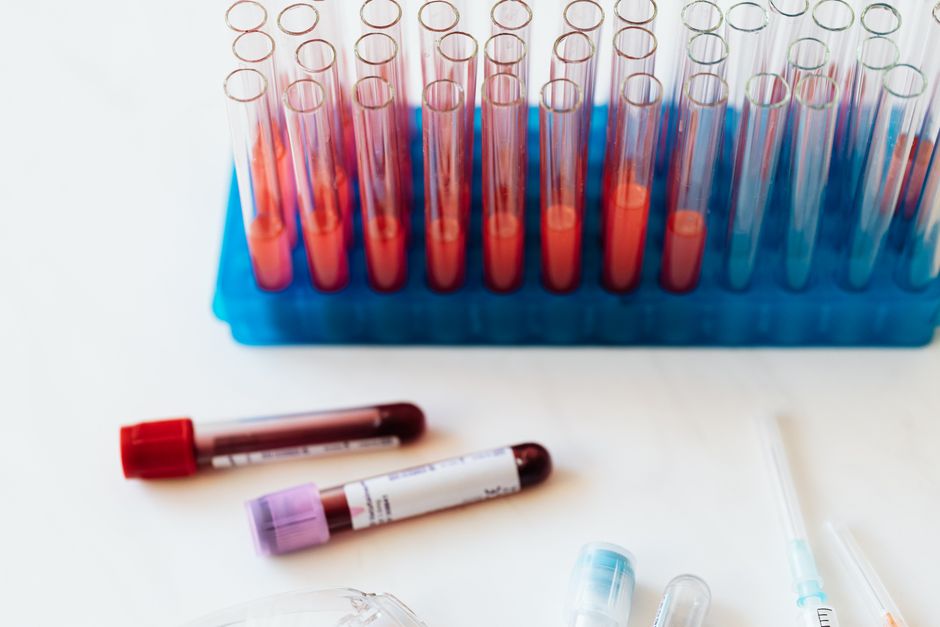
What does INR mean in a blood test, and what does it actually measure?
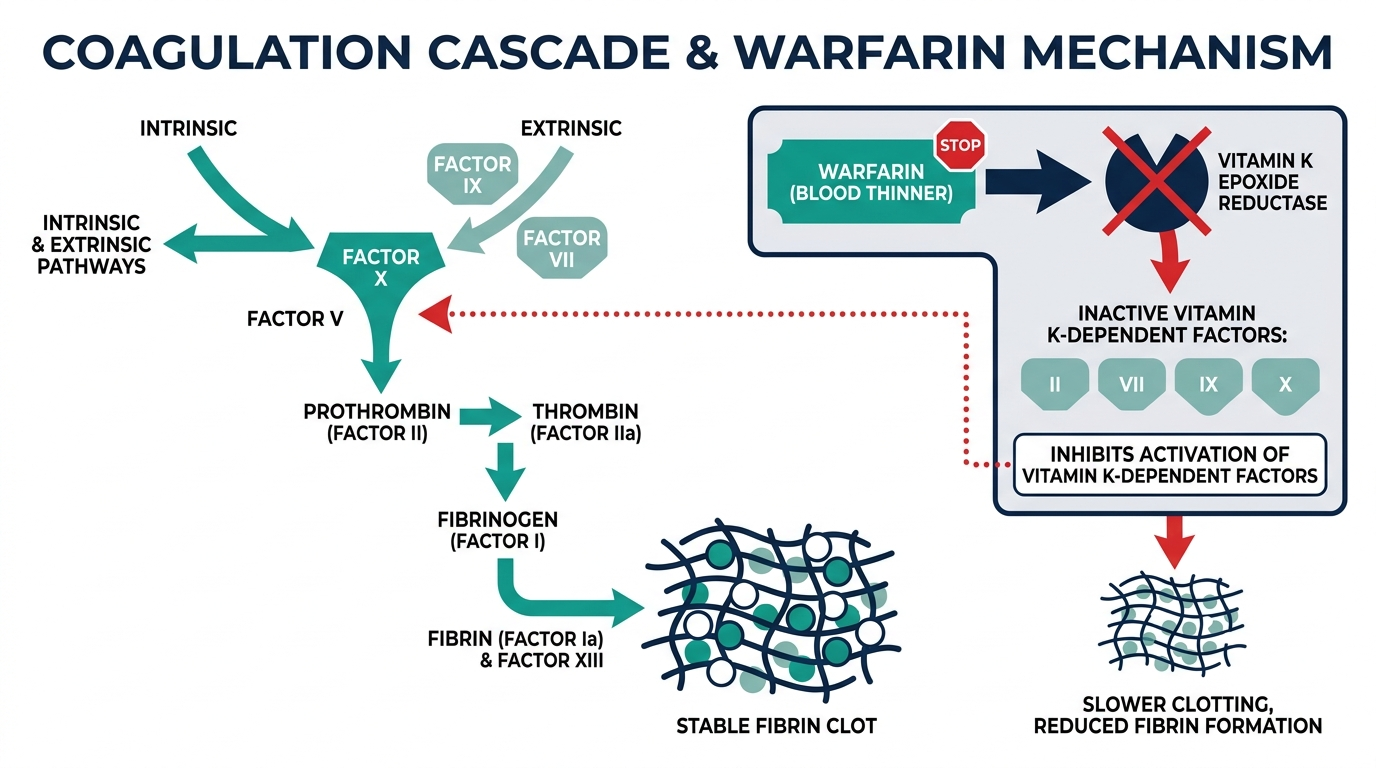
When people ask what does INR mean in a blood test, the short answer is that it measures the function of one specific arm of your clotting system. The prothrombin time behind the INR tests the extrinsic and common coagulation pathways, which depend on clotting factors II, V, VII, and X (StatPearls, NCBI). Several of those factors are built by your liver and require vitamin K to work. That single fact explains almost everything the test is used for.
Because warfarin works by blocking vitamin K, it directly slows down production of those exact factors, which pushes the clotting time up and the INR with it. So the INR is essentially a dose meter for warfarin. It is also a window into liver health and vitamin K status, since the liver makes the factors and vitamin K activates them. When someone asks what does INR blood test mean for them personally, the honest answer is: it depends entirely on whether they are on a blood thinner.
What is a normal INR level?
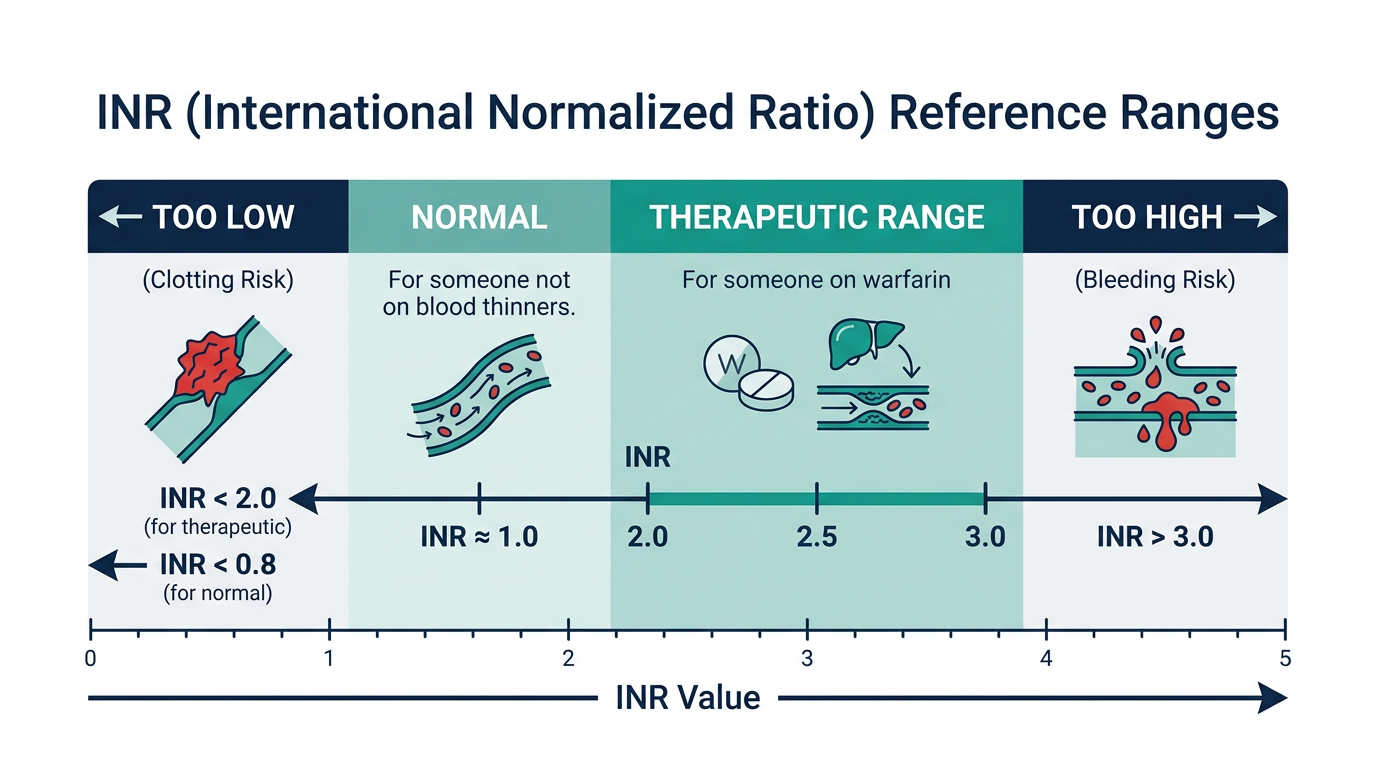
A normal INR for a healthy person who is not taking an anticoagulant is roughly 0.8 to 1.1, with the underlying prothrombin time landing around 11 to 13.5 seconds (MedlinePlus). An INR right around 1.0 is the reference point, because the ratio is built so that normal clotting equals about 1.
Here is the part that confuses people. If you take warfarin, a “normal” INR of 1.0 is actually a treatment failure, because it means the drug is not thinning your blood at all. For most people on warfarin, the target is an INR of 2.0 to 3.0 (Cleveland Clinic). So the same number can be reassuring for one patient and alarming for another. Always read your INR against the goal your own clinician set for you, not against the generic “normal” column.
What does a high INR mean?
A high INR means your blood is clotting more slowly than expected, which raises your risk of bleeding. The higher the number climbs, the longer it takes to form a clot, and the easier it becomes to bruise, bleed from the gums, or bleed dangerously after an injury (MedlinePlus).
In someone who is not on a blood thinner, a high INR is a red flag that points to a short list of causes (StatPearls, NCBI):
- Liver disease. A damaged liver makes fewer clotting factors, so the INR rises. It is one of the reasons INR is used to gauge how sick a liver is.
- Vitamin K deficiency. Without enough vitamin K, factors II, VII, IX, and X cannot work properly, which slows clotting. This can follow poor nutrition, prolonged antibiotics, or fat absorption problems.
- Bleeding disorders involving the clotting factors the test depends on.
- Disseminated intravascular coagulation, a serious condition that burns through clotting factors faster than the body can replace them.
In someone who is on warfarin, a high INR usually means the dose is too strong, the diet has shifted, or a new medication is interfering. This is the situation clinics watch most closely, because an INR that drifts well above the target range is where serious bleeding events happen.
Here is the insider point that rarely makes it into the patient handout. The number that actually predicts how safe a warfarin patient is over a year is not any single INR reading, it is the percentage of time their INR stays inside the target band, a metric clinicians call time in therapeutic range. Research on warfarin-treated patients shows that those with a low time in therapeutic range and highly variable INR results carry a much higher risk of serious bleeding and death, with the combination of both raising the risk several times over (Lind et al., PubMed). A patient whose INR is “in range” today but bounces from 1.5 to 4.5 month to month is in far worse control than one who sits steadily at 2.4 every visit. One snapshot can look fine and still hide a dangerous pattern, which is why warfarin clinics care about the trend, not the single dot.
What does a low INR mean?
A low INR means your blood is clotting faster than the target, which in a person on warfarin signals that the medication is not thinning the blood enough to protect them (MedlinePlus). The danger here is the opposite of a high INR. Instead of bleeding too easily, the blood can clot too easily, raising the risk of a stroke, a deep vein clot, or a clot on a heart valve.
For a warfarin patient, a low INR usually means the dose needs to go up, a dose was missed, or a recent surge in vitamin K rich foods like leafy greens has blunted the drug. For someone not on a blood thinner, a low or normal INR is generally unremarkable and is exactly what you want to see. There is no common disease defined purely by an abnormally low INR in a healthy person.

What blood test is INR, and why is it always paired with PT?
INR is not a separate blood test, it is the standardized output of the prothrombin time test, which is why your report almost always reads PT/INR together (Cleveland Clinic). The lab times the clot in seconds (that is the PT) and then runs that number through a formula to produce the INR. The PT in seconds is the raw measurement, and the INR is the universal translation of it.
This pairing matters because of those lab-to-lab differences mentioned earlier. The raw PT in seconds is only meaningful at the lab that produced it, while the INR is portable. If you travel, switch hospitals, or use a home testing meter, the INR is the language everyone speaks. So when you hear what are INR blood tests used for, the most common answer by far is monitoring warfarin, with checking liver function and screening clotting ability before surgery as the other main uses (MedlinePlus).
Why are there different INR targets for different people?
Different conditions carry different clotting risks, so clinicians deliberately aim for different INR bands rather than one universal goal. The target is set high enough to prevent dangerous clots but not so high that bleeding becomes the bigger threat. It is a balancing act, and the right balance point depends on why you are anticoagulated.
Cleveland Clinic Laboratories lays out the standard targets clearly (Cleveland Clinic Laboratories):
- INR 2.0 to 3.0: the common target for preventing and treating venous clots, atrial fibrillation, and embolism with tissue heart valves.
- INR 2.5 to 3.5: a higher target used for mechanical heart valves, which clot more aggressively than tissue valves, and for lupus anticoagulant.
- INR 3.0 to 4.5: reserved for select high-risk situations to reduce recurrence of stroke and heart attack.
This is why two people can both be “in range” with very different numbers. A person with a mechanical mitral valve at INR 3.0 is on target, while a person with atrial fibrillation at INR 3.0 is at the very top of their range. The number on the page only has meaning once you know the goal it is being measured against.
How to prepare for an INR test and what can throw the number off
Unlike a cholesterol or glucose panel, an INR draw does not require fasting. You can eat normally before it, and in fact you should keep your diet steady rather than change it just before a test, because a sudden shift is exactly what distorts the reading. The test itself is a simple venous draw, or in home monitoring a fingerstick onto a portable meter. What matters far more than the timing of the draw is everything that happened in the days leading up to it.
Warfarin has one of the longest lists of interactions of any common drug, which is why an INR can move even when the dose has not changed. Understanding the usual culprits helps you connect a surprising result to something real rather than treating it as random noise.
- Antibiotics. Many antibiotics push the INR up. They do it two ways: some wipe out gut bacteria that produce vitamin K, and others, such as certain sulfonamides and metronidazole, slow the liver enzymes that clear warfarin (Mayo Clinic). A short antibiotic course is a classic reason a stable patient suddenly tests high.
- Amiodarone. This heart rhythm drug is a well known INR raiser because it blocks the enzymes that break warfarin down. Clinicians often cut the warfarin dose substantially when starting it and then recheck the INR closely.
- Vitamin K rich foods. Leafy greens like kale, spinach, and collards are packed with vitamin K, the very nutrient warfarin blocks. A big swing in how much you eat can move the INR. The goal is consistency, not avoidance: eat greens if you like them, just keep the amount roughly the same week to week.
- Alcohol and illness. A drinking binge or an acute illness with fever, vomiting, or poor appetite can all shift the INR, usually upward, by stressing the liver or cutting vitamin K intake.
- Supplements. Fish oil, ginkgo, garlic, and many herbal products can affect bleeding or interact with warfarin, so tell your clinician about anything you take, including things you consider natural.
The practical takeaway is simple. If your INR comes back off target, do not just blame the dose. Walk back through the last one to two weeks for a new prescription, an antibiotic, an illness, a diet change, or extra alcohol. That history is often the whole explanation.
Markers that get read alongside INR
An INR rarely tells the full story on its own. Clinicians read it in the context of a few neighboring results, and knowing the panel it lives in helps you interpret your own report.
- Prothrombin time (PT). This is the raw clotting time in seconds that the INR is calculated from, so the two always travel together as PT/INR.
- Activated partial thromboplastin time (aPTT). This tests a different arm of the clotting system, the intrinsic pathway, and is used to monitor heparin rather than warfarin. When both PT and aPTT are prolonged, it points toward a broader problem such as advanced liver disease or a widespread clotting factor deficiency, not just warfarin.
- Platelet count. Platelets are the cells that plug a wound, while the INR reflects the clotting proteins. A person can bleed either because platelets are low or because clotting factors are impaired, so reading them together separates the two mechanisms.
- Liver enzymes and albumin. Because the liver builds the clotting factors the INR depends on, a rising INR in someone not on warfarin often prompts a look at liver function. Together these values help gauge how well the liver is working.
Reading INR beside these markers is what turns a lone number into a picture. That is also why one comprehensive panel that captures clotting, liver, and blood cell markers in a single draw gives a clearer read than chasing one value at a time.
Interpreting your INR: worked scenarios
Numbers make more sense against realistic situations. Here are a few patterns clinicians see often, framed the way you might actually encounter them on your own report.
- INR 1.0, no blood thinner, healthy adult. This is exactly what you want. Clotting is normal, and there is nothing to act on.
- INR 1.4, on warfarin, target 2.0 to 3.0. This is subtherapeutic. The blood is clotting too readily to be protected, so the dose likely needs to go up. Missed pills or a jump in leafy greens are common reasons.
- INR 4.8, on warfarin, target 2.0 to 3.0. This is well above range and a bleeding risk. It calls for prompt clinical attention, and the trigger is often a new antibiotic, an illness, or a dose error.
- INR 1.8, not on warfarin, with abnormal liver enzymes. Here the mildly high INR is not about a drug at all. It may reflect the liver struggling to make clotting factors, so the clue lies in the neighboring liver results, not the INR alone.
- INR steady at 2.4 every visit versus bouncing 1.5 to 4.5. Both averages may look on target, but the steady patient is far better controlled. Stability over time, not a single reading, is what protects a warfarin patient.
The through line is that an INR only means something once you pair it with two facts: whether you take an anticoagulant, and what your personal target is.
How often INR is checked and what happens after an abnormal result
Monitoring frequency depends on how stable you are. When warfarin is first started or a dose is changed, the INR may be checked every few days to a couple of times a week while the number settles. Once it holds steady in range, testing spaces out, often to every two to four weeks, and for very stable patients it can stretch further at the clinician’s discretion. Home INR meters let some patients test themselves more often between clinic visits, which can improve control for the right people.
An out of range result does not automatically mean a crisis. What happens next depends on how far off it is and whether you are bleeding or clotting. A mildly low INR usually prompts a small dose increase and a recheck. A mildly high INR may lead to a small dose reduction or a skipped dose. A markedly high INR, especially with any bleeding, is treated more urgently and may involve holding the drug or giving vitamin K to reverse it. The one thing you should never do is change your own warfarin dose based on a single reading without talking to the clinician who manages it.
Common misconceptions about INR
- “A normal INR is always good.” Not if you take warfarin. For a warfarin patient, an INR of 1.0 means the drug is doing nothing, which is a treatment failure, not a win.
- “Higher INR is more dangerous, lower is safer.” Both directions carry risk. High INR means bleeding risk, low INR means clotting risk. The target is a balance point, not a ceiling to stay under.
- “I should avoid all vitamin K foods on warfarin.” The aim is consistency, not elimination. Cutting greens entirely is unnecessary and makes the diet harder to keep steady. Eating a stable amount is what keeps the INR predictable.
- “INR and PT are two different tests.” They are one test reported two ways. PT is the raw clotting time, INR is its standardized ratio.
- “One good reading means I am fine for months.” A single in range value can hide a swinging pattern. It is the time your INR spends in range over months, not any one dot, that predicts safety.
Turn what you just learned about INR into action.
Superpower lets you test INR and 100+ biomarkers from home, then re-check them over time so you can actually see progress, physician-reviewed at every step.
Frequently asked questions
What is an INR blood test used for?
It is used most often to monitor people taking the blood thinner warfarin and make sure the dose is keeping their clotting in the right range. It also helps check liver function and assess how well your blood can clot before surgery (MedlinePlus).
What is a normal INR level?
For a healthy person not on a blood thinner, a normal INR is about 0.8 to 1.1, with a prothrombin time near 11 to 13.5 seconds (MedlinePlus). People on warfarin usually have a target of 2.0 to 3.0, so compare your result to the goal your clinician set.
What does a high INR mean?
A high INR means your blood is clotting more slowly than normal, which increases bleeding risk. In a warfarin patient it often means the dose is too strong, and in others it can point to liver disease or vitamin K deficiency (StatPearls, NCBI).
What does a low INR mean if I take warfarin?
A low INR on warfarin means your blood is clotting too readily and the medication is not protecting you enough, which raises the risk of a dangerous clot. It usually means the dose needs adjusting or that vitamin K rich foods have blunted the drug (MedlinePlus).
What blood test is INR, and is it the same as PT?
INR is the standardized version of the prothrombin time (PT) test, which is why reports list them together as PT/INR. The PT is the raw clotting time in seconds, and the INR converts it into a ratio that means the same thing across different labs (Cleveland Clinic).
This article is for general educational purposes and is not medical advice. It cannot diagnose or treat you and does not replace your clinician. Always discuss your lab results and any health decisions with a qualified healthcare professional.
Related reading
Vital Signs Today may earn a commission if you buy through links on this page. It does not affect our editorial assessments.