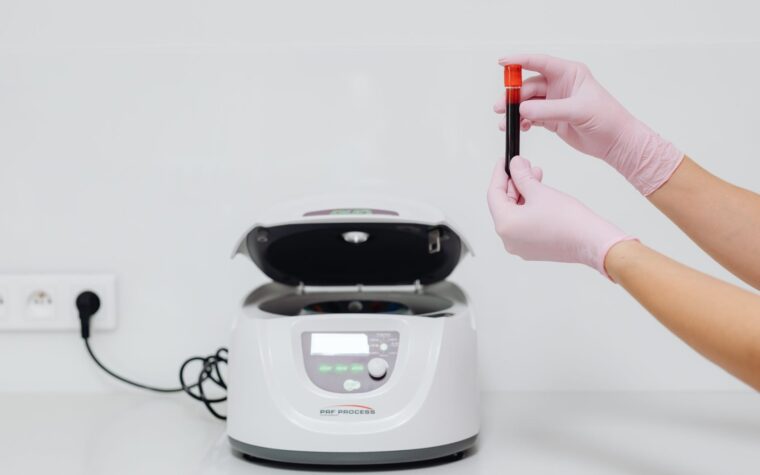
Your doctor ordered an immunoglobulin panel, the results came back, and now you are staring at a line that just says IgA followed by a number and a reference range. No bold flag, no plain-English label, just three letters. Here is what almost no one explains at the lab counter: IgA is the antibody that guards every wet surface your body uses to meet the outside world, and the single number on your report is a snapshot of how well that frontline defense is staffed.
A lone IgA number rarely tells the whole immune story. See how it fits with your other immunoglobulins and more. One at-home Superpower draw checks 100+ biomarkers, physician-reviewed.
Most quick explainers stop at “it is an antibody.” That misses the more useful part, which is what a high or low result actually changes about your care, and why one specific scenario can quietly sabotage a celiac test. Let us read the number properly.
What is iga blood test?

The IgA blood test measures the amount of immunoglobulin A, a type of antibody, circulating in your blood. It is usually run as part of a broader immunoglobulins panel that also checks IgG and IgM, and it helps your doctor evaluate how your immune system is working (MedlinePlus). In plain terms, the what is iga blood test question has a simple answer: it counts the antibody that protects your respiratory tract and digestive system, the mucous surfaces where most germs try to get in.
Immunoglobulin A is described by Cleveland Clinic as a protein your body makes to help keep germs and toxins from getting into your cells, and it lives mostly in your body fluids and the mucous membranes lining your airways and gut (Cleveland Clinic). The blood test puts a number on how much of it you have, which is the starting point for spotting immune problems, chronic infections, and certain autoimmune conditions.

What does an iga blood test show?
An IgA blood test shows whether your body is making too little, too much, or a normal amount of immunoglobulin A, which is a window into your immune defenses at the mucosal level. On its own it does not diagnose a specific disease. The immunoglobulins panel alone cannot confirm any single condition, so the IgA number is read alongside your symptoms and other tests (MedlinePlus).
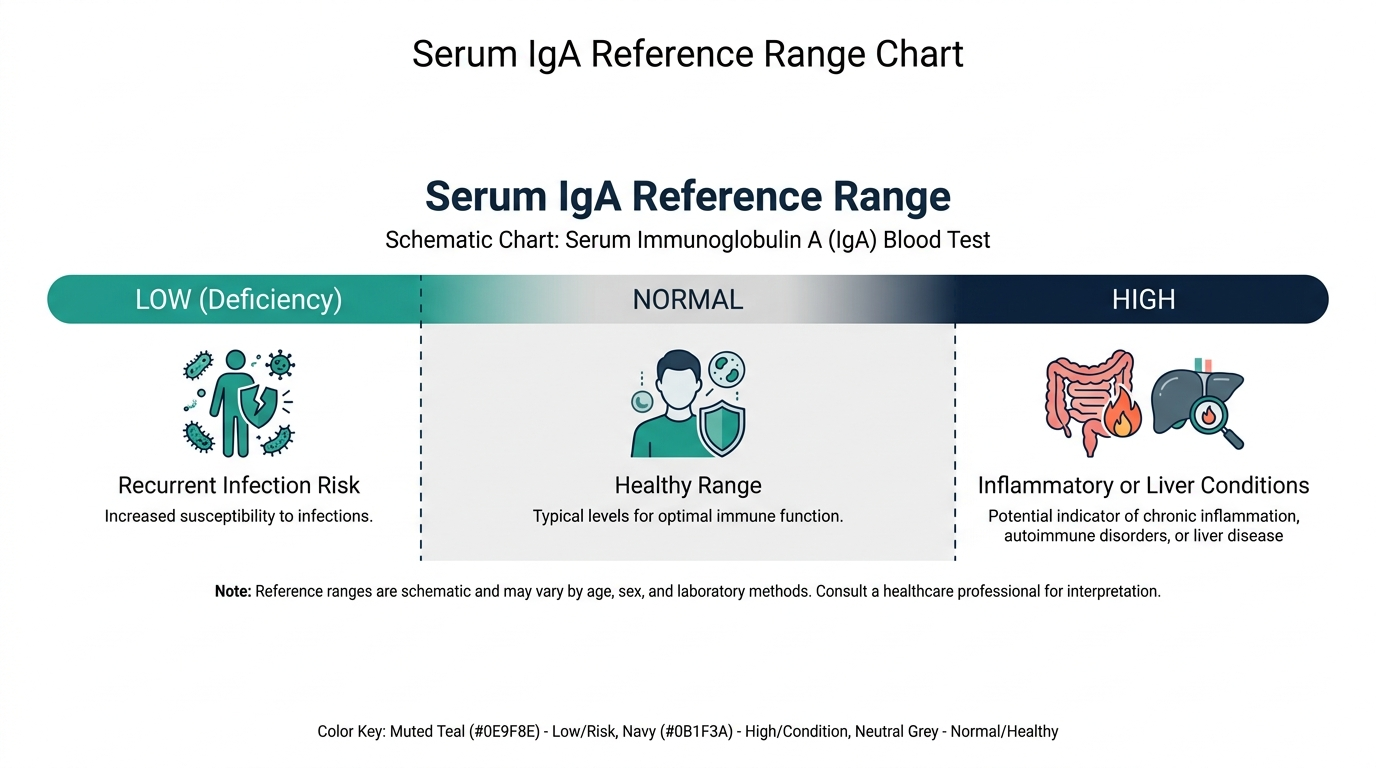
What the result points toward depends on the direction it moves. A low number raises the question of an immune deficiency that leaves your sinuses, airways, and gut more exposed. A high number suggests your immune system is being driven hard by a chronic infection, liver disease, or an autoimmune process. The test is a signpost, not a destination. It tells your doctor which road to investigate next.
What is a normal IgA level?
A normal IgA level for adults is generally about 60 to 400 mg/dL, though the exact range varies by laboratory and by age (Cleveland Clinic). Children typically sit lower than adults because IgA production ramps up slowly through childhood and does not reach adult levels until the teenage years.
The practical rule is the same one that applies to every lab value: read your result against the reference range printed on your own report, not against a number from an article. Different analyzers and different labs calibrate slightly differently, so the range beside your result is the one that was actually validated for that machine. If your IgA falls comfortably inside that band and you feel well, it is almost always a non-event.
What does a high IgA mean?
A high IgA usually means your immune system is being chronically stimulated, and the test points to a handful of common drivers rather than one clear diagnosis. Elevated IgA can show up with chronic infections, IgA nephropathy (a kidney disease), liver disease such as hepatitis or cirrhosis, certain blood cancers including multiple myeloma and lymphoma, and various autoimmune conditions (Cleveland Clinic).
Because the list is broad, a single elevated IgA is a reason to look closer, not to panic. Your doctor will weigh it against the rest of the picture. Were your IgG and IgM also up, suggesting a general immune response, or was IgA elevated alone, which can hint at something more specific like a clonal process in the bone marrow? The pattern across all three immunoglobulins often matters more than any one of them in isolation.

What does a low IgA mean?
A low IgA most often means your body is simply not making much immunoglobulin A, and in many people that causes no symptoms at all. Low or absent IgA can leave you more prone to repeated respiratory and digestive infections, and it is associated with asthma, allergies, and autoimmune conditions such as celiac disease and inflammatory bowel disease (Cleveland Clinic). It can also reflect protein loss or poor production from kidney disease or malnutrition (MedlinePlus).
The most common genetic cause of a low result is selective IgA deficiency. This is the mildest and most common primary immunodeficiency, and Cleveland Clinic estimates it affects roughly 1 in 500 white individuals (Cleveland Clinic). The clinical definition is strict: serum IgA below 7 mg/dL in someone older than four years, while IgG and IgM stay normal (StatPearls, NCBI). Reported prevalence ranges from about 1 in 143 to 1 in 965 depending on the population studied, which makes it far from rare (StatPearls, NCBI).
Most people with selective IgA deficiency never know they have it and live entirely normal lives. The reason it is worth naming is not the deficiency itself, but a trap it sets for one very common test, which is the next section.
Why is total IgA checked before a celiac test?
Total IgA is checked before or alongside a celiac blood test because the standard celiac screen is itself an IgA antibody, and if you do not make enough IgA, that screen can read falsely normal even when you have celiac disease. The usual first-line celiac test is the tissue transglutaminase IgA test, written as tTG-IgA, which measures the IgA antibodies your immune system makes when it overreacts to gluten (Cleveland Clinic).
Here is the insider point that explains a lot of missed diagnoses. If you have IgA deficiency, you cannot mount a strong IgA antibody response to anything, including gluten. So your tTG-IgA can come back low or negative not because your gut is healthy, but because you have no IgA to produce in the first place. Cleveland Clinic states this plainly: false negatives can happen if you already have low IgA levels, as in IgA deficiency (Cleveland Clinic). This matters because celiac disease is one of the conditions that runs more often in people with selective IgA deficiency in the first place (Cleveland Clinic). The very people most likely to have celiac are the ones whose standard test is most likely to miss it.
That is why a thoughtful workup pairs the tTG-IgA with a total IgA. If total IgA is low, the lab switches to IgG-based celiac tests, which do not depend on the antibody you lack. When you see total IgA ordered next to a celiac panel, this is the quiet logic behind it, and it is a good sign your clinician is reading the chessboard a move ahead.
How is the IgA blood test done and how do you prepare?
The IgA blood test is a routine blood draw, usually taken from a vein in your arm, and for most people it needs no special preparation. The sample goes to the lab, where the immunoglobulin levels are measured, and it is commonly bundled with IgG and IgM so your doctor sees the full antibody profile at once (MedlinePlus).
One detail worth flagging to your clinician: certain medications and recent vaccines or infections can nudge immunoglobulin levels, so mention anything relevant before the draw. The test carries the same minor risks as any blood draw, mainly brief soreness or a small bruise. If your result lands outside the range, the next step is rarely a single answer and more often a targeted follow-up based on whether the number was high or low and how your other antibodies looked.

Where IgA works: serum versus secretory
To read the number well, it helps to know that IgA lives in two forms, and the blood test only sees one of them directly. Most of the IgA doing frontline work is secretory IgA, which is pumped out across the linings of your gut, airways, tears, saliva, and breast milk, where it neutralizes germs and toxins before they ever cross into the body. Serum IgA, the fraction that circulates in the bloodstream, is what the standard IgA blood test measures.
That distinction explains a common source of confusion. A blood IgA level is a useful proxy for how well your IgA machinery is staffed overall, but it is measuring the antibody in transit, not the antibody standing guard on every mucous surface. It is why someone can have a normal serum IgA and still have localized mucosal issues, and why the number is best read as one indicator of a larger system rather than a direct meter of gut or airway defense.
IgA is also the most abundant antibody at mucosal surfaces in the body, which is fitting given how much surface area your gut and airways expose to the outside world every day. When you appreciate that scale, a low result stops looking like an abstract lab quirk and starts looking like a thinner-than-usual staffing of your body’s largest border.
Read IgA with IgG and IgM, not alone
An IgA result rarely arrives by itself. It usually comes bundled in an immunoglobulins panel with IgG and IgM, and the pattern across all three is where the real information lives. Each antibody class tells a slightly different part of the story.
- IgG is the workhorse of long-term immunity and the most abundant antibody in blood. It reflects your accumulated defenses from past infections and vaccines.
- IgM is the first responder, the antibody your body throws up early in a fresh infection before the more specific IgG catches up.
- IgA is the mucosal guard, concentrated where the body meets the outside world.
Reading them together sharpens the interpretation. A single elevated IgA with normal IgG and IgM can hint at something specific, such as a clonal process in the bone marrow, whereas all three rising together looks more like a broad immune response to chronic stimulation. On the low side, a lone low IgA with normal IgG and IgM fits selective IgA deficiency, while low levels across all classes point toward a broader immunodeficiency that needs a very different workup. The panel, not the solo number, is what your clinician actually reads.
The IgA deficiency detail that matters in an emergency
There is one consequence of selective IgA deficiency that most explainers skip, and it can matter in a hospital. A minority of people with IgA deficiency develop anti-IgA antibodies, and in rare cases those antibodies can trigger a serious allergic reaction if they receive IgA-containing blood products such as plasma, red cells, or platelets (StatPearls, NCBI).
This is genuinely uncommon, and the evidence on exactly how often it happens is debated, so it is not a reason for alarm. But it is a reason knowing your IgA status can be quietly useful. If you have documented IgA deficiency, that fact belongs in your medical record, because in the event you ever need a transfusion, your care team can take precautions such as using washed cells or products from IgA-deficient donors. It is a clean example of how a lab value that means nothing in daily life can still be worth carrying, because context can turn a harmless number into an actionable one.

A closer look at high IgA and IgA nephropathy
When IgA runs high, the differential is broad, but one condition on the list deserves a fuller mention because it directly involves this antibody: IgA nephropathy. In this kidney disease, IgA deposits build up in the kidney’s filtering units and can drive inflammation over time. It is one of the more common causes of chronic kidney disease worldwide, and it can be silent for years.
The lesson here is about the limits of the blood test. A raised serum IgA can accompany IgA nephropathy, but the blood level alone does not diagnose it. The definitive diagnosis comes from a kidney biopsy, and the earliest practical clues often show up not in the immunoglobulin panel but in a urine test, where blood or protein leaking into the urine flags a kidney under strain. This is the recurring theme of the whole article: the IgA number narrows the search, and then more specific tests close the case.
Who should get an IgA test, and what symptoms prompt it
Nobody needs a routine IgA level the way they might get a routine glucose or cholesterol. It is a targeted test, ordered when a specific question comes up. The usual triggers include:
- Recurrent infections. Frequent sinus, ear, respiratory, or gut infections, especially in a pattern that seems excessive, can prompt an immunoglobulin panel to check whether an immune deficiency is behind them.
- A celiac workup. As covered above, total IgA is often ordered alongside the tTG-IgA celiac screen so a false negative from underlying IgA deficiency is not missed.
- Suspected autoimmune or liver disease. Certain autoimmune conditions and chronic liver disease can raise IgA, so the level sometimes appears as part of a broader evaluation.
- Following up an abnormal protein result. If bloodwork flags an unusual protein pattern, an immunoglobulin panel including IgA helps characterize it, occasionally uncovering a clonal condition such as multiple myeloma.
- Family history. A known family history of IgA deficiency or other immunodeficiency can justify checking.
If none of these apply and you feel well, there is usually no reason to seek out an isolated IgA test. Its value comes from answering a specific clinical question, not from routine surveillance.
Common misunderstandings about the IgA result
A few myths cause needless worry over this line on a report. Clearing them up changes how you read the number.
- “A low IgA means my immune system is broken.” For most people, a low or even absent IgA causes no problems at all. Selective IgA deficiency is the mildest and most common primary immunodeficiency, and many people live entirely normal lives without knowing they have it.
- “A high IgA means I have cancer.” While certain blood cancers can raise IgA, far more often a high value reflects a chronic infection, liver disease, or an autoimmune process. It is a prompt to investigate, not a diagnosis.
- “The IgA test can diagnose celiac disease.” The IgA-based celiac screen supports a workup, but a formal celiac diagnosis usually still requires confirmation, and in IgA-deficient people the standard screen can miss it entirely, which is the whole reason total IgA is checked first.
- “My number is different from the article, so something is wrong.” Reference ranges differ by lab, analyzer, and age. The only range that governs your result is the one printed next to it on your own report.
The through line is the same one that runs through every good lab interpretation. A single immunoglobulin number is a signpost pointing your clinician toward the next, more specific question, and its meaning depends entirely on the company it keeps: your symptoms, your other antibodies, and your history.
Why age changes what a normal IgA looks like
One reason an IgA value can be misread is that the antibody is not present at adult levels from birth. IgA is among the slowest of the immunoglobulins to mature, so what counts as normal shifts substantially across childhood, and comparing a young child’s result to an adult range is a common mistake.
Newborns make very little of their own IgA, because it does not cross the placenta the way some antibody protection does. Levels then climb gradually through infancy and childhood as the immune system matures, typically reaching the adult range in the teenage years. This slow rise is why a low IgA in a young child is interpreted with caution rather than alarm. In some children the level is simply still catching up, a pattern sometimes described as a transient, age-related delay that resolves as they grow, which is why clinicians may recheck over time before concluding there is a true, lasting deficiency.
Two practical points follow. First, the only reference range that applies to a result is the age-specific one printed on that report, since a value that is perfectly normal for a five-year-old could look low against an adult scale. Second, timing matters for diagnosis: because IgA is still maturing, a firm label of selective IgA deficiency is generally not applied until a child is older, usually around age four or later, when the level would be expected to have risen. For adults, by contrast, the level is stable enough that a single well-timed measurement is usually representative. The lesson is the same one that governs the rest of this test: read the number against the right range for the person in front of you, not a one-size figure.
Don’t just read about iga, track it.
A single result is a snapshot. Superpower re-tests iga and 100+ markers over time so you can watch them move as you change sleep, food, and training.
Frequently asked questions
What does IgA mean in a blood test?
IgA stands for immunoglobulin A, an antibody that protects your respiratory tract and digestive system. The test measures how much of it is in your blood and is usually run with IgG and IgM to assess your immune system (Cleveland Clinic).
What is a normal IgA level?
For adults, a normal IgA level is generally about 60 to 400 mg/dL, though it varies by lab and age and children run lower (Cleveland Clinic). Always compare your result to the reference range on your own report.
What does a high IgA blood test show?
A high IgA suggests chronic immune stimulation. It can appear with chronic infections, IgA nephropathy, liver disease, certain blood cancers like multiple myeloma, and autoimmune conditions, so it is interpreted alongside your other results (Cleveland Clinic).
Can you have low IgA and feel fine?
Yes. Selective IgA deficiency, defined as serum IgA below 7 mg/dL with normal IgG and IgM, is the most common primary immunodeficiency and often causes no symptoms at all (StatPearls, NCBI). Many people live normal lives without ever knowing.
Why is IgA tested with a celiac test?
The standard celiac screen, tTG-IgA, is an IgA antibody, so if you have low IgA the test can read falsely negative (Cleveland Clinic). Checking total IgA tells your doctor whether to switch to IgG-based celiac testing instead.
This article is for general educational purposes and is not medical advice. It cannot diagnose or treat you and does not replace your clinician. Always discuss your lab results and any health decisions with a qualified healthcare professional.
Related reading
Vital Signs Today may earn a commission if you buy through links on this page. It does not affect our editorial assessments.