Medically reviewed by the VST Editorial Board. Last updated July 3, 2026. This article contains affiliate links.
Somebody on every sailing asks whether they can swim in the Nile. The answer is no, and the reason is a parasite, not a crocodile.
A Nile river cruise is one of the lower risk ways to see Egypt, because you sleep on one vessel with one kitchen and one water supply, but it carries three specific health considerations: schistosomiasis from any freshwater contact, extreme heat between June and August when Luxor and Aswan regularly reach 42 to 45 C, and the food and water precautions that apply anywhere in the region. Get those three right and the rest of the trip is temples and early mornings. Here is what to plan before you book.
Key takeaways
- The CDC advises travelers to avoid wading, swimming or other contact with freshwater in Egypt, including the Nile and irrigation canals, because of schistosomiasis.
- Chlorinated pools, the Red Sea and the Mediterranean carry no schistosomiasis risk.
- October through April is the comfortable window. July and August in Luxor and Aswan are a heat management problem, not a sightseeing season.
Why can you not swim in the Nile?
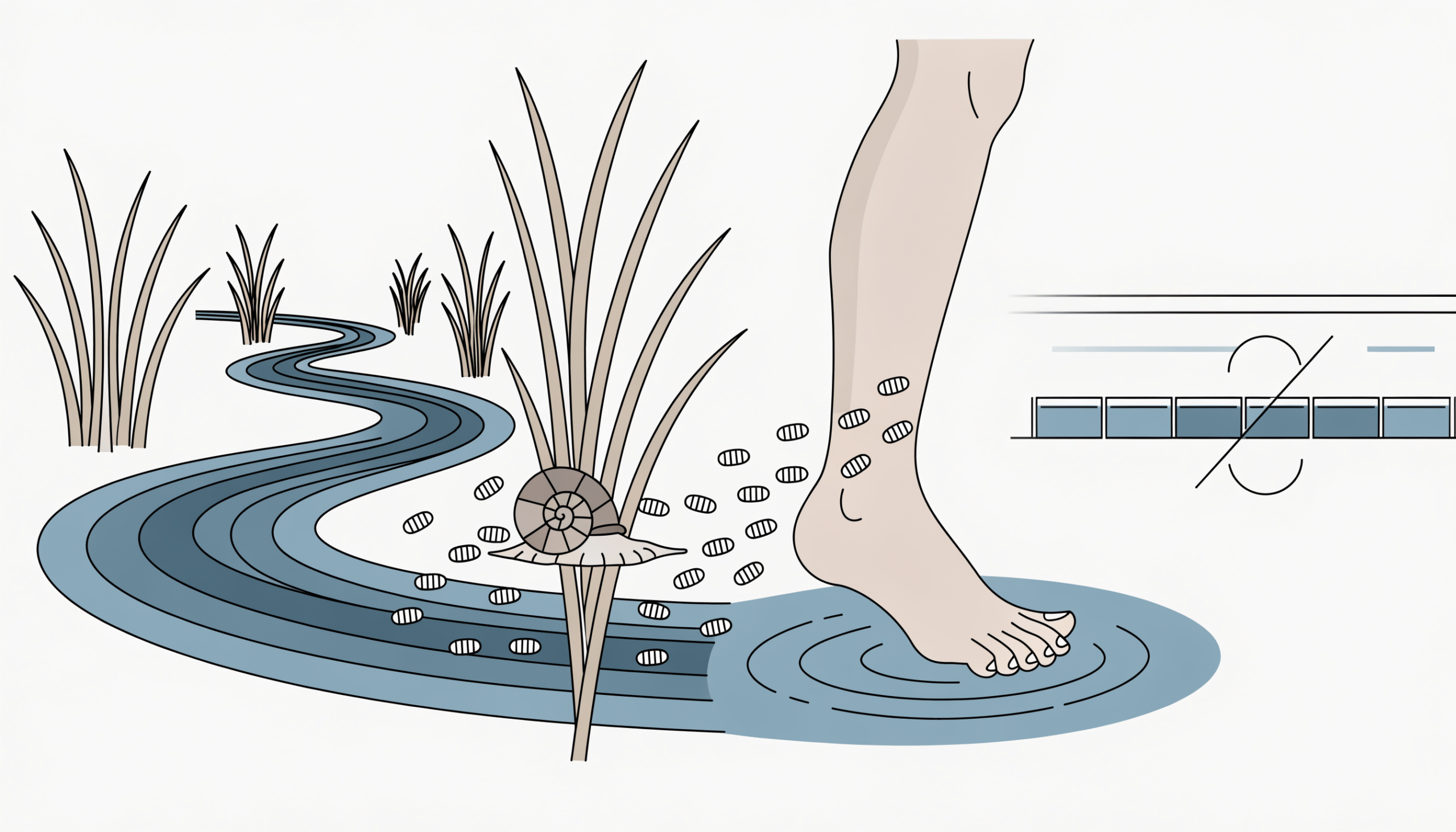
Because of schistosomiasis, a parasitic infection caused by blood flukes whose larvae live in freshwater and penetrate intact skin. Schistosoma mansoni and S. haematobium are endemic in Egypt, with cases reported from the Nile Delta, the Faiyum area, the Suez Canal zone and along the Nile down to the Aswan Dam.
There is no vaccine and no drug that prevents infection. The only protection is not touching the water. The CDC also advises travelers to view local claims that a particular stretch of freshwater is safe, including fast-moving water, with skepticism.
What is safe: chlorinated swimming pools, the saline pools of desert oases, the Red Sea and the Mediterranean. So the pool on your vessel or at your hotel is fine. A felucca ride is fine. Trailing your hand in the river, wading at a bank, or a splash of river water on your legs is the thing to avoid.
Infection is often silent at first. Weeks after exposure some people develop fever, cough, muscle aches and fatigue, known as Katayama syndrome. Blood in the urine can appear later with S. haematobium. It is treatable with prescription praziquantel, and the diagnosis depends entirely on you telling a doctor that you had freshwater contact in Egypt. Say it explicitly, even years later.
When should you go?
| Months | Conditions in Luxor and Aswan | Verdict |
|---|---|---|
| October to February | Roughly 20 to 28 C by day, cool evenings on deck | The comfortable window |
| March to May | Warming fast, still workable early and late | Good, plan around midday |
| June to August | Regularly 42 to 45 C, hotter inside tombs | Cheapest and emptiest, and a genuine heat risk |
| September | Easing but still hot | Shoulder season, acceptable |
The detail people underestimate is that tombs and closed chambers are hotter and more humid than the open air outside, with poor circulation and crowds. If you travel in summer, treat the Valley of the Kings as the hardest physical hour of the trip rather than the easiest.
How do you manage the heat properly?
Shift the schedule rather than powering through. Most excursions already run at dawn for exactly this reason, and the correct response to a 5 a.m. call is to go, not to sleep in and visit at noon.
Drink to thirst plus a little, and add electrolytes if you are sweating heavily for hours. Plain water alone in extreme heat over a full day can leave you salt depleted.
Wear loose, light coloured, long sleeved clothing rather than less clothing. Covered skin in dry desert heat is cooler than exposed skin, and it solves the sun exposure problem at the same time. A wide brimmed hat outperforms a cap.
Know the difference between heat exhaustion and heat stroke. Heat exhaustion means heavy sweating, weakness, nausea, headache, cool clammy skin: move to shade or air conditioning, lie down, cool the skin, sip fluids. Heat stroke means a body temperature above about 40 C with confusion, agitation, slurred speech or loss of consciousness, and the skin may be hot and dry. That is a medical emergency. Call for help, move the person into shade, and start active cooling immediately.
The vessel is your kitchen, your water supply and your air conditioning
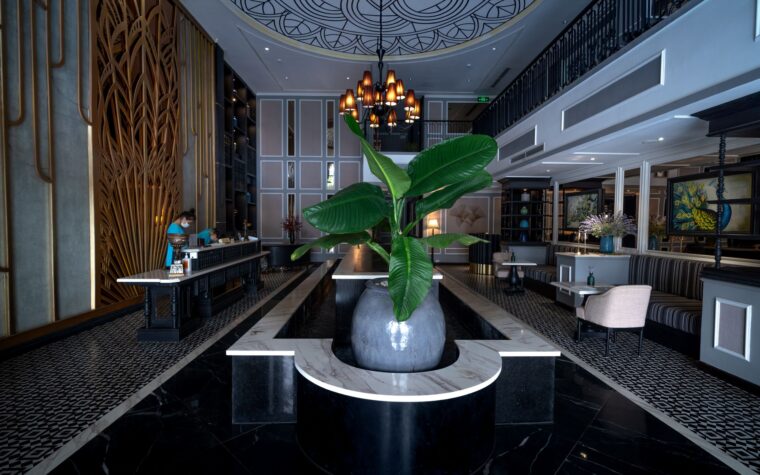
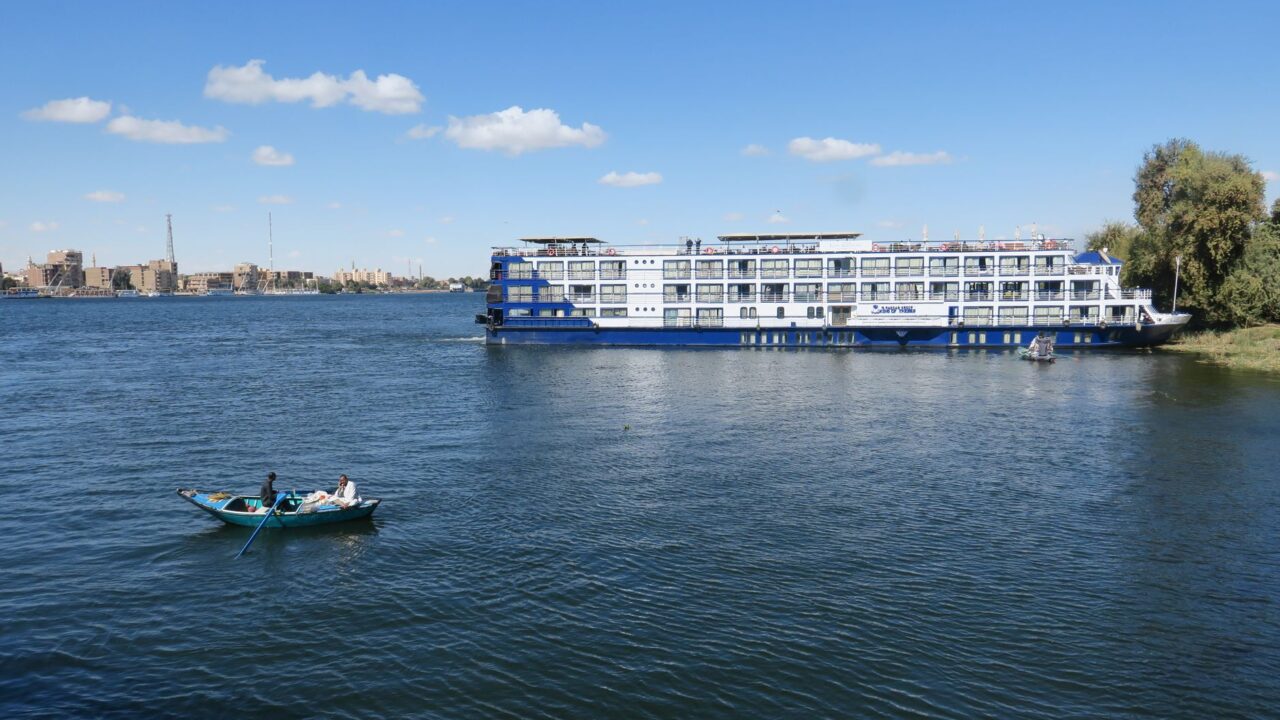
On a cruise, almost every controllable health variable belongs to the operator. The Oberoi Zahra and The Oberoi Philae are the group’s two luxury Nile cruisers, running the Luxor and Aswan stretch with their own catering and water treatment standards, which is the part of a booking worth comparing rather than the cabin photos.
Affiliate link. We may earn a commission at no cost to you.
For how the two luxury cruisers sit inside their operator’s wider portfolio, see our guide to Oberoi Hotels.
What about food and water on board?
A cruise concentrates your risk in a good way and a bad way. Good, because one kitchen with real standards is more controllable than fourteen different restaurants. Bad, because a norovirus outbreak on a closed vessel spreads through the whole passenger list.
The rules that still apply: drink sealed bottled or treated water, treat ice as water unless the operator confirms it is made from treated water, favour hot freshly cooked dishes over items held warm on a buffet, and wash your hands with soap and water before eating. Alcohol gel is a backup, and it is weak against norovirus specifically.
Carry oral rehydration salts. If you do get travelers’ diarrhea in 43 C heat, dehydration arrives much faster than it would at home. The full treatment protocol, including when loperamide is the wrong drug, is in our guide to travelers’ diarrhea.
What vaccines and prescriptions should you sort first?
Book a pre-travel appointment four to six weeks before departure. For Egypt that conversation usually covers routine vaccines including measles, hepatitis A, typhoid, and depending on your plans hepatitis B and rabies. Malaria is not a routine concern for the standard Nile itinerary, but mosquito bite avoidance still matters because West Nile virus is present in the region.
Bring enough of your regular prescription medication for the full trip plus several days, in original labelled packaging, with a copy of the prescription list using generic drug names. Our guide to travel vaccinations covers the timing rules, and setting up an eSIM covers keeping your insurer reachable from a moving vessel.
Buy travel insurance that explicitly includes medical evacuation. Between Luxor and Aswan you are hours from a tertiary hospital, and the cost of moving someone is the part that ruins families financially rather than the treatment itself.
Dress for 43 C, not for the photographs
Loose, breathable, moisture wicking long sleeves are the single most effective piece of heat kit for desert sightseeing. Cariloha’s bamboo travel layers are built around exactly that, and they pack small enough that carrying two sets is not a decision.
See Cariloha breathable travel layers
Affiliate link. We may earn a commission at no cost to you.
What else surprises first time cruisers?
The dust. Sandstone dust at temple sites irritates eyes and airways, and if you have asthma this is the trip to carry your reliever inhaler in your pocket rather than in the cabin.
The steps. Temple complexes involve uneven stone, steep tomb ramps and no handrails. Sturdy closed shoes matter more than anything in your suitcase, and mobility limitations are worth raising with the operator before booking rather than at the gangway.
(An aside from the trip planning side: the cheapest sailing dates in July and August are cheap for a physiological reason, not a marketing one. If your group includes anyone over 70, anyone with heart or kidney disease, or a small child, the price difference is not worth the heat load.)
When should you see a doctor?
Get urgent care in Egypt for:
- Confusion, agitation, slurred speech or collapse in the heat, which suggests heat stroke
- Fever above 102 F (38.9 C), bloody diarrhea, or vomiting you cannot stop
- Chest pain, breathlessness at rest, or one sided weakness
- Any animal bite, scratch, or bat contact, which needs rabies assessment the same day
After you return, see a doctor and mention Egypt and any freshwater contact if you develop: fever within weeks of the trip, blood in your urine, persistent cough or fatigue, or diarrhea lasting more than two weeks. Schistosomiasis is easy to treat and easy to miss, and it is missed mostly because nobody thinks to mention a river.
Frequently asked questions
Is a Nile cruise safe?
For most travelers, yes. The realistic risks are heat, food and water borne illness, and freshwater contact, all of which are manageable with planning.
Can I drink the water on board?
Use sealed bottled or operator treated water for drinking and brushing teeth unless the operator states its supply is treated to drinking standard.
Is the pool on the ship safe?
Yes. Chlorinated pools do not carry schistosomiasis risk. The river does.
What is the best month for a Nile cruise?
October through April for comfort. November to February is the easiest on the body.
Do I need malaria tablets for Egypt?
Usually not for a standard Nile itinerary, but confirm with a travel clinician based on your exact route and season.
The bottom line
Book between October and April if you have the choice, keep every part of you out of the river, drink treated water, carry rehydration salts, and buy insurance that covers evacuation. Then say yes to the 5 a.m. excursions. The heat is the only thing on this trip that genuinely punishes a late start.
Sources
- Centers for Disease Control and Prevention. Egypt and Nile River Cruises, CDC Yellow Book. wwwnc.cdc.gov
- Centers for Disease Control and Prevention. Schistosomiasis, CDC Yellow Book 2026. ncbi.nlm.nih.gov
- National Travel Health Network and Centre. Schistosomiasis factsheet. travelhealthpro.org.uk
- Centers for Disease Control and Prevention. Travelers’ Diarrhea, CDC Yellow Book. cdc.gov
This article is for general information and is not medical advice. See our medical disclaimer.