Disclosure: Vital Signs Today may earn a commission if you buy through links on this page, at no extra cost to you. This does not influence our evidence-based assessments. We are not a medical provider; talk to a clinician before acting on test results.
Quick answer: An iron panel blood test (also called iron studies or an iron profile) measures four things together: serum iron, total iron-binding capacity (TIBC), transferrin saturation, and usually ferritin. A single iron number can mislead you, which is why a full iron panel reads them as a set to tell the difference between true iron deficiency, iron overload, and inflammation mimicking either one. If you want iron status checked alongside your wider health rather than in isolation, Superpower bundles ferritin and other iron-relevant markers into a 100+ biomarker annual draw for $199, so you see iron in context instead of guessing from one result.
Disclosure: Vital Signs Today may earn a commission if you buy through links on this page, at no extra cost to you. This does not influence our evidence-based assessments. We are not a medical provider; talk to a clinician before acting on test results.
| Service | Best for | Pricing | Visit |
|---|---|---|---|
| Superpower | Whole-body optimization | ~$179/yr membership | View › |
| Everlywell | Single targeted tests | Per-kit | View › |
What an iron panel blood test actually measures
People search for an iron panel blood test expecting one number. There isn’t one. Iron in the body lives in several places at once: circulating in your blood, bound to a transport protein, and stored in your tissues. A full iron panel measures each of those compartments so a clinician can see the whole picture rather than a snapshot.
Here is the editorial point most single-marker kits gloss over: serum iron alone swings with what you ate, the time of day, and even a recent supplement. Reading it without its companion markers is like checking your bank balance the morning after payday and assuming you are rich. The panel exists precisely because the markers correct for each other.
The cleanest way to think about it is three compartments and a ratio. Serum iron is the cash in your wallet right now. TIBC and transferrin are the wallet itself, how much you could carry. Ferritin is your savings account, the reserve you draw down slowly. Transferrin saturation is the ratio of wallet cash to wallet capacity. No single one of those tells you whether you are financially healthy. A fat wallet means nothing if the savings account is empty, and a thin wallet on a day you just spent means nothing if savings are full. The iron panel reads all four so the story holds together.
Serum iron
Serum iron is the amount of iron circulating in your bloodstream right now, bound to transferrin. It is the most volatile number on the panel. It rises after an iron-rich meal or a supplement and dips later in the day. On its own it tells you little, which is exactly why it never travels alone in a proper iron studies test.
Because it is so movable, serum iron is best read as a contributor to the saturation ratio rather than as a standalone verdict. A high serum iron the morning after a steak dinner and an iron pill is not a finding. A low serum iron in the afternoon is not a diagnosis. The panel uses serum iron mostly to feed the saturation calculation and to complete the pattern, not to stand on its own.
TIBC (total iron-binding capacity)
TIBC measures how much iron your blood could carry if every transport site were filled. Think of transferrin as a fleet of delivery trucks and TIBC as the total number of seats across that fleet. When iron stores run low, the body builds more trucks to scavenge what it can, so TIBC tends to rise in iron deficiency. In iron overload, TIBC usually falls. A complete iron panel includes TIBC because the empty-seat count is as informative as the iron itself.
TIBC has a quieter use too: it is a rough read on transferrin supply, which the liver makes. Because the liver also makes many other proteins, a low TIBC can occasionally reflect liver strain, malnutrition, or inflammation rather than iron overload. That is one more reason the number is read in the context of the others rather than in a vacuum.
Transferrin and transferrin saturation
Transferrin is the protein that ferries iron through the blood. Transferrin saturation is the percentage of those truck seats actually occupied, calculated from serum iron and TIBC. It is one of the most useful single figures in the whole panel. A low saturation points toward deficiency; a high saturation can flag overload conditions such as hemochromatosis. Because it is a ratio, it is steadier than raw serum iron and harder to fool with a single meal. If you want the arithmetic behind it, we break it down in the iron saturation test explainer.
Ferritin
Ferritin reflects your stored iron, the reserve tank rather than what is circulating. It is often the earliest marker to drop when iron starts running short, sometimes before serum iron looks abnormal and well before anemia shows up on a blood count. One catch worth knowing: ferritin is also an inflammation marker, so infection or illness can push it up and mask a real deficiency. That is one more reason the panel is read as a group.
This dual nature makes ferritin the most misread marker on the panel. A normal ferritin can be falsely reassuring in someone who is inflamed, because inflammation props the number up even as true stores fall. A high ferritin is not automatically iron overload either, since infection, liver disease, heavy alcohol use, and even intense recent exercise can lift it. The fix is the same one the whole panel is built around: never read ferritin alone, and when it looks off, look at transferrin saturation and, ideally, an inflammation marker beside it.
Why a full iron panel beats a single iron test
The simplest way to actually get this done
Superpower is a full-body lab membership that runs 100+ biomarkers, has each result reviewed by a doctor, and tracks your numbers year over year (about $199/year). It is what we point readers to when they would rather get one clean, complete draw than chase single tests one at a time. Here is superpower reviewed in full.
Imagine two people who both feel exhausted. Person A has low serum iron, high TIBC, low saturation, and rock-bottom ferritin. That is a clean picture of iron-deficiency anemia. Person B has low serum iron too, but normal-to-high ferritin and normal TIBC. Their low iron is more likely driven by inflammation, not a depleted reserve, and iron pills would be the wrong move.
A single serum iron test would have flagged both as “low iron” and sent both toward the supplement aisle. The full iron panel separates them. This is the core reason iron studies are ordered as a bundle: the markers only mean something in relation to one another.
There is also a sequencing logic. Ferritin usually falls first, then transferrin saturation drifts down, and only later does a complete blood count show the anemia. Catching the slide early, while it is still just low stores, is far easier to fix than waiting for full-blown anemia. A complete iron panel lets you see where on that timeline you actually are.
How the four markers cover each other’s blind spots
Each marker on the panel has a specific weakness, and the panel is designed so that another marker patches it. Serum iron is volatile, so saturation, a ratio, steadies it. Ferritin can be falsely lifted by inflammation, so a low saturation alongside a normal ferritin exposes the deception. TIBC can be pulled down by liver issues, so ferritin and saturation keep it honest. Read together, the four form a small system of checks where any one liar gets caught by the others. That is the entire engineering logic of ordering iron studies as a set instead of buying serum iron on its own and trusting it.
The markers that often ride along with an iron panel
An iron panel rarely travels completely alone, and knowing its usual companions helps you read the full report your clinician sees. These are not always part of the core four, but they sharpen the interpretation.
- Complete blood count (CBC). This is where anemia actually shows up, in hemoglobin, hematocrit, and red cell indices. Iron deficiency classically produces small, pale red cells, so a low MCV (mean corpuscular volume) alongside low ferritin strengthens the deficiency picture. The iron panel tells you about iron; the CBC tells you what the iron shortage has done to your red cells.
- Reticulocyte count. Reticulocytes are young red cells. This number tells you how hard the bone marrow is currently working, which matters when you are checking whether iron treatment is starting to rebuild your blood.
- Transferrin, reported directly. Some labs report transferrin as its own value rather than only as TIBC. They measure closely related things, transferrin the protein and TIBC its iron-carrying capacity, so they move together.
- An inflammation marker such as CRP. Because ferritin rises with inflammation, a C-reactive protein result in the same draw tells you whether a high ferritin is genuine stored iron or an inflammatory bump. This single companion resolves one of the most common iron misreads.
You do not need every one of these every time. The point is that iron status is a small neighborhood, not a single house, and the more of the neighborhood you can see in one draw, the less guessing you do.
How to read your iron panel results
Reference ranges vary by lab, sex, and even pregnancy status, so treat the patterns below as a way to understand the report, not as a diagnosis. Any result outside the normal range, or any symptom that worries you, should be reviewed with a clinician who can see your full history.
- Iron deficiency pattern: low ferritin, low transferrin saturation, often high TIBC. The classic depleted-stores picture.
- Iron overload pattern: high transferrin saturation, high ferritin, often low TIBC. Can point toward hemochromatosis and warrants follow-up.
- Inflammation pattern: low serum iron but normal or high ferritin, with normal TIBC. Iron looks low but stores are not the problem.
Notice that no single marker decides any of these. The same low serum iron sits in all three. The diagnosis lives in the combination, which is the whole argument for ordering a panel rather than a one-off test.
Common causes behind an abnormal panel
Once you can name the pattern, the next question is what tends to cause it. On the low side, the usual drivers are heavy or long menstrual periods, pregnancy, a diet low in absorbable iron, poor absorption from gut conditions like celiac disease, and slow blood loss from the digestive tract, which is why unexplained iron deficiency in some adults earns a closer look at the gut. On the high side, the standouts are hereditary hemochromatosis, repeated blood transfusions, excess iron supplementation, and liver disease. Inflammatory patterns trace back to infection, chronic inflammatory conditions, or simply being tested during an acute illness. None of these are things you diagnose from the panel alone, but knowing the common causes helps you have a sharper conversation with your clinician about what to check next.
Where to get an iron panel blood test
You have three broad routes, and the right one depends on whether you want iron in isolation or iron as part of a bigger health baseline.
At-home single-marker kits
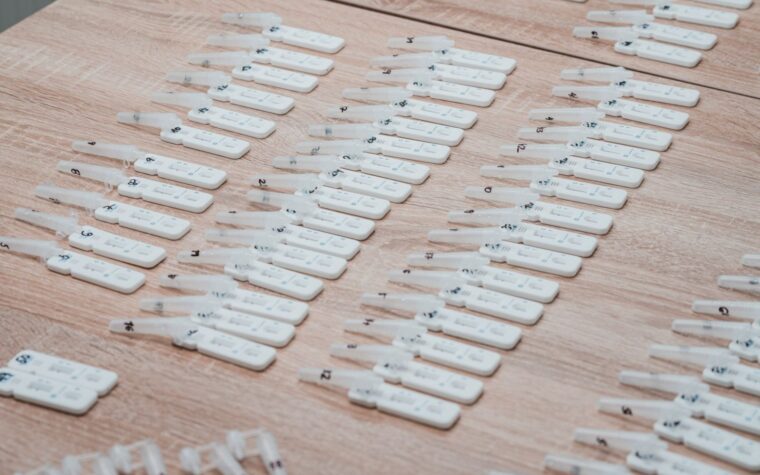
At-home kits are the fastest way to check one or two iron markers without a doctor’s visit. Everlywell, for example, offers at-home test kits processed through CLIA-certified labs with results delivered online, billed per kit. If your only question is “is my ferritin low,” a targeted kit is a clean, affordable answer. See the provider for current per-kit pricing, since it varies by test.
The tradeoff: a single-marker home test gives you one piece of the puzzle. For a true full iron panel you generally need serum iron, TIBC, saturation, and ferritin together, which usually means a venous blood draw rather than a finger-prick spot test.
At-home test kits for specific markers (metabolic, thyroid, hormones) shipped to your door.
Your doctor or a national lab
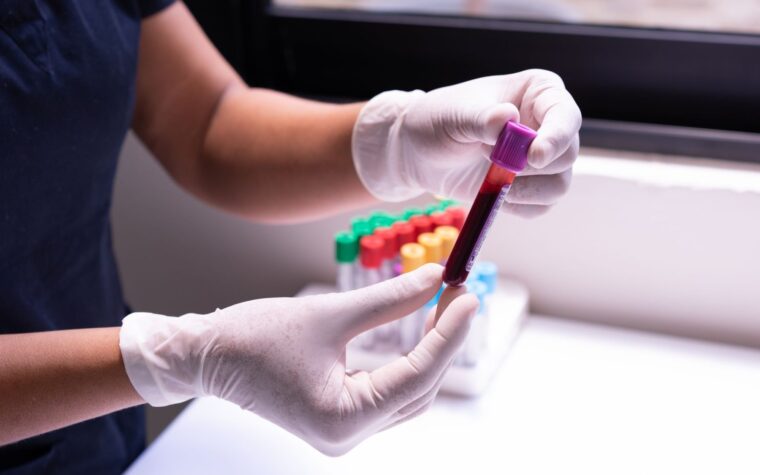
Your physician can order iron studies, and a national lab like Quest or Labcorp can run them. This is the most clinically integrated route, especially if you already have symptoms or a known condition. The downside is that you often get the iron panel and little else unless you specifically ask, so you learn about iron but stay blind to the dozens of other markers that shape how you feel.
A comprehensive membership panel
If iron is on your radar, there is a decent chance your real question is broader: why am I tired, am I optimizing, what else is off? This is where a full-body panel earns its place. Superpower runs one comprehensive annual blood draw covering 100+ biomarkers (about 150 counting calculated ratios) for $199 a year, including ferritin and other markers relevant to iron status, then translates them into 17 plain-language health scores and a personalized action plan. It is priced at $399 in New York and New Jersey because of state lab rules.
The honest framing: Superpower is a screening and tracking service, not a diagnostic clinic, and it is not the cheapest way to check one marker. But if you are going to draw blood anyway, getting iron context plus metabolic, hormone, thyroid, and inflammation markers in the same sitting is a far better use of the needle than an isolated iron test. You also get an AI concierge you can ask about your results, and a year-over-year baseline so next year’s iron numbers actually mean something in trend. That trend is the part a one-off iron test can never give you, because a single ferritin or saturation is only a dot, and it takes at least two dots drawn under the same conditions before you can honestly call anything a rise or a fall.
Iron panel vs comprehensive panel: which should you order?
Choose the standalone iron panel if you have a specific, narrow reason: a clinician asked for iron studies, you are tracking a known deficiency, or you just want to confirm whether supplements are working. It is targeted and you do not pay for markers you are not asking about.
Choose a comprehensive panel if iron is really a doorway to a bigger “how is my health” question, if you want to catch problems beyond iron, or if you plan to track trends over time. Function Health takes the more clinically thorough route here, with 160+ biomarkers, two draws per year, a urinalysis, and a 6-month retest for $365 a year. It is pricier and more exhaustive. Superpower is leaner at $199 with one annual draw and a faster, more guided experience, which is why for most people wanting iron-in-context without a clinical deep dive, we point to Superpower first.
How to prepare, and when to retest
An iron panel is one of the tests where preparation genuinely changes the result, because serum iron and, through it, saturation are so sensitive to timing. A few simple habits make your numbers trustworthy.
- Test in the morning, fasting. Serum iron is highest earlier in the day and rises after meals, so a morning fasted draw gives the cleanest, most comparable read. Water is fine.
- Pause iron supplements first. A recent iron pill or an iron-fortified multivitamin can inflate serum iron and saturation for hours. Hold them for a day or two beforehand if your clinician agrees.
- Avoid testing during an acute illness. Infection and inflammation can push ferritin up and serum iron down, distorting the whole picture. If you are fighting something off, it is often better to wait.
- Keep conditions consistent for retests. If you are tracking a trend, draw under the same conditions each time. Comparing a fasted morning result to a post-lunch one is comparing apples to oranges.
On timing, most healthy adults do fine with an annual check as part of a broader panel. If you are actively correcting a deficiency, iron stores rebuild slowly, so rechecking a few months into treatment is usually more meaningful than testing every few weeks. If you are monitoring overload, your clinician will set the cadence. The habit that pays off most is simply testing under the same conditions each year so the trend, not the noise, is what you are reading.
The bottom line
An iron panel blood test is not one number, it is a coordinated read of serum iron, TIBC, transferrin saturation, and ferritin that only makes sense together. If your question is strictly “check my iron,” an at-home single-marker kit or a doctor-ordered panel does the job. If your iron question is the tip of a broader interest in how your body is actually doing, fold it into a comprehensive baseline so one draw answers far more. Either way, read any out-of-range result with a clinician before acting on it.
Related reading on Vital Signs Today
- Iron Test Cost: At-Home vs Lab vs Full Panel
- Iron Test Near Me: At-Home and Local Options (2026)
- Iron Saturation Test (Transferrin Saturation): The Math and What It Means
- Superpower Blood Test Review (2026): Is It Worth the Membership?
Frequently asked questions
What is included in a full iron panel?
A full iron panel typically includes serum iron, total iron-binding capacity (TIBC), transferrin saturation, and ferritin. Some labs also report transferrin directly or add unsaturated iron-binding capacity. The point of a complete iron panel is that these markers are interpreted as a set, since each one corrects for the limits of the others.
What is the difference between an iron test and an iron panel blood test?
A simple iron test usually means serum iron alone, which is volatile and easy to misread. An iron panel blood test bundles serum iron with TIBC, transferrin saturation, and ferritin so the result distinguishes true deficiency from inflammation or overload. For most people trying to understand fatigue or iron status, the full panel is more informative than a single marker.
Can I get a complete iron panel at home?
You can check individual iron markers at home through kits like Everlywell, processed by CLIA-certified labs. A genuinely complete iron panel with serum iron, TIBC, saturation, and ferritin together usually needs a venous blood draw, which you can get through a doctor, a national lab, or a membership service such as Superpower that includes ferritin within a broader 100+ biomarker draw.
How often should I get an iron panel blood test?
For most healthy adults, an annual check is reasonable, which fits how Superpower’s once-a-year draw works. If you are correcting a known deficiency, treating iron overload, or have a condition that affects iron, your clinician may want to retest more often to confirm the trend. Always let your provider guide the timing when something is actively being managed.
What do abnormal iron panel results mean?
Patterns matter more than any single value. Low ferritin with high TIBC and low saturation usually points to iron deficiency. High saturation and high ferritin can signal iron overload. Low serum iron with normal ferritin often reflects inflammation rather than depleted stores. Because these overlap, any abnormal iron panel result should be reviewed with a clinician who can interpret it against your symptoms and history.
Does an iron panel test for anemia?
Not directly. Anemia is diagnosed on a complete blood count, which measures hemoglobin and red cell numbers. An iron panel tells you about iron supply and stores, which is the most common cause of anemia but not the only one. The two are usually read together: the iron panel explains why the anemia on the blood count is happening, or rules iron out as the cause.
Should men and women read an iron panel the same way?
The markers are the same, but the context differs. Premenopausal women lose iron through menstruation and have higher demand in pregnancy, so iron deficiency is more common and reference ranges can differ by sex. Men who show low iron without an obvious cause often warrant a look for a source of blood loss. Always read your results against the range your lab prints for your sex, and take anything unexpected to a clinician.