People ask how to test blood type for all kinds of reasons. Maybe a form wants it, maybe a partner is pregnant, maybe you saw an at-home kit on a shelf and got curious. Whatever brought you here, the actual answer is more interesting than the question suggests, because the type of blood you carry is not something you read off a chart. It has to be discovered by watching how your blood reacts in a tube.
Curious about more than just your blood type? See the full panel a single draw can reveal about your health. One at-home Superpower draw checks 100+ biomarkers, physician-reviewed.
Here is what most quick answers skip: there are three honest ways to find out, they differ wildly in accuracy, and the one number printed on a finger-prick card is not the same as the result a hospital will trust before a transfusion. Let me walk you through all of it.
How to test blood type
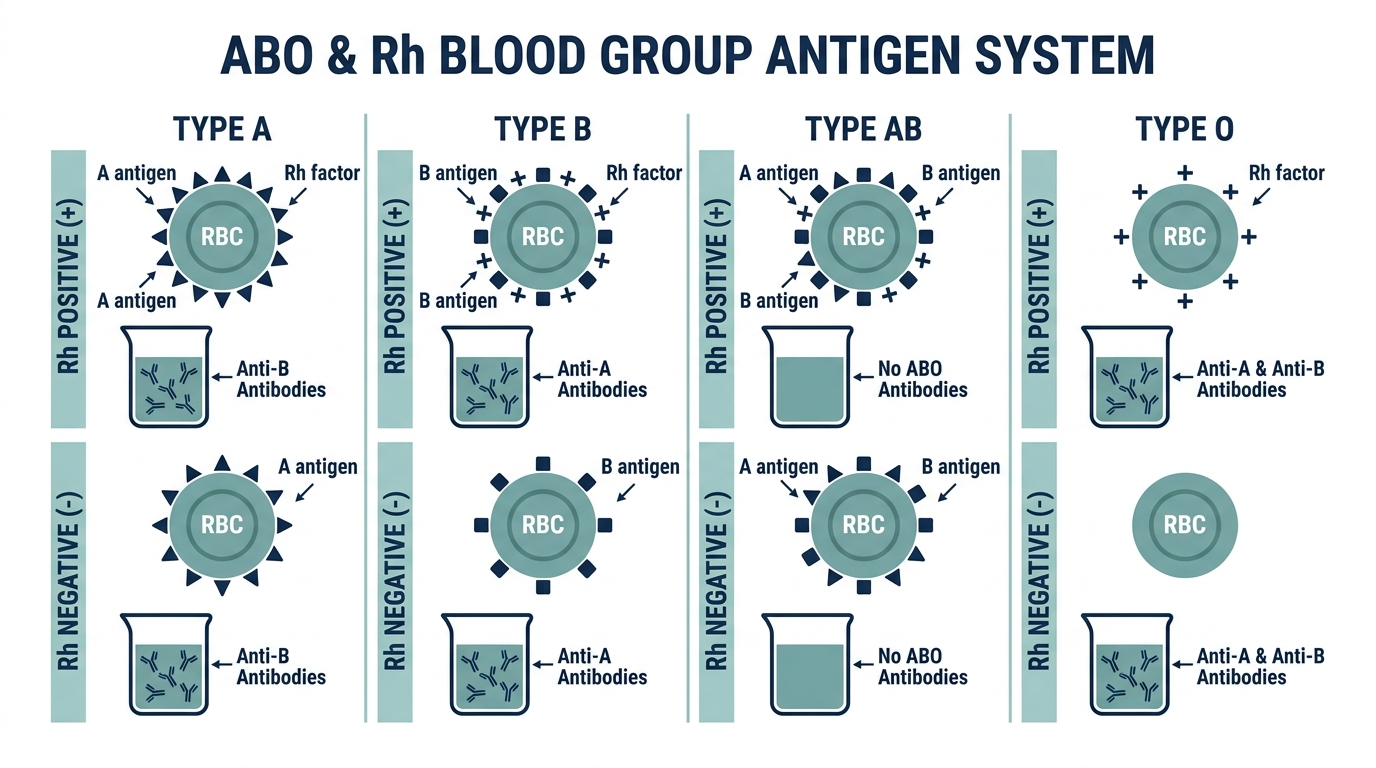
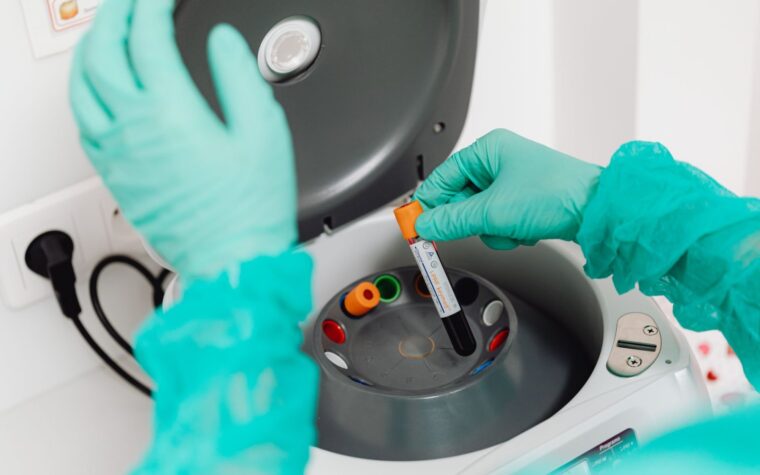
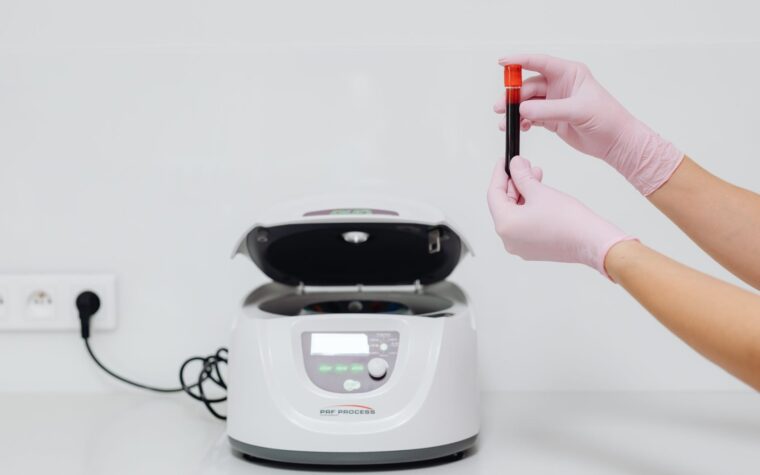
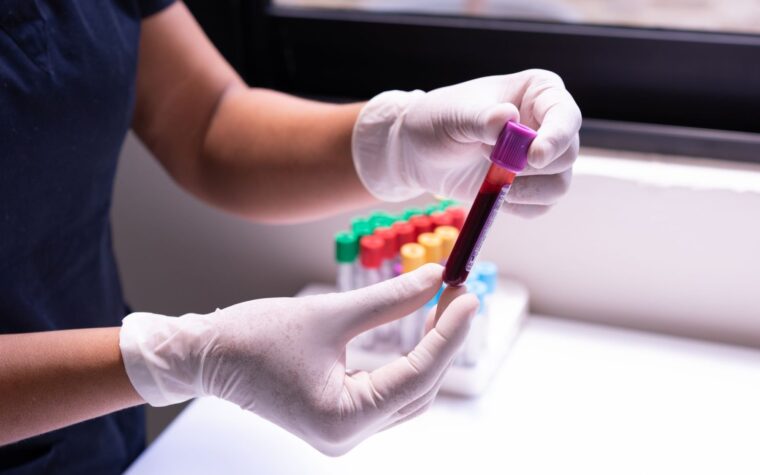
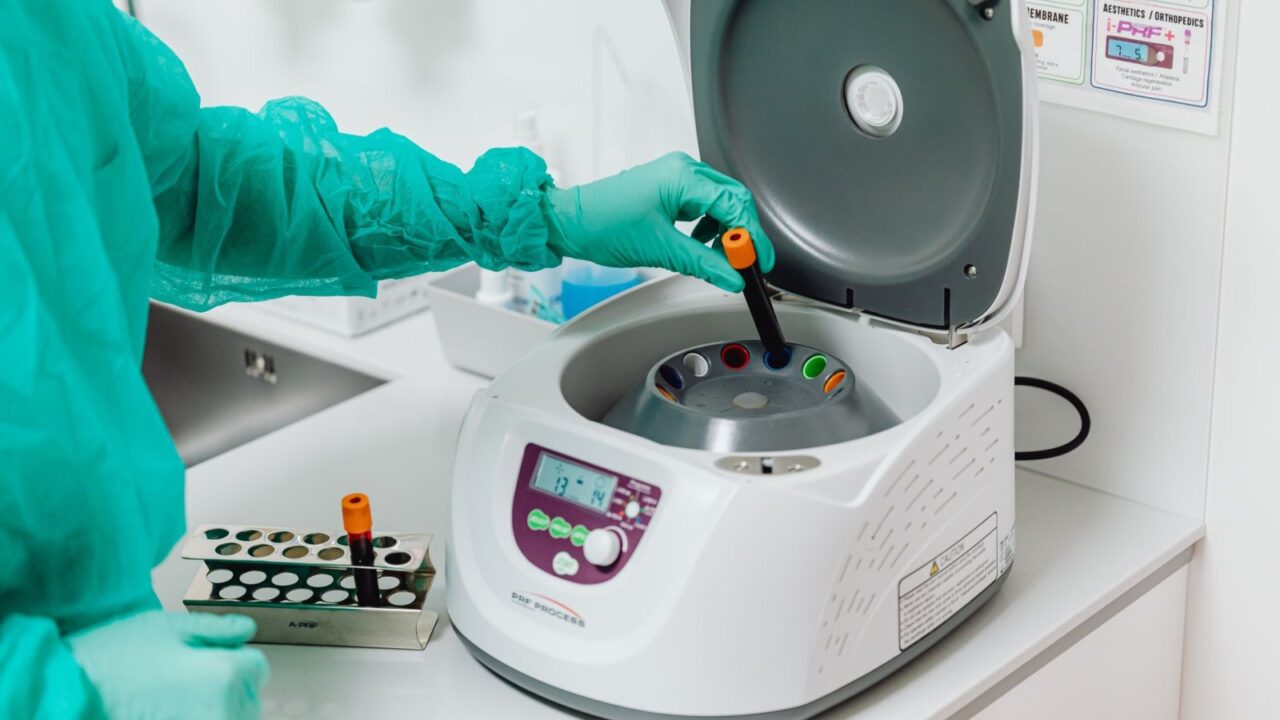
To test blood type, a sample of your blood is mixed with antibodies that target the A and B antigens, and a technician watches whether the red cells clump together. That clumping reaction is the whole test. You can have it done three ways: a lab blood draw ordered by a clinician, a finger-prick at-home kit, or by donating blood and asking the center to tell you your type (Cleveland Clinic).
The test itself is called ABO typing. Your blood sample is combined with anti-A and anti-B antibodies, then checked to see whether the cells stick together. If the cells clump with anti-A, you carry the A antigen. If they clump with anti-B, you carry the B antigen. Clump with both, you are AB. Clump with neither, you are O (MedlinePlus). It is a beautifully simple piece of immunology happening in a few seconds on a glass slide.
No fasting and no special preparation is needed for blood typing, which is one of the few lab tests you can walk in for cold (MedlinePlus).
How do you test for blood type step by step?
The simplest way to actually get this done
Superpower is a full-body lab membership that runs 100+ biomarkers, has each result reviewed by a doctor, and tracks your numbers year over year (about $199/year). It is what we point readers to when they would rather get one clean, complete draw than chase single tests one at a time. Here is superpower reviewed in full.
Blood typing is done in two halves, and a proper lab runs both. The first half checks your red cells, the second half checks your plasma, and the two must agree before the result is trusted.
The two steps are:
- Forward typing. Your red blood cells are mixed with known anti-A and anti-B antibodies. The pattern of clumping reveals which antigens sit on your cells (MedlinePlus).
- Back typing (reverse typing). The liquid part of your blood, the serum, is mixed with known type A and type B red cells. This checks which antibodies you naturally carry, because a type A person makes anti-B antibodies and vice versa. It confirms the forward result (MedlinePlus).
Then comes Rh typing, which uses the same clumping method to check for one more marker, the RhD protein. If your cells react with anti-D antibody, you are Rh positive. If they do not, you are Rh negative (MedlinePlus). Put the ABO and Rh results together and you get one of the eight common types: A+, A-, B+, B-, AB+, AB-, O+, or O- (Cleveland Clinic).
What happens when your two typing results disagree?
Forward and back typing are supposed to mirror each other. When they do not, the lab has what it calls an ABO discrepancy, and resolving it is where blood typing stops being simple and becomes detective work. A newborn is one common example. Babies do not reliably make their own ABO antibodies until a few months of age, so back typing on an infant is often blank and the lab leans on forward typing alone. At the other end of life, elderly and immunosuppressed patients sometimes make weak antibodies, which can mute the back-typing reaction and force a repeat with more sensitive methods.
A few other situations quietly bend the result:
- Recent transfusion. If you received red cells from a donor in the past few months, your bloodstream can hold a mix of your own cells and the donor’s, producing a mixed-field reaction that muddies the read. Labs handle this by asking about transfusion history before they trust a fresh type.
- Weak or subgroup antigens. Some people carry a weak version of the A or the RhD antigen. A weak D, for example, can read negative on a fast method and positive on a more sensitive one, which is exactly why a pregnant woman’s Rh status is confirmed carefully rather than eyeballed.
- Stem cell or marrow transplant. A donor of a different blood type can, over time, shift the recipient’s type toward the donor’s, one of the few real ways a blood type can change.
None of this is something you can sort out from a card at your kitchen table, and that is the whole point. A clinical lab runs two independent checks precisely so that when they disagree, a trained eye can find out why.
How to test your blood type at home?
You can test your blood type at home with a rapid typing kit, which uses the same antibody-clumping principle as a lab but in a single finger-prick. The kit includes a lancet to prick your finger, a card pre-loaded with anti-A, anti-B, and anti-D reagents, and a guide for reading the pattern. Where the blood clumps tells you your type (Cleveland Clinic).
The appeal is obvious: a few dollars, five minutes, no appointment. For pure curiosity, that is genuinely fine. But here is the part the box does not advertise. A home kit only performs forward typing. It looks at your cells but never cross-checks your plasma the way a lab does with back typing. Smearing, a too-small drop, weak clumping, or simply misreading the card can all throw the result. That is why no hospital, blood bank, or transfusion service will ever act on a home kit. The reaction can also weaken in certain medical situations, which is exactly why labs run two independent steps that have to match.
So treat an at-home result as a fun fact, not a medical fact. If anything depends on the answer, get it confirmed by a lab.
How common is each blood type, and how rare is yours?
Once you know your type, the natural next question is where you land in the crowd. Blood types are not evenly split. In most populations, O positive and A positive are the two most common types, while the negative groups are far scarcer, and AB negative sits at the bottom as the rarest of the eight (Cleveland Clinic). Distribution also shifts by ancestry, so the exact ranking in one country can differ from another, which is one reason blood centers recruit donors from every community.
This is not trivia. It has a direct clinical consequence that blood banks live with every day. O negative, the universal donor, is comparatively uncommon, yet it is the type reached for in an emergency when there is no time to type a crashing patient. That mismatch, high demand and low supply, is why O negative is chronically the most requested unit on the shelf. If you are O negative, your donation is worth its weight, because it can go to anyone.
There is a mirror image for plasma. AB is the universal plasma donor, the opposite of the red-cell rule, because AB plasma carries no anti-A or anti-B antibodies to react against a recipient’s cells. So the same person can be a common or a rare donor depending on which part of their blood is being given. Knowing your type turns an abstract letter into a practical fact about how you can help, and how easily you can be helped.
Where to get a blood type test you can trust?
The most reliable place to get your blood type tested is a clinical lab, ordered through your doctor, where a phlebotomist draws blood from a vein and sends it for full ABO and Rh typing. Venipuncture, the standard vein draw, is the most common collection method for this kind of test (Cleveland Clinic).
Your realistic options, ranked by how much you can rely on them:
- Doctor or clinic blood draw. Gold standard. Both forward and back typing, plus Rh. This is what gets recorded in your medical chart.
- Donating blood. A useful free route. Donation centers type every unit they collect, and many will tell you your type if you ask. You give blood and walk away knowing your group (Cleveland Clinic).
- At-home kit. Cheapest and fastest, least reliable. Fine for curiosity, not for decisions.
One practical note. Many people assume their blood type is already filed somewhere from a past hospital visit. Often it is not, unless you specifically had a transfusion, surgery, or pregnancy workup. Asking your physician is worth a try, but do not be surprised if the record is not there.
How to read your blood type results?
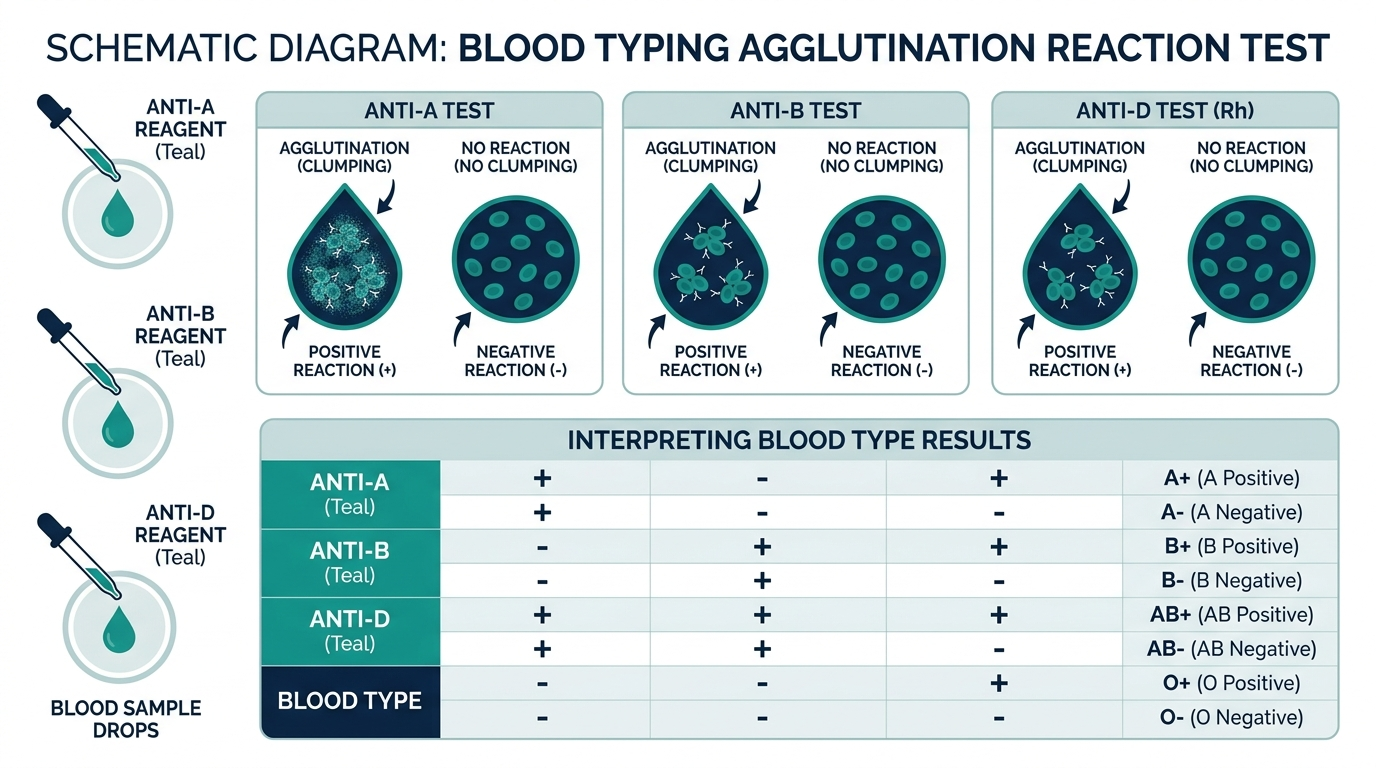
Reading blood type results comes down to two pieces: a letter group and a Rh sign. The letter is your ABO group, A, B, AB, or O, set by which antigens sit on your red cells. The sign is your Rh status, positive if you carry the RhD protein and negative if you do not (Cleveland Clinic).
So a result reading O+ means you have neither A nor B antigens and you do carry RhD. AB- means you have both A and B antigens but lack RhD. That is the entire code.
Two facts make the system click. Type O negative is the universal donor, because its cells carry none of the markers that trigger a reaction, so it can be given to anyone in an emergency. Type AB positive is the universal recipient, because a person with every marker already has no antibodies to attack incoming blood, so they can safely receive any type (Cleveland Clinic). Worth knowing whether you are the person who can give to all, or the one who can take from all.
Can your blood type ever change?
For nearly everyone, the answer is no. Your ABO and Rh type is written into your genes at conception and stays fixed for life, which is why a type recorded in your twenties still holds in your seventies. It does not drift with diet, age, illness, or a change in health, and any home kit that suggests otherwise is far more likely to be misread than to be reporting a real shift.
There are a small number of genuine exceptions, and they are dramatic rather than subtle. A bone marrow or stem cell transplant replaces the patient’s blood-forming cells with the donor’s, so over months the recipient’s red cells can take on the donor’s ABO type. A large-volume transfusion during a trauma temporarily fills the bloodstream with donor cells, though that is a passing state, not a permanent change. Certain leukemias and, rarely, some gut infections can weaken the apparent expression of an antigen enough to confuse a test. Pregnancy, despite how much blood typing revolves around it, does not change the mother’s own type at all.
The practical takeaway is reassuring. If a new result contradicts a type you were confident about, suspect the test before you suspect biology. Ask for a repeat at a clinical lab, mention any recent transfusion or transplant, and let two matching draws settle it. A real change of blood type is a notable medical event, not a quiet surprise on a routine panel.
Why does blood type matter most in pregnancy and transfusion?
Blood type matters most in two situations where a mismatch can be dangerous: receiving a transfusion and being pregnant. In both, the immune system can turn on red cells it sees as foreign. This is the real reason careful typing exists, not curiosity (MedlinePlus).
For transfusion, the logic is direct. If you receive blood that does not match, your body makes antibodies against the donated red cells and attacks them, which can be life threatening. That is why your type must be confirmed before any transfusion (MedlinePlus).
Pregnancy is where the insider knowledge really pays off, and it is the answer to why a Rh negative reading is the one result worth taking seriously. If a pregnant woman is Rh negative and her baby is Rh positive, fetal red cells crossing into her blood can trigger her immune system to make anti-Rh antibodies. Those antibodies can cross the placenta and destroy the baby’s red cells, causing severe anemia and jaundice in the newborn, a condition called Rh incompatibility or erythroblastosis fetalis (MedlinePlus).
The detail most people never hear: this is largely preventable, but only if the typing is done. An Rh negative mother can be given Rh immune globulin (RhoGAM) around 28 weeks of pregnancy and within 72 hours after delivery, which stops her body from forming those antibodies (MedlinePlus). The single most important blood type result in your life may not be A versus B at all. It may be the plus or minus sign, discovered during a routine pregnancy blood draw, that quietly prevents harm to a future child.
Turn what you just learned into action.
Superpower lets you test 100+ biomarkers from home, then re-check them over time so you can actually see progress, physician-reviewed at every step.
Does your blood type affect your diet, health, or personality?
This is where popular myth outruns the evidence. The best known claim, the blood type diet, holds that each ABO group should eat according to its type to lose weight and avoid disease. It is a memorable idea with essentially no support. Controlled research has found that any benefit people saw from following one of these plans had nothing to do with their actual blood type, and everything to do with simply eating a cleaner diet. You do not need to know your ABO group to decide whether to eat more vegetables.
The personality claim, popular in parts of East Asia, that type A is anxious or type O is a born leader, is folklore rather than biology. There is no credible mechanism and no reliable evidence behind it.
Where blood type does show faint, real associations is in disease epidemiology, and even here the effects are small and not something to act on day to day. Large observational studies have linked the non-O types with a modestly higher tendency to form blood clots, and O types with a slightly lower risk, while certain groups show small differences in susceptibility to particular infections. These are population-level signals, useful to researchers, not personal verdicts. Your blood type will not tell you what to eat, who to marry, or how you will age. It matters intensely in a transfusion room and a pregnancy clinic, and very little at the dinner table.
Frequently asked questions
How can you test your blood type for free?
Donating blood is the most common free route. Donation centers type every unit they collect, and many will tell you your blood type if you ask the staff (Cleveland Clinic). You can also ask your doctor, since your type may already be in your medical records from a past surgery, transfusion, or pregnancy.
Do I need to fast before a blood type test?
No. Blood typing requires no fasting and no special preparation, so you can have it done at any time of day (MedlinePlus). Fasting is only needed for certain other blood tests, such as glucose or cholesterol panels.
Are at-home blood type kits accurate?
They can give a reasonable answer for curiosity, but they only perform forward typing and skip the back typing that labs use to confirm the result. No hospital or blood bank will act on a home kit, so confirm with a clinical lab if the answer matters (MedlinePlus).
How is Rh positive or negative determined?
Rh typing mixes your red cells with anti-D antibody. If the cells clump, you carry the RhD protein and are Rh positive; if they do not clump, you are Rh negative (MedlinePlus).
What blood type is the universal donor?
Type O negative is the universal donor, because its red cells lack the A, B, and RhD markers that trigger an immune reaction, so it can be given to any patient in an emergency. Type AB positive is the universal recipient (Cleveland Clinic).
Can two parents with type O have a child with a different type?
Not normally. ABO type is inherited, and the O gene is recessive, so a type O parent carries two O genes to pass on. Two type O parents can therefore only pass O to a child, who will also be type O. A surprising result usually points to a lab error or a misread home kit rather than a genetic mystery, though very rare inheritance quirks do exist and are worth a clinician’s input if the question matters to you.
How long does a blood type test take to come back?
The reaction itself takes only minutes, but the turnaround depends on the setting. A hospital lab can produce a confirmed ABO and Rh type within hours, and a blood donation center often shares your type in the days after you give. An at-home kit gives an instant read at the point of the finger prick, though that result is for curiosity only and should be confirmed by a lab if anything depends on it.
Is my blood type already in my medical records?
Sometimes, but do not count on it. Your type is usually only on file if you specifically had it tested, such as during a transfusion, a surgery, or a pregnancy workup. A routine checkup does not include blood typing, so many people have no type recorded anywhere. Asking your doctor is worth a try, and if it is not there, a single lab draw settles it for good.
This article is for general educational purposes and is not medical advice. It cannot diagnose or treat you and does not replace your clinician. Always discuss your lab results and any health decisions with a qualified healthcare professional.
Related reading
Vital Signs Today may earn a commission if you buy through links on this page. It does not affect our editorial assessments.