Disclosure: this article contains affiliate links. If you buy through them, we may earn a commission at no extra cost to you. Prices were checked in September 2026.
Quick answer: Hone Health charges $45 for its at-home Plus lab test and then $135 a month for the men’s TRT membership, on top of separate drug costs starting at $28 a vial for injectable testosterone. Add it up and a realistic first year runs $2,046 to $2,430, not the $45 the homepage advertises. The medicine is real and the doctors are licensed, but the starter panel skips PSA and hematocrit, and Hone does not sell hCG. See Hone’s current September 2026 pricing here.
What Is Hone Health and Who Actually Treats You?
Hone Health is a telehealth hormone clinic run by Time Therapeutics, Inc., with care delivered by Broad Health P.A. Its medical director is Dr. James R. Staheli, D.O., a family medicine physician in Atlanta (Hone Help Center). Founded in 2018 by Saad Alam, Hone closed a $33 million Series A in January 2025, bringing total funding to $39 million (Business Wire).
Coverage matters more than most reviews admit. The men’s Plus plan, the one that leads to TRT, runs in 35 states and specifically excludes New York. Premium covers 34 states including New York, but drops Hawaii and South Dakota. Fourteen states get neither plan: Alaska, Arkansas, Connecticut, Delaware, D.C., Kansas, Louisiana, Minnesota, New Hampshire, New Jersey, North Dakota, Pennsylvania, Rhode Island, and South Carolina (Hone state coverage list). Check your state before reading further.
How Much Does Hone Health Cost in September 2026?
Hone runs three tiers, and the naming is where the first bit of confusion starts. Plus is the only plan available as a men-only, finger-prick, at-home kit. Premium requires a venous blood draw and is open to both sexes.
| Basic | Plus | Premium | |
|---|---|---|---|
| Who it’s for | Men and women | Men only | Men and women |
| First lab kit | $50 (no consult) | $45 + consult | $65 + consult |
| Biomarkers tested | 50+ | 8 to 11 | 50+ |
| Monthly membership | $25 | $135 | $155 |
The $50 Basic figure is actually $25 for the first month plus a one-time $25 onboarding fee (verified on Hone’s live checkout). On top of the membership, Hone bills prescriptions separately: testosterone cypionate injections from $28 a vial, compounded testosterone cream $60 a month, compounded testosterone troche $60 a month, enclomiphene from $42 to $43 a month, clomiphene $38 a month, and anastrozole $22 a month (Hone drug pricing page). Check Hone’s live checkout price for your state here, because we found three places where the published numbers do not agree with each other.
Here is the mismatch, straight from Hone’s own pages. The Plus plan page lists the confirmatory lab (the second test TRT patients need) at $45, while the lab scheduling page lists it at $50. Separately, Hone’s own “Men’s HRT Membership” PDF, last updated May 28, 2026, still quotes $1,548 a year ($129 a month) with a refund promise if a doctor declines treatment, but the live membership page today charges $135 and $155 a month. That is a price increase the legal PDF has not caught up to. And the Premium help article quotes a $65 test, while the actual checkout today shows $45 for men and $60 for women, off a $150 and $165 list price respectively (lab scheduling page, men’s checkout).
What Does Your First Year With Hone Health Actually Cost?
Hone splits “testing costs” from “membership costs” everywhere on its site, which makes the sticker price look smaller than it is. We added the pieces ourselves from Hone’s published prices, so treat this as our own math, not a number Hone publishes anywhere.
- Plus plan, injectable TRT, confirmatory test at a lab: $45 + $45 + ($135 x 12) + ($28 x 12) = roughly $2,046 in year one at the lowest advertised drug price.
- Plus plan, compounded testosterone cream instead of injections: $45 + $45 + $1,620 + $720 = $2,430 in year one.
- Premium plan, injectable TRT: $65 + $25 + $1,860 + $336 = $2,286 in year one.
None of these totals include dose increases, which push the drug cost higher, or the $50 no-show fee Hone charges if you miss an appointment, a fee we could not find published anywhere on the public help center despite it showing up repeatedly in customer complaints. Run your own numbers on Hone’s plan page here before you sign up.
A PDF Hone publishes for its own membership contract breaks down where that monthly fee goes, and it is unusually transparent for the industry (Hone’s membership cost breakdown PDF). On the $1,548-a-year Plus/HRT membership: $780 goes to Broad Health P.A. for medical care, $78 goes to the lab, and $690, or about 45%, stays with Hone itself. On the $1,788-a-year Premium membership: $840 goes to medical care, $141 to the lab, and $807 to Hone. In plain terms, on the Plus plan only about 5% of what you pay every month is actually the cost of your lab work.
How Accurate Is the At-Home Finger-Prick Test?
This is the part most reviews skip entirely. Hone’s Plus kit does not draw blood from a vein. It uses a “safety lancet” to prick the finger and collects a dried blood spot on a sample card (Hone collection instructions). The at-home kit is only offered to men; women are required to go to a Quest Diagnostics location. Hone will not name which lab processes the finger-prick cards, and has not published data showing its results match a venous draw, even though it claims to have “validated the equivalence” internally.
The research on finger-prick hormone testing is genuinely mixed. A Modern Fertility-funded study of 130 women found 0.99 to 1.00 correlation with venous serum (Burke 2019), but a separate 2025 comparison of dried blood spots against venous serum found correlations as low as 0.67 for some steroid hormones (Olthof 2025), and competitor Maximus rates plain finger-prick collection “Low to Medium” accuracy, reserving “High” for venous draws (Maximus lab methodology). Reddit’s r/Testosterone forum has several posts of people running Hone and LabCorp the same week and getting different numbers. Our guide to how at-home testosterone tests actually work covers the collection methods in more depth.
Does Hone Health Follow Its Own Cited Guidelines?
Hone says its protocols follow guidance from the American Urological Association. Checked against the actual AUA Testosterone Deficiency Guideline and the Endocrine Society’s 2018 guideline, three gaps stand out.
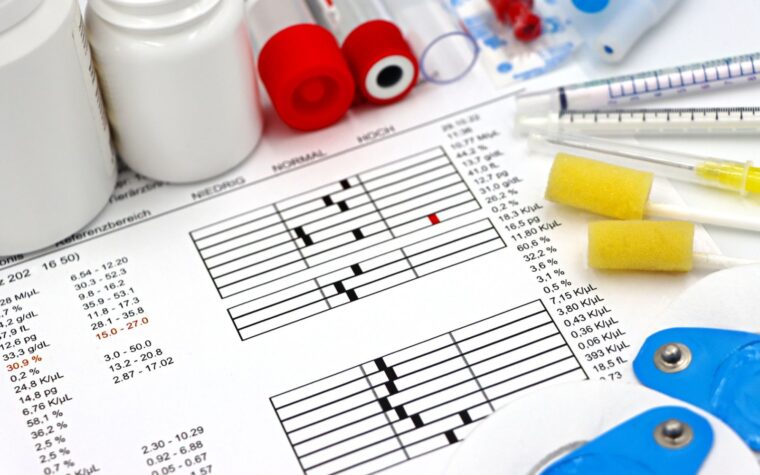
First, the starter panel skips two required baseline tests. Hone’s Plus panel checks total testosterone, calculated free testosterone, SHBG, albumin, LH, estradiol, AST, and ALT, eight markers. It excludes PSA and hematocrit/CBC at the initial step, though AUA Statement 11 and 12 call for both before treatment starts (AUA Testosterone Deficiency Guideline). To be fair, Hone adds both at the confirmatory step before any prescription ships.
Second, Hone sells compounded drugs where the guideline prefers commercial ones. AUA Statement 28 says “commercially manufactured testosterone products should be prescribed rather than compounded testosterone, when possible.” Hone’s testosterone cream and troche are both compounded ($60/month each), alongside compounded enclomiphene and clomiphene. The FDA is blunt here: compounded drugs are not FDA-approved, the agency “does not verify the safety, effectiveness or quality of compounded drugs before they are marketed,” and the pharmacies making them are not bound by commercial manufacturing standards (FDA compounding Q&A).
Third, Hone does not sell hCG. AUA Statement 27 lists hCG as an option for preserving fertility during hormone therapy, and a 26-patient study found men on TRT plus hCG kept normal sperm counts, with nine fathering children (Hsieh 2013). Without it, Hone patients wanting fertility preservation are limited to compounded enclomiphene or clomiphene, and enclomiphene has never been FDA-approved.
Is TRT Itself Safe? What the FDA and NEJM Found
Separate from Hone specifically, testosterone replacement carries real, documented risks. The largest safety trial, TRAVERSE, followed 5,246 men aged 45 to 80 with heart disease or high cardiac risk for an average of 33 months (Lincoff et al., NEJM 2023). The primary outcome, a composite of heart attack, stroke, and cardiovascular death, was not significantly different (7.0% vs 7.3%). But several secondary findings were: atrial fibrillation (3.5% vs 2.4%), acute kidney injury (2.3% vs 1.5%), and more fractures, 91 cases (3.50%) versus 64 (2.46%), in a related analysis (Snyder et al., NEJM 2024). The trial’s own authors note these secondary findings were not adjusted for multiple comparisons, so read them as signals, not proof.
The clearest, most established risk is erythrocytosis, a thickening of the blood. A meta-analysis commissioned for the Endocrine Society guideline found the risk of high hematocrit is more than eight times higher on testosterone (RR 8.14, 95% CI 1.87-35.40), and injections raise hematocrit far more than gels: 66.7% of men on short-acting injections crossed the 50% threshold versus 12.8% on transdermal gel (Ponce 2018, Ohlander 2018). This is exactly why the hematocrit check Hone’s starter panel skips matters.
The regulatory picture just changed. On June 18, 2026, HHS and the FDA ordered testosterone product labels updated to remove the “limitation of use” language for age-related hypogonadism, narrow the prostate cancer contraindication to men with metastatic disease only, and soften the benign prostatic hyperplasia warning (HHS press release, June 2026, FDA testosterone information page). It is the biggest regulatory shift for this entire industry in years, and as of this writing no other Hone review has mentioned it.
Hone Health vs Blokes, Joi, Everlywell, Maximus, Hims, and Hundred
Hone is not the cheapest option, and it is not the most expensive either. It sits in an unusual spot: the entry test is cheap, but the ongoing cost is structured to look smaller than an all-inclusive competitor’s single price.
| Provider | Initial test | Monthly membership | TRT drug cost | HSA/FSA |
|---|---|---|---|---|
| Hone Health | $45 men / $60 women (checkout price) | $135 (Plus) / $155 (Premium) | Billed separately, from $28/vial | Yes |
| Blokes (men) | $149 to $699 | Bundled into drug price | $99/mo (12-month plan), all-inclusive | Yes |
| Joi (women) | $149 to $699 | $50/mo | Testosterone injection $59, cream $69 | Yes |
| Maximus | $99.99 (10-marker at-home kit) | Bundled | $99.99 to $199.99/mo depending on term | Yes |
| Hims | Bundled into plan | Free consult | Enclomiphene only, from $99/mo. No injectable TRT yet. | No |
| Everlywell | $69 (single-marker Testosterone Test) | None, no prescribing | n/a | Yes |
| Hundred | Included in membership | $199/yr or $499/yr, no prescribing | n/a (100+ marker panel, action plan, no TRT) | Yes |
Two things stand out. Blokes runs an all-inclusive $99-a-month plan bundling the drug, consult, and follow-up labs, which beats Hone’s Plus plan ($135 membership plus $28-plus per vial, or $163-plus a month minimum) once you add everything up. And Hims still does not sell injectable TRT; its site labels both injectable and oral testosterone “Coming in 2026” (Hims testosterone page). If you just want a single lab number, no membership, no prescription, see our full Everlywell review and our roundup of the best at-home hormone tests.
Also worth knowing: a 2022 Journal of Sexual Medicine study found a year of testosterone injections through an academic center cost $134 to $1,333 depending on insurance, versus $1,586 to $4,200 through direct-to-consumer telehealth, and its authors advised insured patients that telemedicine TRT will likely cost more (Jesse et al., J Sex Med 2022). If you have good insurance and a cooperative doctor, rule that route out first. Our explainer on what counts as a normal testosterone range by age is a useful gut check before you spend anything.
What Do Real Hone Health Customers Say?
The reviews split cleanly by which platform you check. Trustpilot shows 4.8 out of 5 across 12,348 reviews, but that page carries a “Paid Trustpilot subscription” label, meaning Hone pays to manage it (Trustpilot). PissedConsumer, which companies do not pay to manage, shows 1.3 out of 5. The Better Business Bureau lists an A+ rating alongside 121 complaints in three years, 52 closed in the last 12 months (BBB profile).
A pattern runs across all four sources: glowing reviews praise a specific doctor by name, while complaints cluster around what happens after the appointment: a $50 no-show fee billed even when the doctor did not show, membership charges continuing after cancellation, no phone support, unclear pricing before checkout, and lab logistics running weeks late. A smaller Reddit thread involves people comparing Hone results against a LabCorp draw the same week and getting different numbers.
One thing worth being precise about: search results for “Hone Health lawsuit” or “Hone Health FTC” often surface a July 29, 2026 FTC lawsuit over deceptive practices. That lawsuit is against Hims & Hers, a separate company (STAT News). We found no lawsuit or FTC action against Hone Health itself.
Who Should Not Use Hone Health
- You live in New York and want the cheaper plan. New York is only served by Premium, which costs more and requires a lab visit.
- You want to preserve fertility while on TRT. No hCG here, only compounded enclomiphene or clomiphene, neither FDA-approved.
- You have good insurance and a cooperative doctor. A copay path can run $10 to $40 a month once approved, though it needs prior authorization Hone does not require.
- You just want a testosterone number, not a prescription. $45 plus $135 a month to learn your level is normal is an expensive way to get one lab result.
- Your baseline hematocrit is above 48% (50% at high altitude). Both guidelines treat this as a reason to hold off until it is addressed.
Is Hone Health Legit and Worth It?
Hone Health is a real telehealth clinic with licensed physicians, not a scam. The medicine ships, the doctors hold state licenses, and the company is unusually transparent about where membership dollars go, once you find the PDF. That same transparency exposes the weak points: only about 5% of the Plus fee funds actual lab work, the starter panel skips two tests the guideline it cites requires, and the drugs it sells lean compounded in a category where the guideline prefers commercial products. None of that makes Hone dishonest. It makes Hone a company built for recurring membership revenue first and guideline-complete care second, worth knowing before your card gets charged monthly.
If you already want TRT and value a real doctor plus home blood draws, Hone is a reasonable, if not the cheapest, way in. If you want the lowest all-in monthly cost, price Blokes against Hone before committing. Check Hone Health’s current plans and September 2026 pricing here before deciding.
This article is for informational purposes only and is not a substitute for professional medical advice, diagnosis, or treatment. Talk to a licensed physician before starting or stopping any hormone therapy.
Frequently Asked Questions
Is Hone Health legit?
Yes. Hone Health is a real telehealth company, founded in 2018, with care delivered by licensed physicians through Broad Health P.A. We found no FTC action or lawsuit against Hone Health specifically; a widely-circulated 2026 FTC lawsuit involves Hims & Hers, a different company.
How much does Hone Health cost per month?
The membership alone runs $25 a month for Basic, $135 a month for Plus, or $155 a month for Premium, as of September 2026. Prescription drugs are billed separately and are not included in those figures.
Does Hone Health take insurance?
No. Hone Health does not bill insurance and does not handle prior authorization, but it does accept HSA and FSA payment.
Does Hone Health sell hCG for fertility preservation while on TRT?
No. Hone’s pharmacy list does not include hCG. Men who want to preserve fertility on Hone are limited to compounded enclomiphene or clomiphene.
Is the Hone Health at-home blood test as accurate as a lab draw?
It uses a finger-prick dried blood spot method available only to men, and Hone has not published its own accuracy data or named the lab that processes it. Independent research on this collection method is mixed, and Hone’s own Premium plan requires a venous draw instead for a reason.
Is Hone Health available in every state?
No. The men’s Plus TRT plan is not available in New York, and 14 states, including Alaska, Connecticut, and Pennsylvania, are not served by any Hone plan. Check the state list before you pay for a test.