Quick answer: In 2026 there are two covid test types that matter for most people: a rapid antigen test (the at-home swab that reads in 15 minutes) and a PCR molecular test (the lab-run version that is more sensitive but takes a day or two). Use a rapid antigen test when you have symptoms or a known exposure and need an answer now, and confirm with PCR when you are high-risk, need documentation, or got a negative rapid result while clearly sick. Antigen tests are sold over the counter at CVS, Walgreens, Target, and most grocery stores for about $10 to $25 a pack, while PCR is done at pharmacies, urgent care, and labs like Quest and Labcorp for roughly $75 to $200 cash if it is not covered.
What are the main covid test types?
There are really three categories of covid test, but only two of them tell you if you are infectious right now. Knowing which is which saves you money and a lot of second-guessing.
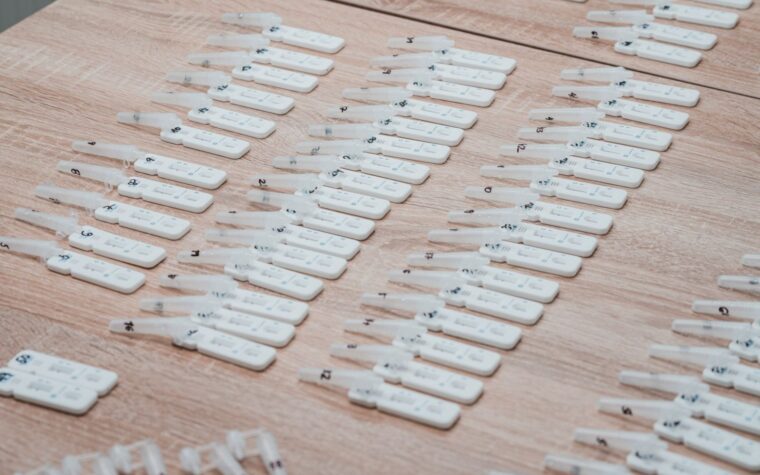
- Rapid antigen test. Detects viral proteins from a nasal swab. Results in 10 to 15 minutes, done at home or in a clinic. Cheap, fast, and the workhorse of 2026. It is most accurate when your viral load is high, which usually means days two through five of symptoms.
- PCR (molecular) test. Detects viral genetic material and amplifies it, so it can catch infection earlier and at lower levels. This is the most accurate covid test for confirming a case, but it runs in a lab and you wait roughly 24 to 48 hours. Some pharmacies and urgent cares now offer rapid molecular machines that return PCR-grade results in about 20 to 30 minutes on site.
- Antibody (serology) test. A blood test that shows past infection or vaccine response, not current illness. It cannot tell you if you are contagious today, so do not reach for it when you feel sick.
The insider point most people miss: a single negative antigen test early in an illness means very little. The instructions on the box say to repeat it, and they mean it. If you test on day one of a scratchy throat and see one line, you are not in the clear. Test again 48 hours later.
Antigen vs molecular: what the labels actually mean
The same test gets called three different things. “Antigen,” “rapid,” and “at-home” all mean the 15-minute strip you swab yourself. “Molecular,” “NAAT,” and “PCR” all mean the amplification-based test that finds genetic material. PCR is one kind of NAAT (nucleic acid amplification test), but people say PCR loosely to mean any lab-grade molecular result. A pharmacy “rapid PCR” is just a small NAAT machine run on site. The distinction matters when an airline or employer says it will only accept a “PCR” or “NAAT” result and rejects a home antigen photo.
Combination flu and covid tests
A newer category is the combination antigen test that screens for covid and influenza A and B from a single swab. These are common now because the symptoms overlap so heavily that telling them apart by feel is a coin flip. The useful payoff: both covid (Paxlovid) and flu (Tamiflu) have time-sensitive antivirals, so knowing which one you have within the first day or two genuinely changes what you do next.
PCR vs rapid antigen: which covid test should you use?
The simplest way to actually get this done
Superpower is a full-body lab membership that runs 100+ biomarkers, has each result reviewed by a doctor, and tracks your numbers year over year (about $199/year). It is what we point readers to when they would rather get one clean, complete draw than chase single tests one at a time. Here is superpower reviewed in full.
Match the test to the moment, not to a blanket rule. A rapid antigen test is the right first move for most situations, and PCR is the backup when the stakes or the ambiguity are high.
| Factor | Rapid antigen | PCR (molecular) |
|---|---|---|
| Time to result | 10 to 15 minutes | 24 to 48 hours (lab), 20 to 30 min on rapid molecular machines |
| Where | At home, pharmacy, clinic | Pharmacy, urgent care, Quest, Labcorp |
| Best timing | Days 2 to 5 of symptoms, high viral load | Early infection or to confirm a result |
| Sensitivity (symptomatic) | About 80 to 85 percent | Roughly 95 percent or higher |
| Sensitivity (no symptoms) | Drops to roughly 50 to 65 percent | Stays high, catches low viral loads |
| Specificity (false positives) | Very high, a positive is trustworthy | Very high |
| Typical cash cost | $10 to $25 per pack | $75 to $200 cash if not covered |
| Accepted for travel/work proof | Sometimes, often rejected | Almost always accepted |
Reach for PCR when you are older or immunocompromised, when a doctor wants confirmation before prescribing an antiviral like Paxlovid, when travel or an employer requires documented proof, or when you feel genuinely sick but your rapid test keeps coming back negative. In every other day-to-day case, the at-home antigen test is faster, cheaper, and good enough.
Worked example: the same swab, two very different timelines
Say you wake up Monday with a sore throat and a coworker tested positive Friday. You swab at home Monday morning and see a single line. That negative is close to worthless on day one, because your viral load has not climbed yet. The right move is to mask, retest Wednesday, and only then trust the result. Now compare a different person: a 68-year-old with diabetes who feels the same sore throat Monday. She should not run the 48-hour home-test loop at all. She should call her clinician Monday for a rapid molecular or PCR test, because if it is covid, Paxlovid only works well when started within about five days, and waiting two days to confirm burns a third of that window.
Worked example: travel proof that gets rejected at the gate
A traveler buys a $15 two-pack of home antigen tests for a cruise that “requires a covid test,” then watches the cruise line refuse the photo of the strip at the terminal and demand a lab document. Now they are paying $150 for a same-day PCR under pressure. If the requirement says NAAT, PCR, or “proctored,” a plain home antigen test will not clear it, and the cheap option becomes the expensive one.
How does each covid test actually work?
Understanding the mechanism is the fastest way to understand the timing rules, because the timing falls straight out of how each test detects the virus.
How a rapid antigen test works, step by step
- You swab the lower part of both nostrils, usually four or five circles in each. The most common reason a home test fails is a shy swab that does not collect enough sample.
- You swirl the swab in the provided buffer tube, which breaks the virus open and releases its proteins.
- You drop the liquid onto the test strip. The fluid wicks across a line coated with antibodies that grab the specific covid proteins.
- If enough protein is present, a colored line appears. The control line (often the “C”) proves the test ran correctly; the test line (often the “T”) shows the result.
- You read it at the time on the box, usually 15 minutes, and not later. A faint line that appears after the window can be a false positive from the strip drying out.
Because antigen tests only fire when there is a lot of protein in the sample, they need a high viral load. That is exactly why they shine on days two through five of symptoms and miss early infections.
How a PCR test works, step by step
- A swab sample (or sometimes saliva) goes into a transport tube and travels to a lab, or into an on-site molecular machine.
- The lab extracts genetic material and runs reverse transcription, turning the virus’s RNA into DNA the machine can copy.
- The machine amplifies that DNA through repeated heating and cooling cycles, doubling the amount each cycle.
- A fluorescent signal rises as copies accumulate. The number of cycles needed to cross the detection threshold is the Ct value, and a low Ct roughly means a higher viral load.
- The result comes back as positive or negative, typically in 24 to 48 hours from a central lab or 20 to 30 minutes from a rapid on-site NAAT device.
Because PCR copies the genetic material over and over, it detects even a tiny amount of virus. That sensitivity is both its strength and its quirk: it catches infections antigen tests miss, but it can stay positive for weeks after you are no longer contagious because it keeps finding leftover fragments.
How accurate is each covid test and when should you retest?
No covid test is perfect, and the biggest accuracy mistake is testing at the wrong time, not picking the wrong brand. Accuracy tracks your viral load, which rises over the first several days of infection and then falls.
- A negative rapid antigen test does not rule out covid early on. If you have clear symptoms, treat one negative as inconclusive and retest in 48 hours, or get a PCR. In symptomatic people a single antigen test catches roughly 80 to 85 percent of cases; in people without symptoms that drops toward half, which is why serial testing matters.
- A positive rapid antigen test is very reliable. Two lines mean you are positive. Antigen tests almost never throw false positives, so there is no need to confirm a positive with PCR before isolating.
- PCR can stay positive for weeks after you recover because it detects leftover genetic fragments. That does not mean you are still contagious, which is why a recent rapid antigen test is often the better gauge of whether you can be around others.
The serial testing rule, in plain numbers
A single home antigen test is a snapshot; two or three spaced out are a trend. Health authorities recommend repeat testing precisely because the snapshot is unreliable early. If you are symptomatic, test, and if negative, retest 48 hours later, and consider a third test 48 hours after that before you fully relax. If you were exposed but feel fine, start testing around day three to five after the exposure rather than the next morning, because testing too early just wastes a strip on a viral load that has not built up yet.
Detection window: what each test sees and when
| Phase of infection | What a PCR test shows | What an antigen test shows |
|---|---|---|
| Day 0 to 1 (just exposed) | Often still negative, too early | Almost always negative |
| Day 2 to 3 (early symptoms) | Frequently positive | May be negative, viral load still climbing |
| Day 3 to 6 (peak) | Reliably positive | Reliably positive, its best window |
| Day 7 to 10 (recovering) | Often still positive | Usually turning negative as load drops |
| Weeks later | Can stay positive on fragments | Negative, better gauge of contagiousness |
If you are in a high-risk group and antiviral treatment is on the table, do not wait around repeating home tests. Get evaluated quickly, because medications like Paxlovid work best when started early. As with any result that worries you, talk to a clinician rather than guessing from a strip alone.
How do you read covid test results correctly?
Most result confusion comes from three things: faint lines, expired kits, and reading outside the time window.
- Any test line, even a faint one, counts as positive as long as it appears within the reading window and the control line is also present. A faint line usually means an early or fading infection, not a weak “maybe.”
- No control line means the test is invalid, not negative. If the C line never appears, the test failed and you need a fresh one, regardless of what the T line shows.
- A line that shows up only after the window has passed is not a valid positive. Strips can develop faint evaporation lines as they dry. Read at the stated time and discard the test after.
- Check the expiration date, including the extensions. The FDA has repeatedly extended shelf life on many brands past the date printed on the box, so a kit can still be good even if the printed date looks expired. Look up your specific lot number before you throw a kit out or trust a result from an old one.
One more practical detail: store kits at room temperature. A test that froze in a car overnight or baked in a hot mailbox can read wrong with no warning, so if a result looks strange after temperature extremes, repeat with a fresh one.
Where can you get a covid test in 2026?
You have more options than during the height of the pandemic, but the model has shifted from free pop-up sites to retail and clinical settings.
Can you get a covid test at CVS?
Yes. CVS still does covid testing, and you can both buy a kit and get tested there. CVS pharmacies stock rapid antigen kits on the shelf, and many CVS and MinuteClinic locations offer in-clinic testing, including lab-run PCR for people who need a confirmed result. Availability varies by store, so check your specific location online and book a MinuteClinic slot rather than walking in cold. The short version: CVS does offer covid testing, CVS does PCR tests at clinic locations, and you can get a covid test at CVS either as a self-administered kit or a clinic visit.
Does Target sell covid tests?
Yes. Target sells over-the-counter rapid antigen covid tests in the pharmacy and health aisle, the same FDA-authorized brands you find at CVS and Walgreens. Many Target stores house a CVS pharmacy inside them, which is why the kits and brands often look identical. Target sells the kits but does not run on-site PCR testing the way a pharmacy clinic or urgent care does, so for a lab result you will go elsewhere.
Other places to test
- Walgreens and other pharmacies: kits on the shelf and clinic testing at many locations, often bookable online for a same-day slot.
- Urgent care: the fastest route to an on-site rapid molecular result, useful when you need PCR-grade accuracy the same day. Expect a visit fee on top of the test if you are paying cash.
- Quest and Labcorp: order a PCR test online or through a clinician and visit a draw site, the same labs that handle routine bloodwork without insurance.
- Telehealth plus mail-in or pharmacy pickup: several services let you do a video visit, get an order, and either receive a kit by mail or pick up a test, which is handy when you need documentation but cannot leave the house.
- Local health department: some county health departments still do covid testing, often for uninsured residents, though the free mass-testing era has largely ended. Call ahead, because hours and availability are limited and inconsistent in 2026.
Cost by setting, side by side
| Where you test | Test type | Typical cash cost | Result speed |
|---|---|---|---|
| At home (retail kit) | Rapid antigen | $10 to $25 per pack of 2 | 15 minutes |
| Pharmacy clinic | Antigen or rapid molecular | $0 to $150 depending on coverage | 15 to 30 minutes |
| Urgent care | Rapid molecular or PCR | $100 to $250 with visit fee | Same day to 48 hours |
| Quest or Labcorp | Lab PCR | $75 to $200 cash if uncovered | 24 to 48 hours |
| Health department | Varies | Often free for uninsured | Varies |
The same antigen kit swings in price depending on the door you walk through: a two-pack off the shelf might be $18, while the identical brand bundled into an urgent care visit shows up inside a $150 bill. If you only need to know your own status at home, the retail kit almost always wins.
Does health insurance cover covid tests in 2026?
Sometimes, but the blanket free-test mandate is gone, so the honest answer is that it depends on your plan and why you are testing. During the federal public health emergency, insurers had to cover covid tests with no cost to you. That requirement expired, and coverage now works like coverage for any other test.
Here is how it generally shakes out in 2026:
- At-home antigen kits: usually not reimbursed by commercial insurance anymore. You pay cash, roughly $10 to $25 a pack. You can use HSA or FSA dollars on them, which softens the hit.
- Clinic and lab tests with a medical reason: if you have symptoms or an exposure and a clinician orders the test, many plans cover it like other diagnostic lab work, subject to your deductible and copay.
- Tests for travel, work, or events: these are typically considered not medically necessary and are usually not covered. Expect to pay cash, often $75 to $200 for PCR.
- Medicare and Medicaid: coverage exists for diagnostic testing but the details vary by plan and state, so confirm before you assume. Medicare Part B generally covers a clinician-ordered diagnostic covid test, while at-home kit reimbursement has largely wound down.
- Uninsured: your cheapest reliable path is a retail antigen kit paid out of pocket, and your local health department is worth a call for free or low-cost clinical testing.
The detail that catches people off guard: the same PCR test can be free or a couple hundred dollars depending only on the reason coded on the order. A test billed as diagnostic because you have symptoms is treated very differently from the identical test billed because your cruise line asked for it. This is the same trap that turns a supposedly free screening into a surprise bill, which we cover in our guide to when insurance actually covers blood tests. If cost matters, ask the front desk how it will be coded before you swab.
One practical habit while we are talking about tests and what insurance will and will not touch: if you are already going to a lab and getting blood drawn for something, it is often smarter to capture a fuller picture of your health in that one visit rather than chasing single tests piecemeal over the year. Here is the Superpower blood test review if you want to see how a full baseline panel compares to one-off draws. It will not test for covid, but the logic of batching one clean draw applies to almost everything else.
Who should pick which covid test? A quick decision guide
The right test depends less on the brand and more on who you are and why you are testing.
- Healthy adult with symptoms: start with a home antigen test, and retest in 48 hours if the first is negative. No need for PCR unless symptoms persist and tests stay negative.
- Older adult or immunocompromised: skip the wait-and-retest loop. Go straight to a clinician for a rapid molecular or PCR test so antiviral treatment can start fast if needed.
- Needs proof for travel or an employer: read the exact requirement, then book a PCR or rapid molecular test at a pharmacy, urgent care, or lab that issues a document. A photo of a home strip is often rejected.
- Recently exposed, no symptoms: wait until day three to five, then test. Testing the morning after exposure usually just wastes a kit.
- Uninsured and cost-sensitive: a retail antigen two-pack is the floor for reliable testing, with the health department as a backup for clinical needs.
- Parent of a sick child: home antigen kits are authorized for kids with adult-collected swabs. For very young children or worrying symptoms, a pediatric clinic visit is the safer call.
Common mistakes people make with covid tests
The same handful of errors come up again and again, and avoiding them is most of the battle.
- Trusting a single early negative. One negative antigen test on day one of symptoms is close to meaningless. The most common mistake is treating it as an all-clear and skipping the retest.
- Confirming a positive with a second test. A positive antigen result is highly reliable. Burning a PCR to “double-check” a clear positive wastes time and money; just isolate.
- Swabbing too gently. A timid swab that does not collect enough sample is a leading cause of false negatives. Follow the depth and rotation instructions exactly.
- Reading the strip late. A line that appears 30 minutes after a 15-minute window can be an evaporation artifact, not a true positive. Read on time.
- Assuming a PCR positive weeks later means you are contagious. PCR can detect fragments long after you recover. A recent negative antigen test is the better contagiousness gauge.
- Buying a home antigen kit when a document is required. If travel or work needs proof, the home kit often will not be accepted. Match the test to the paperwork before you spend.
- Ignoring kit storage. A frozen or overheated kit can read wrong with no warning. Keep tests at room temperature and check FDA expiration extensions.
FAQ
What is the difference between a PCR and an antigen covid test?
A PCR test detects the virus’s genetic material and amplifies it in a lab, making it the most sensitive option, with results in 24 to 48 hours. An antigen test detects viral proteins on a home strip and reads in about 15 minutes, but it needs a higher viral load, so it is most accurate during peak symptoms. Use antigen for speed and convenience, PCR for early detection or documentation.
How long after exposure should I take a covid test?
If you have no symptoms, wait until day three to five after the exposure before testing, because the virus needs time to build up enough to detect. Testing the next morning usually returns a false negative. If symptoms appear sooner, test when they start and retest 48 hours later if the first result is negative.
How accurate are at-home covid tests?
At-home antigen tests catch roughly 80 to 85 percent of cases in people with symptoms, and that accuracy drops toward half in people without symptoms. A positive result is very trustworthy, but a single negative early in an illness is not, which is why the instructions tell you to retest in 48 hours. PCR is more sensitive across the board.
Does a faint line mean positive on a covid test?
Yes. Any visible test line that appears within the reading window counts as positive, even a faint one, as long as the control line is also present. A faint line usually signals an early or fading infection. A line that shows up only after the time window has passed should not be trusted, because dried strips can develop evaporation marks.
Does CVS still do covid testing?
Yes. CVS still does covid testing in 2026. You can buy rapid antigen kits off the shelf at the pharmacy, and many CVS and MinuteClinic locations offer in-clinic testing, including PCR. Availability differs by store, so check your location and book ahead.
Does CVS do a PCR test?
At many clinic-equipped CVS and MinuteClinic locations, yes. Not every CVS runs PCR, so confirm with your specific store. For a guaranteed PCR option you can also use urgent care or order through Quest or Labcorp.
Does Target sell covid tests?
Yes. Target sells over-the-counter rapid antigen covid tests in the health and pharmacy section. Many Target stores have an in-store CVS pharmacy, so the kits and brands are usually the same ones you would find at a standalone CVS. Target does not run on-site PCR testing, so use a pharmacy clinic, urgent care, or lab for a confirmed result.
Are covid tests covered by health insurance?
It depends. The federal mandate to cover tests for free has ended. Diagnostic tests ordered for symptoms or an exposure are often covered like other lab work, while at-home kits and tests for travel or work are usually paid out of pocket. HSA and FSA funds can cover at-home kits.
Can I use an expired covid test?
Maybe. The FDA has extended the shelf life of many test brands well past the date printed on the box, so a kit can still be good even if the printed date looks expired. Look up your kit’s brand and lot number on the FDA’s extended expiration list before you trust or toss it. A test that has frozen or overheated should be replaced regardless of date.
Does the health department do covid testing?
Some county health departments still offer covid testing, often aimed at uninsured residents, but the large free testing sites have mostly closed. Hours and availability are limited and vary by location in 2026, so call your local department before going.