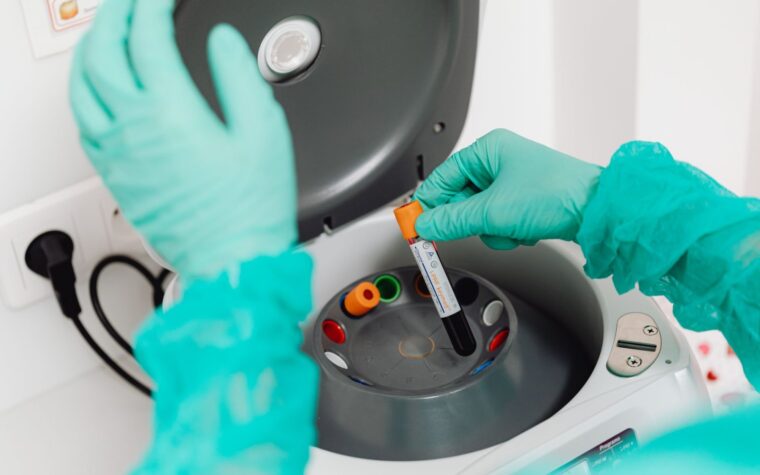
Yes, a blood test can give you a rough estimate of your biological age. Several well-validated scientific tools now exist to measure how fast your body is aging at the cellular level, and the better ones do predict mortality and disease risk more precisely than your birth year alone. The honest follow-up: none of them are accurate enough at the individual level to treat a single result as a health verdict.
This article is for informational purposes only and does not constitute medical advice. See our medical disclaimer.
Key Takeaways
- Biological age reflects how well your cells and organs are functioning, not when you were born.
- Epigenetic clocks (DNA methylation analysis) are the most research-validated approach; GrimAge and DunedinPACE lead the field in 2024-2025 evidence.
- Phenotypic age (PhenoAge) can be estimated from nine standard blood markers and correlates with mortality risk in large studies.
- Telomere length testing is the weakest predictor among the three main methods; most aging researchers treat it as supplementary at best.
- No consumer biological age test has FDA clearance. Short-term factors including illness and sleep can shift scores.
- A result showing you are “older” than your chronological age is a signal worth discussing with a physician, not a diagnosis.
What Does “Biological Age” Actually Mean?
Biological age describes how well your body’s systems are functioning relative to a population average, rather than simply counting years since birth. Two people who are both 55 years old can have meaningfully different risks of cardiovascular disease, cognitive decline, and all-cause mortality. Chronological age alone does not capture those differences, but certain biomarkers can approximate them.
The concept traces back to gerontology research of the 1970s and 1980s, but it became measurable in a rigorous statistical sense after 2011, when UCLA geneticist Steve Horvath demonstrated that DNA methylation patterns across hundreds of genomic sites track chronological age with remarkable accuracy across tissues. That work, published in Genome Biology in 2013, effectively launched the modern field of epigenetic clocks. Understanding these aging biomarkers is now central to longevity medicine and preventive screening.
What makes biological age clinically useful is the gap, not the absolute number. If your biological age estimate is 10 years older than your calendar age, that discrepancy (called “epigenetic age acceleration” in the research literature) is associated with elevated risks of several age-related conditions. The same logic runs in reverse: a biological age younger than your chronological age correlates with lower mortality risk in population data.
The Three Main Approaches to Measuring Biological Age
Researchers and commercial labs currently use three distinct biological mechanisms to estimate aging. They measure different things, they do not always correlate with one another, and they each carry different tradeoffs for practical use.
Epigenetic Clocks (DNA Methylation Analysis)
DNA methylation is a chemical modification (the addition of a methyl group to a cytosine base) that regulates gene expression without altering the DNA sequence itself. The pattern of these modifications at specific CpG sites across the genome changes in predictable ways as we age, and that is what epigenetic clocks exploit.
The first-generation Horvath clock (2013) tracked 353 CpG sites and predicted chronological age across multiple tissue types with a median error of about 3.6 years. Impressive for a first pass, but predicting your birthday turns out to be less clinically useful than predicting your mortality risk. Subsequent second-generation clocks were optimized for outcomes like disease and death rather than simply matching calendar age.
GrimAge, developed at UCLA and published in Aging in 2019, incorporates plasma protein surrogates alongside methylation data. It is currently the strongest single epigenetic predictor of all-cause mortality available through commercial testing. Faster GrimAge acceleration is associated with coronary artery disease, lung cancer risk, and shorter time to death in multiple independent cohorts.
DunedinPACE takes a different conceptual approach. Rather than estimating a static biological age, it measures the current rate at which a person is aging: essentially, how many biological years are passing for every calendar year. It was developed at Duke University and published in eLife in 2022, built from longitudinal data tracking the same individuals over decades. A DunedinPACE score of 0.8 means aging at roughly 80% the population rate; a score of 1.2 means aging 20% faster. A 2024 study in Alzheimer’s and Dementia found faster DunedinPACE was associated with accelerated cognitive aging in the Framingham Heart Study cohort.
Pros: Best-validated approach for predicting mortality and disease risk. GrimAge and DunedinPACE outperform earlier clocks in head-to-head comparisons. DunedinPACE is sensitive enough to detect changes from lifestyle interventions in clinical trials.
Cons: Requires specialized laboratory analysis of DNA methylation, which is not available from a standard blood draw at most medical offices. Commercial tests (TruAge, Elysium Index, others) vary in which algorithm they use, making direct comparisons between providers difficult. A single measurement can be influenced by recent illness or acute inflammation.
Phenotypic Age (PhenoAge from a Standard Blood Panel)
Morgan Levine, PhD, then at Yale, published the PhenoAge model in 2018 in Nature Communications. It calculates a biological age estimate from nine markers that most physicians already order: albumin, creatinine, glucose, C-reactive protein, lymphocyte percentage, mean corpuscular volume, red cell distribution width, alkaline phosphatase, and white blood cell count, plus chronological age.
The model was derived from NHANES III data and validated in independent population samples. PhenoAge outperformed chronological age in predicting all-cause mortality, disability, and multiple chronic diseases. It also correlates with DNA methylation-based clocks, which gives researchers confidence that it captures a real biological signal rather than noise.
The practical appeal is real. If you have had a recent comprehensive metabolic panel and CBC, you already have most of the data needed to calculate your PhenoAge. Several free online calculators accept these inputs. Metabolic dysregulation shows up clearly in PhenoAge scores, which is why tracking metabolic markers such as fasting glucose and CRP over time matters as much as any single snapshot result.
Pros: No specialized testing required. Accessible and relatively inexpensive. The underlying markers are modifiable, meaning lifestyle and medical interventions that improve metabolic health can lower the score. Sensitive to changes that a physician can act on.
Cons: Highly sensitive to transient conditions. An acute infection, dehydration, or recent strenuous exercise can meaningfully skew CRP and white blood cell count. A single PhenoAge calculation should not be taken in isolation; trends over multiple measurements are far more informative.
Telomere Length Testing
Telomeres are repetitive DNA sequences at the ends of chromosomes that shorten with each cell division. The hypothesis that shorter telomeres equal older biology is intuitive and has some population-level support: shorter mean telomere length is associated with modestly elevated risks of certain cancers, cardiovascular disease, and mortality in meta-analyses. Elizabeth Blackburn shared the 2009 Nobel Prize in Physiology or Medicine partly for work on telomerase, the enzyme that rebuilds telomeres.
Here is where practicing researchers part ways with the consumer marketing around telomere tests. A 2022 comparative review in Aging Medicine found that telomere length explained roughly 2-7% of the variance in chronological age across cohorts, compared to 20-35% for epigenetic clocks. That is a substantial performance gap. A separate analysis confirmed that telomere length and epigenetic clock estimates are largely independent of each other; they appear to capture different, only weakly overlapping dimensions of aging biology.
There is also substantial technical noise in telomere measurement. Different assay methods (qPCR versus Southern blot versus flow-FISH) give different absolute values, and telomere length varies between cell types within the same person. The research community largely treats telomere length as supplementary information rather than a primary biological age indicator.
Pros: Conceptually straightforward. Some consumer tests are relatively affordable. May add marginal information when combined with other biomarkers.
Cons: Weakest predictor of the three for individual health outcomes. High technical variability between labs. Consumer tests for telomere length offer limited actionable guidance. Multiple research teams have concluded that telomere length alone is not a reliable clinical aging marker at the individual level.
What the Science Actually Supports, and Where It Falls Short
The honest scientific picture is more nuanced than either the longevity-industry marketing or the reflexive skepticism suggest. Here is where the evidence is genuinely strong, and where it has real limits.
Where it is strong: In large epidemiological cohorts, epigenetic age acceleration and elevated PhenoAge are consistently associated with increased mortality risk, earlier onset of age-related diseases, and poorer physical and cognitive function. These associations survive adjustment for traditional risk factors. The 2024 NIA-hosted Biomarkers of Aging Symposium, which brought together leading researchers from multiple institutions, affirmed that DNA methylation-based clocks are among the most informative aging biomarkers currently available, noting that they outperform most other omics approaches for predicting mortality outcomes.
Where it is limited: None of these tools have been validated as diagnostic or prognostic instruments for individual clinical decision-making. The National Institute on Aging has noted explicitly that there is no gold-standard measurement of biological aging and no consensus on what one should be. Population-level associations, even very robust ones, do not translate cleanly to individual predictions. A clock score that predicts elevated mortality risk in a cohort of 10,000 people tells you much less about any specific individual within that cohort.
A practical example: two commercial labs running the same methylation algorithm on split samples from the same individual can return scores that differ by several years, due to differences in normalization methods and reference populations. A 2025 review in Frontiers in Molecular Biosciences highlighted this reproducibility gap as a key unresolved challenge for clinical translation of epigenetic clocks.
There is also the intervention question. Some trials report that diet, exercise, and certain supplements can reduce epigenetic age scores. But as researchers at the NIA symposium emphasized: changing a proxy measurement is not necessarily the same as slowing the underlying biology the proxy represents. An analogy worth keeping in mind: treating a slightly elevated thermometer reading does not address the fever’s cause.
Should You Get a Biological Age Test? A Practical Framework
If you are considering a consumer biological age test, a few honest questions are worth asking first.
Which method does the test use? Epigenetic clock tests (look for GrimAge or DunedinPACE algorithms specifically) have the strongest evidence base. PhenoAge calculated from standard labs is accessible and clinically meaningful when trended over time. Telomere-only tests offer limited value for most people given current evidence levels.
What algorithm and reference population does the company use? This is the question most consumer tests do not answer clearly in their marketing materials. A company using a proprietary algorithm with an undisclosed reference population is asking you to trust a black box. Independent verification of such results is limited.
How will you use the result? A biological age test that motivates you to exercise more, sleep better, and reduce chronic stress has real value. Those behaviors have evidence behind them regardless of any clock score. A test that produces anxiety or drives significant medical decisions without physician involvement is a different matter entirely.
One result is not a trend. The research literature is clear that single measurements are noisy. If you use these tests, tracking the same metric over 12 to 24 months under consistent conditions (fasted state, same time of day, same lab) is far more informative than any single number.
Frequently Asked Questions
What is a biological age test and how does it work?
A biological age test estimates how old your body’s cells and tissues are functioning relative to your birth age. The most studied methods analyze DNA methylation patterns at specific sites in the genome (epigenetic clocks), calculate a composite score from standard blood chemistry (phenotypic age), or measure the length of telomeres, the protective caps on chromosomes. Each method captures a different dimension of aging, and they do not always agree with one another.
Is a biological age blood test accurate?
Epigenetic clocks and phenotypic age models show strong statistical associations with mortality and disease risk in large population studies. However, accuracy at the individual level is more limited. Short-term factors like illness, stress, sleep deprivation, and recent diet can shift results. Different commercial labs using different algorithms can return meaningfully different numbers from the same person’s sample. Treat a single result as an approximate signal, not a precise measurement.
Can you reverse your biological age?
Some intervention studies, including trials of lifestyle changes and certain drug protocols, have reported small reductions in epigenetic age scores. A 2021 study in Aging Cell found a diet-and-supplement intervention reduced DNAm PhenoAge by about 3 years over 8 weeks. However, most researchers caution that changing a clock score is not the same as reversing aging itself. The clocks are proxies, not the underlying mechanism.
Which biological age test is most reliable?
Among research-grade tools, GrimAge and DunedinPACE currently have the strongest evidence for predicting mortality and pace of aging respectively, outperforming earlier clocks in most head-to-head comparisons. PhenoAge is attractive because it can be calculated from a standard blood panel without a specialized methylation assay. Telomere length testing is the weakest option for individual-level prediction, and the research community largely agrees on this point. No consumer test has FDA clearance as a diagnostic.
Sources
- Horvath S. DNA methylation age of human tissues and cell types. Genome Biology. 2013;14(10):R115. doi:10.1186/gb-2013-14-10-r115
- Lu AT, et al. GrimAge strongly predicts lifespan and healthspan. Aging. 2019;11(2):303-327. PMC6366976
- Belsky DW, et al. DunedinPACE, a DNA methylation biomarker of the pace of aging. eLife. 2022;11:e73420. elifesciences.org/articles/73420
- Levine ME, et al. An epigenetic biomarker of aging for lifespan and healthspan. Aging. 2018;10(4):573-591. PMC5940111
- Herzog EN, et al. Biomarkers of Aging, NIA Joint Symposium 2024: New Insights Into Aging Biomarkers. Aging Cell. 2025. PMC12266742
- Marioni RE, et al. The epigenetic clock and telomere length are independently associated with chronological age and mortality. International Journal of Epidemiology. 2016;45(2):424-432. PMC4864882
- What are most ethically salient implications of epigenetic age testing? AMA Journal of Ethics. 2025. journalofethics.ama-assn.org
Sources
- Horvath S. DNA methylation age of human tissues and cell types. Genome Biology. 2013.
- Lu AT, et al. GrimAge strongly predicts lifespan and healthspan. Aging. 2019.
- Belsky DW, et al. DunedinPACE, a DNA methylation biomarker of the pace of aging. eLife. 2022.
- Levine ME, et al. An epigenetic biomarker of aging for lifespan and healthspan. Aging. 2018.
- Herzog EN, et al. Biomarkers of Aging NIA Joint Symposium 2024: New Insights. Aging Cell. 2025.
- Marioni RE, et al. Epigenetic clock and telomere length independently associated with chronological age and mortality. Int J Epidemiology. 2016.
- What Are the Most Ethically Salient Implications of Epigenetic Age Testing? AMA Journal of Ethics. 2025.