Best Longevity Blood Tests of 2026: 4 At-Home Services We Compared Head to Head
If you want to track the biomarkers that actually predict how long and how well you live, the best longevity blood test for most people in 2026 is Superpower, which screens 100+ biomarkers for around $199 a year. Below we break down four leading at-home services so you can match the right panel to your budget and goals.
We may earn a commission if you buy through links on this page. Here is our process.
Wondering which biomarkers actually predict a longer, healthier life? See how a 100+ marker longevity panel compares. One at-home Superpower draw checks 100+ biomarkers, physician-reviewed.
Key Takeaways
- Superpower offers the most biomarkers per dollar for general longevity tracking, screening 100+ biomarkers for about $199 per year with a physician-reviewed dashboard.
- Function Health is the premium choice for people who want clinician sign-off and two full panels a year, covering 160+ lab tests for around $365 annually.
- For a single targeted question like thyroid or hormones, a one-off Everlywell kit ($49 to $299) costs far less than any annual membership and ships to your door.

A quick look at our top picks
- Best overall value: Superpower
- Best premium membership: Function Health
- Best for single targeted panels: Everlywell
- Best for frequent low-cost retesting: SiPhox Health
Comparison table
| Service | VST score (out of 5) | Price | Best for |
|---|---|---|---|
| Superpower | 4.7 | ~$199/year | Overall longevity value |
| Function Health | 4.5 | ~$365/year | Premium, clinician-reviewed |
| Everlywell | 4.2 | $49 to $299/kit | Single targeted panels |
| SiPhox Health | 4.1 | from ~$125 | Frequent low-cost retesting |
Superpower – Best for overall longevity value
Superpower is our top pick because it packs 100+ biomarkers, a blood draw, and a physician-reviewed dashboard into a membership that costs about $199 a year. For most people who want a yearly longevity baseline without paying premium prices, nothing else delivers as many markers per dollar.
Pros
- 100+ biomarkers covering heart, metabolic, hormone, thyroid, and inflammation markers in one panel
- Roughly $199 per year, the lowest annual price among full-membership services we reviewed
- At-home kit plus a lab draw, with a physician-reviewed dashboard and 17 health scores
- HSA and FSA eligible
Cons
- The base price is $399 per year for members in New York and New Jersey
- Supplement recommendations can nudge you toward extra spending, so treat them as optional
- One full panel per year rather than two
The membership starts you off with a full blood panel and turns the raw numbers into 17 plain-language health scores plus a personalized action plan. That matters because a wall of lab values means little if you cannot tell which ones need attention. A physician reviews your results, so you are not left to interpret abnormal flags alone.
What pushes Superpower ahead for longevity specifically is breadth at a reasonable price. You get the inflammation, metabolic, and hormone markers that researchers tie to healthy aging, not just a basic cholesterol and glucose snapshot. The catch worth knowing is that the AI concierge will suggest supplements, and those can add up if you say yes to everything, so keep the test and the upsell separate in your head.
Pricing: About $199 per year for most states ($399 in NY and NJ), HSA and FSA eligible.

Function Health – Best premium, clinician-reviewed membership
Function Health is the better choice if you want the deepest panel and a clinician reading every result. For around $365 a year it runs 160+ lab tests, then retests roughly 60 markers halfway through the year so you can see what changed.
Pros
- 160+ lab tests, the widest panel of any service here
- Two testing rounds a year, including a mid-year retest of key markers
- Clinician review with notes on every result, no per-test fees
- HSA and FSA eligible
Cons
- Costs nearly double Superpower at around $365 per year
- Premium add-ons like Galleri cancer screening cost extra
- The volume of data can feel overwhelming without guidance
Function recently dropped its membership to roughly $365 a year, down from $499, which narrows the gap with Superpower but still leaves it as the pricier option. What you pay extra for is depth and the reassurance of clinician sign-off. Every result comes with a clinician note, and the mid-year retest is genuinely useful if you are changing diet, training, or medication and want to confirm the numbers moved.
This is the service to choose when you treat your annual labs as a serious health project rather than a quick checkup. The 160+ test menu spans organ systems most basic panels skip, and the action plan, food guide, and supplement list give you a concrete next step. If you only want a once-a-year snapshot at the lowest price, Superpower is the smarter spend, but for two rounds and clinician depth, Function earns its premium.
Pricing: Around $365 per year, HSA and FSA eligible, optional add-ons priced separately.
Everlywell – Best for single targeted panels
Everlywell is the smart pick when you have one specific question, not a desire to track everything. Individual kits run from about $49 to $299 and ship to your door, so you can test thyroid, hormones, or metabolism without committing to an annual membership.
Pros
- Pay per kit, no yearly commitment, with prices from $49 to $299
- Focused panels for thyroid, hormones, metabolism, and food sensitivity
- Results processed through CLIA-certified labs
- Widely available, including through major retailers
Cons
- No single 100+ biomarker longevity panel like the membership services
- Buying several panels separately costs more than one full membership
- Less dashboard depth and ongoing tracking than Superpower or Function
Where the membership services give you breadth, Everlywell gives you precision and control over spend. If your doctor flagged your thyroid, or you want to check hormone levels before making a change, a single targeted kit answers that question for a fraction of an annual fee. The labs behind it are CLIA-certified, so the results carry clinical weight.
The tradeoff is that Everlywell is not built for comprehensive longevity tracking. There is no one-shot panel of 100+ markers, and if you find yourself buying three or four kits a year, a Superpower membership would likely cost less and give you more. Use Everlywell as a scalpel, not a dragnet.
Pricing: Individual kits from $49 to $299 depending on the panel.
SiPhox Health – Best for frequent low-cost retesting
SiPhox Health is built for people who want to retest often without a needle or a lab visit. Memberships start around $125 with a near-painless at-home collection device, fast 5 to 7 day turnaround, and HSA and FSA eligibility.
Pros
- Among the lowest cost per biomarker we found, starting around $125
- At-home collection with no clinic trip, plus a 5 to 7 day result window
- Flexible monthly, quarterly, or biannual retesting cadence
- HSA and FSA eligible
Cons
- Base panels cover fewer biomarkers than Superpower or Function
- Reaching 60 markers requires the Ultimate 360 upgrade at extra cost
- Best as a tracking tool rather than a one-time deep dive
The appeal of SiPhox is cadence. If you are actively working on metabolic or heart markers and want to see them move every quarter, paying for a full 100-plus panel each time is overkill. SiPhox lets you retest a focused set frequently and cheaply, which is exactly what behavior change needs: a tight feedback loop.
The collection itself uses an upper-arm device that most users describe as far less unpleasant than a venous draw, and results land in under a week. The honest limit is breadth. Base panels are smaller, and getting to 60 biomarkers means paying for the Ultimate 360 add-on. For a once-a-year longevity baseline, Superpower still wins on coverage, but for the person who lives in their numbers, SiPhox is the most affordable way to keep checking.
Pricing: Memberships from around $125, with an Ultimate 360 upgrade for roughly $100 more.

Why trust Vital Signs Today
We compared 12 at-home and longevity blood testing services and reviewed what each panel actually measures, not just the marketing headline biomarker count. We checked current 2026 pricing directly against each provider, separated membership fees from optional add-on upsells, and flagged where a cheaper one-off kit beats an annual plan. Our picks are based on coverage, value, and how usable the results are for a non-clinician.
How we picked
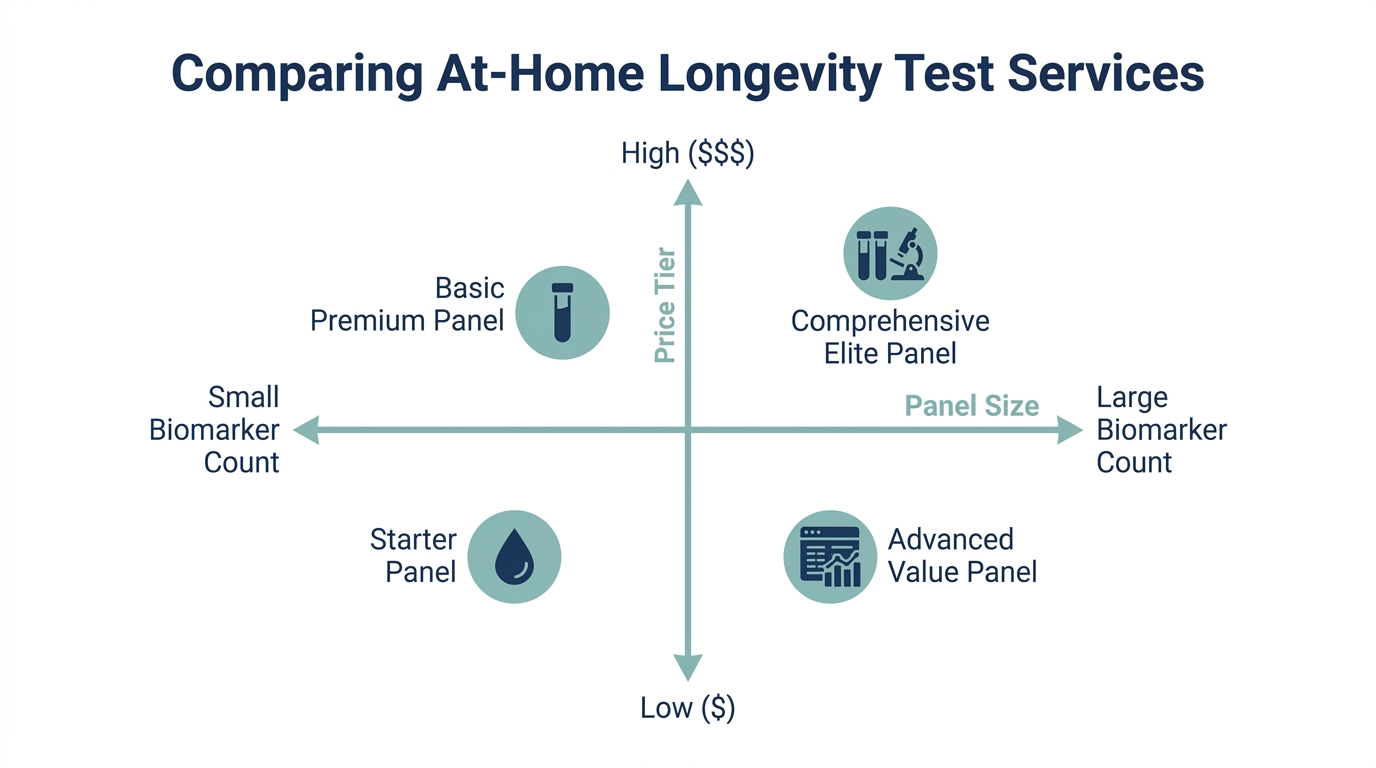
We scored each service against four criteria that matter for longevity testing specifically.
- Biomarker coverage: how many markers, and whether they include the metabolic, inflammation, and hormone panels tied to healthy aging.
- Value: total annual cost versus what you actually get, with upsells stripped out.
- Usability: whether results come with plain-language scores, an action plan, and clinician input.
- Convenience: at-home collection, turnaround time, and HSA or FSA eligibility.
Which biomarkers actually matter for longevity
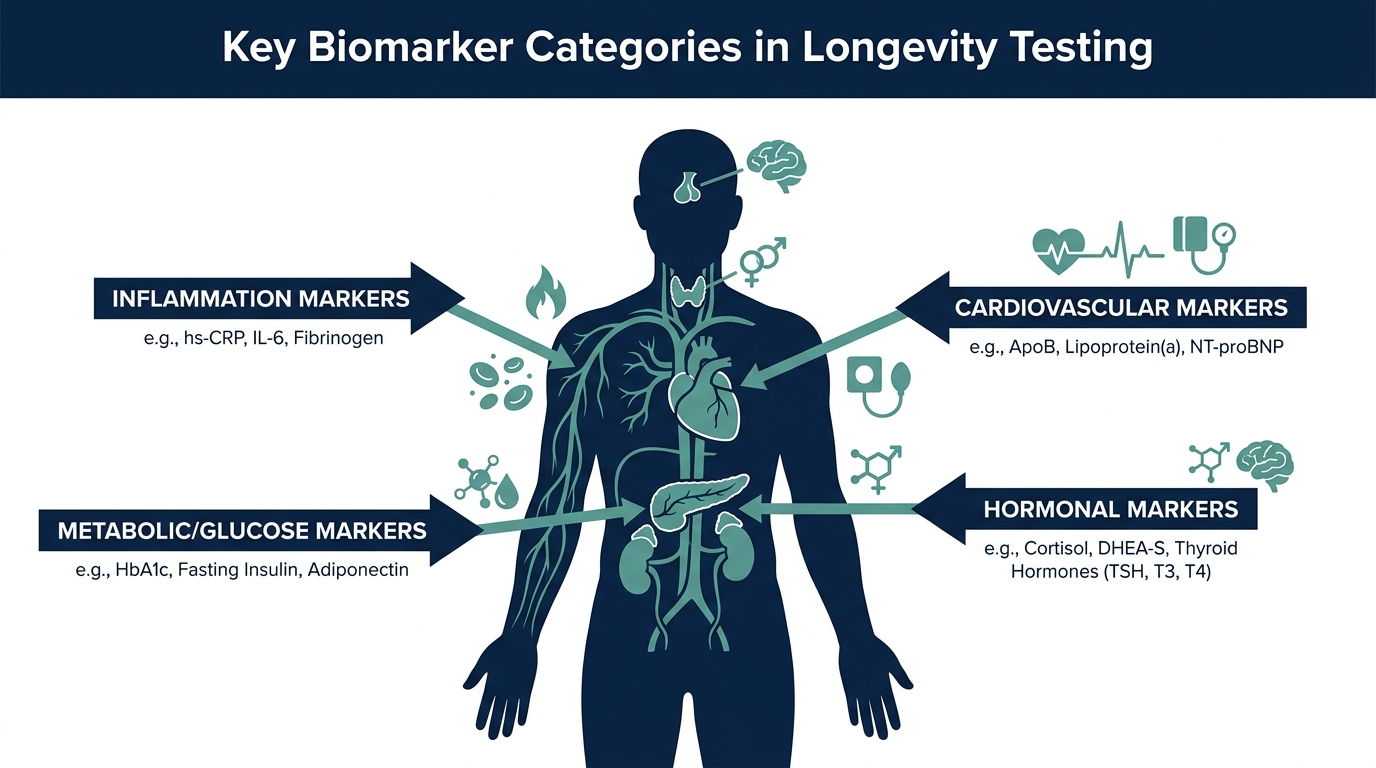
A high biomarker count looks impressive on a sales page, but not all markers carry the same weight for healthy aging. When you compare these services, it helps to know which numbers are doing the heavy lifting so you can judge whether a panel covers the essentials or just pads its total. The markers most consistently tied to long-term cardiometabolic and inflammatory risk cluster into a few groups.
- Advanced lipids. A standard cholesterol panel gives total, LDL, HDL, and triglycerides, but two extra markers add real signal for cardiovascular risk: ApoB, which counts the actual number of atherogenic particles, and lipoprotein(a), a largely genetic risk factor that a basic panel misses. A longevity-oriented panel that includes these is doing more than a routine checkup.
- Metabolic and glucose control. Fasting glucose plus HbA1c (your three-month average glucose) and, where available, fasting insulin catch insulin resistance years before diabetes shows up. This is where most avoidable aging-related disease begins.
- Inflammation. High-sensitivity C-reactive protein (hs-CRP) is the workhorse inflammatory marker linked to cardiovascular risk. Chronic low-grade inflammation is a recurring theme in aging research.
- Kidney and liver function. eGFR with creatinine for the kidneys, and ALT, AST, and GGT for the liver, track two organ systems whose quiet decline predicts later trouble.
- Micronutrients and hormones. Vitamin D, ferritin and iron studies, B12, and thyroid markers (TSH, and often free T4) are common, correctable deficiencies that affect energy and long-term health. Sex hormones round out the picture for many people.
When you scan a service’s marker list, look past the headline number and check that these categories are represented. A panel of 100-plus markers that skips ApoB or hs-CRP is less useful for longevity than a smaller panel that includes them.
How to prepare so your results are trustworthy
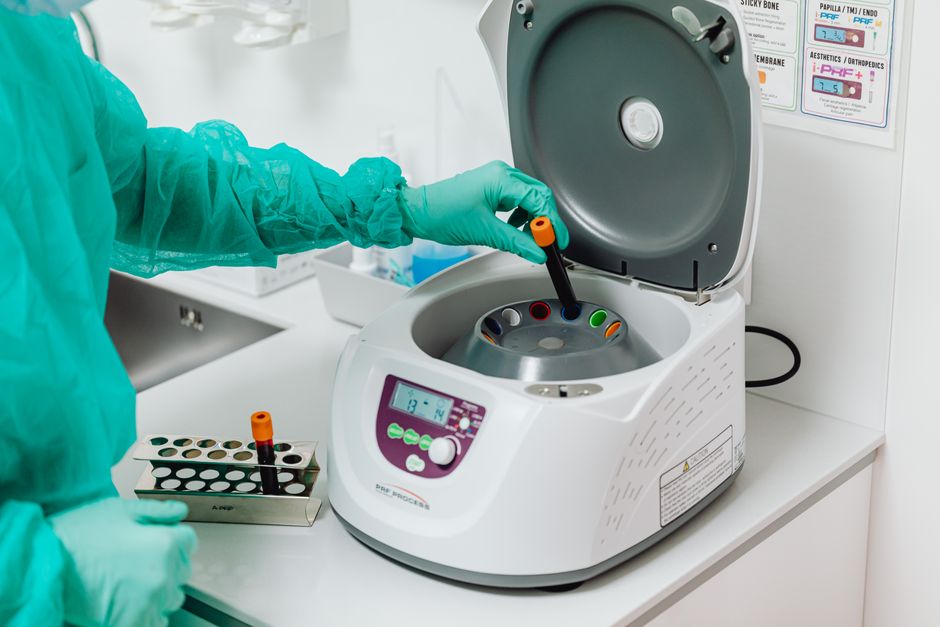
An at-home test is only as good as the sample you provide, and a handful of prep steps meaningfully change the numbers. This matters across every service in this comparison, because they all depend on you collecting the sample correctly.
- Fast when instructed. Glucose, triglycerides, and some lipid fractions shift after eating. Most longevity panels ask for an 8 to 12 hour fast, water allowed. Check your kit and follow it, or your metabolic numbers may read falsely off.
- Time it consistently. Draw in the morning if you can, and if you retest, use the same time of day. Cortisol, iron, and some hormones follow a daily rhythm, so consistency makes your trend line meaningful.
- Skip a hard workout the day before. Intense exercise can transiently raise markers like certain muscle and liver enzymes and inflammation, muddying the picture.
- Hold biotin supplements. High-dose biotin, common in hair and nail supplements, can interfere with some lab immunoassays, especially thyroid and hormone tests. Many labs advise pausing it for a couple of days before testing.
- Log your medications and supplements. Your results are only interpretable if whoever reviews them knows what you take. Bring the list to any physician review the service offers.
The finger-stick and upper-arm collection devices used by some services are convenient, but small-volume samples are more sensitive to technique. Warm your hands, follow the fill lines, and do not squeeze so hard that you dilute the sample with tissue fluid.
Reading your results: single value versus trend
The most common mistake with longevity testing is fixating on a single flagged value. A one-time result is a snapshot influenced by your last meal, your sleep, a passing cold, and even the stress of the draw. The real payoff of an annual or quarterly membership is the trend line, watching whether a marker is drifting in the right direction over time.
This is why the retesting cadence in the comparison above matters as much as the raw marker count. A service that retests key markers mid-year, or lets you recheck a focused set each quarter, turns a static number into a feedback loop you can actually act on. If you change your diet, training, or a medication, a follow-up test three to six months later tells you whether it worked, which no single baseline can. When you interpret results, favor the direction of travel over the exact decimal, and always read a marker in the context of the ones around it rather than in isolation.
Who benefits most from a longevity panel, and how often to test
These services are broad screening tools, not diagnostic tests, and they suit some people better than others. They are most useful for generally healthy adults who want an early-warning baseline, people actively changing their lifestyle who want to measure the effect, and anyone with a family history of heart or metabolic disease who wants to track risk markers like ApoB, lipoprotein(a), and HbA1c over time.
They are a poorer fit as a substitute for medical care. If you have active symptoms, a diagnosed condition being managed by a doctor, or an urgent concern, targeted testing ordered by a clinician is the right path, not a broad self-ordered panel. For most healthy people, an annual baseline is a sensible cadence, with a mid-year or quarterly recheck of a focused set only if you are actively working to move specific numbers. Testing more often than your body can meaningfully change rarely adds insight and mostly adds cost.
How to choose between these four
Rather than defaulting to the highest marker count, work backward from the job you are hiring the test to do:
- You want one solid yearly baseline at the best value. A broad annual membership with a clear, physician-reviewed dashboard fits best, which is why Superpower leads our value pick.
- You treat labs as a serious project and want clinician sign-off plus a mid-year retest. A premium membership with the widest panel and two rounds, like Function Health, earns its higher price.
- You have exactly one question, such as thyroid or hormones. A single targeted kit answers it for far less than any annual plan, which is Everlywell’s strength.
- You live in your numbers and want to retest cheaply and often. A low-cost, frequent-cadence service like SiPhox Health gives you the tight feedback loop that behavior change needs.
Notice that the right answer depends on your goal and budget, not on which service has the biggest number on its homepage. Match the tool to the job, prepare properly, and read the trend rather than a single value, and any of these can deliver genuine insight into how you are aging.
Curious what your own levels look like?
Baseline 100+ biomarkers today and retest as life changes, all in one membership with physician review.
Frequently asked questions
What is the best longevity blood test in 2026?
For most people, Superpower offers the best mix of coverage and price, screening 100+ biomarkers for around $199 a year. If you want the deepest panel with clinician review and two rounds a year, Function Health at about $365 is the premium alternative.
How much does a longevity blood test cost?
Annual memberships range from about $125 for SiPhox up to $365 for Function Health, with Superpower at roughly $199. Single-question kits from Everlywell start at $49, so cost depends on whether you want broad tracking or one targeted answer.
Are at-home longevity blood tests accurate?
The services here run samples through CLIA-certified labs, the same standard used by clinical labs. Accuracy depends on following the collection instructions carefully, especially for fasting markers, so read the kit directions before you draw your sample.
Can I use HSA or FSA funds to pay for these tests?
Yes. Superpower, Function Health, and SiPhox Health are all HSA and FSA eligible, which effectively lowers your cost by your tax rate. Many individual Everlywell kits qualify as well, though it is worth confirming at checkout.
Do I need a doctor to order a longevity blood test?
No. All four services let you order directly without a physician visit, and Superpower and Function include clinician or physician review of your results as part of the membership. You can then share the report with your own doctor if you choose.
The bottom line
If you want one yearly longevity baseline at the best price, choose Superpower for its 100+ biomarkers at around $199 and a dashboard that turns numbers into action. If budget is secondary and you want the deepest panel with clinician sign-off and a mid-year retest, Function Health at about $365 is worth the premium. For a single targeted question, an Everlywell kit costs far less than any membership, and if you want to retest cheaply every quarter, SiPhox Health is the most affordable feedback loop. Match the tool to the job and you will get more out of your results, and your money.
Sources
- Superpower official site and pricing: https://superpower.com/
- Superpower Blood Test Review 2026, Athletech News: https://athletechnews.com/superpower-blood-test-review/
- Function Health pricing page: https://www.functionhealth.com/pricing
- Function membership is now $365/year, Function Health: https://www.functionhealth.com/article/function365
- Everlywell Review 2026, Medical News Today: https://www.medicalnewstoday.com/articles/everlywell-review
- Everlywell products and pricing: https://www.everlywell.com/products/
- How much does SiPhox Health cost, SiPhox Health: https://siphoxhealth.com/articles/how-much-does-siphox-health-cost
- SiPhox Health official site: https://siphoxhealth.com/