Quick answer: Weight loss shots are GLP-1 injections like Wegovy (semaglutide) and Zepbound (tirzepatide), and for most healthy adults with obesity they are safe and effective when prescribed and monitored by a clinician. In the STEP and SURMOUNT trials they produced average weight loss of about 15 percent (semaglutide) and 20 percent or more (tirzepatide). The real safety risk is not the drug itself but how people get it: unmonitored gray-market or mislabeled compounded vials, wrong dosing, and skipping the lab work that catches thyroid, pancreas, and kidney problems before they matter.
So “are weight loss shots safe” has two answers. The medicine, used correctly, has a side effect profile most people tolerate. The way half the internet buys it is where people get hurt. This guide covers how the shots work, real results and timelines, side effects, cost and insurance, who qualifies, and how to get them without gambling on a sketchy source.
Before starting a GLP-1 shot, a baseline panel can show your metabolic starting point. Want to see your own numbers? One at-home Superpower draw checks 100+ biomarkers, physician-reviewed.
What are the weight loss shots, and how do they work?
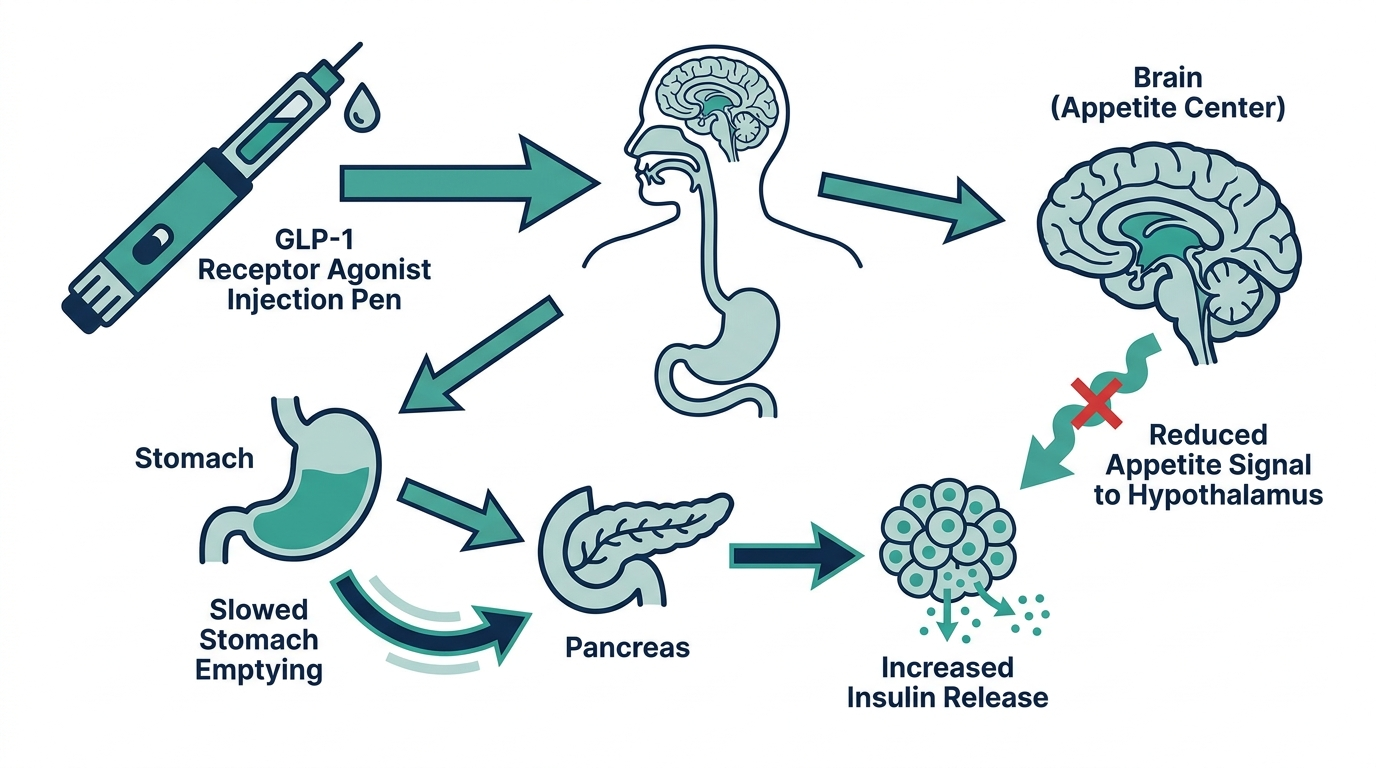
The weight loss shots are injectable medications in the GLP-1 class, and they work by mimicking gut hormones your body already makes after you eat. The major ones are semaglutide (sold as Wegovy for weight loss and Ozempic for diabetes) and tirzepatide (Zepbound for weight loss, Mounjaro for diabetes). Saxenda (liraglutide) is an older daily option that is largely being replaced by the newer weekly drugs.
Here is the mechanism a layperson rarely hears. GLP-1 (glucagon-like peptide-1) is released by your intestine when food arrives. It tells the pancreas to release insulin, slows how fast your stomach empties, and signals your brain that you are full. Tirzepatide goes further: it activates both GLP-1 and a second receptor called GIP, which is part of why it tends to outperform semaglutide. These drugs do not “burn fat.” They quiet the food noise and make a calorie deficit feel survivable instead of like a daily war. That is the whole trick, and it is a big one, because most diets fail not on knowledge but on the relentless biological pull to eat.
For a deeper look at which molecule wins on results, see our breakdown of what is the best injection for weight loss.
Do weight loss shots work, and how much weight do you lose?
Yes, weight loss shots work, and the trial data is unusually strong for this category. In the STEP 1 trial, adults on weekly semaglutide lost about 15 percent of their body weight over 68 weeks, versus roughly 2.4 percent on placebo. In the SURMOUNT-1 trial, the highest dose of tirzepatide produced an average loss of around 20 to 22 percent over 72 weeks. For a 220-pound person, that is the difference between losing about 33 pounds and about 45 pounds.
A realistic timeline matters more than the headline number, because people quit when month one does not look like a transformation video:
- Weeks 1 to 4: You start at a low “starter” dose on purpose, to limit nausea. Weight loss is modest, often 2 to 5 pounds. The appetite change is the real signal here.
- Months 2 to 4: The dose steps up every 4 weeks. This is where the scale usually moves fastest, often 1 to 2 pounds a week.
- Months 5 to 12: Loss continues but slows as you approach your body’s new set point. Most of the trial weight loss landed by month 12 to 16.
One honest caveat the ads skip: a chunk of the early drop is water and gut content, not pure fat. The fat loss is real over months, but be patient through the first weeks. And up to a third of the weight lost can be lean muscle if you do not eat enough protein and resistance-train, which is why your numbers, not just the scale, should be watched.
Which weight loss shot is the best?
For pure weight loss in 2026, tirzepatide (Zepbound) is the most effective shot on average, with semaglutide (Wegovy) a close and well-established second. “Best” still depends on your medical history, your insurance, and how your gut tolerates each one, so the strongest molecule on paper is not automatically the right choice for you.
| Shot | Drug | FDA status for weight loss | Avg trial loss | Dosing |
|---|---|---|---|---|
| Zepbound | Tirzepatide | Approved | ~20 to 22% (SURMOUNT) | Weekly |
| Wegovy | Semaglutide | Approved | ~15% (STEP) | Weekly |
| Ozempic | Semaglutide | Off-label (approved for diabetes) | Similar to Wegovy at matched dose | Weekly |
| Mounjaro | Tirzepatide | Off-label (approved for diabetes) | Similar to Zepbound at matched dose | Weekly |
| Saxenda | Liraglutide | Approved | ~5 to 8% | Daily |
A few notes that change real decisions. Ozempic and Mounjaro are the diabetes-labeled versions of the same molecules in Wegovy and Zepbound, which is why people ask about using them off-label. They are not magic alternatives; they are the same drug, prescribed for a different reason. Saxenda is a daily shot with weaker results and is mostly a fallback. For the off-label path, our guides on is Mounjaro approved for weight loss and how to get Ozempic for weight loss spell out the rules.
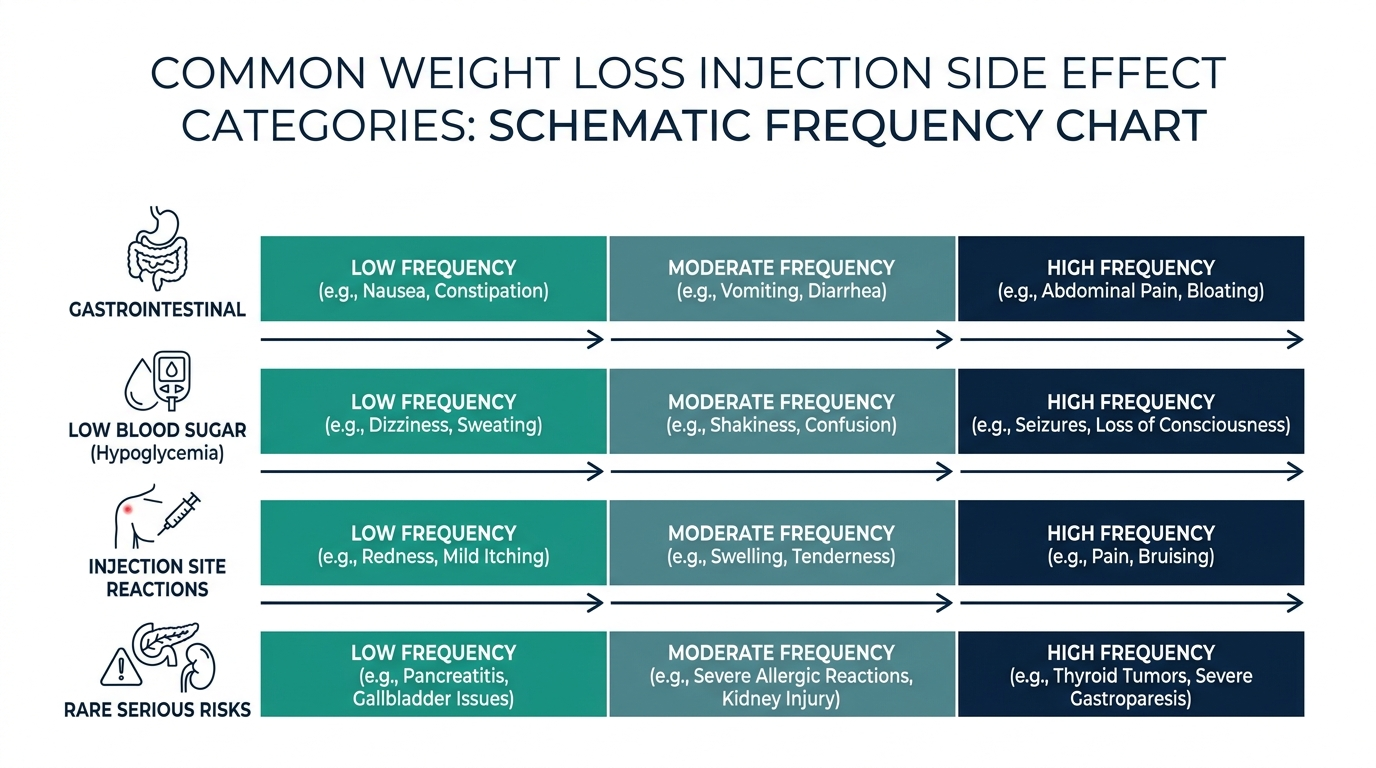
Are weight loss shots safe, and what are the side effects?
For most healthy adults, GLP-1 weight loss shots are safe when supervised, and the common side effects are gastrointestinal and usually fade. The serious risks are real but rare, and screening before you start is what keeps them rare. This is the section to read slowly.
Common and usually temporary:
- Nausea, especially in the first weeks and after each dose increase
- Constipation or diarrhea
- Reflux, burping, and feeling full fast
- Fatigue and mild headaches early on
Most of these come from the drug slowing your stomach. They improve when the dose is raised slowly and you eat smaller, lower-fat meals. People who quit in week three almost always titrated too fast or ate a greasy meal their slowed gut could not handle.
Less common but serious, the reasons monitoring exists:
- Pancreatitis: rare, but severe stomach pain that radiates to the back warrants stopping the drug and calling a clinician.
- Gallbladder problems: rapid weight loss of any kind raises gallstone risk.
- Thyroid C-cell tumor signal: seen in rodents, not confirmed in humans, but these drugs carry a boxed warning and are avoided in people with a personal or family history of medullary thyroid cancer or MEN2.
- Dehydration and kidney strain: usually downstream of severe nausea and vomiting, which is why fluids matter.
- Muscle and bone loss: the under-discussed one. Lose weight too fast without protein and lifting and you lose muscle you will miss later.
This is the honest line: talk to a clinician before starting or stopping a GLP-1, because the questions they ask (thyroid history, pancreatitis, gallbladder, what other meds you take) are exactly what separates safe use from a trip to the ER. The danger is not the molecule. It is taking it blind.
There is a flip side to the risk conversation that rarely makes the headlines. In the SELECT trial, semaglutide reduced the rate of major cardiovascular events, meaning heart attack, stroke, and cardiovascular death, in adults with obesity and established heart disease, independent of diabetes. GLP-1 medications have also improved blood pressure, blood sugar control, and markers of liver fat in trials. So for the right person, the medical calculus is not only about side effects to avoid, it is also about serious risks these drugs measurably lower. That is exactly the kind of trade-off a clinician can weigh against your own history, and another reason the labs-first route beats guessing.
How do you keep the side effects manageable?
The simplest way to actually get this done
Superpower is a full-body lab membership that runs 100+ biomarkers, has each result reviewed by a doctor, and tracks your numbers year over year (about $199/year). It is what we point readers to when they would rather get one clean, complete draw than chase single tests one at a time. Here is superpower reviewed in full.
Most people who tolerate GLP-1 shots well do a few specific things, and most who quit skipped them. The side effects are largely mechanical, since they come from a stomach that now empties slowly, so the fixes are mechanical too.
- Eat smaller meals and stop at the first sign of fullness. Your old portion sizes will now feel like too much, and pushing past that is where the nausea starts.
- Go easy on greasy, fried, and very rich food, which sits worst in a slowed stomach and triggers most of the queasiness people blame on the drug.
- Drink water steadily through the day. Much of the kidney and dehydration risk is downstream of vomiting and simply not drinking enough.
- Do not rush the dose. Every titration step exists to let your gut adjust. If a step is rough, holding at the lower dose an extra few weeks is normal and safe.
- Rotate injection sites between the abdomen, thigh, and upper arm to avoid soreness, and inject on the same day each week so you do not lose track.
If nausea is severe or persistent, or you get stomach pain that bores through to your back, that is not a “push through it” situation, it is a call-your-clinician one.
Why the gray market is where weight loss shots get dangerous
The single biggest safety problem with weight loss shots in 2026 is not the FDA-approved drug, it is unregulated sourcing: research-only vials sold online, mystery “semaglutide” from overseas, and dosing by guesswork. This is the part the cheerful TikTok before-and-afters never mention.
Two things to keep straight. First, FDA-approved means Wegovy, Zepbound, Saxenda, and the diabetes versions Ozempic and Mounjaro. These come from the manufacturer with verified dosing. Second, compounded semaglutide and tirzepatide are NOT FDA-approved. They are legal when prescribed by a licensed clinician and made by a licensed pharmacy, and a legitimate telehealth clinic uses that route responsibly. But “compounded” on a no-questions-asked website is a different animal from “compounded by a pharmacy your clinician vetted.” The gray market problem is vials with no clinician, no label you can trust, no idea of the real concentration, and no one watching your labs. People have overdosed by drawing the wrong amount from an unlabeled vial. That is a sourcing failure, not a drug failure.
The fix is boring and it works: get the same medication through a clinician who runs labs first, starts you low, and is reachable when something feels off.
Want the legitimate route, not a mystery vial?
Joi + Blokes is a telehealth clinic that prescribes GLP-1 medication (Zepbound, compounded semaglutide and tirzepatide), hormone therapy, thyroid care and peptides after a real lab panel and clinician review, with no membership or consult fee (prescriptions from about $59/month, hormone and GLP-1 lab panels from $149). It is the supervised, labs-first version of exactly what this article warns you not to buy from a no-questions-asked website. Here is Joi + Blokes reviewed in full.
How much are weight loss shots, and does insurance cover them?
Weight loss shots run from about $59 a month for compounded options through telehealth up to roughly $1,000 to $1,350 a month for brand-name Wegovy or Zepbound at cash list price. What you actually pay depends almost entirely on insurance, manufacturer savings programs, and whether you go brand or compounded.
| Route | Typical 2026 monthly cash cost | Notes |
|---|---|---|
| Brand Wegovy / Zepbound (no coverage) | ~$1,000 to $1,350 | Manufacturer savings cards and direct-from-maker programs can cut this to roughly $350 to $500 for some self-pay patients |
| Brand with good insurance | $0 to ~$50 copay | Coverage for obesity (not just diabetes) is still uneven and often needs prior authorization |
| Compounded semaglutide (telehealth) | ~$150 to $300 | Not FDA-approved; only safe via a licensed clinician and pharmacy |
| Compounded tirzepatide (telehealth) | ~$200 to $400 | Same caveat; tends to cost more than semaglutide |
| Entry telehealth programs | from ~$59 | Lowest tier compounded options; confirm what is included and who supervises |
On insurance: many plans cover GLP-1s for type 2 diabetes but still restrict them for weight loss alone, and Medicare generally does not cover anti-obesity drugs. Commercial plans that do cover Wegovy or Zepbound usually require prior authorization documenting your BMI. Coverage is plan-by-plan, which is why our guide on does Blue Cross Blue Shield cover weight loss injections shows how to check. HSA and FSA dollars can usually be used for prescribed weight loss medication, which softens the cash blow.
How do you get approved for weight loss shots, with or without insurance?
You get approved for weight loss shots by meeting the medical criteria and having a clinician document it, and you can get them without insurance through telehealth that bills you cash. The standard FDA-approval criteria for the shots are a BMI of 30 or higher, or a BMI of 27 or higher with at least one weight-related condition such as high blood pressure, prediabetes, sleep apnea, or high cholesterol.
The path looks like this:
- Get evaluated. An in-person or telehealth clinician confirms your BMI, reviews your history, and screens for the red flags (thyroid cancer history, pancreatitis, pregnancy).
- Get labs. A baseline panel checks kidney and liver function, A1c, thyroid, and lipids. This is also where a hidden thyroid or insulin problem driving your weight gets caught.
- If insured: your clinician submits prior authorization. Expect to document BMI and sometimes prior diet attempts. Denials are common and appealable.
- If uninsured: a cash-pay telehealth clinic can prescribe brand or compounded medication directly. This is the practical answer to how to get weight loss shots without insurance, and it is legitimate as long as a real clinician and licensed pharmacy are involved.
The thing people underrate: the lab step is not a hoop, it is the point. Plenty of people who think they need a shot actually have an underactive thyroid, severe insulin resistance, or a hormone issue that changes the whole plan once treated. Guessing skips that. Measuring catches it.
What stalls people on weight loss shots, and the common mistakes
Most people who fail on weight loss shots do not fail because the drug stopped working. They fail because of a handful of avoidable mistakes, and almost all of them trace back to not having someone watching the details.
A common real-world pattern makes this concrete. Someone loses 25 pounds over six months, feels great, and stops the shot to see if it holds. Within a few months the appetite returns to its old volume, the old eating creeps back, and much of the weight follows, because nothing changed the underlying set point. The person who keeps the weight off usually treats the medication like blood pressure medicine, a long-term tool, and spends the appetite-quiet months building the protein habit, the resistance training, and the sleep that carry the result forward after the drug.
- Quitting in the first month. The starter dose is deliberately weak. People expecting fast loss bail before the effective dose. Give it three to four months.
- Eating no protein. Appetite drops so far that some people eat 800 calories of crackers and lose muscle. Aim for protein at every meal and lift something heavy twice a week.
- Stopping cold and regaining. The insider reality: GLP-1s do not retrain your set point. Stop, and appetite hormones come roaring back and most people regain a large share of the weight within a year, exactly what the STEP withdrawal data showed. The shots are a long-term tool, not a 12-week cleanse.
- Ignoring a stalled scale. A plateau that will not break despite real effort is often a thyroid or insulin signal, not a willpower problem. That is a lab question, not a “try harder” problem.
- Dosing from an unlabeled vial. Covered above. Do not do it.
Edge cases worth flagging: women with PCOS often have strong insulin resistance and respond well to GLP-1s, but the insulin piece should be measured. People in perimenopause may be fighting shifting estrogen and a falling metabolic rate at once, which a hormone panel reveals. If the scale will not move no matter what you eat or inject, it is usually worth seeing your actual numbers first; here is how a full-body panel works.
Don’t just read about your health, track it.
A single result is a snapshot. Superpower re-tests 100+ markers over time so you can watch them move as you change sleep, food, and training.
FAQ
Is weight loss shots safe for someone without diabetes?
Yes. Wegovy and Zepbound are FDA-approved for weight management in adults with obesity, or overweight plus a related condition, with or without diabetes. The key is meeting the BMI criteria and being screened for the same red flags (thyroid cancer history, pancreatitis, pregnancy).
Are shots for weight loss safe long term?
Current evidence suggests GLP-1s are safe for multi-year use under supervision, and many people use them as ongoing treatment for a chronic condition. The longer-term concern is muscle preservation and what happens when you stop, which is why protein and resistance training matter as much as the injection.
What is the best shot for weight loss if cost is no object?
On raw effectiveness, tirzepatide (Zepbound) wins, with average trial loss around 20 percent or more versus about 15 percent for semaglutide. If you tolerate it and your clinician agrees, it is the strongest option. Tolerance and side effects still vary person to person, so “best on paper” is a starting point, not a guarantee.
How much are the weight loss shots per month?
Brand-name shots list around $1,000 to $1,350 a month cash, though manufacturer programs can bring some self-pay patients to roughly $350 to $500. Compounded options through telehealth typically run about $150 to $400, with entry programs starting near $59. With covered insurance, copays can be $0 to $50.
Does insurance cover weight loss shots?
Sometimes. Many commercial plans cover GLP-1s for type 2 diabetes but restrict or deny them for weight loss alone, and Medicare generally does not cover anti-obesity medication. Plans that do cover them usually require prior authorization. Check your specific plan’s formulary and ask your clinician to handle the paperwork.
How do you get weight loss shots without insurance?
Through a cash-pay telehealth clinic that evaluates you, runs baseline labs, and prescribes brand or compounded medication. This is a legitimate route as long as a licensed clinician and pharmacy are involved. Avoid websites selling unlabeled “research” vials with no clinician; that is where the real danger lives.
How do you get approved for a weight loss shot?
You generally qualify with a BMI of 30 or higher, or 27 or higher with a weight-related condition like prediabetes, high blood pressure, or sleep apnea. A clinician documents this, screens your history, and orders labs. If you are insured, they submit a prior authorization; if not, a cash-pay clinic can prescribe directly.
Why do people regain weight after stopping weight loss shots?
Because the drugs suppress appetite while you take them but do not permanently reset your body’s set point. Stop, and the hunger hormones rebound, often driving significant regain within a year. Treat the shots as long-term management of a chronic condition, and build muscle and habits that hold during and after.
Are compounded weight loss shots the same as the brand drugs?
Same active molecule, different regulatory status. Brand Wegovy and Zepbound are FDA-approved with verified dosing. Compounded semaglutide and tirzepatide are not FDA-approved but are legal when made by a licensed pharmacy on a clinician’s prescription. The safety gap is supervision and sourcing, not the molecule itself.
Can you drink alcohol on weight loss shots?
There is no strict ban, but alcohol tends to hit differently on a GLP-1. A slowed stomach can make you feel the effects faster, and many people notice their desire for alcohol drops on these drugs. Alcohol also adds empty calories and can worsen nausea and reflux. Keep it modest, and do not drink to the point of vomiting while your gut is already sensitive. Ask your clinician if you have liver or pancreas concerns.
What happens if you miss a weekly dose?
For the weekly shots, a missed dose is usually not a crisis. General guidance is that you can often take it within a couple of days of the scheduled day, and if more time has passed you skip it and resume your normal schedule rather than doubling up. Follow the specific instructions for your product and ask your prescriber, since the exact window depends on the drug.
Are weight loss shots safe for your heart?
For most people yes, and for some they are protective. Semaglutide lowered the rate of heart attack and stroke in adults with obesity and existing heart disease in the SELECT trial. The main cardiac caution is that these drugs can raise heart rate slightly in some users, which a clinician monitors. Your history decides the picture, so it is a conversation to have before starting.
Do weight loss shots cause mood changes?
Reports of mood changes exist, and regulators have reviewed them without finding a proven causal link to depression or suicidal thoughts. That is not a reason to ignore your mental health on these drugs. If your mood shifts, tell your clinician promptly, especially if you have a history of depression. Rapid changes in eating and weight can affect mood on their own.
Vital Signs Today may earn a commission if you buy through links on this page. It does not affect our editorial assessments.