Quick answer: Smoothies can be good for weight loss, but only when they replace a meal and stay under roughly 350 to 400 calories with at least 25 to 30 grams of protein and 8 or more grams of fiber. Most popular fruit smoothies do the opposite: a large smoothie-shop blend can hit 500 to 900 calories of fast sugar with almost no protein, which spikes blood sugar, leaves you hungry an hour later, and quietly adds to your day. So the honest verdict is that the glass is not magic. A smoothie is just a delivery vehicle, and whether it helps depends entirely on what you put in it and what it replaces.
That nuance is the whole story, so let’s break down exactly when a smoothie helps, when it hurts, what to put in one, and why the scale sometimes refuses to move no matter how clean your blender game is.
Are smoothies good for weight loss, or are they just liquid dessert?
It depends on whether the smoothie creates a calorie deficit or hides one. Weight loss comes down to energy balance over time, and smoothies cut both ways. A protein-forward smoothie that replaces a 600-calorie fast-food breakfast is a clear win. A 24-ounce mango-banana-juice blend added on top of three normal meals is a clear loss, because you have just drunk 500-plus calories that your brain barely registers as food.
Here is the insider detail most blog posts skip: liquid calories are poorly compensated. Studies on satiety consistently show that when people drink their calories, they do not eat proportionally less at the next meal the way they would after eating the same calories as solid food. Chewing, gastric stretch, and slower digestion all send fullness signals that a blended drink partly bypasses. So a smoothie that is mostly fruit and juice can leave you hungry again within an hour, which is the opposite of what you want.
The fix is not to fear smoothies. It is to engineer them so they behave like a meal instead of a treat.
Are fruit smoothies good for weight loss?
The simplest way to actually get this done
Superpower is a full-body lab membership that runs 100+ biomarkers, has each result reviewed by a doctor, and tracks your numbers year over year (about $199/year). It is what we point readers to when they would rather get one clean, complete draw than chase single tests one at a time. Here is superpower reviewed in full.
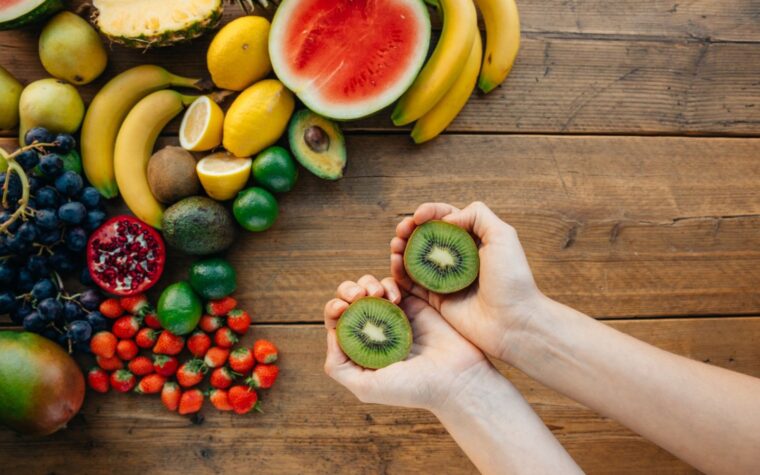
Fruit smoothies are usually the weakest option for weight loss, and a pure fruit-and-juice smoothie is often a setback. The problem is not fruit itself, which is fine whole. The problem is dose and form. Blending three bananas, a cup of mango, a handful of grapes, and a cup of orange juice can pack 60 to 90 grams of sugar into one glass, with the fiber partly disrupted and almost no protein or fat to slow it down.
Whole fruit comes with intact fiber, water, and a structure that forces you to chew and stops you at one or two pieces. Once you blend it, you can drink the sugar of five pieces of fruit in 90 seconds. That is why “is fruit smoothies good for weight loss” gets a heavily qualified answer: fruit belongs in a weight-loss smoothie, but as a flavor accent (half a banana, a handful of berries), not the whole base.
If you keep the fruit to about one serving and build the rest of the glass around protein, fiber, and water, fruit becomes a helper instead of the saboteur.
Are protein smoothies good for weight loss?
Protein smoothies are the version most likely to help, and they are the only style worth defaulting to if weight loss is the goal. Protein is the most satiating macronutrient, it costs more energy to digest (the thermic effect of protein is roughly 20 to 30 percent of its calories versus 5 to 10 percent for carbs), and it protects muscle while you are in a deficit. That last point matters more than people realize, because losing muscle slows your metabolism and makes the weight easier to regain.
A good rule: aim for 25 to 40 grams of protein per smoothie. That usually means a scoop of whey or plant protein, or about a cup of Greek yogurt or a half block of silken tofu. The difference in hunger between a 5-gram-protein fruit smoothie and a 30-gram-protein smoothie is dramatic. One leaves you raiding the pantry by 10 a.m.; the other carries you to lunch.
So if you take one thing from this article, it is this: a smoothie without real protein is a snack pretending to be a meal.
Are smoothies healthy and good for weight loss, or can they be bad?
The same smoothie can be healthy or harmful depending on three variables: total calories, protein content, and whether it replaces a meal or stacks on top of one. “Are smoothies bad for weight loss” is a fair question, because three common mistakes turn a health drink into a weight-gain drink.
- It is an extra, not a swap. A 300-calorie smoothie is great if it replaces a 500-calorie lunch. It is a problem if you drink it between meals.
- Hidden calorie bombs. Nut butters, honey, granola, sweetened yogurt, fruit juice, and coconut milk add up fast. Two tablespoons of peanut butter alone is about 190 calories.
- Smoothie-shop sizing. Many chain smoothies are 400 to 900 calories once you count the sherbet, frozen yogurt, juice base, and large size.
A smoothie is healthy and supports weight loss when it is a controlled, protein-rich meal replacement. It works against you when it is a sugary add-on you sip while telling yourself it is virtuous.
The hidden calories that quietly wreck a “healthy” smoothie
Most smoothies that stall people are not sabotaged by fruit. They are sabotaged by the “healthy” extras that get eyeballed by the spoonful. These add-ons are genuinely nutritious in small amounts, but they are calorie dense, and a generous hand turns a 300-calorie meal into a 700-calorie one without changing how full you feel. Here is what the common culprits actually cost.
| Common add-in | Typical serving | Approx. calories |
|---|---|---|
| Peanut or almond butter | 2 tablespoons | 190 to 200 |
| Canned coconut milk | 1/2 cup | about 220 |
| Granola topping | 1/4 cup | 120 to 150 |
| Sweetened yogurt | 1 cup | 150 to 250 |
| Fruit juice base | 1 cup | 110 to 120 |
| Honey or agave | 1 tablespoon | about 60 |
| Medjool date | 1 date | about 65 |
| Olive or MCT oil | 1 tablespoon | about 120 |
Notice the trap. Stack two tablespoons of nut butter, a couple of dates, and a juice base and you have added over 400 calories of mostly fat and sugar to a drink you still think of as “just a smoothie.” The fix is not to ban these ingredients. It is to measure them with a spoon and a scale for two weeks until your eye recalibrates. Almost everyone who does this discovers their “one spoonful” of almond butter was closer to two.
What smoothies are good for weight loss, and what are the best ones?
The best weight-loss smoothies share a formula, not a specific recipe. Hit these four pillars and the exact ingredients barely matter: lean protein, high fiber, low added sugar, and enough water or ice for volume without calories. Here is the build template I give people who ask what the best smoothies for weight loss are.
| Component | Target per smoothie | Good choices |
|---|---|---|
| Protein | 25 to 40 g | Whey or plant protein powder, Greek yogurt, silken tofu, cottage cheese |
| Fiber and greens | 8 to 12 g | Spinach, kale, chia or flax seeds, frozen cauliflower, a little oat |
| Fruit (flavor only) | About 1 serving | Half a banana, a cup of berries, a few frozen cherries |
| Liquid | Low calorie | Water, unsweetened almond milk, plain kefir |
| Avoid or limit | Keep near zero | Fruit juice, honey, agave, sherbet, sweetened yogurt |
A reliable default that lands around 320 calories with 30-plus grams of protein and 10 grams of fiber: one scoop protein powder, one cup unsweetened almond milk, a big handful of spinach, half a frozen banana, half a cup of frozen berries, and a tablespoon of chia seeds. Blend with ice. That is the answer to “what are the best smoothies for weight loss” in one glass: protein and fiber forward, sugar dialed down, real volume.
How to make smoothies and healthy fruit smoothies for weight loss
To make a weight-loss smoothie, build it in a fixed order so the macros stay honest. People who ask how to make healthy smoothies for weight loss usually go wrong by starting with fruit and juice and then wondering why it is 600 calories. Reverse the order.
- Start with protein. Add your scoop, yogurt, or tofu first. This anchors the whole drink.
- Add fiber and greens. A handful of spinach (you will not taste it), plus chia or flax. This is how you make fruit smoothies for weight loss that actually keep you full.
- Add fruit last, and measure it. Half a banana or one cup of berries, not the whole bunch. This is the single biggest lever for healthy fruit smoothies for weight loss.
- Use a low-calorie liquid. Water or unsweetened almond milk, never juice.
- Add ice for volume. A thicker, colder, larger drink feels more like a meal and slows your sipping.
That sequence is really all there is to how to make weight loss smoothies. Lock the protein and fiber, treat fruit as seasoning, and skip liquid sugar.
A realistic day: how a smoothie swap creates a real deficit
Formulas are easy to nod along to and hard to picture, so here is a concrete before and after for one ordinary person. Take a 34-year-old office worker who currently starts the day with a large flavored latte and a pastry, roughly 550 calories, and is hungry again by 10:30. She is not overeating out of greed. The breakfast is fast sugar with almost no protein, so it never held her.
She swaps that for the default smoothie built earlier: one scoop of protein powder, unsweetened almond milk, a big handful of spinach, half a frozen banana, half a cup of berries, and a tablespoon of chia, blended with ice. That is about 320 calories with roughly 30 grams of protein and 10 grams of fiber. Two things happen at once. First, she cut about 230 calories at breakfast. Second, and this is the part people miss, the protein and fiber carry her to lunch, so she stops the 10:30 vending-machine snack that was quietly adding another 250 calories.
Add those up and the single swap removes roughly 400 to 500 calories from her day without any hunger or willpower fight, because the new breakfast is more filling than the old one. Over a week that is a meaningful chunk of a deficit, and it is repeatable because it takes two minutes and tastes good. That is the entire mechanism. Not fat burning, not a magic ingredient. A more filling meal in the slot where she was weakest, which then prevents the downstream snacking.
Now run the failure version. Same woman keeps the latte and pastry, then adds a 24-ounce mango-juice smoothie mid-afternoon because it feels healthy. She has now added 500 calories to an unchanged day and wonders why the scale creeps up. Identical drink category, opposite result, decided entirely by whether it replaced something or piled on top.
Can smoothies help with weight loss, and when should you drink them?
Yes, smoothies can help with weight loss when they replace a meal you would otherwise overeat, and the best time to drink one is in place of your weakest eating window. For most people that is breakfast, where the alternative is a pastry or a drive-through, or a hectic lunch where the alternative is takeout. A 300- to 400-calorie protein smoothie there is an easy, repeatable swap.
On timing, do not overthink “when to drink smoothies for weight loss.” There is no fat-burning hour. A smoothie as a pre-workout or post-workout meal is reasonable because protein supports recovery, but the meal-replacement effect is what drives results, not the clock. The trap is the mid-afternoon “healthy” smoothie on top of three full meals, which just adds calories.
And to answer the blunt versions directly: do smoothies help with weight loss? Only as a swap. Is drinking smoothies good for weight loss every day? Fine, if it is replacing a meal and built right. Otherwise it is liquid calories you did not need.
Common mistakes: why the scale stalls even on “clean” smoothies
Most people who plateau on a smoothie habit are making one of a handful of fixable errors, and a few are stuck for reasons no recipe can fix. Start with the recipe mistakes:
- Adding, not replacing. The number one error. The smoothie has to take the place of a meal.
- No protein. A fruit-only smoothie leaves you hungry within an hour and you eat it all back.
- Juice and sweeteners. Orange juice, honey, and agave can double the sugar invisibly.
- Portion drift. A 16-ounce glass becomes a 28-ounce mega-blend over a few weeks.
- Eyeballing nut butter and oats. A “spoonful” of almond butter is often two, which is 200 calories.
Smoothies sit alongside other viral diet hacks people try, like the Gelatin Weight Loss Recipe, the Pink Salt Trick for Weight Loss, or asking whether ginger helps with weight loss. The pattern is always the same: a single food or trick rarely moves the needle on its own. Smoothies are slightly better than most because a well-built one is a real, satiating, protein-rich meal, not a placebo. But the glass is still just a tool.
Here is the part the recipe blogs never tell you. Sometimes you do everything right, the smoothies are perfect, the deficit is real, and the scale still will not move. That is usually not a willpower problem or a recipe problem. It is a metabolic one. An underactive thyroid can slow your metabolism enough to stall fat loss even in a deficit. Insulin resistance and high fasting insulin can make fat stubborn and hunger relentless. PCOS, perimenopause, low testosterone, and chronically high cortisol all tilt the system against you. None of these show up in your blender. They show up in your blood.
If the scale will not move no matter how clean you eat, it is usually worth seeing your actual numbers before blaming yourself. A full-body panel that checks fasting insulin, A1C, thyroid, and cortisol can reveal in one draw what months of smoothie tweaking never will. You can also see how a full lab membership works in our full review.
Comparison: a weight-loss smoothie vs. a typical fruit smoothie
Two glasses can look almost identical and behave completely differently in your body. This is the difference between a smoothie that helps and one that quietly stalls you.
| Feature | Built-for-weight-loss smoothie | Typical fruit-shop smoothie |
|---|---|---|
| Calories | 300 to 400 | 500 to 900 |
| Protein | 25 to 40 g | 2 to 8 g |
| Fiber | 8 to 12 g | 2 to 4 g |
| Added sugar | Near zero | 40 to 70 g |
| Fullness at 90 minutes | Still satisfied | Hungry again |
| Role in the day | Replaces a meal | Adds to three meals |
Same category, opposite outcome. The label “smoothie” tells you nothing. The macros tell you everything.
So who should lean on smoothies, and who should look deeper? Protein smoothies are a smart tool for busy people who skip or overeat at one meal, for anyone who struggles to hit a protein target, and for people who want a portion-controlled, repeatable swap. If your problem is a chaotic breakfast or a takeout lunch, a built-right smoothie can genuinely help you lose weight by closing that gap day after day.
But if you are already eating in a clear deficit and the weight is not coming off, the smoothie is not your problem. Years of nutrition advice treat everyone as if their metabolism is identical, and it is not. People with thyroid disorders, insulin resistance, PCOS, or hormonal shifts in their 40s and 50s often need a medical workup, not another recipe. The honest move is to measure your hormones and metabolic markers, then act on real data. Talk to a clinician before making big changes, especially if you suspect a thyroid or insulin issue, since those are treatable once they are identified.
Which numbers to check when clean smoothies stop working
If you have run a genuinely tight diet for two months, protein-forward smoothies and all, and the scale is frozen, that is the moment to stop tweaking recipes and start measuring. A stalled scale on a real deficit is usually one of a small set of measurable problems, not a character flaw. Here is what to look at, with the standard reminder that reference ranges vary by lab and a clinician reads them alongside your symptoms.
- Thyroid panel (TSH, free T4, free T3). An underactive thyroid slows metabolism and is a classic hidden cause of stubborn weight, along with fatigue, feeling cold, and thinning hair. TSH commonly runs about 0.4 to 4.0 mIU/L, and many people feel and lose better in the lower half of that band.
- Fasting insulin. This can be high for years while fasting glucose still looks fine, and elevated insulin makes fat stubborn and hunger loud. It is one of the most useful and most overlooked numbers for a stall.
- A1C and fasting glucose. A1C reflects roughly three months of average blood sugar. The standard cutoffs are under 5.7 percent normal, 5.7 to 6.4 percent prediabetes, and 6.5 percent or higher in the diabetes range. A creeping A1C often travels with insulin resistance.
- Sex hormones. PCOS in women, low testosterone in men, and the estrogen shifts of perimenopause all change where fat is stored and how hunger behaves. None of it responds to a better blender.
- Cortisol. Chronically high cortisol from poor sleep, stress, or over-restriction raises appetite and pushes fat toward the belly.
The point is not to self-diagnose from a chart. It is that these are treatable once identified, and you cannot see any of them in your food log. If insulin, thyroid, or hormones are the real brake, the fix is a clinical one, and knowing that saves you months of blaming your willpower for a problem that lives in your bloodwork.
Want a real clinician to run the numbers, not a guess?
Joi + Blokes is a telehealth clinic that prescribes GLP-1 medication (Zepbound, compounded semaglutide and tirzepatide), hormone therapy (TRT, HRT), thyroid care, and peptides after a real lab panel and clinician review, with no membership or consult fee (prescriptions from about $59/month, lab panels from $149). If the scale will not budge, this is where you find out whether insulin, thyroid, or hormones are the real reason. Here is Joi + Blokes reviewed in full.
FAQ
Is it good to drink smoothies every day for weight loss?
It can be, if each smoothie replaces a meal and is built with protein, fiber, and minimal added sugar. A daily 300- to 400-calorie protein smoothie that swaps out a heavier meal is a sustainable habit. A daily fruit-and-juice smoothie added on top of normal meals will work against you.
Are smoothies bad for weight loss?
Smoothies are only bad for weight loss when they are high in sugar, low in protein, and consumed in addition to your regular meals. The drink itself is neutral. The mistake is treating a 600-calorie sugary blend as if it were a free health bonus rather than a meal-sized hit of calories.
What is the best time to drink a smoothie for weight loss?
The best time is whenever it replaces your weakest meal, usually breakfast or a rushed lunch. There is no special fat-burning window. The benefit comes from swapping out a meal you would otherwise overeat, not from the hour on the clock.
How many calories should a weight-loss smoothie have?
Aim for roughly 300 to 400 calories with at least 25 grams of protein and 8 grams of fiber. That range keeps it meal-sized and filling without overshooting. Anything above 500 calories starts to look more like a dessert than a tool for losing weight.
Do green smoothies help with weight loss?
Green smoothies help when the greens are paired with protein, because spinach and kale add fiber and volume for almost no calories. On their own, greens blended with a lot of fruit and juice are still a sugar-heavy drink. Add a scoop of protein and the green smoothie becomes a genuine weight-loss meal.
Is a smoothie better than eating whole fruit for weight loss?
Whole fruit is usually better, because intact fiber and the act of chewing make it more filling and harder to overconsume. Blending lets you drink the sugar of several pieces of fruit in seconds with weaker fullness signals. A smoothie wins only when it is engineered as a protein-rich meal replacement, not when it is just blended fruit.
Can a meal-replacement smoothie really replace a meal?
Yes, if it contains the building blocks of a meal: 25 to 40 grams of protein, 8 or more grams of fiber, and enough volume to feel satisfying. A drink that is mostly fruit is a snack, not a meal, and it will leave you hungry soon after. The protein and fiber are what make the swap hold.
Why am I not losing weight even though I drink healthy smoothies?
The most common reasons are that the smoothie is being added rather than swapped, that it is higher in calories than you think, or that you are not actually in a deficit across the day. If your diet is genuinely tight and the scale still will not move, an underactive thyroid, insulin resistance, or a hormonal issue may be the real cause, and those need a blood test, not a recipe change.
Are smoothies or juices better for weight loss?
Smoothies are better, because they keep the whole fruit including its fiber, while juicing strips the fiber and leaves concentrated sugar. Even so, a fiber-heavy smoothie with no protein is still a weak choice. The strongest option is a protein smoothie, and the weakest is straight fruit juice.
What protein powder is best for a weight-loss smoothie?
The best one is simply a protein you will drink consistently that is low in added sugar. Whey concentrate and isolate are well absorbed and high in the amino acid leucine that supports muscle, while pea, soy, or a plant blend works fine for anyone avoiding dairy. Check the label for around 20 to 30 grams of protein per scoop and minimal added sugar. Brand matters far less than picking one you like enough to use every day.
Will a smoothie spike my blood sugar?
A fruit-and-juice smoothie can cause a fast blood sugar rise because blending disrupts fiber and delivers sugar quickly in liquid form. You blunt that sharply by anchoring the drink with protein, adding fiber from greens and chia or flax, keeping fruit to about one serving, and skipping juice, honey, and agave. Built that way, the same glass releases its energy far more slowly and keeps you fuller.
Can I use a smoothie as a post-workout meal for weight loss?
Yes, and it is one of the better uses. A protein smoothie after training supplies the protein your muscles use to recover while staying portion controlled, which helps you hold onto muscle in a deficit. Just keep it inside your calorie budget for the day rather than treating it as a bonus on top of your normal meals. The recovery benefit does not cancel the calories.