Quick answer: If you want to know how to take berberine for weight loss, most studies use 500 mg two to three times a day (a total of 1,000 to 1,500 mg), swallowed with food right before or during a meal to blunt the post-meal glucose spike and reduce stomach upset. Berberine is not a fat-loss drug. In trials it produces modest weight change, often in the range of about 5 pounds over three months, mostly in people who already have insulin resistance, prediabetes, or PCOS. If the scale will not move at all, the real lever is almost never a supplement, it is your metabolic numbers, and those need a lab, not a guess.
Does berberine help weight loss, or is it hype?
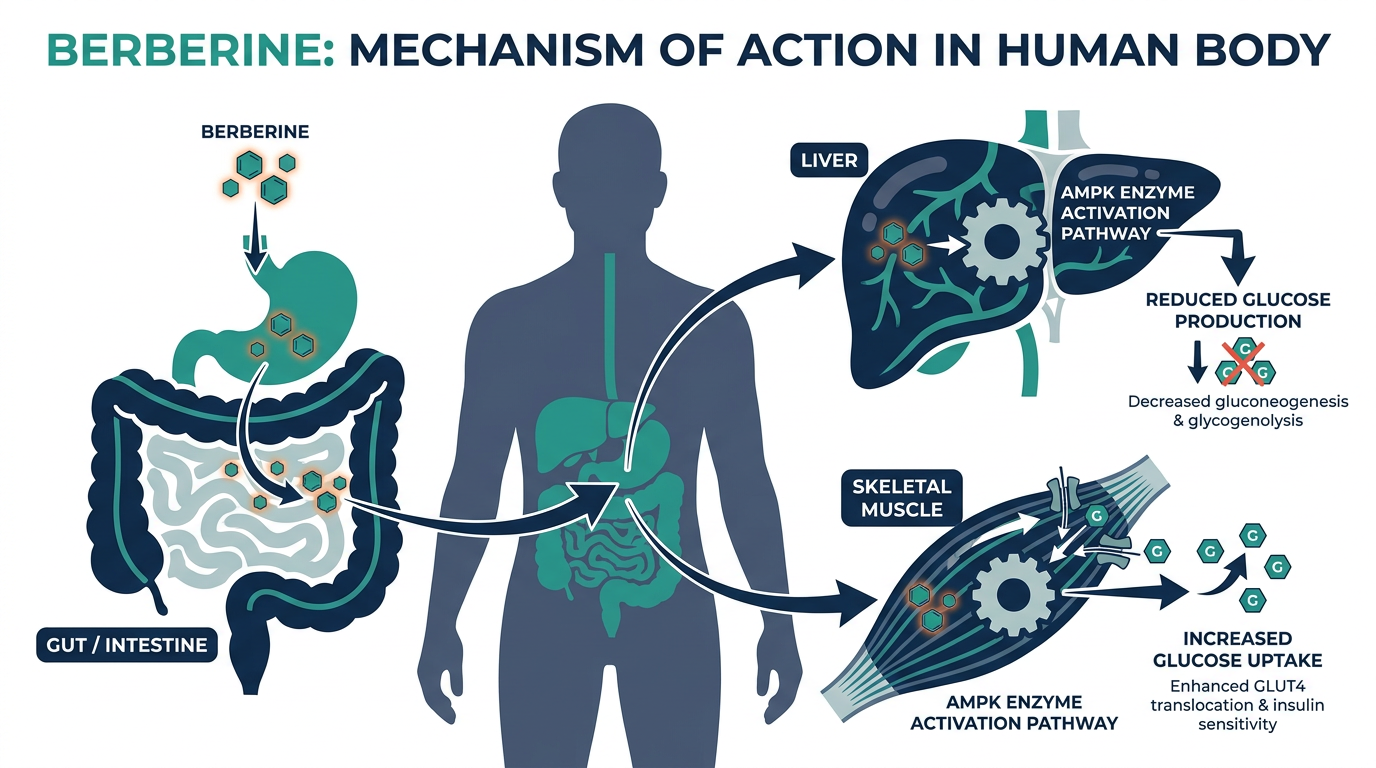
Berberine helps a little, and only for some people. It is a plant compound (from goldenseal, barberry, and Oregon grape) that activates an enzyme called AMPK, the same metabolic switch that exercise and the diabetes drug metformin flip on. That is the real reason it has any effect at all. When AMPK is active, cells pull glucose out of the blood more efficiently, the liver makes less new sugar, and fat storage signaling quiets down.
Before you dose berberine and hope, a full panel can show whether your blood sugar markers actually need the help. One at-home Superpower draw checks 100+ biomarkers, physician-reviewed.
The honest read of the research: a 2020 meta-analysis pooling roughly a dozen randomized trials found berberine produced small but real reductions in body weight, BMI, and waist circumference, on the order of a few pounds over 8 to 12 weeks. The people who responded best were not lean gym-goers chasing the last 5 pounds. They had measurable metabolic dysfunction: type 2 diabetes, prediabetes, fatty liver, or polycystic ovary syndrome. In healthy-weight people with normal blood sugar, berberine does close to nothing for the scale.
So the viral nickname “nature’s Ozempic” is wrong on two counts. Ozempic and Wegovy (semaglutide) drove about 15% average body-weight loss in the STEP trials, and Zepbound (tirzepatide) hit north of 20% in the SURMOUNT trials. Berberine, at its best, is in the low single digits of percent. Different universe. If a TikTok promised you GLP-1 results from a $20 bottle, that was the hype talking.
How to take berberine for weight loss: how much per dose
The dose used in almost every credible trial is 500 mg, taken two or three times per day, for a total of 1,000 to 1,500 mg daily. That total is the number that matters, not any single capsule. Going higher than 1,500 mg has not been shown to help more, and it sharply increases the odds of digestive misery.
Why split it? Berberine has a short half-life, so a single big dose clears your system fast and tends to hammer your gut all at once. Spreading it across meals keeps blood levels steadier and is far gentler on digestion. A practical ramp that avoids the classic first-week cramps and diarrhea:
- Days 1 to 4: 500 mg once a day, with your largest meal.
- Days 5 to 9: 500 mg twice a day, with two meals.
- Day 10 onward: 500 mg three times a day if you tolerate it, otherwise hold at twice a day.
If you ever wonder how much berberine you should take for weight loss and you see a label pushing 2,000 mg or more, that is a marketing flex, not a research-backed dose. More is not better here. It is just more bathroom trips.
When should I take berberine for weight loss?
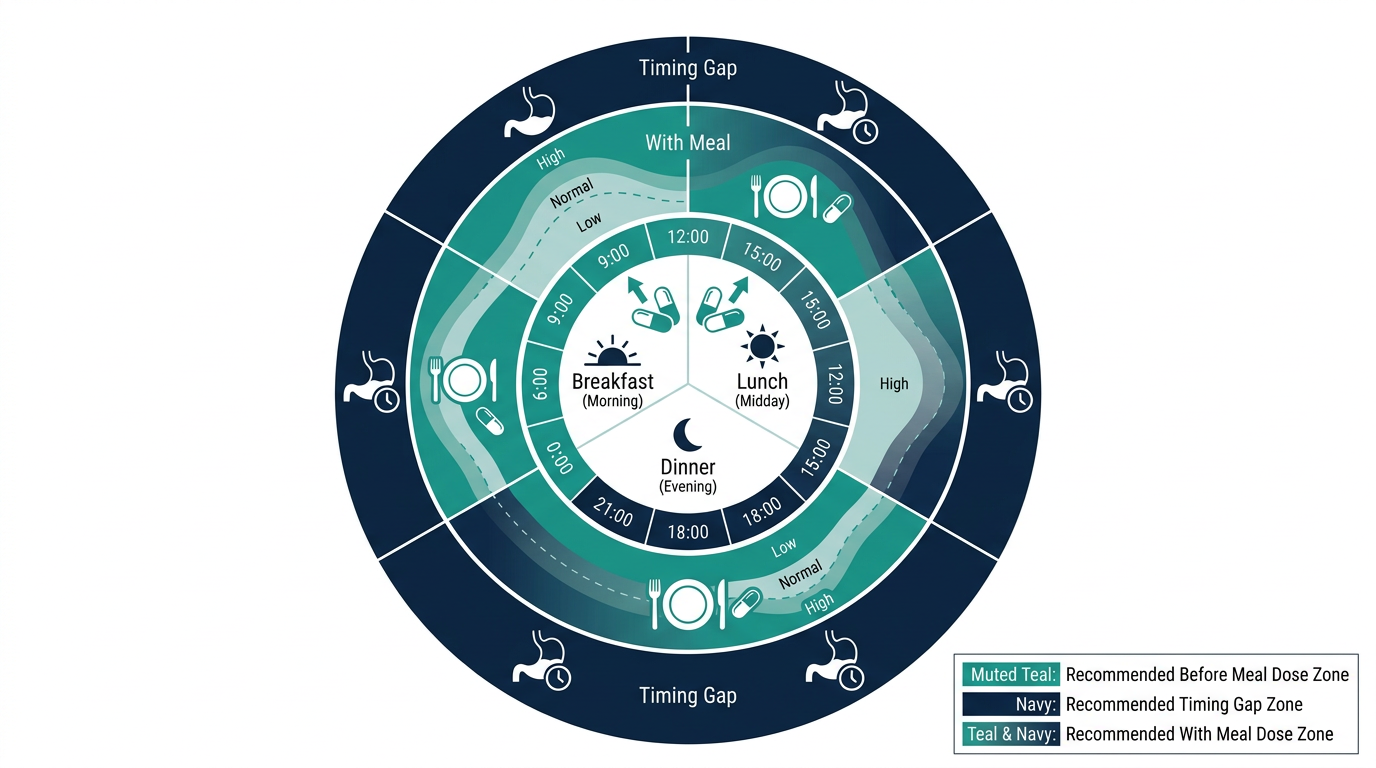
Take berberine right before or with meals, ideally the meals with the most carbohydrate. Berberine’s main trick is dampening the glucose and insulin spike that follows a meal, so timing it to a meal is where it earns its keep. Taking it on an empty stomach mostly just upsets your stomach and wastes the dose on a moment when there is no glucose surge to blunt.
One nuance most blog posts skip: berberine interferes with the enzyme system (CYP3A4) that clears many prescription drugs, which is why it can raise levels of statins, some blood pressure meds, and others. Spacing it with food does not fix a drug interaction, so this is the line where it matters: talk to a clinician or pharmacist before starting berberine if you take any prescription medication.
How to use berberine for weight loss the right way
Knowing how to take berberine for weight loss is half the job; using it well is the other half, and that means treating it as a metabolic helper, not a fat burner. Here is the realistic protocol that mirrors how it was studied:
- Pair it with the eating change, not instead of it. In trials, berberine sat on top of a calorie-reduced diet. The supplement nudged insulin sensitivity, the diet did the actual weight loss. No bottle out-eats a surplus.
- Give it 8 to 12 weeks before you judge it. Berberine works on insulin signaling and the gut, both of which shift slowly. Two weeks tells you nothing except how your stomach feels.
- Track a number, not just the scale. Because berberine works through blood sugar, fasting glucose or HbA1c is a better progress signal than weight alone. If those improve, it is doing its job even if the scale moves slowly.
- Cycle if you want, but it is optional. Some people run 8 to 12 weeks on, a few weeks off. There is no strong evidence you must, but there is also no benefit to taking it forever if your numbers have normalized.
If you are already stacking supplements, it helps to know which ones actually have evidence behind them. We have looked at the real data on whether green tea helps with weight loss and on whether apple cider vinegar does anything, and the short version is that most of the popular ones do far less than the marketing claims.
What is the best berberine for weight loss, and which form to buy
The simplest way to actually get this done
Superpower is a full-body lab membership that runs 100+ biomarkers, has each result reviewed by a doctor, and tracks your numbers year over year (about $199/year). It is what we point readers to when they would rather get one clean, complete draw than chase single tests one at a time. Here is superpower reviewed in full.
The best berberine for weight loss is plain berberine hydrochloride (HCl) at a verified 500 mg per dose from a brand that does third-party testing. That is the form used in the research, it is the cheapest, and it works. You do not need an exotic version.
The marketing problem is that brands invent fancier forms to justify a higher price. Here is how the common types actually stack up:
| Form | What it is | Evidence for weight loss | Worth paying extra? |
|---|---|---|---|
| Berberine HCl | Standard form used in nearly all trials | Strongest, this is the studied one | No, it is already the cheapest |
| Dihydroberberine | Pre-converted, claims better absorption | Early/limited; smaller doses may work, less human weight data | Only if HCl wrecks your gut |
| Berberine phytosome | Bound to a fat carrier for absorption | Some absorption data, thin weight-loss data | Usually not |
| Goldenseal/barberry extract | Whole-plant source, variable berberine content | Dose is unreliable, hard to hit 1,500 mg | No, you cannot trust the dose |
When people ask what type of berberine is best for weight loss, the only honest upgrade is dihydroberberine, and only because it absorbs better, so a smaller dose (often around 100 to 200 mg) can match standard berberine with less stomach upset. If your gut tolerates HCl fine, save your money. For deciding which berberine is best for weight loss in practice, the deciding factors are: a 500 mg verified dose, a third-party testing seal (USP, NSF, or a posted certificate of analysis), and no proprietary blend hiding the real amount.
What to take with berberine for weight loss
The best thing to take with berberine is food, specifically your carb-containing meal, because that is when it works. Beyond that, a few pairings have a rationale, and several popular ones do not.
- Fiber (worth it): Soluble fiber slows glucose absorption through a different mechanism, so it complements berberine’s blood-sugar effect and helps with the appetite control berberine itself does not provide. Timing fiber with meals does more than most “fat burner” capsules. The same logic is why chia seeds can help with weight loss when used as a pre-meal fiber load rather than a magic food.
- Vitamin D and B12 (worth checking): Not fat burners, but common deficiencies that quietly stall energy and metabolism. It is worth knowing your levels. We break down which vitamins actually matter for weight loss and which are wishful thinking.
- Creatine (situational): It supports muscle and training, which protects metabolic rate during a diet, though creatine itself does not cause fat loss and can briefly bump the scale from water.
- Skip the kitchen-sink “metabolism” blends. Stacking berberine with green tea extract, raspberry ketones, and a dozen other label-fillers does not multiply results. It multiplies side effects and cost.
Before you buy another bottle, find out if berberine even fits your body
Hundred is an annual membership that runs 100+ advanced labs, builds a clinician-reviewed 100-day action plan covering nutrition, supplements and lifestyle, and gives member pricing on the supplements it recommends (about $199/year). Berberine only earns its place when your fasting glucose, insulin, and HbA1c say you have the insulin resistance it actually targets, and Hundred shows you those numbers before you guess. Here is Hundred reviewed in full.
What side effects should you expect, and how do you handle them?
Berberine’s reputation for wrecking digestion is earned, but the side effects are usually manageable once you know what is coming. The common ones are cramping, loose stools or diarrhea, constipation in the other direction, gas, and a bitter aftertaste. They cluster in the first week and tend to fade as your gut adapts. Nearly every one traces back to the same two mistakes: dosing too fast, or dosing on an empty stomach.
Here is how to head them off before they make you quit:
- Ramp slowly. The one-to-three-dose progression above exists for exactly this reason. Your gut needs a week to adjust, not a day.
- Always take it inside a meal, not just near one. Food buffers the direct contact with your gut lining and is the difference between a mild dose and a rough one.
- If diarrhea hits, drop back one dose level for a few days, then climb again. Most people can reach the full amount on the second attempt.
- If constipation shows up instead, add water and soluble fiber rather than pushing the dose higher.
- Keep the doses hours apart, not stacked together, so blood levels stay steady instead of spiking.
Two effects deserve more caution than a stomachache. Because berberine lowers blood sugar, combining it with a glucose-lowering drug such as metformin, a sulfonylurea, or insulin can push you too low, so that combination belongs under a clinician’s eye. And the CYP3A4 interaction covered earlier is not a digestion problem at all, it is a drug-level problem, which is the real reason the prescription warning is not just boilerplate.
Why people stall on berberine: the common mistakes
Most people who say berberine “did nothing” made one of a handful of predictable mistakes. None of them are about willpower.
A realistic example makes the pattern obvious. Picture two people who buy the same bottle. The first is 45, with a fasting glucose sitting in the prediabetic range, a bit of belly weight, and a family history of type 2 diabetes. She ramps to 1,500 mg with meals, tightens her carbohydrates, and over ten weeks her fasting glucose drifts down while she loses a few pounds without much drama. The second is a 27-year-old runner with normal blood sugar who takes the identical dose hoping to lean out for summer. He gets a week of cramps and no scale movement, because there was no broken glucose pathway for berberine to repair. Same supplement, same dose, opposite results, and the only thing that predicted the difference was a lab value neither of them had to guess at.
- They were not insulin resistant to begin with. This is the big one. Berberine works on a problem you may not have. A lean 28-year-old with normal blood sugar will see almost no scale change, because there is no broken glucose pathway for it to fix. Without a lab, you are buying a wrench for a bolt that may not exist.
- They underdosed. One 500 mg capsule a day is a third of the studied amount. People take it once, get a stomachache, and never ramp to the effective 1,000 to 1,500 mg total.
- They took it on an empty stomach. No meal, no glucose spike to blunt, just side effects.
- They expected GLP-1 results. Berberine does not strongly suppress appetite the way semaglutide does. If you are eating the same amount, the math does not change much.
- The real problem was thyroid, not insulin. A stalled scale despite “doing everything right” is very often an underactive thyroid (low T3/T4, high TSH) or a hormonal shift in perimenopause. No amount of berberine touches a thyroid problem. This is the classic case of treating a symptom while the actual lever sits unmeasured in your bloodwork.
That last point is the whole reason this site keeps coming back to one idea: most weight-loss failure is a measurement failure. People self-experiment with supplements and peptides for months when one round of labs would have told them whether the issue was insulin, thyroid, cortisol, or simply calories. If the scale will not move no matter what you eat, it is usually worth seeing your actual numbers first. An at-home option like Everlywell can check thyroid and metabolic markers without a clinic visit, and a fuller panel from Superpower covers more of the metabolic picture in one draw.
If you do run labs, these are the numbers that tell you whether berberine is aimed at a real target. Fasting glucose and HbA1c show your average blood sugar. Fasting insulin, and the HOMA-IR calculation it feeds, measure insulin resistance itself, which is the specific thing berberine acts on. Triglycerides and the triglyceride-to-HDL ratio give a cheap read on metabolic health. A full thyroid panel of TSH, free T3, and free T4 rules out the underactive thyroid that so often masquerades as a “berberine did nothing” stall. One caveat worth repeating: optimal ranges are usually tighter than the wide “normal” flags a lab prints, and reference ranges differ between labs, so read the trend across two draws rather than fixating on a single value near the edge.
Who should and should not use berberine
Berberine makes the most sense for people with measured insulin resistance, prediabetes, fatty liver, or PCOS who are also changing their diet. It makes the least sense for everyone else.
| Situation | Berberine likely to help? | Better first move |
|---|---|---|
| Prediabetes / high fasting glucose | Yes, this is its sweet spot | Confirm with HbA1c, then add berberine to a diet change |
| PCOS with insulin resistance | Often yes | Work with a clinician; it can affect cycles and meds |
| Lean, normal blood sugar | Probably not | Focus on training and protein, not a supplement |
| Scale stalled despite clean diet | Unknown until tested | Run thyroid and insulin labs first |
| On statins or other prescriptions | Caution, interaction risk | Clear it with your pharmacist before starting |
| Pregnant or breastfeeding | No, avoid it | Do not take berberine |
If you want real GLP-1-level weight loss, that is a clinical conversation, not a supplement aisle. The safe route is a supervised telehealth clinician who runs labs and prescribes an FDA-approved drug like Wegovy or Zepbound where appropriate. Compounded semaglutide and tirzepatide are legally prescribed through licensed pharmacies, but they are not FDA-approved products, so the gray-market versions sold without a clinician are exactly what to avoid.
Turn what you just learned into action.
Superpower lets you test 100+ biomarkers from home, then re-check them over time so you can actually see progress, physician-reviewed at every step.
Want a real clinician to run the numbers, not a guess?
Joi + Blokes is a telehealth clinic that prescribes GLP-1 medication (Zepbound, compounded semaglutide and tirzepatide), hormone therapy (TRT, HRT), thyroid care, and peptides after a real lab panel and clinician review, with no membership or consult fee (prescriptions from about $59/month, lab panels from $149). If the scale will not budge, this is where you find out whether insulin, thyroid, or hormones are the real reason. Here is Joi + Blokes reviewed in full.
FAQ
How much berberine should you take for weight loss per day?
The researched dose is 1,000 to 1,500 mg total per day, split into 500 mg doses taken two or three times with meals. Start at one dose a day and ramp up over a week to limit digestive side effects. Going above 1,500 mg has not been shown to add benefit.
What dose of berberine is best to start with?
Start with 500 mg once a day with your largest meal for the first few days, then add a second and eventually a third 500 mg dose as your stomach adjusts. The slow ramp is the single best way to avoid the cramping and diarrhea that make people quit in week one.
When is the best time to take berberine for weight loss?
Take it right before or during meals, especially carb-heavy ones, because berberine works by blunting the after-meal glucose spike. Taking it on an empty stomach mostly causes side effects without the metabolic payoff.
Does berberine really work for weight loss?
It works modestly and mainly in people with insulin resistance, prediabetes, or PCOS, producing a few pounds of loss over 8 to 12 weeks in studies. In people with normal blood sugar it does very little. It is a metabolic helper, not a fat-loss drug, and nowhere near GLP-1 medications.
What is the best type of berberine for weight loss?
Plain berberine HCl at a verified 500 mg per dose is the best choice because it is the form used in the trials and the cheapest. Dihydroberberine is the only worthwhile upgrade, and only if standard berberine upsets your stomach, since it absorbs better at a smaller dose. Avoid whole-plant goldenseal or barberry extracts where the actual berberine amount is unreliable.
What should you take with berberine for weight loss?
Take it with food, and pair it with soluble fiber, which slows glucose absorption and helps the appetite control berberine lacks. Check vitamin D and B12 if you are low, since deficiencies quietly drag on energy. Skip multi-ingredient “metabolism” blends, which add cost and side effects without added results.
Can I take berberine with other medications?
Be careful. Berberine slows the CYP3A4 enzyme system that clears many drugs, so it can raise blood levels of statins, some blood pressure medications, and others. Talk to a clinician or pharmacist before combining it with any prescription, and never start or stop a medication on your own.
How long until berberine shows results?
Give it 8 to 12 weeks before judging, since it works gradually through insulin signaling and the gut. A faster signal that it is working is an improvement in fasting glucose or HbA1c, which is why tracking a lab number beats watching the scale day to day.
Is berberine the same as Ozempic?
No. The “nature’s Ozempic” label is marketing. Semaglutide (Ozempic, Wegovy) drove about 15% average weight loss in the STEP trials and tirzepatide (Zepbound) over 20% in SURMOUNT, while berberine produces low single-digit percent loss at best and works through a completely different mechanism.
Is berberine safe to take long term?
Short to medium term use at 1,000 to 1,500 mg is generally well tolerated, with digestive upset being the main complaint. Long-term safety data are limited, so many people cycle it for 8 to 12 weeks at a time, and there is little reason to take it indefinitely once your blood-sugar numbers have normalized. Avoid it entirely in pregnancy and breastfeeding.
Does berberine target belly fat specifically?
Not directly. Berberine does not burn fat in a chosen spot, and no supplement does. What it can do is improve insulin sensitivity, and because visceral belly fat is tightly linked to insulin resistance, people who carry that pattern sometimes see waist circumference shrink a little in the trials. The waistline change follows the metabolic improvement, it is not a spot-reduction effect.
Can berberine cause low blood sugar?
On its own, in someone not taking diabetes medication, true hypoglycemia is uncommon because berberine nudges glucose down modestly rather than forcing it. The real risk is combining it with metformin, a sulfonylurea, or insulin, where the effects stack and can drop you too low. If you take any glucose-lowering drug, only use berberine under a clinician who can adjust the doses together.
Is berberine as good as metformin?
They share a mechanism, since both activate AMPK, and some studies in metabolic conditions found comparable effects on blood sugar, which is where the “natural metformin” nickname comes from. But metformin is a regulated drug with decades of safety data and consistent dosing, while berberine is an unregulated supplement with variable product quality and mostly short-term evidence. If a clinician decides you need metformin, berberine is not a proven substitute. Think of it as a milder over-the-counter cousin, not an equal.
Does berberine work if you do not change your diet?
Barely. In the trials, berberine sat on top of a calorie-reduced diet, and it was the diet that did most of the weight loss. Taken alongside the same eating habits, berberine improves how your body handles glucose but does not create a calorie deficit by itself. If nothing else changes, expect the scale to stay roughly where it is.
Vital Signs Today may earn a commission if you buy through links on this page. It does not affect our editorial assessments.