Quick answer: The pink salt trick for weight loss is a morning drink, usually a glass of warm water with a pinch of Himalayan pink salt and a squeeze of lemon. It does not burn fat or melt away pounds. At best it improves hydration, can blunt appetite slightly because the water fills your stomach, and may help if you were genuinely low on electrolytes. Any quick drop on the scale is water weight, not fat. The real lever for losing weight is a calorie deficit, and the reason most people stall is a hormonal or metabolic problem a blood test can flag, not a missing salt recipe.
If you have seen the pink salt trick on TikTok, Facebook reels or in a flood of look-alike ads, you are not alone. Searches for what is the pink salt trick for weight loss spike every January and every summer. The pitch is seductive: one cheap kitchen ingredient, one glass of water, and the fat supposedly falls off. We have read the claims, the recipes, and the marketing pages behind them. Here is the honest breakdown of what the pink salt trick is, what is actually in it, whether it works, and what to do instead if the scale will not move.
The pink salt trick only shifts water weight, so what would actually moving your metabolic markers look like? One at-home Superpower draw checks 100+ biomarkers, physician-reviewed.
What is the pink salt trick for weight loss, exactly?
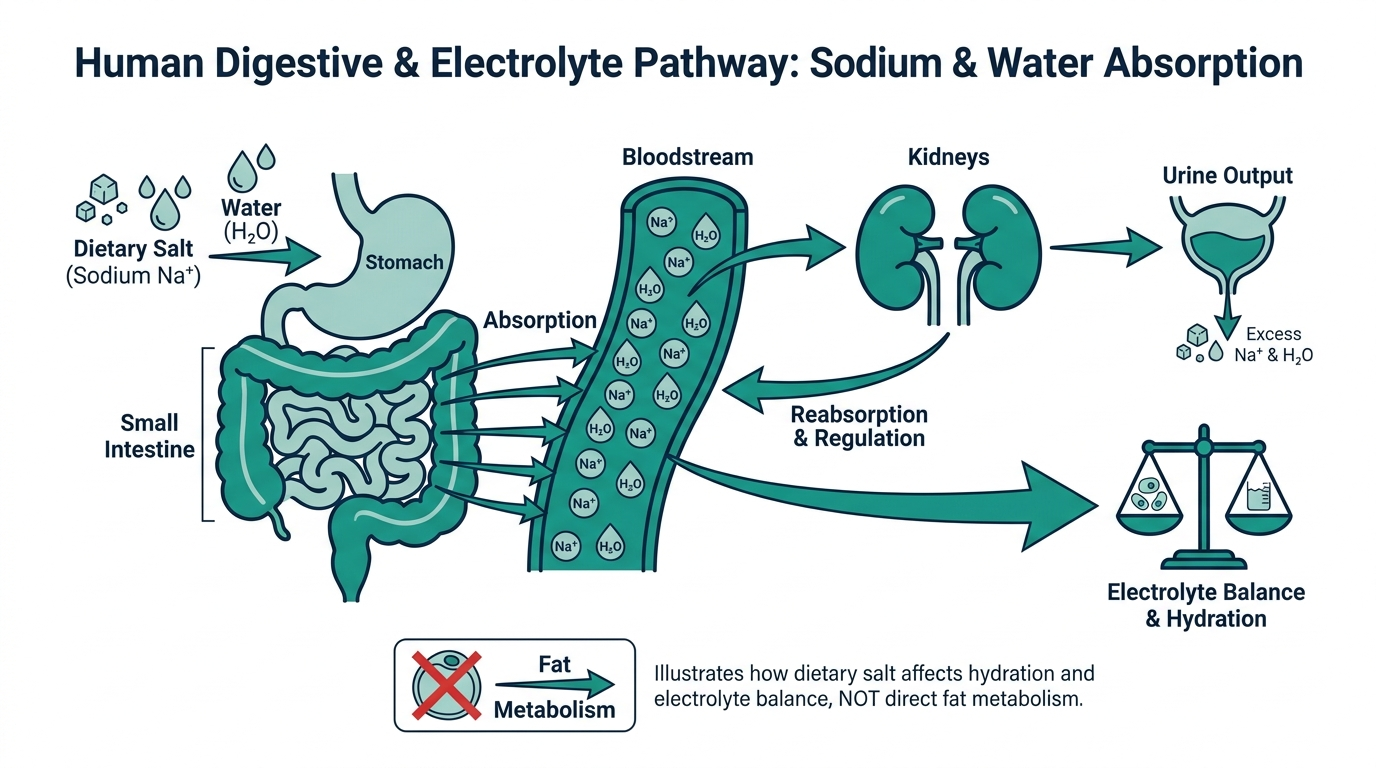
The pink salt trick is a simple homemade drink you take first thing in the morning, made from warm water, a small amount of Himalayan pink salt, and an acid like lemon or lime juice. That is the entire concept. There is no proprietary compound and no patented mechanism. The story attached to it is that pink salt “activates metabolism,” “balances hormones,” or “flushes fat,” and that drinking it on an empty stomach kick-starts fat burning for the day.
None of those metabolic claims hold up. Pink salt is roughly 98 percent sodium chloride, the same as table salt, plus trace minerals like potassium, magnesium and iron in amounts far too small to matter. It gets its color from iron oxide, basically rust. Drinking salty water does not turn on a fat-burning switch. What it can do is rehydrate you after a night of sleep and add a few electrolytes, which is mildly useful but not a weight-loss intervention.
It is worth separating the marketing from the recipe. The “pink salt trick” sold in ads is often a front for an affiliate offer or a supplement upsell. The actual drink people make at home is harmless in normal amounts. Both share a name, but only the home version is what most people mean when they ask what is the pink salt weight loss trick.
What is in the pink salt trick and how do you make it?
The simplest way to actually get this done
Superpower is a full-body lab membership that runs 100+ biomarkers, has each result reviewed by a doctor, and tracks your numbers year over year (about $199/year). It is what we point readers to when they would rather get one clean, complete draw than chase single tests one at a time. Here is superpower reviewed in full.
The pink salt trick recipe is short, which is part of its appeal. Here is the standard version people share, so you can see exactly what is in the pink salt trick for weight loss.
- 12 to 16 ounces of warm or room-temperature water
- A small pinch of Himalayan pink salt, roughly an eighth to a quarter teaspoon
- The juice of half a lemon or lime
- Optional: a teaspoon of apple cider vinegar, or a dash of honey
To make the pink salt trick for weight loss, stir the salt into the warm water until it dissolves, add the citrus, and drink it on an empty stomach before breakfast. That is the whole recipe. People who add apple cider vinegar are stacking another popular trick on top, and some swap in cayenne pepper or ginger for a “thermogenic” boost.
Keep the salt small. An eighth of a teaspoon adds about 290 milligrams of sodium, a quarter teaspoon roughly 575 milligrams. The American Heart Association recommends staying under 2,300 milligrams of sodium a day and ideally near 1,500 for most adults, so a daily salt drink eats into your budget fast, especially if you have high blood pressure.
Does the pink salt trick work for weight loss?
No, the pink salt trick does not work for weight loss in any direct way, and any honest answer has to say so plainly. There is no clinical trial showing that Himalayan salt water causes fat loss. Sodium does not increase your metabolic rate in a way that burns meaningful calories, and the trace minerals are present in amounts too tiny to influence weight.
So why do some people swear the pink salt trick really works for weight loss? A few honest reasons:
- Water fills your stomach. Drinking 12 to 16 ounces of water before a meal genuinely reduces how much you eat. Studies on pre-meal water have shown modestly lower calorie intake at that meal. The salt is not doing this, the water is.
- You feel a routine forming. A morning ritual often nudges people toward other better habits, like eating breakfast more mindfully or skipping the sugary coffee. That is a behavior change, not a salt effect.
- Water weight shifts. Hydration and sodium changes move the scale a pound or two within days. People mistake that for fat loss. It is not.
- Placebo and attention. When you start any “trick,” you pay more attention to what you eat. The trick gets the credit for what your awareness did.
So does the pink salt trick really work for weight loss? Only as a sneaky way to drink more water before meals. If you took plain water you would get the same effect without the sodium load.
Pink salt trick vs the other viral weight-loss tricks
The pink salt trick is one of a whole family of viral kitchen recipes, and they all rest on the same shaky logic. Here is how they actually compare on evidence, so you can stop chasing the next one.
| Trick | What it claims | What it really does | Evidence grade |
|---|---|---|---|
| Pink salt water | Boosts metabolism, flushes fat | Hydrates, adds electrolytes, fills stomach before meals | Very weak |
| Coffee trick (cinnamon or coconut oil in coffee) | Burns fat all morning | Caffeine gives a tiny, short calorie-burn bump and curbs appetite a little | Weak |
| Apple cider vinegar | Melts belly fat | May slightly slow stomach emptying and blunt blood sugar spikes | Weak to modest |
| Lemon water | Detoxes and torches fat | Hydration plus a few calories saved if it replaces soda | Very weak |
| Gelatin or collagen drink | Curbs hunger, shrinks waist | Protein helps satiety a little; no special fat-loss power | Weak |
A common question is what is the coffee trick for weight loss, since it travels in the same TikTok circles. It is usually black coffee with cinnamon, MCT or coconut oil. Caffeine does nudge metabolism by a small percentage and dulls appetite for an hour or two, which is more than pink salt can claim, but it is still a rounding error against your total daily calories. None of these tricks move the needle on their own. They all work, when they work at all, by making you eat a bit less or drink your calories less. Compare them honestly with our breakdown of how much cinnamon in coffee for weight loss actually does, and the pattern is identical: a real but tiny edge, oversold as magic.
What is the salt trick for weight loss supposed to do, and is any of it true?
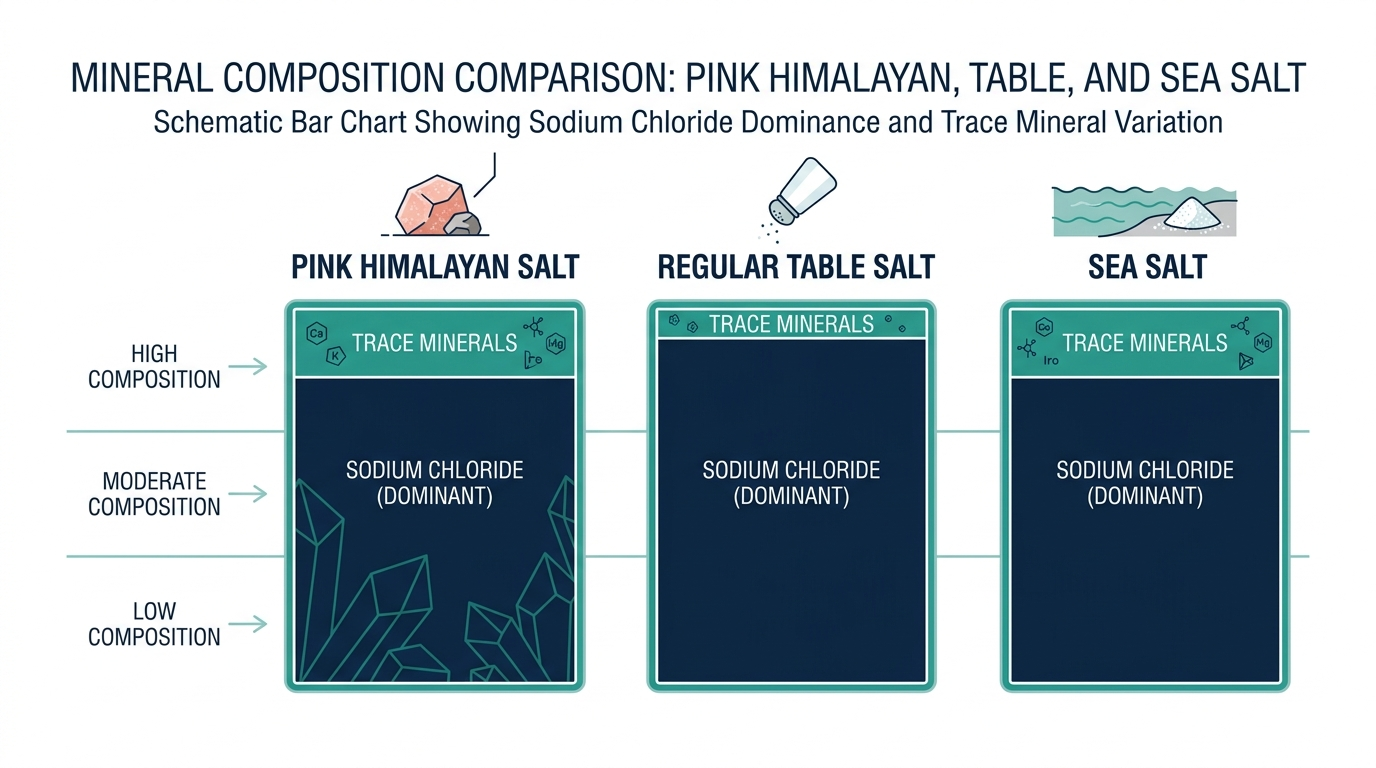
The salt trick rests on three claims, and each one has a grain of truth buried under a lot of hype. Let us take them in order.
“It balances your electrolytes so you burn fat”
Electrolytes matter for hydration, nerve function and muscle cramps, and people doing low-carb or fasting can run low on sodium. Topping up can genuinely make you feel better and less foggy. But feeling better is not the same as burning fat. There is no pathway from sodium to fat oxidation.
“It detoxes and flushes out bloat”
Your kidneys and liver handle detox. They do not need salt water to do it. If anything, a sudden salt load makes your body hold water temporarily. Any “debloat” people report is usually from drinking water and eating less processed food at the same time.
“It curbs your appetite”
This is the one with real footing, and it has nothing to do with salt. Drinking water before a meal lowers calorie intake for many people. That is the working ingredient. You can get it from a plain glass of water.
So if you enjoy the ritual and your blood pressure is fine, a small daily salt drink is not going to hurt you. Just do not expect it to do the heavy lifting. If you want a deeper read on the recipe side, see what is the pink salt recipe for weight loss and the firsthand accounts in how to drink pink salt for weight loss reviews.
What stalls people, and why the scale ignores your salt drink
Here is the part the viral videos skip. Most people who cannot lose weight are not failing because they missed a salt recipe. They are stalling for reasons that show up in bloodwork, not in a kitchen cabinet. After years of watching people grind through diet after diet, the same culprits keep appearing.
- Underactive thyroid. An out-of-range TSH slows your metabolism and makes weight loss feel impossible no matter how clean you eat. It is common, especially in women over 35, and often undiagnosed.
- Insulin resistance. High fasting insulin makes your body store fat and stay hungry. The scale will not budge until insulin comes down, and you cannot feel insulin resistance, you can only measure it.
- PCOS. Polycystic ovary syndrome drives insulin resistance and stubborn weight gain in many women, and it is wildly underdiagnosed.
- Perimenopause. Shifting estrogen and progesterone change where you store fat and how hungry you feel, often in your early 40s.
- Low testosterone in men. It quietly drops muscle mass and slows metabolism.
- Chronic high cortisol. Stress and poor sleep push cortisol up, which favors belly fat and cravings.
The common mistake is treating the scale like a willpower scoreboard when it is really a dashboard light. Drinking salt water while your thyroid is sluggish is like adding wiper fluid when your check-engine light is on. You are guessing at the problem instead of measuring it. That is the single biggest reason the tricks fail: they aim at a symptom and miss the cause.
The thing that actually works: a calorie deficit you can sustain
Weight loss comes down to a sustained calorie deficit, where you take in fewer calories than you burn over weeks and months. Everything that has ever worked, from keto to intermittent fasting to GLP-1 medications, works because it makes that deficit easier to hold. The pink salt trick, at its absolute best, helps a sliver by making you drink water before meals so you eat a little less. That is the entire mechanism.
If you want real leverage, here is the honest hierarchy:
- Protein and fiber at every meal. They keep you full far longer than salt water. Fiber timing, eating it before the carb-heavy part of a meal, blunts blood sugar spikes more reliably than any vinegar trick.
- Sleep and stress. Poor sleep raises hunger hormones and cortisol. Fixing sleep often unsticks a stalled scale faster than any diet tweak.
- Strength training. Muscle is metabolically active and protects your metabolism while you lose fat.
- Medication when warranted. For people with obesity or related conditions, FDA-approved GLP-1 drugs like Wegovy (semaglutide, around 15 percent average body-weight loss in the STEP trials) and Zepbound (tirzepatide, north of 20 percent in the SURMOUNT trials) are genuinely powerful. They are prescription medicines with real side effects, not tricks, and weight tends to return after stopping them unless habits hold. Talk to a clinician before starting or stopping any medication.
Notice that compounded semaglutide and tirzepatide, sold cheaply online, are not FDA-approved products. They are legally prescribed through licensed clinicians and pharmacies, but the gray-market versions you find in random ads are a different and riskier story. If you go the medication route, do it through a supervised telehealth clinician who orders labs, not a checkout page.
Stop guessing, start measuring: test the numbers behind your stall
Before you try the next viral drink, get the data on why your weight is stuck. If the scale will not move no matter what you eat, the answer is almost always hiding in your bloodwork: thyroid, fasting insulin, A1C, testosterone or cortisol. You cannot feel any of these, and a standard annual physical often does not even test them. That is the gap that keeps people stuck for years, swapping one trick for another.
Want to see what is actually stalling your weight, instead of guessing?
Superpower is a full-body lab membership that runs 100+ biomarkers including fasting insulin, A1C, thyroid, testosterone and cortisol, has each result reviewed by a doctor, and tracks your numbers year over year so you can see what is actually stalling your weight (about $199/year). It tells you in plain numbers whether your stall is a thyroid or insulin problem, the exact thing a pink salt drink can never reveal. Here is Superpower reviewed in full.
If you want to start narrower, an at-home thyroid panel from a service like Everlywell can flag an underactive thyroid for a fraction of a full membership, which is a sensible first step if your main symptom is fatigue plus a stuck scale. Either way, the principle is the same: measure first, then act on the number.
Curious what your own levels look like?
Baseline 100+ biomarkers today and retest as life changes, all in one membership with physician review.
Want a real clinician to run the numbers, not a guess?
Joi + Blokes is a telehealth clinic that prescribes GLP-1 medication (Zepbound, compounded semaglutide and tirzepatide), hormone therapy (TRT, HRT), thyroid care, and peptides after a real lab panel and clinician review, with no membership or consult fee (prescriptions from about $59/month, lab panels from $149). If the scale will not budge, this is where you find out whether insulin, thyroid, or hormones are the real reason. Here is Joi + Blokes reviewed in full.
Frequently asked questions
What is the pink salt trick recipe for weight loss?
It is 12 to 16 ounces of warm water, a small pinch of Himalayan pink salt (an eighth to a quarter teaspoon), and the juice of half a lemon, stirred together and drunk on an empty stomach in the morning. Some people add apple cider vinegar or a dash of honey. There is no fixed official version because it is a homemade drink, not a product.
Does the pink salt trick really work for weight loss?
Not directly. No study shows Himalayan salt water causes fat loss. Any benefit comes from the water itself filling your stomach before meals and from the habits people build around the ritual. The salt adds sodium you probably do not need.
What is in the pink salt trick for weight loss?
Water, Himalayan pink salt, and citrus juice, plus optional apple cider vinegar. Pink salt is about 98 percent sodium chloride with trace minerals too small to affect weight. The pink color comes from iron oxide.
How do you make the pink salt trick for weight loss?
Dissolve a small pinch of pink salt in warm water, add lemon or lime juice, and drink it before breakfast. Keep the salt minimal, since a quarter teaspoon already adds roughly 575 milligrams of sodium to your daily total.
What is the coffee trick for weight loss?
It is usually black coffee with cinnamon and sometimes coconut oil or MCT, marketed as a fat burner. Caffeine does give a small, temporary bump in calorie burn and dulls appetite for an hour or so, which is slightly more than pink salt offers, but it is still tiny against your total daily intake.
Is the pink salt trick safe?
For most healthy people a small daily pinch of salt in water is fine. It is not safe if you have high blood pressure, heart failure, or kidney disease, because the extra sodium can raise blood pressure and fluid retention. Check with your doctor if any of those apply to you.
What do pink salt trick reviews say?
Reviews are mixed and mostly anecdotal. People who report success almost always changed other habits at the same time, like drinking more water, cutting soda, or eating less. The drink itself is rarely the deciding factor, which is why results do not hold up in any controlled setting.
Will the pink salt trick help me lose belly fat specifically?
No. You cannot spot-reduce fat from one area with any drink. Belly fat is driven largely by total body fat, insulin resistance, cortisol and, for women, hormonal shifts in perimenopause. Lowering overall body fat and addressing those hormones is what shrinks a waistline.
What should I do instead of the pink salt trick if I keep stalling?
Get your metabolic numbers tested before trying another trick. Fasting insulin, A1C, thyroid (TSH and free T4), testosterone and cortisol explain most stubborn stalls. Once you know which one is off, you and a clinician can target it, which beats guessing with kitchen recipes every time.