
Last updated 18 June 2026. Educational content, not medical advice. Talk to a licensed clinician before starting any weight-loss medication.
Short answer: Yes. GLP-1 (glucagon-like peptide-1) is a 30-to-31-amino-acid peptide hormone your intestinal L-cells release within minutes of eating. Your body makes it constantly, but it survives in circulation for only about 2 to 3 minutes before the enzyme DPP-4 destroys it. Every injectable GLP-1 drug, from Ozempic to Wegovy to Zepbound, is an engineered version of that same peptide, modified specifically to survive hours or days instead of seconds.
Your gut releases GLP-1 within minutes of eating, then it vanishes in under three minutes. Want to see how your metabolism handles that? One at-home Superpower draw checks 100+ biomarkers, physician-reviewed.
What exactly is a peptide, and does GLP-1 qualify?
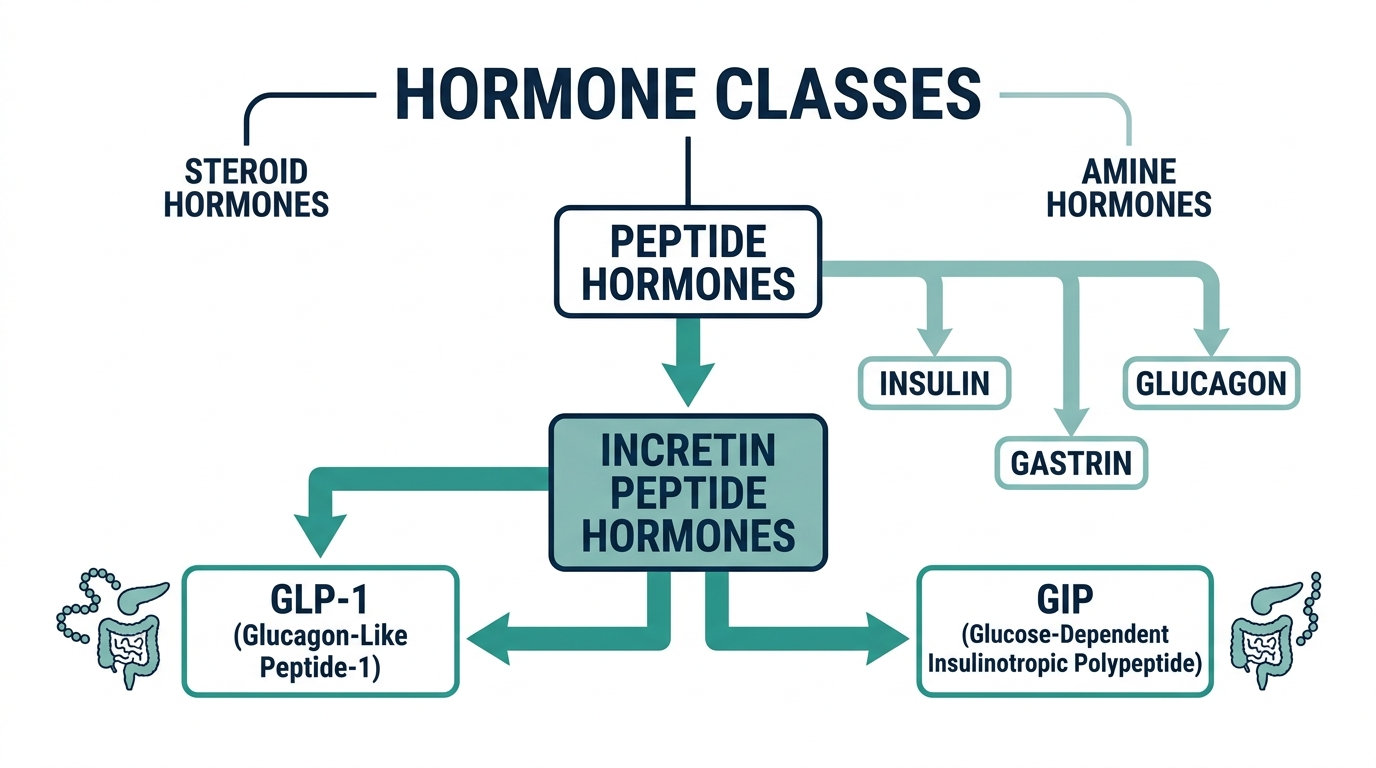
A peptide is a short chain of amino acids linked together. The cutoff is informal: strings shorter than roughly 50 amino acids are typically called peptides; longer chains become proteins. GLP-1 clocks in at 30 or 31 amino acids depending on which active form the body produces, putting it firmly in peptide territory.
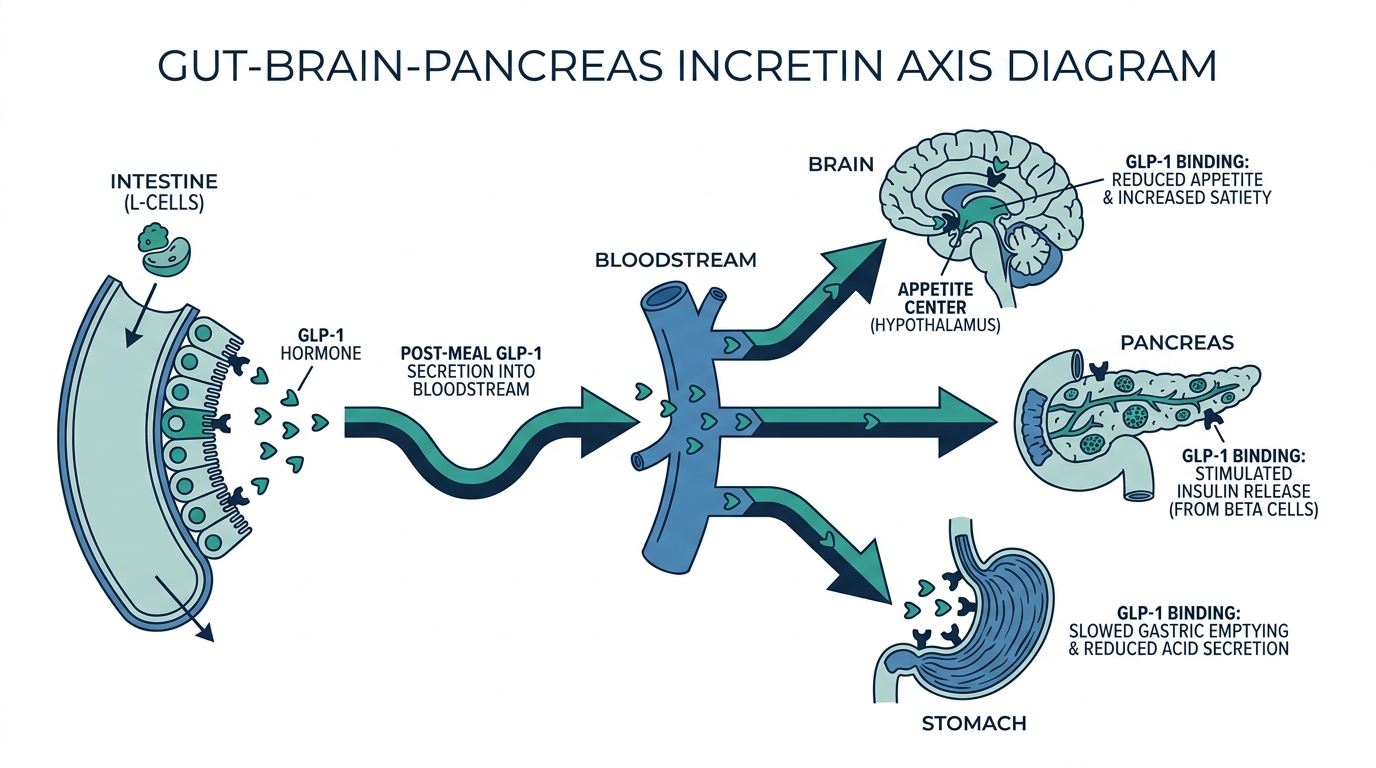
More specifically, GLP-1 is a peptide hormone: it is made in one location, enters the bloodstream, and produces effects in distant organs. The gut makes it, but the pancreas, brain, heart, and kidneys all respond to it. That multi-organ reach is why researchers now study GLP-1 for conditions far beyond blood sugar and weight.
The technical designation is “incretin hormone,” meaning it boosts insulin release after a meal. GLP-1 and GIP are the two main incretins humans produce.
Where does the body make GLP-1?
The simplest way to actually get this done
Superpower is a full-body lab membership that runs 100+ biomarkers, has each result reviewed by a doctor, and tracks your numbers year over year (about $199/year). It is what we point readers to when they would rather get one clean, complete draw than chase single tests one at a time. Here is superpower reviewed in full.
GLP-1 does not start as GLP-1. It starts as a much larger protein called proglucagon, which the body cleaves into several daughter molecules depending on which tissue is doing the cutting.
In the pancreatic alpha cells, proglucagon is cut to produce glucagon, the hormone that raises blood sugar between meals. In the intestinal L-cells and certain brain neurons, the same protein is cut differently, yielding GLP-1 and GLP-2 instead. So glucagon and GLP-1 are effectively siblings: same mother protein, different tissue, different biological purpose.
The L-cells are concentrated in the small intestine and colon. Fat and protein in a meal trigger them within minutes, and the GLP-1 spike follows the size and composition of what you ate. A high-fiber, high-protein meal generates a bigger, more sustained spike than a meal of refined carbohydrates, which is one reason diet quality affects satiety signals even before any drug enters the picture.
Why does natural GLP-1 disappear so fast?
This is the detail that explains almost everything about modern GLP-1 drugs.
The enzyme dipeptidyl peptidase-4, or DPP-4, cleaves the second amino acid from the GLP-1 chain almost the instant the peptide enters circulation. The result is a truncated, inactive fragment. The process is remarkably efficient: only 10 to 15% of the GLP-1 your gut secretes actually reaches circulation intact. The liver degrades another large fraction before the peptide can reach peripheral tissues.
The biological half-life of native GLP-1 in the bloodstream is approximately 2 minutes. That is not a rounding error. Your body is constantly making GLP-1 and constantly destroying it, maintaining a tightly controlled signal that rises with food and falls fast.
This short life was the central engineering problem pharmaceutical companies had to solve. The molecule worked beautifully in the lab. It just would not stay long enough to be a drug.
How did drug makers solve the 2-minute problem?
The first GLP-1 drug, exenatide (Byetta, approved 2005), was derived not from human GLP-1 but from a peptide called exendin-4, found in the saliva of the Gila monster lizard. Exendin-4 shares 53% of its amino acid sequence with human GLP-1 but is naturally resistant to DPP-4 because of a single amino acid substitution at position 2. That accident of reptile biology gave researchers their first workaround.
Subsequent drugs took a different approach: modify human GLP-1 directly to block DPP-4 cleavage. Semaglutide, the active ingredient in Ozempic and Wegovy, replaced the alanine at position 8 with alpha-aminoisobutyric acid and attached a long fatty acid chain to a lysine residue. The fatty acid tethers semaglutide to albumin in the blood, protecting it from kidney filtration. The result: a half-life of approximately 1 week, versus 2 minutes for the native hormone. One injection every seven days instead of a drip you could never bottle.
Personally, I find the Gila monster origin story underappreciated in mainstream GLP-1 coverage. It is a reminder that the most commercially successful class of drugs in modern metabolic medicine traces its roots to a desert lizard’s saliva. Biology is strange, and drug discovery is stranger.
Full-body lab membership: 100+ biomarkers, doctor-reviewed, tracked over time.
What does GLP-1 actually do in the body?
The short list of GLP-1’s effects reads like a weight-loss wishlist, which is exactly why it attracted so much pharmaceutical interest.
In the pancreas: GLP-1 triggers insulin secretion in a glucose-dependent fashion. That last qualifier matters. Unlike insulin injections, GLP-1 only amplifies the insulin signal when blood sugar is actually elevated. When glucose is normal or low, GLP-1 barely moves the needle, which is why GLP-1 drugs have a low risk of dangerous hypoglycemia compared to older diabetes medications.
In the stomach: GLP-1 slows gastric emptying, meaning food leaves the stomach and enters the small intestine more slowly. This stretches the satiety window. You feel full for longer after a smaller portion because the stomach is still processing the meal an hour or two later.
In the brain: This is the mechanism that explains the dramatic weight loss in clinical trials, and it is more complex than “feeling less hungry.” GLP-1 receptors sit in the hypothalamus, brainstem, and reward-processing circuits. The hypothalamus activates pro-opiomelanocortin neurons that signal fullness, while suppressing neuropeptide Y neurons that drive hunger. The reward circuits matter too: clinical reports consistently describe patients losing interest in food they previously craved, including alcohol, because GLP-1 dampens the dopaminergic reward response to food.
In the heart and kidneys: GLP-1 receptors on heart muscle and kidney cells confer direct protective effects that appear to be at least partly independent of the weight loss. The LEADER trial (liraglutide, 9,000+ patients) showed a 13% reduction in major cardiovascular events; the SUSTAIN-6 trial (semaglutide) showed 26% reduction. This cardiovascular benefit turned GLP-1 drugs from metabolic medications into some of the most closely watched cardiovascular drugs in medicine.
The side-effect ledger: the same slowed gastric emptying that curbs appetite is also why the most common complaints are gastrointestinal, nausea, vomiting, diarrhea, and constipation, usually worst during dose escalation and easing over time. Less common but serious risks include pancreatitis and gallbladder disease, and every drug in this class carries a boxed warning about thyroid C-cell tumors based on rodent studies. That warning is why GLP-1 drugs are contraindicated in anyone with a personal or family history of medullary thyroid carcinoma or MEN 2. This is exactly the kind of decision that belongs with a clinician who has your labs and history in front of them, not a checkout page.
The comparison table: native GLP-1 vs the drugs based on it
| Feature | Native GLP-1 | Semaglutide (Ozempic/Wegovy) | Tirzepatide (Zepbound) | Orforglipron (Foundayo) |
|---|---|---|---|---|
| Type | Natural 30-31 AA peptide | Modified peptide | Dual GIP/GLP-1 peptide | Small molecule (non-peptide) |
| Source | Intestinal L-cells | Synthetic / pharmaceutical | Synthetic / pharmaceutical | Synthetic / pharmaceutical |
| Half-life | ~2 minutes | ~7 days | ~5 days | ~14 hours |
| DPP-4 resistant? | No | Yes (modified at position 8) | Yes | N/A (not a peptide) |
| Administration | N/A (endogenous) | Weekly subcutaneous injection or daily pill | Weekly subcutaneous injection | Once-daily oral, no food restrictions |
| Weight loss | Physiological satiety signal | Up to 16.6% (oral, OASIS 4 trial) | Up to 22.5% (SURMOUNT-1) | ~9% (ACHIEVE trials) |
| FDA approved for weight? | N/A | Yes (Wegovy) | Yes (Zepbound) | Yes (Foundayo, April 1, 2026) |
One entry in that table deserves extra attention. Orforglipron, approved by the FDA under the brand name Foundayo on April 1, 2026, is technically not a peptide at all. It is a small-molecule GLP-1 receptor agonist, meaning it activates the GLP-1 receptor without being a peptide itself. This matters because it can be swallowed with water at any time of day, no empty-stomach fasting window required, unlike oral semaglutide (Wegovy pill), which needs a 30-minute pre-meal fast. The drug category is expanding beyond its peptide origins.
Is GLP-1 the same as Ozempic?
No, and the confusion creates real misunderstandings in how people think about this entire class.
GLP-1 is the hormone your body produces. Ozempic is semaglutide, a synthetic peptide that is structurally similar enough to GLP-1 to bind and activate the same receptor, but modified enough to survive in the bloodstream for a week. The relationship is like the difference between a key and a copy of that key: the copy fits the lock, but it is not the original.
People also sometimes ask whether they can “get Ozempic effects” from boosting natural GLP-1. The pharmacological honesty here is worth stating plainly.
Do not believe the “natural Ozempic” supplement marketing. Berberine, which some brands market as “nature’s Ozempic,” does activate AMPK and may modestly increase GLP-1 secretion from L-cells in small preclinical studies. But the magnitude of effect is not comparable. Natural GLP-1 still has a 2-minute half-life regardless of how much the L-cells secrete. Semaglutide works not because it raises GLP-1 levels but because it is engineered to persist where native GLP-1 cannot. Supplements that increase your own GLP-1 secretion are working on a signal that disappears in under three minutes. Ozempic provides that signal continuously for seven days. Those are not the same thing.
That said, dietary choices that support GLP-1 secretion, high fiber, adequate protein, limited ultra-processed food, are genuinely worth pursuing for metabolic health. They just should not be confused with pharmaceutical intervention.
What about the new oral GLP-1 drugs?
Two different approaches to oral delivery launched in 2025 to 2026, and understanding them requires understanding the peptide problem again.
Semaglutide is still a peptide in the oral Wegovy pill. Taking a peptide by mouth is normally futile because stomach acid and proteases break down peptide bonds before the molecule can be absorbed. Novo Nordisk solved this using a co-formulation with sodium N-(8-(2-hydroxybenzoyl)amino)caprylate (SNAC), an absorption enhancer that protects semaglutide from digestive degradation and facilitates absorption across the gastric epithelium. The pill still requires an empty stomach and a 30-minute wait because food in the stomach dramatically reduces absorption. In the OASIS 4 trial, adherent patients lost an average of 16.6% of body weight, and one-third of adherent participants lost at least 20%. The oral Wegovy launched in the US in January 2026 at around $149 per month without insurance, substantially below the injectable version.
Orforglipron sidesteps the peptide delivery problem entirely by not being a peptide. No special formulation needed. No food restrictions. No 30-minute window. It is a genuinely different molecular category that happens to hit the same receptor, and its approval on April 1, 2026 opened a new lane for oral GLP-1 therapy.
Telehealth GLP-1 program with provider visits and pharmacy coordination.
What are realistic expectations, and who is GLP-1 actually for?
The trial numbers set expectations that real life rarely matches exactly, and understanding why protects you from disappointment.
First, the averages hide a wide spread. A 15 percent mean loss on semaglutide means some people lose far more and a real minority lose very little. Genetics, starting weight, dose tolerance, and how much the nausea limits your titration all move the number. Second, the effect is not permanent unless the treatment or the habits are. In the STEP 1 extension, participants who stopped semaglutide regained about two-thirds of the weight they had lost within a year. GLP-1 drugs manage appetite while you take them. They do not reset a set point you can then walk away from.
There is also a body-composition caveat that marketing skips: a meaningful share of the weight lost on any aggressive calorie deficit, GLP-1 included, is lean muscle rather than fat. That is why clinicians increasingly pair these drugs with a firm daily protein target and resistance training, and why muscle preservation is becoming the next frontier of the field.
Who actually fits the label? The FDA approvals are for adults with a BMI of 30 or higher, or 27 or higher with a weight-related condition such as type 2 diabetes, high blood pressure, or sleep apnea. That is the honest boundary. These are chronic-disease medications for obesity and metabolic risk, not a cosmetic shortcut for the last five pounds, and the risk-to-benefit math looks very different at the two ends of that range.
What GLP-1 drugs are currently FDA-approved for weight loss?
As of mid-2026, four medications with GLP-1 activity have FDA approval specifically for chronic weight management in adults with obesity or overweight with comorbidities:
- Wegovy (semaglutide 2.4 mg, injectable, weekly): Approved 2021. Showed 14.9% mean weight loss versus 2.4% placebo in the STEP 1 trial over 68 weeks.
- Zepbound (tirzepatide 5/10/15 mg, injectable, weekly): Approved 2023. Tirzepatide is a dual GIP and GLP-1 receptor agonist, not a pure GLP-1 drug. SURMOUNT-1 showed up to 22.5% mean body-weight loss at the 15 mg dose, with nearly two-thirds of participants on the highest dose losing 20% or more.
- Wegovy pill (oral semaglutide 25 mg, daily): Approved December 22, 2025. Launched January 2026 at approximately $149/month without insurance.
- Foundayo (orforglipron, daily oral small-molecule): Approved April 1, 2026. First non-peptide GLP-1 receptor agonist approved for weight loss. No food or water restrictions.
Ozempic and Mounjaro are the same molecules (semaglutide and tirzepatide) approved at different doses for type 2 diabetes; many physicians prescribe them off-label for weight loss, but the designated weight-management formulations are Wegovy and Zepbound.
What does GLP-1 therapy actually cost in 2026?
The cost picture shifted substantially in 2025 to 2026 as the compounded semaglutide window closed and new oral options launched.
The FDA declared the semaglutide shortage resolved on February 21, 2025, ending the window for compounding pharmacies to sell low-cost semaglutide copies. Hims & Hers, one of the largest compounded GLP-1 sellers, fully exited compounding after a settlement with Novo Nordisk in early 2026. The “cheap compounded semaglutide” landscape that existed in 2024 has largely disappeared.
Current 2026 pricing through legitimate channels:
- Oral Wegovy (pill): ~$149/month without insurance through Novo Nordisk’s direct program; co-pays as low as $25 with commercial insurance.
- Injectable Wegovy: ~$599 to $1,349/month list price; insurance coverage varies widely.
- Zepbound (tirzepatide): ~$399/month through LillyDirect for self-pay patients; list price higher with insurance.
- Foundayo (orforglipron): Eli Lilly has indicated a target of approximately $149/month.
- Telehealth programs bundling medication + monitoring: $199 to $399/month depending on provider and included services (Ro, Found, Noom, Henry Meds, Hone Health).
None of this is covered by most insurance plans as a standalone obesity treatment. The coverage landscape is improving, but out-of-pocket planning remains the default.
Turn what you just learned into action.
Superpower lets you test 100+ biomarkers from home, then re-check them over time so you can actually see progress, physician-reviewed at every step.
Frequently asked questions
Is GLP-1 a peptide or a hormone?
Both. GLP-1 is a peptide hormone: a short chain of 30 to 31 amino acids (qualifying it as a peptide) that travels through the bloodstream to produce effects in distant organs (qualifying it as a hormone). The two terms are not mutually exclusive.
Does your body naturally make GLP-1?
Yes. Intestinal L-cells release GLP-1 in response to food within minutes of eating. Your pancreatic response to a meal depends partly on this natural GLP-1 signal. The catch is that the body’s own GLP-1 survives for only about 2 minutes before the enzyme DPP-4 degrades it, so any drug effect requires a modified version that resists that degradation.
Is Ozempic the same as GLP-1?
No. GLP-1 is the natural hormone your body makes. Ozempic (semaglutide) is a synthetic peptide engineered to mimic GLP-1 at its receptor. Semaglutide is structurally modified to resist DPP-4 degradation, giving it a half-life of about one week versus 2 minutes for native GLP-1. The two share functional similarities but are different molecules.
Can you boost GLP-1 naturally without a prescription?
Dietary changes, particularly increasing fiber and protein, do stimulate L-cell GLP-1 release. Berberine and certain supplements show modest GLP-1-boosting effects in small studies. However, because natural GLP-1 is degraded in under 3 minutes, natural boosts do not replicate the sustained receptor activation that drives the dramatic weight loss seen in clinical trials. They support metabolic health but are not a pharmaceutical substitute.
What happens if you stop taking a GLP-1 drug?
Appetite returns and, for most people, so does weight. In the STEP 1 extension, participants who stopped semaglutide regained roughly two-thirds of their lost weight over the following year. This is why clinicians frame GLP-1 therapy as ongoing management of a chronic condition rather than a short course, and why the exit plan matters as much as the start.
Do GLP-1 drugs cause muscle loss?
Some. As with any large calorie deficit, a share of the weight lost is lean mass rather than fat. The practical countermeasures are well established: hit an adequate daily protein target and keep resistance training through the weight-loss phase. A clinician can track this with the right labs and body-composition measures rather than leaving you to read it off the scale alone.
What is the difference between a GLP-1 drug and a GLP-1 receptor agonist?
They are the same category. “GLP-1 drug” is informal shorthand; “GLP-1 receptor agonist” (GLP-1 RA) is the pharmacological classification. An agonist binds and activates a receptor, so a GLP-1 RA activates the GLP-1 receptor. As of 2026, most GLP-1 RAs are modified peptides (semaglutide, liraglutide, tirzepatide’s GLP-1 arm), but orforglipron is a small-molecule GLP-1 RA that is technically not a peptide at all.
Is tirzepatide (Zepbound) a GLP-1 drug?
Partially. Tirzepatide is a dual agonist: it activates both the GLP-1 receptor and the GIP (glucose-dependent insulinotropic polypeptide) receptor. The addition of GIP receptor activity appears to explain why tirzepatide’s maximum dose (22.5% mean weight loss in SURMOUNT-1) outperforms semaglutide (approximately 14 to 15% in its trials) even though both hit the GLP-1 receptor.
How does the new oral GLP-1 pill work differently from the injectable?
Semaglutide is still a peptide in the oral Wegovy pill, but it is co-formulated with SNAC, an absorption enhancer that protects it from stomach acid and helps it cross the gastric lining. The trade-off is that food dramatically reduces absorption, requiring an empty-stomach, 30-minute fasting window. Orforglipron (Foundayo), approved in April 2026, avoids this entirely because it is a small molecule, not a peptide, and can be taken at any time with or without food.
Author: Vital Signs Today Editorial Team, [credential]”]. Educational content, not medical advice. Sources linked inline.
Primary sources:
– Glucagon-like peptide-1, PMC review
– GLP-1 receptor agonists, StatPearls / NCBI
– How DPP-4 complicates measuring GLP-1, ALPCO
– GLP-1 half-life explained, Ergsy
– FDA approves oral Wegovy pill, PR Newswire / Novo Nordisk, December 2025
– Oral Wegovy FDA approval, AJMC
– SURMOUNT-1 tirzepatide 22.5% weight loss, Eli Lilly press release
– FDA approves Foundayo (orforglipron), Healio, April 2026
– Orforglipron approval history, Drugs.com
– Hypothalamus GLP-1 satiation, PMC 2025
– LEADER and SUSTAIN-6 cardiovascular outcomes, PMC
– Does your body naturally produce GLP-1, Fella Health
Want a real clinician to run the numbers, not a guess?
Joi + Blokes is a telehealth clinic that prescribes GLP-1 medication (Zepbound, compounded semaglutide and tirzepatide), hormone therapy (TRT, HRT), thyroid care, and peptides after a real lab panel and clinician review, with no membership or consult fee (prescriptions from about $59/month, lab panels from $149). If the scale will not budge, this is where you find out whether insulin, thyroid, or hormones are the real reason. Here is Joi + Blokes reviewed in full.
Related reading
Vital Signs Today may earn a commission if you buy through links on this page. It does not affect our editorial assessments.