
Disclosure: Vital Signs Today may earn a commission if you buy through links on this page, at no extra cost to you. This does not influence our evidence-based assessments. We are not a medical provider; talk to a clinician before acting on test results.
Last updated June 2026. Educational content, not medical advice. Talk to a licensed clinician before starting any medication or weight-loss program.
Short answer: Yes. GLP-1 (glucagon-like peptide-1) is a 30-amino-acid peptide hormone your intestines produce within 15 to 30 minutes of eating. Drugs like semaglutide (Wegovy, Ozempic) and tirzepatide (Zepbound) are synthetic peptide analogues that mimic it, engineered to last days instead of the two minutes your natural version survives in circulation. For the full drug-by-drug breakdown, see our guide to GLP-1 medications.
GLP-1 is a hormone your own body already makes. Curious how your natural levels and metabolic markers compare? One at-home Superpower draw checks 100+ biomarkers, physician-reviewed.
What exactly is a peptide, and where does GLP-1 fit?
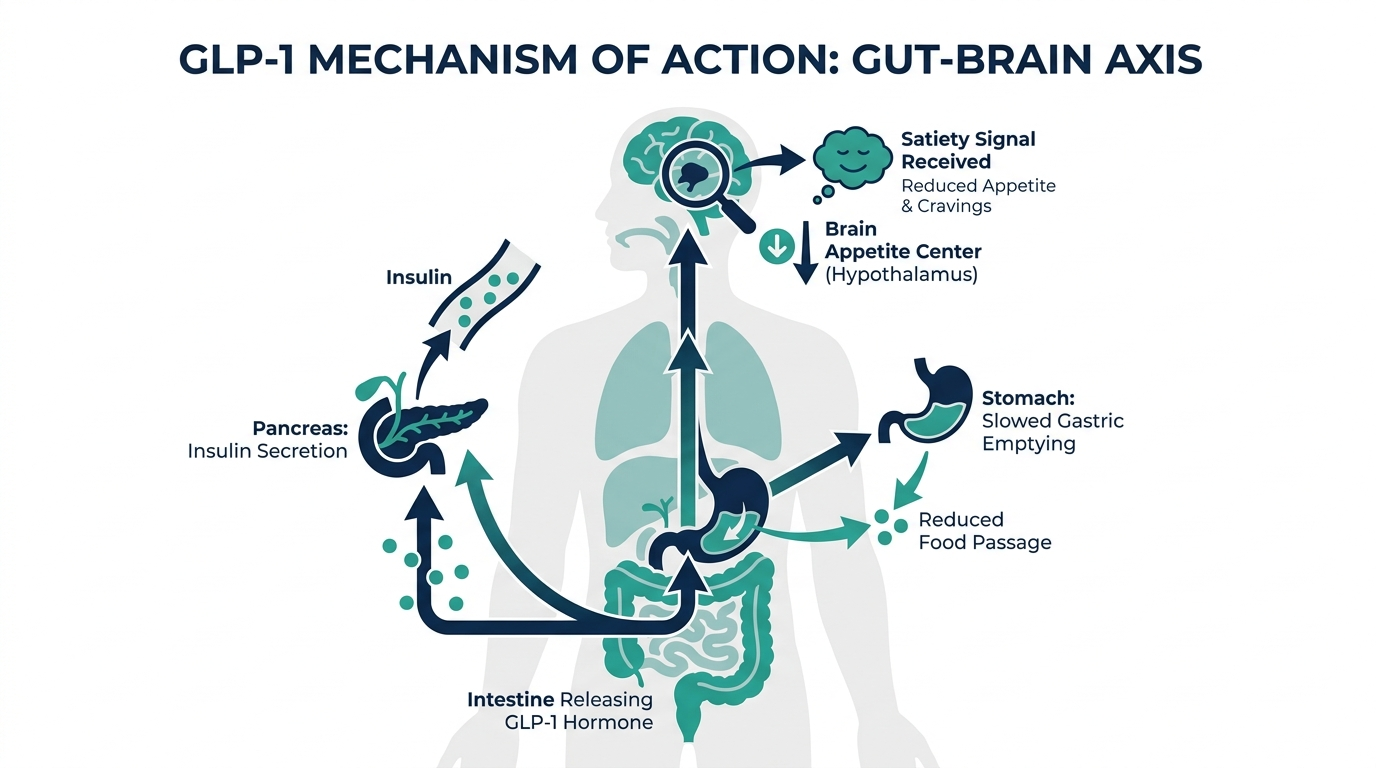
A peptide is a short chain of amino acids, longer than a single amino acid but shorter than a full protein. By convention, chains under roughly 50 amino acids are called peptides; chains above that are proteins. GLP-1 is 30 amino acids long, placing it squarely in peptide territory.
Your body synthesizes GLP-1 in enteroendocrine L-cells that line the small intestine and colon. Every time you eat a meal containing fat, protein, or fermentable fiber, those L-cells sense the nutrients and fire a pulse of GLP-1 into your bloodstream. The problem is that the enzyme dipeptidyl peptidase-4 (DPP-4) slashes the peptide bond between alanine-8 and glutamic acid-9 almost immediately, inactivating the hormone. The half-life of endogenous GLP-1 is approximately one to two minutes, which is why a post-meal satiety signal does not last long on its own.
That two-minute window is the core pharmacological problem every GLP-1 drug was built to solve.
Why does GLP-1 matter for weight loss?
GLP-1 works through both central (brain) and peripheral (body) pathways. It binds to GLP-1 receptors in the hypothalamus, where it suppresses appetite and increases satiety signals. Peripherally, it slows gastric emptying, triggers insulin release in proportion to blood glucose, and reduces glucagon secretion from the pancreas. The net result is that you feel full faster, stay full longer, eat less, and your blood sugar rises more gradually after meals.
These effects are clinically meaningful. The SURMOUNT-1 trial of tirzepatide, a drug that targets both the GLP-1 receptor and the GIP receptor, showed a mean 22.5% body-weight loss over 72 weeks at the maximum 15 mg dose, translating to roughly 49.5 lbs for the average trial participant. Semaglutide 2.4 mg in the STEP-1 trial produced a mean 14.9% body-weight loss. Those numbers reflect what happens when the body’s GLP-1 signal is amplified and extended far beyond what the natural two-minute pulse achieves.
Beyond weight loss, the SELECT cardiovascular outcomes trial showed semaglutide reduced major adverse cardiovascular events, including heart attack and stroke, by 20% in adults with obesity and established heart disease, making it the first obesity drug to demonstrate that outcome in a large randomized trial.
Full-body lab membership: 100+ biomarkers, doctor-reviewed, tracked over time.
How are synthetic GLP-1 peptides different from the natural hormone?
This is where the chemistry gets interesting. Pharmaceutical scientists needed to preserve the receptor-binding structure of GLP-1 while blocking DPP-4 from chopping it up. They used three main strategies:
Fatty acid conjugation. Semaglutide has a C18 fatty acid chain attached to lysine-26 of the peptide backbone. That chain binds reversibly to albumin in the blood, creating a depot that releases semaglutide slowly and protects it from DPP-4 cleavage. The result is a half-life of approximately 165 to 168 hours, one injection per week.
Amino acid substitution. Most GLP-1 analogues swap out the alanine-8 residue that DPP-4 targets. Liraglutide, for instance, uses an arginine-34 substitution combined with a fatty acid arm for its 13-hour half-life. Exenatide (Byetta, Bydureon) is derived from exendin-4, a peptide from Gila monster venom that has glycine instead of alanine at position 8 and is therefore naturally resistant to DPP-4, with a 2.4-hour half-life in its original formulation.
GIP co-agonism. Tirzepatide is technically a “twincretin,” a single peptide engineered to activate both the GLP-1 receptor and the GIP (glucose-dependent insulinotropic polypeptide) receptor simultaneously. Its 39-amino-acid backbone is structurally different from native GLP-1 but binds both receptors with high affinity. This dual mechanism appears to produce the metabolic effect researchers call “additive-to-synergistic,” which is likely why tirzepatide consistently outperforms pure GLP-1 agonists in head-to-head trials.
| Drug | Type | Receptor targets | Route | Half-life | Mean weight loss |
|---|---|---|---|---|---|
| Semaglutide (Wegovy 2.4 mg) | GLP-1 analogue | GLP-1R | Weekly injection | ~165 hrs | ~14.9% (STEP-1) |
| Oral semaglutide (Wegovy 25 mg pill) | GLP-1 analogue | GLP-1R | Daily tablet | ~165 hrs | ~16.6% (OASIS 4) |
| Tirzepatide (Zepbound 15 mg) | Dual GLP-1/GIP agonist | GLP-1R + GIPR | Weekly injection | ~120 hrs | ~22.5% (SURMOUNT-1) |
| Retatrutide (Phase 3) | Triple GLP-1/GIP/glucagon agonist | GLP-1R + GIPR + GCGR | Weekly injection | ~135 hrs | ~28.3-28.7% (TRIUMPH-4) |
| Liraglutide (Saxenda) | GLP-1 analogue | GLP-1R | Daily injection | ~13 hrs | ~8.0% (SCALE) |
The natural GLP-1 hormone belongs to the same peptide family as all of these but is fully degraded in 1 to 2 minutes and produces none of these sustained effects on its own.
How fast does GLP-1 therapy work, and what happens if you stop?
Appetite usually drops within the first week or two, often before the scale moves at all. Many patients describe the change as the “food noise” going quiet, the constant low-grade thinking about the next meal that fades once the receptor is being activated steadily. Visible weight loss then builds over months as the dose escalates, and the trial averages above reflect people who reached and held the top maintenance dose for well over a year, not a starting dose taken for a few weeks.
Two honest caveats belong here. First, a meaningful minority respond weakly. If you have reached full dose and lost little, that is a real signal to revisit the plan with your prescriber rather than white-knuckle it, since a different agent may suit you better. Second, the effect is not self-sustaining. In the STEP and SURMOUNT extension data, people who stopped the drug regained a large share of the lost weight over the following year, because the underlying appetite biology returns to baseline once the peptide clears. That is why clinicians frame these drugs as long-term management of a chronic condition rather than a short course. Plan for maintenance dosing or a deliberate taper paired with durable habit change, not an abrupt stop.
What are the approved GLP-1 peptide drugs in 2026?
The approved landscape has expanded significantly in the past 12 months.
Semaglutide (injectable) remains available as Ozempic (approved for type 2 diabetes) and Wegovy (approved for chronic weight management in adults with a BMI of 30 or higher, or 27 or higher with a weight-related condition). Both are manufactured by Novo Nordisk. The FDA declared the semaglutide shortage resolved in February 2025, which closed the door on most compounded semaglutide programs.
Oral semaglutide (Wegovy pill, 25 mg) was approved by the FDA on December 22, 2025, making it the first oral GLP-1 receptor agonist approved specifically for chronic weight management. The OASIS 4 trial showed 16.6% mean weight loss at 64 weeks with full adherence, with about one-third of adherent participants achieving at least 20% weight loss. Novo Nordisk launched the full US rollout in early 2026.
Tirzepatide (Zepbound) was approved for chronic weight management in November 2023. The FDA declared the tirzepatide shortage resolved in October 2024, ending most compounded tirzepatide programs. Its SURMOUNT-1 trial data (22.5% mean weight loss) and SURMOUNT-4 maintenance data now represent the benchmark for comparison.
Retatrutide is a triple agonist (GLP-1, GIP, and glucagon receptors) from Eli Lilly that completed its first successful Phase 3 trial, TRIUMPH-4, in December 2025. That trial reported an average weight loss of 28.7% at the 12 mg dose over 68 weeks, along with significant relief from knee osteoarthritis pain. At a mean 71.2 lbs of weight lost, retatrutide represents the current frontier, though it is not yet FDA-approved. Seven additional Phase 3 trials are expected to complete in 2026.
Personally, the retatrutide numbers are genuinely remarkable, but they also carry a caution: heavier weight loss at faster speed means heavier lean-mass burden if protein intake and resistance training are not proactively managed. More on that below.
Does GLP-1 come from any natural food sources?
This is one of the most searched questions in the category, and the answer requires a precise distinction. No food contains GLP-1 as an ingredient you can absorb. GLP-1 is a peptide hormone that your own L-cells manufacture in response to nutrient signals. What certain foods do is stimulate more of it.
Soluble fiber is the strongest dietary trigger. When soluble fiber reaches the large intestine, gut bacteria ferment it into short-chain fatty acids (acetate, propionate, butyrate), which bind to free fatty acid receptors on L-cells and trigger GLP-1 secretion. Foods with high soluble fiber include oats, psyllium, legumes, and chicory root.
Protein also stimulates GLP-1 release, particularly leucine-rich proteins from eggs, dairy, and fish. Fermented foods appear to have a modest independent effect through gut microbiome modulation.
Do not believe the supplement industry hype around “natural GLP-1 boosters.” The plasma levels you can achieve through dietary stimulation are physiologically relevant for blood sugar regulation but are nowhere near the concentrations that GLP-1 receptor agonist drugs achieve at their target receptors. Diet can optimize the system; it cannot replicate the therapeutic dose.
What should you test before and while on a GLP-1?
The scale is the crudest possible measure of what a GLP-1 drug is doing to your body. Before starting, a baseline panel tells you what you are actually treating and gives you numbers to track. The markers worth having in front of you include fasting glucose and HbA1c for how your blood sugar is trending, a full lipid panel, thyroid function, liver enzymes (many people carrying excess weight have some degree of fatty liver), and a marker of kidney function. If insulin resistance is the engine behind your weight, those numbers will show it, and they are the numbers that should improve as you lose fat.
Rechecking the same panel after three to six months is how you confirm the medication is improving your metabolic health rather than just shrinking a number on the scale. It also catches the less visible costs early. Because rapid loss can strip lean mass and stress the gallbladder, tracking your trajectory with real labs, not body weight alone, is the difference between losing fat and losing fat plus the muscle and bone you want to keep.
The simplest way to actually get this done
Superpower is a full-body lab membership that runs 100+ biomarkers, has each result reviewed by a doctor, and tracks your numbers year over year (about $199/year). It is what we point readers to when they would rather get one clean, complete draw than chase single tests one at a time. Here is superpower reviewed in full.
What are the real side effects worth knowing about?
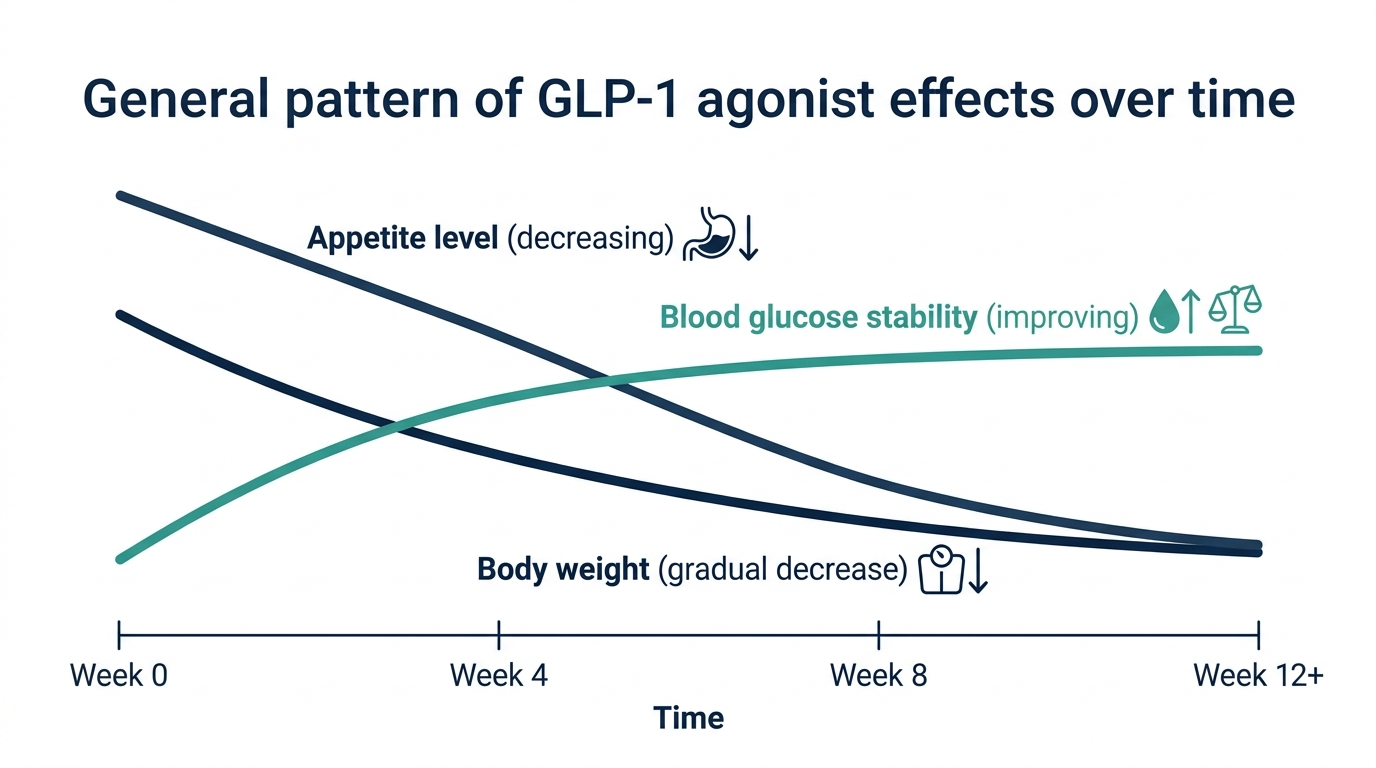
The most common adverse effects are gastrointestinal: nausea, vomiting, diarrhea, constipation, and bloating. These are most pronounced during dose escalation and affect up to half of patients to some degree, though most are mild to moderate and resolve without stopping the medication.
The less-discussed issue is lean mass loss. Clinical trials show that 25 to 40% of total weight lost on GLP-1 medications comes from lean tissue rather than fat, a ratio that worsens at faster rates of weight loss. For a 50-lb loss, that could mean 12 to 20 lbs of muscle and bone mass lost alongside fat. This is not a reason to avoid GLP-1 therapy, but it is a reason to proactively counter it.
The evidence-based countermeasure is straightforward: the American Society for Metabolic and Bariatric Surgery recommends 1.2 to 1.5 grams of protein per kilogram of ideal body weight per day for patients on GLP-1 medications, and 2 to 3 weekly resistance training sessions targeting major muscle groups. Some sports medicine clinicians push protein targets to 1.6 g/kg for patients doing structured strength training alongside drug therapy.
The irony is that the appetite suppression of the drug makes hitting protein targets harder. Most patients need to track intake deliberately and front-load protein early in each meal before fullness kicks in.
Who can access GLP-1 peptide therapy in 2026?
The legitimate pathway is licensed telehealth and in-person clinics that prescribe FDA-approved medications. This means a real clinician prescribes based on your BMI and health history, the medication comes from a named licensed pharmacy, and there is monitoring built in.
Named telehealth platforms currently operating in this space include Ro, Hims and Hers, Found, and Calibrate (we compare them in our best GLP-1 telehealth roundup), with newer entrants targeting the post-shortage era of brand-only prescribing. Pricing for brand-name Wegovy or Zepbound without insurance runs approximately $1,000 to $1,350 per month. Some payers, including certain state Medicaid programs and large employers, have begun covering GLP-1 medications since 2025 SELECT trial data demonstrated cardiovascular benefits, so checking your specific coverage is worth doing before comparing retail prices.
Compounded semaglutide and tirzepatide programs largely exited the market after the FDA shortage resolutions in 2024 and 2025. Some compounding pharmacies continue to offer them for documented cases of allergies to inactive ingredients or specific dosing needs that brand products cannot accommodate. Those exceptions require clear clinical documentation. The “compounded at $149 a month” ads still floating online are mostly operating outside current FDA guidance.
The thread running through every legitimate option is oversight. A clinician who checks your labs, sets the starting dose, and monitors you is not a formality. It is what catches a thyroid problem masquerading as stubborn weight, flags a contraindication before it becomes an emergency, and adjusts the plan when the scale stalls. If the reason the weight will not move is insulin, thyroid, or hormones rather than willpower, that is exactly the kind of thing a real panel and a real prescriber are there to find.
Want a real clinician to run the numbers, not a guess?
Joi + Blokes is a telehealth clinic that prescribes GLP-1 medication (Zepbound, compounded semaglutide and tirzepatide), hormone therapy (TRT, HRT), thyroid care, and peptides after a real lab panel and clinician review, with no membership or consult fee (prescriptions from about $59/month, lab panels from $149). If the scale will not budge, this is where you find out whether insulin, thyroid, or hormones are the real reason. Here is Joi + Blokes reviewed in full.
Are there GLP-1 peptide supplements?
Technically yes, but they do not work the way the name implies. Supplement brands sell “GLP-1 support” products containing berberine, psyllium, inulin, chromium, and various amino acids. Some of these ingredients have modest evidence for stimulating endogenous GLP-1 release from L-cells.
Berberine is the most studied. Some trials show it raises postprandial GLP-1 and improves insulin sensitivity. Personally, the berberine data is worth noting, but do not expect anything close to the 15 to 22% weight loss reported in semaglutide and tirzepatide trials. The mechanisms are not comparable. A supplement that nudges GLP-1 secretion by a few percentage points is not the same as a receptor agonist that locks onto GLP-1Rs and activates them at pharmaceutical concentrations for seven days.
The myth to bust here: there is no supplement that “mimics Ozempic” at a pharmacologically meaningful level. The phrase is marketing, not biochemistry.
Don’t just read about your health, track it.
A single result is a snapshot. Superpower re-tests 100+ markers over time so you can watch them move as you change sleep, food, and training.
FAQ: GLP-1 peptides
Are GLP-1 drugs the same thing as peptide therapy?
They overlap but are not identical. GLP-1 drugs (semaglutide, tirzepatide, liraglutide) are FDA-approved prescription medications with clinical trial backing and pharmacy dispensing. “Peptide therapy” in the longevity and optimization clinic context usually refers to a broader set of research or compounded peptides like BPC-157, sermorelin, or CJC-1295/Ipamorelin. GLP-1 agonists are the most clinically validated class in that broader category.
Is semaglutide a peptide?
Yes. Semaglutide is a synthetic 31-amino-acid GLP-1 analogue with a fatty acid conjugate attached. It is a peptide by structure, engineered for pharmaceutical half-life.
Can I get GLP-1 naturally?
Your body produces GLP-1 endogenously after every meal, and certain dietary patterns (high soluble fiber, adequate protein) stimulate more of it. But “natural” dietary GLP-1 is degraded within 1 to 2 minutes and cannot replicate the therapeutic effect of a receptor agonist drug. The pharmacological effect and the physiological signal exist on different scales.
What is the difference between semaglutide and tirzepatide?
Semaglutide activates only the GLP-1 receptor. Tirzepatide activates both the GLP-1 receptor and the GIP (glucose-dependent insulinotropic polypeptide) receptor. In clinical trials, tirzepatide consistently produces greater weight loss (approximately 22.5% vs. 14.9% for semaglutide at their approved weight-management doses). Both are once-weekly injections.
Is there a GLP-1 pill?
Yes, as of December 2025. The FDA approved oral semaglutide 25 mg (Wegovy tablet) as the first oral GLP-1 receptor agonist for weight management. It delivered 16.6% mean weight loss in the OASIS 4 trial at 64 weeks. The oral form has only about 1% bioavailability (versus 89 to 94% for injectable), requiring a 25 mg dose to produce therapeutic blood levels similar to a weekly injection.
What is retatrutide?
Retatrutide is a triple GLP-1/GIP/glucagon receptor agonist developed by Eli Lilly. Phase 3 data from December 2025 (TRIUMPH-4) showed 28.7% mean weight loss over 68 weeks at the 12 mg dose, plus meaningful reductions in osteoarthritis pain. It is not yet FDA-approved, and no legitimate compounded version exists. Anyone selling it outside a clinical trial is selling something unverified.
How soon will I notice GLP-1 working?
Reduced appetite and quieter cravings usually appear within the first one to two weeks, though meaningful weight loss builds gradually over months as the dose steps up. The largest average losses in the trials came after patients reached the top maintenance dose and stayed on it for well over a year.
Do I have to stay on a GLP-1 forever?
Not necessarily, but plan around the fact that stopping tends to bring much of the weight back. These drugs manage the appetite biology of obesity rather than curing it, so lasting results depend on either long-term maintenance dosing or a careful taper paired with durable changes to food, protein intake, and training.
Do GLP-1 medications cause muscle loss?
Some lean mass loss occurs with rapid weight loss on any program, and GLP-1 medications accelerate the rate of loss. Approximately 25 to 40% of total weight lost during treatment comes from lean tissue rather than fat. Counterstrategies supported by evidence include at least 1.2 to 1.5 g protein per kg of ideal body weight daily and 2 to 3 weekly resistance training sessions.
Author: VST Editorial Board. Educational content, not medical advice. Sources linked inline.
Primary sources:
- Glucagon-like peptide-1 (Wikipedia: half-life, structure)
- FDA GLP-1 compounding policy / shortage resolutions
- Lilly retatrutide TRIUMPH-4 Phase 3 results, December 2025
- FDA approves oral semaglutide Wegovy pill, December 22 2025
- SELECT cardiovascular outcomes trial, semaglutide 20% MACE reduction
- Mechanisms of GLP-1 RA weight loss, American Journal of Medicine 2025
- GLP-1 muscle preservation and lean mass data
- Tirzepatide vs semaglutide meta-analysis, PMC
- GLP-1 RA systematic review and meta-analysis, PMC
Related reading
Related: best thyroid and hormone tests of 2026.
Vital Signs Today may earn a commission if you buy through links on this page. It does not affect our editorial assessments.