You opened your lab report, saw your uric acid flagged as low, and felt a small jolt. The good news up front: a low uric acid result is usually less worrying than a high one, and many people with it feel perfectly fine. But “usually benign” is not the same as “ignore it.” This article walks you through what the number means, what pushes it down, when it actually matters, and the one nuance most quick web answers leave out.
- Low uric acid, called hypouricemia, is most often defined as a serum urate level below 2.0 mg/dL, and it affects roughly 0.5 percent of people, according to research summarized in StatPearls and UpToDate.
- The most common drivers are a low-purine diet (such as vegetarian or vegan eating), certain medications, and the kidneys flushing out too much urate, and the majority of cases cause no symptoms.
- Low uric acid becomes a real concern mainly in one situation: an inherited kidney condition called renal hypouricemia, which can trigger exercise-induced acute kidney injury after intense workouts.
What does low uric acid mean and what is the cutoff?
Low uric acid (hypouricemia) means your blood holds less of this waste product than the typical range, and it is most commonly defined as a serum urate level below 2.0 mg/dL, equal to about 119 micromol/L (UpToDate; StatPearls). For context, typical reference ranges run from roughly 3.4 to 7.0 mg/dL in men and 2.4 to 6.0 mg/dL in women, though every lab sets its own cutoffs (WebMD; Medscape). Hypouricemia is uncommon, showing up in about 0.5 percent of people.
Low uric acid is usually less worrying, but see the fuller panel to know for sure. One at-home Superpower draw checks 100+ biomarkers, physician-reviewed.
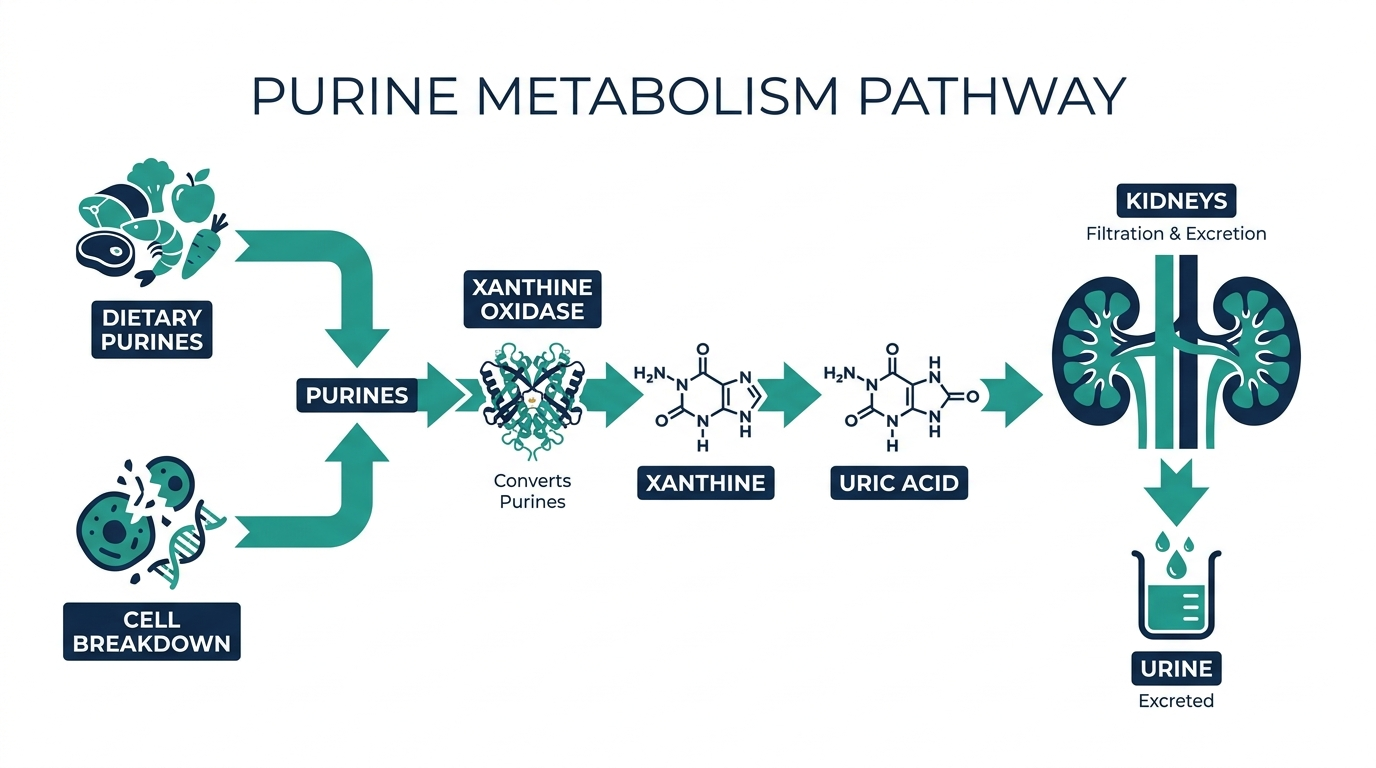
Uric acid is the end product of breaking down purines, compounds found in your cells and in foods like red meat, organ meat, and beer. Your liver makes it, and your kidneys clear most of it. A low number tells you one of two things is happening: your body is making less uric acid, or your kidneys are dumping more than usual. The cutoff matters because mildly low values rarely mean anything, while a clearly low or persistent result is what prompts a closer look.

What causes low uric acid?
The most frequent causes of low uric acid are diet, medications, and the kidneys excreting too much urate. A plant-heavy diet is a leading driver: vegetarian eating can produce mean serum uric acid values as low as 2.7 mg/dL because most plant foods are low in purines (research cited via ScienceDirect). This is a normal, healthy reason for a low number.
Other common contributors include:
- Medications: Uricosuric drugs (used to treat gout), high-dose aspirin, losartan, fenofibrate, and the SGLT2 inhibitors used for diabetes can all lower urate.
- Kidney tubular wasting: Conditions like Fanconi syndrome make the kidneys leak too much uric acid into the urine.
- Inherited transporter defects: Mutations in the SLC22A12 (URAT1) or SLC2A9 (GLUT9) genes reduce the kidneys’ ability to reabsorb urate, causing renal hypouricemia (PMC; StatPearls).
- Low purine production: Liver disease or rare enzyme deficiencies (such as xanthine oxidase deficiency) reduce how much uric acid your body makes.
- SIADH and certain cancers: These can lower urate through hormonal and metabolic effects.
What are the symptoms, or is it silent?
For most people, low uric acid is completely silent and causes no symptoms at all, which is why it is so often found by accident on a routine blood panel (StatPearls; UpToDate). Uric acid is a waste product, not a hormone or fuel, so having less of it does not directly make you feel sick the way low iron or low thyroid would.
When symptoms do appear, they almost always come from the underlying cause rather than the low number itself. For example, if Fanconi syndrome is behind it, you might notice signs tied to that condition, such as bone aches, weakness, or increased urination. In renal hypouricemia, the warning sign is dramatic and specific: severe flank or back pain, nausea, and reduced urine output that strikes within hours after intense exercise. If you ever experience that pattern after a hard workout, it is a medical emergency, not normal soreness. Outside of that scenario, a low uric acid result on its own is rarely a reason to feel unwell.
When is low uric acid dangerous?
Low uric acid is dangerous mainly in one setting: inherited renal hypouricemia, where a serum urate of 2.0 mg/dL or less combined with heavy urate loss can cause exercise-induced acute kidney injury (EIAKI) after strenuous activity (PMC; Kidney Research and Clinical Practice). In these patients, an all-out sprint or intense gym session can trigger sudden kidney failure that needs urgent care, and the same condition raises the risk of kidney stones.
Beyond that, the picture is more about association than proven harm. Observational research links lower uric acid to higher rates of certain degenerative neurological conditions. One analysis found that people with levels below 3.5 mg/dL had increased rates of vascular and non-vascular dementia compared with those in a high-normal range of 3.5 to 7.5 mg/dL (Epic Research). Because uric acid acts as an antioxidant in the blood, scientists are studying whether very low levels remove some protection. Importantly, these are correlations, not proof that low uric acid causes the conditions, so do not read a single low result as a diagnosis of anything.

What should you do next and when should you see a doctor?
If your uric acid is mildly low and you feel well, the usual next step is simple: discuss it with your clinician and, if needed, repeat the test, since a low-purine diet alone can explain values near 2.7 mg/dL (ScienceDirect). Your doctor will look at the whole picture, including your medications, kidney function, and diet, rather than treating the number in isolation. Most people need no treatment at all.
See a doctor promptly if any of these apply:
- Emergency: Severe back or flank pain, nausea, or low urine output within hours of intense exercise. This can signal exercise-induced acute kidney injury and needs immediate care.
- Persistent or clearly low values: A urate well under 2.0 mg/dL on repeat testing warrants a workup of kidney handling and possible genetic causes.
- Other abnormal results: Low uric acid alongside abnormal kidney, electrolyte, or glucose readings.
- Family history: A relative with renal hypouricemia or unexplained exercise-related kidney problems.
Bring your full lab report and a current medication list to the visit, since several common drugs lower urate.
The insider nuance: ask for a fractional excretion test, not just a repeat number
Here is the detail most quick answers skip. When low uric acid is genuinely low and unexplained, the test that actually sorts out the cause is the fractional excretion of uric acid (FEUA), which compares how much urate your kidneys filter versus how much they dump into urine. In renal hypouricemia, FEUA runs above 10 percent, a clear fingerprint that the kidneys, not the diet or the liver, are the source (PMC). This single urine-plus-blood calculation separates a harmless dietary low from the inherited kidney condition that carries real exercise-related risk. If your clinician is investigating a persistently low urate, asking whether an FEUA is warranted can save you from either needless worry or a missed diagnosis. It is the difference between “your salad explains this” and “you should be careful with all-out sprints.”
Where uric acid comes from, and why the number moves
To read a low uric acid result well, it helps to know the simple machinery behind it. Uric acid is the final waste product of purine metabolism. Purines are building blocks of DNA and RNA, and they come from two places: your own cells constantly recycling their genetic material, and the food you eat. When purines are broken down, an enzyme called xanthine oxidase converts them into uric acid, mostly in the liver. From there, the kidneys handle the majority of the clearance, filtering urate and then reabsorbing much of it through specialized transporters before excreting the rest.
That two-part system, production by the liver and clearance by the kidneys, is why any uric acid result reflects a balance. A level can fall for only two broad reasons: the body is making less (less purine intake, less production, or blocked production) or the kidneys are removing more (transporter defects, tubular damage, or drugs that force urate out). Holding this framework in mind turns a confusing number into a simple question: is this a production story or an excretion story? Nearly every cause of low uric acid slots into one of those two buckets, and distinguishing them is exactly what the follow-up workup aims to do.

Why high uric acid gets the headlines and low does not
Most people have heard of uric acid only in the context of gout, and there is a reason. High uric acid is far more common and far more clearly harmful than low uric acid. When urate builds up, it can crystallize in joints to cause the intense pain of gout, and it is associated with kidney stones and other problems. Low uric acid is the mirror image in frequency: it is uncommon, affecting a small fraction of people, and it is usually benign. This asymmetry explains why a low result often catches people off guard. They associate uric acid entirely with the danger of having too much, so a low number feels like an unfamiliar puzzle. The reassuring reframe is that, for most people, low sits on the safer side of the spectrum. The important exception, the inherited kidney form that carries exercise-related risk, is the one worth ruling in or out when the value is genuinely and persistently low.
The antioxidant paradox: is some uric acid actually good?
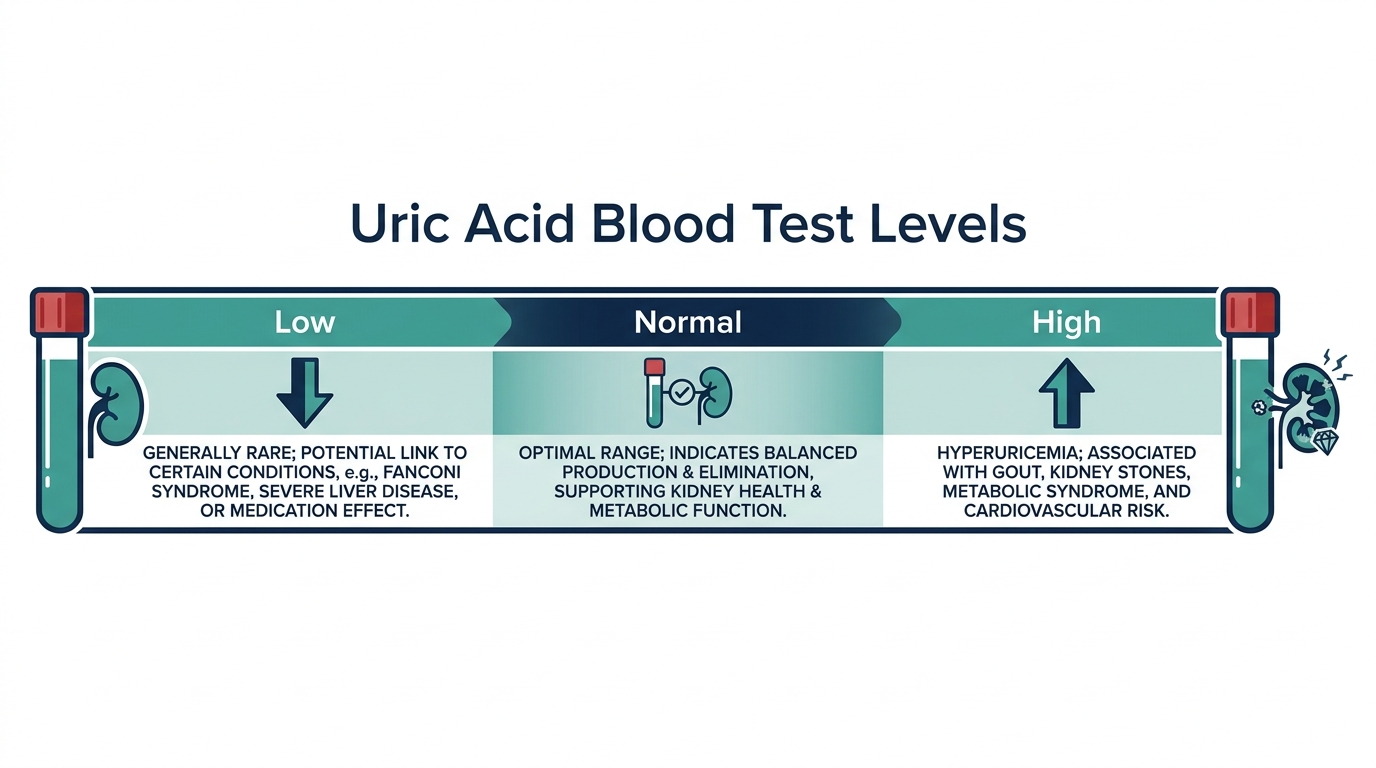
Here is a genuinely interesting wrinkle that reframes the whole topic. Uric acid is not only a waste product; in the bloodstream it also acts as one of the body’s most abundant antioxidants, a molecule that helps neutralize damaging free radicals. This dual identity is why the story of low uric acid is more nuanced than “waste is bad, less waste is good.”
Because urate has antioxidant properties, researchers have explored whether very low levels remove a layer of protection, and observational studies have linked lower uric acid to higher rates of certain degenerative neurological conditions. It is essential to read these findings correctly: they are associations, not proof of cause. It is entirely possible that another factor drives both the low urate and the condition, or that the disease process itself lowers urate. No one should treat a low result as a diagnosis or try to raise their uric acid deliberately, because high uric acid carries its own well-established harms. The honest state of the science is that a mid-range level appears healthiest, and the extremes at both ends are where questions arise.
Diet, purines, and the vegetarian effect in detail
Diet is the single most common and most benign reason for a low uric acid result, and it is worth understanding why. Purine content varies enormously across foods, and a low uric acid usually reflects a diet that is simply low in the high-purine items.
- High-purine foods that tend to raise uric acid include organ meats such as liver and kidney, red meat, certain seafood like anchovies and sardines, and beer, which contributes purines and also affects urate handling.
- Low-purine foods that dominate plant-based eating include most vegetables, fruits, whole grains, and legumes, which is why vegetarian and vegan diets commonly produce lower urate levels.
- Dairy and coffee have been associated with lower uric acid in population studies, adding to the effect of a plant-forward pattern.
The practical upshot is that a low uric acid in someone eating a mostly plant-based diet is often just the diet showing up in the blood. It is a physiological consequence of healthy eating rather than a warning sign, which is why clinicians ask about diet before ordering anything more.
Medications that lower uric acid, and why it matters
A surprising number of common drugs push uric acid down, and recognizing them prevents an unnecessary workup. When a clinician sees a low urate, the medication list is one of the first things reviewed.
- Uricosuric drugs, which are prescribed precisely to lower uric acid in gout, work by increasing urinary excretion of urate.
- SGLT2 inhibitors, a widely used class for diabetes and heart and kidney protection, lower uric acid as a side effect by promoting its excretion.
- Losartan, a common blood pressure medication, has a mild urate-lowering effect.
- Fenofibrate, used for high triglycerides, also lowers uric acid.
- High-dose aspirin increases urate excretion, though low-dose aspirin can do the opposite.
Because these effects are well known, a low uric acid in someone taking one of these drugs is frequently explained on the spot. This is exactly why bringing a complete, current medication list to the appointment can turn a mysterious result into a solved one.
How uric acid is tested and what it is read alongside
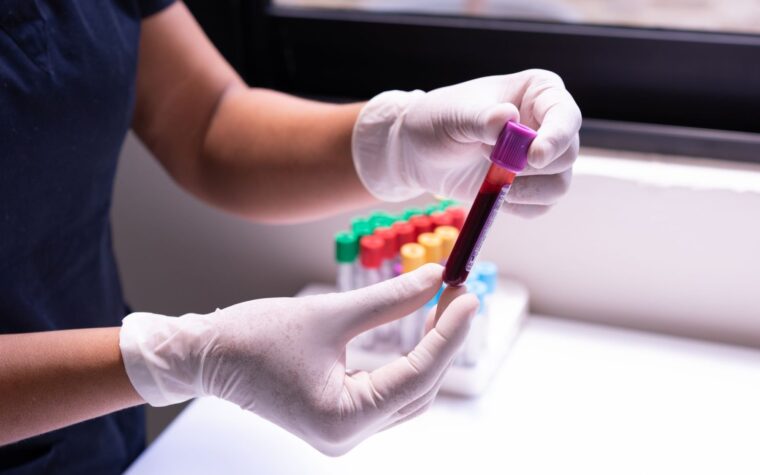
The uric acid test itself is a simple blood draw, often part of a broader metabolic or arthritis-related panel, and it usually does not require fasting, though following your clinician’s specific instructions is always wise. What gives the number meaning is the company it keeps on the report.
- Kidney markers, such as creatinine and estimated GFR, help distinguish a kidney-driven low urate from a dietary one, since the kidneys do most of the clearing.
- Electrolytes and glucose in the urine, when a tubular problem like Fanconi syndrome is suspected, because that condition wastes multiple substances at once.
- A paired blood and urine uric acid, which allows calculation of the fractional excretion of uric acid, the single most useful test for sorting out an unexplained low value.
Reading uric acid next to these companions is what lets a clinician decide whether a low number is a harmless dietary footnote or a clue to how the kidneys are handling filtration.
Common misunderstandings about low uric acid
- “Low uric acid is always a problem.” Usually it is not. Most cases are benign and silent, driven by diet or medication, and need no treatment.
- “Uric acid is purely a waste product.” It is also a major antioxidant in the blood, which is why the extremes at both ends attract scientific interest.
- “A low result means I should try to raise it.” No. Deliberately raising uric acid is not advised, because high levels carry real, well-documented harms like gout and stones.
- “Low uric acid means my kidneys are failing.” Not usually. Only a specific inherited form, renal hypouricemia, and certain tubular conditions involve the kidneys, and most low values do not.
- “One low reading is a diagnosis.” It is not. A single low value in someone who feels well is typically rechecked and read alongside diet, medications, and other labs before any conclusion.
How context changes what a low uric acid means
The same low number carries different weight depending on who it belongs to. In pregnancy, uric acid normally drifts down in the first and second trimesters, partly because the kidneys clear more of it and blood volume expands. So a low reading in a healthy pregnant person is often just physiology, not a warning sign. The reverse is more clinically watched in pregnancy: a rising uric acid later on can accompany conditions like preeclampsia, which is why obstetric teams tend to care more about an upward move than a low value.
Age shifts the picture as well. Children generally run lower uric acid than adults, and levels climb through puberty, more so in boys, as muscle mass and cell turnover increase. That means a value flagged as low on an adult range may be perfectly normal for a child. In older adults, medications become the leading reason for a low number, because the list of drugs that increase uric acid excretion, from certain blood pressure agents to high dose vitamin C, tends to grow with age and polypharmacy.
Diet and hydration form the last layer of context. Someone eating a largely plant based, low purine diet will sit lower than a heavy meat and seafood eater, and that is expected rather than concerning. A very low value in a person who is also losing weight rapidly, has other electrolyte abnormalities, or shows sugar or protein spilling into the urine is the combination that earns a closer look, because it can point to a kidney tubule that is leaking several substances at once. The lesson is to never read a low uric acid in isolation. Pair it with your age, your pregnancy status, your medication list, and the rest of your panel before deciding whether it means anything at all.
Turn what you just learned into action.
Superpower lets you test 100+ biomarkers from home, then re-check them over time so you can actually see progress, physician-reviewed at every step.
Frequently asked questions
Is low uric acid something to worry about?
Usually no. Hypouricemia is most often benign and silent, frequently caused by a plant-based diet or a medication. It mainly becomes a concern in inherited renal hypouricemia, which can cause kidney injury after intense exercise. Discuss persistent low values with your doctor.
What level counts as low uric acid?
Low uric acid (hypouricemia) is most commonly defined as a serum urate level below 2.0 mg/dL, about 119 micromol/L, according to UpToDate and StatPearls. Typical reference ranges start around 3.4 mg/dL in men and 2.4 mg/dL in women, though labs vary.
Can a vegetarian or vegan diet cause low uric acid?
Yes. Most plant foods are low in purines, so vegetarian and vegan diets commonly lower uric acid. Research found mean serum values as low as 2.7 mg/dL in vegetarians. This is a normal, healthy reason for a low result and rarely needs treatment.
Does low uric acid affect the kidneys?
It can in one specific condition. Inherited renal hypouricemia, driven by URAT1 or GLUT9 gene mutations, lets the kidneys lose too much urate and can trigger exercise-induced acute kidney injury and kidney stones. Dietary or medication-related low uric acid does not harm the kidneys.
How is the cause of low uric acid diagnosed?
Your clinician reviews your diet, medications, and other lab results first. For unexplained or persistent low values, a fractional excretion of uric acid (FEUA) test helps. An FEUA above 10 percent points to renal hypouricemia rather than a dietary or production-related cause.
Sources
- NCBI StatPearls, Hyperuricemia and Hypouricemia
- UpToDate, Hypouricemia: Causes and clinical significance
- WebMD, Uric Acid Blood Test
- Medscape, Uric Acid Reference Range
- NCBI PMC, Hypouricemia and Urate Transporters
- ScienceDirect Topics, Hypouricemia overview
- Kidney Research and Clinical Practice, Renal hypouricemia and exercise-induced acute kidney injury
- Epic Research, Low uric acid levels and degenerative neurologic conditions
This article is for general educational purposes and is not medical advice. It cannot diagnose or treat you and does not replace your clinician. Always discuss your lab results and any health decisions with a qualified healthcare professional.
Related: find the right at-home biomarker test.
Vital Signs Today may earn a commission if you buy through links on this page. It does not affect our editorial assessments.