Function Health vs Everlywell: Which At-Home Blood Test Is Right for You? (2026)
- Function Health is a yearly membership (around $499/year) that runs 100+ lab tests with testing twice a year, plus clinician review and a tracked dashboard. It is built for people who want ongoing, whole-body monitoring. See current pricing at Function Health, as plans change.
- Everlywell sells individual at-home test kits (roughly $49 to $249 each) for one specific question at a time, like thyroid, hormones, or food sensitivity. You pay only for the panel you need, with no annual commitment.
- The right pick depends on intent. Choose Function Health if you want a recurring full-body baseline you can trend over time. Choose Everlywell if you want a single targeted answer now without a subscription.
Disclosure: This article contains affiliate links. If you purchase through them, Vital Signs Today may earn a commission at no extra cost to you. This does not influence our editorial assessment. The content here is for general information and is not medical advice. Talk to a clinician before making health decisions.
Function Health vs Everlywell at a glance
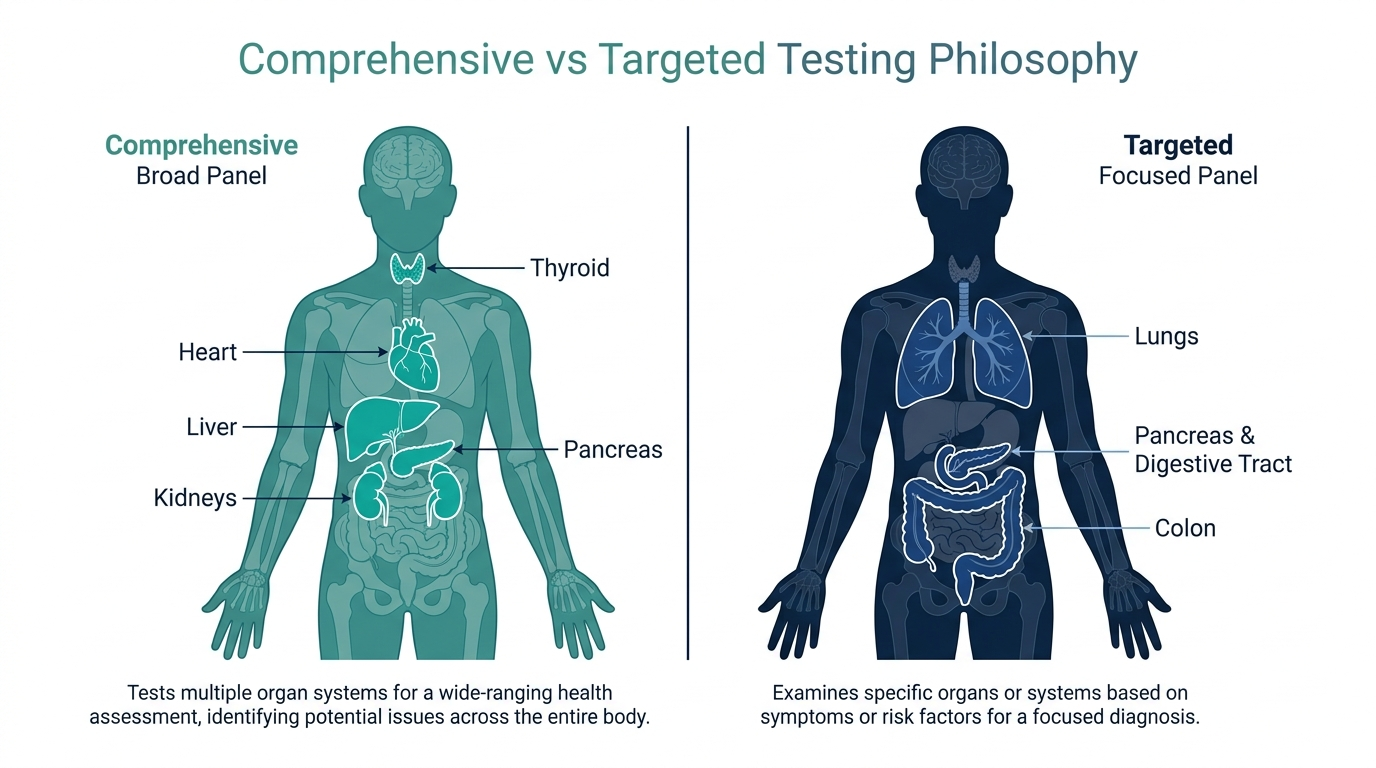
Function Health and Everlywell solve two different problems. Function Health is a membership for continuous, full-panel monitoring, while Everlywell is an a la carte kit shop for answering one question at a time. Below we score both on six fixed axes, where 5 is strongest.
Choosing between one-off kits and a full membership panel? See what 100+ biomarkers reviewed by a physician actually covers. One at-home Superpower draw checks 100+ biomarkers, physician-reviewed.
| Axis | Function Health | Everlywell |
|---|---|---|
| Price | Around $499/year membership. 3/5 (higher upfront, but covers two full draws) | Roughly $49 to $249 per kit. 4/5 (low entry, pay per panel) |
| Biomarkers covered | 100+ markers, tested twice a year. 5/5 | Focused single panels, a few to dozens of markers each. 3/5 |
| Sample method | Venous lab draw at a partner lab. 4/5 | At-home finger-prick, saliva, or urine by panel. 5/5 |
| Physician review | Clinician review of every result plus an action plan. 5/5 | Independent physician orders the test, results reviewed by board-certified physicians. 4/5 |
| Turnaround | Several days to about two weeks after the draw. 3/5 | Typically a few days after the lab receives your sample. 4/5 |
| Best for | Yearly full-body baseline and trend tracking. 5/5 | One targeted question, no subscription. 5/5 |
Function Health overview
Function Health is a yearly membership that gives you a wide, repeated lab panel with clinician review, not a one-off kit. For around $499 per year you get 100+ biomarkers with testing twice a year, all organized into a dashboard that tracks change over time. Pricing can shift, so see current pricing at Function Health before you buy.
The pitch is comprehensiveness. Instead of guessing which single panel to buy, Function tests across heart, hormones, thyroid, metabolism, nutrients, heavy metals, inflammation, liver, kidney, and autoimmunity in one sweep. A clinician reviews the results and you get a plain-language action plan, so the numbers come with context rather than a raw PDF.
Pros
- One of the widest standard panels available, with 100+ markers in a single draw.
- Two draws per year built into the price, which is what makes trending useful.
- Clinician review and an action plan on every result.
- A dashboard that keeps your history in one place.
Cons
- Highest upfront cost of the at-home category, and it is an annual commitment.
- Requires a venous lab draw, so it is not a fully at-home finger-prick experience.
- Pricing and availability can differ in some states such as New York and New Jersey.
- Overkill if you only want to check one thing, like thyroid.
Pricing: Around $499 per year for the full membership, with optional advanced add-ons available for an extra fee. See current pricing at Function Health, as plans can change.
SEE PLANS AT FUNCTION HEALTH →
Everlywell overview
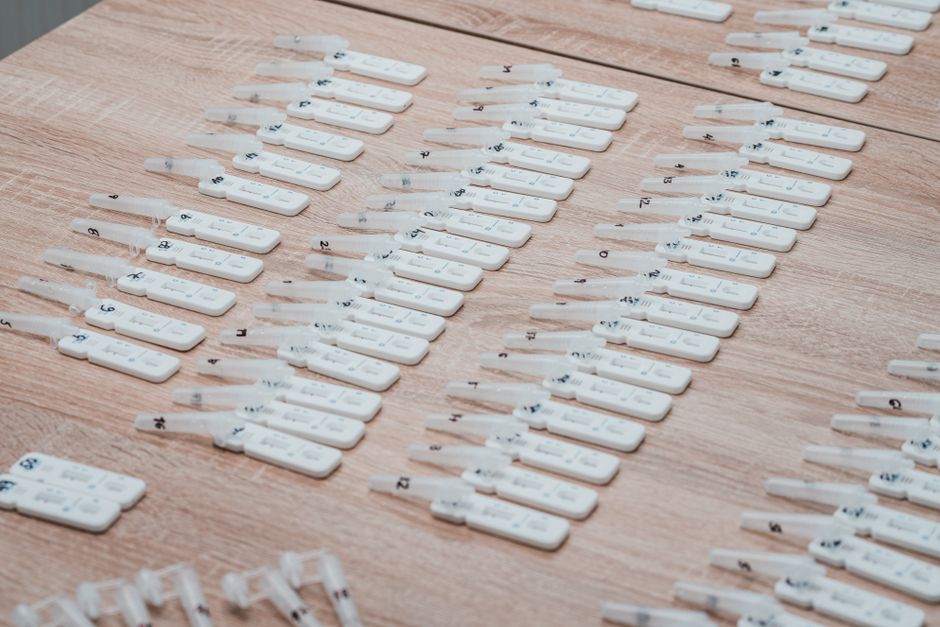
Everlywell sells individual at-home test kits, so you buy exactly the one panel that answers your question and skip the rest. Prices run from roughly $49 to $249 per kit, samples are collected at home, and they are processed by CLIA-certified labs with physician oversight.
The model is targeted and flexible. If you suspect a thyroid issue, you buy the thyroid kit (TSH, Free T3, Free T4, and TPO antibodies) for around $149. If you want to investigate food reactions, the food sensitivity panel screens IgG reactivity to dozens of foods. There is no membership required, and many kits are HSA and FSA eligible, though an Everlywell+ membership exists for people who test more often.
Pros
- Low entry price and no subscription required for one-off kits.
- True at-home collection by finger-prick, saliva, or urine depending on the panel.
- Wide menu of specific panels, so you pay only for what you need.
- Many kits are HSA and FSA eligible.
Cons
- Each kit covers a narrow set of markers, so a full-body picture means buying several kits.
- Costs add up fast if you stack multiple panels, eroding the price advantage.
- Some panels, such as IgG food sensitivity testing, are debated within the medical community.
- No single longitudinal dashboard the way a membership service offers.
Pricing: Roughly $49 to $249 per kit depending on the panel, with HSA and FSA accepted on many tests.

The verdict: which one should you choose?
There is no single winner here because the two services are built for different jobs. Match the tool to your goal rather than chasing the lower sticker price.
Choose Function Health if you want a recurring, whole-body baseline you can trend across the year, you value clinician review and an action plan on every marker, and you are comfortable with a venous draw and an annual fee. It is the better fit for a serious yearly checkup mindset where the goal is catching small changes early across many systems.
Choose Everlywell if you have one specific question right now, like thyroid, hormones, or metabolism, and you want a low-cost at-home kit with no subscription. It is the smarter buy when you do not need 100+ markers and would rather pay $49 to $249 for the exact panel that matters to you.
If your priority is longevity-style monitoring at a friendlier price than the premium memberships, it is worth comparing both against (around $199/year for 100+ biomarkers with a physician-reviewed dashboard). And if fast, finger-prick at-home blood testing is your main concern, SiPhox Health offers HSA and FSA eligible kits with quick turnaround.
SEE PLANS AT FUNCTION HEALTH →
SEE PLANS AT EVERLYWELL →
How to think about cost per biomarker, not sticker price
The headline numbers hide the real math. A $499 Function Health membership sounds expensive next to a $49 Everlywell kit, but you are not comparing the same thing. Function spreads more than 100 markers across two draws a year, so the cost per marker per draw lands in the low single digits. A single Everlywell kit that reads eight to twelve markers for $99 works out to a much higher price per marker, even though the upfront number is smaller.
The tipping point is how many questions you actually have. Run the arithmetic on your own situation before you decide:
- One question only. If you want thyroid checked and nothing else, a single targeted kit is almost always cheaper. There is no scenario where paying for 100+ markers beats a $149 thyroid panel when thyroid is all you care about.
- Three or more questions. Once you start stacking a thyroid kit, a metabolic kit, a hormone kit, and a vitamin kit, the individual prices climb past the membership total, and you still lack a single dashboard tying them together.
- Ongoing tracking. If you plan to retest twice a year to watch a number move, the membership model is built for that and the per draw math keeps improving. Buying repeat one-off kits does not.
A useful rule of thumb: count the panels you would realistically buy in twelve months. If that list is one or two kits, stay a la carte. If it is four or more, or you care about trending, the membership usually wins on both money and convenience.
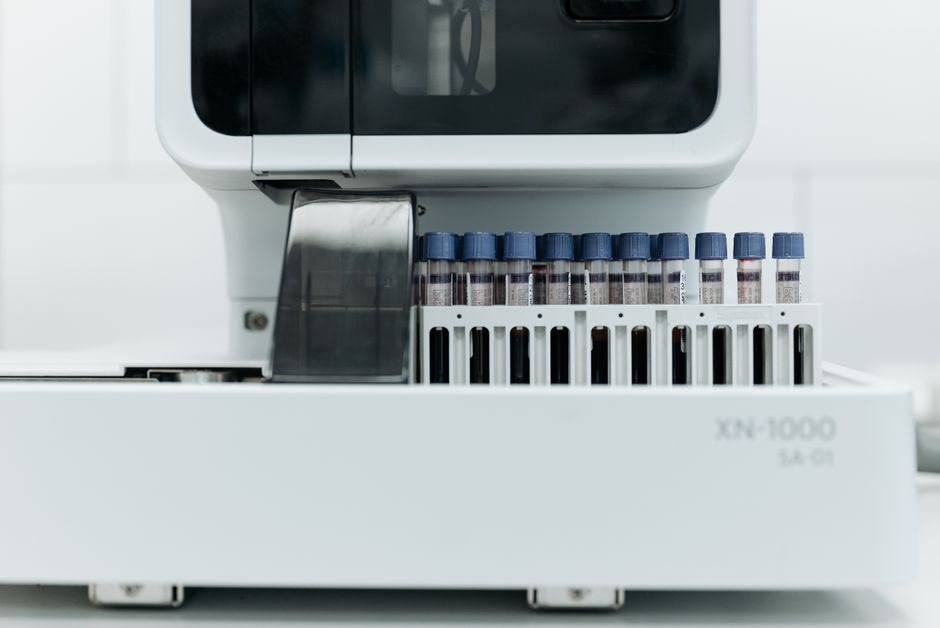
Venous draw versus finger-prick: what actually changes
Function Health uses a venous draw at a partner lab, while many Everlywell kits use an at-home finger-prick (capillary) or saliva or urine collection. This is not just a comfort question. The collection method affects which markers can be measured reliably and how easy it is to get a clean sample.
A venous draw pulls a larger, more stable volume of blood, which is why it remains the reference standard for panels that need many analytes at once or markers that are sensitive to sample handling. Finger-prick sampling is genuinely convenient and validated for many common markers, but it carries a higher risk of user error: squeezing the finger too hard can dilute the sample with tissue fluid, and a small clot or an underfilled collection card can skew a result or trigger a redraw request.
Practical takeaways when you choose a method:
- For a broad, multi-system panel you plan to trend over years, a venous draw gives the most consistent baseline.
- For a quick single-question check where convenience matters most, a well-designed at-home kit is reasonable, as long as you follow the warm-hand, hanging-arm, no-squeeze technique the instructions describe.
- Whichever you use, keep the collection method the same across retests. Comparing a finger-prick result to a venous result for the same marker can introduce differences that have nothing to do with your health.
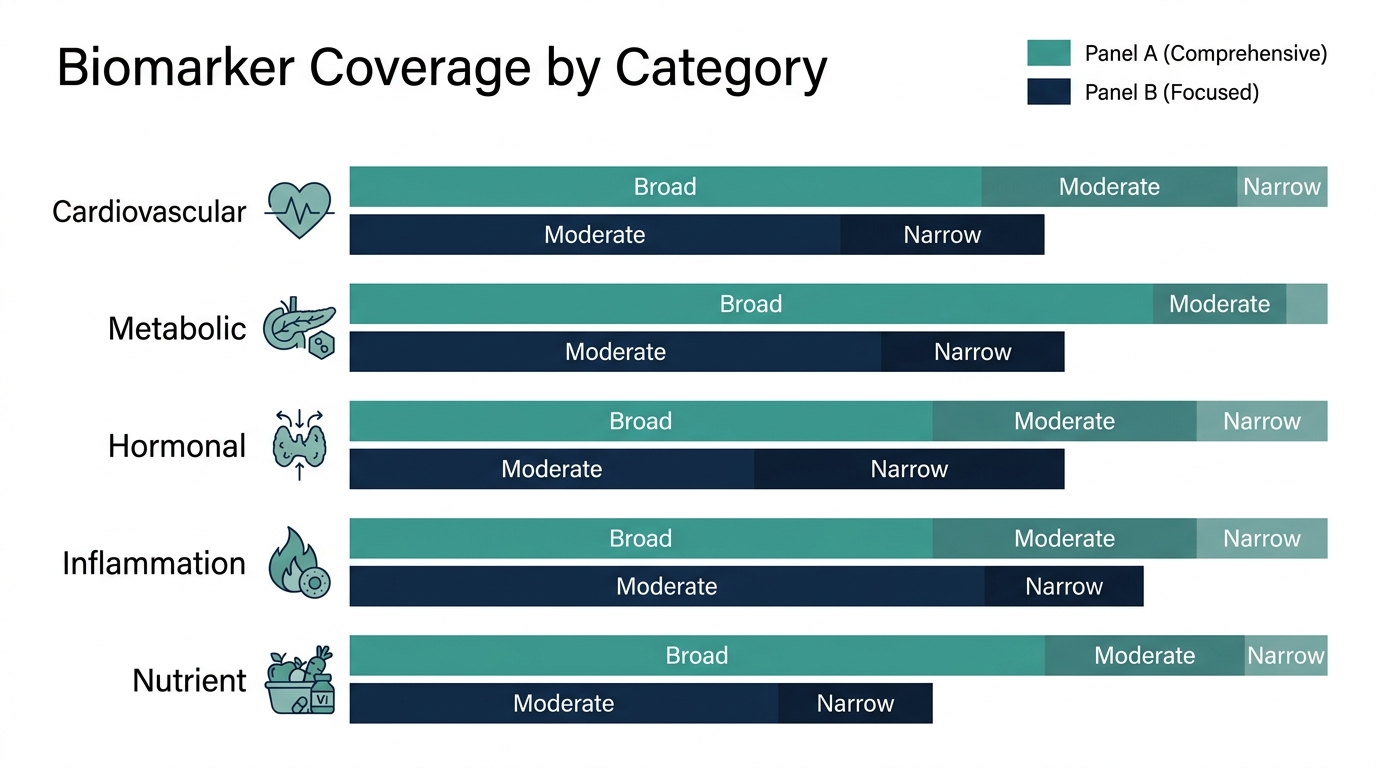
Which biomarker categories each service actually covers
Comparing “100+ markers” to “a focused panel” is vague until you look at the categories. Below is how the coverage tends to break down, so you can match a service to the systems you care about.
| System | Typical markers | Best served by |
|---|---|---|
| Heart and metabolic | Total, LDL, HDL cholesterol, triglycerides, ApoB, fasting glucose, HbA1c | Full membership panel for the complete picture; single kit if you only want a lipid check |
| Thyroid | TSH, Free T4, Free T3, TPO antibodies | Targeted thyroid kit is efficient and inexpensive |
| Hormones | Testosterone, estradiol, DHEA-S, cortisol, sex hormone binding globulin | Either, depending on whether you want hormones alone or in context |
| Nutrients | Vitamin D, B12, folate, ferritin, magnesium | Membership panel bundles these; single kits exist for vitamin D and B12 |
| Inflammation and organ | hs-CRP, liver enzymes (ALT, AST), kidney (creatinine, eGFR) | Broad membership panel, since these are rarely the reason people buy a single kit |
The pattern is clear. If your interest is a single system, a la carte kits are efficient. If you want the organ and inflammation markers that quietly matter for long-term risk, a broad panel captures them without you having to shop for each one.

Reading your results without overreacting
A wide panel can rattle you if you read every out-of-range flag as an alarm. Reference ranges are set so that a small percentage of perfectly healthy people naturally fall outside them, which means a broad panel will almost always return at least one mildly abnormal value. The skill is interpreting a result in context rather than in isolation.
A few sample scenarios that show why context matters:
- One nutrient low, everything else normal. A single low vitamin D in an otherwise clean panel usually points to a straightforward fix, not a systemic problem.
- A borderline value that has not changed. A number sitting just outside the range on two consecutive draws, with no upward or downward trend, is far less concerning than a marker moving steadily in the wrong direction.
- Two related markers disagreeing. If one marker looks off but the companion marker that should move with it looks normal, the odd result may be a fluke or a collection artifact worth repeating before you act.
This is exactly where physician review earns its keep. A clinician can tell you whether a flag is signal or noise, whether it needs a repeat test, and what, if anything, to do next. It is also why any borderline or unexpected result should be discussed with your own doctor rather than self-managed from a dashboard.
How to prepare so your results are trustworthy
Whichever service you pick, the quality of your result depends on how you collect the sample. Common preparation steps that reduce error:
- Fasting when required. Lipid and glucose panels are often measured after an overnight fast of roughly 8 to 12 hours. A late meal can nudge triglycerides and glucose upward. Check whether your specific panel calls for fasting.
- Consistent timing. Some markers, such as cortisol and testosterone, vary through the day. Testing at the same time of morning across draws makes your trend meaningful.
- Hydration. Being well hydrated makes a venous draw easier and can affect concentration-dependent readings.
- Note your supplements and medications. High-dose biotin can interfere with certain immunoassays, and some medications shift specific markers. Keep a list so your reviewer can interpret results correctly.
- Ship at-home samples promptly. Finger-prick cards and saliva tubes are time-sensitive. A sample that sits over a weekend before mailing can degrade and force a retest.
Privacy, data, and what happens to your results
Handing a company your blood results means handing them sensitive health data, so it is worth knowing how each model treats it. Both services store your results in an online account. A membership model like Function is designed around a persistent dashboard, which is the point but also means your history lives in one place over time. An a la carte model gives you results per kit, which some people prefer for a smaller data footprint.
Before you buy, it is reasonable to check a few things on each provider’s current policy: whether results are shared with third parties, whether you can delete your data and destroyed any retained sample, and whether the service is a covered entity under standard health privacy rules or operates under a consumer privacy framework instead. Policies change, so read the current version rather than relying on older summaries.
Matching the service to real-life scenarios
Abstract feature lists are hard to act on, so here is how the choice tends to play out for specific kinds of buyers. Find the one closest to your situation.
- The healthy person wanting a yearly baseline. You feel fine but want to catch quiet changes early across many systems. A broad membership panel with two draws and clinician review fits this better than piecing together kits, because the value is in the trend, not any single number.
- The person chasing one symptom. You are tired and suspect thyroid, or you want to check a lipid number your doctor mentioned. A single targeted kit answers the exact question for far less money, and you can always go broader later if the result raises new questions.
- The optimizer who retests often. You change your diet or training and want to see markers respond over months. A dashboard that keeps history in one place is worth more here than the lowest per-kit price, because comparing results is the whole point.
- The budget-conscious first-timer. You have never done at-home testing and do not want to commit to a yearly fee. Start with one inexpensive kit, learn how the process feels, and scale up to a membership only if you find yourself wanting more markers.
- The person in a state with testing restrictions. Direct-to-consumer lab testing is regulated differently across states, and availability or pricing can vary in places such as New York and New Jersey. Confirm the service ships and tests where you live before you pay.
What to do after you get your results
Testing is only useful if it changes something. A sensible sequence after any panel, targeted or broad:
- Separate flags from fluctuations. Note which values are clearly out of range versus barely outside it. Barely-outside numbers often normalize on a repeat test.
- Look for patterns, not single dots. Two related markers pointing the same direction is more meaningful than one marker alone.
- Bring the report to your own clinician for anything abnormal. At-home services flag and explain results, but they do not replace a doctor who knows your history. A genuinely abnormal or unexpected value deserves a real conversation and, if needed, confirmatory testing.
- Set a retest date. If you change something based on a result, decide up front when you will recheck the marker so you can tell whether the change worked.
- Keep the same conditions. Retest at the same time of day, with the same fasting status and collection method, so the comparison is fair.
The common mistake is treating a one-time panel as a verdict. A single snapshot is a starting point. The value compounds when you retest under consistent conditions and watch how your numbers move.
Turn what you just learned into action.
Superpower lets you test 100+ biomarkers from home, then re-check them over time so you can actually see progress, physician-reviewed at every step.
Frequently asked questions
Is Function Health or Everlywell cheaper?
Everlywell is cheaper to start, with single kits from about $49 to $249, while Function Health is around $499 per year. But Function includes two draws a year and 100+ markers, so per biomarker it can be the better value if you would otherwise buy several Everlywell kits.
Do either of these require a doctor visit?
No. Everlywell tests are ordered by an independent physician and collected at home, and Function Health uses a partner lab draw with clinician review built in. Neither requires you to book your own doctor appointment first.
Are the results from Everlywell and Function Health accurate?
Both use accredited labs. Everlywell processes samples at CLIA-certified labs, and Function Health runs venous samples through partner labs with clinician review. As with any test, accuracy also depends on following the collection instructions correctly.
Can I use HSA or FSA funds?
Many Everlywell kits are HSA and FSA eligible, and SiPhox Health kits are as well. Function Health membership eligibility can vary, so confirm with your benefits administrator before purchasing.
What if I only want to check one thing, like thyroid?
Then Everlywell is the better fit. You can buy just the thyroid kit (TSH, Free T3, Free T4, and TPO) for around $149 without committing to a yearly membership. Save Function Health for when you want the full-body annual picture.
Sources
- Function Health, Pricing and membership details, functionhealth.com/pricing
- Function Health, Membership pricing and biomarker details, functionhealth.com/pricing
- Everlywell, Thyroid Test product page, everlywell.com/products/thyroid-test
- Everlywell, Products and pricing, everlywell.com/products
- Everlywell+ At-Home Lab Testing Membership, everlywell.com/monthly-at-home-lab-testing-membership
- Medical News Today, “Everlywell Review 2026,” medicalnewstoday.com/articles/everlywell-review