You roll up your sleeve, the phlebotomist ties the band, and your brain asks the only question that matters in that moment: is this going to hurt? It is the most human reaction in the world, and it stops a surprising number of people from getting tests they actually need.
Once the needle pinch is behind you, that same draw can answer a lot more than one worry. One at-home Superpower draw checks 100+ biomarkers, physician-reviewed.
Here is the honest answer up front. A standard blood draw from a vein in your arm is a quick pinch, not an ordeal. The sensation most people dread is far bigger in the imagination than on the actual skin. Below is exactly what you will feel, why, and the few situations where it genuinely stings more.
Does it hurt to get a blood test?
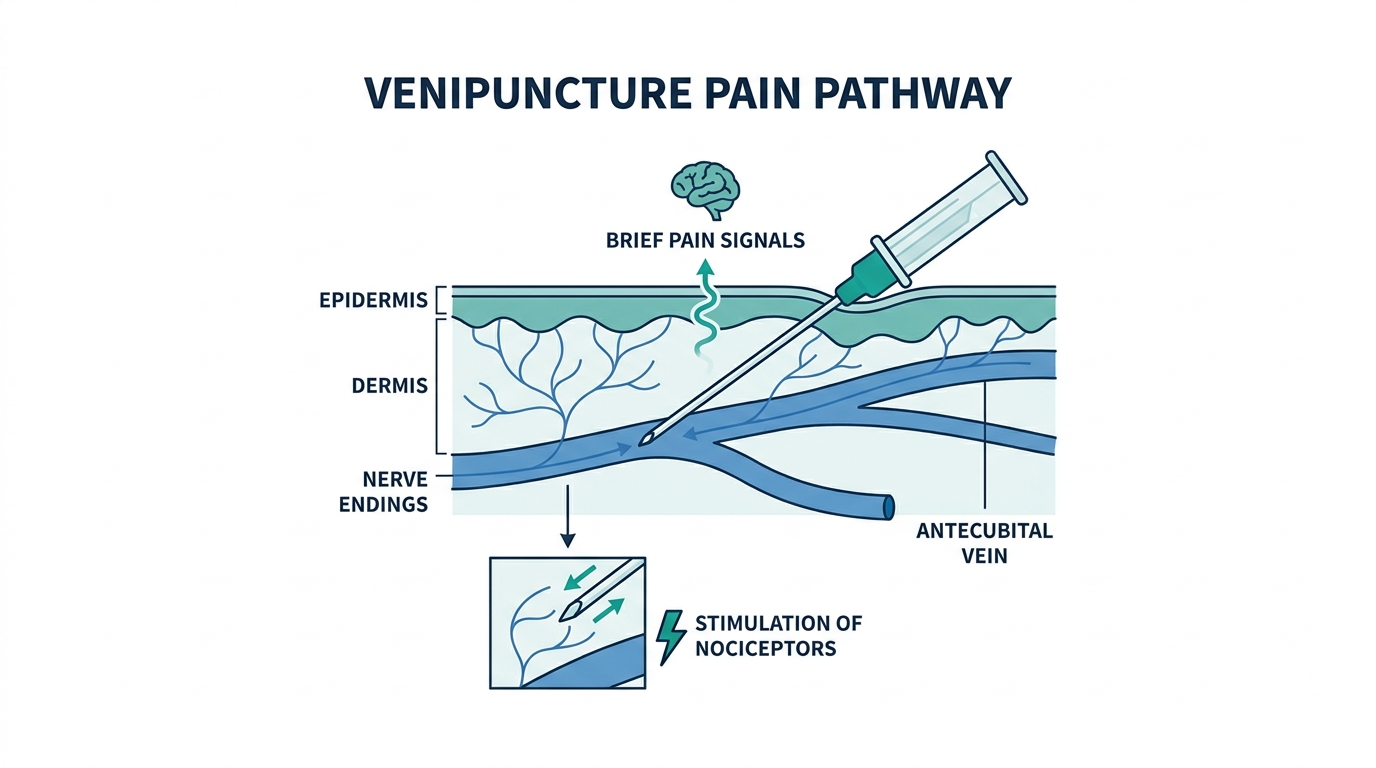
For a routine blood draw from a vein, the honest answer is: a little, briefly, and usually less than you expect. You may feel a slight sting or pinch when the needle goes in, and sometimes a faint throbbing afterward, but most of the discomfort is over in seconds (MedlinePlus). When people ask do blood tests hurt, what they are really picturing is a sharp, lasting pain. That is not what a vein draw usually delivers.
So does blood testing hurt at all? Yes, mildly. The needle has to cross your skin, and skin has nerve endings, so there is a real but small sensation. Cleveland Clinic puts it plainly: whether a blood test hurts depends on the kind of test, and phlebotomists are specifically trained to take samples quickly and without causing pain (Cleveland Clinic). The whole venipuncture usually takes less than five minutes, and the needle itself is in your arm for only a fraction of that.
What does a blood test actually feel like, second by second?
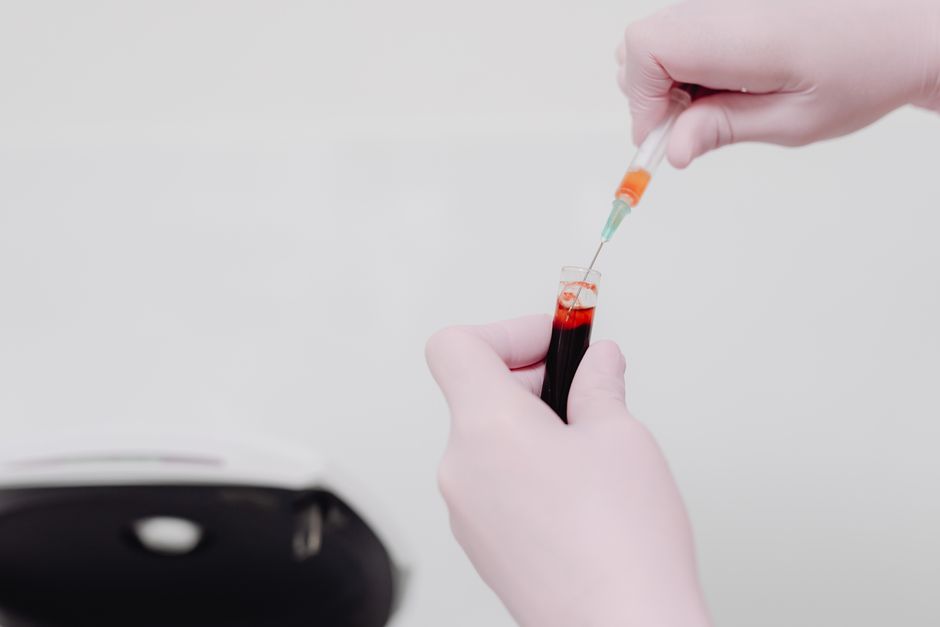
It feels like a quick pinch on the way in, then mostly pressure and waiting. The needle insertion is the sharpest moment, and it is genuinely brief. Here is the sequence so nothing surprises you.
- The clean. The phlebotomist wipes the inside of your elbow with antiseptic. Cold and wet, not painful.
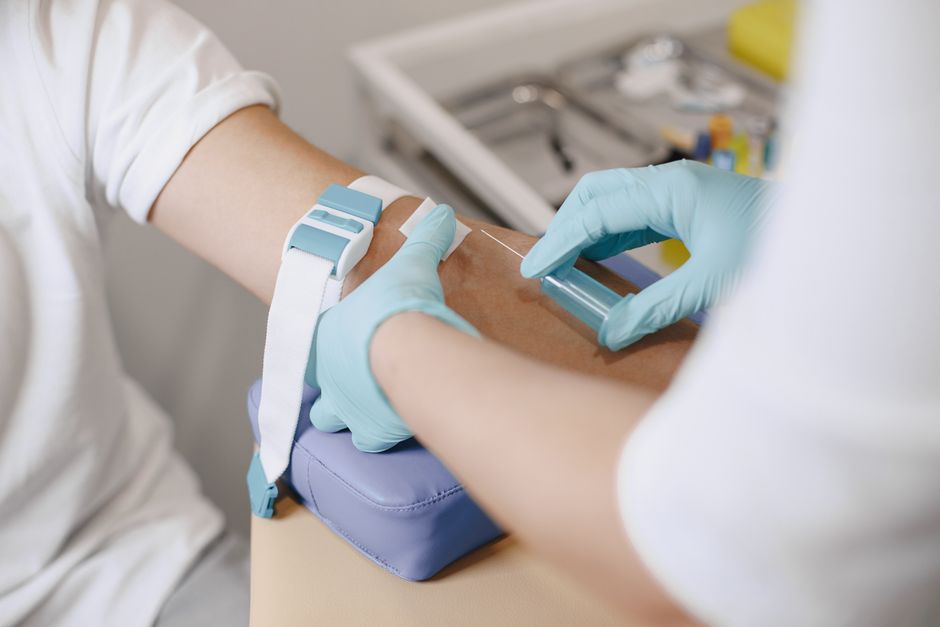
- The band. An elastic tourniquet goes around your upper arm so the vein swells and is easier to find. It feels tight, like a firm squeeze.
- The stick. This is the pinch. The needle goes into the vein and you may feel a slight sting (MedlinePlus). This is the part people fear, and it is over in roughly a second.
- The draw. Blood collects into the tube. You usually feel almost nothing here, maybe mild pressure. This is the longest part and the least painful.
- The finish. The needle comes out, a cotton ball and bandage go on, and you may feel some throbbing at the site afterward (MedlinePlus).
Notice that the scary part and the long part are not the same part. The needle is sharp for an instant, then you are just sitting still while tubes fill. People who expect a sustained pain are bracing for something that never comes.
Why does the needle hurt at all?
It hurts because the needle has to pass through your skin, and skin is packed with nerve endings whose entire job is to notice things crossing it. That brief sting is your nervous system doing exactly what it evolved to do. The good news is that the vein itself has very few pain receptors, which is why the draw phase, once the needle is parked in the vein, feels like so little.
The size of the needle matters less than people assume. Blood collection needles are thin, and a skilled phlebotomist enters at a shallow angle in one smooth motion, which is why a practiced draw can feel like almost nothing while a hesitant one can sting more. If a phlebotomist has trouble finding the vein and has to reposition the needle, that is when a routine draw turns uncomfortable (Cleveland Clinic). This is also why a good phlebotomist is worth more than a good needle.
Which blood tests hurt more than others?
The single biggest factor in how much a blood test hurts is whether the sample comes from a vein or an artery. A standard venous draw from your arm is the gentle version. An arterial sample is the one that genuinely stings more.
The clearest example is the arterial blood gas (ABG) test, which pulls blood from an artery, usually in your wrist, to measure oxygen and carbon dioxide. Cleveland Clinic is blunt about it: getting a blood sample from an artery is usually more painful than from a vein, because arteries sit deeper in your body and are surrounded by nerves (Cleveland Clinic). You may feel a sharp pain as the needle goes into the artery. MedlinePlus confirms the same pattern: collecting blood from an artery is more painful than from a vein, though serious complications are rare (MedlinePlus).
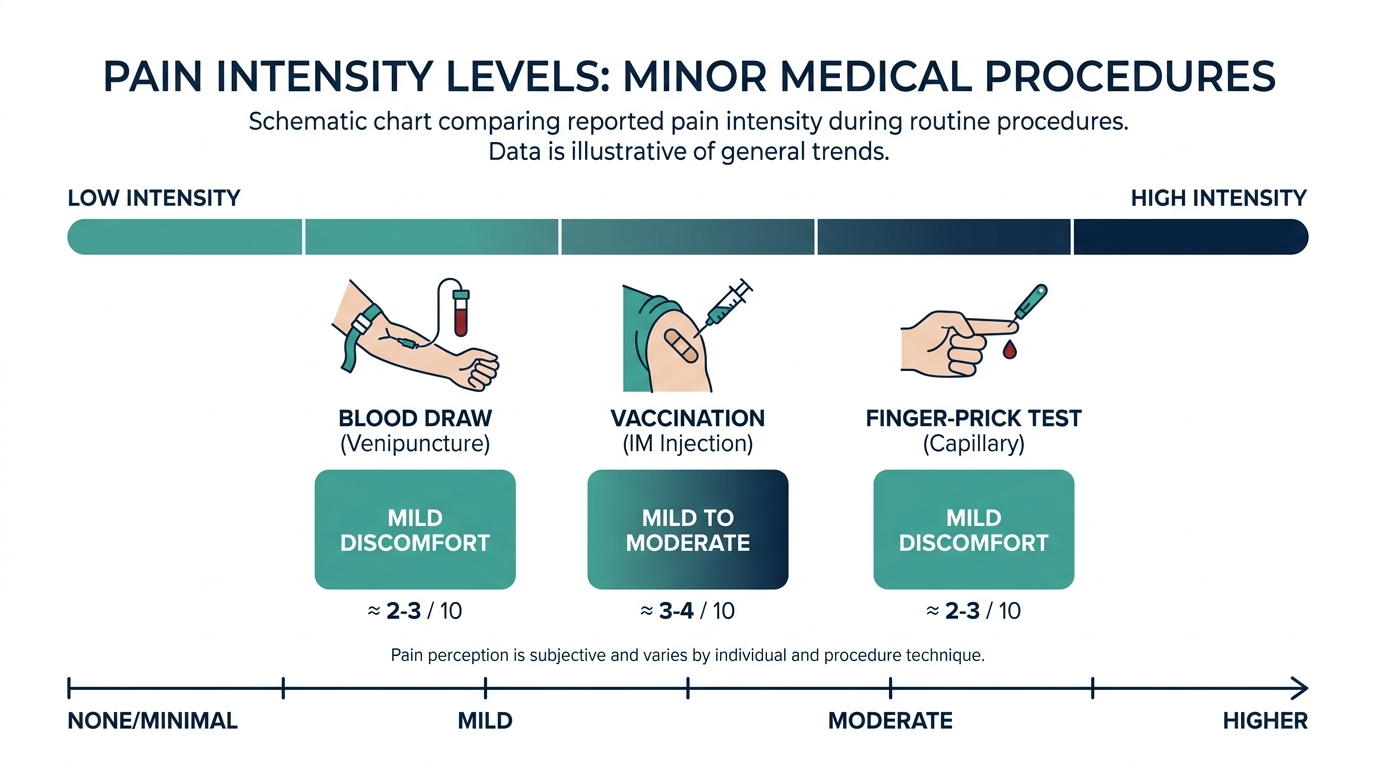
So do blood test hurt levels really change that much by type? Yes. A few practical comparisons:
- Venous draw (most blood work). The standard pinch. Mild and brief.
- Finger prick (glucose, some quick panels). A small jab on the fingertip. Fingertips are nerve-dense, so it can feel surprisingly sharp for a split second, but it is over instantly (MedlinePlus).
- Arterial draw (ABG). The most uncomfortable of the routine collections, for the anatomical reasons above (Cleveland Clinic).
The reassuring takeaway: the overwhelming majority of blood tests your doctor orders are venous draws. The arterial test that hurts more is reserved for specific situations, mostly involving breathing or oxygen problems, and is not part of your annual checkup.
Why does it hurt afterward, and is bruising normal?
Some soreness or a small bruise at the puncture site afterward is normal and not a sign anything went wrong. After the needle comes out, you may feel throbbing at the spot (MedlinePlus), and a bruise can appear over the next day or two. MedlinePlus describes the overall risk of a venous draw as very small: you may have slight pain or bruising at the spot where the needle went in, but most symptoms go away quickly (MedlinePlus).
A bruise forms when a little blood leaks out of the vein into the surrounding tissue. The simplest way to reduce it is to press firmly on the site for a minute or two after the needle is removed instead of bending your arm, which can reopen the tiny puncture. If you take blood thinners or bruise easily, mention it before the draw so the phlebotomist applies pressure for longer.
The insider truth: for most people, the fear hurts more than the needle
Here is what clinicians who draw blood all day know that the average patient does not. The intensity of pain you feel from a blood draw is shaped far more by your anxiety than by the needle itself. Tense muscles, a clenched arm, and a racing pulse all amplify the sensation, while a relaxed arm and a slow exhale genuinely dull it. The needle does not change. Your perception of it does.
This is why Cleveland Clinic’s coping tips are not soft fluff, they are pain management. The clinic recommends taking deep breaths as the needle goes in, looking away so you do not watch it enter, and distracting yourself, for example by silently counting to ten (Cleveland Clinic). These work because they interrupt the anticipation loop that turns a one-second pinch into a minute of dread.
There is a second insider point that matters for a real subset of people. A meaningful number of patients do not just dislike needles, they have a genuine vasovagal response: their blood pressure drops and they feel lightheaded or faint. If that is you, the worst thing you can do is tough it out silently. Tell the phlebotomist before they start and ask to lie down for the draw. Lying flat removes most of the fainting risk and changes the experience entirely. The pinch was never the real problem for these patients, the drop was, and that part is preventable.
The practical message: if fear of the needle has kept you from a blood test, the test you are avoiding is almost certainly easier than the version in your head. The discomfort is small, brief, and largely under your control.
How to make the draw easier before you even arrive
A surprising amount of what determines whether a draw is a quick pinch or a frustrating, multi-stick ordeal is decided before the needle ever comes out, and much of it is in your control. The core issue is simple: an easy-to-find vein means a fast, gentle draw, and a hard-to-find vein means poking, repositioning, and more discomfort.
- Hydrate well the day before and the morning of. Dehydration shrinks veins and makes them harder to access, while good hydration plumps them up and makes the blood less viscous, so it flows faster (SUNY Upstate). If your test requires fasting, water is almost always still allowed, so drink it.
- Keep your arm warm. Cold constricts veins. Wearing a jacket, keeping your sleeves down until the last moment, or warming your arm can make veins noticeably easier to find.
- Do not skip meals unless told to. Unless a fasting test is ordered, arriving having eaten normally helps you feel steadier and less likely to feel faint.
- Wear short or loose sleeves. Tight sleeves pushed up can act like a second tourniquet and make the arm uncomfortable during the draw.
- Point out your good vein. If you know from past draws that a particular spot works well, tell the phlebotomist. You are the expert on your own arm history.
These small moves matter most for people who have been told they are a “hard stick.” Warm, hydrated veins turn a difficult draw into a routine one, which is the single biggest lever for reducing pain, because the pain almost always comes from the searching, not the sticking.
The applied tension technique for people who feel faint
For the meaningful subset of people whose real problem is not pain but the risk of passing out, there is a specific, evidence-based tool worth knowing: applied muscle tension. It exists because fainting during a draw is caused by a sudden drop in blood pressure, and this technique props that pressure back up.
The method is straightforward. While seated, tense the large muscles of your body, your thighs, glutes, and core, and hold that tension for about ten to fifteen seconds until you feel a slight warmth in your face. Then release for twenty to thirty seconds. Repeat this cycle several times in the minutes before and during the draw (PsychCentral). By artificially raising your blood pressure, you counteract the exact drop that causes a vasovagal faint, which is why this technique is taught specifically for blood-injection phobia and even for blood donors prone to reactions (PubMed).
Two important caveats. Do not tense the arm being drawn from, since it needs to stay relaxed for the needle. And always tell the phlebotomist you tend to feel faint and ask to lie down, because lying flat plus applied tension nearly eliminates the fainting risk. If needles have made you avoid tests entirely because you once passed out, this pairing is often the thing that finally makes bloodwork manageable.
A calm breathing and distraction routine that actually works
Because anxiety amplifies the sensation of the needle, controlling your nervous system is genuinely a form of pain control, not just a nicety. A simple routine, done deliberately, reliably shrinks the experience.
- Slow the exhale. Breathe in through your nose, then let a long, slow breath out as the needle touches the skin. A drawn-out exhale calms the stress response and turns a sting into a pinch.
- Look away. Watching the needle enter feeds the anticipation loop. Turn your head, look at a spot on the wall, or close your eyes (Cleveland Clinic).
- Occupy your mind. Count slowly to ten, name objects in the room, or run through song lyrics. Distraction interrupts the dread that makes a one-second event feel long.
- Ask about numbing options. For people with severe fear, a topical numbing cream applied ahead of time or a cold spray at the site can dull the initial sensation. This is especially worth asking about for children.
The point is that the needle is a fixed, brief event. Everything that makes it feel worse, tension, watching, bracing, is on your side of the equation, and each of these habits chips away at it.
Helping a child through a blood test
Children feel the same brief pinch adults do, but their fear and their memory of it can be much larger, so how the draw is handled shapes how they feel about every future one. A few approaches make a real difference.
- Be honest but calm. Telling a child it will not hurt at all can backfire when it does pinch. Saying it will feel like a quick pinch and be over fast builds trust.
- Ask about numbing cream in advance. Applied to the site ahead of time, it can dull the stick for a nervous child.
- Use comfort positioning. Many pediatric settings let a parent hold the child upright on their lap rather than having them lie down, which feels far less frightening.
- Bring a distraction. A tablet, a favorite toy, or blowing bubbles gives the child something to focus on other than the arm.
- Keep your own calm. Children read a parent’s anxiety instantly, so a steady, matter-of-fact tone helps more than reassurance delivered nervously.
The goal is not just this one draw but preventing a lasting needle fear, which is one of the most common reasons adults avoid medical care. A well-handled childhood draw pays off for decades.
When mild soreness becomes something to mention
The vast majority of draws leave nothing but a tiny mark or a small bruise that fades in a day or two. But it helps to know the difference between normal aftereffects and the rare signs worth a call, so you neither worry needlessly nor ignore something real.
- Normal: a brief throb, mild tenderness, and a small bruise at the site. Pressing firmly for a minute or two afterward, rather than bending your arm, minimizes bruising.
- Worth watching: a larger bruise if you take blood thinners or bruise easily, which is expected but resolves on its own. Mention such medications before the draw so pressure is held longer.
- Worth a call: spreading redness, increasing warmth, significant swelling, or pain that worsens over the following days rather than fading, which can rarely signal an infection or a larger collection of blood under the skin.
- Numbness or tingling that persists down the arm is uncommon and worth reporting, since it can indicate irritation of a nearby nerve.
These serious outcomes are genuinely rare for a routine venous draw, whose overall risk is very small (MedlinePlus). Knowing the short list simply lets you relax about the ordinary bruise while staying alert to the unusual case.
Does the draw site change how much it hurts?
Not every draw comes from the crook of your elbow, and the site does change the sensation. The inner elbow, the antecubital fossa, is the default for a reason: the veins there are usually large, close to the surface, and well anchored, which makes for the quickest and gentlest stick. When those veins are not available, the phlebotomist may look elsewhere, and it helps to know what to expect.
- Back of the hand. Hand veins are smaller and sit closer to nerves and tendons, so a draw here often feels a bit sharper than the inner elbow. It is a common backup when arm veins are hard to find, and a smaller butterfly needle is usually used to make it more comfortable.
- Forearm or wrist area. Occasionally used when other sites fail. The wrist is more sensitive, which is part of why arterial samples taken there are known to sting more.
- Butterfly (winged) needles. These thinner, more flexible needles are often chosen for small or fragile veins, for children, and for the hand. Many people who dread draws find a butterfly noticeably gentler, so it is reasonable to ask whether one is an option.
The general rule is that bigger, shallower veins hurt less, which is exactly why the inner elbow is the standard. If you have a history of difficult draws from your arm, mentioning that up front lets the phlebotomist choose the site and needle most likely to work on the first try, and the first try is almost always the most comfortable one.
Will more tubes mean more pain or feeling weak?
A common worry is that a long list of ordered tests, and the row of tubes that comes with it, will mean more pain or leave you feeling drained. In practice, neither fear holds up. The needle is inserted once, and the tubes are filled in sequence through that same needle, so the number of tubes has no effect on how much the stick hurts. Whether one tube or eight are collected, you feel a single pinch.
The total volume is also far smaller than most people picture. A typical multi-tube blood panel collects only a modest amount of blood, a small fraction of what the body holds and replaces continuously, and dramatically less than a whole blood donation. That is why a routine draw, even a comprehensive one, does not leave healthy adults feeling weak. Any lightheadedness that does occur is almost always the vasovagal response to the situation rather than the volume taken. Eating normally beforehand when no fasting is required, staying hydrated, and sitting for a moment after the draw are enough to keep the vast majority of people steady even after a full panel.
Curious what your own levels look like?
Baseline 100+ biomarkers today and retest as life changes, all in one membership with physician review.
Frequently asked questions
Does it hurt to get a blood test from your arm?
Usually only a little. A standard venous draw causes a brief sting or pinch when the needle goes in, sometimes with mild throbbing afterward, and most of the discomfort is over in seconds (MedlinePlus). Phlebotomists are trained to take samples quickly and with minimal pain (Cleveland Clinic).
Why did my blood test hurt more this time?
The most common reason is that the phlebotomist had trouble finding the vein and had to reposition the needle, which makes a routine draw more uncomfortable (Cleveland Clinic). Tense muscles, dehydration, and anxiety can also make the same needle feel sharper.
Does getting a blood test hurt more than a flu shot?
For most people they are roughly comparable, both a quick pinch. A vein draw and a routine vaccine both cross the skin briefly, and the sensation is mild. An arterial blood gas test is the exception that hurts more, because arteries are deeper and surrounded by nerves (Cleveland Clinic).
How long does the pain from a blood test last?
The sharp part lasts about a second, during needle insertion. Afterward you may feel some throbbing at the site (MedlinePlus), and any soreness or small bruise usually fades within a day or two. Most symptoms from a venous draw go away quickly (MedlinePlus).
What can I do if I am scared of needles?
Tell the phlebotomist before they start. Take slow deep breaths as the needle goes in, look away, and distract yourself such as by counting to ten (Cleveland Clinic). If you tend to feel faint, ask to lie down for the draw, which sharply reduces the risk of a vasovagal reaction.
This article is for general educational purposes and is not medical advice. It cannot diagnose or treat you and does not replace your clinician. Always discuss your lab results and any health decisions with a qualified healthcare professional.
Related reading
Vital Signs Today may earn a commission if you buy through links on this page. It does not affect our editorial assessments.