Medically reviewed by the VST Editorial Board. Last updated July 3, 2026. This article contains affiliate links.
A safari drive at Ranthambore runs about three and a half hours with no toilet stop. Which is why half the vehicle quietly stops drinking water, in 40 C heat, on purpose.
Ranthambore National Park in Rajasthan is open from 1 October to 30 June, closes zones 1 to 5 during the July to September monsoon, and runs two safaris a day timed to sunrise and sunset, each about three and a half hours long. The park is one of India’s most reliable places to see a wild tiger. It is also hot, dusty and physically rougher than the brochure suggests, and the two things most likely to spoil a visit are heat and a booking mistake, not the wildlife. Here is the practical brief.
Key takeaways
- Core zones 1 to 5 close for the monsoon from July to September. Zones 6 to 10 stay open, subject to weather, generally on current booking only.
- May is the hottest month, with daytime highs around 44 C (110 F) in the Sawai Madhopur area. November to April is the comfortable window.
- Any bite, scratch or lick on broken skin from a monkey, dog or other mammal needs same day medical care for rabies. This is the one wildlife risk that actually affects tourists.
When is the park open, and which zones?
Ranthambore opens on 1 October and closes on 30 June each year, with the July to September monsoon reserved for the forest to recover. During those monsoon months zones 1 to 5, the core zones, are closed, while zones 6 to 10 remain open subject to conditions. Monsoon safaris usually run on current booking rather than advance permits, and the forest department can cancel any shift without notice when tracks are unsafe.
Both morning and afternoon safaris last roughly three and a half hours. The park gate opens about half an hour after sunrise and the afternoon drive ends about half an hour before sunset, so the exact times shift through the season rather than staying fixed.
| Period | Conditions | What it means for you |
|---|---|---|
| October to November | Post monsoon, green, pleasant | Beautiful, denser cover, sightings less concentrated |
| December to February | Cool days, cold dawns | Most comfortable. Bring a real jacket for the morning drive |
| March to April | Warming, vegetation thinning | Strong sighting odds, still manageable heat |
| May to June | Highs around 40 to 44 C | Best sightings at waterholes, hardest on the body |
| July to September | Monsoon, core zones closed | Zones 6 to 10 only, weather dependent |
The uncomfortable truth about May and June is that they offer the best odds of a sighting precisely because water is scarce and animals concentrate at waterholes. You are trading physiological comfort for photographs. That is a legitimate trade for a fit adult and a poor one for a family with a toddler or a grandparent with heart disease.
How do you handle the heat on a three and a half hour drive?
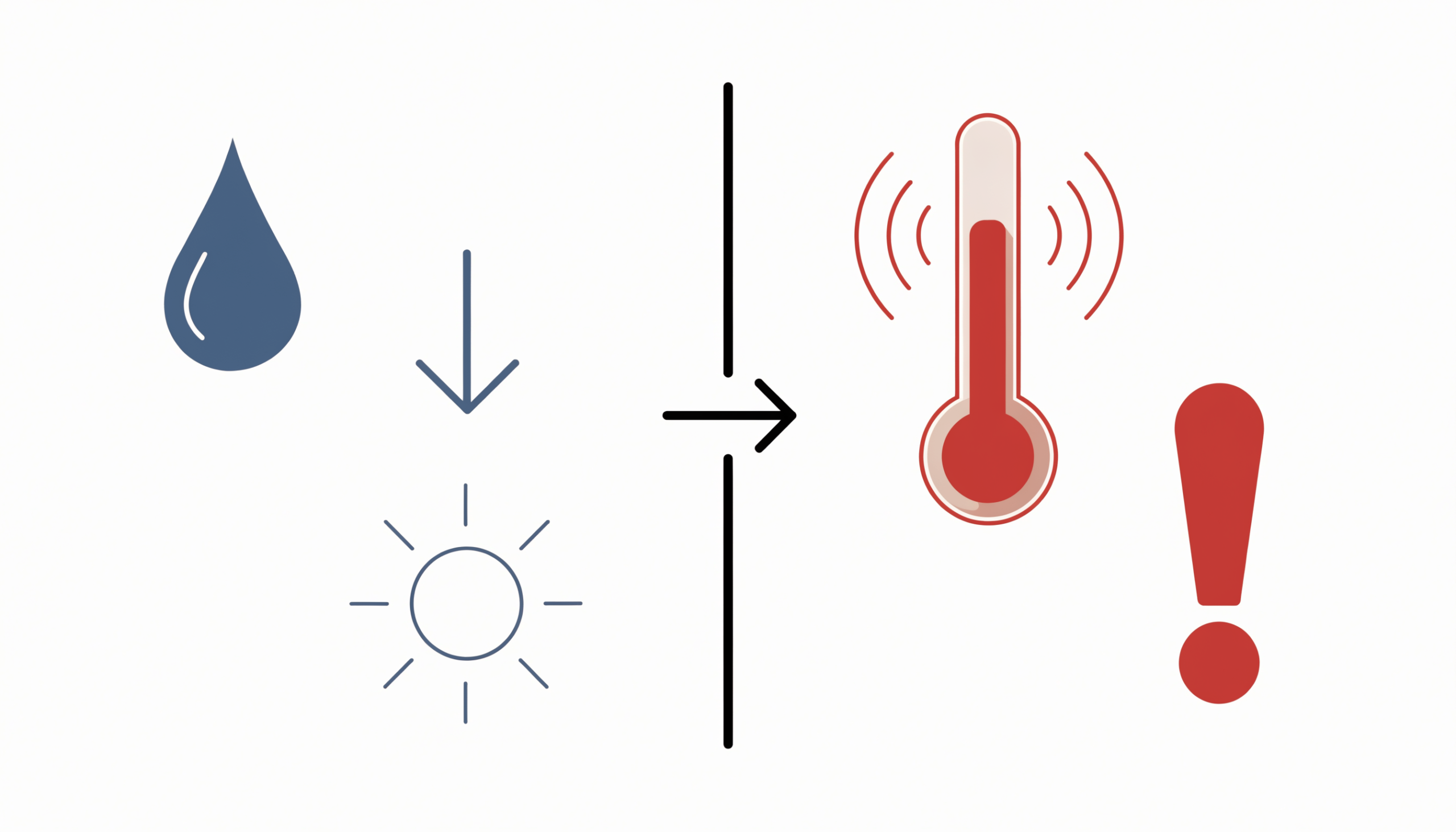
Start by rejecting the fluid restriction strategy. Skipping water because there is no toilet is how people arrive back at the lodge with a headache, dark urine and a heat injury brewing. Drink normally, accept the discomfort, and remember that in dry 40 C heat you lose a surprising amount through sweat that evaporates before you notice it.
Add electrolytes rather than water alone on the hot months’ drives. Oral rehydration sachets work and weigh nothing.
Cover up instead of stripping down. Loose long sleeves in light colours, a wide brimmed hat, and sunglasses beat a t shirt and sunscreen alone, and they double as dust protection.
Learn the two heat emergencies. Heat exhaustion looks like heavy sweating, weakness, nausea, headache and clammy skin, and it responds to shade, cooling and fluids. Heat stroke means core temperature above about 40 C plus confusion, agitation, slurred speech or collapse, and it is a medical emergency needing immediate cooling and help. On an open safari vehicle at midday, the person most likely to miss the transition is the person having it.
The lodge decides how recoverable the hot months are
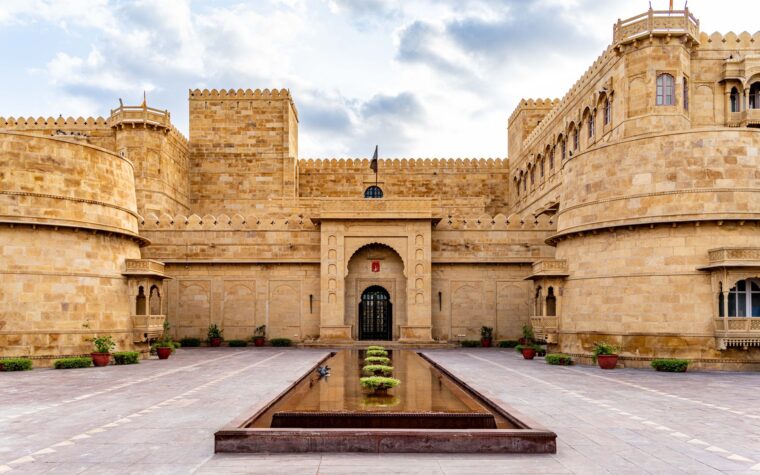
Between a 5:30 a.m. departure and a 2:30 p.m. one, the middle of the day is the recovery window, and a cool room, reliable drinking water and a pool are the difference between two safaris a day and one. The Oberoi Vanyavilas sits directly beside the reserve, which also removes the pre dawn transfer from your sleep budget.
See Oberoi Vanyavilas at Ranthambhore
Affiliate link. We may earn a commission at no cost to you.
On the accommodation side, the reserve edge properties are covered in our guide to Oberoi Hotels, and the mid tier city alternatives in Trident Hotels.
What is the real wildlife risk?
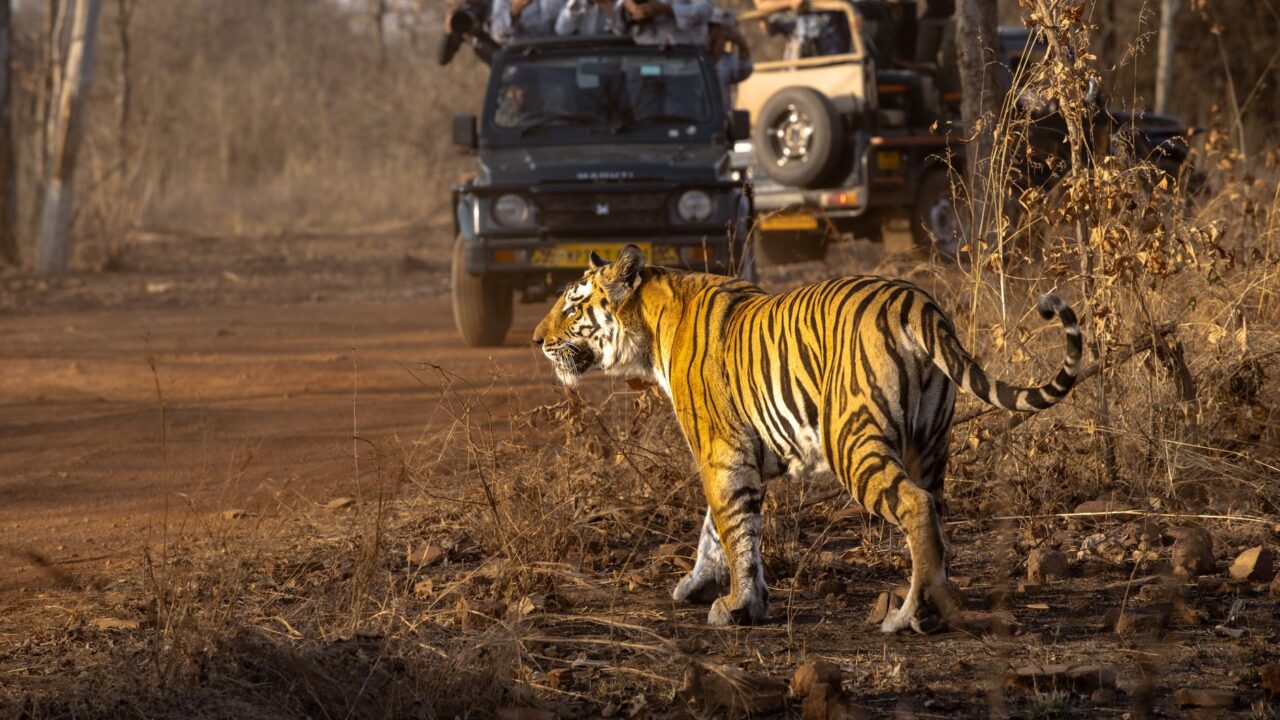
Not the tigers. In a permitted vehicle with a guide, tiger encounters are the safest part of the day. The risk that actually sends travelers to a clinic is rabies exposure from monkeys and free roaming dogs around the fort, the town and the lodges.
The protocol if you are bitten, scratched, or licked on broken skin: wash the wound with soap and running water for a full 15 minutes, apply an antiseptic, and get medical care the same day. Rabies is essentially always fatal once symptoms appear and essentially always preventable with prompt post exposure treatment. Pre exposure vaccination, discussed at your pre travel appointment, simplifies what you need afterwards but does not remove the need for care.
Do not feed monkeys, do not hold food visibly at the fort, and keep an eye on children, who get bitten far more often than adults do.
What should you sort medically before you fly?
Book a travel health appointment four to six weeks before departure. For Rajasthan the discussion usually covers routine vaccines including measles, hepatitis A, typhoid, and depending on your itinerary hepatitis B and rabies. Malaria risk in Rajasthan is low but not zero, so bite avoidance measures matter and chemoprophylaxis is a decision for your clinician based on season and route. Full timing rules are in our guide to travel vaccinations.
Pack rehydration salts and loperamide, and know when loperamide is the wrong drug. Our guide to travelers’ diarrhea covers that, and it applies identically in India.
If you use a reliever inhaler, carry it on the vehicle. Open jeeps and canters raise dust continuously on dry tracks, and that is a predictable trigger.
What to actually pack for the drive
- Water, plus electrolyte sachets in the hot months
- Wide brimmed hat, sunglasses, high SPF sunscreen
- A buff or light scarf for dust, which matters more than most people expect
- Neutral coloured long sleeves. Avoid bright white and heavy fragrance
- A warm layer for December and January dawns, which are genuinely cold in an open vehicle
- Binoculars, and a camera you can hold steady on a moving track
- Your ID, because permits are name matched at the gate
(An aside on the vehicles: a jeep of six is a different experience from a canter of twenty, and the difference is not only comfort. Fewer people means less noise, and on rough tracks a smaller vehicle takes the jolts better. If you have a back problem, that choice is medical rather than aesthetic.)
Everything above has to fit in one small bag
Water, salts, inhaler, buff, sunscreen and a camera is a daypack, not pockets. G4Free makes the lightweight packable kind that folds into a suitcase and survives being thrown into a jeep footwell twice a day.
Affiliate link. We may earn a commission at no cost to you.
When should you see a doctor?
Get medical care the same day for:
- Any animal bite, scratch, or lick on broken skin, including from a monkey
- Confusion, agitation, slurred speech or collapse in the heat
- Fever above 102 F (38.9 C), bloody diarrhea, or vomiting you cannot stop
- Chest pain, breathlessness at rest, or fainting
- A wound that is spreading redness, or any deep cut on dusty ground, which raises tetanus questions
After you get home, see a doctor and say you were in India if you develop a fever within three months, since fever after travel to any malaria risk area is treated as an emergency until proven otherwise, or if diarrhea lasts more than two weeks.
Frequently asked questions
What is the best time to visit Ranthambore?
November to April for comfort, March to June for the highest chance of a sighting. Zones 1 to 5 are closed July to September.
How many safaris should I book?
At least three drives across two days. Tiger sightings are probabilistic, and a single drive is a coin toss with poor odds.
Are safaris safe for children?
Generally yes in the cooler months. In May and June the heat, the duration and the absence of toilets make it hard on young children.
Do I need malaria tablets for Rajasthan?
Risk is low but present. Discuss it with a travel clinician rather than assuming either way, and use bite avoidance regardless.
Is Ranthambore worth it if I only have two nights?
Yes, if you book three or four drives across those nights and accept that you may not see a tiger. Treat a sighting as a bonus rather than the reason for the trip.
The bottom line
Go between November and April if comfort matters, book at least three drives, drink through the whole safari instead of rationing, cover your skin rather than baring it, and treat any monkey bite as a same day medical event. The tigers are the easy part. The heat and a bad booking are what actually ruin the visit.
Sources
- Centers for Disease Control and Prevention. CDC Yellow Book, destination guidance for India. cdc.gov
- World Health Organization. Rabies fact sheet and post exposure prophylaxis guidance. who.int
- Centers for Disease Control and Prevention. Heat stress and heat related illness guidance. cdc.gov
- National Travel Health Network and Centre. India country information. travelhealthpro.org.uk
This article is for general information and is not medical advice. See our medical disclaimer.