Disclosure: Vital Signs Today may earn a commission if you buy through links on this page, at no extra cost to you. This does not influence our evidence-based assessments. We are not a medical provider; talk to a clinician before acting on test results.
The lp(a) test measures your level of lipoprotein(a), a type of cholesterol particle that is largely determined by genetics and is an independent risk factor for heart disease and stroke. Unlike LDL cholesterol, Lp(a) levels do not change much with diet or exercise, making the test a critical tool for uncovering hidden cardiovascular risk. It is one of the few heart markers that can flag a person as high risk decades before any symptom appears, and it is one of the most under-ordered tests in routine practice. If you have ever been told your cholesterol looks fine while a close relative had a heart attack in their forties, Lp(a) is often the missing piece.
Key Takeaways
- Lp(a) is a genetically inherited form of cholesterol that increases the risk of heart attack, stroke, and aortic valve narrowing. About 1 in 5 people (roughly 20 percent) carry elevated levels.
- Standard cholesterol panels do not measure Lp(a); a separate blood test is required.
- The test is recommended for people with a family history of early heart disease, unexplained high cholesterol, or a personal history of cardiovascular events.
- Results are reported in nanomoles per liter (nmol/L), now the preferred unit, or milligrams per deciliter (mg/dL), with levels at or above 50 mg/dL (or 125 nmol/L) generally considered high.
- Lp(a) is measured once in most people because the value is set by your genes and stays roughly stable for life.
- As of 2026 no drug is FDA approved specifically to lower Lp(a). Diet and exercise have little effect, and statins can even raise Lp(a) slightly; targeted therapies are still in clinical trials.
What is an lp(a) test?
The lp(a) test is a blood test that measures the concentration of lipoprotein(a), a variant of low density lipoprotein (LDL) cholesterol that contains an extra protein called apolipoprotein(a). This added protein makes Lp(a) particles more likely to stick to artery walls and promote blood clots. Because Lp(a) levels are about 70% to 90% determined by genetics, they remain stable throughout life and are not significantly affected by diet, exercise, or common cholesterol medications like statins. For most people the test is a once-in-a-lifetime measurement, because the genetically fixed result rarely changes.
Structurally, an Lp(a) particle looks like an LDL particle with a long tail. That tail, the apolipoprotein(a) protein, comes in different lengths from person to person because the gene that codes for it, called LPA, contains a variable number of repeated segments. People who inherit a short version tend to make more Lp(a) and carry a higher lifetime risk, while those with a long version make less. This is why Lp(a) tracks so tightly through families and why it does not respond to the lifestyle levers that move LDL. Your body decided your Lp(a) production rate before you were born, and no amount of clean eating rewrites that instruction.
The apolipoprotein(a) tail is also the reason Lp(a) is so mechanically dangerous. Its shape resembles plasminogen, the protein your body uses to dissolve clots. When Lp(a) crowds the same docking sites, it quietly blunts your natural clot-clearing system at the same time it is depositing cholesterol into the artery wall. In other words, a single particle can both build plaque and make a clot on top of that plaque harder to break down. That double action is what separates Lp(a) from ordinary LDL and explains why it earns a separate line on any serious cardiovascular workup.
Why is high lp(a) dangerous?
The simplest way to actually get this done
Superpower is a full-body lab membership that runs 100+ biomarkers, has each result reviewed by a doctor, and tracks your numbers year over year (about $199/year). It is what we point readers to when they would rather get one clean, complete draw than chase single tests one at a time. Here is superpower reviewed in full.
High levels of Lp(a) contribute to cardiovascular disease in three main ways. First, Lp(a) particles can enter the artery wall, become oxidized, and trigger inflammation, leading to plaque formation. Second, because of its structure, Lp(a) can inhibit the breakdown of blood clots, raising the risk of thrombosis. Third, Lp(a) can deposit calcium in the aortic valve, speeding up aortic stenosis. Observational studies have shown that people with Lp(a) levels at the 90th percentile have roughly a two to three fold higher risk of heart attack and stroke compared to those with lower levels. This risk is independent of other factors such as LDL cholesterol, blood pressure, and smoking.
The word independent is the part clinicians want you to hear. It means the risk from Lp(a) stacks on top of everything else. Two people can have identical LDL, identical blood pressure, and identical A1C, yet the one with high Lp(a) is walking a steeper road. That is why a person who does everything right, never smokes, stays lean, exercises, and still ends up in a cardiac cath lab in their fifties is often carrying a high Lp(a) that nobody thought to check. The marker does not care how disciplined you are, which is exactly why finding it early matters.
Aortic valve disease deserves its own mention because most people associate cholesterol only with heart attacks. Elevated Lp(a) is one of the strongest known predictors of calcific aortic stenosis, the slow stiffening and narrowing of the valve that eventually needs surgical or transcatheter replacement. If you have a family history of valve replacement rather than heart attacks, high Lp(a) can still be the thread connecting those relatives.
What are the symptoms of high lp(a)?
Here is the uncomfortable answer: high Lp(a) has no symptoms of its own. You cannot feel it, it does not raise your blood pressure in a way you notice, and it produces no ache, fatigue, or warning sign. The first symptom is often the event it caused, a heart attack, a stroke, or a murmur that turns out to be a narrowing aortic valve. This silence is precisely why the marker is so treacherous and why testing is the only way to know. Waiting for your body to tell you is not a strategy, because by the time it speaks, damage has usually accumulated for years.
Because it is silent, the practical signal that should push you toward a test is not a feeling but a pattern in your family: an early heart attack, a stroke before old age, a relative on a statin since their thirties, or a valve replacement. Those clues in your relatives are the closest thing high Lp(a) has to a symptom, and they belong to you as much as to them.
Who should get an lp(a) test?
Not everyone needs an lp(a) test, but several groups benefit from screening. The American Heart Association and the European Atherosclerosis Society recommend testing for people with a family history of premature coronary artery disease (heart attack before age 55 in men or 65 in women), for those with a personal history of cardiovascular events despite well controlled risk factors, and for individuals who have a family member with high Lp(a) known from a prior test. People with familial hypercholesterolemia or a history of aortic stenosis should also be tested. Some experts suggest considering testing once in all adults to better stratify cardiovascular risk.
The trend in guidelines is moving toward testing everyone at least once, and the logic is simple. Because Lp(a) is stable for life, a single measurement gives you information you can act on for decades, and it costs very little. The European Atherosclerosis Society has been especially direct in recommending a once-in-a-lifetime measurement for all adults. If you fall into any of these buckets, do not wait for a symptom, because as noted above there is no symptom to wait for:
- A parent or sibling who had a heart attack or stroke before age 55 (men) or 65 (women).
- Your own heart attack, stroke, or stent despite normal cholesterol and blood pressure.
- A known family member with high Lp(a), since it is inherited in a predictable pattern.
- A diagnosis of familial hypercholesterolemia or persistently high LDL that runs in the family.
- Early or unexplained aortic valve narrowing.
- Simple curiosity backed by the desire to plan, since one draw covers you for life.
There is also a cascade argument. If your Lp(a) comes back high, your children, siblings, and parents each have roughly a coin-flip chance of carrying it too, so your result is a reason for the whole family to test. This is the same cascade logic used for familial high cholesterol, and it turns one test into protection for several people.
How is the lp(a) test performed?
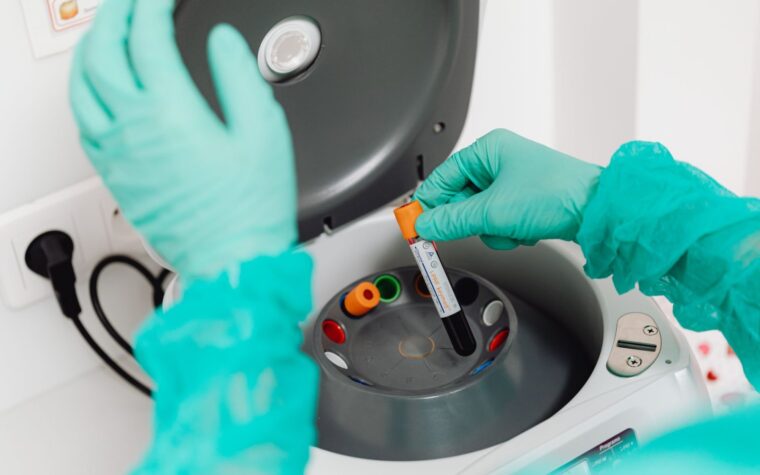
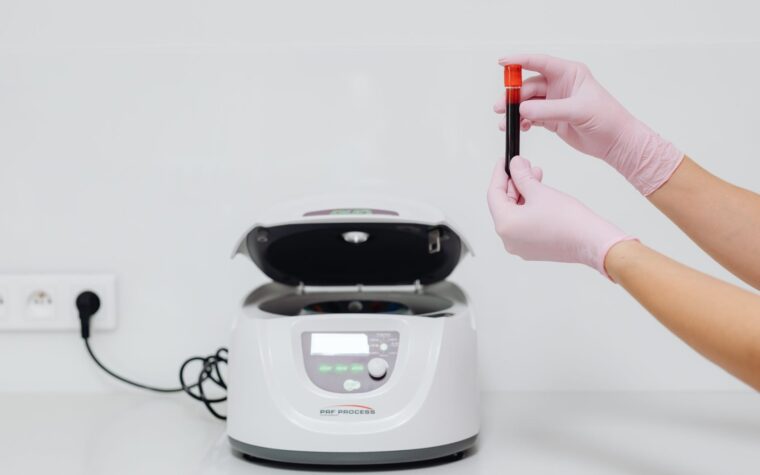
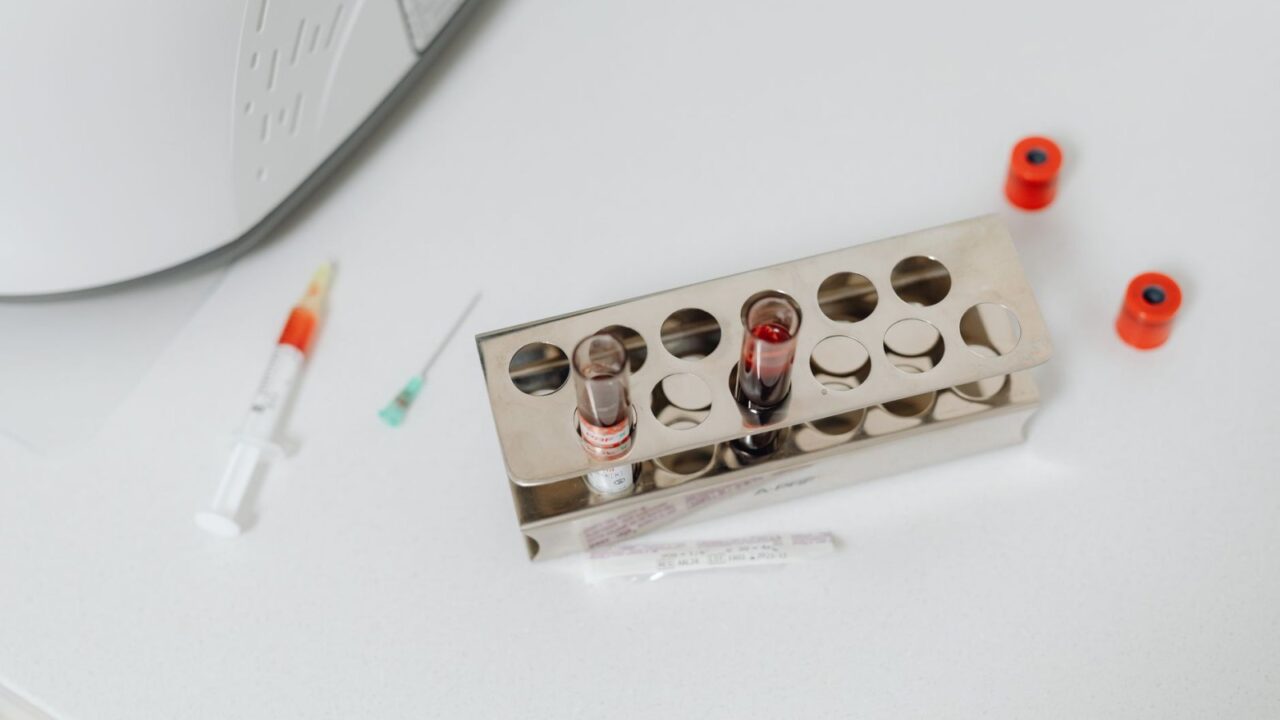
The lp(a) test is a simple blood draw from a vein in your arm. No special preparation such as fasting is required, though some laboratories prefer a fasting sample for consistency. The blood is sent to a lab where an immunoassay or a turbidimetric method measures the amount of Lp(a) particles. Results are typically available within one to three days. Since levels are stable, a single test is usually sufficient unless the result is borderline, in which case a repeat test may help confirm the value.
A few practical points affect the number you get back. Lp(a) is an acute phase reactant, which means a serious infection, a recent heart attack, surgery, or another major inflammatory event can push the reading up temporarily. If you are tested during or right after such an event, a genuinely borderline result may read as high, so it is worth repeating the test once you have fully recovered. Pregnancy and certain hormonal states can also shift the value, which is another reason to interpret a single reading in context rather than reacting to it in isolation.
The bigger source of confusion is not preparation but units, and it is worth getting right before you look at your result. Ask the lab which unit it reports and, ideally, request a mass-independent assay reported in nmol/L. When you compare a result to a prior one, make sure both used the same unit and the same method, because switching between them can make a stable value look like it changed when it did not.
What do the results mean?
Results are reported in either nanomoles per liter (nmol/L), now the preferred unit because it counts the actual number of Lp(a) particles, or milligrams per deciliter (mg/dL). In general, a level below 30 mg/dL (about 75 nmol/L) is considered low risk, between 30 and 50 mg/dL (75 125 nmol/L) is intermediate, and above 50 mg/dL (125 nmol/L) is high. However, some labs use different thresholds. It is important to understand that a high Lp(a) level does not automatically mean you will have a heart attack, but it places you at greater long term risk. Your doctor will interpret the result alongside your other risk factors such as age, LDL cholesterol, smoking, diabetes, and blood pressure. For example, someone with both high LDL and high Lp(a) may be advised to lower LDL aggressively with statins, even though statins do not lower Lp(a) itself, to offset the combined risk. If you want to test your Lp(a) at home, several full-body blood-testing services now include it in their panels.
It helps to think in tiers rather than a single pass or fail line. Very high readings, in the range above 180 nmol/L or about 70 to 90 mg/dL, carry a risk burden that many cardiologists treat as comparable to familial high cholesterol, and these patients warrant the most aggressive management of every other modifiable factor. Intermediate readings are a nudge to tighten LDL and blood pressure and to make sure the rest of the family gets checked. Low readings are genuinely reassuring for this particular pathway, though they never cancel out the ordinary rules of heart health. Because standard lab reference ranges are built around population averages rather than the level that is optimal for prevention, treat the thresholds as guardrails and let the full risk picture, not one number, drive decisions.
Why nmol/L and mg/dL are not interchangeable
You cannot cleanly convert between the two units with a fixed multiplier, and this trips up patients and clinicians alike. The mg/dL unit measures the mass of the Lp(a) particles, while nmol/L counts how many particles there are. Because the apolipoprotein(a) tail varies in size from person to person, two people with the same mass can have very different particle numbers. That is why modern labs favor nmol/L: it reflects the count that actually drives risk. A rough rule some clinicians use is that a number in nmol/L is not simply the mg/dL figure times a set factor, so never do the math yourself to compare an old mg/dL result to a new nmol/L one. Ask the lab to keep you on the same unit and, when possible, the same assay.
How does lp(a) connect to your other heart markers?
Lp(a) does not live in isolation. It is one particle among the family of cholesterol carriers, and reading it next to your other numbers is where it becomes truly useful. The most important companion marker is apolipoprotein B, or ApoB, which counts the total number of artery-clogging particles in your blood, including LDL and Lp(a). Because every Lp(a) particle also carries one ApoB, a high Lp(a) can quietly inflate your ApoB, and a person with a normal LDL cholesterol but a high ApoB often turns out to have hidden Lp(a) driving the gap. Checking both explains discrepancies that a basic panel cannot.
Two other markers round out the picture. High-sensitivity C-reactive protein, or hs-CRP, measures the inflammation that turns quiet plaque into a rupture-prone lesion, and it compounds the danger of high Lp(a). Standard LDL cholesterol remains the number you can actually move, so it becomes the lever you pull hardest when Lp(a) is fixed and high. Reading Lp(a), ApoB, LDL, and hs-CRP together gives you a far more honest risk map than a cholesterol panel alone, which is exactly why comprehensive testing services group them. For a deeper look at how biomarkers like Lp(a) fit into the bigger picture of health tracking, see our guide on Biomarkers Explained.
What should you do if your lp(a) is high?
A high result is not a verdict, it is a map. Because you cannot lower the Lp(a) number itself with today’s approved tools, the entire strategy is to shrink every other risk factor so the overall pressure on your arteries drops. Think of it as being handed a heavier backpack for life: you cannot set the backpack down, but you can get much stronger everywhere else. In practice, a sensible plan built with your doctor usually includes the following steps.
- Drive LDL and ApoB as low as your doctor recommends. Statins, ezetimibe, and where appropriate PCSK9 inhibitors lower the particle burden you can control, which partly offsets the fixed Lp(a) load.
- Treat blood pressure to target. Hypertension and high Lp(a) together multiply arterial stress, so tight control matters more here than average.
- Never smoke, and avoid vaping. Smoking accelerates the exact clotting and inflammation pathways Lp(a) already amplifies.
- Test the family. First-degree relatives have roughly a fifty percent chance of also carrying elevated Lp(a), and cascade screening protects them early.
- Ask about aspirin and imaging. Depending on your full risk, your doctor may discuss low-dose aspirin or a coronary calcium scan to see whether plaque has already formed.
- Stay Lp(a)-aware. Keep the result in your records so future clinicians factor it into every heart decision, and watch the emerging drug pipeline.
Consider a realistic scenario. A 44-year-old runner with normal weight, normal blood pressure, and an LDL of 110 feels invincible, but his father had a bypass at 52. He tests his Lp(a) and it comes back at 180 nmol/L, firmly high. Nothing about his lifestyle is wrong, yet his genetic backpack is heavy. His doctor starts a statin to pull his LDL and ApoB well below standard targets, orders a coronary calcium scan that shows early plaque, and has his two teenagers tested once they are older. He did not feel a thing before the test, and that single draw reshaped his entire prevention plan. That is the whole case for measuring it.
Can you lower high lp(a) levels?
Currently, no medication is approved by the Food and Drug Administration (FDA) specifically to lower Lp(a). Statins, ezetimibe, and lifestyle changes have minimal effect on Lp(a) levels. Niacin (vitamin B3) can lower Lp(a) by about 20% to 30%, but because of side effects and limited outcome data, it is rarely used for this purpose. PCSK9 inhibitors reduce Lp(a) modestly (20% to 30%) and are approved for other indications. Importantly, statins not only fail to lower Lp(a) but can raise it modestly in some people. Emerging targeted therapies are the most promising development. These include the injectable antisense drug pelacarsen (in the Phase 3 Lp(a)HORIZON outcomes trial), the small interfering RNA drug olpasiran (in the Phase 3 OCEAN(a) trial), and an oral small molecule, muvalaplin, now in Phase 3. Early studies have shown reductions of more than 80 percent, but as of 2026 none of these drugs is FDA approved, and large outcome trials are still underway to confirm whether lowering Lp(a) translates into fewer heart attacks and strokes. For people with very high Lp(a) and progressive disease, lipoprotein apheresis, a procedure that filters Lp(a) from the blood, is sometimes used. For now, if you have high Lp(a), your doctor will focus on controlling other modifiable risk factors, such as LDL cholesterol, blood pressure, and smoking. For a deeper look at how biomarkers like Lp(a) fit into the bigger picture of health tracking, see our guide on Biomarkers Explained.
The reason there is so much excitement about the drugs in trials is that they attack the problem at its root. Rather than nudging Lp(a) down by twenty or thirty percent the way older agents do, the RNA-based therapies switch off production of the apolipoprotein(a) protein itself, driving levels down by eighty percent or more. The open question the outcome trials are answering is whether that dramatic drop actually prevents heart attacks and strokes, or whether the damage from a lifetime of high Lp(a) is already locked in. Until those results read out, the honest position is cautious optimism, and the practical move remains the same: control everything else relentlessly.
Many at-home services that report Lp(a) bundle it with 100-plus other markers. Superpower is one popular option, and our Superpower vs Function Health comparison breaks down how the leading services differ.
Frequently Asked Questions
What is a normal lp(a) level?
There is no universal cutoff, but most guidelines consider a level below 30 mg/dL (or 75 nmol/L) as low risk for cardiovascular events. Levels between 30 and 50 mg/dL (75 125 nmol/L) represent intermediate risk, and levels above 50 mg/dL (125 nmol/L) are considered high. Some studies, however, suggest that risk begins to increase even at lower levels, especially when other risk factors are present. Your doctor can help you interpret your specific number in context.
At what age should I get tested?
Because Lp(a) is set by genetics and stays stable, adults can be tested at essentially any age, and many guidelines now support checking it once in early adulthood. If there is a strong family history of early heart disease, testing sooner is reasonable so you and your doctor have the information while prevention still has decades to work. Children are usually tested only when a parent has very high Lp(a) or familial hypercholesterolemia, and that decision is made with a specialist.
Does insurance cover the lp(a) test?
Coverage varies. Many insurance plans, including Medicare, may cover the lp(a) test if it is ordered for a medically accepted reason, such as a personal or family history of early heart disease, unexplained high cholesterol, or known high Lp(a) in a relative. Some plans may require prior authorization. The test is relatively inexpensive, often costing between $50 and $100 out of pocket if not covered. Check with your insurer and laboratory before scheduling the test to confirm coverage and any necessary documentation.
Can diet alone lower lp(a)?
Diet has little to no effect on Lp(a) levels. Unlike LDL cholesterol, which can be reduced by a diet low in saturated fats and high in fiber, Lp(a) is primarily determined by genetics and remains stable regardless of what you eat. However, a heart healthy diet is still important because it helps lower other risk factors such as LDL cholesterol, blood pressure, and weight. While you cannot lower Lp(a) through dietary changes, overall lifestyle modification remains a cornerstone of cardiovascular prevention for everyone, regardless of Lp(a) status.
If my lp(a) is high, will my children have it too?
Possibly. Lp(a) is inherited, and each first-degree relative, including your children, has roughly a fifty percent chance of also carrying an elevated level. This is why a high result in one person is a reason for the wider family to consider testing. Knowing early lets younger relatives manage their other risk factors from a much younger age, which is the most useful thing anyone can do while Lp(a)-lowering drugs remain in trials.
This article is for general information and is not medical advice. See our Medical Disclaimer.