Quick answer: Sometimes. Whether Blue Cross Blue Shield covers weight loss injections depends entirely on your specific plan, not on “BCBS” as a whole, so the real answer to does Blue Cross Blue Shield cover weight loss injections is “check your own formulary.” Many BCBS plans cover FDA-approved injections like Wegovy and Zepbound for obesity, but only after a prior authorization that proves a qualifying BMI (usually 30, or 27 with a condition like type 2 diabetes or high blood pressure). A large share of employer and individual plans exclude weight loss drugs entirely, in which case you pay cash (often $500 or more a month at retail) or use a compounded GLP-1 through a telehealth clinic for far less.
Blue Cross Blue Shield is not one company. It is a federation of 33 independent, locally operated companies (Anthem, Carefirst, Highmark, Florida Blue, BCBS of Texas, Regence and more), each with its own drug formulary and its own rules about weight loss medication. That is why two coworkers can both “have Blue Cross” and get opposite answers at the pharmacy counter. The question that actually matters is not “does BCBS cover weight loss injections,” but “does my plan include a weight loss drug benefit, and what hoops does it want me to jump through.” This guide breaks that down drug by drug, plus the cash-pay reality when the answer is no.
How do weight loss injections actually work?
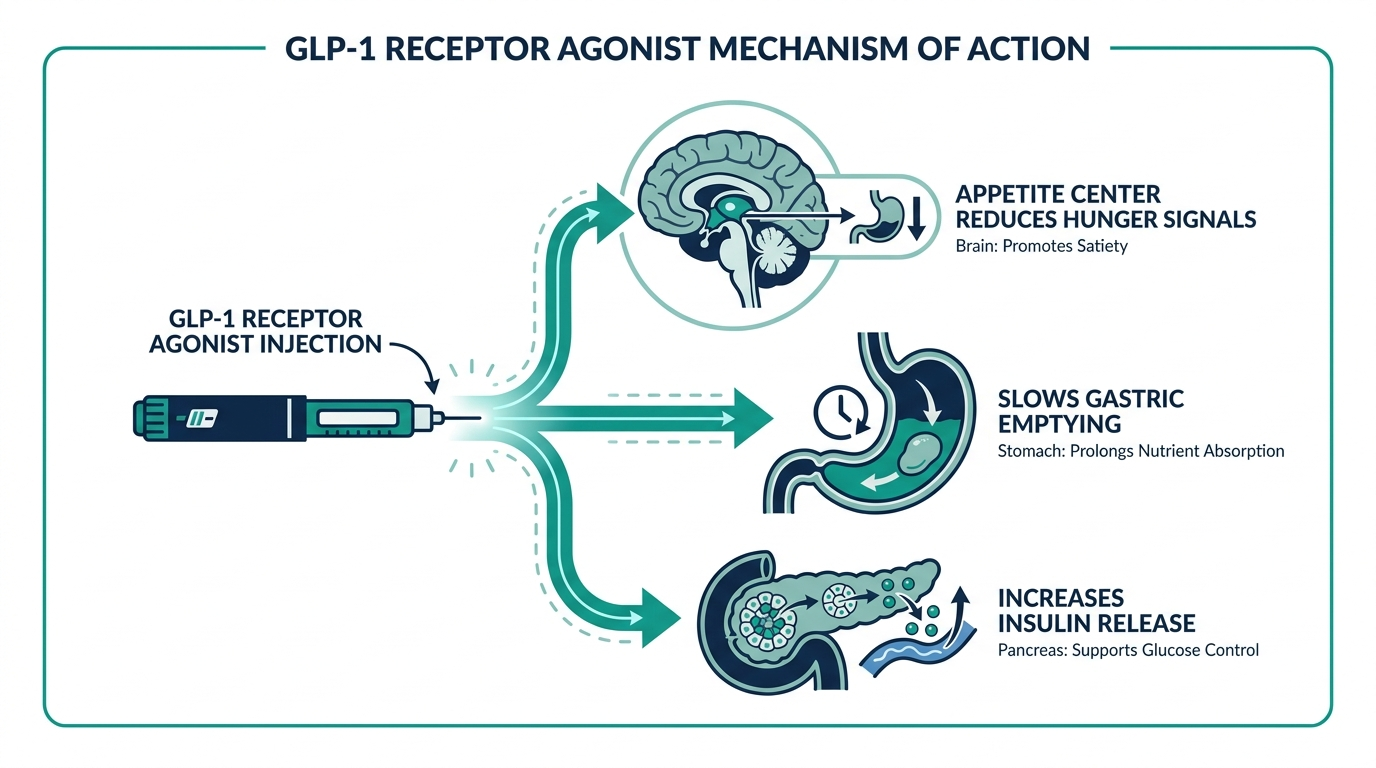
Modern weight loss injections are GLP-1 receptor agonists, drugs that copy a gut hormone your body releases after you eat. That hormone, glucagon-like peptide-1, tells your brain you are full, slows how fast your stomach empties, and steadies blood sugar. The practical effect is that you feel satisfied on far less food and the constant background hunger most dieters fight just gets quieter.
Tirzepatide (Zepbound, Mounjaro) goes a step further. It hits two hormone receptors, GLP-1 and GIP, which is part of why it tends to drive more weight loss than the GLP-1-only drugs. These are not stimulants and they are not “fat burners.” They work on appetite and metabolism, which is exactly why the results hold while you take them and tend to fade when you stop.
The trial numbers are real and worth knowing. In the STEP program, people on semaglutide (Wegovy) lost about 15 percent of their body weight on average over 68 weeks. In the SURMOUNT trials, tirzepatide (Zepbound) produced average losses north of 20 percent at the highest dose. For context, that is the kind of result that used to require surgery. If you want a fuller breakdown of which shot does what, see our guide on what is the best injection for weight loss.
Does Blue Cross Blue Shield cover weight loss medication at all?
It depends on whether your specific plan bought the weight loss drug benefit, and many did not. Anti-obesity medication is one of the most commonly carved-out benefits in US health insurance. Employers choosing a plan can include or exclude this entire drug class to control premiums, so coverage swings wildly from one BCBS plan to the next even within the same state.
Here is how to find your actual answer in about ten minutes:
- Log in to your BCBS member portal and open your plan’s drug list, also called the formulary. Search the exact drug name (Wegovy, Zepbound, Saxenda).
- If the drug appears with a tier number, it is potentially covered. If you see “NF” (non-formulary) or “excluded,” it likely is not.
- Look for “PA” (prior authorization) or “ST” (step therapy) flags next to the drug. Those are the conditions you will have to meet.
- Call the member services number on your card and ask the specific question: “Does my plan cover anti-obesity medication, and what is the prior authorization criteria for Wegovy and Zepbound?”
One distinction trips people up constantly. A plan may cover a GLP-1 for type 2 diabetes (Ozempic, Mounjaro) but explicitly not for weight loss (Wegovy, Zepbound), even though the underlying molecule is nearly identical. The diagnosis on the prescription is what the insurer checks, not the chemistry.
Does Blue Cross Blue Shield cover Wegovy for weight loss?
Many BCBS plans do cover Wegovy, but almost always with a prior authorization. Wegovy (semaglutide) is FDA-approved specifically for chronic weight management, so when a plan includes the anti-obesity benefit, Wegovy is usually on the formulary. The catch is the documentation. A typical BCBS prior authorization for Wegovy asks your clinician to confirm a BMI of 30 or higher (or 27-plus with a weight-related condition), and increasingly to show that you tried lifestyle changes or a structured program first.
If your plan covers it, your out-of-pocket cost depends on your formulary tier and deductible, often landing somewhere between $25 and $100 a month with a copay, or the full negotiated price until you meet your deductible. If your plan excludes weight loss drugs, Wegovy retails around $1,300 a month, though the manufacturer’s savings program and cash pharmacy options can cut that substantially. People often ask how long they will be on it, which is a fair question given the cost. The honest answer is in our piece on how long do you take Wegovy for weight loss: for most people it is a long-term medication, not a 12-week reset.
Does Blue Cross Blue Shield cover Zepbound and Mounjaro for weight loss?
Zepbound coverage follows the same pattern as Wegovy: covered by many BCBS plans with a weight loss benefit, gated behind a prior authorization, and excluded by plans that carved out anti-obesity drugs. Zepbound (tirzepatide) is the FDA-approved version for weight management and is the one your clinician should prescribe if the goal is weight loss and you want insurance to apply.
Mounjaro is the same molecule (tirzepatide) but is FDA-approved for type 2 diabetes. BCBS plans generally cover Mounjaro for diabetes, not for weight loss on its own. Using Mounjaro purely for weight loss is off-label, and a prior authorization for weight management will usually be denied if the diagnosis is not diabetes. If you are weighing the two, our explainer on whether Mounjaro is approved for weight loss lays out the off-label reality.
“Will Blue Cross Blue Shield cover Zepbound for weight loss” is the single most common version of this question right now, and the realistic answer for 2026 is: more plans are adding it than dropping it, but coverage is far from universal, and even covered plans require the prior authorization paperwork done correctly the first time.
Does Blue Cross Blue Shield cover Ozempic for weight loss?
For weight loss specifically, usually no. Ozempic is FDA-approved for type 2 diabetes, not for weight management. BCBS plans typically cover Ozempic when there is a diabetes diagnosis, and they routinely deny it when the only reason on the chart is weight loss. Prescribing Ozempic for weight loss is off-label, and insurers have gotten strict about flagging it.
If your goal is weight loss and you want a covered GLP-1, the cleaner path is asking your clinician about Wegovy, which is the same active ingredient (semaglutide) at a weight-management dose and approval. Trying to get Ozempic covered for weight loss usually means a denial and an appeal you are likely to lose. For the broader landscape of getting a semaglutide prescription legitimately, see how to get Ozempic for weight loss.
Does Blue Cross Blue Shield cover weight loss injections, and what do they cost?
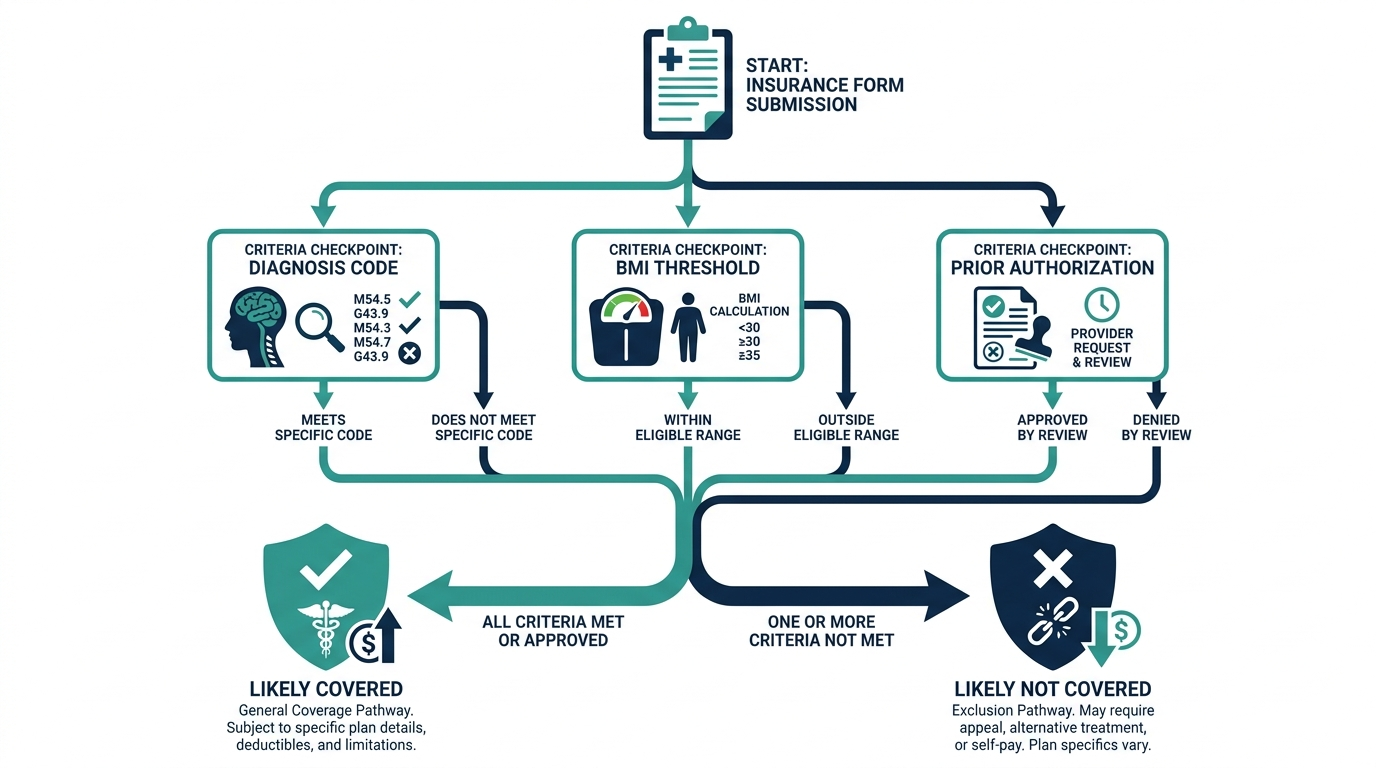
This is where the decision usually gets made. For most people asking whether Blue Cross Blue Shield will cover their weight loss injections, the answer comes down to dollars, and the gap between a covered copay and full retail is enormous, and there is a third option most people do not know about: clinician-supervised compounded GLP-1, which is legally prescribed but is not the same as the brand-name FDA-approved drug.
| Route | Drug | Typical monthly cost (2026) | FDA status |
|---|---|---|---|
| BCBS covered, on formulary | Wegovy / Zepbound | $25 to $100 copay (after deductible) | FDA-approved |
| Cash, no coverage | Wegovy | ~$650 to $1,350 | FDA-approved |
| Cash, no coverage | Zepbound (vials via manufacturer) | ~$350 to $650 | FDA-approved |
| Telehealth compounded | Compounded semaglutide | ~$150 to $300 | Not FDA-approved, legally compounded |
| Telehealth compounded | Compounded tirzepatide | ~$200 to $400 | Not FDA-approved, legally compounded |
A few honest notes on that table. Compounded semaglutide and tirzepatide are not FDA-approved drugs. They are made by licensed compounding pharmacies and prescribed by licensed clinicians, which is legal, but it is a different category from the brand-name product and the supply situation has shifted as the official shortages ended. The right way to use a compounded GLP-1 is through a real telehealth clinic that does a clinician review and lab work, not a random website that ships vials with no oversight. Talk to a clinician before starting or stopping any of these medications.
Note that if your BCBS plan has a Health Savings Account or Flexible Spending Account, you can usually pay for prescribed weight loss injections (including the cash and compounded routes) with pre-tax dollars, which quietly knocks 20 to 35 percent off the real cost depending on your tax bracket.
Denied by BCBS, or paying full retail? There is a supervised middle path.
Joi + Blokes is a telehealth clinic that prescribes GLP-1 medication (Zepbound, compounded semaglutide and tirzepatide), hormone therapy (TRT, HRT), thyroid care and peptides after a real lab panel and clinician review, with no membership or consult fee (prescriptions from about $59/month, hormone and GLP-1 lab panels from $149). If your insurance excludes weight loss drugs, this is the legitimate, clinician-supervised way to get a GLP-1 without the gray market or the $1,300 retail price. Here is Joi + Blokes reviewed in full.
Does Blue Cross Blue Shield cover weight loss surgery?
Yes, and often more readily than it covers the weight loss injections themselves, surprisingly. Most BCBS plans cover bariatric surgery (gastric sleeve, gastric bypass) for people who meet established medical criteria, because the long-term cost math favors a one-time surgery over indefinite drug coverage. Typical BCBS criteria for weight loss surgery include a BMI of 40 or higher, or a BMI of 35-plus with a serious obesity-related condition such as type 2 diabetes, sleep apnea or hypertension.
Surgery coverage almost always comes with its own hoops: a documented supervised diet attempt (often three to six months), a psychological evaluation, nutrition counseling and a prior authorization. Some employer plans exclude bariatric surgery just as they exclude drugs, so “does Blue Cross and Blue Shield cover weight loss surgery” still comes down to reading your specific plan documents. The short version: if you qualify on BMI and have a comorbidity, surgery is frequently covered when injections are not.
What stalls people, and the mistakes that get claims denied
Most denials are not because the drug is uncovered. They are because the paperwork was wrong or the diagnosis did not match the drug. After watching this play out, here are the avoidable mistakes:
- Wrong drug for the goal. Asking for Ozempic or Mounjaro for weight loss instead of Wegovy or Zepbound. Insurers match the approval to the diagnosis. Use the weight-management-approved drug.
- Missing the BMI documentation. The prior authorization needs a charted BMI at or above the threshold, ideally with the weight-related condition spelled out. A clinician who does not document it carefully gets you denied.
- Skipping step therapy. Some plans require you to try a cheaper option or a structured weight loss program first. If your plan has step therapy, your clinician has to show that history or appeal it.
- Assuming “BCBS covers it” because a friend’s plan does. Different BCBS company, different employer, different formulary. Always check your own plan.
- Giving up after the first denial. A large share of GLP-1 denials are overturned on appeal when a clinician submits the right clinical justification. Do not treat the first “no” as final.
There is also a deeper stall that no insurance form catches. Plenty of people who cannot lose weight “no matter what they do” are not failing at willpower, they have an unaddressed metabolic problem: an underactive thyroid, insulin resistance, or shifting hormones in perimenopause that quietly slow the whole system down. A GLP-1 can mask that, but it does not tell you what is actually going on. If the scale will not move and you have never had a full metabolic and hormone panel, it is worth seeing your real numbers first. Here is how a full-body blood panel works.
Who is a candidate, and what to do next
The clinical candidates for weight loss injections are adults with a BMI of 30 or higher, or 27 and above with a weight-related condition like type 2 diabetes, high blood pressure, high cholesterol or obstructive sleep apnea. That is also, not coincidentally, the bar most BCBS prior authorizations use. If you fit that profile, the next step is a clinician visit to document it and submit the authorization for Wegovy or Zepbound.
Decision guidance in plain terms:
- Your plan covers it: get the prior authorization done right, use the FDA-approved brand drug, and budget for your copay tier.
- Your plan excludes weight loss drugs: compare the manufacturer’s cash vials against a supervised telehealth compounded route before paying full retail.
- You qualify on a high BMI with a comorbidity: ask whether bariatric surgery is covered, since it sometimes is when drugs are not.
- The scale will not move and you are not sure why: get labs before guessing on a drug.
If you are comparing insurers, coverage rules are broadly similar across the big carriers but the details differ. Our breakdown of whether Cigna covers weight loss medication shows how another major plan handles the same questions.
FAQ
Does Blue Cross Blue Shield cover GLP-1 for weight loss?
Some plans do, with a prior authorization, and some exclude the entire class. GLP-1 drugs approved for weight loss (Wegovy, Zepbound) are covered on plans that include an anti-obesity benefit, but you must meet BMI criteria and get the authorization approved. Plans that carved out weight loss drugs will not cover them regardless of medical need.
Does Blue Cross Blue Shield cover weight loss shots like Saxenda?
Saxenda (liraglutide) is an older FDA-approved daily injection for weight management, and some BCBS plans cover it, often as a step-therapy option before the newer drugs. It tends to produce less weight loss than semaglutide or tirzepatide (around 5 to 8 percent on average) and requires a daily shot rather than weekly, so it is prescribed less often now.
Does Blue Cross Blue Shield cover weight loss programs?
Many BCBS plans include lifestyle and weight management programs, sometimes at no extra cost, such as digital coaching, nutrition counseling or partner programs. These are separate from drug coverage. Completing a covered program can also satisfy the step-therapy requirement some plans attach to GLP-1 prior authorizations.
How do I get a prior authorization approved faster?
Make sure your clinician documents your current BMI, any weight-related conditions, and prior weight loss attempts in the chart before submitting. Use the drug that matches the goal (Wegovy or Zepbound for weight loss). A clean, complete submission is the difference between approval in days and a denial that takes weeks to appeal.
Will BCBS cover compounded semaglutide or tirzepatide?
Generally no. Compounded GLP-1 medications are not FDA-approved products, and insurers including BCBS typically do not reimburse compounded weight loss drugs. People use compounded versions through telehealth clinics specifically because they are paying cash and want a lower price than brand-name retail, not because insurance covers them.
What BMI do I need for Blue Cross Blue Shield to cover weight loss injections?
Most BCBS prior authorizations require a BMI of 30 or higher, or 27 and above if you also have a weight-related condition such as type 2 diabetes, hypertension, high cholesterol or sleep apnea. The exact threshold and required conditions are spelled out in your plan’s prior authorization criteria, which member services can read to you.
Can I appeal if Blue Cross Blue Shield denies my weight loss injection?
Yes, and appeals succeed often. If the denial is for missing documentation or step therapy, your clinician can resubmit with the right clinical justification. If the denial is because your plan excludes weight loss drugs entirely, an appeal will not change that, and a cash or telehealth route is the realistic alternative.
Is it cheaper to pay cash than to fight my insurance?
Increasingly, for some people, yes. If your plan excludes the drug class, a supervised telehealth compounded GLP-1 often runs $150 to $400 a month, well below the $650 to $1,350 retail price of brand-name Wegovy without coverage. Run your specific copay against the manufacturer cash vials and telehealth options before assuming insurance is automatically the cheaper path.
Vital Signs Today may earn a commission if you buy through links on this page. It does not affect our editorial assessments.