
Last updated 18 June 2026. Educational content, not medical advice. Semax is not FDA-approved for human use in the United States. Talk to a licensed clinician before using any peptide.
Short answer: Semax is a synthetic heptapeptide derived from a fragment of ACTH (adrenocorticotropic hormone) that has been approved in Russia since 1994 for stroke recovery, optic nerve atrophy, and cognitive impairment. In Western countries it is used off-label as a nootropic, primarily because a single dose triples BDNF mRNA expression in the hippocampus within hours. As of April 2026 the FDA removed Semax from its Category 2 restricted-compounding list, with a formal PCAC review scheduled for July 24, 2026 that could open a legal prescription route through licensed US pharmacies.
Semax is unproven for cognition in the US. See what your own biomarkers say about brain and metabolic health instead. One at-home Superpower draw checks 100+ biomarkers, physician-reviewed.
Why are people suddenly talking about Semax?
Semax has been quietly used in Russian hospitals since the Soviet era, and the rest of the world has been catching up in waves. The current surge in search interest is not random. Two things happened in early 2026 that moved Semax from niche nootropic forums into mainstream longevity conversations.
First, RFK Jr.’s Department of Health and Human Services announced in February 2026 that roughly 14 peptides, including Semax, were expected to move back from the FDA’s restricted Category 2 compounding list toward Category 1 (permitted) status. Then on April 15, 2026, the FDA published its revised 503A document formally removing Semax from Category 2 and scheduling it for Pharmacy Compounding Advisory Committee (PCAC) review on July 24, 2026. That hearing, if it goes well, could make Semax legally dispensable through US compounding pharmacies for the first time.
Second, the grey-market peptide vendors that most nootropic researchers relied on have been collapsing. As people search for a safer, more accountable source for the compounds they already use, the upcoming legal route looks more attractive than it ever has.
Full-body lab membership: 100+ biomarkers, doctor-reviewed, tracked over time.
What exactly is Semax, and where did it come from?
Semax is a heptapeptide with the amino acid sequence Met-Glu-His-Phe-Pro-Gly-Pro. Researchers at the Institute of Molecular Genetics of the Russian Academy of Sciences developed it in the 1980s by isolating the ACTH(4-10) fragment, which was already known to influence attention and memory, then adding a C-terminal Pro-Gly-Pro tripeptide to make the molecule metabolically stable in the bloodstream.
The clever engineering move was eliminating the steroidogenic activity of full ACTH. Natural ACTH stimulates cortisol release from the adrenal glands. By working only with the 4-10 fragment plus the stabilizing tail, the researchers kept the cognitive activation profile while removing the cortisol spike. The result is a peptide that acts on the brain without triggering the adrenal axis, which is one reason its side effect profile is genuinely mild compared to most stimulants.
Semax was registered as a pharmaceutical drug in Russia in 1994 and was added to Russia’s official List of Vital and Essential Drugs in December 2011, a designation that puts it alongside insulin and metformin in terms of national healthcare priority. No Western regulator has reviewed it, but over 25 years of institutional Russian clinical use has generated a safety and efficacy record that preclinical data alone cannot match.
The Pro-Gly-Pro tail is itself biologically active, by the way. Studies have shown it independently activates neurotrophins after cerebral ischemia, which means the metabolic byproduct of Semax metabolism is not inert junk but a second working molecule.
What is Semax peptide used for? The approved and the off-label
Semax occupies two lanes: the approved indications in Russia and Eastern Europe, and the off-label nootropic use that drives most Western interest.
Approved indications in Russia:
- Acute ischemic stroke rehabilitation, where it is used to limit neuronal damage and accelerate cognitive recovery in the post-stroke window
- Optic nerve atrophy, based on a published Russian trial showing measurable visual function improvement
- Cognitive impairment from various causes
- Peptic ulcer disease (less commonly cited in Western literature)
Off-label and research uses in Western countries:
- Cognitive enhancement, specifically working memory, executive function, and sustained attention
- Brain fog and mental fatigue, particularly in post-viral or burnout contexts
- ADHD-adjacent symptoms, where some pilot data suggests effects comparable to low-dose stimulants without the sympathomimetic side effects
- Neuroprotection after head injury or hypoxic events
- Anxiety reduction when stacked with Selank, its anxiolytic sister peptide
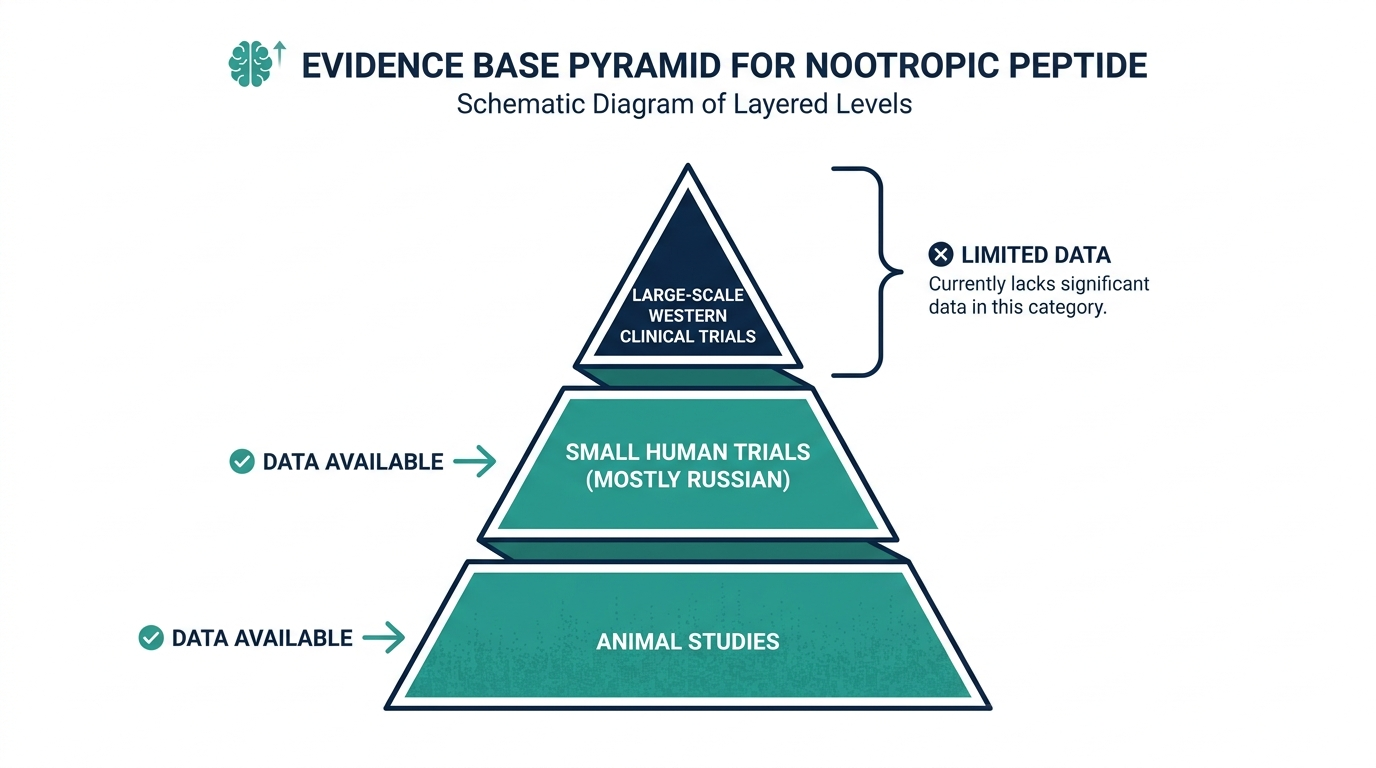
The honest framing on the off-label uses is this: the mechanistic rationale is compelling, the Russian clinical data for the approved indications is real but mostly untranslated and unreplicated, and the large randomized controlled Western trials that would satisfy FDA or EMA standards do not exist. What we have is a clear mechanism, 30 years of institutional use without major safety signals, and a growing body of user reports that mostly align with what the preclinical data predicts.
How does Semax actually work in the brain?
This is where Semax separates itself from most nootropics, because its mechanism is specific and measurable, not a hand-waving reference to “supporting cognitive function.”
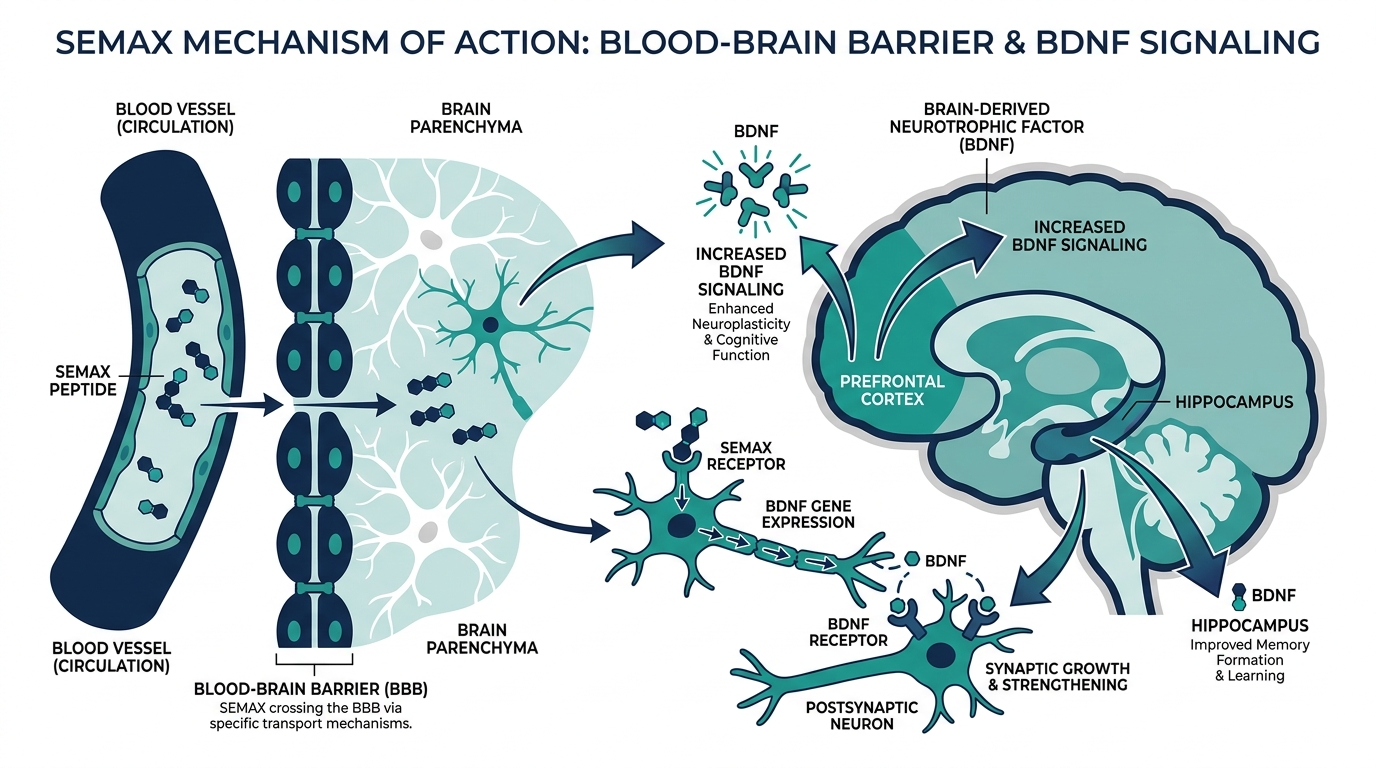
BDNF upregulation. The most studied effect is a rapid increase in brain-derived neurotrophic factor. The pivotal Dolotov et al. (2006) study published in Brain Research found that a single administration of Semax at 50 mcg/kg body weight produced a 3-fold increase in exon III BDNF mRNA levels in the rat hippocampus within hours, accompanied by a 1.4-fold rise in BDNF protein and a 1.6-fold increase in TrkB receptor phosphorylation. BDNF is often called “fertilizer for neurons” because it promotes synaptic plasticity, long-term potentiation, and neurogenesis. Low BDNF is associated with depression, cognitive decline, and poor stress resilience.
Dopaminergic and serotonergic modulation. Semax increases turnover of both dopamine and serotonin in cortical and limbic regions. This is likely responsible for the “activating” quality users describe, the sense of sharper focus and faster retrieval, without the jitteriness or rebound of amphetamine-class compounds. The effect profile is more like the feeling after a hard workout than the edge of a stimulant.
Neuroprotection via VEGF and anti-inflammatory pathways. In stroke models, Semax reduces infarct volume and inflammatory cytokine signaling by upregulating vascular endothelial growth factor (VEGF) and modulating the expression of genes associated with neuronal survival. This neuroprotective mechanism is the direct rationale for its use in acute stroke in Russian hospitals.
The CREB connection. Semax-induced BDNF upregulation runs through CREB phosphorylation, the same transcription factor pathway activated by aerobic exercise, environmental enrichment, and some antidepressants. That is a meaningful parallel: Semax is doing something measurably similar to exercise at the molecular level, just faster and in a vial.
How is Semax delivered, and why does the method matter?
Semax has essentially zero oral bioavailability because peptide bonds are broken down in the gut before the molecule can reach circulation. That constraint narrows the delivery options to two:
Intranasal spray. The dominant route, both in Russian clinical practice and in the nootropic community. The nasal mucosa provides direct access to the olfactory epithelium, which connects to the brain without a strict blood-brain barrier checkpoint. The 0.1% solution is the standard concentration, delivering roughly 100 mcg per spray. Most research in the cognitive literature describes total daily intranasal amounts of 0.6 to 1.5 mg per day, divided across two administrations. This is a rough description of research data, not a dosing recommendation; a licensed clinician must set any protocol.
Subcutaneous injection. Used in some clinical settings and by some researchers seeking more precise bioavailability control. Requires reconstitution from lyophilized powder with bacteriostatic water, the same process as most injectable peptides. All the reconstitution risks, purity verification needs, and calculation precision requirements that apply to any research peptide apply here.
One thing that gets skipped in most Semax writeups: the methionine residue at position 1 of the sequence is highly susceptible to oxidation. Oxidized Semax has meaningfully reduced biological activity. Improper storage, exposure to light, and temperature cycling all accelerate oxidation. This is the unglamorous quality-control variable that separates a functional vial from an expensive placebo, and it is invisible without mass spectrometry testing.
What does the comparison with Selank tell you?
Semax and Selank are often called Russia’s two premier nootropic peptides, and the comparison is worth making because they serve different use cases despite superficially similar origins.
| Feature | Semax | Selank |
|---|---|---|
| Origin | ACTH(4-10) fragment + PGP tail | Tuftsin analog (immune peptide) |
| Primary mechanism | BDNF upregulation, dopamine/serotonin activation | GABAergic modulation, anxiolytic |
| Dominant effect | Focus, cognitive activation, neuroprotection | Anxiety reduction, emotional regulation, calm clarity |
| Clinical approval | Russia: stroke, optic nerve, cognitive impairment | Russia: anxiety disorder, approved anxiolytic |
| Head-to-head anxiety data | Less studied for pure anxiety | Compared to benzodiazepines in Russian trials |
| Best for | Cognitive work, post-injury recovery, brain fog | Anxiety, chronic stress, sleep anxiety |
| Stacks with | Often stacked with Selank for activation without anxiety | Often stacked with Semax for balance |
| Delivery | Intranasal or subcutaneous | Intranasal (primary) |
Do not believe any source that positions these as interchangeable. They hit different receptor systems and produce measurably different user experiences. The reason they are frequently stacked is precisely because their mechanisms do not overlap: Semax brings the cognitive activation, Selank blunts the edge of overstimulation and anxiety. But using Selank when you actually need Semax, or vice versa, is not a half-measure, it is the wrong compound.
What is Semax’s legal status in the United States in 2026?
This is the question that matters most for anyone considering it, and the answer is genuinely in motion.
As of the writing of this article, Semax has no FDA approval as a finished drug product. It is not legal to sell for human use without a prescription, and it is not legal to import as a finished pharmaceutical. The “for research use only” designation that grey-market vendors use transfers the entire legal and safety risk to the buyer.
What changed in 2026 is the pathway toward a legitimate route:
- February 2026: HHS Secretary RFK Jr. publicly announced that approximately 14 peptides were expected to return to compounding-permitted (Category 1) status.
- April 15, 2026: The FDA formally removed Semax from Category 2 (its restricted compounding list), removing the blanket prohibition on compounding pharmacies making it.
- July 24, 2026: PCAC review scheduled, at which the committee will assess whether Semax (both acetate and free base forms) should be added to Category 1, which would formally permit licensed 503A compounding pharmacies to prepare and dispense it under a prescription.
The critical nuance: removal from Category 2 is not the same as approval for compounding. It is a transitional status, no longer explicitly prohibited, but not yet explicitly permitted. A licensed telehealth provider or compounding pharmacy that is moving cautiously will wait for the July outcome before dispensing. One that is already offering it in June 2026 is working in a grey zone, not a fully compliant one.
Personally, I find the regulatory arc genuinely encouraging. The peptides that served as the canary in the coal mine for this whole cycle, including BPC-157 and TB-500, are on the same trajectory, and if the PCAC process goes as signaled, the most-used nootropic peptides will have a legitimate compounding route within months. That is a better outcome for users than anything the research-vendor market was ever going to produce.
Telehealth GLP-1 program with provider visits and pharmacy coordination.
What are the real risks and side effects?
Semax has a genuinely mild side effect profile by the standards of cognitive-acting compounds, but “mild” is not the same as “none,” and the grey-market route adds several layers of risk that the molecule itself does not.
Reported side effects from Russian clinical data and community use:
- Nasal discomfort or mild mucosal irritation with intranasal use, reported in roughly 10% of participants in some trials
- Transient headache in a minority of users, typically resolving without intervention
- Overstimulation at higher doses, described as alert and slightly jittery, particularly when combined with caffeine or other stimulants
- Sleep onset difficulty if used in the afternoon or evening, consistent with its dopaminergic activation profile
- Mild anxiety or “wired” feeling at doses above 600 mcg per administration in sensitive individuals
- Possible blood glucose elevation in diabetic individuals
What the formal safety data shows: The Alzheimer’s Drug Discovery Foundation (in a 2020 review) noted “very little human evidence for potential side effects” despite extensive preclinical testing, and a 2022 review in Pharmaceutics on Russian peptide biopharmaceuticals described the long-term clinical use in Russia as showing an acceptable safety profile. No significant adverse events to vital signs, ECG, or standard lab parameters have been reported in clinical trial cohorts.
What the formal safety data does not show: Long-term controlled human safety data outside of Russian institutional use. No 12-month randomized controlled safety trial exists in a Western clinical framework.
The grey-market risk layer: An impure or mislabeled vial from an unverified research vendor is a different safety question from the molecule itself. Oxidized Semax is inactive but harmless; a wrong compound or bacterial contamination is neither. This is the risk the molecule’s clean clinical profile cannot eliminate if the product itself is not verified.
Who is the realistic candidate for Semax in 2026?
Semax is not a universal brain upgrade, and several categories of people are genuinely better served by other approaches first.
Likely to benefit, based on mechanism and clinical data:
– People in stroke rehabilitation or recovery from traumatic brain injury (the clearest approved indication)
– Individuals with diagnosed cognitive impairment where conventional options have been inadequate
– Healthy adults with well-documented brain fog or post-viral cognitive symptoms who have ruled out basic causes (sleep, thyroid, inflammation, B12)
– Researchers or clinicians supervising nootropic protocols who want a studied compound rather than an understudied one
Poor candidates:
– Anyone who has not checked basic metabolic and neurological markers first, because Semax cannot compensate for untreated hypothyroidism, poor sleep, or B12 deficiency, and the response is much harder to attribute meaningfully without a baseline
– People expecting fast, obvious stimulant-like effects, because Semax has a subtler, more sustained profile that some users miss entirely at first
– Individuals with active mood disorders, without clinician oversight, given the dopaminergic activity
– Anyone unwilling to source through the verified clinical route once it is available, because the oxidation and purity risks with grey-market Semax are real and not solvable by reviews on a vendor page
Turn what you just learned into action.
Superpower lets you test 100+ biomarkers from home, then re-check them over time so you can actually see progress, physician-reviewed at every step.
Frequently asked questions
What is Semax peptide used for?
Semax is used for stroke recovery and cognitive impairment in Russia (where it has been an approved drug since 1994), and off-label in Western countries for nootropic purposes including working memory, focus, brain fog, and neuroprotection. Its primary mechanism is rapid upregulation of BDNF in the hippocampus, with secondary dopaminergic and serotonergic effects.
Is Semax legal in the US?
In a grey zone as of mid-2026. Semax was removed from the FDA’s restricted Category 2 compounding list in April 2026 and is scheduled for a formal PCAC review on July 24, 2026. If the committee approves it for Category 1 status, licensed US compounding pharmacies will be able to prepare and dispense it under a prescription. It is not currently FDA-approved and should not be purchased from unregulated research-chemical vendors.
How does Semax compare to Selank?
Semax is activating, cognitive, and neuroprotective, working primarily through BDNF upregulation and dopamine/serotonin modulation. Selank is anxiolytic and calming, working primarily through GABAergic signaling. They are complementary rather than interchangeable, and they are frequently used together precisely because their mechanisms do not overlap.
What does Semax feel like?
Most users describe sharper focus, faster retrieval, and better sustained attention without the jitteriness of stimulants. Some report a mild “wired” quality at higher doses, particularly when combined with caffeine. The effect is more like post-exercise mental clarity than amphetamine activation.
Can Semax be taken orally?
No. Semax has negligible oral bioavailability because peptide bonds are broken down in the digestive tract before the molecule can reach circulation. The two viable routes are intranasal spray and subcutaneous injection.
What are the side effects of Semax?
The most commonly reported are nasal irritation with intranasal use (about 10% of users), mild headache, overstimulation at higher doses, and sleep onset issues if used late in the day. Russian clinical data across 25+ years of institutional use shows no significant safety signals on vital signs, ECG, or standard lab parameters. No long-term Western controlled trial data exists.
When will Semax be legally available from US clinics?
The PCAC review is scheduled for July 24, 2026. If Semax is added to the Category 1 permitted list following that review, licensed 503A compounding pharmacies will be authorized to prepare it under physician prescription. Expect the first compliant telehealth programs to launch in Q3 to Q4 2026.
Author: Vital Signs Today Editorial Team, [credential]”]. Educational content, not medical advice. Sources linked inline.
Primary sources:
– FDA 503A Category 2 removal and PCAC scheduling, Boesen Snow Law summary
– Newtropin: Semax FDA Status 2026
– Newtropin: BPC-157, TB-500, Semax and MOTS-C: The July 2026 FDA Review
– Dolotov et al. (2006), Semax, BDNF and trkB in rat hippocampus, Brain Research (ScienceDirect)
– PMC: Semax and Pro-Gly-Pro activate neurotrophins after cerebral ischemia
– PMC: Brain protein expression confirming Semax neuroprotection in rat ischemia-reperfusion model
– Wikipedia: Semax, history, approval, structure
– Innerbody: Semax Peptide Benefits, Safety and Buying Advice 2026
– PeakedLabs: Semax Peptide Evidence, Benefits, Dosing 2026
– Meto Blog: Semax and Selank, Cognitive Peptides Now Legal for Compounding
– Brainflow: Semax Peptide Guide, Benefits, Side Effects and Research 2026
– Superpower Guide: Semax, ACTH(4-7)-Derived Heptapeptide
Related reading
Vital Signs Today may earn a commission if you buy through links on this page. It does not affect our editorial assessments.