Quick answer: An HIV test checks whether you have been infected with the virus, and there are three main types: an antibody test, an antigen/antibody (fourth-generation) test, and a nucleic acid (RNA) test. The standard lab option today is a fourth-generation test, which can detect infection as early as 18 to 45 days after exposure. Rapid finger-stick and at-home oral tests are accurate but take longer to turn positive, so a recent exposure can need a repeat test to confirm a negative result. If you think you were exposed in the last 72 hours, skip the testing question for now and get to a clinic or ER about PEP, which can stop the infection before it starts.
What kinds of HIV test are there?
There are three HIV test categories, and they differ by what they look for and how soon they catch an infection. Knowing which one you took tells you whether a negative result is final or whether you need to test again.
- Antibody tests. These detect the antibodies your immune system makes in response to HIV. Most rapid finger-stick tests and the at-home oral-fluid kit (OraQuick) are antibody-only. They are simple and fast, but antibodies take longer to appear, so the window period is the longest of the three.
- Antigen/antibody tests (fourth-generation). These look for both HIV antibodies and the p24 antigen, a viral protein that shows up before antibodies do. This is the workhorse US lab test now, usually run on blood drawn from a vein, and it is what Quest, Labcorp, and most clinics default to.
- Nucleic acid tests (NAT or RNA). These hunt for the virus itself in the blood and turn positive earliest. They are expensive, so they are reserved for recent high-risk exposures, suspected acute infection, or confirming an unclear result.
Here is the insider detail most people miss: the lab test you get billed for is almost always the fourth-generation antigen/antibody combo, even when the order just says “HIV screen.” If your result comes back reactive, the lab automatically runs a confirmatory assay on the same sample before anyone tells you that you are positive. You never get a positive off a single reactive screen alone.
Generations explained, and why “fourth-generation” matters
You will see the word “generation” thrown around, and it is not marketing. Each generation added a way to catch the virus earlier. Fourth-generation tests added p24 antigen detection, which closed much of the early gap, because p24 is a piece of the virus itself rather than a delayed antibody response. For a patient the practical takeaway is simple: if you got a vein draw at Quest or Labcorp in the last few years, you almost certainly got at least a fourth-generation test. That is why a clean fourth-generation result at 45 days is trusted while an antibody-only home swab needs 90.
Antibody vs antigen/antibody vs RNA, side by side
Three tests, three targets, three speeds. The table below is the whole comparison in one place so you can match the test you took to what it can and cannot tell you.
| Feature | Antibody test | Antigen/antibody (4th gen) | Nucleic acid (RNA/NAT) |
|---|---|---|---|
| What it detects | HIV antibodies only | HIV antibodies plus p24 antigen | HIV genetic material (the virus itself) |
| Sample | Oral fluid or finger-stick blood | Blood from a vein (usually) | Blood from a vein |
| Earliest detection | 23 to 90 days | 18 to 45 days | 10 to 33 days |
| Typical setting | Home kit, rapid clinic test | Lab, clinic, urgent care | Specialist, acute-infection workup |
| Best for | Routine screen, convenience | Default screening test | Recent high-risk exposure |
| Rough cash cost | $0 to $50 | $24 to $150 | $100 to $250 and up |
The honest summary: RNA is fastest but you rarely choose it yourself, fourth-generation is the everyday standard, and antibody-only tests trade a little speed for a lot of convenience. The right one depends entirely on how recently you might have been exposed.
What is the HIV window period?
The window period is the time between a possible exposure and when a test can reliably detect infection, and it is the most important thing to understand before you trust a negative result. Test too early and a real infection still reads negative.
| Test type | Earliest detection | Conclusive negative by |
|---|---|---|
| Nucleic acid (RNA) test | 10 to 33 days | About 33 days |
| Antigen/antibody (fourth-generation) lab test | 18 to 45 days | About 45 days |
| Rapid antibody or at-home oral test | 23 to 90 days | About 90 days |
So if you had a risky exposure last week, a negative at-home oral test today means very little. The rule clinicians use: a fourth-generation lab test is conclusive at about 45 days, and an antibody-only test should be repeated at 90 days. If you think you were exposed in the last 72 hours, do not wait to test. Get to a clinic or ER and ask about PEP (post-exposure prophylaxis), which can prevent infection if started quickly.
Why the window exists at all
It comes down to biology, not lab quality. After exposure, the virus needs time to multiply enough to be detectable, and your immune system needs even more time to make antibodies. RNA appears first because it measures the virus copying itself. The p24 antigen shows up next as viral protein accumulates, then fades as antibodies rise. Antibodies are last. That staggered timeline is why an RNA test can be positive at day 12 while an antibody test is still blank at day 40. The test is not failing. The antibodies simply are not there yet.
A worked example of timing
Picture a real situation. You had a possible exposure on the 1st of the month, panic on the 5th, and buy a home oral swab that reads negative. That negative is close to meaningless, because day 4 is far inside the window for an antibody test. Now suppose instead you wait and get a fourth-generation lab draw on day 28. A negative there is reassuring but not yet final. You return on day 46 for a repeat, it is negative again, and now you can call it conclusive. Same person, same body, three different levels of certainty driven entirely by timing. “I tested negative” is an incomplete sentence until you add when you tested relative to your exposure.
How does an HIV test actually work, step by step?
An HIV test follows the same broad arc no matter where you take it: a sample is collected, it is checked for HIV markers, and any reactive result is confirmed before a diagnosis. The details differ between a clinic draw and a home kit, so here is each path.
At a clinic or lab
- Order and check-in. A clinician orders an “HIV screen,” which in practice means the fourth-generation antigen/antibody test. No fasting, no prep, any time of day.
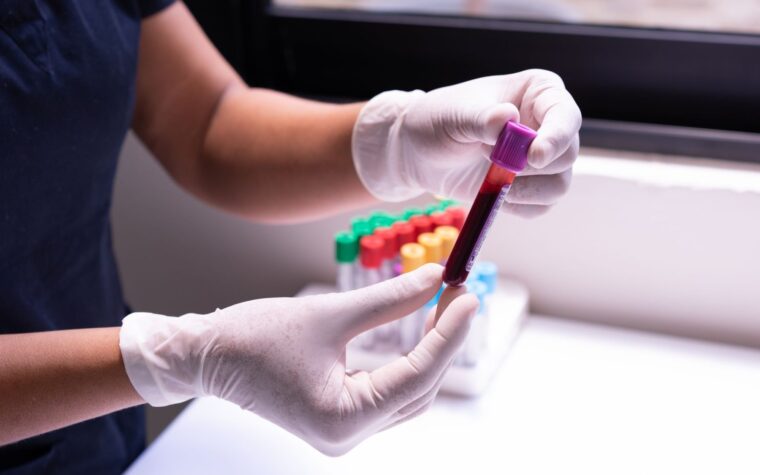
- Draw. A phlebotomist takes blood from a vein in your arm, under a minute.
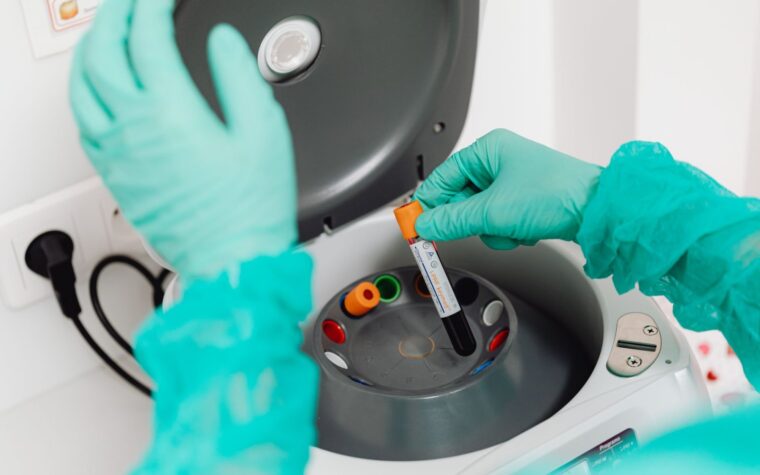
- Lab run. The lab runs the fourth-generation immunoassay. If it is nonreactive, you are done and the result is negative.
- Reflex confirmation. If the screen is reactive, the lab automatically runs a differentiation assay on the same sample, and sometimes an RNA test, to confirm and to tell HIV-1 from HIV-2. You are not told “positive” until this finishes.
- Result. Results usually post to a portal in 1 to 3 business days. A reactive-then-confirmed result triggers a clinician follow-up.
With a rapid finger-stick test
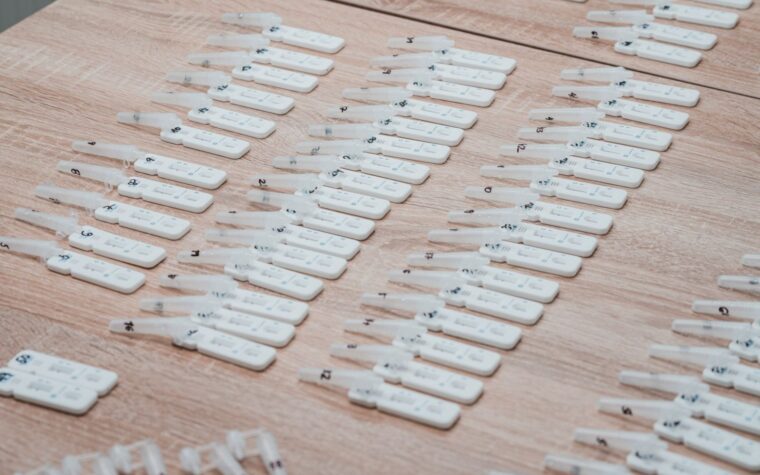
A counselor pricks your finger, applies a drop of blood to a cartridge, and reads the result in about 20 minutes. A nonreactive result is your answer for that window. A reactive rapid result is a preliminary positive that always requires a confirmatory lab test.
With an at-home kit
The instant oral kit has you swab your upper and lower gums, insert the swab into a vial of solution, and wait 20 minutes for one or two lines. The mail-in blood kit has you lance a fingertip, fill a collection device, and ship it in a prepaid envelope to a lab that runs a fourth-generation test and posts your result online. Either way, a reactive home result is a signal to confirm at a clinic, never a diagnosis you act on alone.
Where can you get an HIV test, and does CVS do HIV testing?
You can get an HIV test at a doctor’s office, a lab like Quest or Labcorp, a public health department, many urgent care and retail clinics, and at home with a mail-in or instant kit. CVS does offer HIV testing through its MinuteClinic locations, not the pharmacy counter, and Walgreens runs free testing events in many cities, especially around National HIV Testing Day in late June.
Your health department is often the smartest first stop. Most county and city health departments do HIV testing for free or on a sliding scale, frequently same-day with a rapid result, and many offer it anonymously, so the test never touches your insurance record. For a broader look at where every STI screen is available, see our guide on STD testing and where to go.
At-home and mail-in options
Two at-home routes exist. The instant kit (OraQuick) uses an oral swab and gives a result in 20 minutes at home, but it is antibody-only with that 90-day window. The other route is a mail-in kit: you collect a finger-stick blood sample, ship it to a lab, and get a fourth-generation result online in a few days. If you would rather test discreetly, an at-home blood kit is the more sensitive choice. We break down the trade-offs in at-home STD tests, how they work and which to trust, and you can compare Everlywell pricing before you buy.
Free and low-cost testing, in plain terms
You never have to pay for an HIV test if money is the barrier. Beyond health departments, federally qualified health centers (FQHCs) test on a sliding scale tied to income, often down to zero. Planned Parenthood offers HIV testing at most locations, sometimes free depending on funding. AIDS service organizations and many college health centers run free rapid testing, and the CDC keeps a national locator that maps free and confidential sites by zip code. A free option almost always exists near you.
How much does an HIV test cost?
An HIV test ranges from free at a health department to around $250 for an RNA test at a hospital, and the same fourth-generation screen can swing wildly in price depending only on where it is billed. Cost is driven less by the test and more by the setting and the billing code.
| Where | Test type | Typical cost |
|---|---|---|
| Health department or free site | Rapid antibody or lab | $0 |
| Insurance, routine screening | 4th-gen lab | $0 copay (preventive) |
| Discount lab order (cash) | 4th-gen lab | $24 to $60 |
| Retail clinic (CVS MinuteClinic, etc.) | Rapid or lab | $70 to $150 |
| At-home oral kit | Antibody | $40 to $50 |
| At-home mail-in blood kit | 4th-gen lab | $50 to $100 |
| Hospital or ER, diagnostic | 4th-gen or RNA | $150 to $250 and up |
Here is a worked example of how absurd the spread gets. Order a fourth-generation HIV test as a cash patient through a discount lab marketplace and it runs about $29. The exact same test, drawn at a hospital and billed as a diagnostic workup, can land at $200 or more once facility fees stack on. Nothing about the test changed, only the door you walked through. If you are uninsured or want privacy, a health department or a flat-rate cash lab order beats a hospital draw. HSA and FSA dollars cover HIV testing, so you can pay pre-tax.
The simplest way to actually get this done
Everlywell is at-home test kits for specific markers (thyroid, hormones, metabolic, STI) shipped to your door with results online in days (per kit). It is what we point readers to when they would rather get one clean, complete draw than chase single tests one at a time. Here is everlywell reviewed in full.
Does health insurance cover HIV testing?
Yes. Under the Affordable Care Act, HIV screening is a covered preventive service, so most health insurance plans cover at least one routine HIV test per year with no copay when it is coded as screening. The CDC recommends everyone aged 13 to 64 get tested at least once.
Here is the catch that surprises people: the “free” preventive coding only holds when the visit is billed as routine screening. The moment a test is ordered because you have symptoms or a known exposure, it can be billed as diagnostic, and a diagnostic test goes against your deductible. Life insurance medical exams are a separate matter; they do commonly test for HIV as part of underwriting, and you consent to that when you apply, so it is not the same as a confidential health screen.
How to keep it coded as preventive
If you want the no-copay screening benefit, the wording at order time matters. Ask for HIV screening as part of routine preventive care, and avoid framing the visit around a specific symptom or named exposure if that is not the medical reality, because that framing can flip the billing code to diagnostic. When in doubt, ask the front desk directly: “Will this be billed as preventive screening?” If the answer is unclear and you would rather not risk a deductible hit, a health department test removes the question entirely.
What do my HIV test results mean?
A negative (nonreactive) result means no HIV was detected, and if you are past the window period for the test you took, that negative is reliable. A positive result on a screening test is called “reactive” and is never the final word on its own. The lab confirms every reactive screen with a second, different test before a diagnosis.
If a confirmed positive comes back, it is no longer the diagnosis it was decades ago. With modern treatment, people living with HIV reach an undetectable viral load and live a normal lifespan. Talk to a clinician about your results and next steps; treatment works best when it starts early. If your result is negative but you had a recent exposure, the only right move is to retest at the conclusive mark for your test type rather than assume you are clear.
Reading the three possible outcomes
- Nonreactive (negative). No HIV markers detected. Reliable if you are past the window for your test. Inside the window, treat it as provisional and retest at the conclusive mark.
- Reactive (preliminary positive). Markers detected on the screen. Not a diagnosis. It triggers a confirmatory test on the same or a fresh sample, because false reactives happen.
- Indeterminate. An unclear result, more common with very recent infection when markers are just emerging. The fix is usually an RNA test or a repeat in a couple of weeks.
What “undetectable equals untransmittable” actually means
This is one of the most important shifts in modern medicine and it is still under-known. When someone on HIV treatment reaches and maintains an undetectable viral load, they cannot pass HIV to a sexual partner. Not low-risk. Zero risk through sex. That U equals U fact reframes a positive result entirely.
What if you were just exposed? PEP, PrEP, and next steps
If a possible HIV exposure happened in the last 72 hours, the priority is not testing, it is PEP. PEP (post-exposure prophylaxis) is a 28-day course of HIV medication that can stop an infection from taking hold, and it works only if started fast, ideally within hours and no later than 72 hours after exposure. Go to an urgent care, ER, or sexual health clinic and ask for it by name. Do not wait for a test result, because testing this early cannot tell you anything useful.
PEP vs PrEP, do not confuse them
| PEP | PrEP | |
|---|---|---|
| When | After a possible exposure | Before and ongoing, for prevention |
| Timing | Start within 72 hours | Taken on a schedule, ahead of risk |
| Duration | 28-day course | Daily pill or periodic injection, long term |
| Who | Anyone with a recent high-risk exposure | People with ongoing elevated risk |
The simplest way to remember it: PEP is the emergency brake after the fact, PrEP is the seatbelt you wear in advance. If you keep finding yourself needing PEP, that is the clearest sign to talk to a clinician about starting PrEP instead. After any exposure event, you will also be put on a testing schedule, a baseline test now and follow-ups at the conclusive marks for your test type.
Who should get tested, and how often?
The CDC recommends that everyone aged 13 to 64 get an HIV test at least once as part of routine care, and that people with ongoing risk test more frequently. “At least once” is the floor, and the right frequency depends on your situation.
- Everyone, once: a baseline test sometime between 13 and 64, even with no known risk. Many people who test positive had no obvious flag.
- At least once a year: sexually active gay and bisexual men, anyone with multiple or new partners, people who inject drugs or share equipment, and anyone whose partner is HIV-positive.
- Every 3 to 6 months: people at higher ongoing risk, including many on PrEP.
- During pregnancy: recommended for every pregnancy, because early detection protects the baby and treatment nearly eliminates transmission.
- After any new exposure: a test once you are past the window, regardless of your usual schedule.
If you are unsure where you fall, that uncertainty is itself a reason to test.
Common mistakes people make with HIV testing
Most testing errors are not about the test failing. They are about people misreading timing, type, or what a result means. These come up again and again.
- Testing too early and trusting the negative. The most common mistake by far. A negative inside the window period is not a clean bill of health. Match your test date to the conclusive mark for the test you took.
- Not knowing which test you took. If you do not know whether you had an antibody, fourth-generation, or RNA test, you cannot know when your negative becomes final.
- Treating a reactive rapid or home result as a diagnosis. A preliminary positive needs confirmation. People have spiraled for days over a result a confirmatory test later cleared.
- Waiting to test instead of asking about PEP. Inside 72 hours of a high-risk exposure, the move is PEP, not a test. Testing this early tells you nothing and burns the window when prevention is still possible.
- Assuming a symptom-driven test will be free. Preventive coding only applies to routine screening. Use a health department to avoid the billing question.
- Believing a positive is what it was in the 1990s. Modern treatment means a normal lifespan and zero sexual transmission when undetectable. Outdated fear keeps people from testing at all, which is the worst outcome.
Edge cases: minors, employers, Medicare, and the uninsured
The standard advice covers most adults, but several situations have their own rules worth knowing.
Minors
In every US state, minors can consent to HIV testing on their own without a parent or guardian, an exception built into law specifically so fear of disclosure does not keep young people from testing. A teen can walk into a health department or clinic and get tested confidentially.
Employer-required testing
Some jobs, especially certain healthcare, military, and overseas-assignment roles, require an HIV test as a condition of work. These run through the employer’s process and consent paperwork, not a confidential personal screen, so the result flows to a different place. If you also want a private test for your own knowledge, get that one separately at a health department or with a home kit.
Medicare and older adults
Medicare covers one annual HIV screening for beneficiaries, and more often for those who are pregnant or at increased risk, at no cost when billed as preventive. Older adults are tested less and often diagnosed later, which is exactly the gap routine screening is meant to close.
The uninsured
No insurance is not a barrier. Health departments, FQHCs, Planned Parenthood, and AIDS service organizations test for free or on a sliding scale, and cash home kits and lab orders are inexpensive. Start with a health department or the CDC site locator rather than a hospital, where the same test costs many times more.
How to choose the right HIV test for your situation
The best HIV test is the one that matches your exposure timing, your privacy needs, and your budget. Walk these questions in order and the choice usually falls out.
- Exposure in the last 72 hours? Stop. This is a PEP question, not a testing one. Get to a clinic or ER now.
- Very recent, days to a couple of weeks? You need an RNA test or a clinician’s guidance, because antibody and even fourth-generation tests are still inside their windows.
- About 3 weeks or more and want a definitive answer? A fourth-generation lab draw is the standard, conclusive at about 45 days, and a mail-in blood kit gives you the same test type at home.
- Routine screening, or cost and privacy are the concern? An at-home oral kit is fine if you respect the 90-day window, and a health department gives you a clinic-grade test for free, often anonymously.
FAQ
Can you get HIV tested at the health department?
Yes. Most county and city health departments provide HIV testing, often free or low-cost, and many offer rapid same-day or anonymous testing. Call ahead or check your local department’s website for walk-in hours and whether they use a rapid or lab-based test.
Do health insurance companies test for HIV?
Health insurers do not test you; they cover testing. Most plans pay for at least one routine HIV screen a year at no out-of-pocket cost under preventive-care rules. Life insurers are different and do directly test for HIV during the medical exam used to underwrite a policy.
Do you need health insurance for an HIV test?
No. You can test without insurance through a health department, a free community testing site, or an at-home kit you buy directly. Cash prices at labs and pharmacies typically run from about $25 to $150 depending on the test type and location.
How long does an HIV test take to come back?
Rapid finger-stick and at-home oral tests give results in 20 to 30 minutes. A lab fourth-generation blood test usually returns in 1 to 3 business days, and a mail-in kit takes a few days plus shipping time.
How accurate are at-home HIV tests?
At-home HIV tests are highly accurate when used correctly and after the window period. The oral instant kit detects the large majority of established infections, and a reactive home result is then confirmed at a clinic. The main risk is not a faulty test but testing too early, before antibodies have appeared, which can produce a false negative.
Does a negative HIV test mean I am definitely not infected?
Only if you are past the window period for the test you took. A negative fourth-generation test at 45 days, or an antibody test at 90 days, is conclusive. A negative inside the window, especially soon after an exposure, should be repeated at the conclusive mark before you rely on it.
Can I get HIV-tested anonymously?
Yes. Many health departments and community sites offer anonymous testing, where your name is never attached to the result, as well as confidential testing, where the result is part of your record but kept private. At-home kits you buy and run yourself are also effectively anonymous.
What should I do if my HIV test is positive?
A reactive screening result is confirmed with a second test before it counts as a diagnosis, so the first step is confirmation, not panic. If confirmed, see a clinician quickly to start treatment, because early treatment leads to an undetectable viral load, a normal lifespan, and no sexual transmission. Support and care connect through your clinic, your health department, or an AIDS service organization.