Curious what your own CBC with differential would show? Get one done at home and see every marker explained. One at-home Superpower draw checks 100+ biomarkers, physician-reviewed.
- A CBC with differential is a common blood test that counts your red cells, white cells, and platelets, and then breaks the white cells into five specific types: neutrophils, lymphocytes, monocytes, eosinophils, and basophils.
- The differential adds the breakdown of white blood cells on top of a standard complete blood count, helping your clinician tell whether an infection, allergy, or inflammation is more likely bacterial, viral, or another cause.
- In adults, neutrophils normally make up about 40% to 60% of white blood cells and lymphocytes about 20% to 40%, according to StatPearls (NCBI), though your lab compares your absolute counts against its own reference ranges.
What is a CBC with differential?
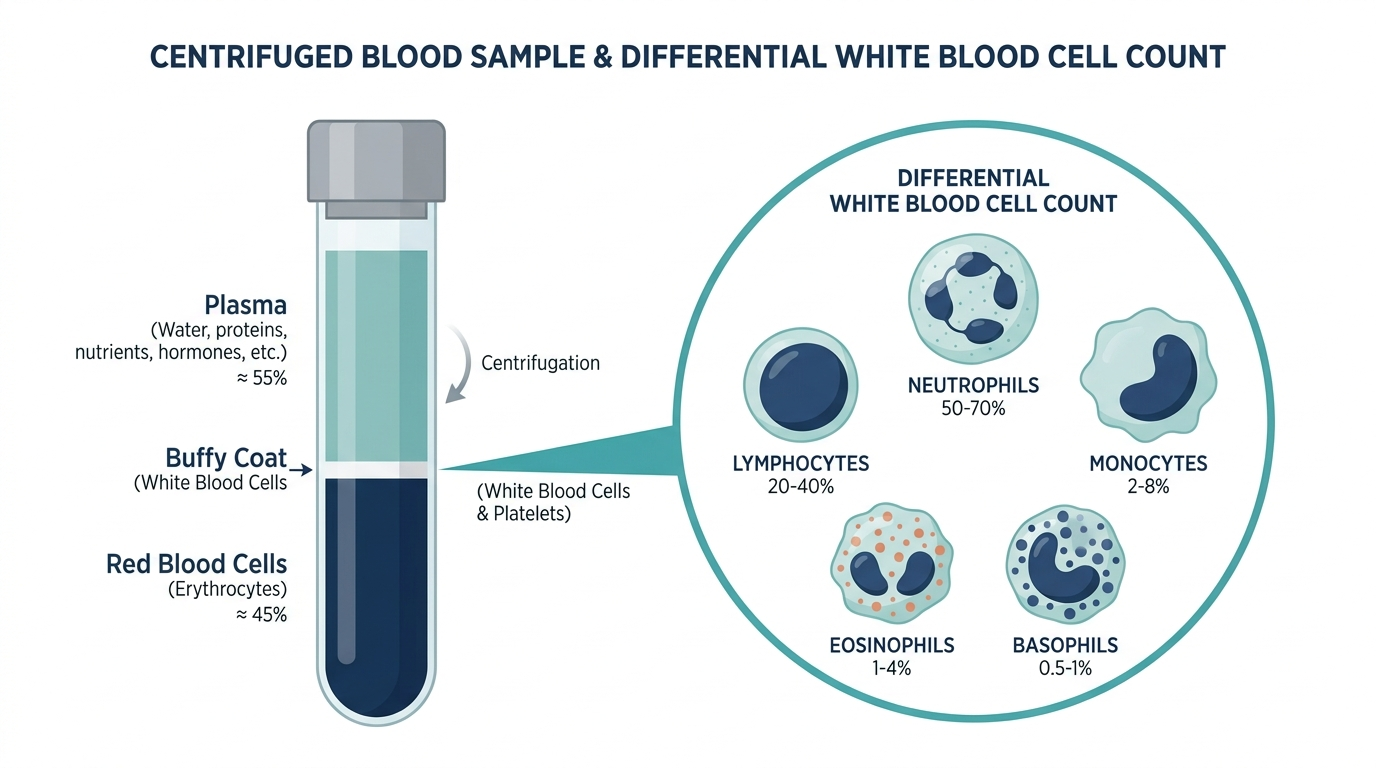
A CBC with differential is a complete blood count plus a count of each of the five main types of white blood cells. The standard CBC measures red blood cells, white blood cells, hemoglobin, hematocrit, and platelets. The differential then divides the total white blood cell count into neutrophils, lymphocytes, monocytes, eosinophils, and basophils, reported as both a percentage and an absolute number of cells per microliter, according to MedlinePlus.
Think of the plain CBC as counting how many people are in a building, and the differential as identifying which departments they belong to. That breakdown matters because the mix of white cells shifts in predictable ways with different problems. A bacterial infection often pushes neutrophils up, while many viral infections shift the balance toward lymphocytes. Cleveland Clinic notes the CBC is one of the most common blood tests ordered, used for routine checkups, diagnosis, and monitoring.
What does the differential actually measure?
The differential measures the proportion and absolute count of your five mature white blood cell types, plus any abnormal or immature cells the lab finds. In adults, the usual reference intervals reported by StatPearls (NCBI) are roughly: neutrophils 40% to 60%, lymphocytes 20% to 40%, monocytes 2% to 8%, eosinophils 1% to 4%, and basophils 0.5% to 1%.
Here is what each type does:
- Neutrophils: your first responders against bacterial and fungal infection. Absolute neutrophil count in adults is often about 1,500 to 8,000 cells/µL (StatPearls).
- Lymphocytes: B cells and T cells that fight viruses and coordinate immunity, roughly 1,000 to 4,000 cells/µL.
- Monocytes: cleanup cells that mature into macrophages, about 200 to 1,000 cells/µL.
- Eosinophils: tied to allergies and parasites, usually under about 0.5 x 10⁹/L.
- Basophils: the rarest white cell, involved in allergic and inflammatory responses, usually under about 0.2 x 10⁹/L.
Clinicians often focus on the absolute values rather than the percentages, because a percentage can look abnormal simply because another cell line changed.
Why would a doctor order a CBC with differential?
A doctor orders a CBC with differential to investigate symptoms like fever, fatigue, bruising, or recurrent infections, and to monitor chronic conditions or treatment side effects. MedlinePlus lists common reasons including checking for infection, anemia, blood cancers such as leukemia, immune disorders, and the effects of chemotherapy. Because chemotherapy can sharply lower the absolute neutrophil count, this test is central to monitoring infection risk during cancer treatment.
The differential is especially useful when the total white blood cell count is abnormal and your clinician needs to know which cell type is driving the change. A high total with a neutrophil surge points one direction, while a high eosinophil count raises questions about allergies, asthma, or parasites. It is also part of many routine wellness panels, so plenty of people get a differential without any symptoms at all.
CBC versus CBC with differential: what is the difference?
The difference is the white blood cell breakdown. A standard CBC gives you a single total white blood cell number, while a CBC with differential splits that total into its five subtypes and flags any unusual cells. Per Cleveland Clinic, a basic CBC reports red cells, white cells, hemoglobin, hematocrit, and platelets, so the “with differential” portion is the added layer.
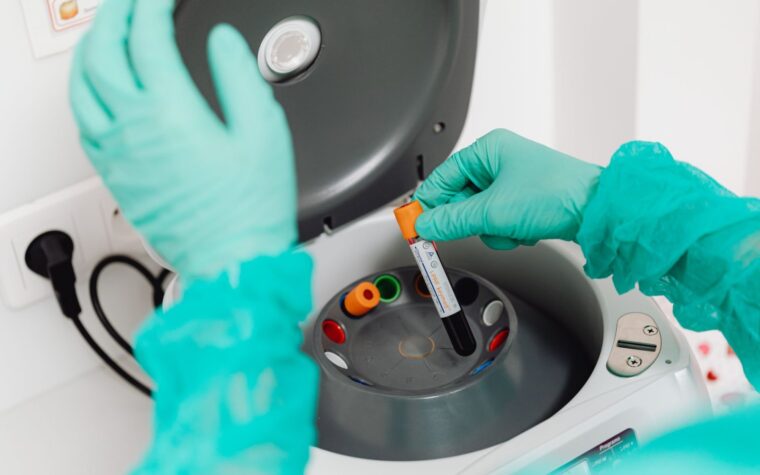
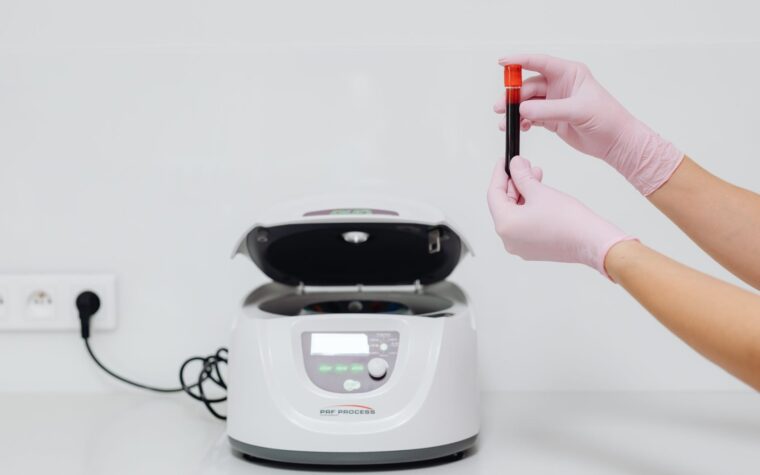
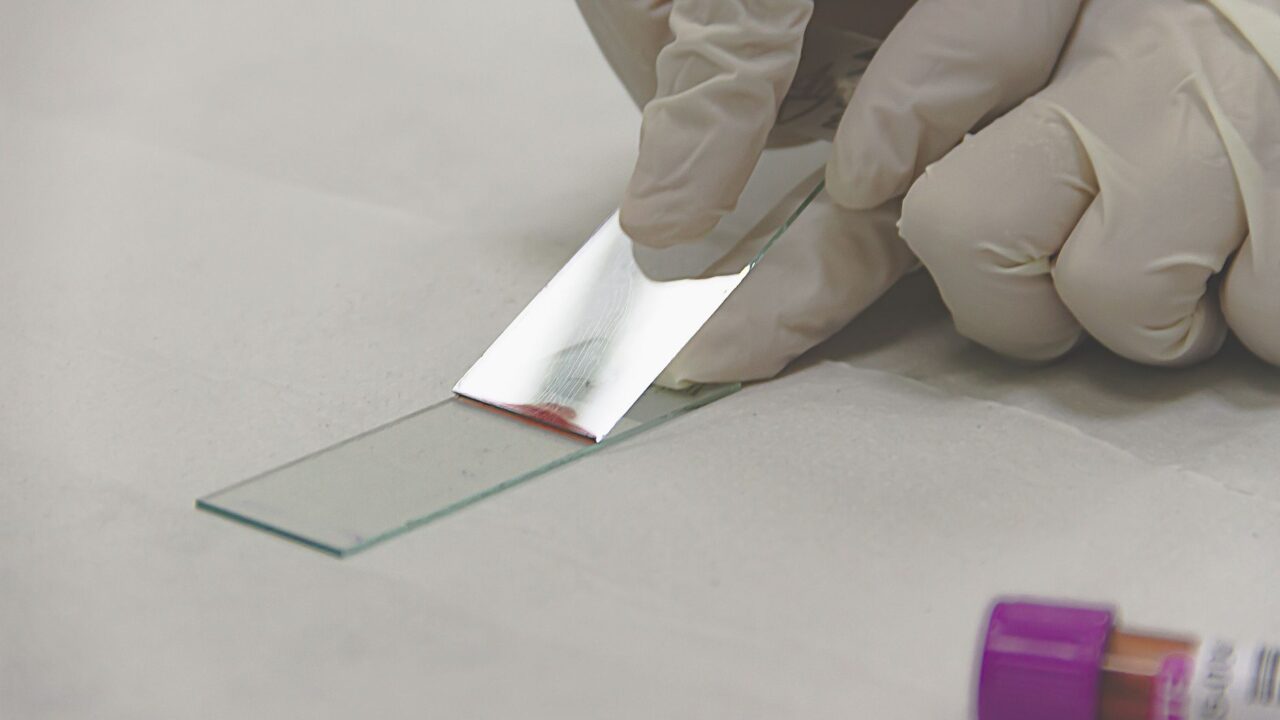
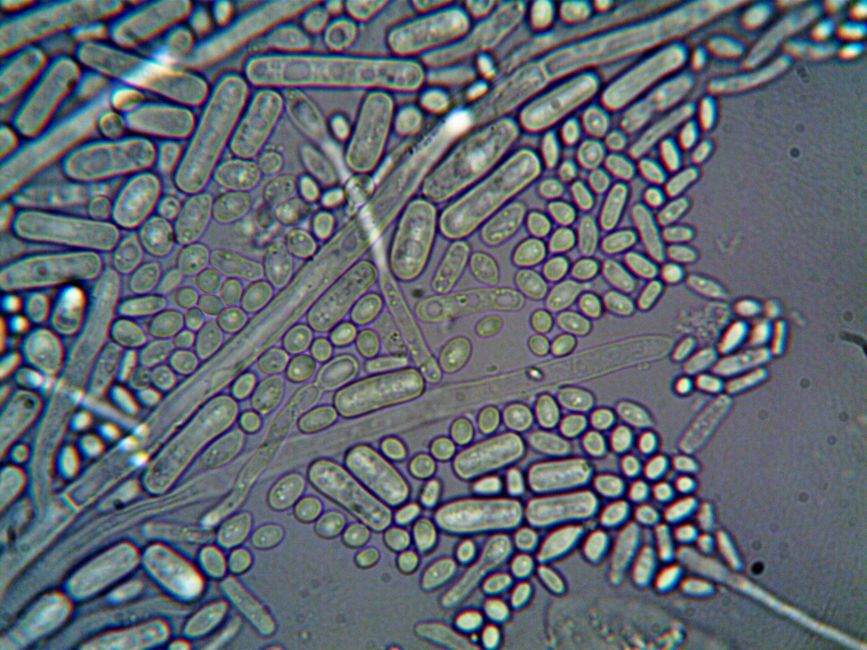
Differentials come in two forms. An automated differential is run by a hematology analyzer and covers most routine cases quickly. A manual differential is performed when a technologist reviews a stained blood smear under a microscope, usually triggered when the analyzer flags something unexpected. The manual version can catch abnormal cell shapes and immature cells that an automated count may miss. Your result may simply say “auto diff” or “manual diff” depending on which was done.
How do you read your CBC with differential results?
You read the results by comparing each value against the reference range printed next to it on your lab report, and by looking at the absolute counts more than the percentages. A value flagged as high or low is outside that lab’s range, but a single out-of-range number is not a diagnosis on its own. Reference ranges vary slightly between labs because they use different equipment and populations, which is why you should always read against the range on your own report.
A few common patterns, drawn from StatPearls and MedlinePlus, help orient you:
- High neutrophils (neutrophilia): often bacterial infection, inflammation, stress, or certain medications.
- High lymphocytes (lymphocytosis): frequently viral infections, and sometimes specific blood disorders.
- High eosinophils (eosinophilia): allergies, asthma, eczema, or parasitic infection.
- Low neutrophils (neutropenia): can raise infection risk, sometimes from chemotherapy or autoimmune conditions.
Context matters as much as the numbers. Your clinician interprets the results alongside your symptoms, history, and other tests, then decides whether to repeat the test, watch and wait, or investigate further.
How is the test done and how should you prepare?
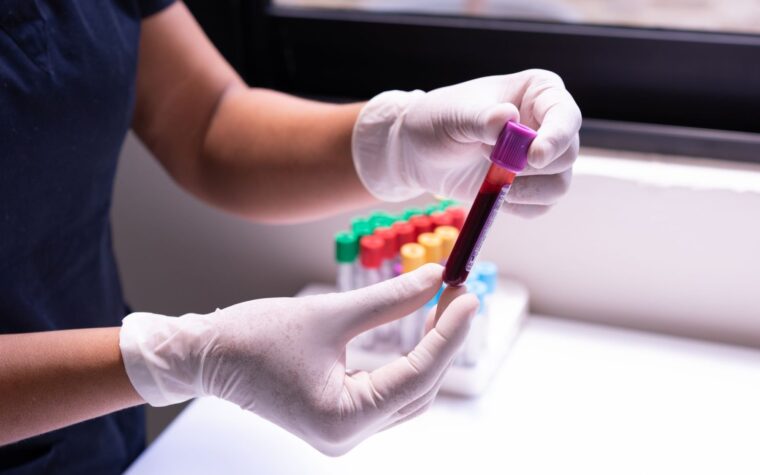
The test is a routine blood draw, usually taking only a few minutes, and most CBCs with differential require no special preparation. A phlebotomist inserts a needle into a vein, typically in your arm, and collects a small tube of blood, according to MedlinePlus. You can normally eat and drink as usual unless your clinician has ordered other tests at the same time that require fasting.
Side effects are minimal. You may feel a brief sting and have slight bruising or soreness at the puncture site afterward. Results often come back within a day, though timing depends on the lab. If a manual differential is needed, the report can take a little longer because a technologist reviews the smear by hand. When you get your results, bring them to your clinician rather than self-diagnosing from the numbers alone.
The red blood cell side of the CBC: hemoglobin, hematocrit, and indices
The differential gets most of the attention because it explains the white cells, but the same report also carries a full read on your red blood cells. These values often reveal anemia or dehydration long before you notice symptoms, so it is worth knowing what they mean.
- Hemoglobin (Hgb): the oxygen-carrying protein in red cells. The World Health Organization uses roughly 13 to 18 g/dL for adult men and 12 to 16 g/dL for non-pregnant adult women. Low hemoglobin is the classic marker of anemia.
- Hematocrit (Hct): the percentage of your blood volume made up of red cells, commonly around 42% to 50% in men and 37% to 47% in women. It rises with dehydration and falls with anemia.
- Red blood cell count (RBC): the raw number of red cells per volume of blood, which moves together with hemoglobin and hematocrit.
Where the red cell story gets genuinely useful is in the indices, which describe the size and hemoglobin content of your cells:
- MCV (mean corpuscular volume): cell size, normally about 80 to 94 femtoliters. A low MCV suggests small cells, often iron deficiency, while a high MCV suggests large cells, often B12 or folate deficiency.
- MCH and MCHC: how much hemoglobin each cell carries, with MCH around 27 to 32 pg and MCHC about 32 to 36 g/dL.
- RDW (red cell distribution width): how uniform your red cells are in size, roughly 11.8% to 14.5% in men and 12.2% to 16.1% in women (Cleveland Clinic). A high RDW means your cells vary a lot in size, an early clue to mixed or evolving anemia.
Read together, these turn a bare hemoglobin number into a diagnosis. Low hemoglobin with a low MCV points toward iron deficiency. Low hemoglobin with a high MCV points toward a B12 or folate problem. That is the kind of pattern reading a differential alone cannot give you.
Platelets: the third cell line on your report
Platelets are the smallest cells counted on a CBC, and they handle clotting. A normal adult platelet count runs about 150,000 to 400,000 per microliter (150 to 400 x 10^9/L).
- Low platelets (thrombocytopenia): can cause easy bruising, tiny red skin spots called petechiae, prolonged bleeding from small cuts, or heavy periods. Causes range from viral infection and certain medications to immune conditions and bone marrow problems.
- High platelets (thrombocytosis): often a reactive response to infection, inflammation, iron deficiency, or recent surgery, and less commonly a primary bone marrow disorder.
Many labs also report mean platelet volume (MPV), the average size of your platelets, which can hint at whether the bone marrow is producing fresh platelets rapidly. Because platelets, red cells, and white cells all come from the same bone marrow, a change across all three lines at once is more concerning than a change in just one, and is a reason clinicians read the whole panel rather than a single value.
When counts run low: neutropenia and anemia in more detail
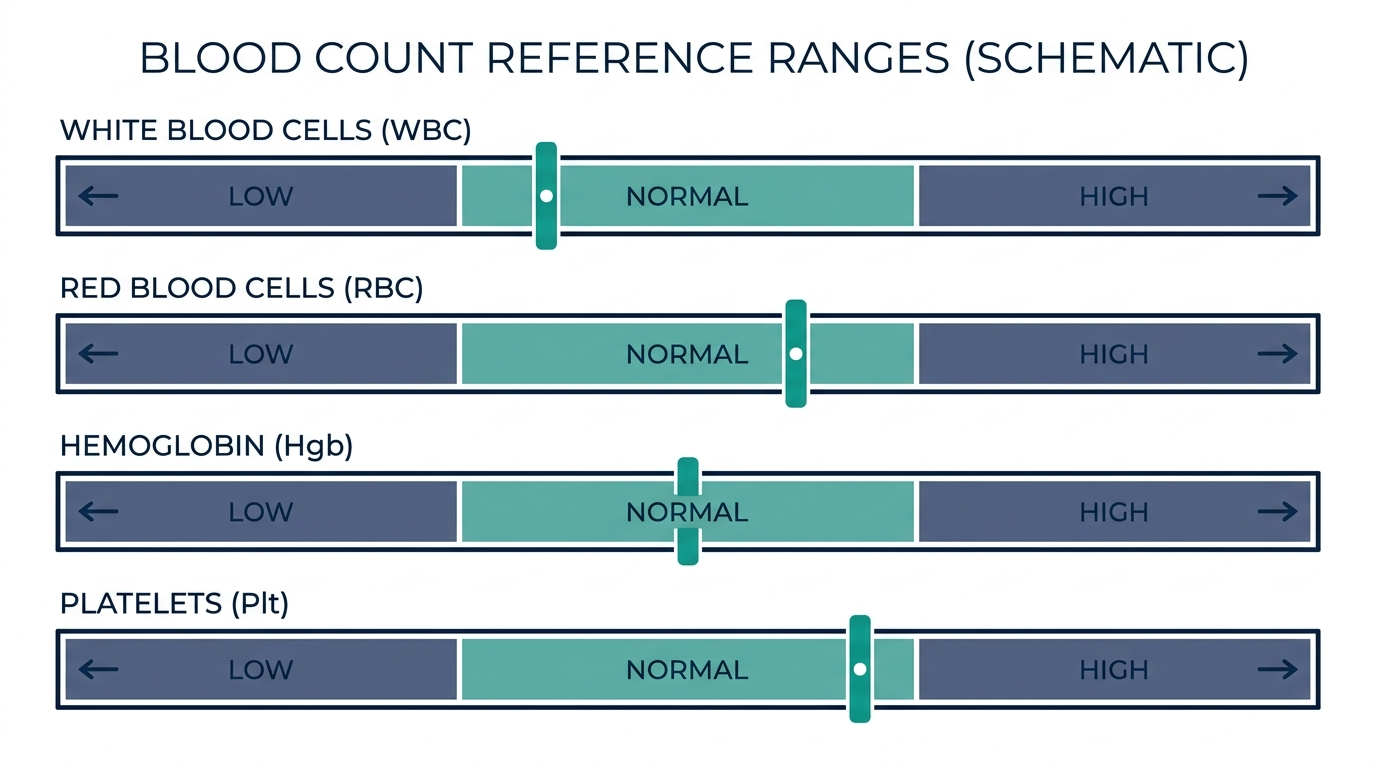
The article above covered high counts. Low counts deserve their own attention because they carry practical risks.
Neutropenia (low neutrophils)
Because neutrophils are your front line against bacteria and fungi, a low absolute neutrophil count raises infection risk. Mild reductions are common and often harmless, but a markedly low count, especially during chemotherapy, is why oncology teams track this test so closely. If your neutrophils are low and you develop a fever, that combination is treated as urgent rather than a wait-and-see situation. Causes include chemotherapy, some medications, viral infections, autoimmune conditions, and, in some people, a benign lower baseline.
Anemia (low hemoglobin)
Anemia means your blood carries less oxygen than it should. Symptoms include fatigue, shortness of breath on exertion, pale skin, dizziness, and cold hands and feet. The MCV index steers the workup: small cells point to iron deficiency or chronic disease, large cells point to B12 or folate deficiency, and normal-sized cells point toward blood loss, kidney disease, or early marrow problems. This is a clear example of why the indices matter, since the size of the cells narrows a long list of causes down to a manageable few.
Beyond the raw counts: the neutrophil-to-lymphocyte ratio
An increasingly discussed value that you can calculate from your own report is the neutrophil-to-lymphocyte ratio (NLR), which is simply your absolute neutrophil count divided by your absolute lymphocyte count. It is a low-cost snapshot of systemic inflammatory tone, weighing innate immune activation (neutrophils) against adaptive immune regulation (lymphocytes).
In healthy adults the NLR generally sits between about 1 and 3. Values pushing toward 3 to 5 are associated with higher inflammatory stress, which can come from acute infection, physical or psychological stress, or metabolic strain, and values above 5 are typically flagged as significant inflammation (NLR as an inflammatory marker, PMC). Importantly, the NLR is a general signal, not a specific diagnosis. It tells you inflammation may be elevated, not what is causing it. Used alongside symptoms and the rest of the CBC, it can be a useful trend to watch over time, especially since it costs nothing extra to compute from a test you already have.

Putting the whole panel together: sample interpretation scenarios
The real skill in reading a CBC with differential is seeing patterns across cell lines rather than reacting to a single flag. Here are a few illustrative patterns clinicians recognize.
- High white count with a neutrophil surge: suggests a bacterial infection or acute inflammation, especially if you have fever and localized symptoms.
- High white count with a lymphocyte predominance: more consistent with a viral infection, which often resolves on its own.
- High eosinophils with normal everything else: raises the question of allergy, asthma, or, in the right setting, parasites.
- Low hemoglobin with a low MCV and high RDW: a classic iron-deficiency pattern, worth confirming with iron studies and ferritin.
- Drops across all three lines at once (low red cells, white cells, and platelets): called pancytopenia, this is a more serious pattern that points to the bone marrow and always warrants prompt evaluation.
Notice that in every case the interpretation comes from the combination, not one number. A single value flagged high or low is a prompt to look at the rest of the panel and your clinical picture, never a standalone diagnosis. That is exactly why your clinician reads the whole report, and why bringing your results to them beats self-diagnosing from a chart.
What can throw off a CBC result
Blood counts are sensitive, and several everyday factors can nudge them without any disease being present. Knowing these prevents you from over-reacting to a borderline flag.
- Recent hard exercise: vigorous activity can transiently raise white blood cell and neutrophil counts, so a test right after a workout may look inflamed when it is not.
- Acute stress: physical or emotional stress can temporarily shift white cells, particularly neutrophils and lymphocytes.
- Hydration status: dehydration concentrates the blood and can push hematocrit and hemoglobin up, while overhydration can dilute them.
- Time of day and recent illness: counts vary somewhat through the day, and a recent cold or infection can leave your differential shifted for a while as you recover.
- Medications: steroids, some antibiotics, and chemotherapy all change specific cell lines in predictable ways your clinician will factor in.
- Sample handling: a difficult draw or a delay before the sample reaches the analyzer can occasionally affect platelet counts, which is one reason an odd result is sometimes simply repeated.
This is why a single out-of-range value on an otherwise normal panel, in a person who feels well, is often watched and repeated rather than chased with immediate testing. Context and timing matter as much as the numbers themselves.
Who should get a CBC with differential and how often
There is no one-size answer, because the test serves different purposes for different people.
- People with symptoms: fever, unexplained fatigue, easy bruising or bleeding, recurrent infections, or unexplained weight loss are all reasons to get one promptly.
- People on treatments that affect blood counts: anyone on chemotherapy or certain immune-suppressing medications is monitored on a schedule set by their clinician, sometimes frequently.
- People with chronic conditions: those with known anemia, blood disorders, autoimmune disease, or kidney disease may repeat the test periodically to track stability.
- Generally healthy adults: a CBC is often included in a routine wellness panel, but there is no fixed universal interval. Your clinician decides based on your age, history, and risk factors.
After an abnormal result, the next step depends entirely on the pattern. Sometimes it is a simple repeat in a few weeks to confirm it was not a fluke. Sometimes it triggers targeted follow-up tests, such as iron studies for a small-cell anemia or a blood smear review for unusual cells. The value of the CBC with differential is not just the numbers it gives today, but the direction it reveals when you track it over time.
Turn what you just learned into action.
Superpower lets you test 100+ biomarkers from home, then re-check them over time so you can actually see progress, physician-reviewed at every step.
Frequently asked questions
Is a CBC with differential the same as a regular CBC?
No. A regular CBC reports one total white blood cell count, while a CBC with differential breaks that total into neutrophils, lymphocytes, monocytes, eosinophils, and basophils. The differential adds detail that helps pinpoint the type of immune response or disorder, per MedlinePlus.
Do I need to fast before a CBC with differential?
Usually no. A CBC with differential typically needs no fasting and no special preparation. Fasting is only required if your clinician ordered other tests at the same time, such as glucose or a lipid panel, according to Cleveland Clinic. Follow the specific instructions you are given.
What is a normal neutrophil percentage?
In adults, neutrophils usually make up about 40% to 60% of white blood cells, with an absolute count near 1,500 to 8,000 cells/µL, according to StatPearls (NCBI). Clinicians often weigh the absolute neutrophil count more heavily than the percentage when judging infection risk.
What does it mean if my lymphocytes are high?
High lymphocytes, called lymphocytosis, are often caused by viral infections and usually resolve as you recover. Less commonly, persistently high counts can signal certain blood disorders. Your clinician interprets the result with your symptoms and other values rather than from one number alone.
How long do CBC with differential results take?
Automated results are frequently available within a day. If the analyzer flags abnormal cells, a technologist performs a manual differential by reviewing a blood smear, which can add time. Ask your lab or clinician about the expected turnaround for your specific order.
Sources
- MedlinePlus, Blood Differential
- Cleveland Clinic, Complete Blood Count (CBC)
- StatPearls (NCBI), Normal and Abnormal Complete Blood Count With Differential
- MedlinePlus, Complete Blood Count (CBC)
- MedlinePlus, White Blood Count (WBC)
This article is for general educational purposes and is not medical advice. It cannot diagnose or treat you and does not replace your clinician. Always discuss your lab results and any health decisions with a qualified healthcare professional.
Related reading
Related: see our ranking of the best at-home blood tests.
Vital Signs Today may earn a commission if you buy through links on this page. It does not affect our editorial assessments.