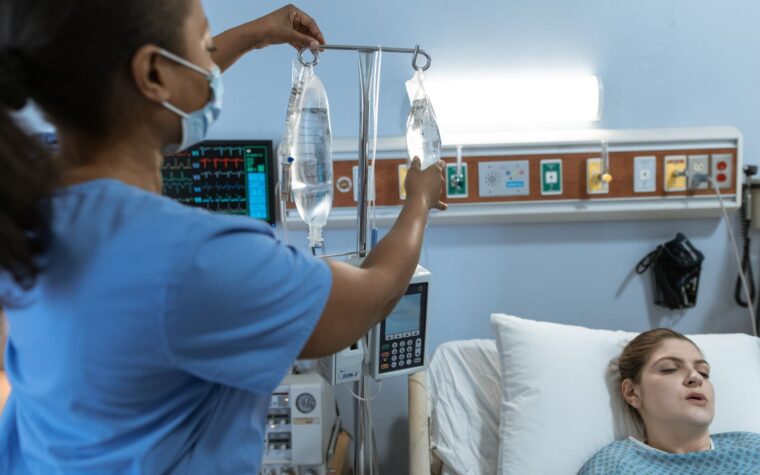
Future 6G networks could significantly improve telemedicine by managing computing power and data transmission more effectively, allowing up to 40 percent more applications to run simultaneously. Researchers at the Technical University of Munich (TUM) and TUM University Hospital conducted a study on how the next generation of mobile networks might handle the growing demands of remote health care. Their findings suggest that 6G could make telemedicine more reliable and efficient for everyday clinical use.
Key takeaways
- 6G networks could boost the number of concurrent telemedicine applications by up to 40 percent.
- The research was led by scientists at the Technical University of Munich and TUM University Hospital.
- Optimized resource management in 6G could reduce delays and improve reliability for remote monitoring and procedures.
- Current telemedicine systems sometimes struggle with bandwidth and latency, but 6G may address these issues.
- The study focused on network slicing and dynamic allocation of computing power to prioritize medical data traffic.
How 6G could improve telemedicine
Telemedicine depends on fast, uninterrupted data transmission for activities such as video consultations, remote patient monitoring, and even robot-assisted surgery. As health care systems adopt more connected devices and real-time applications, network capacity becomes a bottleneck. The TUM team explored how 6G networks, expected to roll out around 2030, can allocate resources more intelligently than 5G.
According to the original report, the researchers designed algorithms that dynamically balance computing power and bandwidth among different medical services. This approach, called network slicing, allows the network to prioritize urgent health care data over less critical traffic. Tests showed that such optimization could increase the number of simultaneously running telemedicine applications by roughly 40 percent without degrading performance.
Benefits for remote monitoring and procedures
Continuous remote monitoring of patients with chronic conditions requires a steady stream of data from wearables and sensors. If the network slows down, doctors may miss crucial changes in a patient’s health. 6G networks, with their improved utilization strategies, can maintain quality of service even during peak usage. Similarly, remote procedures, such as robotic tele-surgery, demand minimal latency and high reliability. The TUM study indicates that 6G infrastructure could meet these strict requirements more consistently than current systems.
Challenges and next steps
While the findings are promising, the research is still at an early stage. 6G standards have not yet been finalized, and hardware prototypes remain in laboratories. The team at TUM plans to test their algorithms in real-world simulations and eventually in clinical pilot projects. Other hurdles include ensuring security and privacy for medical data traveling over 6G networks, as well as integrating with existing health care information systems.
Nevertheless, the work provides a roadmap for how future networks can be designed specifically for health care needs. The report from Medical Xpress notes that the researchers believe their methods could be applied to other fields, such as autonomous driving and smart factories, where reliable connectivity is equally critical.
Frequently Asked Questions
When will 6G networks be available for telemedicine?
6G is expected to begin commercial rollout around 2030, following standards development over the next few years. Telemedicine applications will likely be tested in research settings before that, but widespread clinical adoption may take additional time.
How is 6G different from 5G for health care?
6G aims to offer much higher data rates, lower latency, and more intelligent resource allocation. The TUM research specifically highlights network slicing and dynamic computing management, which could give telemedicine applications priority and allow many more to run simultaneously than is possible with current 5G systems.
What telemedicine applications benefit most from 6G?
Applications that require real-time data transmission and low latency stand to gain the most. These include remote surgery, continuous monitoring of vital signs, high-definition video consultations, and transmission of large medical images. The ability to run more applications simultaneously also helps hospitals scale up telehealth services.
This is an original report by Vital Signs Today, informed by reporting from Medical Xpress. Read the original source.
This article is for information only and is not medical advice. See our Medical Disclaimer.