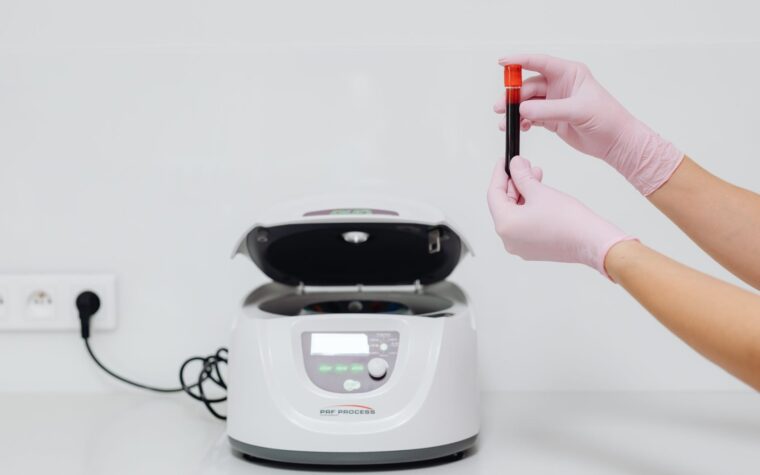
You opened your lab results, scanned past the cholesterol and the blood sugar, and landed on a section labeled immunoglobulins with three letters that meant nothing to you: IgG, sitting next to a number in the high hundreds or low thousands. Maybe it was flagged high. Maybe low. Either way, it is one of the most misunderstood numbers on a blood report, and it tells you something the standard markers cannot: how well your immune system actually remembers the fights it has already won.
IgG reflects your immune memory built over years. Want to see it alongside your full immune and health panel? One at-home Superpower draw checks 100+ biomarkers, physician-reviewed.
Most explainers stop at “it is an antibody.” That is true and almost useless. What matters is what a high or low IgG is quietly telling you about chronic infection, autoimmune activity, and whether your body can defend itself at all.
What is IgG in a blood test?
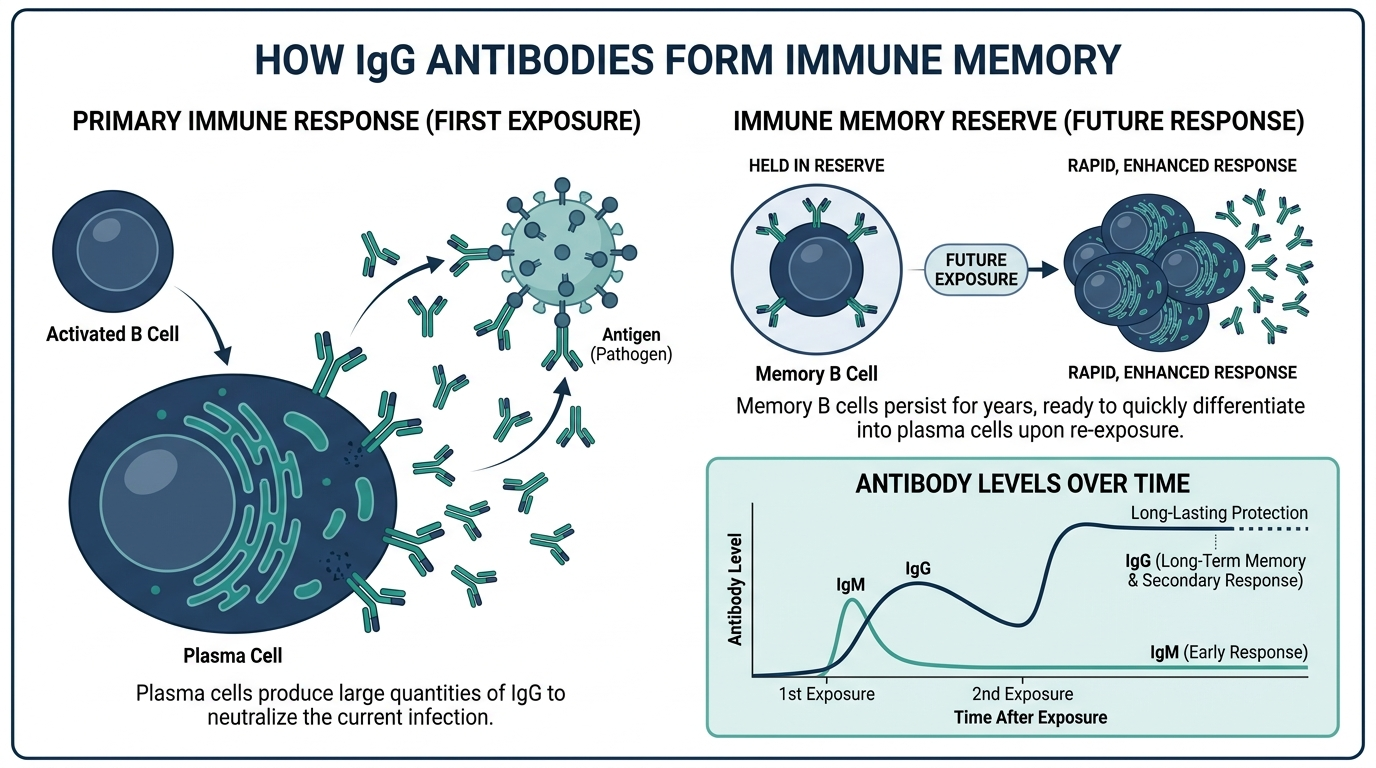
IgG stands for immunoglobulin G, the most common antibody in your blood, and a blood test measures how much of it is circulating. IgG is a protein your immune system makes to fight off infections, and it makes up roughly 75 percent of all the antibodies in your bloodstream (Cleveland Clinic). When you ask what is IgG in a blood test, the short answer is this: it is a snapshot of your long term immune memory, the antibodies your body keeps on file after an infection or a vaccine so it can respond fast the next time.
The test usually comes bundled with two other antibodies, IgA and IgM, as a quantitative immunoglobulins panel (MedlinePlus). A typical adult IgG result sits between 600 and 1600 mg/dL. That single number is the foundation for everything below.

What does an IgG blood test show?
An IgG blood test shows whether your immune system is producing a normal amount of its workhorse antibody, and it is used two different ways. The first is to check overall immune health: too little IgG can mean your defenses are weak, while too much can flag chronic inflammation or a blood disorder (MedlinePlus). The second use is more specific. Doctors order a targeted IgG test against a particular germ, such as measles or chickenpox, to confirm whether you are immune, either from a past infection or a vaccine (Cleveland Clinic).
So when people search what is an IgG blood test or what does an IgG blood test show, they are usually looking at one of those two scenarios. A total IgG level answers “is my immune system stocked.” A pathogen specific IgG answers “am I protected against this one thing.” It is worth knowing which one your doctor ordered, because the interpretation is completely different.
What is a normal IgG level?
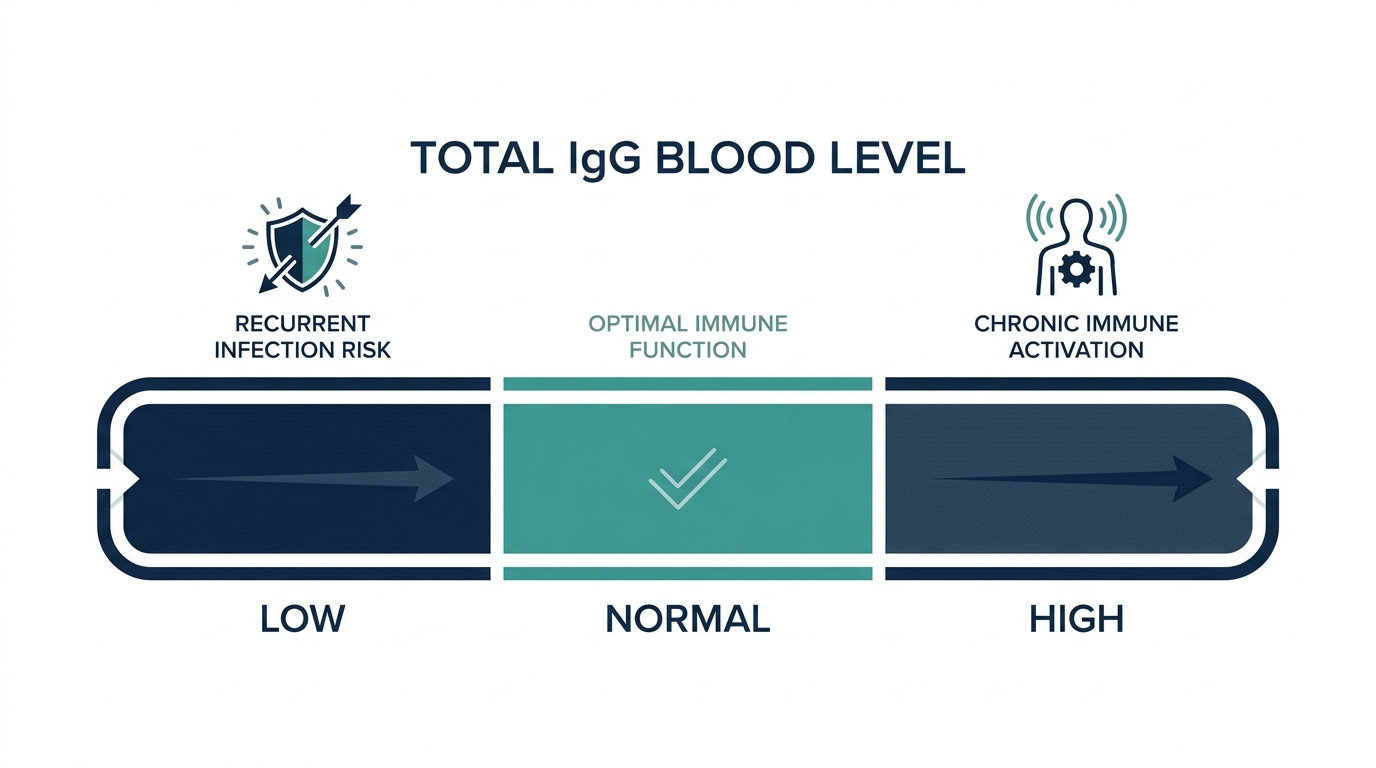
A normal adult IgG level is generally between 600 and 1600 mg/dL, though the exact range varies by laboratory and is lower in infants and children (Cleveland Clinic). IgG ranges shift with age because newborns start with antibodies borrowed from their mother, then build their own supply over the first years of life, which is why a pediatric reference range looks nothing like an adult one.
The practical rule is the same one that applies to almost every lab value: read your result against the reference range printed on your own report, not against a number you found online. That printed range is the one your specific lab calibrated its instruments to. If your IgG falls inside it, that part of your immune system is doing its job.
What does a high IgG level mean?
A high IgG level means your body is producing an unusually large amount of antibody, which is a clue that the immune system is either fighting something long term or being driven by an abnormal process. It is not a diagnosis on its own, but it points to a recognizable short list of causes (Cleveland Clinic):
- Chronic infection. A long running infection keeps the immune system switched on, and IgG climbs as it churns out antibodies (MedlinePlus).
- Autoimmune disease. Conditions like lupus, rheumatoid arthritis, and scleroderma can push IgG up because the immune system is overactive (Cleveland Clinic).
- Liver disease. Cirrhosis and chronic hepatitis are common drivers of elevated immunoglobulins (MedlinePlus).
- Plasma cell disorders. A high IgG can signal MGUS or multiple myeloma, where one clone of antibody producing cells overproduces a single type of IgG (Cleveland Clinic).
Here is the counterintuitive part that rarely makes it into the patient handout. A high IgG does not mean your immune system is strong. MedlinePlus is blunt about it: even when your levels are high, you may still get frequent infections, because those extra antibodies may not be working normally (MedlinePlus). In a plasma cell disorder, for example, the body cranks out mountains of one useless antibody while crowding out the diverse antibodies you actually need. Quantity is not quality. That distinction is exactly why a high number gets investigated rather than celebrated.

What does a low IgG level mean?
A low IgG level means your body is not making enough of its main protective antibody, and this is the result that genuinely matters for your health, because it can leave you vulnerable to repeated infections. Low IgG shows up when something blocks antibody production or causes you to lose antibodies faster than you make them (Cleveland Clinic).
The common causes fall into a few groups:
- Primary immunodeficiency. Genetic conditions such as common variable immunodeficiency or X-linked agammaglobulinemia limit how much IgG the body can produce (Cleveland Clinic).
- Medications and illness. Immunosuppressive drugs, some cancers, and HIV can drive IgG down (Cleveland Clinic).
- Loss or poor absorption. Kidney disease, malnutrition, and malabsorption disorders can deplete immunoglobulins (MedlinePlus).
The telltale symptom pattern is recurrent or stubborn infections: repeated sinusitis, pneumonia, bronchitis, and ear infections that keep coming back (Cleveland Clinic). If you have been on antibiotics more times than you can count, a low IgG can be the missing explanation that everyone overlooked.
Why is IgG tested alongside IgA and IgM?
IgG rarely tells the full story alone, which is why labs measure it next to IgA and IgM as a set. Each antibody class has a different job and a different timeline, and the pattern across all three is far more informative than any single value (MedlinePlus). Think of it as reading three gauges instead of one.
The cleanest way to understand the trio is by timing. IgM is the first responder, the antibody your immune system makes within days of meeting a new germ. IgG comes in later and sticks around for the long haul, providing lasting memory (Cleveland Clinic). IgA guards your mucous surfaces, the respiratory and digestive linings where germs try to get in.
That timing split is what powers a huge amount of real world diagnosis. For a specific infection, a high IgM with low IgG suggests a recent or active infection, while a high IgG with low IgM points to a past exposure you have already recovered from and are now immune to. One pattern says “you are sick right now,” the other says “you were sick before and your body remembers.” Reading IgG in isolation throws away that entire dimension.
The detail most patients never hear: a normal total IgG can still hide a problem
Here is the insider point that gets lost in nearly every patient explainer. Your total IgG number can sit comfortably in the normal range while a hidden weakness goes undetected. IgG is not one uniform antibody. It comes in four subclasses, IgG1 through IgG4, each tuned to fight different kinds of germs. You can have a perfectly normal total IgG and still be deficient in one subclass.
This matters clinically. Because the total IgG number is an average across all four subclasses, a deficiency in a single subclass can be averaged out and hidden inside a normal looking result, even in someone who keeps catching the same respiratory infections (Cleveland Clinic). The total is an average, and an average can hide a specific gap. A low subclass in a child who keeps catching pneumonia is exactly the kind of thing a single combined number cannot show.
The practical takeaway: if you keep getting the same kinds of infections but your standard IgG comes back normal, that is not necessarily the end of the investigation. It can be the reason to ask whether the subclasses were measured. The most useful blood tests are the ones that prompt the right next question, and IgG is a textbook example of a normal result that sometimes deserves a second look rather than a shrug.

Pathogen-specific IgG: how a single antibody proves immunity
Beyond the total number, one of the most common ways IgG shows up on a report is as a test against a single germ. When a doctor orders a measles IgG, a varicella (chickenpox) IgG, a hepatitis B surface antibody, or a rubella IgG, they are not measuring your whole antibody pool. They are asking a yes-or-no question: has your immune system built lasting memory against this specific disease?
A positive or detectable specific IgG generally means you are considered immune, either from a past infection or from vaccination, because your body has filed away the antibody and can mount a fast defense on re-exposure. A negative or low specific IgG suggests you may not be protected, which is why these tests are used before certain jobs, before pregnancy, or before starting treatments that suppress the immune system. This is a different use of the letters IgG from the total immunoglobulin number, and confusing the two is a common source of worry. A total IgG asks whether your antibody factory is stocked; a specific IgG asks whether one particular product is on the shelf.
Reading IgG next to IgM for a specific infection
For a suspected infection, the pairing of IgM and IgG timing is what lets a single blood draw place you on a timeline. Because IgM appears first and fades, while IgG appears later and persists, the combination tells a story that neither marker tells alone.
| Pattern for a specific germ | Usual interpretation |
|---|---|
| IgM positive, IgG negative | A recent or current infection, caught early before long-term memory has formed |
| IgM positive, IgG positive | An infection that is active but has been present long enough for IgG to start rising |
| IgM negative, IgG positive | A past infection or vaccination, with current immunity and no active illness |
| IgM negative, IgG negative | No evidence of past exposure or immunity to that germ |
This is why testing IgG alone for an infection can be misleading. A positive IgG without an IgM tells you the body has met the germ at some point, but not whether the fight is happening now. The two gauges together are what separate a current illness from an old, resolved one.
When high IgG points to IgG4-related disease
The subclass detail deserves a concrete example, because one subclass has its own recognized illness. IgG4-related disease is a chronic, immune-driven condition in which inflammation and scar-like tissue build up in organs, sometimes forming tumor-like masses. It commonly affects the salivary and tear glands, the pancreas, the bile ducts, lymph nodes, and the tissue behind the abdomen, and it can involve several organs at once.
In many, though not all, people with the condition, the IgG4 subclass in the blood is elevated. That is why a persistently high IgG, or unexplained swelling of glands and organs, sometimes leads a specialist to measure IgG4 specifically rather than stopping at the total. A useful feature of the disease is that it often responds well to corticosteroids, which makes recognizing it worthwhile. The broader lesson mirrors the rest of this article: the total number is a starting point, and the subclasses can carry information the average conceals.

How low IgG is treated when it matters
When a low IgG is genuinely causing repeated, serious infections, it is one of the more treatable immune problems, which is a reason not to dismiss it. For people with a significant antibody deficiency, the mainstay is immunoglobulin replacement therapy, which supplies pooled IgG antibodies collected from donors. It can be given into a vein periodically or under the skin more frequently, and the goal is to keep enough protective antibody in circulation to prevent the cycle of recurrent infections.
Not everyone with a low number needs treatment. A mildly low IgG in someone who rarely gets sick may simply be watched. The decision hinges on the pattern of infections, the depth of the deficiency, and whether the body can still respond to vaccines, which is something an immunologist can test directly. The point for a patient is that a low IgG is not a dead end. It often has a clear explanation and, when it matters, a concrete treatment.
How to prepare, and what can shift an IgG result
Total IgG is a fairly stable protein, so a single value is less twitchy than something like a white cell count. Still, a few things are worth knowing so a result is read in context:
- Recent infection or vaccination. Both can raise antibody levels as the immune system responds, so timing relative to a recent illness or shot matters when interpreting a specific IgG.
- Medications. Immunosuppressive drugs, including corticosteroids and some biologics, can lower IgG. Always tell your clinician what you take.
- Protein loss. Conditions that cause the body to lose protein, such as certain kidney or gut disorders, can pull immunoglobulins down alongside other proteins.
- Fasting. A quantitative immunoglobulins panel usually does not require fasting, but follow whatever instructions accompany your full order, since it may be bundled with tests that do.
Because total IgG is an average across subclasses and reflects a long-lived antibody pool, a single normal value is generally reassuring, while a single abnormal value in someone with recurrent infections is often the start of a more detailed workup rather than the end of one.
Who benefits most from having IgG checked
For most healthy people, IgG is not a routine screening test. It earns its place when there is a specific question to answer. A few groups get the most value from it:
- People with recurrent, severe, or unusual infections. Repeated pneumonia, sinus infections, or ear infections that keep returning are the classic reason to check for an antibody deficiency.
- People being evaluated for autoimmune or liver disease, where a high total IgG can add a piece to the diagnostic picture.
- People who need proof of immunity, such as before pregnancy, before certain jobs in healthcare, or before starting immune-suppressing treatment, where a specific IgG confirms protection.
- People with unexplained gland or organ swelling, where a specialist may look at IgG and its subclasses to consider conditions like IgG4-related disease.
The thread through all of these is that IgG answers a targeted question rather than serving as a general wellness number. Knowing which question your clinician is asking is the key to reading the result correctly.
Common misunderstandings about IgG
- “High IgG means my immune system is strong.” Not necessarily. A high total can reflect chronic inflammation or an abnormal overproduction of one useless antibody, and those extra antibodies may not protect you at all.
- “A normal total IgG rules out an antibody problem.” Because the total averages four subclasses, a deficiency in one can hide inside a normal number, which is why persistent infections sometimes justify subclass testing.
- “A positive IgG means I am sick right now.” For a specific germ, a positive IgG usually means past exposure or immunity. Current infection is better signaled by IgM.
- “Low IgG cannot be treated.” Significant antibody deficiency is often managed effectively with immunoglobulin replacement, so a low value is worth investigating rather than ignoring.
Turn what you just learned about igg into action.
Superpower lets you test igg and 100+ biomarkers from home, then re-check them over time so you can actually see progress, physician-reviewed at every step.
Frequently asked questions
What is IgG in a blood test and why is it measured?
IgG, or immunoglobulin G, is the most common antibody in your blood and makes up about 75 percent of all your antibodies (Cleveland Clinic). It is measured to check overall immune health, to investigate frequent infections, and to confirm whether you are immune to a specific disease from past infection or vaccination.
What is a normal IgG level?
A normal adult IgG level is generally between 600 and 1600 mg/dL, though the exact range varies by laboratory and is lower in children and infants (Cleveland Clinic). Always compare your result to the reference range printed on your own lab report.
Is a high IgG level dangerous?
Not by itself. A high IgG is a clue, not a diagnosis, and most often reflects chronic infection, autoimmune disease, liver disease, or a plasma cell disorder (Cleveland Clinic). A high level does not mean strong immunity, since the extra antibodies may not work normally (MedlinePlus), so it is usually investigated further.
What does a low IgG level mean?
A low IgG means your body is not making enough protective antibody, which can leave you prone to recurrent infections like sinusitis, pneumonia, and ear infections (Cleveland Clinic). Causes include primary immunodeficiency, immunosuppressive medications, certain cancers, kidney disease, and malnutrition.
What is the difference between IgG and IgM on a blood test?
IgM is the first antibody your immune system makes when fighting a new infection, while IgG develops later and provides long term memory (Cleveland Clinic). For a specific germ, high IgM suggests a recent or active infection, while high IgG with low IgM usually means past exposure and current immunity.
This article is for general educational purposes and is not medical advice. It cannot diagnose or treat you and does not replace your clinician. Always discuss your lab results and any health decisions with a qualified healthcare professional.
Related reading
Vital Signs Today may earn a commission if you buy through links on this page. It does not affect our editorial assessments.