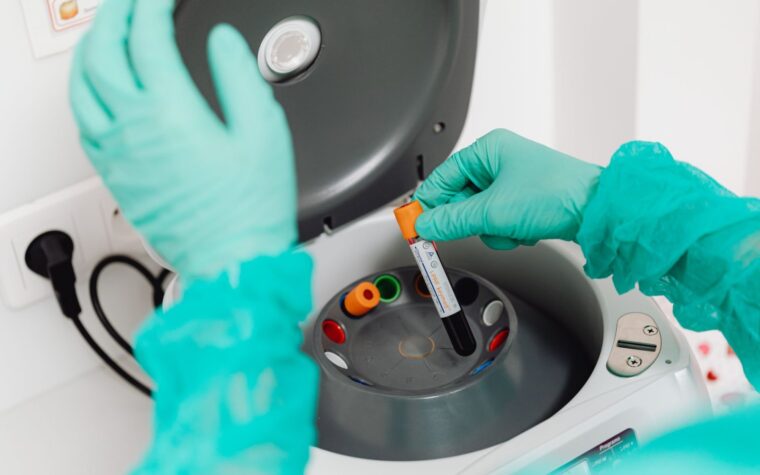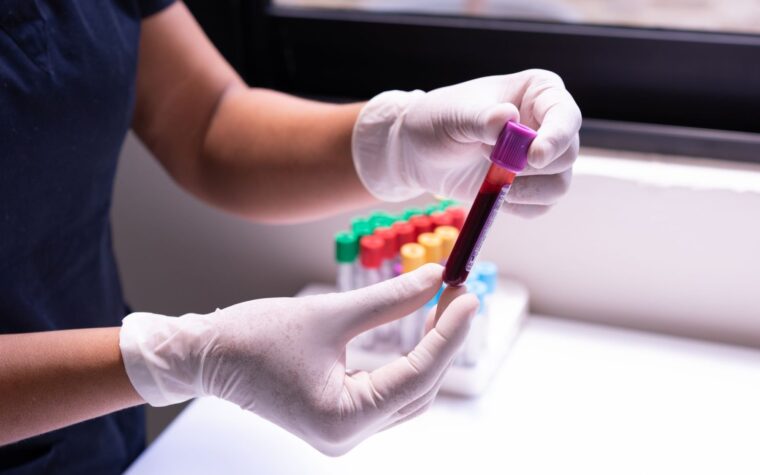
If you have ever had blood drawn at a routine physical, in the emergency room, or before surgery, there is a very good chance a BMP was on the order. It is one of the most frequently run blood tests in American medicine, and yet most people who get one never find out what those eight little numbers actually say about them.
A BMP covers 8 numbers. Ready to see the other 90+ that never made it onto that panel? One at-home Superpower draw checks 100+ biomarkers, physician-reviewed.
Here is the part that surprises people. A BMP is not a single test. It is a small dashboard of your body’s plumbing, and once you understand what each gauge is reading, the printout stops looking like noise and starts telling a story.
What is a BMP blood test?
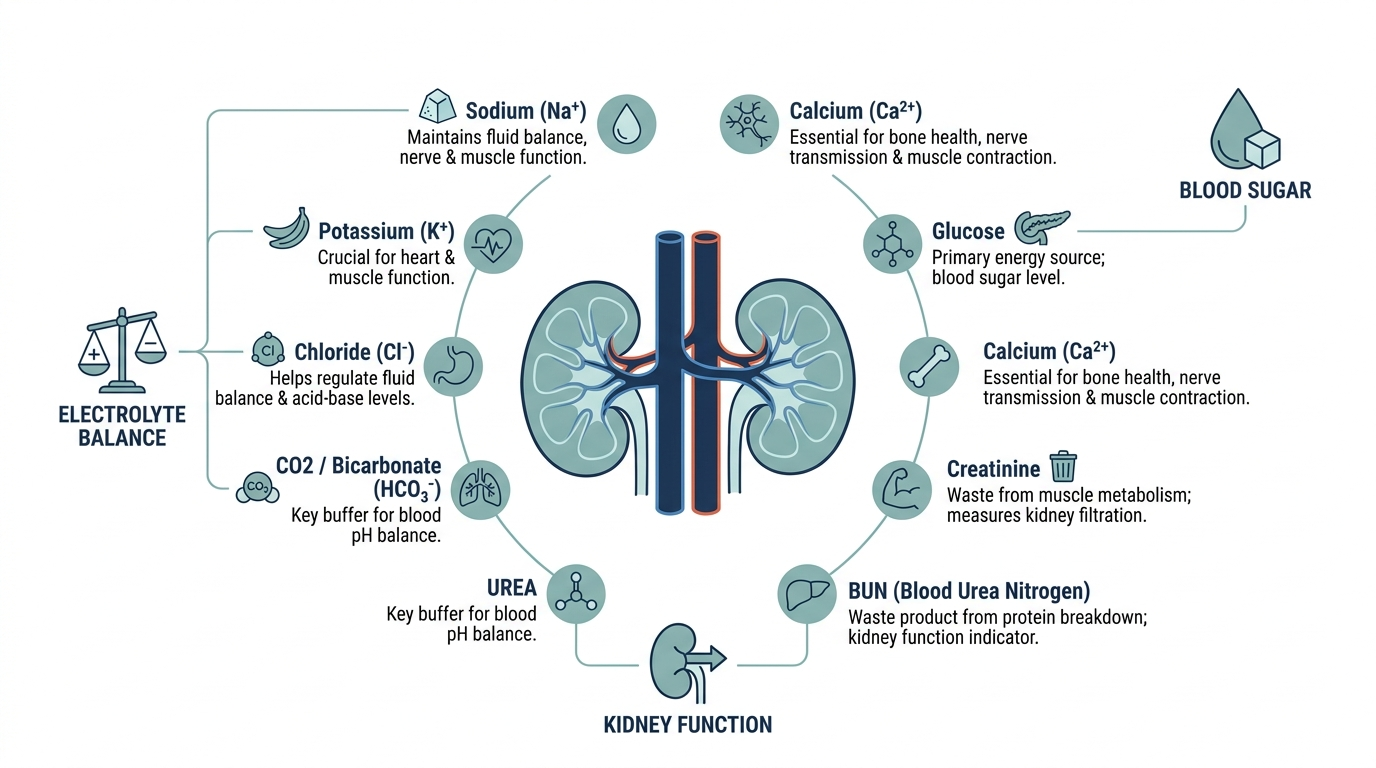
A BMP, or basic metabolic panel, is a blood test that measures eight substances in your blood to check your blood sugar, your electrolyte and fluid balance, and how well your kidneys are working (MedlinePlus). When people ask what is a bmp blood test, the short answer is that it is a snapshot of your metabolism and kidney function from a single blood draw, and it is one of the most common tests doctors order to check general health.
The eight substances are glucose, calcium, sodium, potassium, carbon dioxide (bicarbonate), chloride, BUN (blood urea nitrogen), and creatinine (Cleveland Clinic). Each one is a window into a different system, and together they give your clinician a fast read on whether the basics are in order.
What is in a BMP, and what does each part show?
A BMP measures eight things, and they sort neatly into three jobs: blood sugar, kidney function, and electrolyte and acid balance. This is the heart of what a BMP shows (MedlinePlus).
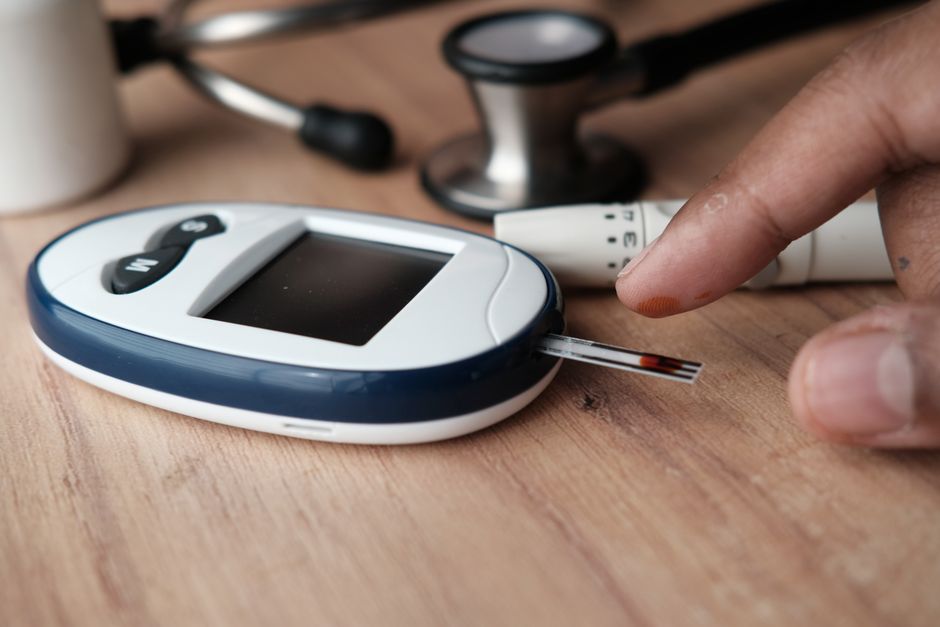
- Glucose. The sugar your body uses for energy. It is the screening number for diabetes and prediabetes.
- BUN (blood urea nitrogen) and creatinine. These are waste products your kidneys are supposed to filter out. When they rise, it can signal that the kidneys are not clearing waste well (MedlinePlus).
- Sodium, potassium, chloride, and carbon dioxide. These four are your electrolytes. They control your fluid balance and your acid and base (pH) balance, and they keep nerves, muscles, and the heart firing correctly (MedlinePlus).
- Calcium. A mineral essential for nerves, muscles, and a steady heartbeat (Cleveland Clinic).
That is the whole panel. If you have seen the terms “what is bmp on blood test” or “what is in bmp” while staring at your results, this list is the answer. Eight values, three systems.
What is a normal BMP level for each component?
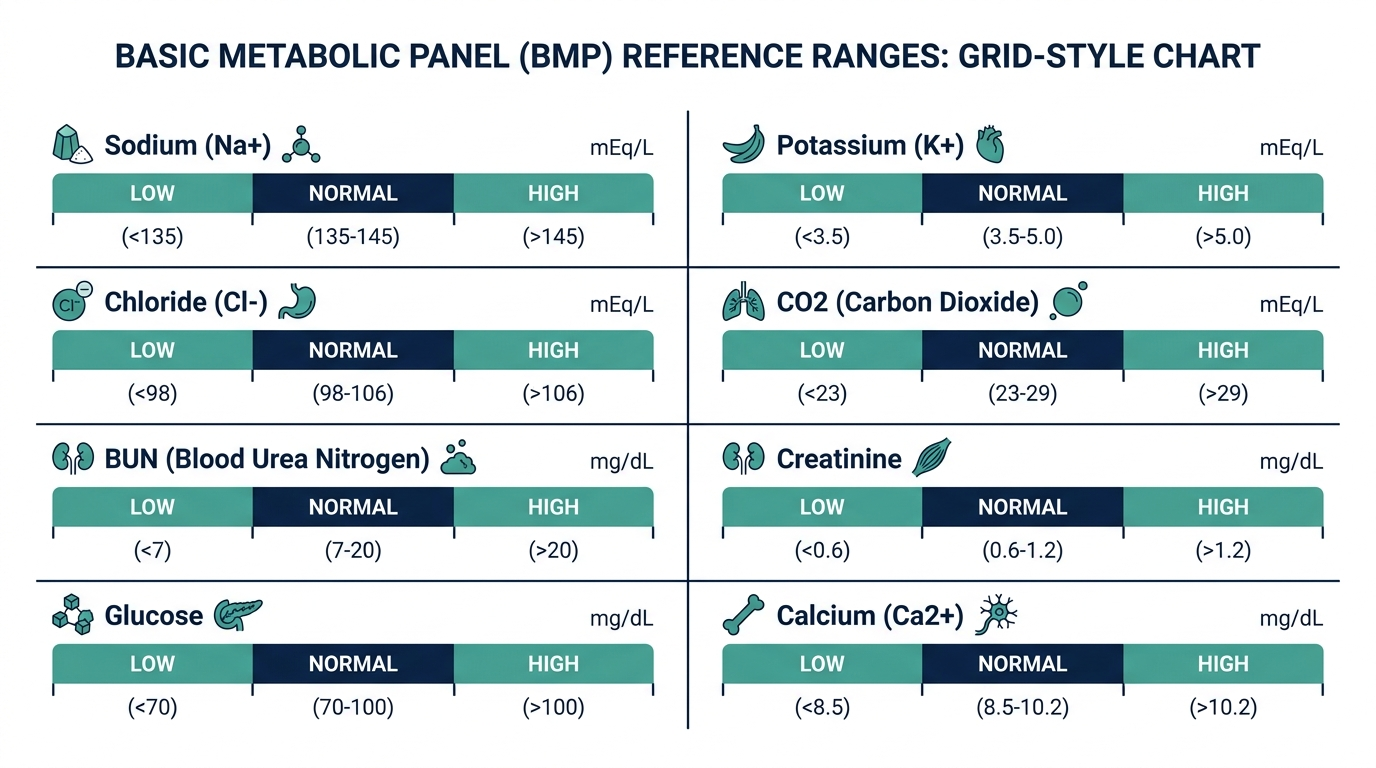
There is no single “normal BMP” number, because each of the eight components has its own range. Cleveland Clinic publishes a representative set of adult reference ranges, though these vary slightly by laboratory (Cleveland Clinic):
- Glucose: 74 to 99 mg/dL
- Calcium: 8.5 to 10.2 mg/dL
- Sodium: 136 to 144 mmol/L
- Potassium: 3.7 to 5.1 mmol/L
- Bicarbonate (carbon dioxide): 22 to 30 mmol/L
- Chloride: 98 to 107 mmol/L
- BUN: 7 to 21 mg/dL
- Creatinine: 0.58 to 0.96 mg/dL
The practical rule: always read each result against the reference range printed on your own report, not a number from the internet. Your lab calibrated those ranges to its own instruments, and the cutoffs can shift by age, sex, and method.
Why is a BMP blood test done?
A BMP is done to check your general health and to screen for, diagnose, or monitor problems with your metabolism, kidneys, and fluid balance (MedlinePlus). It is a workhorse test, which is exactly why it shows up so often.
Common reasons a clinician orders one:
- As part of a routine checkup to get a broad read on your physical health (Cleveland Clinic).
- In the emergency room, where a fast electrolyte and kidney check guides urgent decisions.
- To monitor a known condition such as diabetes, high blood pressure, or kidney disease over time.
- To keep an eye on medications that can affect the kidneys or electrolytes, such as diuretics.
One note on preparation. Because the glucose number is part of the panel, you may be asked to fast (no food or drink except water) for about eight hours beforehand (Cleveland Clinic). Always follow the specific instructions your clinic gives you, since not every BMP requires fasting.
What does an abnormal BMP result mean?
An abnormal BMP result flags that one of the eight values is outside its reference range, which is a clue to look closer rather than a diagnosis on its own. One out-of-range number does not necessarily mean you have a disease (Cleveland Clinic). What matters is the pattern.
Some common interpretations:
- High glucose can point toward diabetes or prediabetes, especially on a fasting sample.
- High BUN and creatinine together raise the question of reduced kidney function or dehydration (Cleveland Clinic).
- Abnormal sodium or potassium can reflect dehydration, kidney issues, or a medication effect, and potassium in particular is one a clinician will not ignore.
- Low bicarbonate (carbon dioxide) can be a sign that acid is building up in the blood.
The reason a clinician reads the panel as a whole, rather than chasing a single value, is that the components talk to each other. A lone borderline result is often noise. Several pointing the same direction is signal.
The insider read: the anion gap your BMP quietly calculates
Here is the detail that separates someone who reads a BMP like a clinician from someone who just scans for red flags. Hidden inside those eight values is a ninth number that the lab calculates for free: the anion gap. Many reports do not even print it, but it can be the single most informative thing on the page.
The anion gap is derived from the electrolytes already on your BMP, using sodium minus the sum of chloride and bicarbonate (NCBI StatPearls, Biochemistry, Anion Gap). It estimates whether your blood is more acidic than it should be, and the Cleveland Clinic describes it as the difference between the negatively and positively charged electrolytes in your blood (Cleveland Clinic). A high anion gap is a recognized signal of metabolic acidosis, and the list of causes is serious: kidney disease, type 1 diabetes, and diabetic ketoacidosis (DKA), a life-threatening emergency from lack of insulin (Cleveland Clinic).
Why does this matter to you? Because a person can walk into an emergency department feeling vaguely unwell, and a widened anion gap on a routine BMP is sometimes the first hard evidence that something dangerous, such as undiagnosed diabetes tipping into DKA, is underway (NCBI StatPearls, Biochemistry, Anion Gap). The same eight numbers that look boring on a wellness visit become a rapid triage tool in a crisis. That is the underrated power of the BMP: it is cheap, fast, and quietly multi-purpose.
BMP vs CMP: what is the difference?
A BMP measures eight substances; a comprehensive metabolic panel (CMP) measures those same eight plus six more, for fourteen total (MedlinePlus). The extra six are liver-focused: total protein, albumin, bilirubin, and the liver enzymes ALP, ALT, and AST (MedlinePlus).
In plain terms, a BMP checks your kidneys, blood sugar, and electrolytes, while a CMP adds a look at your liver. A clinician orders a CMP when they want that broader picture, for example to screen for liver disease or to get a fuller view of organ health. If your goal is a quick metabolic and kidney check, the BMP does the job. If liver function is in question, the CMP is the right call.

Each of the eight numbers, and what high or low means
Reading a BMP well means knowing what pushes each value in each direction. Here is a component-by-component guide, kept practical:
- Glucose. High points toward diabetes, prediabetes, stress, or steroid medications; on a fasting sample it is a screening flag. Low can come from too much diabetes medication, prolonged fasting, or, less often, hormonal problems.
- BUN. High suggests reduced kidney filtration, dehydration, a high-protein intake, or gastrointestinal bleeding. Low is less concerning and can reflect low protein intake or liver disease.
- Creatinine. A more specific kidney marker than BUN because it comes from muscle at a steady rate. High signals reduced kidney function or dehydration; it also runs naturally higher in very muscular people and lower in those with little muscle mass.
- Sodium. High often means dehydration or too little water relative to salt. Low, called hyponatremia, can come from overhydration, certain medications, heart or kidney disease, and hormonal issues, and severe drops are dangerous.
- Potassium. The one clinicians never ignore, because both high and low levels can disturb heart rhythm. High can come from kidney disease or certain blood pressure drugs; low from diuretics, vomiting, or diarrhea.
- Chloride. Tracks loosely with sodium and shifts with fluid and acid-base balance. It is rarely read alone and is most useful as part of the acid-base picture.
- Bicarbonate (carbon dioxide). Low can signal acid building up (metabolic acidosis) from kidney disease, uncontrolled diabetes, or severe diarrhea. High can reflect fluid loss from vomiting or certain breathing problems.
- Calcium. High can point to overactive parathyroid glands, certain cancers, or excess vitamin D. Low can come from kidney disease, vitamin D deficiency, or parathyroid problems, and affects nerves and muscles.
Notice how often the same cause, dehydration or kidney trouble, shows up across several rows. That is exactly why the panel is read as a set rather than eight separate verdicts.
How the components talk to each other
The real skill in reading a BMP is seeing relationships, not isolated values. A few classic patterns show how the numbers reinforce one another:
- BUN and creatinine rising together point to a kidney or hydration issue. The BUN-to-creatinine ratio refines it: a high ratio with normal creatinine often means dehydration, where the kidney is fine but fluid is low, while both rising together leans more toward kidney disease itself.
- Sodium and its fellow electrolytes map your fluid status. A high sodium with a high BUN-to-creatinine ratio is a coherent dehydration story.
- Low bicarbonate with a widened anion gap flags a metabolic acidosis that deserves urgent explanation, as covered above.
- Glucose read alongside the electrolytes matters in diabetes, where very high sugar can drag sodium and potassium out of balance.
This interconnectedness is the whole point of ordering the eight as a bundle. Each number is a sentence, but the panel is a paragraph, and the meaning lives in how the sentences fit together.
Symptoms and red flags tied to BMP abnormalities
Many BMP abnormalities are silent and found only on a blood draw, which is why the test is run so routinely. When symptoms do appear, certain combinations are worth acting on quickly:
- Very high glucose with intense thirst, frequent urination, nausea, or fruity-smelling breath can signal a diabetic emergency and needs prompt care.
- Marked potassium abnormalities can cause muscle weakness, palpitations, or an irregular heartbeat, and are treated as urgent.
- Low sodium with confusion, headache, or seizures is a red flag, because the brain is sensitive to rapid sodium shifts.
- Rising creatinine and BUN with reduced urination or swelling can indicate worsening kidney function.
- Low calcium with muscle cramps, tingling around the mouth, or spasms warrants evaluation.
The general rule holds: a mildly out-of-range value in someone who feels well is usually rechecked, while an abnormal number paired with real symptoms is what turns a routine panel into an action item.

Preparation and what can distort a BMP
Beyond fasting for the glucose portion, a few practical factors can skew a BMP and are worth knowing:
- Hydration. Being dehydrated at the draw can nudge sodium, BUN, and creatinine upward, so ordinary water intake beforehand is fine and helpful unless you are told otherwise.
- Sample handling. If red cells break during collection or the sample sits too long, potassium can read falsely high. An isolated high potassium in a well person is sometimes just this, and a repeat draw settles it.
- Medications. Diuretics, blood pressure drugs, and steroids can all shift electrolytes or glucose. Tell your clinician what you take.
- A clenched fist or tight tourniquet during the draw can slightly raise potassium, another reason a surprising value is often rechecked rather than acted on immediately.
Who should get a BMP, and how often
There is no universal schedule, because a BMP is driven by context rather than the calendar. Many adults get one as part of a periodic checkup, and it is ordered more frequently for specific reasons. You are a good candidate for regular BMP monitoring if you have diabetes or prediabetes, high blood pressure, known kidney disease, or if you take medications that affect the kidneys or electrolytes such as diuretics or certain blood pressure drugs. It is also standard before many surgeries and a frontline test in the emergency room, where a fast read on kidneys and electrolytes guides urgent decisions.
For a healthy adult with normal results and no risk factors, a BMP as part of routine care is usually enough. For someone managing a chronic condition or starting a new medication, more frequent checks let a clinician catch a drift early, before it becomes a symptom. As always, the right interval is the one your clinician sets based on your situation, not a fixed number.
What to do after an abnormal BMP
If a value comes back out of range, a calm and sensible sequence usually follows. First, place the result in context: any recent dehydration, illness, new medication, or symptoms. Second, look at whether other values move in a consistent direction, since a lone borderline number often means less than a cluster. Third, expect your clinician to either repeat the test, especially for a surprising potassium or a mildly high creatinine, or add a targeted follow-up such as an eGFR and urine test for kidney questions or an A1C for glucose. Fourth, treat the underlying cause rather than the number, whether that is rehydrating, adjusting a medication, or investigating a kidney or metabolic issue. A single abnormal BMP is a starting question, and the answer almost always comes from the follow-up, not the first printout.
Common misconceptions about the BMP
- “A BMP checks everything.” It does not. It focuses on kidneys, blood sugar, and electrolytes. It does not measure your liver in depth (that is the CMP), your cholesterol, your thyroid, or your blood counts.
- “One high number means I am sick.” Usually not. A single borderline value is often noise or a fixable factor like dehydration. The pattern across the panel is what matters.
- “BUN and creatinine are the same thing.” Both relate to kidney function, but creatinine is more specific, while BUN is swayed by hydration, diet, and bleeding. Their ratio adds information neither gives alone.
- “A normal BMP means my kidneys are perfect.” Not quite. Early kidney disease can exist with a still-normal creatinine, which is why eGFR and urine tests add sensitivity a BMP alone may miss.
- “Glucose on a BMP diagnoses diabetes.” A high fasting glucose is a screening flag, not a final diagnosis, which usually needs confirmation with a repeat test or an A1C.
Why the BMP is the emergency room’s first move
If you have ever had blood drawn in an emergency room, a BMP was almost certainly among the first tests run, and there is a good reason it sits at the front of the line. In a single quick result it answers three questions that shape urgent care: are the kidneys working, is blood sugar dangerously high or low, and are the electrolytes that keep the heart and nerves firing in a safe range.
Those three readings steer immediate decisions. A very high or very low potassium can affect heart rhythm and may need treatment within minutes. A markedly high glucose points toward a diabetic emergency, while a very low one explains confusion or collapse. A high creatinine and BUN flag kidneys under strain, which changes how safely certain medications and contrast dyes can be given. The anion gap the panel quietly calculates can also hint at a hidden acid buildup from causes like uncontrolled diabetes or certain poisonings. This is why the BMP is fast, cheap, and ubiquitous in acute settings: it converts a worrying but vague presentation into a handful of concrete numbers a clinician can act on right away, long before slower or more specialized tests come back.
Reading your BMP report at home without panic
Getting a BMP result in a patient portal before you have spoken to anyone is common, and a calm way to scan it keeps a single flagged value from ruining your evening. The trick is to read the panel as a group, not as eight independent verdicts.
- Start with how far out of range it is. A value a hair past the cutoff is very different from one far outside it. Portals flag anything outside the reference range, even trivially.
- Look for a pattern, not a lone number. Sodium, BUN, and creatinine drifting up together can simply mean you were dehydrated at the draw. One borderline value with everything else normal usually means less.
- Give potassium the benefit of the doubt. An isolated high potassium in someone who feels fine is often a collection artifact from the draw itself, which is why clinicians so often just repeat it.
- Note anything that could skew it. A recent illness, a missed meal before a glucose, a new medication, or a hard workout can all move numbers without signaling disease.
None of this replaces your clinician’s read, and a value far outside the range or paired with real symptoms deserves a prompt call. But for the common case of a mildly flagged result in someone who feels well, scanning the panel this way usually turns alarm into a reasonable question to raise at your next visit.
Don’t just read about BMP, track it.
A single result is a snapshot. Superpower re-tests BMP and 100+ markers over time so you can watch them move as you change sleep, food, and training.
Frequently asked questions
What does a BMP show?
A BMP shows your blood sugar, your kidney function, and your electrolyte and acid-base balance by measuring eight substances: glucose, calcium, sodium, potassium, carbon dioxide, chloride, BUN, and creatinine (MedlinePlus). It is a broad snapshot used to check general health.
Do I need to fast for a BMP blood test?
Often yes. Because glucose is part of the panel, you may be asked to fast for about eight hours beforehand (Cleveland Clinic). Follow the specific instructions your clinic gives you, since not every BMP requires fasting.
What is the difference between a BMP and a CMP?
A BMP measures eight substances focused on kidneys, blood sugar, and electrolytes. A CMP measures those same eight plus six liver-related tests (total protein, albumin, bilirubin, ALP, ALT, and AST), for fourteen total (MedlinePlus).
Is an abnormal BMP result something to worry about?
Not necessarily. One out-of-range value does not mean you have a disease; clinicians read the whole panel and your history together (Cleveland Clinic). An abnormal result usually prompts a closer look or follow-up testing.
What is a normal blood sugar level on a BMP?
A representative fasting glucose reference range is about 74 to 99 mg/dL, though ranges vary by lab (Cleveland Clinic). Always compare your result to the range printed on your own report.
This article is for general educational purposes and is not medical advice. It cannot diagnose or treat you and does not replace your clinician. Always discuss your lab results and any health decisions with a qualified healthcare professional.
Related reading
Vital Signs Today may earn a commission if you buy through links on this page. It does not affect our editorial assessments.