You suspect you might be pregnant, your period is a few days away, and you want a real answer, not a faint line you have to squint at under the bathroom light. So the question lands fast: can a blood test give you a cleaner, earlier yes or no than the drugstore stick? It can, and it can do something the home test cannot.
Wondering how early a blood test can confirm pregnancy? See what else a single draw can tell you about your body. One at-home Superpower draw checks 100+ biomarkers, physician-reviewed.
Most people think of pregnancy testing as one thing, the pee on a stick ritual. The blood version is a different animal. It is more sensitive, it can put an actual number on the pregnancy, and that number is the part almost nobody talks about until something goes sideways.
Can a blood test detect pregnancy?
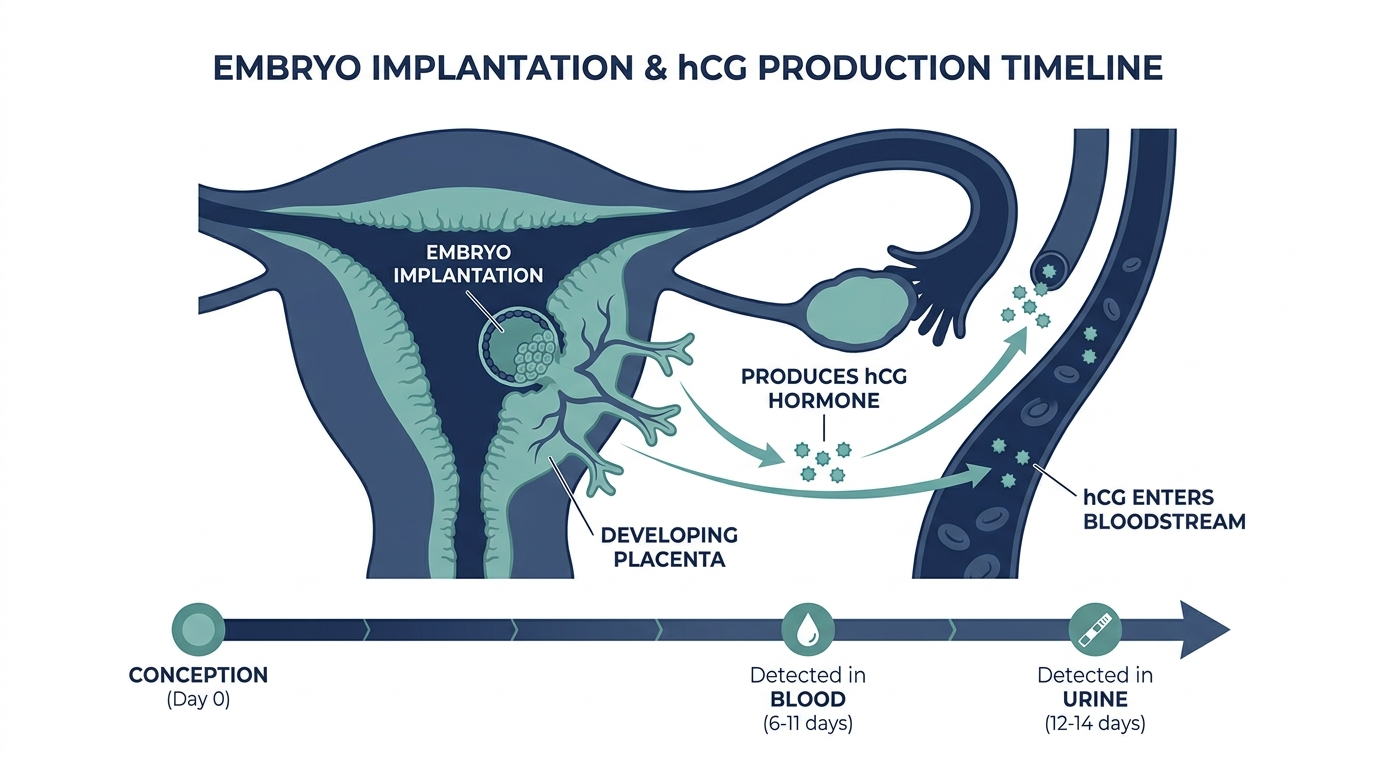
Yes. A blood test can absolutely detect pregnancy, and it does so by looking for the same hormone a home test looks for, human chorionic gonadotropin, or hCG (MedlinePlus). hCG is the hormone the placenta starts making after a fertilized egg implants, and its presence in your blood is the chemical signature of pregnancy (Cleveland Clinic). A blood test is slightly more sensitive than a urine test because it can pick up very small amounts of hCG, which means it can confirm a pregnancy earlier (Cleveland Clinic).
So the answer to can a blood test detect pregnancy is not just yes, it is yes and then some. Blood testing comes in two flavors, and the difference between them matters more than most people realize.
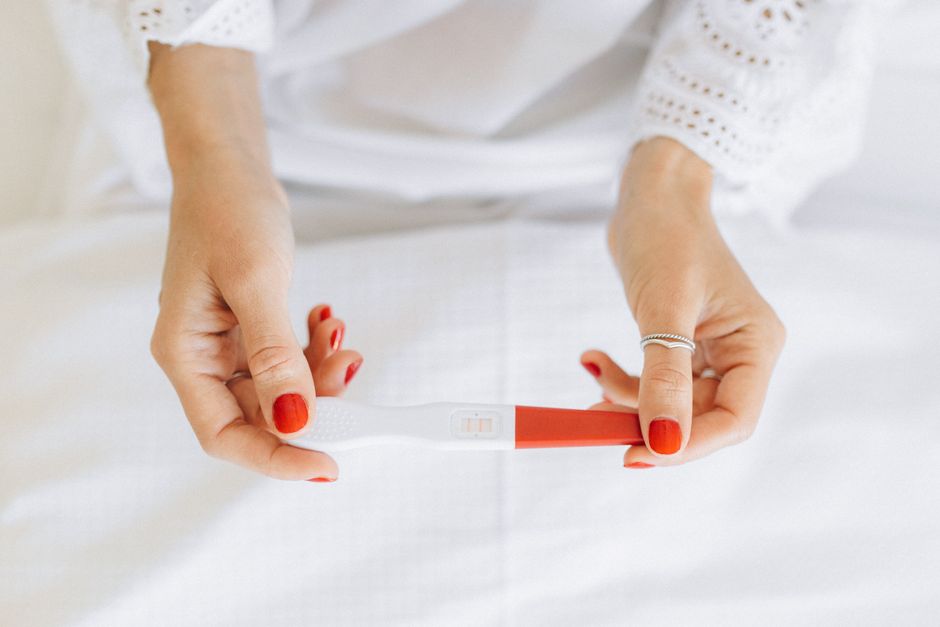
What kind of blood test detects pregnancy?
There are two types of hCG blood test, and they answer two different questions. A qualitative hCG blood test simply tells you whether the hormone is present, returning a plain positive or negative (MedlinePlus). A quantitative hCG blood test measures the exact amount of hCG circulating in your blood, reported as a number in milli-international units per milliliter (MedlinePlus).
Think of it this way. The qualitative test answers “am I pregnant,” the same yes or no a home stick gives you, just from blood. The quantitative test answers “how much hormone is there,” which opens the door to tracking how a pregnancy is progressing.
That number is why a quantitative hCG test, sometimes called a beta hCG, is the one clinicians reach for when they need detail. It can help pin down how far along a pregnancy is, and it is a key tool for spotting abnormal pregnancies, including ectopic pregnancies, molar pregnancies, and possible miscarriages (MedlinePlus). A urine test can never do that. It only gives you a line.
When can a blood test show pregnancy?
A blood test can show pregnancy roughly seven to 10 days after conception, earlier than a urine test can (Cleveland Clinic). The reason is timing of the hormone itself. hCG levels start to build once the fertilized egg implants in the uterus, which happens about six to 10 days after conception, and the blood test can catch those very small early amounts (Cleveland Clinic).
This is the heart of why people ask would a blood test show pregnancy before a missed period. Often, yes. Because the blood test detects smaller amounts of hCG, it can show whether you are pregnant before you have missed your period, while a urine test usually wants you to wait (MedlinePlus).
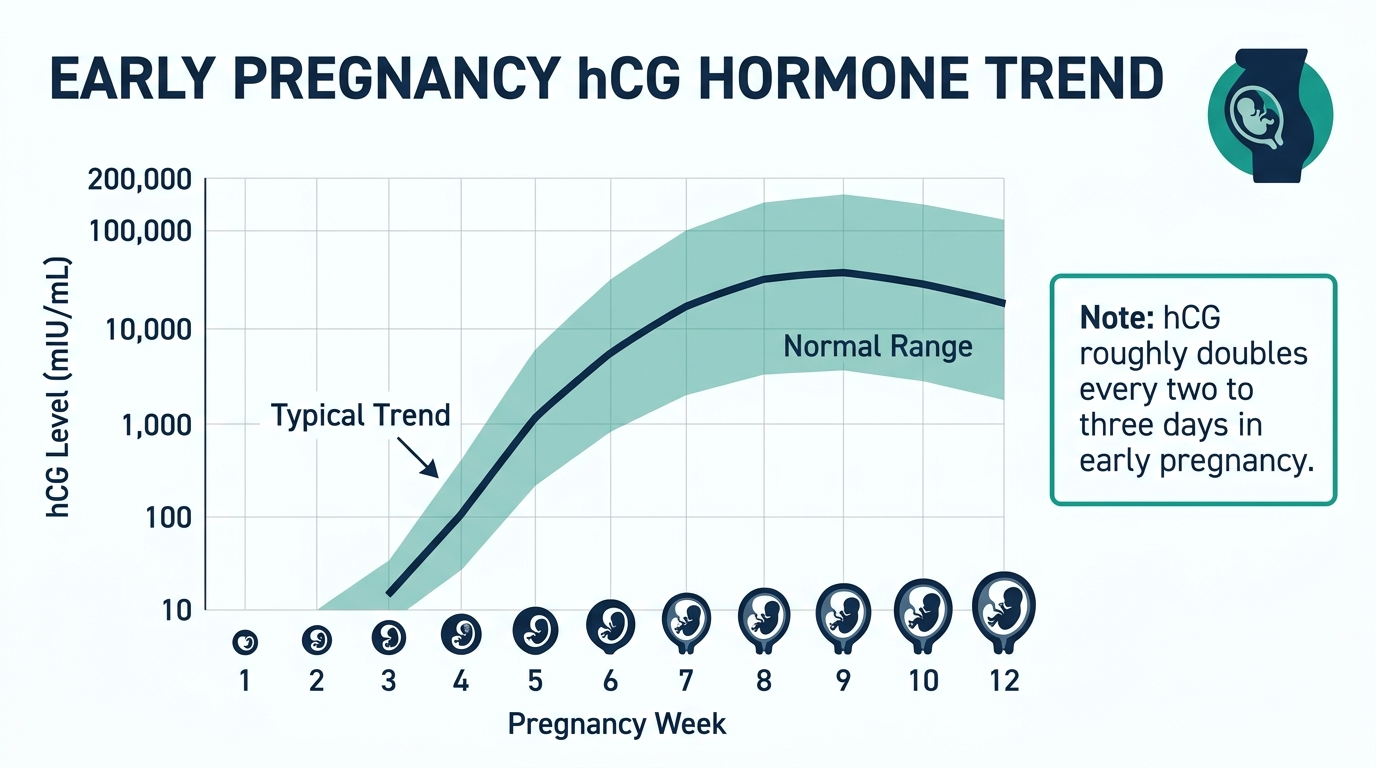
Once a pregnancy takes hold, hCG climbs fast. In the first weeks it almost doubles every two to three days, rising steadily for the first eight to 10 weeks before it peaks (Cleveland Clinic). That steep early climb is exactly what makes very early detection possible, and it is also what makes the number so useful for monitoring.
One honest caveat on the question of when does a blood test show pregnancy. Testing on day seven is possible, but a very early test can come back negative even if you are pregnant, simply because hCG has not risen high enough yet. If you test early and get a negative, it is worth retesting in a few days rather than treating that first result as the final word.

What hCG level confirms pregnancy on a blood test?
An hCG level above 25 mIU/mL usually means you are pregnant (Cleveland Clinic). For context, everyone has tiny, almost undetectable amounts of hCG in their body, so a non pregnant result is typically below 5 mIU/mL in women and below 2 mIU/mL in men (MedlinePlus).
The gray zone between those numbers, roughly 5 to 25 mIU/mL, is exactly why a single early result can be confusing. A value in that band is not a clear yes or a clear no, which is one more reason a repeat test a few days later often settles the question.
During pregnancy the numbers rise dramatically. Quantitative ranges climb week by week, for example roughly 5 to 72 mIU/mL at three weeks, into the thousands by five weeks, and into the tens of thousands by six to seven weeks (MedlinePlus). The wide ranges are normal. A single number matters far less than where it sits and how it changes over time.
Is a blood test more accurate than a home pregnancy test?
A blood test is more sensitive than a urine test, but more sensitive is not the same as more accurate for the everyday question of whether you are pregnant. Home urine tests are about 97 to 99 percent accurate when done a week or two after a missed period (MedlinePlus). For most people, a properly timed home test is plenty.
Where the blood test wins is the edges. It detects smaller amounts of hCG, so it can confirm a pregnancy earlier (Cleveland Clinic). The trade off is convenience and speed. Urine tests are cheaper, faster, and done at home, while blood tests are run in a lab and results may take hours to more than a day (MedlinePlus).
The practical read: if you just want to know, a home test after your missed period is fast and reliable. If you want the earliest possible answer, or you need a number for medical reasons, blood is the tool.
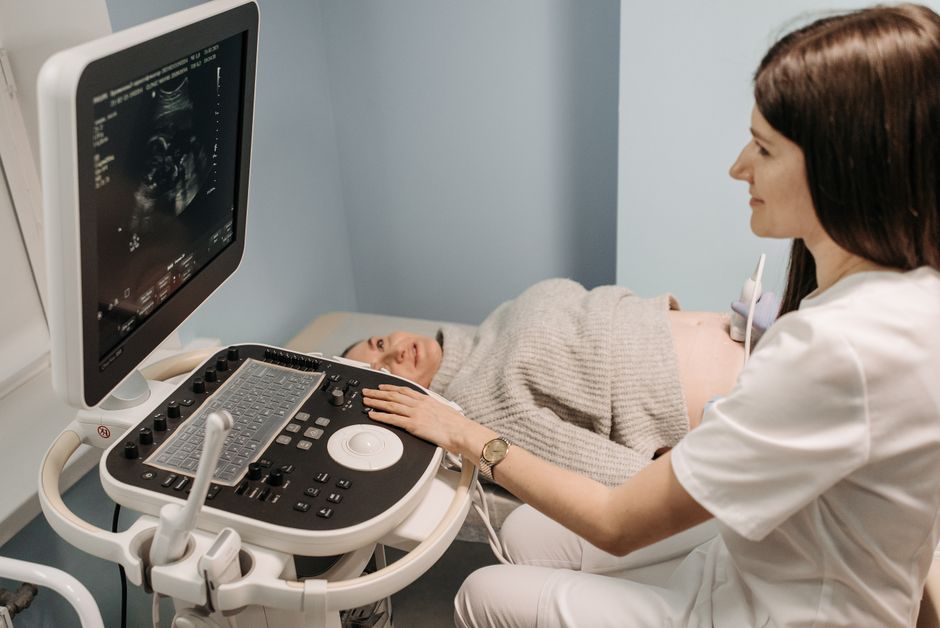
The part most people never hear: the number is the real reason to draw blood
Here is the insight that gets lost in the rush to answer the simple question. The genuine power of a pregnancy blood test is not detecting a pregnancy a few days sooner. It is the ability to measure hCG and watch it move.
Because hCG should almost double every two to three days in early pregnancy (Cleveland Clinic), clinicians order two quantitative tests a couple of days apart and compare them. The trend, not any single value, is the signal. A healthy intrauterine pregnancy usually shows that brisk rise. A number that climbs too slowly, plateaus, or falls can be an early red flag for an ectopic pregnancy or a miscarriage, which is precisely what the quantitative test is designed to help catch (MedlinePlus).
This is why an ectopic pregnancy, where the embryo implants outside the uterus, is a situation where serial blood hCG can be lifesaving information well before symptoms force the issue. A home urine test would only ever say “positive” and tell you nothing about whether the pregnancy is in the right place or growing the way it should. The blood number is what turns a yes or no into a story you can actually follow. When people ask whether a blood test can detect pregnancy, that monitoring power is the answer that actually changes outcomes.
What the hCG number can tell you beyond a simple yes
Once a lab reports an exact hCG value, that single figure does more work than most people expect. It is not just a bigger, better positive. Read alongside your dates and an ultrasound, the number and its trajectory hint at several distinct situations.
- How far along you likely are. Because hCG rises in a fairly predictable band week by week, a value can loosely suggest gestational age. It is only a rough guide, since the normal range at any week is wide, but it is a useful starting estimate before imaging.
- Whether the rise is healthy. A brisk near-doubling every two to three days points to a normally progressing early pregnancy. A slow, flat, or falling value is the earliest chemical warning that something may be wrong.
- A possible multiple pregnancy. Twins or higher-order pregnancies can be associated with higher hCG for a given week, though the overlap with singleton pregnancies is large. hCG can raise the suspicion, but only ultrasound confirms multiples.
- A molar pregnancy. Unusually high hCG, sometimes far above the expected range, can accompany a molar pregnancy, an abnormal growth of placental tissue that needs specific follow up.
- A resolving or non-viable pregnancy. After a miscarriage or treatment of an ectopic pregnancy, providers track hCG down toward non-pregnant levels to confirm the process is complete.
This is the practical difference between a line on a stick and a number in a lab report. The line answers one question once. The number can be followed, compared, and interpreted, which is why clinicians reach for it whenever the stakes are higher than simple confirmation.

Where you get the test, and what to expect
A blood pregnancy test is ordered by a clinician and run in a lab, which shapes the logistics in ways a drugstore test does not.
- How the sample is taken. A small amount of blood is drawn from a vein in your arm, the same simple draw used for most routine blood work. No fasting is needed, and ordinary meals, water, or activity do not change an hCG result.
- Turnaround. Because the sample is processed in a lab rather than read at home, results can take from a few hours to more than a day, depending on the facility (MedlinePlus). A home urine test, by contrast, gives an answer in minutes.
- When two draws are planned. If your provider wants to watch the trend, expect to return in about 48 hours for a second quantitative draw. The comparison between the two is the point, so keeping that second appointment matters.
- What to bring to the conversation. Your best estimate of your last menstrual period and, if you tracked it, your ovulation date. Those dates let your clinician judge whether a given hCG value fits the expected week.
The extra steps are exactly why blood testing is usually reserved for situations that need the detail: very early confirmation, a history that raises concern, or a pregnancy that needs monitoring. For a routine confirmation, a well timed home test is faster and entirely adequate.
False and misleading results with blood pregnancy tests
Blood hCG testing is highly reliable, but no test is perfect, and a handful of specific situations can produce a result that does not mean what it seems to.
When a positive may mislead
- A very early loss. A biochemical pregnancy is an early miscarriage in which hCG rises briefly, then falls before a pregnancy can be seen on ultrasound. The test was not wrong; the pregnancy simply did not continue.
- Recent hCG medication. Some fertility treatments use an hCG trigger injection, and leftover hormone from that shot can produce a positive that is not a new pregnancy. Tell your provider if this applies.
- Non-pregnancy sources of hCG. Rarely, certain medical conditions and tumors can produce hCG, which is one reason a positive without a confirmed uterine pregnancy is investigated further.
When a negative may mislead
- Testing before hCG has risen. The most common cause. A too-early draw can read negative in a genuinely pregnant person, which is why an early negative should be repeated rather than trusted as final.
The throughline is the same one clinicians rely on: a single hCG result is a starting point, not a verdict. When a result and the clinical picture disagree, the answer is usually a repeat test or an ultrasound, not a leap to conclusions.
What to do after your result, step by step
Knowing the number is only useful if you know what comes next. A rough roadmap after a blood pregnancy test looks like this:
- If the result is clearly positive and expected, your provider will usually arrange early prenatal care and, when appropriate, an ultrasound to confirm the pregnancy is in the uterus and progressing. The timing of that scan often depends on your hCG level and dates.
- If the result is a borderline value in the gray zone, roughly 5 to 25 mIU/mL, a repeat quantitative test in a couple of days usually clarifies whether the number is rising, plateauing, or falling.
- If the result is negative but your period still has not come, retesting in about a week is the standard next step, since hCG may simply not have risen enough yet.
- If serial numbers rise too slowly, plateau, or fall, expect closer evaluation, often including an ultrasound, to check for an ectopic pregnancy or a miscarriage.
At every branch, the same principle holds. The value on the report opens a conversation with your clinician; it does not replace one. Symptoms such as severe or one-sided pelvic pain, heavy bleeding, shoulder-tip pain, or fainting are red flags that warrant urgent care regardless of what any number says, because they can signal an ectopic pregnancy, which is a medical emergency.
Common misunderstandings about blood pregnancy tests
A few persistent beliefs cause needless worry or false confidence. Correcting them changes how you read your own result.
- “A blood test can confirm pregnancy the day after intercourse.” It cannot. hCG does not exist in your blood until after implantation, which is typically about a week or more after conception. Before then, there is nothing to detect.
- “A higher hCG number means a healthier pregnancy.” A single high number is not proof of a healthier or more advanced pregnancy. Normal ranges at any given week are broad and overlap heavily between people. The trend across two draws is far more meaningful than one figure.
- “A quantitative number can date my pregnancy precisely.” It offers only a rough estimate. Because the normal range for each week is so wide, hCG alone cannot pinpoint gestational age. An ultrasound does that job.
- “A blood test can tell me if it is twins.” Not on its own. Multiples can be associated with higher hCG, but the overlap with single pregnancies is too large for the number to confirm it. Only imaging can.
- “One negative blood test rules out pregnancy for good.” A single early negative does not. If your period does not arrive and you still suspect pregnancy, retesting in about a week is the standard advice.
The common thread is that early pregnancy is a moving process, not a fixed snapshot. Any single blood result is best read as one frame in a sequence, interpreted with your dates, your symptoms, and, when needed, an ultrasound.
How doctors use serial hCG numbers in early pregnancy
A single quantitative hCG result is a starting point, not the whole story. In a normally progressing early pregnancy, hCG tends to rise steadily, roughly doubling every two to three days in the first weeks. Because of this pattern, clinicians often order two blood draws about 48 hours apart rather than acting on one number, since the rate of change carries more information than any single value. A healthy rise reassures, while a level that plateaus or falls prompts a closer look.
This serial approach matters most when the situation is uncertain, for example when there is bleeding, cramping, or a history of pregnancy loss or ectopic pregnancy. A slower than expected rise does not automatically mean something is wrong, but it lowers the threshold for an ultrasound to see where the pregnancy is located and whether it is developing. Once hCG climbs past a certain level, usually somewhere in the low thousands, a transvaginal ultrasound can typically confirm a pregnancy inside the uterus. Below that level, the imaging may not show anything yet, which is exactly why the trend in the blood number is used to guide timing. The number and the ultrasound work together rather than either one alone.
What happens if the first blood test is inconclusive
Not every early hCG result gives a clean yes or no, and that is normal rather than alarming. A very low positive can appear when the test is done extremely early, before hCG has had time to build, so the standard next step is simply to repeat the blood draw in about two days and watch whether the number rises appropriately. Timing, not a faulty test, is the usual reason for an ambiguous first result.
Occasionally a low or slowly changing hCG reflects something that needs attention, such as a very early miscarriage or a pregnancy developing outside the uterus. This is why a doctor pairs the repeat blood test with symptoms and, when the level is high enough, an ultrasound, rather than drawing conclusions from one figure. If you get an inconclusive result, the practical response is to avoid guessing from a single number, keep any follow-up blood draw exactly as scheduled since the interval is what makes the comparison meaningful, and report any heavy bleeding or one-sided pelvic pain promptly. An inconclusive first test almost always resolves into a clear answer within a few days once the trend becomes visible.
Turn what you just learned into action.
Superpower lets you test 100+ biomarkers from home, then re-check them over time so you can actually see progress, physician-reviewed at every step.
Frequently asked questions
How early can a blood test detect pregnancy?
A blood test can usually detect pregnancy about seven to 10 days after conception, earlier than a urine test, because it can pick up very small amounts of hCG (Cleveland Clinic). If you test very early and get a negative, retest in a few days, since hCG may not have risen enough yet.
Would a blood test show pregnancy before a missed period?
Often yes. Because a blood test detects smaller amounts of hCG than a urine test, it can show whether you are pregnant before you have missed your period (MedlinePlus). A urine test usually works best a week or two after a missed period.
What is the difference between a qualitative and quantitative hCG blood test?
A qualitative hCG test gives a simple positive or negative, while a quantitative hCG test measures the exact amount of hCG in your blood (MedlinePlus). The quantitative number can help date a pregnancy and flag problems like ectopic or molar pregnancies.
What hCG level means you are pregnant?
An hCG level above 25 mIU/mL usually indicates pregnancy, while a non pregnant level is typically below 5 mIU/mL in women (Cleveland Clinic). Results between 5 and 25 are a gray zone and usually call for a repeat test.
Is a blood pregnancy test more accurate than a home test?
A blood test is more sensitive and detects pregnancy earlier, but home urine tests are about 97 to 99 percent accurate when done a week or two after a missed period (MedlinePlus). For a number or the earliest answer, choose blood.
This article is for general educational purposes and is not medical advice. It cannot diagnose or treat you and does not replace your clinician. Always discuss your lab results and any health decisions with a qualified healthcare professional.
Related reading
Vital Signs Today may earn a commission if you buy through links on this page. It does not affect our editorial assessments.